
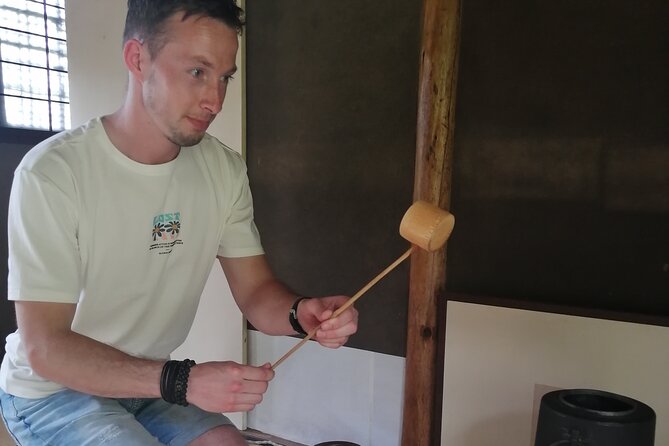
Reviewed · TEA CEREMONY EXPERIENCES
The Art of Mindful Living: Tea Ceremony in Kyoto
The best part of this Kyoto experience is its hands-on approach. You do not simply sit through a formal tea ritual. Naomi explains the meaning behind the movements, serves organic Uji matcha and a Japanese sweet, then lets you make your own tea. I like that the session feels both cultural and practical, rather than stiff or difficult to follow.
I also like the quiet old house and its garden. The setting gives the ceremony a sense of place, and you can take photographs before or during the activity. Food allergies and vegan diets are accommodated, and children can have cocoa instead of matcha. The main drawback is the location: it is away from central Kyoto and can take extra time to reach, so this works best when paired with sights in the Kinkakuji or Arashiyama direction.
Key points to know before booking
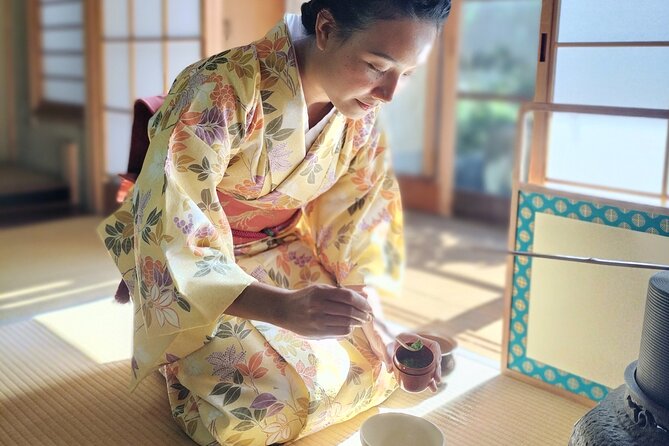
- You make your own matcha: After watching Naomi, you whisk a cup yourself.
- Organic Kyoto Uji matcha: The tea is sourced from Uji, a major tea-growing area near Kyoto.
- A real old-house setting: The ceremony takes place in a traditional residence with a Japanese garden.
- Flexible for families: Children can have cocoa, chairs are available, and baby kimono rental is offered.
- Kimono photos are possible: Rental costs ¥4,000, with hakama available for ¥8,000.
- Small standard groups: Regular sessions accommodate up to six people, with larger arrangements possible by contacting the provider.
What happens inside the old Kyoto residence
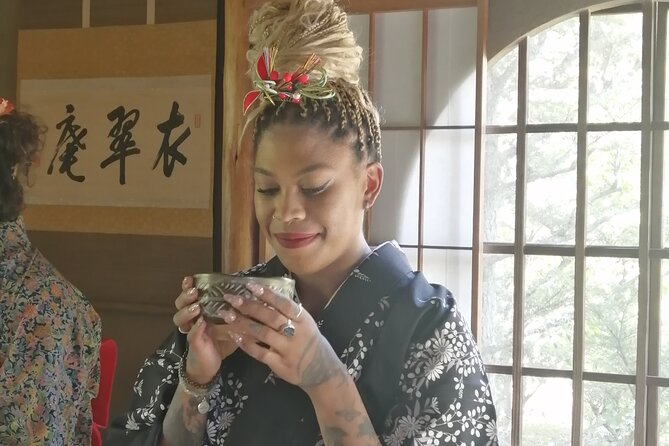
The experience lasts about one hour and takes place at Kaze no Waon in Kyoto’s Ukyo Ward. You meet at the residence, enter the traditional house, and settle into a room prepared for tea ceremony. Chairs are provided, which matters if sitting on the floor is uncomfortable or if you are bringing older family members.
The setting does much of the work. This is not a modern demonstration room or a busy downtown venue. You have a dedicated tea room and access to a Japanese garden, giving the hour a slower pace than most sightseeing stops. The location also supports photography, especially before the ceremony begins.
Naomi leads the session in English and explains what you are seeing as it happens. Her approach is designed for people who have never encountered tea ceremony before. You will not need to know the correct gestures in advance, and you are not expected to behave like a tea master.
The first part covers the background of tea ceremony, the effects and qualities associated with matcha, the different types of matcha and Japanese tea, and the proper way to drink it. That information gives the ritual some context. Without it, the gestures can look beautiful but mysterious. With it, you can follow the purpose behind the bowl, the sweets, and the careful preparation.
More Tea Ceremony Experiences in Kyoto
- Kyoto: Tea Ceremony in a Traditional Tea House in Kiyomizu
★ 4.9 · 3,519 reviews - Kyoto: Tea Ceremony Ju-An at Jotokuji Temple
★ 4.9 · 3,207 reviews - Kyoto: 45-Minute Tea Ceremony Lesson Experience
★ 4.3 · 2,378 reviews
Watching the tea ceremony, then trying it yourself
Naomi first performs the ceremony while you watch. This is the most formal part of the session. You see how the matcha is prepared and served, and you learn how to receive and drink it.
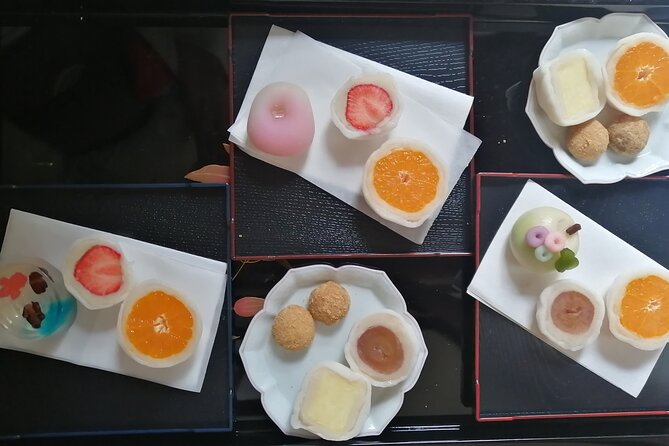
A Japanese sweet is served with the tea. You can choose between a traditional bean-paste sweet and a fresh-fruit daifuku. One sweet is included in the price, while trying both costs an additional ¥500 per person. The choice is useful for families or anyone who prefers fruit to a more classic wagashi filling.
The matcha comes from Uji in Kyoto and is described as organic. It is not presented as a famous brand, but the focus is on quality and taste. Matcha has a strong, grassy flavor that can surprise first-time drinkers, so pairing it with a sweet is more than decoration. The sweetness softens the tea and shows how the two are traditionally enjoyed together.
Then the formal demonstration becomes participatory. You get to whisk your own matcha. This is the part I would value most if you want more than photographs. Making the tea helps you understand the care involved, and it gives children and adults a simple task to focus on.
The session also frames tea preparation as a quiet, almost meditative act. That does not mean the activity is silent or solemn for the full hour. Naomi’s teaching style is described as light and welcoming, making the ceremony easier to approach for families and first-time visitors.
Why the garden adds real value
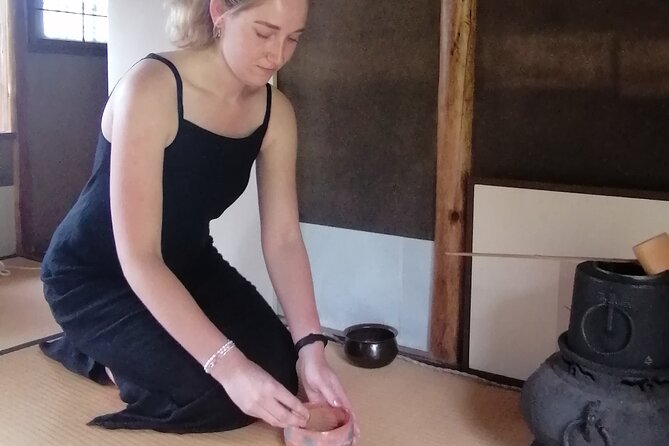
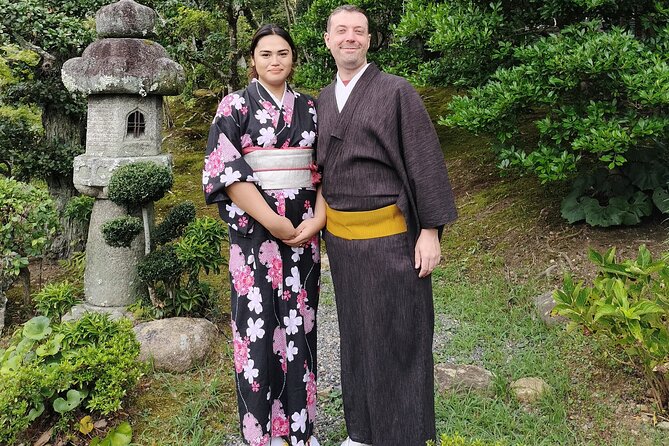
The garden is not just a backdrop for the tea room. It gives you another part of the residence to enjoy before the ceremony and creates a calm place for photographs. Several parts of the garden can be used for pictures, and the setting works well for family shots or kimono portraits.
You can take photos during the tea ceremony as well. That is a helpful policy because some formal cultural activities restrict cameras completely. Here, you can record the experience while still taking part in the ritual.
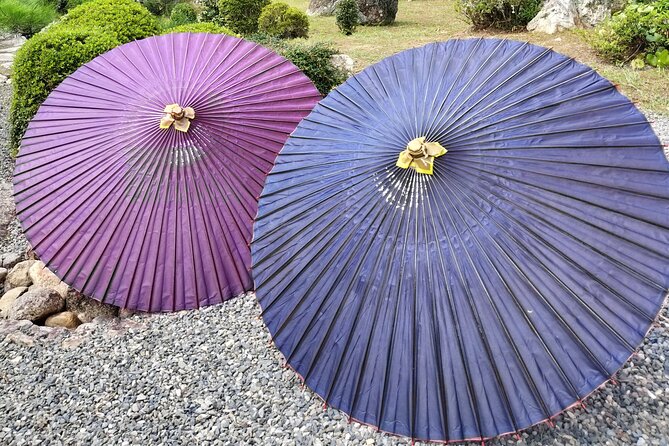
Rain does not necessarily cancel the photo opportunity. You can take pictures while holding a Japanese umbrella, but you cannot stand outside in a kimono without an umbrella and allow it to get wet. If you are booking mainly for outdoor photos, keep the weather policy in mind.
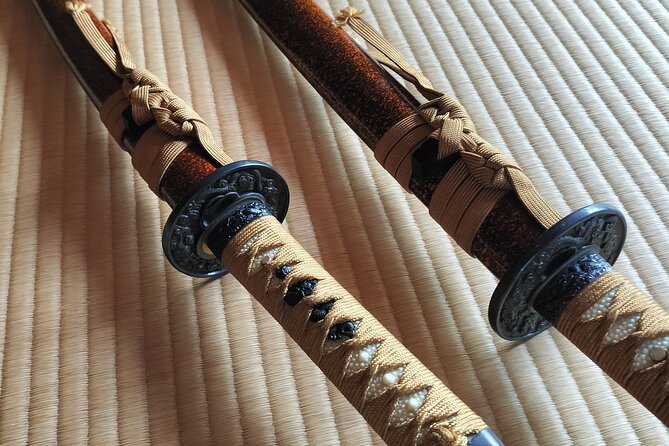
A private session includes a special photo option: use of a traditional Japanese umbrella and an imitation sword. These are for photographs only. They are not part of the tea ceremony itself, but they can add a playful visual touch to a kimono session.
Adding a kimono to the tea ceremony
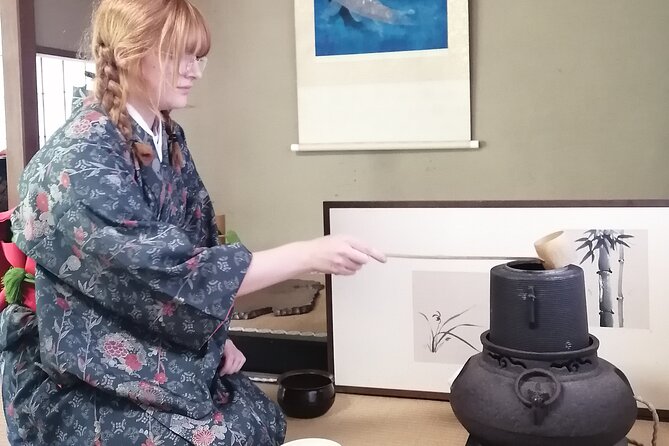
Kimono rental is an optional extra, priced at ¥4,000 while the ceremony takes place. A hakama rental costs ¥8,000. There is also a baby romper-style kimono for ¥600 and an undershirt rental for ¥200.
This option can turn a one-hour tea activity into a fuller cultural outing, but allow for the fact that dressing takes time. Hair styling and makeup are not provided. Hair accessories are available for you to use, so you can add a small finishing touch without booking a salon service.
I would choose the kimono option if photographs and traditional dress are central to your Kyoto plans. If you mainly want to learn about matcha, the basic tea session is enough. The extra clothing cost is reasonable compared with a full photo package, but it is still an add-on, not part of the advertised price.
For families, the baby kimono option gives very young children a way to join the photographs. It is a practical detail that many cultural activities overlook. Ask about clothing needs in advance if several members of your group want to dress up.
Same trip, a completely different kind of day:
- PERFECT KYOTO 1-Day Bus Tour
★ 5.0 · 13,518 reviews - Kyoto: Fushimi Inari, Kinkakuji, Bamboo Grove 1 Day Bus Tour
★ 4.8 · 4,316 reviews - Kyoto Geisha Walking Tour: Gion District & Hidden Gems
★ 4.7 · 3,273 reviews - Kyoto: Gion Magical Night Walking Tour with Geisha Trivia
★ 4.9 · 2,393 reviews
Matcha, sweets, and dietary needs
The advertised price is $44.42 per person, and one Japanese sweet is included. For a one-hour activity, that is not the cheapest way to drink matcha in Kyoto. You can find tea and sweets for less at a café.
The value comes from the instruction, the old residence, the garden, and the chance to prepare the tea yourself. You are paying for a guided cultural lesson rather than a drink alone. I think that makes the price fair for visitors who want to understand the ceremony and take part in it.
Food allergies and vegan diets can be accommodated. You should communicate your needs clearly before the session so the appropriate sweet can be prepared. You can choose a bean-paste sweet or fresh-fruit daifuku, and you can pay ¥500 more per person to sample both.
Children who do not want matcha can have cocoa instead. That makes the activity more workable for families, since young children do not have to drink a bitter or unfamiliar tea to participate.
Alcoholic drinks are not included. That will not surprise anyone booking a tea ceremony, but it is worth noting if you are comparing the experience with a broader food or drinks tour.
Getting there and planning the day
The meeting point is Kaze no Waon, 14 Utanokitanoinchō, Ukyo Ward, Kyoto, postal code 616-8201. The residence is near public transportation, but it is not near Kyoto’s main downtown sightseeing area.
Plan extra time for the journey. The location is in the direction of Kinkakuji Temple and Arashiyama, making it inconvenient to combine with a tight central Kyoto schedule. On the other hand, it can fit well into a day focused on western Kyoto. Pairing the ceremony with nearby sightseeing avoids crossing the city just for a one-hour appointment.
The activity ends back at the meeting point. A mobile ticket is provided, and confirmation is sent within 48 hours of booking, subject to availability. The experience is usually booked about 13 days ahead, so reserving around two weeks before your visit is sensible if your Kyoto dates are fixed.
Stroller access is allowed on the premises, but the stroller cannot go inside the building. Families with small children should be ready to leave it outside the interior rooms.
Standard group sessions have a maximum of six people. Larger groups may be accommodated, but you should contact the provider before booking rather than assume a large party will fit into a regular session. A private tea ceremony is also available, and you need to ask about it before booking.
Who will get the most from this experience
This is a good match for first-time visitors who want a clear introduction to Japanese tea ceremony without committing to a long, highly formal ritual. Naomi explains the background and drinking etiquette, then gives you something to do with your hands.
Families are also well served. The cocoa option, chairs, baby kimono rental, and flexible sweets make the hour easier for mixed-age groups. Children may enjoy the whisking more than the explanation, while adults can focus on the cultural meaning.
The activity suits photographers and anyone planning to wear kimono. The garden, old residence, umbrella, and optional imitation sword offer several photo settings. Just remember that rain affects outdoor pictures and that makeup and hair styling are not supplied.
It is less suitable if you want a central Kyoto stop that takes almost no planning. The journey to Ukyo Ward is part of the cost in time, and the one-hour ceremony may not justify the trip if you are only passing through central Kyoto.
Practical booking advice
Book at least a few days ahead, and two weeks is safer if your schedule is tight. If you need a private session, a larger group arrangement, kimono rental, or dietary accommodation, contact the provider before finalizing the booking.
The cancellation policy is generous up to 24 hours before the start time, when you can receive a full refund. Cancellations or changes inside 24 hours are not refunded or accepted. The activity can also be affected by poor weather or an insufficient minimum number of participants, in which case you are offered another date, another experience, or a full refund.
The standard price does not include kimono, hakama, the second sweet, or alcoholic drinks. Keep those extras in mind when comparing the total cost with other Kyoto cultural activities.
Should you book this Kyoto tea ceremony?
Book it if you want a personal introduction to matcha, a peaceful old-house setting, and the chance to make tea yourself. The garden, flexible food options, chairs, and family-friendly cocoa make it easier to recommend than a strict ceremony with little explanation.
I would especially choose it for a small group, a family, or anyone who wants kimono photographs alongside a cultural lesson. I would skip it if your itinerary is packed around central Kyoto and you do not want to spend extra time reaching Ukyo Ward.
At $44.42, the value is in the teaching and participation, not the bowl of tea alone. For visitors who want to understand what they are seeing and leave with a new skill, this is a well-balanced Kyoto experience.
FAQ
How long does the tea ceremony experience last?
The activity lasts approximately one hour.
Where does the tea ceremony take place?
It takes place at Kaze no Waon, 14 Utanokitanoinchō, Ukyo Ward, Kyoto, Japan.
What is included in the price?
One Japanese sweet and matcha are included. The experience also includes the tea ceremony explanation and the chance to make matcha yourself.
Can I choose the type of Japanese sweet?
Yes. You can choose a traditional bean-paste sweet or fresh-fruit daifuku. One sweet is included, and trying both costs an additional ¥500 per person.
Is the experience suitable for vegans or people with food allergies?
Yes. Food allergies and vegan requirements can be accommodated.
Can children take part?
Yes. Cocoa is available for children instead of matcha. Chairs are also provided.
How much does kimono rental cost?
Kimono rental costs ¥4,000. Hakama rental costs ¥8,000. A baby romper-style kimono costs ¥600, and an undershirt rental costs ¥200.
Can I cancel for a full refund?
You can cancel at least 24 hours before the local start time for a full refund. Cancellations and changes made less than 24 hours before the experience are not accepted or refunded.
Just added around Kyoto
- Sekka Cotton Furoshiki Class★ 5.0 · 19 reviews
- Secret Eastern Kyoto Biking Adventure★ 5.0 · 44 reviews
- Kyoto Sword Experience – includes Museum Ticket/Ninja Experience★ 4.5 · 149 reviews
- Scenic Green Tea Fields of Hidden Kyoto & Local Tea Exp (Private)★ 5.0 · 32 reviews
- Private Sake Tasting in Central Kyoto with Sake Sommelier★ 5.0 · 32 reviews
- Samurai School in Kyoto: Samurai for a Day★ 5.0 · 202 reviews
- SHIRAKAWA Japanese Culture Experiences with private English staff★ 5.0 · 16 reviews
- A Privately Guided Photoshoot in Beautiful Kyoto by a Pro★ 5.0 · 18 reviews
Tea Ceremony Experiences, compared.

Tea Ceremony in a Traditional Tea House in Kiyomizu
Our verdict →


World Heritage Kyoto & Nara Uji Authentic Matcha Experience
Our verdict →


Arashiyama Bamboo Forest, Monkeys, Matcha & Temple Tour
Our verdict →
Browse the lists this tour appears in