
Reviewed · KYOTO TOURS
Sacred Pathways: Discover the Philosopher’s Path of Kyoto
Kyoto’s Philosopher’s Path is at its best when you slow down. This four-hour walk follows a tree-lined canal beneath the Eastern mountains, linking Ginkakuji, the Silver Pavilion, with Nanzenji Temple. Along the way, your guide explains how Zen shaped Japanese gardens, architecture, art, and daily life.
I like the small group limit of eight, which makes it easier to ask questions and keep a calm pace. I also like that entrance fees are covered, so you can focus on moss, gravel, stone, water, and temple roofs instead of counting coins at every gate.
The main consideration is the walking. The route covers about 5km, or 3 miles, and includes time on temple grounds. It suits visitors with moderate fitness better than anyone seeking a ride between sights.
Key points at a glance
- About 5km on foot: Expect a real walk, not a quick transfer between temples.
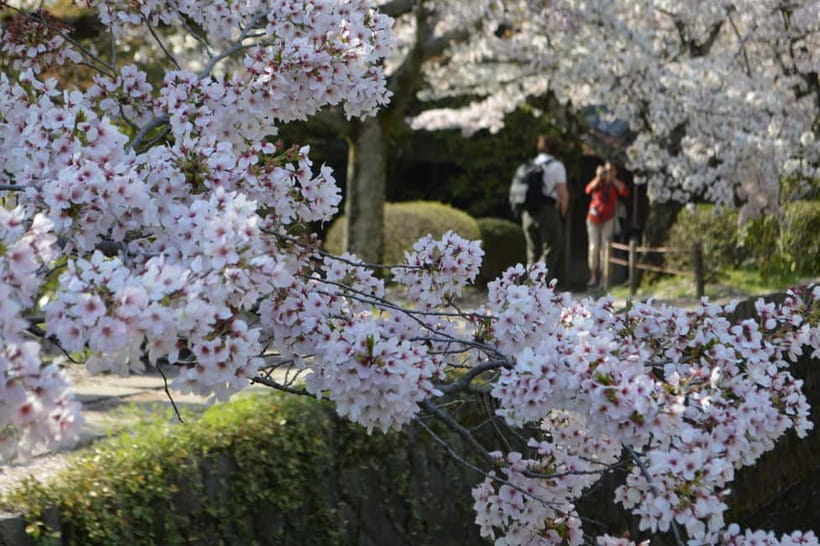
- Ginkakuji’s famous garden: See carefully shaped gravel, stones, moss, and greenery around the Silver Pavilion.
- Nanzenji’s aqueduct: Pair temple buildings with one of Kyoto’s more unusual pieces of historic infrastructure.
- Groups of no more than eight: The setting stays quiet, and questions are easier to ask.
- Guides with local experience: Kevin and Craig are among the guides named in the feedback, both praised for clear explanations and an easygoing manner.
- $64 with admission included: Food and drinks cost extra, but temple entrance fees are covered.
Why the Philosopher’s Path works best at a slow pace
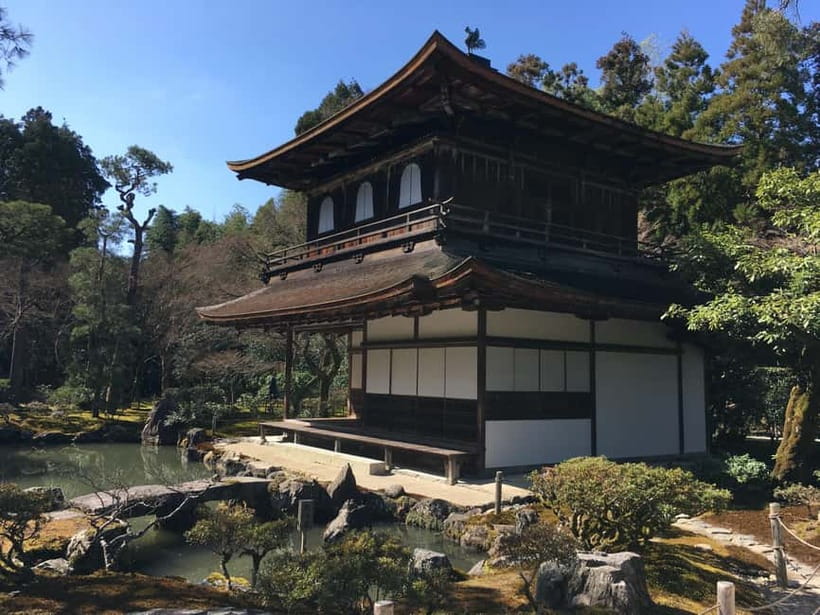
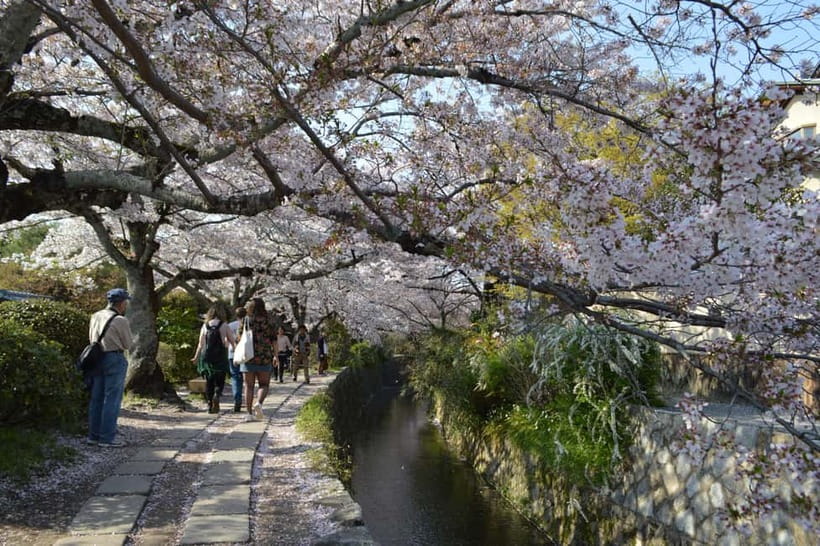
The Philosopher’s Path is not a single grand monument. Its appeal comes from the way several small pleasures connect: running water, leafy shade, temple gates, gardens, local shops, and glimpses of the mountains.
The canal beside the path gives the walk a steady rhythm. You hear water under the trees, then pass a garden wall or a small cafe. In spring, the route is especially associated with blossoms, but the setting can also be appealing in green summer weather, autumn color, or the quieter months.
I would not treat this as a brisk sightseeing march. The guide keeps the pace relaxed, giving you time to take photographs and notice details that are easy to miss alone. One person described having enough time for excellent photographs, while another appreciated seeing small corners that would have been easy to pass without local direction.
That pace matters in Kyoto. Temple grounds reward attention, but only if you have enough time to look. A quick stop can leave you with a few photographs and little sense of why a garden is arranged as it is. A good guide points out how empty space, raked gravel, moss, water, and stone work together.
A few more Kyoto half-days worth comparing
- PERFECT KYOTO 1-Day Bus Tour
★ 5.0 · 13,518 reviews - Kyoto: Fushimi Inari, Kinkakuji, Bamboo Grove 1 Day Bus Tour
★ 4.8 · 4,316 reviews - Kyoto: Tea Ceremony in a Traditional Tea House in Kiyomizu
★ 4.9 · 3,519 reviews
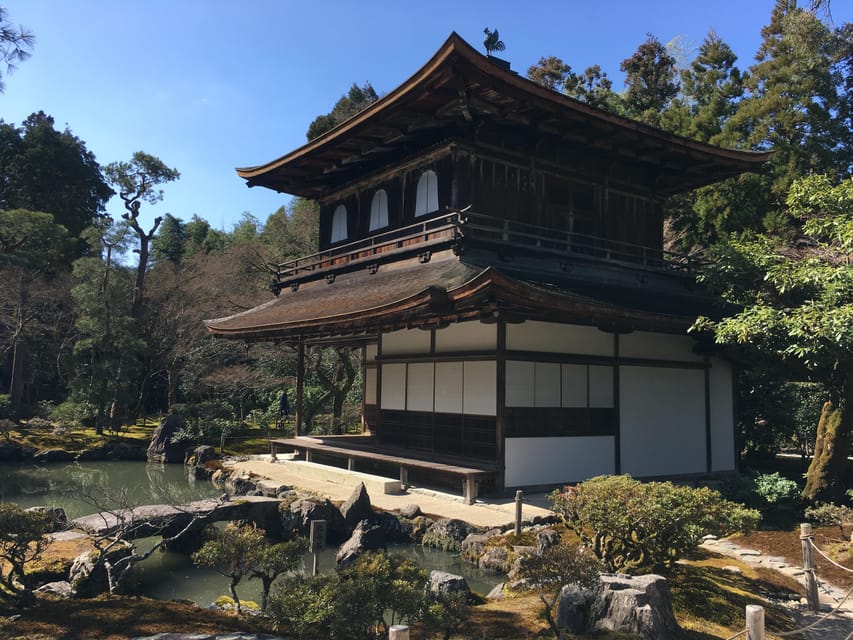
Ginkakuji, the Silver Pavilion, and its garden
Ginkakuji is often called the Silver Pavilion, though its name can create the wrong expectation. The main pleasure here is not a shining silver exterior. It is the garden and the way the buildings sit within it.
The grounds combine carefully raked gravel, placed stones, moss, trees, and water. The garden asks you to look slowly rather than search for one spectacular view. The textures change as you walk, especially in damp weather when moss takes on a deeper color and the paths feel more enclosed.
Your guide adds the missing context. Zen garden design can look simple, even plain, if you do not know what to notice. The arrangement of natural materials, the use of open space, and the controlled appearance of the gravel all connect to larger ideas about focus and restraint.
That is one of the tour’s strongest features. You are not just shown a temple and sent on your way. The explanation links the garden to Japanese arts and culture, helping you understand why similar ideas appear in painting, tea practice, architecture, and gardens.
Ginkakuji can be busy, depending on the day and season. The tour does not promise an empty temple, and you should not expect private access or a silent garden throughout. Still, the walking route between the major stops gives the outing breathing room, and the small group can move more lightly than a large organized party.
Nanzenji and the unexpected aqueduct
Nanzenji provides a different kind of temple visit. Its buildings and gates have a larger, more imposing presence than the intimate garden scenes along the canal.
The most memorable feature for many people is the aqueduct. Its brick arches bring a practical piece of infrastructure into a setting often associated with wooden temple buildings, gravel gardens, and religious calm. That contrast is useful. Kyoto is not a museum frozen in one period. Its sacred sites exist alongside the engineering and public works that helped the city function.
Nanzenji is also described as one of Kyoto’s leading Zen temples. Here, the guide can help connect the physical buildings to the wider role of Zen in Japanese culture. You may come away with a clearer sense of why Zen is not only a religious subject, but also a major influence on visual design and artistic practice.
The stop also gives the walk some variety. Ginkakuji is prized for its garden setting, while Nanzenji brings scale, architecture, and the striking aqueduct. Together, they prevent the morning from becoming a repeated sequence of similar temple visits.
What the guide adds to the temples
I would book this tour for the explanation as much as for the route. Kyoto’s temples and shrines can be beautiful without commentary, but their meaning is harder to grasp when you do not know the background.
The guides speak English or French. Kevin is specifically praised for making history and Japanese culture approachable, answering questions, and adjusting his pace to the group. Craig is described as a long-term Kyoto resident who enjoys sharing the city and makes it easy to ask questions.
Those details matter because the walk is conversational. You can ask about a garden, a temple custom, a piece of architecture, or the city itself rather than simply listening to a fixed speech. The guides are also described as offering restaurant suggestions and practical local advice, which can make the tour useful beyond its four-hour route.
The experience is not designed around flags, microphones, or buses. With no more than eight people, you can usually hear the guide without the feel of a large procession. The group size also helps when stopping beside the canal, entering a garden, or gathering near a temple feature.
A guide cannot remove every crowd from Kyoto. The city’s most important sites can be busy. What this format does provide is a more nimble way to move between them and more room for direct conversation.
Same trip, a completely different kind of day:
- Kyoto Geisha Walking Tour: Gion District & Hidden Gems
★ 4.7 · 3,273 reviews - Kyoto: Tea Ceremony Ju-An at Jotokuji Temple
★ 4.9 · 3,207 reviews - Kyoto: Gion Magical Night Walking Tour with Geisha Trivia
★ 4.9 · 2,393 reviews - Kyoto: 45-Minute Tea Ceremony Lesson Experience
★ 4.3 · 2,378 reviews
A 4-hour route with room to pause
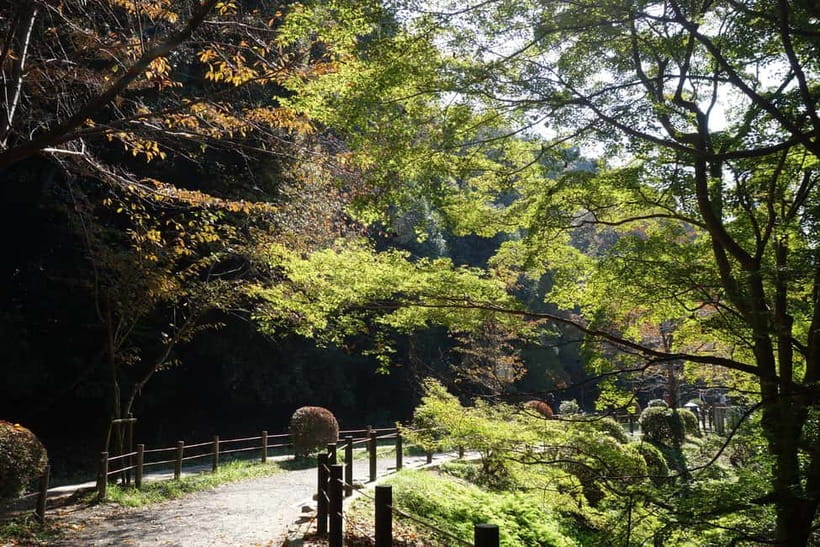
The tour lasts four hours, which is enough time to connect the Philosopher’s Path with both Ginkakuji and Nanzenji without turning every stop into a rushed photograph.
The exact meeting point can vary by the option you book, so check the confirmed details carefully. Once the walk begins, plan to stay on your feet for much of the time. There is no included meal, and drinks are also separate, though cafes and shops along the route can offer a natural pause.
The route is described as relaxed rather than strenuous, but 5km still adds up. Wear comfortable shoes. You will get more from the tour if you can walk steadily and stand for explanations at temple grounds.
Weather can change the feel of the route. On a wet day, moss and garden colors may look especially rich, and fewer people may be outside. On a warm day, shade beside the canal is welcome, but you should still bring suitable clothing and water. These are practical considerations, not reasons to avoid the walk.
There are no food or drink costs included in the $64 price. That is useful to know before booking, especially if you expect a cafe stop. The included entrance fees cover the main paid visits, so you do not need to keep cash ready for admissions.
Is $64 good value?
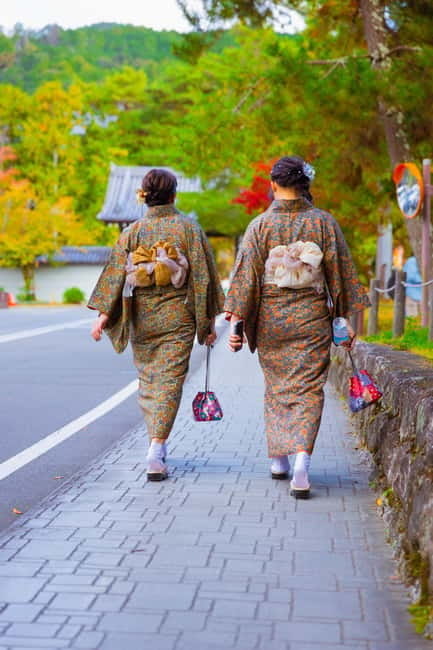
At $64 per person, this is not the cheapest way to walk the Philosopher’s Path. You can walk parts of the route independently, and you may visit some areas with little planning.
The value comes from combining several useful services. You get a four-hour guided walk, admission fees, an English or French-speaking guide, and a digital city guide. You also get historical and cultural context at two major temple sites, plus local advice that can help with the rest of your time in Kyoto.
I think the price makes the most sense for a first visit, especially if you want to understand what you are seeing rather than simply collect temple photographs. It is also a good fit if you prefer a calm group and do not want to plan the route, work out admissions, or research the background of Zen gardens yourself.
The value is weaker if you already know Kyoto’s temples well, dislike guided outings, or want to move at your own speed. Independent visitors can linger longer at one garden or skip a stop, while this tour follows a shared route.
The included admissions remove one small hassle, but they should not be mistaken for a full-day package. Food, drinks, and any extra visits beyond the planned route are your responsibility.
Who should book this walk?
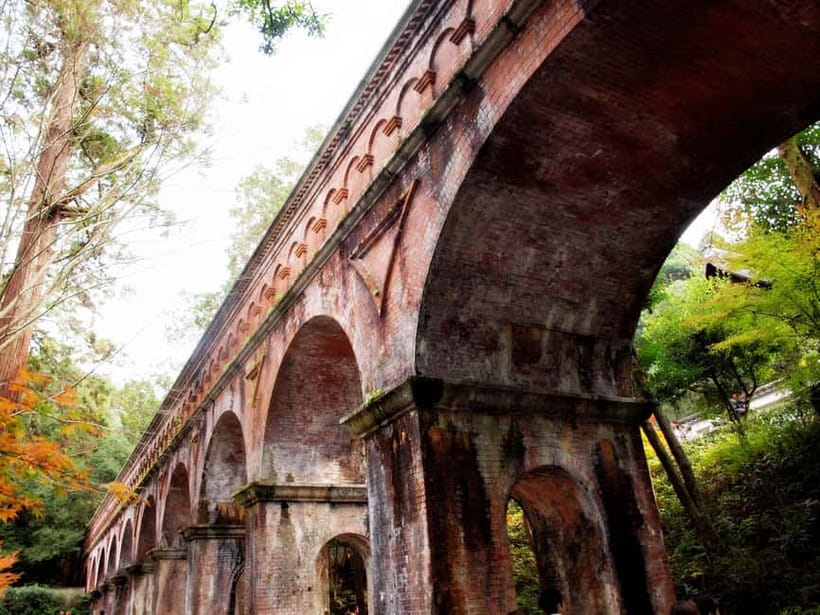
This tour suits adults and older children who enjoy walking, gardens, architecture, and cultural explanation. It is especially useful for you if Kyoto feels visually impressive but difficult to interpret.
It also works well for people who dislike large group tours. Eight people is enough for conversation but small enough to avoid the slow shuffle of a bus group. The lack of a bus is part of the point here. You experience the connection between the canal, the temples, the shops, and the mountain foothills on foot.
The tour is not suitable for children under 10. If you are hoping to bring younger children, the company asks you to enquire about a private tour. It is also not suitable for people over 95, according to the activity information.
You should have at least a moderate level of fitness. The route is about 5km, and the tour involves walking between stops rather than being driven from gate to gate.
French speakers have the option of a French guide, while English speakers can book in English. Private and small-group formats are available, though the exact meeting point and option details vary.
Useful booking details before you commit
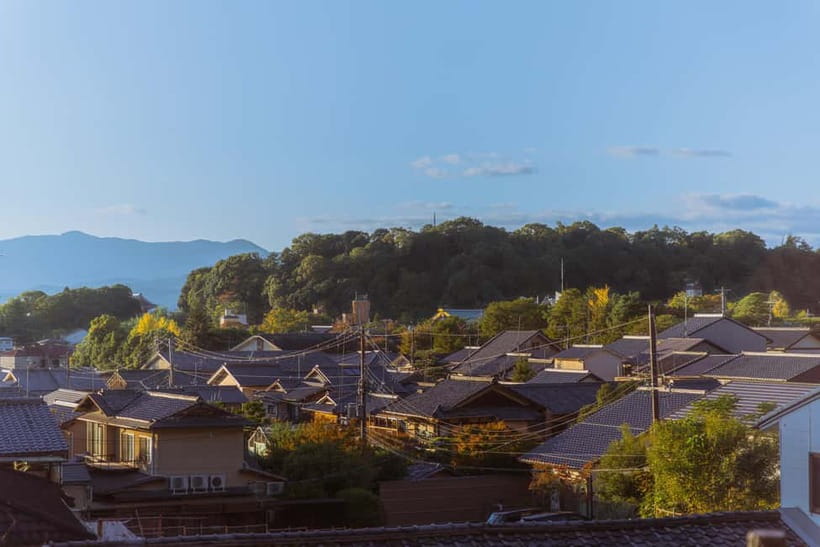
You do not need to bring cash for the included entrance fees. You should still carry money or a payment method for food, drinks, cafes, shops, and any personal purchases.
Drones are not allowed. That restriction is straightforward, but it is worth noting if you hoped to film the canal or temple roofs from above.
The tour offers free cancellation up to 24 hours before the start time for a full refund. You can also reserve now and pay later, which helps if your Kyoto schedule is still shifting.
Because the meeting point can change by booking option, check the exact location and starting time after choosing your tour. Availability varies, and the activity runs for four hours.
Should you book Sacred Pathways?
Book it if you want Kyoto’s Philosopher’s Path explained rather than merely photographed. The combination of Ginkakuji’s garden, Nanzenji’s architecture and aqueduct, and a quiet 5km walk gives you a well-shaped morning in eastern Kyoto.
The strongest reasons to choose it are the small group, the unhurried pace, the included admissions, and guides such as Kevin and Craig who are described as approachable, experienced local residents. You are likely to get more from the gardens when someone explains what you are looking at.
Skip it if you want a short, self-directed visit or if 5km of walking sounds like too much. For everyone else, $64 is a fair price for four hours of walking, temple access, and useful cultural context in one of Kyoto’s most pleasant areas.
FAQ
How long does the Philosopher’s Path tour last?
The tour lasts four hours.
How far do you walk?
The route covers about 5km, or 3 miles, so you need at least a moderate level of fitness.
Which places are visited?
The tour includes the Philosopher’s Path, Ginkakuji Temple, and Nanzenji Temple, including Nanzenji’s notable aqueduct.
Are entrance fees included?
Yes. All entrance fees are included in the tour price.
Are food and drinks included?
No. Food and drinks are not included.
Which languages are available?
The live guide is available in English or French.
Can children join the tour?
Children under 10 are not suitable for this activity. If you want to book for children under 10, the company asks you to enquire about a private tour.
Just added around Kyoto
- Sekka Cotton Furoshiki Class★ 5.0 · 19 reviews
- Kyoto Sword Experience – includes Museum Ticket/Ninja Experience★ 4.5 · 149 reviews
- Scenic Green Tea Fields of Hidden Kyoto & Local Tea Exp (Private)★ 5.0 · 32 reviews
- Secret Eastern Kyoto Biking Adventure★ 5.0 · 44 reviews
- Private Sake Tasting in Central Kyoto with Sake Sommelier★ 5.0 · 32 reviews
- Samurai School in Kyoto: Samurai for a Day★ 5.0 · 202 reviews
- SHIRAKAWA Japanese Culture Experiences with private English staff★ 5.0 · 16 reviews
- A Privately Guided Photoshoot in Beautiful Kyoto by a Pro★ 5.0 · 18 reviews
Kyoto Tours, compared.

Tea Ceremony in a Traditional Tea House in Kiyomizu
Our verdict →
Kyoto Geisha Walking Tour: Gion District & Hidden Gems
Our verdict →



Fushimi Inari Hidden Hiking Tour (Private Option Available)
Our verdict →