
Reviewed · TEA CEREMONY EXPERIENCES
Osaka Temple Head Spa &Matcha Facial – Refresh & Glow〈90min〉
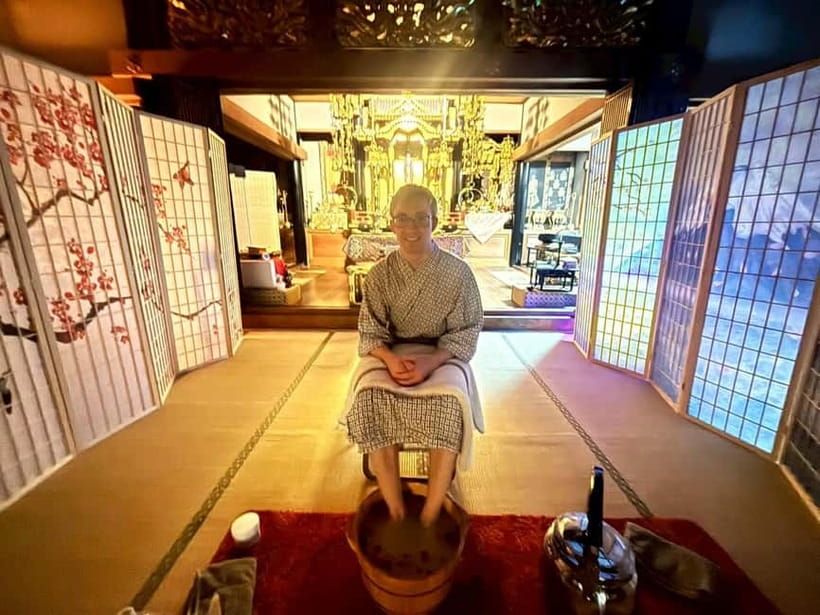
The most unusual part of this Osaka experience is the foot bath in front of a revered Buddha. You sit in the temple setting while warmth, scent, and quiet replace the city noise. The visit then moves from worship rituals to a scalp massage, matcha facial, and tea ceremony, so it feels like both a spa appointment and a small cultural lesson.
I like the gentle mix of hands-on relaxation and Japanese tradition, especially the incense offering, bell meditation, and kneaded incense. I also like the yukata photo, a simple keepsake that gives the visit a sense of place. The main consideration is that the tea ceremony may be shared with other people, even though the treatments themselves are individual.
Key points to know before booking
- Foot bath before the Buddha: This is the experience’s most distinctive setting, not a standard spa room.
- A 90-minute course within a two-hour visit: Time includes changing, temple rituals, treatment, tea, and photos.
- Three-person maximum: The small group keeps the experience calm, though the tea portion may include others.
- Matcha in two forms: You receive a matcha facial pack and later take part in a traditional tea ceremony.
- Yukata and smartphone photos: Complimentary photos give you a practical souvenir without arranging a separate photographer.
- Use the correct map pin: Search for Japanese Massage -the one&only- or the nearby restaurant Tossa de coracao, not just the temple name.
A temple visit that also works as a reset
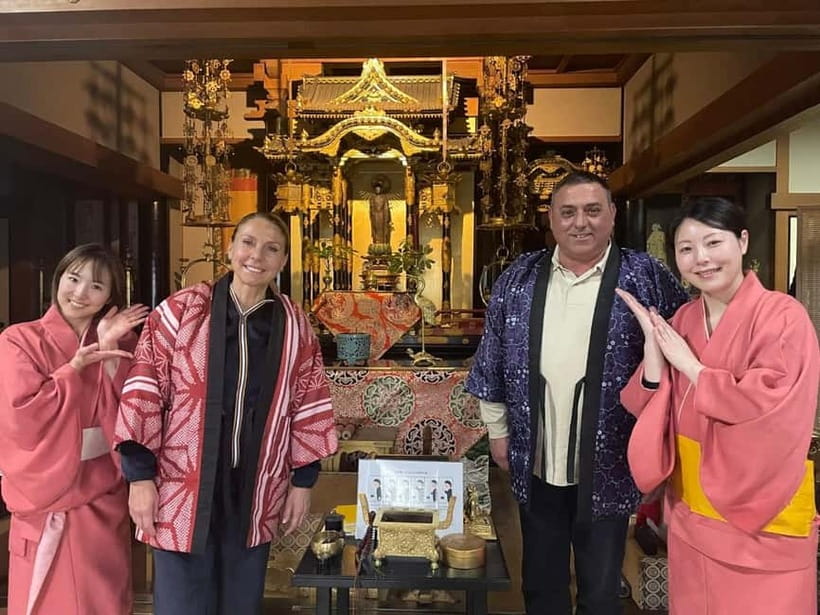
Osaka can be loud, fast, and crowded. This experience gives you a different rhythm. You change into a yukata, learn a little about the temple and Japanese worship, make an incense offering, and sit quietly before the treatment begins.
That order matters. You are not simply arriving for a massage and leaving with damp hair. The first part helps you slow down and understand where you are. Then the foot bath and head spa feel connected to the setting rather than pasted onto it.
I would think of this as a cultural wellness experience. It is not a full temple tour, and it is not a medical treatment. Instead, it offers a short, carefully arranged visit with enough explanation to make the rituals meaningful and enough quiet time to let your mind rest.
More Onsen & Hot Springs in Osaka
- From Osaka: Himeji Castle, Arima Onsen & Mt. Rokko Day Tour
★ 4.6 · 339 reviews - Osaka: Solaniwa Onsen Hot Spring Visit
★ 4.6 · 51 reviews - Himeji Castle, Arima Onsen & Mt. Rokko: 1-Day Bus Tour from Osaka
★ 4.0 · 28 reviews
Arriving, changing into a yukata, and getting settled
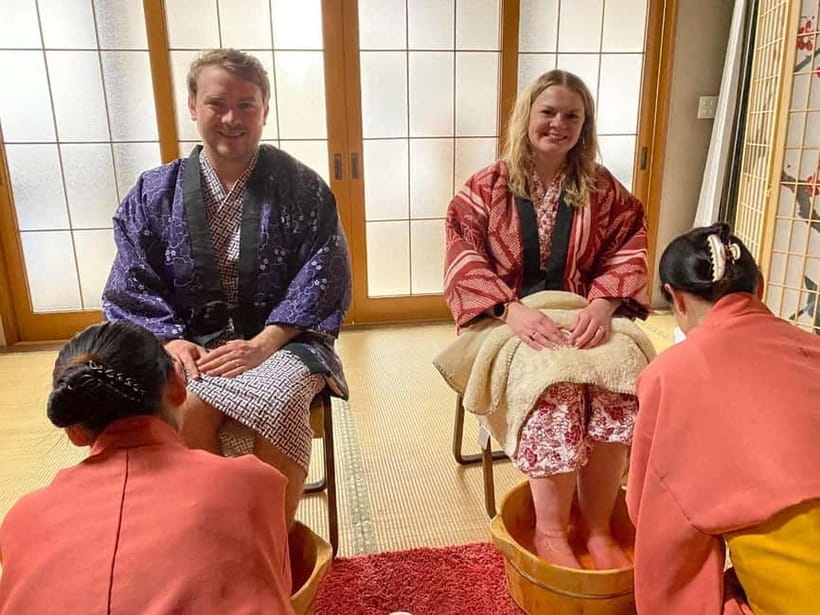
Your visit begins with a welcome drink and a change into a yukata. This is a useful touch because it marks a clear break from ordinary sightseeing. You are not squeezing this appointment between train platforms in your street clothes. You are preparing for a slower activity.
The yukata also makes the complimentary smartphone photos more worthwhile. You can take home pictures of yourself in a temple setting rather than relying only on a memory of the massage. The photos are included, so you do not need to arrange a separate photo session.
Keep the meeting point instructions close at hand. Enter Japanese Massage -the one&only- into Google Maps. Searching only for the temple may send you to the back entrance, where it is easy to get turned around. If the map causes trouble, search for the restaurant Tossa de coracao. The experience is right next to it.
Incense, bells, and a short lesson in worship
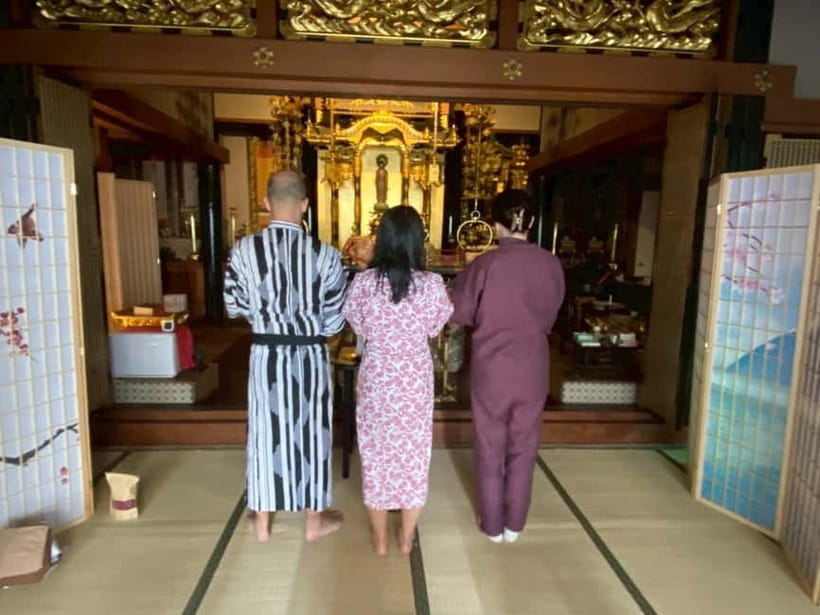
Before the spa treatments, you visit the temple and take part in an incense offering. You receive an introduction to the temple’s history and Japanese worship culture, which helps explain the actions instead of leaving you to guess what to do.
The program also includes meditation with a bell and kneaded incense. These are short activities, but they set the mood well. A bell gives the meditation a clear beginning, while kneaded incense adds scent and a physical task to the quiet period.
I like this part because it avoids turning the temple into a decorative backdrop. You are given a chance to behave as a respectful visitor and to understand a little of the local practice. Still, the amount of historical explanation is not specified, so you should expect an introduction rather than a long guided temple lecture.
The Buddha-side foot bath
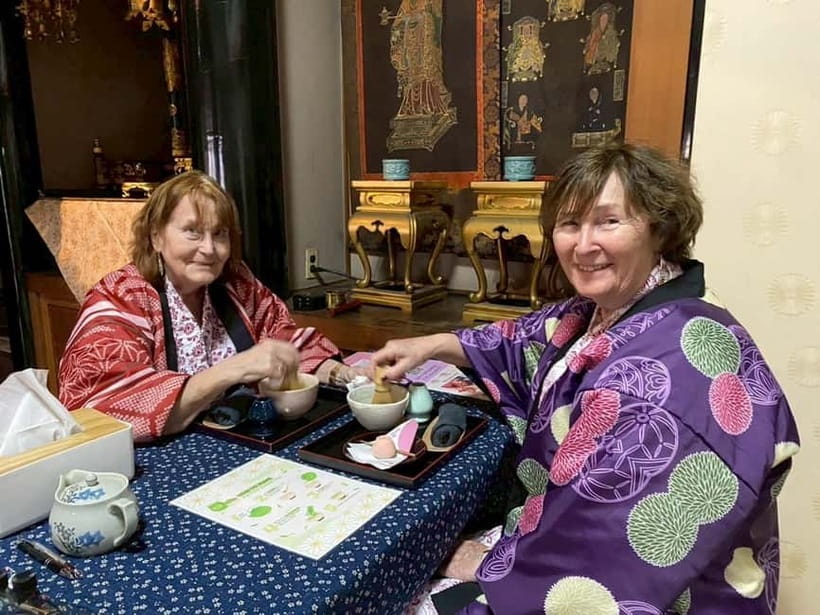
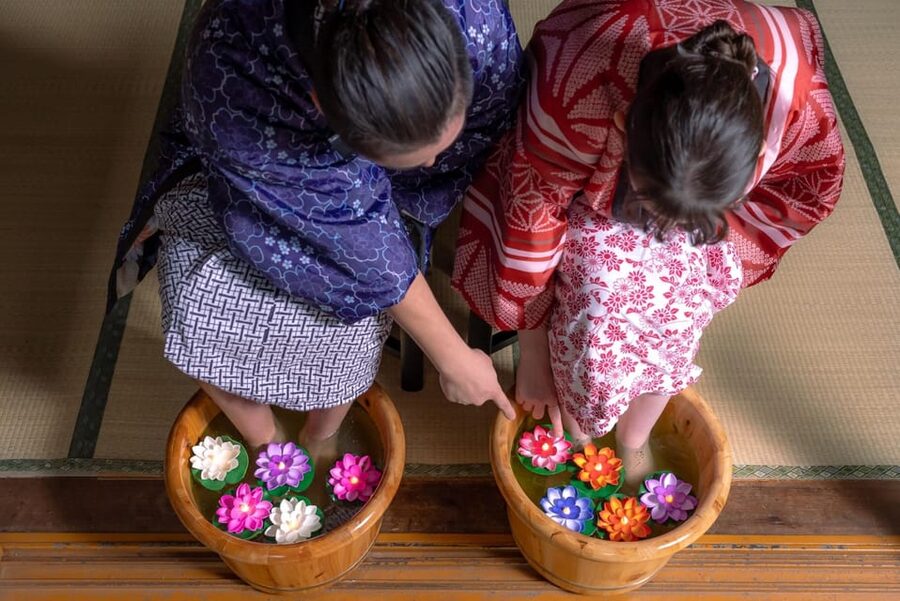
The foot bath is the most memorable feature for many people, and the location is the reason. You receive the foot bath directly in front of the temple’s revered Buddha, with the temple view, warmth, and fragrance working together.
The treatment includes a scrub massage. That means your feet are not simply placed in warm water while you wait. The scrub adds a hands-on element and helps the foot bath feel like an active part of the treatment.
For a visitor who has spent the morning walking through Osaka, this can be especially welcome. A foot bath is also less intense than a full body massage, so it gives you a calm transition into the head spa. The setting may matter as much as the treatment itself: you are resting in a sacred space rather than an ordinary salon.
Because this is a temple environment, keep your expectations sensible. The experience is designed for quiet and relaxation, not loud conversation or a dramatic spa production. The peaceful setting is a benefit, but it also means you should approach it with respect.
More Tea Ceremony Experiences in Osaka
- Osaka: Tea Ceremony Experience
★ 4.9 · 1,426 reviews - Tea Ceremony Experience in Osaka Doutonbori
★ 5.0 · 754 reviews - Matcha Making Class in Osaka with Authentic Japanese Sweets Set
★ 5.0 · 509 reviews - Osaka: Matcha Making Experience with Japanese Sweets
★ 5.0 · 146 reviews
Head spa and matcha facial
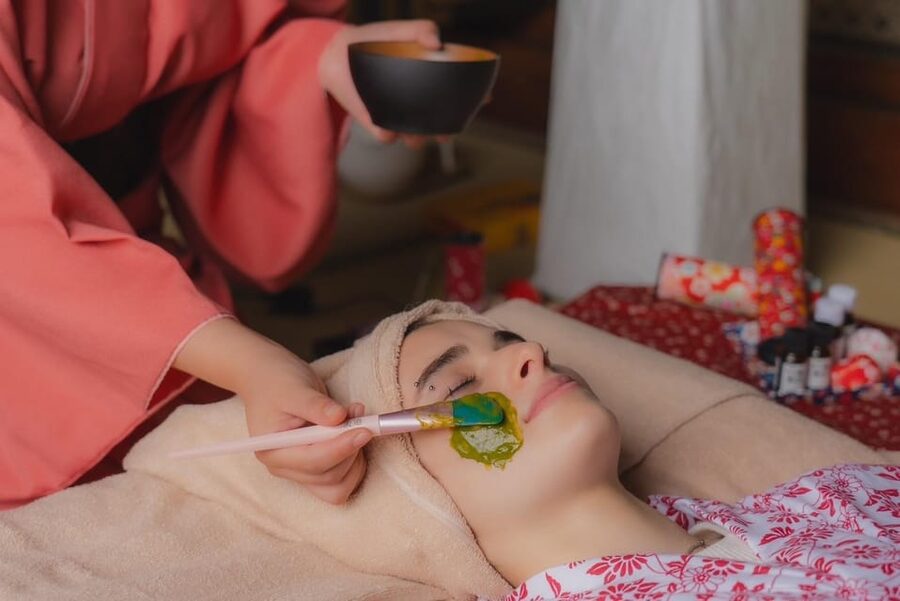
The head spa focuses on scalp relaxation through massage. This is the part most likely to appeal to you after long days of sightseeing, screen time, or travel fatigue. A scalp massage can feel especially soothing because it asks very little from you. You simply settle in and let the treatment happen.
The matcha facial adds a skin-care element. A matcha facial pack is included, with the treatment described as supporting skin nourishment. The program pairs that facial with scalp care, so the attention stays around the head, face, and upper body rather than becoming a full-body spa service.
The strongest practical point is that the treatment is individual. Even in a small group, you are not expected to share the massage itself. The tea ceremony may be shared, so anyone seeking complete privacy should contact the provider before booking.
Language may require patience. One person who took part found that a staff member spoke limited English, but a translation app worked well. That is not a serious obstacle for a quiet treatment, since you do not need a long conversation during a foot bath or head massage. Still, you may want your phone charged and your translation app ready for questions about pressure, timing, or comfort.
Tea ceremony after the treatment
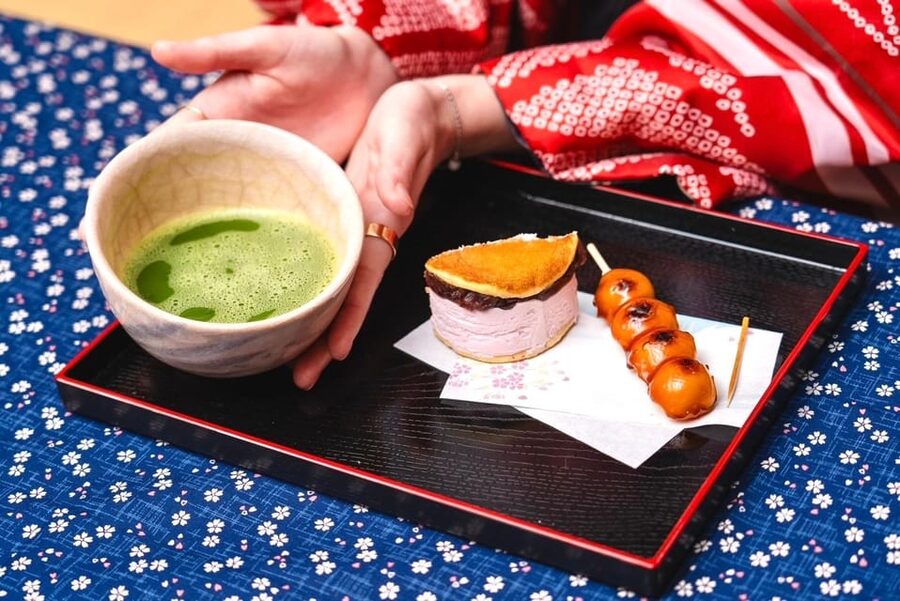
The traditional tea ceremony comes after the relaxation treatments. This gives the experience a clean cultural finish rather than ending with the facial pack. You receive an explanation of the ceremony’s cultural and historical background, so the tea is more than a drink served at the end.
The tea ceremony may be shared with other people. That is the clearest difference between the private feel of the treatment and the social side of the program. If you are booking with a friend or family member, this can be pleasant. If you want a fully private appointment, ask ahead.
I see the tea ceremony as a good reason to choose this experience over a standard head spa. You get a moment to learn how tea fits into Japanese customs, then leave with a memory tied to the temple rather than only to the massage table.
Yukata photos and the shape of the visit
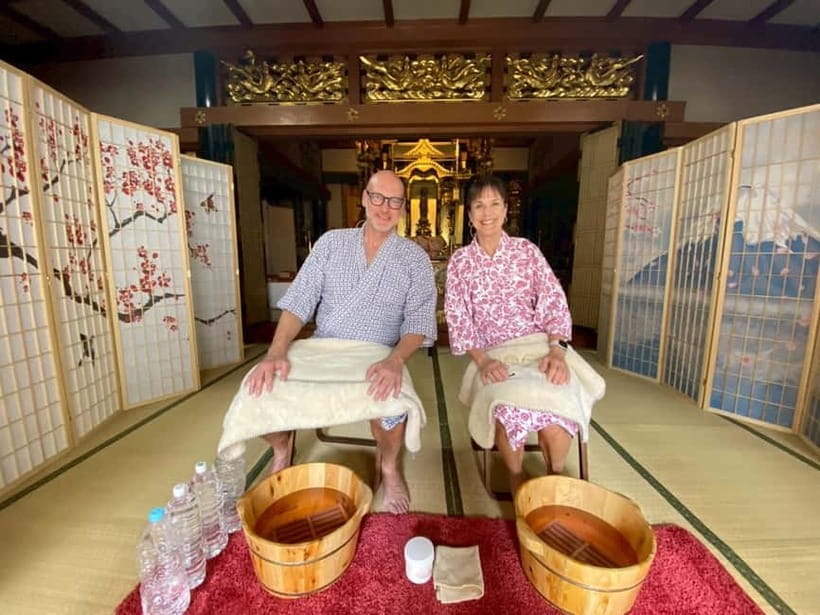
Complimentary smartphone photos are included as a keepsake. The photos are taken during your temple experience while you are wearing the yukata, so the clothing and setting do much of the work. You are not paying extra for a professional photo package, and the format sounds informal and easy.
The advertised duration is two hours, while the included treatment course is described as 90 minutes. The difference likely allows room for arrival, changing, temple activities, treatment, tea, and photos. When you compare this with a regular 90-minute facial or massage, remember that you are paying for the full visit, not only for hands-on treatment time.
The group is limited to three participants. That is small enough to keep the setting personal, but it does not guarantee that every moment will be private. Again, the tea ceremony is the part that may include other people.
Is $141 a fair price?
At $141 per person, this is not the budget choice for a quick massage. You are paying for a package that combines a temple visit, cultural explanation, incense ritual, meditation, foot bath, scalp massage, matcha facial, tea ceremony, yukata, and photos.
I think the value depends on what you want from your Osaka schedule. If you only want a head massage, a cheaper spa appointment may suit you better. If you want an experience that joins wellness, worship, and Japanese customs, the price is easier to justify because you are receiving several different elements in one visit.
The treatment itself is not the only measure of value. The Buddha-side foot bath and the temple setting give this appointment a sense of place. The tea ceremony and incense offering add context. The yukata and photos provide a souvenir. Put together, the experience works best for someone who wants a memorable cultural activity with plenty of rest built in.
It is also a practical choice for a short trip. You do not need to set aside separate time for a spa, a tea ceremony, and a small temple visit. You can fit all three into one two-hour block.
Who will enjoy this most?
I would recommend it to you if you want a quiet break from sightseeing and prefer smaller, slower experiences. It suits couples, parent and adult child combinations, friends, and solo visitors who want something more personal than a large group tour.
It is especially appealing if you have already seen major Osaka sights and want an activity that feels less hurried. The program also fits people who are curious about Japanese rituals but do not want a full-day temple or meditation course.
You may want to choose something else if you need a fully private tea ceremony, dislike having your photo taken, or want a vigorous full-body massage. The treatment focuses on the feet, scalp, and face. It does not promise a full-body service.
The language point is worth keeping in mind. Staff are described as welcoming and accommodating, but at least some communication may rely on a translation app. For a mostly quiet treatment, that should be manageable, but you should not expect an English lecture at every stage.
Booking details that affect your decision
The experience allows free cancellation up to 24 hours before the scheduled time for a full refund. You can also reserve now and pay later, which helps if your Osaka plans are still shifting.
Check the available start times because the visit lasts about two hours. Arrive with the correct map search saved, since the temple name alone may lead you to the wrong entrance.
The course is offered as a small group with a limit of three participants. Treatments are individual, but the tea ceremony may be shared. Contact the provider before booking if privacy during every part of the visit matters to you.
Should you book the Osaka temple head spa?
Book it if you want more than a massage. The best reasons are the foot bath before the Buddha, the calm head spa and matcha facial, and the chance to learn basic Japanese worship and tea customs in one compact visit.
Skip it if your priority is low price, a fully private ceremony, or a full-body treatment. For everyone else, $141 buys a distinctive two-hour pause from Osaka’s busy streets, with enough ritual and local setting to make the relaxation feel tied to Japan.
FAQ
How long does the experience last?
The activity lasts about two hours. The included course is described as 90 minutes, with the remaining time allowing for arrival, changing into a yukata, temple activities, tea, and photos.
What treatments are included?
You receive a relaxing foot bath with a scrub massage, a head spa with scalp massage, and a matcha facial pack.
Is the tea ceremony private?
Not necessarily. The treatments are individual, but the tea ceremony may be shared with other people. Contact the provider if you want a completely private experience.
How many people are in the group?
The experience is limited to three participants.
Is a yukata provided?
Yes. The experience includes a welcome drink and changing into a yukata.
Are photos included?
Yes. Complimentary smartphone photos of your experience in the temple are included as a keepsake.
Where should I set the map location?
Search for Japanese Massage -the one&only-. Searching only for the temple may take you to the back entrance. You can also search for the restaurant Tossa de coracao, which is right next to the meeting point.
Can I cancel for a refund?
Yes. You can cancel up to 24 hours in advance for a full refund. You can also reserve now and pay later.
Just added around Osaka
- Exclusive Sushi Making Experience with a Master Chef – Osaka Area★ 5.0 · 25 reviews
- Private Home-Style Cooking Class in Osaka with Local Mom Yoshiko★ 5.0 · 46 reviews
- Hidden Osaka – Yukaku Red Light Tour & Culinary Adventure★ 4.8 · 96 reviews
- Osaka: Walking Tour and Top Highlights★ 4.8 · 104 reviews
- Osaka: Private Ceramic Painting Workshop★ 5.0 · 13 reviews
- Pickleball in Osaka, Kobe & Kyoto with Locals!★ 4.7 · 80 reviews
- Eat Like a Local in Osaka – Private Custom Street Food Tour★ 4.3 · 33 reviews
- Osaka:SUMO BEATS SHOWCASE: Taiko Drum and Wagyu burger!★ 4.2 · 37 reviews
Tea Ceremony Experiences, compared.

Tea Ceremony in a Traditional Tea House in Kiyomizu
Our verdict →


World Heritage Kyoto & Nara Uji Authentic Matcha Experience
Our verdict →

Arashiyama Bamboo Forest, Monkeys, Matcha & Temple Tour
Our verdict →
Browse the lists this tour appears in