
Reviewed · SUSHI EXPERIENCES
Osaka: Sushi Class in Dotonbori
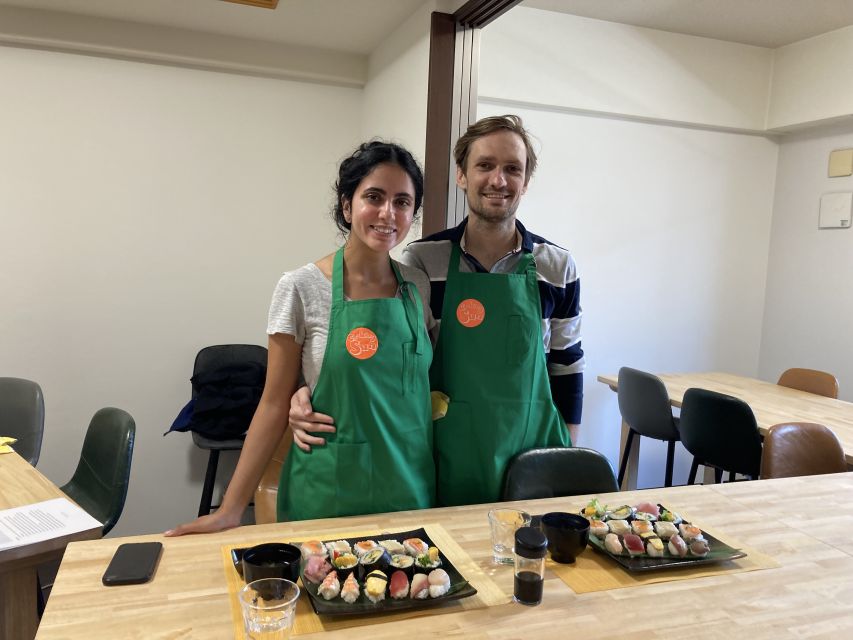
Osaka’s sushi story is not just about raw fish. In this three-hour Dotonbori class, you make a fresh salad roll, hand-shaped nigiri, and oshizushi, Osaka’s own pressed style. The last one is the real local lesson: rice and toppings are packed into a wooden mold, then cut into tidy squares.
I like the small class size, capped at eight, and the clear English instruction. I also like that you learn three different techniques rather than making the same roll again and again. The main consideration is that this is a sushi-making class, not a fish-filleting workshop, so you should not expect to prepare the fish from the whole fish yourself.
Key points
- Three distinct sushi styles: Make salad roll, nigiri, and Osaka-style oshizushi.
- A proper taste of Osaka: Pressed sushi, also called box sushi, is the regional specialty.
- Small and social: The class is limited to eight people, allowing plenty of hands-on help.
- A generous meal: You eat the sushi you prepare, with all sushi-making ingredients included.
- Strong English support: Instructors such as Yoshi, Yoko, Ami, Eriko, and Naomi have led sessions with clear, friendly instruction.
- Useful for special diets: Vegetarian and gluten-free options can be requested when booking.
Three sushi styles in one Osaka kitchen
At $67 per person, this is a food lesson, a cultural introduction, and a substantial meal rolled into one three-hour activity. That price makes more sense once you consider the variety: you are not simply watching a chef prepare sushi while you take notes. You work with the ingredients and shape the food yourself.
The class focuses on three forms of sushi. Each teaches a different skill, which keeps the session moving and gives you a better feel for how Japanese sushi changes from one region to another.
You begin with a salad roll, move on to nigiri, then finish with oshizushi. The order makes sense. You start with a familiar roll, progress to the more delicate hand-shaped form, and end with Osaka’s pressed style.
More Sushi Experiences in Osaka
- Sushi Making Osaka Roll and Authentic Japanese Sushi Class
★ 5.0 · 1,220 reviews - Osaka Sushi Making Experience
★ 5.0 · 400 reviews - Osaka Sushi Making Class – Hands-On Nigiri & Rolls (Same-Day OK)
★ 5.0 · 352 reviews
Starting with the salad roll
The salad roll is the most approachable part of the class. You work with crab-flavored kamaboko, lettuce, cucumber, tuna mixed with mayonnaise, nori seaweed, and a core of tamagoyaki, the Japanese rolled omelet.
This is a good first task because the ingredients are easy to recognize and the finished roll is forgiving. You learn how to arrange the fillings, keep the nori and rice together, and create a firm central shape without crushing everything inside.
The combination also shows how Japanese home-style flavors can be different from the raw-fish image many people have of sushi. The crisp vegetables add texture, while the seasoned tuna and egg give the roll a soft, familiar taste.
You should still pay attention to the rolling technique. Too much filling makes the nori split, while too much pressure can squeeze out the ingredients. The instructor demonstrates each step, then gives you a chance to copy it at your own pace.
Nigiri, the skill test
Nigiri is the sushi most people picture first: a small piece of vinegared rice topped with fish, shellfish, or omelet. It looks simple, but making a neat piece takes more care than it seems.
The rice has to hold together without becoming a hard lump. The topping needs to sit squarely on top. You also need to make pieces that are similar in size, since nigiri is designed as a small, balanced bite rather than a large mound of rice.
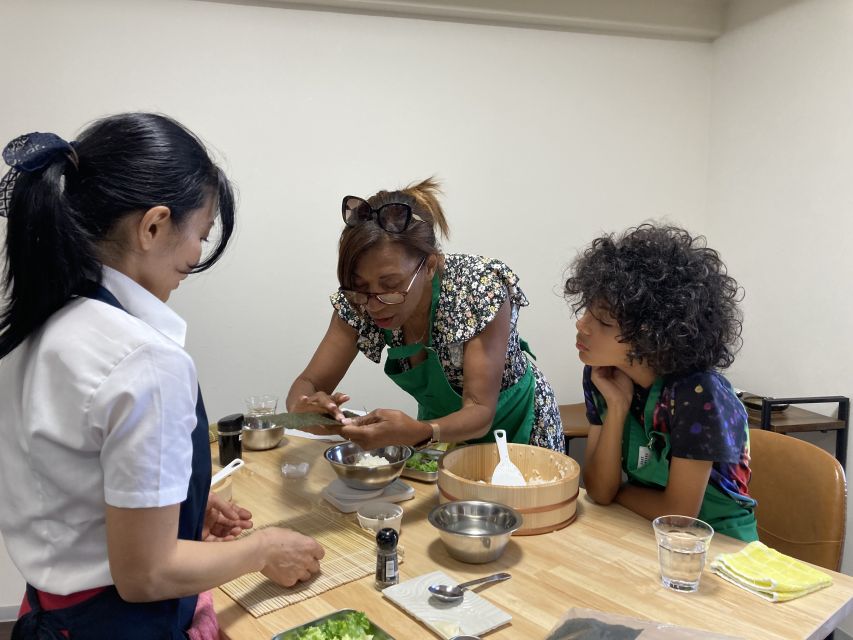
This is where the value of a small group matters. With no more than eight people, the English-speaking instructor can watch your technique and correct small problems before they become habits. Instructors including Yoshi, Yoko, Ami, Eriko, and Naomi have been praised for patient, step-by-step teaching, so beginners should feel comfortable asking for another demonstration.
One useful expectation to set: the class teaches you to form the sushi, but it does not promise fish preparation from start to finish. If slicing fish is the part that interests you most, this may feel limited compared with a class that includes filleting. For learning sushi rice, topping, and hand-shaping, it covers the basics well.
Osaka’s pressed oshizushi
Oshizushi is the most distinctive part of the experience. It belongs to the Kansai region and is strongly associated with Osaka, where it is also called box sushi.
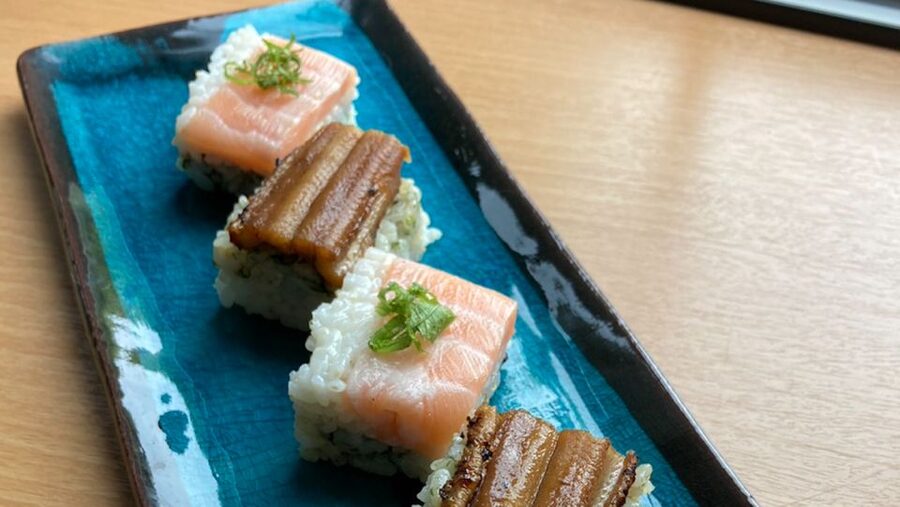
Instead of shaping each piece by hand, you fill a square wooden frame with sushi rice and toppings. You then press the rice so it sticks to the ingredients. Once the block is firm, you remove it from the frame and cut it into pieces just before eating.
The finished sushi is square rather than oval. That small visual difference tells you something important about Japanese regional food: sushi is not one fixed dish with one correct shape. Different places developed their own methods based on local habits, ingredients, and ways of serving food.
Oshizushi is also a useful technique for home cooks. The mold gives the sushi structure, so you are not relying only on delicate hand movements. The cutting still matters, though. Press too lightly and the block can fall apart. Cut too roughly and the tidy layers lose their shape.
For me, this is the strongest reason to choose this class over a standard sushi-roll lesson. You get an Osaka specialty that you might not learn in a generic international cooking class.
Same trip, a completely different kind of day:
- Osaka Go Karting Tour with Funny Costume
★ 5.0 · 2,658 reviews - Osaka Castle: Museum and Tower Entry Ticket
★ 4.5 · 2,380 reviews - Osaka: Shinsekai Food Tour with 13-15 Dishes at 5 Eateries
★ 4.8 · 2,204 reviews - Osaka Food Tour: 13 Dishes at 5 Local Eateries
★ 5.0 · 2,149 reviews
What the three-hour session feels like
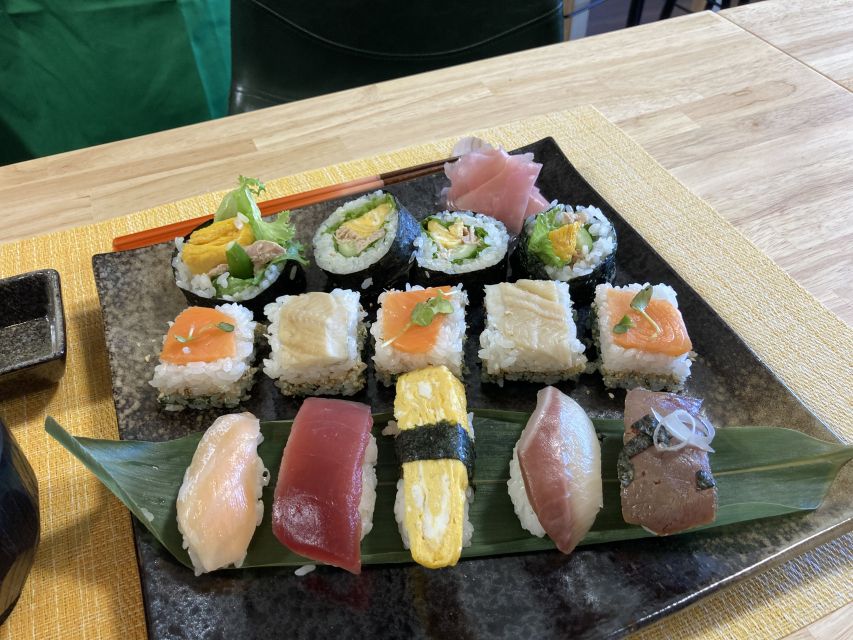
The class is designed as a practical workshop rather than a lecture. You receive the ingredients needed for the sushi, watch the instructor demonstrate each stage, then prepare the same item at your station.
The English instruction is an important part of the experience. You are learning several techniques in a short period, and small details matter: how much rice to use, how to place the nori, how tightly to roll, and how to press the box sushi.
Instructors also add context about Japanese food customs and cooking methods. Previous sessions have included explanations of preservation, pickling, dashi, and the role of food in Japanese culture. The exact additions can vary, so treat the three sushi styles as the firm core of the activity.
The teaching style appears warm and conversational. Yoshi, for example, has been noted for answering questions about Osaka food and suggesting places to eat during the rest of a trip. That sort of local conversation is a pleasant extra, but the main value remains the hands-on instruction.
A meal as well as a lesson
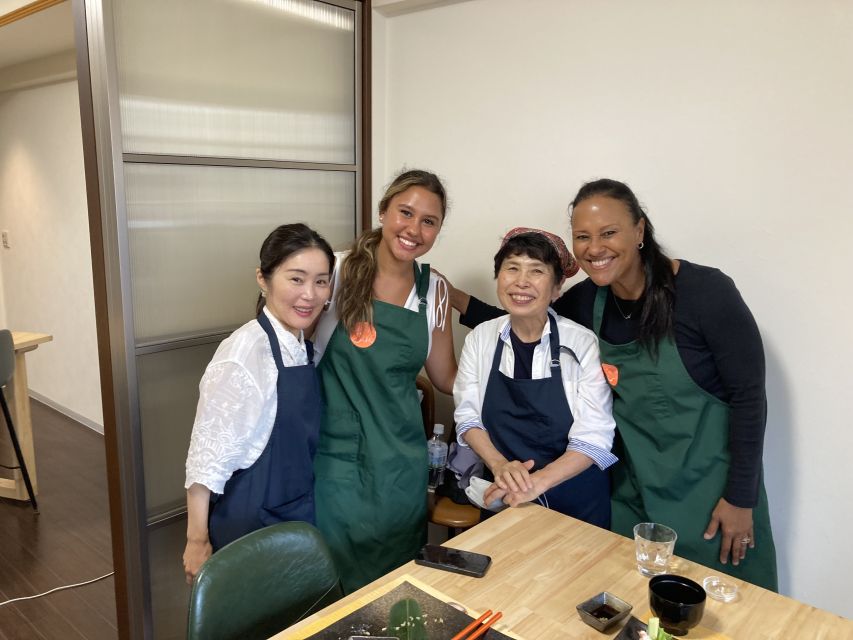
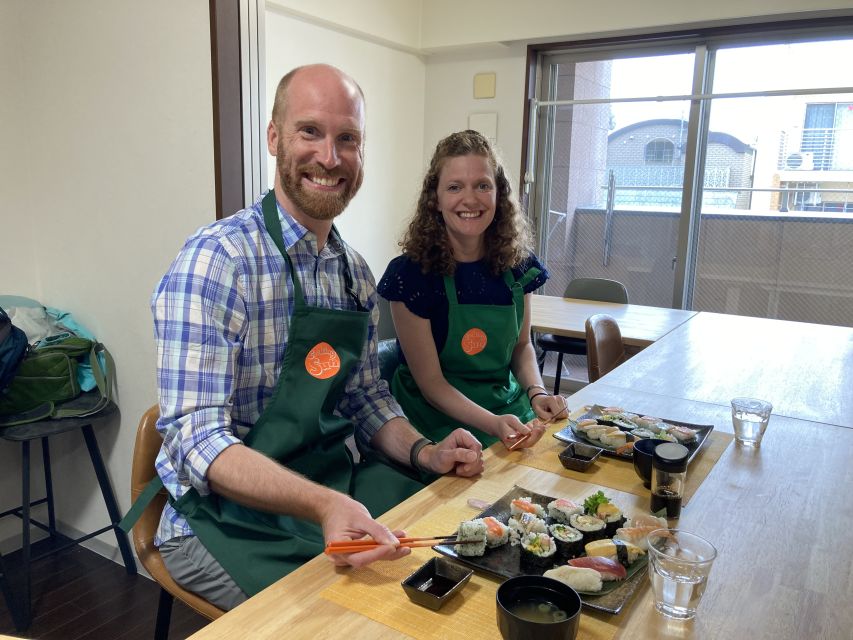
You eat what you make at the end, and the portions are not described as token samples. The completed sushi is meant to serve as a proper meal, so arriving hungry is sensible.
That matters when judging the $67 cost. You are paying for ingredients, three hours of instruction, a small-group setting, and the meal you prepare. For two people with a good appetite, the amount of food can be substantial.
The food is also at its best for a simple reason: you have just assembled it. The ingredients are prepared for the class, and the finished sushi goes straight to the table. You do not need advanced cooking skills to produce something satisfying, but you do get the pleasure of seeing raw components become a complete plate.
Do not expect restaurant-level knife training or a professional sushi-counter apprenticeship. This is an accessible class for visitors who want to learn the main forms and enjoy the result.
Why the small group matters
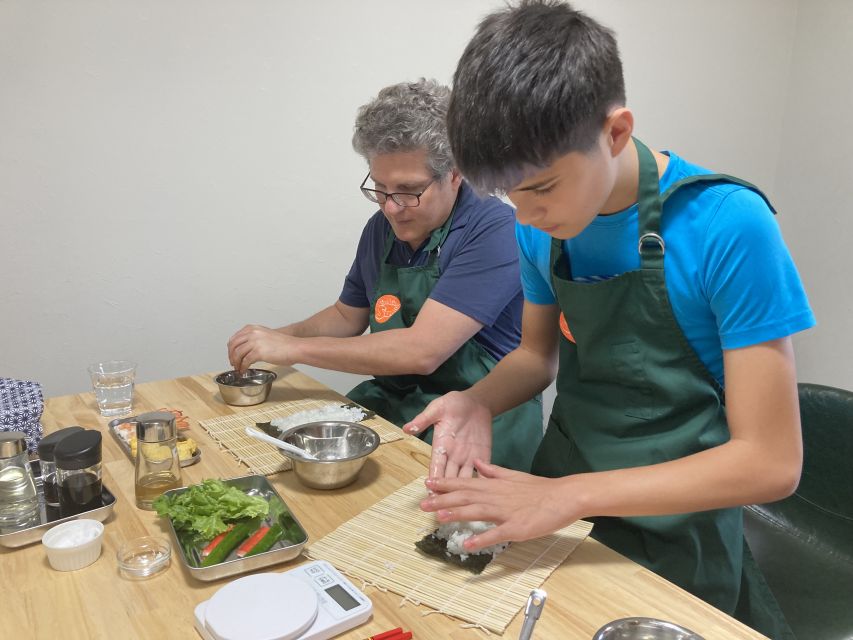
A class limited to eight people offers a better balance than a large demonstration. You still meet other people, but the instructor can see what your hands are doing.
That is especially helpful with nigiri and oshizushi. A small adjustment in finger pressure can change the shape of the rice, and a quick correction is easier in a compact class. Smaller groups also make it easier to ask about ingredients, allergies, Japanese food customs, or how to repeat the dish at home.
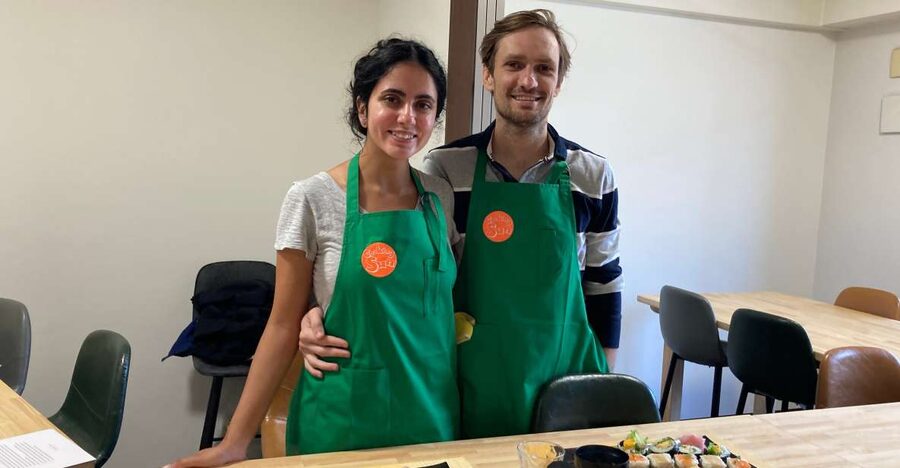
The group size can vary within that limit. Some sessions have had only four participants, which gives the class an almost private feel. If you are traveling as a couple or family, this makes the experience more personal than a crowded cooking studio.
It is also a good rainy-day plan or a break from sightseeing. Three hours is long enough to feel worthwhile, but not so long that the cooking takes over your entire day.
Finding Cooking Sun Osaka
The meeting point is Cooking Sun Osaka, room 202. At the entrance, press 202 and the button marked 呼出, which means call.
Give yourself extra time to find the building. One participant had trouble locating it, and a taxi driver also struggled with the address. The tree outside is a useful visual clue once you are in the right area, but do not count on spotting the entrance instantly.
This is the kind of meeting point where arriving early pays off. You do not want to spend the first part of a three-hour class walking up and down the street or trying to explain the room number at the entrance.
The activity is listed as wheelchair accessible. If you have access needs beyond that, contact the provider before booking so the arrangements are clear.
Dietary requests and ingredients
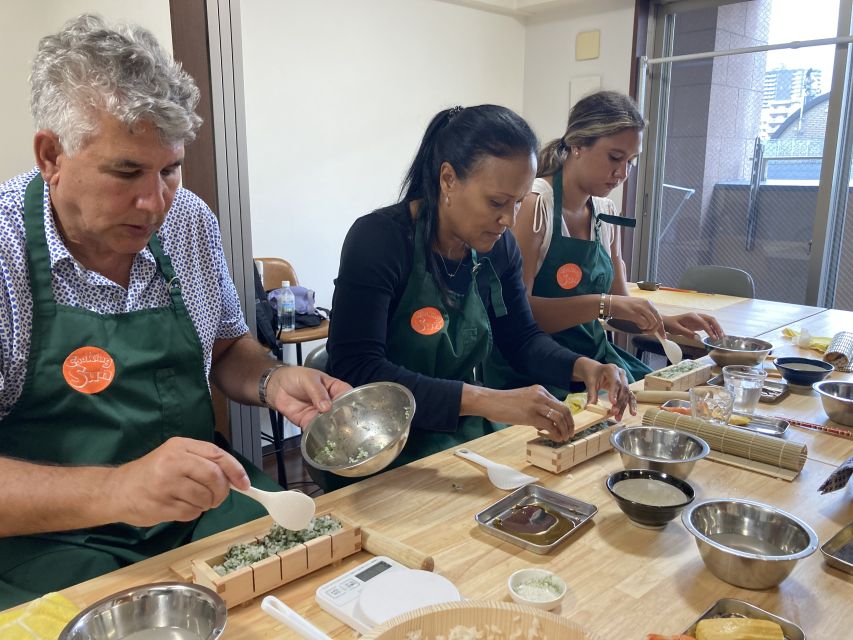
All ingredients for the sushi-making portion are included. You should leave a note at booking if you need a vegetarian or gluten-free option.
That request matters because the standard ingredient list includes kamaboko, tuna mixed with mayonnaise, fish or other nigiri toppings, egg, rice, and nori. Some of those items may not suit every diet, and substitutions need to be planned rather than requested casually at the start.
The class has also handled food allergies with care in past sessions, but the safest approach is to give full details in advance. Do not assume that a dish is gluten-free simply because it contains rice. Seasonings, sauces, prepared ingredients, or shared equipment may matter.
English instruction and cultural context
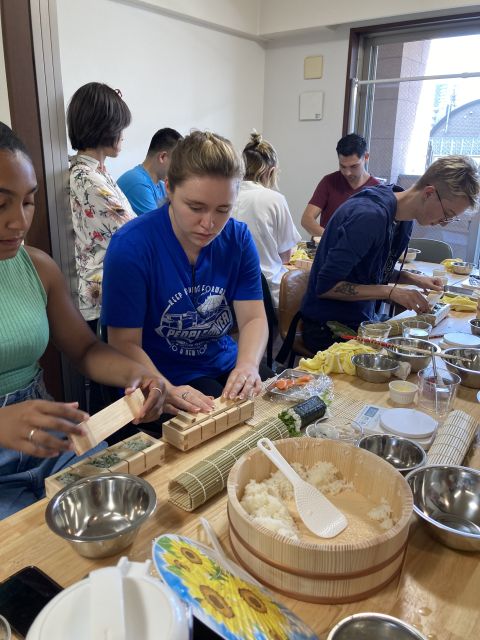
The class is offered in English, and clear explanations are central to its appeal. You are not left to guess how to copy the demonstration.
The cultural side adds useful context without turning the session into a formal history talk. You learn why vinegared rice matters, how sushi can be shaped in different ways, and why oshizushi is tied to Osaka and the wider Kansai region.
The instructors also explain Japanese cooking ideas such as dashi and preservation when time allows. That helps you understand the food beyond its appearance. A sushi roll is not just a pretty lunch; it reflects choices about texture, seasoning, storage, and presentation.
I particularly like the chance to ask about recreating the food at home. A class is more useful when you leave knowing what the technique is trying to achieve, not just what your hands did for three minutes.
Who should book this class
This suits first-time sushi makers, couples, families, and anyone who likes food activities with a clear finished result. You do not need cooking experience, and the instruction is structured enough for a complete beginner.
It is also a strong choice for sushi fans who want something beyond the usual maki roll. The oshizushi section gives you a genuine Osaka connection, while the nigiri practice covers the form most associated with Japanese sushi.
You may want a different activity if your main goal is to slice a whole fish, prepare restaurant-style sashimi, or learn advanced knife work. One participant specifically wished for the chance to cut the fish, which is a fair limitation to keep in mind.
This class is less suited to someone who dislikes hands-on tasks or prefers a quiet meal served by someone else. You will be handling ingredients, following instructions, and shaping the food yourself.
Is $67 a fair price?
For three hours, a small group, included ingredients, English instruction, and a full meal at the end, $67 is a solid price. The value is strongest if you want both food and culture rather than a quick photo opportunity.
The class also gives you three techniques for the price of one. A cheaper activity might teach only a basic roll, while a more expensive one might include a chef, a market visit, or fish butchery. This experience sits in the practical middle: focused, hands-on, and approachable.
The price will feel less worthwhile if you already make sushi often or want advanced professional training. For most visitors, though, the combination of clear teaching, plenty of food, and Osaka-style pressed sushi makes the cost reasonable.
Cancellation is free up to 24 hours before the activity, and you can reserve now and pay later. Those terms are useful if your Osaka schedule is still moving around.
Should you book the Dotonbori sushi class?
Book it if you want to learn by doing, eat a generous lunch, and come away with a better understanding of Osaka food. The small group, friendly English instruction, and three different sushi styles make this more useful than a quick roll-making demonstration.
I would especially recommend it to first-time sushi makers and visitors who want a local specialty. Just set your expectations correctly: you will shape and press sushi, but fish slicing is not the focus.
Make your dietary requests when booking, allow extra time to find room 202, and arrive ready to eat what you create. For $67, this is a practical and enjoyable way to spend three hours in Osaka.
FAQ
How long does the sushi class last?
The class lasts three hours. Starting times vary, so check availability when choosing a date.
What types of sushi will I make?
You will make a salad roll, nigiri, and oshizushi, also known as pressed or box sushi.
Is the class taught in English?
Yes. The instructor language is English.
How large is the group?
The class is limited to eight participants. Some sessions may have fewer people.
Are ingredients included?
Yes. All ingredients needed for the sushi-making activity are included.
Can I request a vegetarian or gluten-free option?
Yes. Leave a note when booking if you need a vegetarian or gluten-free option.
Where is the meeting point?
Meet at Cooking Sun Osaka, room 202. At the entrance, press 202 and then press the button marked 呼出, meaning call.
Just added around Osaka
- Exclusive Sushi Making Experience with a Master Chef – Osaka Area★ 5.0 · 25 reviews
- Private Home-Style Cooking Class in Osaka with Local Mom Yoshiko★ 5.0 · 46 reviews
- Hidden Osaka – Yukaku Red Light Tour & Culinary Adventure★ 4.8 · 96 reviews
- Osaka: Walking Tour and Top Highlights★ 4.8 · 104 reviews
- Osaka: Private Ceramic Painting Workshop★ 5.0 · 13 reviews
- Pickleball in Osaka, Kobe & Kyoto with Locals!★ 4.7 · 80 reviews
- Eat Like a Local in Osaka – Private Custom Street Food Tour★ 4.3 · 33 reviews
- Osaka:SUMO BEATS SHOWCASE: Taiko Drum and Wagyu burger!★ 4.2 · 37 reviews
Sushi Experiences, compared.
Sushi Making Tokyo Roll and Authentic Japanese Sushi Class
Our verdict →
Sake Omakase in Tokyo: Guided Tasting by Certified Sommeliers
Our verdict →
Browse the lists this tour appears in