
Reviewed · SUSHI EXPERIENCES
Osaka Dotonbori: Hand Roll Sushi Experience
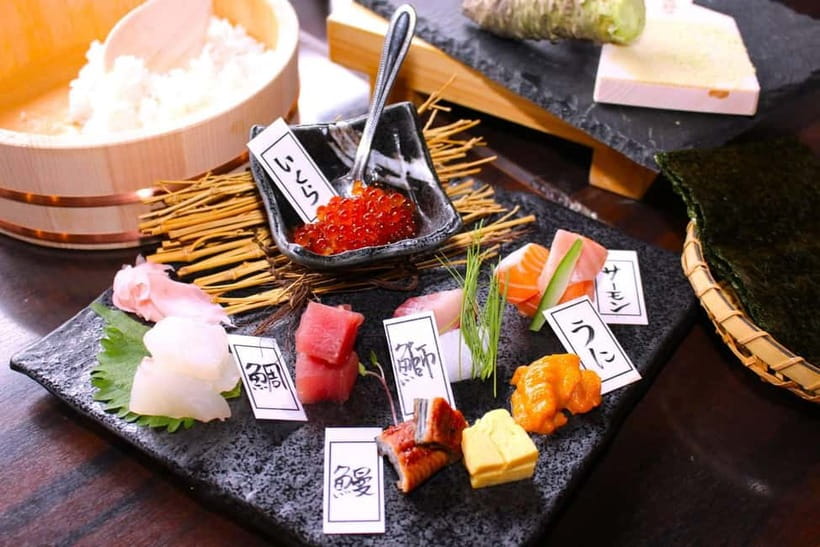
Dotonbori is usually a place for bright signs, crowds, and quick street food. This experience gives you a calmer view of the district: you sit on tatami mats above the river and learn to make hand-rolled sushi with seasonal seafood. The class covers sushi rice, real wasabi, and the small tricks that keep a roll from falling apart.
I like the authentic tatami setting and the generous, hands-on format. You do not simply watch a chef work. You mix the rice, taste the wasabi, and build your own sushi. The main consideration is that the seafood selection may not be fully yours to choose, so tell the staff about dislikes before the class begins if you can.
Key points at a glance
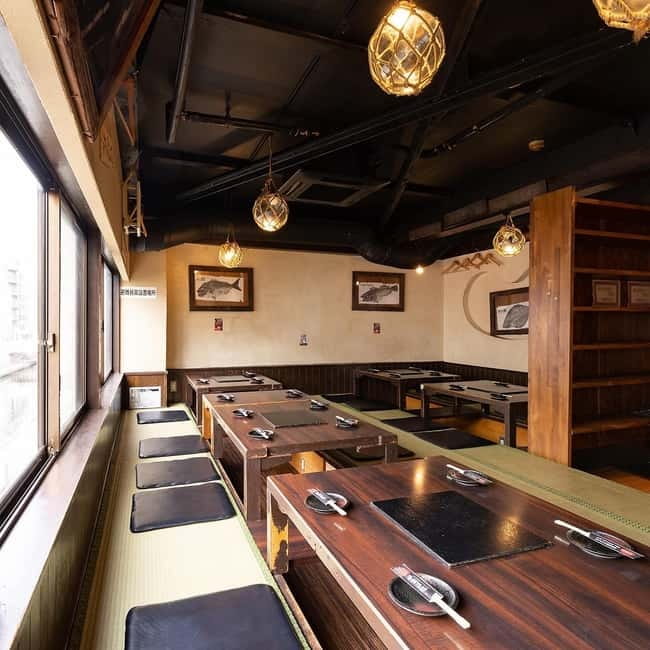
- Tatami room above the Dotonbori River: You get a quiet Japanese-style setting in one of Osaka’s busiest districts.
- Real wasabi tasting: The fresh root has a sharper aroma and more complex heat than the common green paste.
- Sushi rice lesson: You learn how Japanese rice and vinegar are combined, not just how to place fillings on seaweed.
- Hands-on preparation: You make your own hand-rolled sushi and eat it during the session.
- Two-hour English-language class: Choose the noon or 2 pm session, both held at Kaisen Monogatari Dotonbori.
- 8,000 yen including tax: The fee includes ingredients, tools, instruction, sushi, and one soft drink.
A quiet sushi lesson in the middle of Dotonbori
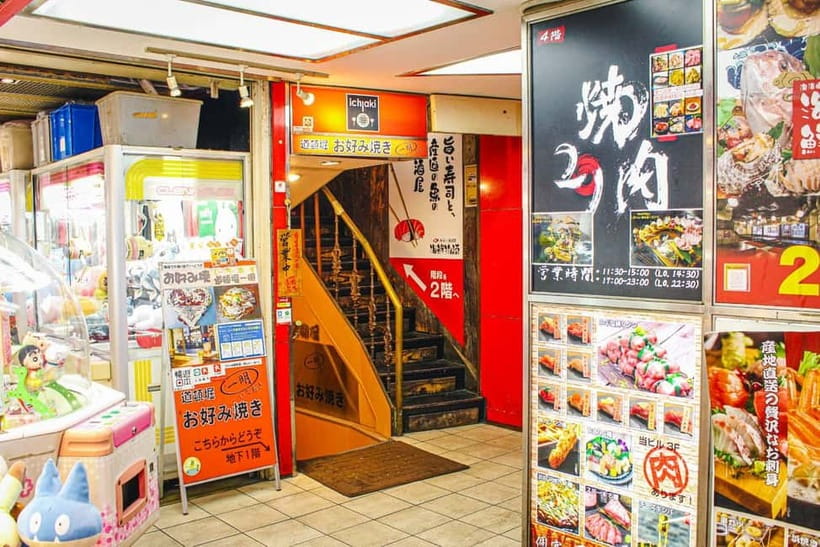
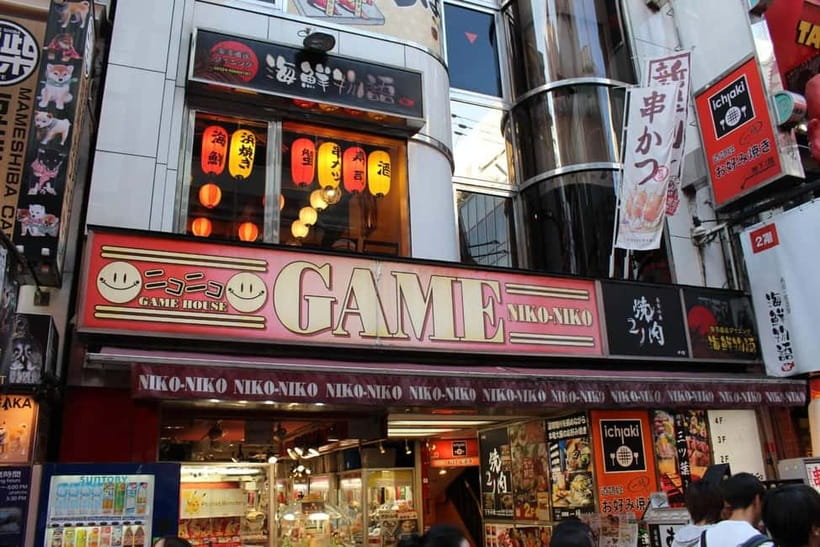
The location is part of the appeal. Kaisen Monogatari Dotonbori sits at 1-6-12 Dotonbori, Chuo-ku, on the second floor of the Nico Building. The entrance is on the main street, while a game arcade occupies the first floor, so do not expect a polished hotel-style entrance. Look for the building address and head upstairs.
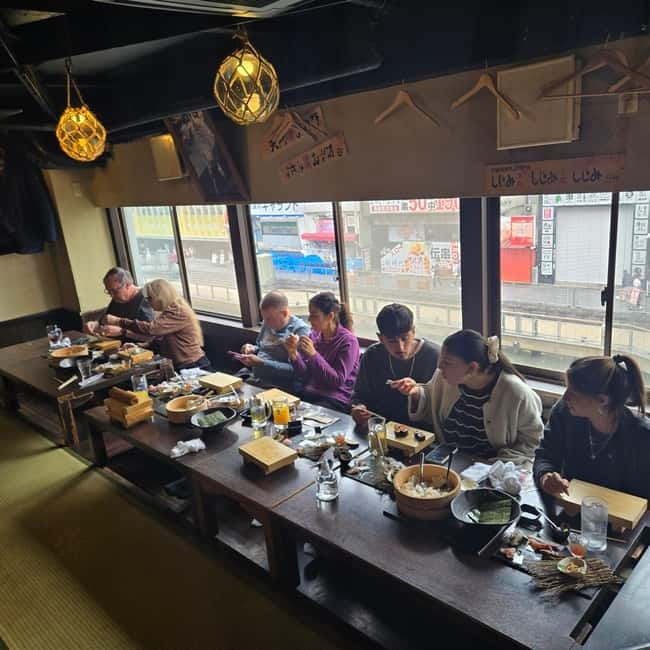
Once inside, the mood changes. The class takes place in a tatami room with a view of the Dotonbori River. That contrast is useful: you remain close to Osaka’s famous canal district, but the meal itself has a more traditional Japanese feel.
You will not spend the session racing through a crowded market or moving between several restaurants. You settle in one place, listen to the chef, and work through the food step by step. For a first sushi class, that makes the format easy to follow.
The class is offered in English. Specific group size information is not provided, so you should not book it expecting either a private lesson or a large cooking school. The setting is described as intimate, and the chef and assistant help participants during the preparation.
More Sushi Experiences in Osaka
- Sushi Making Osaka Roll and Authentic Japanese Sushi Class
★ 5.0 · 1,220 reviews - Osaka Sushi Making Experience
★ 5.0 · 400 reviews - Osaka Sushi Making Class – Hands-On Nigiri & Rolls (Same-Day OK)
★ 5.0 · 352 reviews
Starting with the basics of sushi
The class begins with an introduction to sushi. This matters because hand-rolled sushi looks simple, but the result depends on several small choices: the rice must hold together, the filling must be balanced, and the seaweed must be rolled firmly without becoming soggy.
The introduction also gives you a better sense of what you are eating. The seafood is presented as seasonal, so the ingredients can reflect what is available in Japan at that time of year. That is more interesting than a fixed list of familiar fish, though it also means the exact selection may change.
The chef explains the food as you go. The staff have been described as friendly and helpful, with the assistant ready to answer questions and help with the practical steps. This is a good arrangement for families and first-time sushi makers because you can ask for help without stopping the whole lesson.
Do not treat this as a professional sushi apprenticeship. You are learning the foundations and enjoying a meal, not training for a restaurant kitchen. The value is in understanding the ingredients and trying the technique yourself.
Why the sushi rice lesson matters
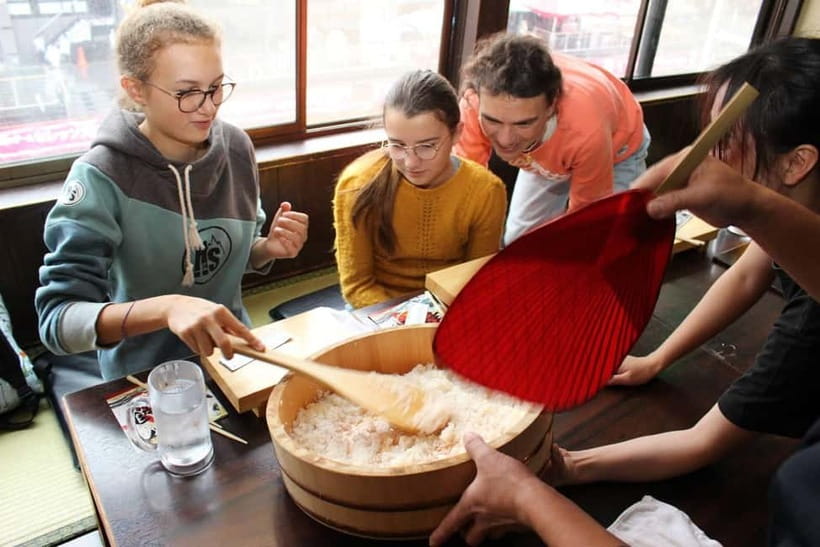
Rice is the part many beginners overlook. At this class, you learn about Japanese rice and how vinegar is mixed into it. That gives you a more useful lesson than simply receiving prepared rice and moving straight to the fillings.
The flavor of sushi rice is not accidental. Too much vinegar can overwhelm the seafood, while poorly mixed rice can taste flat or separate in the roll. By taking part in the preparation, you see how a few basic ingredients create the slightly sweet, sharp taste that holds the sushi together.
This is also where the class connects food with daily Japanese cooking. Rice is central to the meal, and the lesson helps you notice its texture and seasoning. You may not leave with the skill to reproduce restaurant sushi perfectly, but you will understand why a good roll tastes balanced.
The activity provides the tools and materials, so you do not need to carry anything beyond comfortable clothing. A camera and water are suggested, and a hat is included on the recommended packing list. The practical advice is simple: arrive ready to handle food and keep your hands free.
The real wasabi tasting
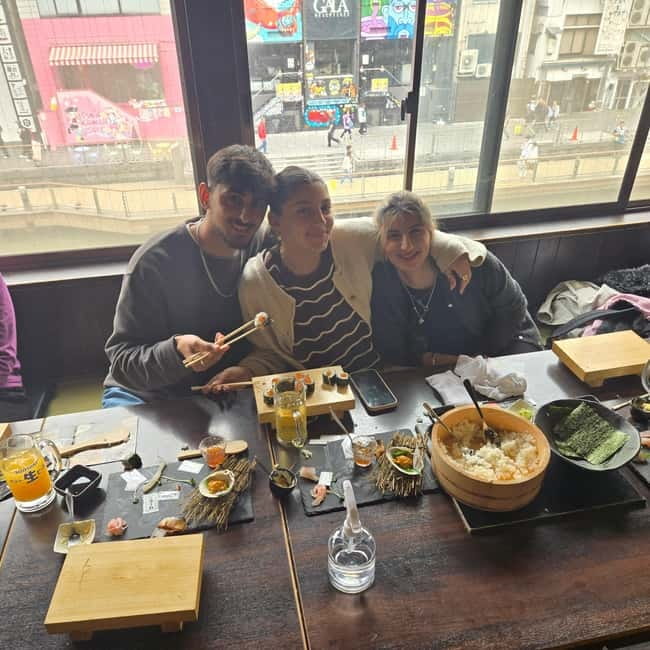
The wasabi tasting is one of the more distinctive parts of the class. Many people know wasabi only as a smooth, bright-green condiment served with sushi. Authentic Japanese wasabi has a different aroma and a quick, clean heat that can surprise you.
The purpose here is not to see who can tolerate the strongest mouthful. It is to notice the difference between real wasabi and the standard paste many people have encountered outside Japan. The tasting adds a small sensory lesson to the class, and it helps you understand why wasabi is used sparingly with delicate seafood.
If you are sensitive to spicy food, take a modest amount. You can enjoy the aroma and flavor without treating it as a challenge. The activity description specifically highlights the fragrance and spiciness, so this is a genuine tasting, not merely a dab placed beside your plate.
The wasabi also makes a good talking point during the meal. Once you have tried it by itself, you can decide how much to pair with your sushi. That gives you a little control over the final flavors even if the seafood selection is set by the class.
Same trip, a completely different kind of day:
- Osaka Go Karting Tour with Funny Costume
★ 5.0 · 2,658 reviews - Osaka Castle: Museum and Tower Entry Ticket
★ 4.5 · 2,380 reviews - Osaka: Shinsekai Food Tour with 13-15 Dishes at 5 Eateries
★ 4.8 · 2,204 reviews - Osaka Food Tour: 13 Dishes at 5 Local Eateries
★ 5.0 · 2,149 reviews
Making your own hand-rolled sushi
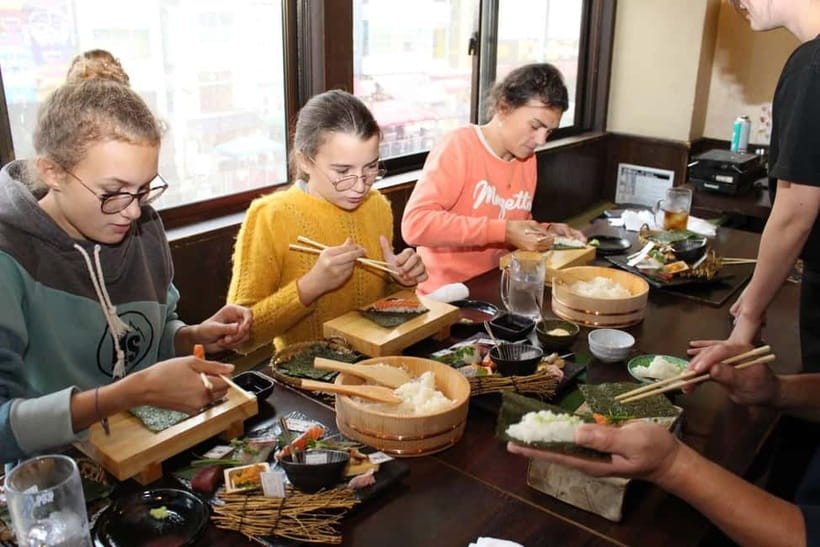
The main event is the hands-on preparation. You use the supplied ingredients and tools to make hand-rolled sushi, following the chef’s instructions. The class offers a variety of options for assembling rolls, and the staff help when the rice or seaweed becomes difficult to manage.
You should expect a learning curve. Your first roll may be loose, uneven, or fuller than it needs to be. That is part of the point. The class lets you practice the balance between rice, seafood, and other fillings rather than watching a professional create a perfect piece every time.
One practical detail is worth noting: the sushi is eaten as you make it. If you imagined arranging every roll on one large platter at the end to compare your progress, this format may disappoint you. On the other hand, eating along the way keeps the food fresh and gives you a chance to adjust your technique for the next roll.
Come hungry. The food is not merely a sample on the side of a cooking demonstration. You taste the results of your work during the session, and the class includes enough food to function as a substantial light meal for many people. The exact quantity is not stated, so do not assume it replaces a full dinner after a long day of sightseeing.
The chef also provides a special homemade soy sauce for the rolls. That adds another flavor option beyond wasabi and standard soy sauce. You can compare the sauce with your own combinations and see how a small change affects the seafood and rice.
Seasonal seafood and the question of choice
Seasonal seafood is a strong point for anyone who wants a taste of Japan rather than a generic cooking class. The ingredients are fresh, and the selection helps connect your meal to the time of year.
Still, this is not described as a class where you select every fish from a menu. The seafood may be assigned as part of the prepared ingredient set. If you dislike certain fish, have allergies, or follow a restricted diet, contact the provider before booking or speak with the staff as soon as you arrive.
This point is especially important for families with different tastes. A person who enjoys trying unfamiliar seafood may appreciate the surprise. Someone who only eats a few familiar varieties may find the fixed selection less flexible.
There is also a practical food-waste concern if you receive an ingredient you do not like. You can reduce that risk by asking in advance what the seasonal selection will be and explaining any strong dislikes. The available information does not promise substitutions, so you should not assume that every ingredient can be changed.
What the 8,000 yen price includes
The cost is 8,000 yen per person, including tax, or about $54 based on the stated price. Currency conversion will change, but the yen price is the useful figure when comparing it with other Osaka activities.
The fee includes the sushi introduction, sushi rice session, wasabi tasting, hands-on preparation, all ingredients, tools, and one soft drink. You are also paying for two hours of instruction in a central Dotonbori location, plus the tatami-room setting and river view.
That makes the price reasonable if you want both a meal and a cultural activity. A standard restaurant dinner might cost less, especially if you choose inexpensive conveyor-belt sushi. It would not, however, include the teaching, ingredient handling, or chance to make the food yourself.
The value is strongest for first-time visitors who want an activity with a clear beginning and end. It can fill part of an afternoon without requiring transportation across Osaka. The value is weaker if you already make sushi confidently or only want to eat without instruction.
One soft drink is included. Other meals and drinks are not specified, and transportation to the venue is not included. Since you finish back at the same location, you can easily continue exploring Dotonbori afterward.
Timing your visit in Dotonbori
There are two sessions each day, at noon and 2 pm. Both last two hours. The noon class can work as an early lunch, though you may want to leave room in your schedule for the food and instruction rather than planning another immediate meal.
The 2 pm session is useful after a morning of sightseeing. It also gives you time to explore the surrounding Dotonbori streets before or after the class. Because the district is crowded and the entrance is on a busy main street, allow enough time to locate the Nico Building.
You should note the meeting point carefully: 海鮮物語道頓堀店, Kaisen Monogatari Dotonbori. The activity ends at that same location. No transportation is arranged, so you make your own way there.
Book at least a day ahead if your Osaka schedule is tight. The stated cancellation policy allows a full refund when you cancel up to 24 hours in advance, and you can reserve without paying immediately. Those terms are helpful when your plans are still shifting.
Who will enjoy this class most
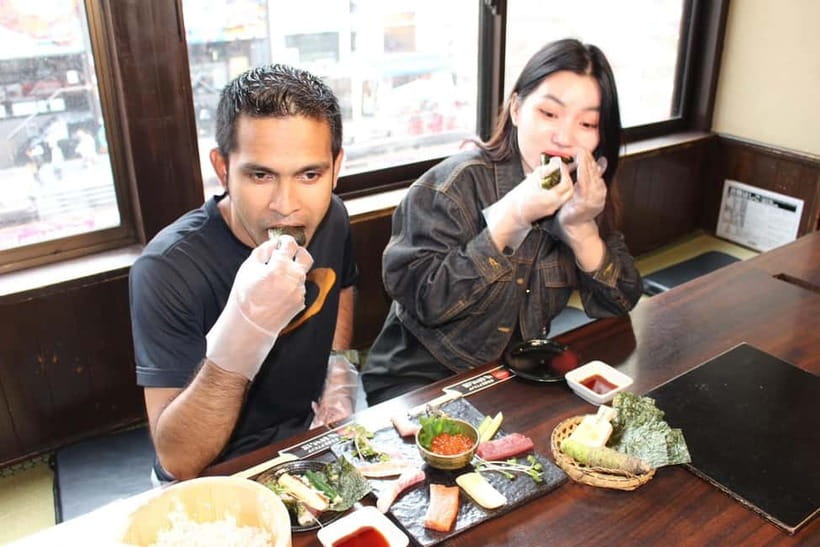
I would choose this for several kinds of visitors:
- First-time sushi makers: You receive a guided introduction rather than being expected to know the technique.
- Families: The chef and assistant help with the process, and making food together gives children and adults a shared task.
- Food-focused visitors: The rice, wasabi, seafood, and soy sauce each receive attention.
- Visitors staying in central Osaka: You avoid a long trip to a cooking school outside the main sightseeing area.
- People interested in Japanese settings: The tatami room offers a traditional atmosphere without leaving Dotonbori.
It may be less suitable if you want a fully self-directed menu, a private class, or a large final platter of every roll you make. It is also not the best fit for anyone unwilling to try the seafood selected for the session.
Practical tips before you go
Wear comfortable clothes that let you sit and work easily. The setting is a tatami room, and the class involves handling ingredients, so comfort matters more than dressing up.
Bring a camera if you want photos of the food and river view. Bring water as well, especially if you plan to walk around Dotonbori before the class. A hat is listed among the suggested items, though the class itself takes place indoors.
Keep your expectations realistic. The chef will guide you, but your rolls may not look like restaurant sushi. Ask questions, take your time, and treat uneven shapes as part of the lesson.
If seafood preferences matter to you, ask about the ingredients before the session. The class uses seasonal seafood, and the available information does not guarantee that you can choose every fish yourself.
Should you book the Dotonbori hand-roll sushi experience?
Book it if you want a two-hour food activity that combines instruction, tasting, and a meal in a central Osaka setting. The real wasabi, sushi rice lesson, friendly chef and assistant, and tatami room with a river view give it more substance than a quick make-your-own snack.
Think twice if you need complete control over the seafood or want to save every roll for one final presentation. For most first-time sushi makers, families, and curious eaters, the 8,000 yen fee offers a fair mix of food and hands-on learning. Ask about the seafood in advance, arrive with an appetite, and you should get a memorable change of pace from Dotonbori’s street-level noise.
FAQ
Where does the sushi experience take place?
It takes place at Kaisen Monogatari Dotonbori, on the second floor of the Nico Building at 1-6-12 Dotonbori, Chuo-ku, Osaka.
How do I find the entrance?
The entrance is on the main street. A game arcade is on the first floor, and the experience is on the second floor.
How long does the activity last?
Each session lasts two hours.
What time does the experience start?
Sessions begin at 12 pm and 2 pm.
Is the activity offered in English?
Yes. English is listed as the available language.
What is included in the price?
The fee includes an introduction to sushi, a sushi rice session, a wasabi tasting, hands-on hand-rolled sushi preparation, all materials and tools, and one soft drink.
How much does it cost?
The cost is 8,000 yen per person, including tax. The stated approximate price is $54 per person.
Does the activity include transportation?
No. Transportation to and from the activity location is not included.
Where does the activity end?
The activity ends back at the meeting point at Kaisen Monogatari Dotonbori.
Just added around Osaka
- Exclusive Sushi Making Experience with a Master Chef – Osaka Area★ 5.0 · 25 reviews
- Private Home-Style Cooking Class in Osaka with Local Mom Yoshiko★ 5.0 · 46 reviews
- Hidden Osaka – Yukaku Red Light Tour & Culinary Adventure★ 4.8 · 96 reviews
- Osaka: Walking Tour and Top Highlights★ 4.8 · 104 reviews
- Osaka: Private Ceramic Painting Workshop★ 5.0 · 13 reviews
- Pickleball in Osaka, Kobe & Kyoto with Locals!★ 4.7 · 80 reviews
- Eat Like a Local in Osaka – Private Custom Street Food Tour★ 4.3 · 33 reviews
- Osaka:SUMO BEATS SHOWCASE: Taiko Drum and Wagyu burger!★ 4.2 · 37 reviews
Sushi Experiences, compared.
Sushi Making Tokyo Roll and Authentic Japanese Sushi Class
Our verdict →
Sake Omakase in Tokyo: Guided Tasting by Certified Sommeliers
Our verdict →
Browse the lists this tour appears in