Reviewed · KYOTO TOURS
Let’s make only one original onigawara in the world
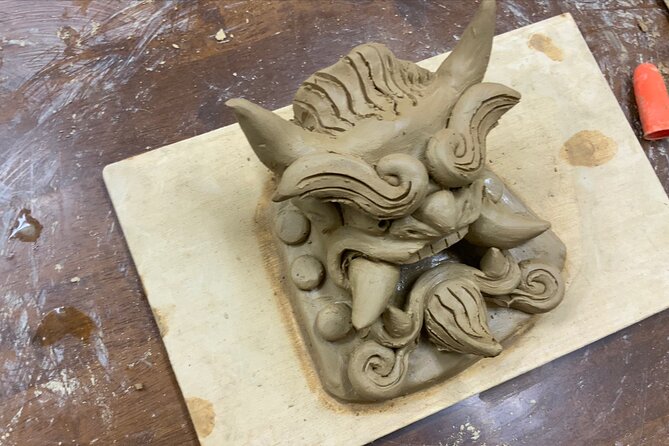
The most memorable part of this Kyoto workshop is turning a lump of clay into a snarling roof guardian. You shape the face, build its features, and make choices that leave every finished onigawara different. I like the practical connection to Kyoto architecture, and I like that your souvenir is made by you rather than picked from a shop shelf.
The patient instruction from Yuya is another strong point. He breaks a tricky sculpture into simple stages, so beginners can keep up. The main drawback is the extra wait and shipping cost: the piece must dry and be fired later, and shipping is not included in the $89.17 price.
Key points before you book
- Make a traditional roof guardian: Learn how demon-faced onigawara tiles helped protect Japanese buildings from evil and rainwater.
- Beginner-friendly instruction: Yuya breaks the sculpture into manageable steps, even for children and people who feel clumsy with clay.
- Small standard class: The usual workshop has a maximum of five participants, allowing for personal help.
- A souvenir with a long tail: Your work is kiln-fired after the class and shipped to your home, often weeks later.
- Plan for mess and postage: Wear clothes that can get dirty, and bring cash for shipping if requested.
- Allow more than the advertised two hours: The stated duration is about two hours, but some sessions take close to three.
Making a demon tile in central Kyoto
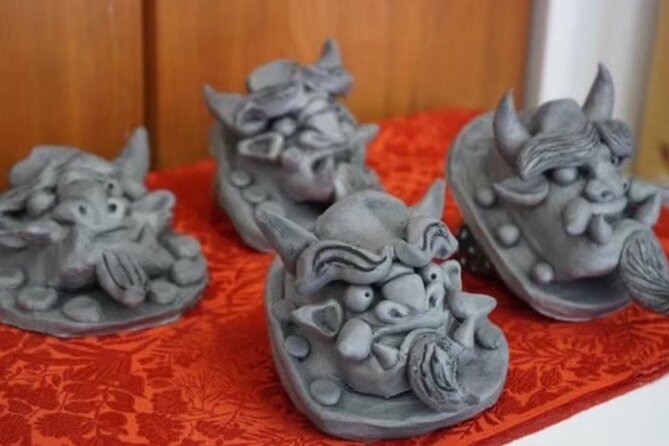
This is not a quick craft table where you paint a ready-made object. You start with clay and work toward a small onigawara, the carved ornament traditionally placed at the ends of a roof ridge.
The meeting point is 瓦工房 You家, at 373-2 Yamazakichō in Kyoto’s Higashiyama Ward. The workshop ends at the same place. It is near public transportation, which matters because this activity fits well between sightseeing stops in eastern Kyoto.
The studio setting gives the class a more personal feel than a large cultural demonstration. The normal maximum is five people. That is a useful size for an activity involving wet clay, tools, questions, and occasional rescue work on a feature that has gone slightly wrong.
Large parties can also be accepted, with groups of five or more and up to 40 people noted as possible. For those bookings, the location changes. Confirm the venue carefully if you are arranging a family reunion, school group, or tour party.
A few more Kyoto half-days worth comparing
- PERFECT KYOTO 1-Day Bus Tour
★ 5.0 · 13,518 reviews - Kyoto: Fushimi Inari, Kinkakuji, Bamboo Grove 1 Day Bus Tour
★ 4.8 · 4,316 reviews - Kyoto: Tea Ceremony in a Traditional Tea House in Kiyomizu
★ 4.9 · 3,519 reviews
What an onigawara means
Before you shape the clay, you learn why the form matters. Onigawara are traditional Japanese roof tiles with faces that often resemble ogres or gargoyles. They sit at the ends of the main roof ridge and serve both a practical and symbolic purpose.
Their shape helps protect roof areas from rainwater. Their fierce faces are also guardians, meant to keep evil away. Once you start noticing them, Kyoto’s temples and older buildings become more interesting. You can compare the expressions, sizes, and details on real roof ornaments with the piece you make in the studio.
That context gives the craft more weight than a standard pottery class. You are not simply making a decorative animal or bowl. You are working with a form connected to Japanese buildings and protective traditions.
Yuya’s step-by-step method
The finished example can look intimidating. A polished onigawara has a strong face, raised details, and a solid sculptural form. If you have never touched clay, you may wonder how a beginner can make one in a single sitting.
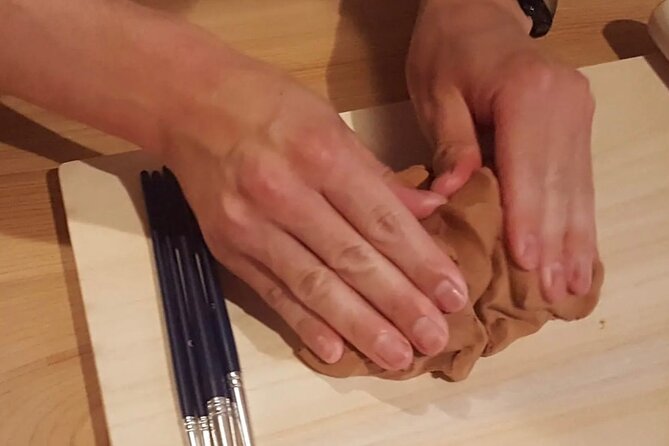
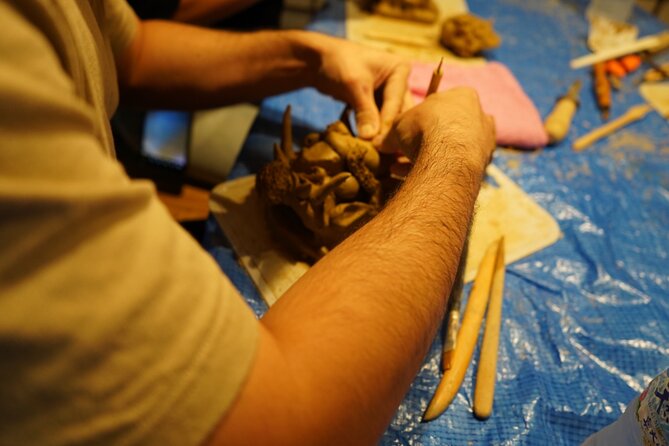
Yuya’s method is designed around that problem. He breaks the project into a set sequence of manageable parts. You shape the basic form first, then add the face and other features. Each stage has a clear purpose, and you get guidance before moving on.
This is where the workshop earns its reputation for being accessible. The process is structured enough for a first-time clay worker, but you still have room to make personal choices. Two people following the same general instructions can produce very different demons.
Yuya is described as patient and encouraging, with English instructions clear enough for the technical steps. Casual conversation may be simpler than a full English-language lecture, but the important part of the class is demonstration and hands-on guidance. He also answers questions and offers suggestions without taking over your project.
That balance matters. If you are artistic, you can add your own character. If you are not, you still have a reliable path from clay lump to finished guardian.
A realistic look at the two to three hours
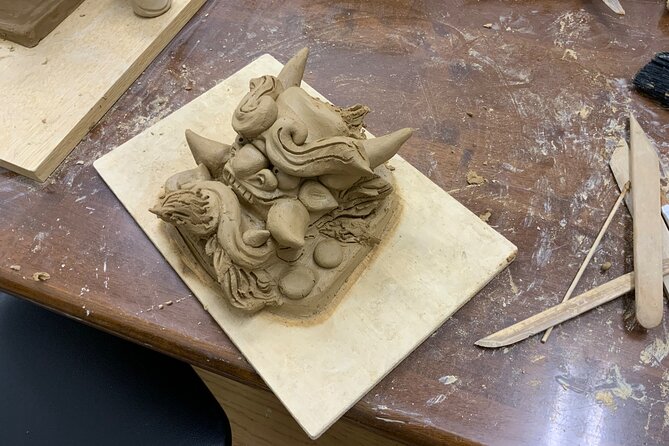
The advertised duration is about two hours, but you should not treat that as a hard finish time. Some sessions run close to three hours, especially when the group includes several people working at different speeds.
The early part focuses on understanding the form and preparing the clay. You then follow Yuya through the construction process. The work is hands-on for most of the session, and your attention stays on the shape, surface, and details in front of you.
This is a good break from Kyoto’s temples and crowded walking routes. You sit down, work with your hands, and concentrate on one object. The pace is not described as rushed, though the sequence moves along because the sculpture must be completed within the session.
If you are booking around a restaurant reservation or train departure, leave extra time. A two-hour listing can become a longer morning or afternoon once you allow for late finishing and getting to your next stop.
Same trip, a completely different kind of day:
- Kyoto Geisha Walking Tour: Gion District & Hidden Gems
★ 4.7 · 3,273 reviews - Kyoto: Tea Ceremony Ju-An at Jotokuji Temple
★ 4.9 · 3,207 reviews - Kyoto: Gion Magical Night Walking Tour with Geisha Trivia
★ 4.9 · 2,393 reviews - Kyoto: 45-Minute Tea Ceremony Lesson Experience
★ 4.3 · 2,378 reviews
Why the finished pieces look so different
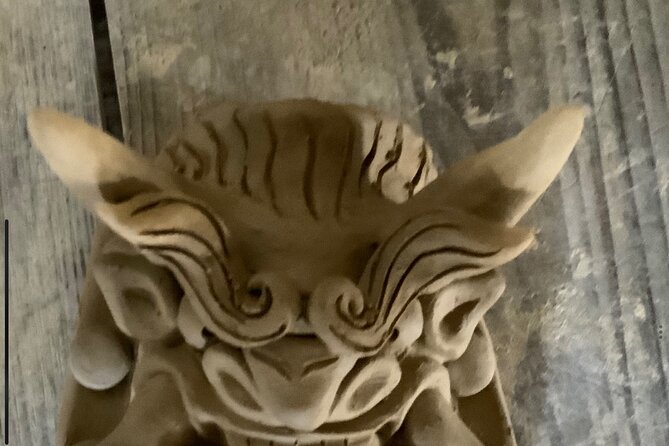
One of the pleasures of this activity is seeing how much personality appears in the same basic design. Your class may use a shared construction method, but clay responds to each person’s hands.
One demon may look fierce. Another may seem comic. A beginner may worry that the face is misshapen, only to find that the final result looks surprisingly strong once all the parts are assembled.
The workshop is not about producing identical factory objects. Small differences in expression and proportion are part of the point. You leave with something tied to your own decisions, including the odd little details that would never appear on a mass-produced souvenir.
That also makes this a good choice for families. Children and teenagers can take part, and the step-by-step system gives them a clear task at each stage. Younger participants will need to follow instructions and handle clay carefully, but the activity is presented as suitable for children and people who consider themselves clumsy.
The kiln wait and home delivery
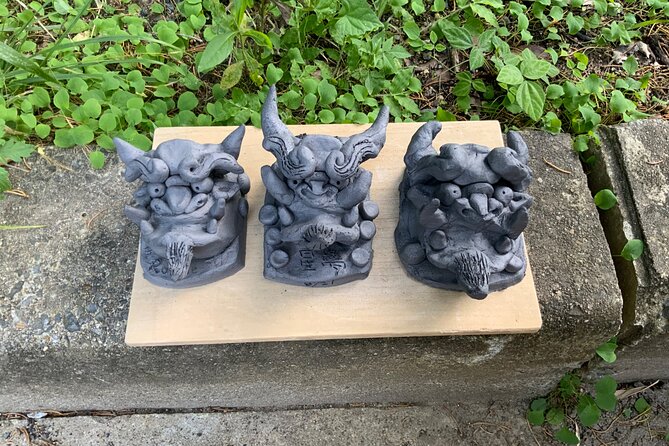
You do not take the unfired tile home. After the workshop, the onigawara is fired in a kiln at the factory. Shipping happens after the clay has dried and the firing process is complete.
This delay is important. Some pieces arrive after several weeks, with one expectation of about a month for drying and another of roughly two months before delivery. The exact timing may vary, so do not plan to use the souvenir immediately after your trip.
The wait does add a pleasant second chapter to the experience. Kyoto ends, but your handmade object is still on its way. When it arrives, you have a finished ceramic piece rather than a fragile lump of damp clay.
Shipping costs are separate from the workshop fee. The exact amount is not stated in advance, and payment may be requested in cash at the end of the class. Bring cash and ask about the postage cost before leaving if you want a clearer idea of the total price.
The package is intended to reach your home, and reported deliveries arrived safely. Still, international shipping is an added expense and one more detail to manage. If you are traveling with strict luggage limits, home delivery is a real advantage. If you dislike delayed souvenirs or uncertain postage, it is a point against the activity.
Is $89.17 good value?
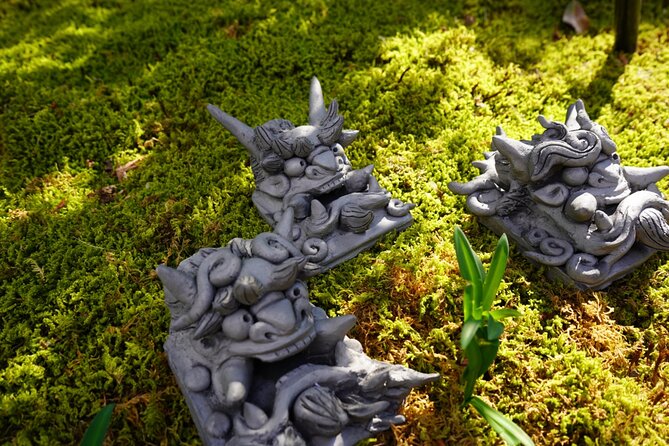
The listed price is $89.17 per person. That is more than you would pay for a small ready-made souvenir, but the comparison is not quite fair. You are paying for instruction, studio time, clay, kiln firing, and a personal object that cannot be duplicated.
The price makes the most sense if you value the making process as much as the final piece. You receive a cultural lesson, guided craft work, and a souvenir with a story. The included bottled water is useful, but it is not a major part of the value. An apron is not included, so your clothing does the practical work.
Shipping must be added to the budget. That is the main cost issue to settle before booking. The activity also advertises group discounts, though the exact discount is not provided. Large groups should ask where the relocated venue will be and how the group price works.
For a couple or small family, the standard small-group setting offers personal attention without the cost of a private art lesson. If your main goal is simply to buy an inexpensive gift, this is not the efficient choice. If you want to make an object and learn why it belongs on Japanese roofs, the price is easier to justify.
Who will enjoy this most
I would choose this for several kinds of people:
- First-time clay workers: The process is broken into clear stages, and Yuya gives help when a feature becomes difficult.
- Families with artistic teenagers: The project is active, personal, and more memorable than another hour of looking at displays.
- Couples wanting a shared souvenir: You can create matching pieces that still have different faces and personalities.
- Repeat visitors to Kyoto: The workshop offers a fresh activity away from the usual temple route.
- People interested in Japanese buildings: Seeing real onigawara around Kyoto becomes more rewarding after you understand how they work.
- Visitors who like meaningful objects: The final piece carries your own marks and choices.
I would think twice if you have very little free time, do not want to handle soil, or need a souvenir that travels home in your suitcase the same day. The workshop also requires patience after the class, since the finished item comes later.
Practical details that affect your day
Wear clothes that may get dirty. The experience uses soil and clay, and an apron is not included. This is an easy detail to overlook when packing smart clothes for Kyoto’s temples.
Bottled water is included. Service animals are allowed, and the meeting point is near public transportation. Most people can participate, though the work involves handling clay and following a series of physical steps.
The standard class maximum is five people. If only two people book, the session may feel close to private instruction. A session is not automatically canceled because the booking is small, which is useful if you are arranging a trip around a specific date.
Free cancellation is available when you cancel at least 24 hours before the local start time. Cancellations or changes inside that window are not refunded or accepted.
FAQ
How long does the onigawara workshop last?
The stated duration is approximately two hours. Some sessions can take close to three hours, depending on the group and the pace of the work.
Where does the activity begin and end?
It begins and ends at 瓦工房 You家, located at 373-2 Yamazakichō, Higashiyama Ward, Kyoto, 605-0841, Japan.
How many people can join the standard workshop?
The standard activity has a maximum of five participants. Groups of five or more can also be accepted, with larger groups of up to 40 people possible at a different location.
Is shipping included in the price?
No. Shipping costs are separate from the $89.17 activity fee. Cash may be needed to pay for shipping at the end of the class.
When will my finished onigawara arrive?
The tile must dry and be fired after the workshop before it is shipped. Delivery may take several weeks, with some estimates around one month and others around two months.
Do I need previous pottery experience?
No. The instructor teaches the process step by step, and the activity is intended to work for beginners, children, and people who feel they are not skilled with clay.
What should I wear?
Wear clothing that can get dirty because the activity uses soil. An apron is not included.
Should you book this Kyoto craft experience?
Book it if you want more than a quick souvenir. The appeal is the full chain: learning what onigawara do, shaping one with Yuya’s guidance, watching your own design take form, then waiting for the fired piece to arrive at home.
The best reason to go is the personal result. You do not need artistic skill, and your finished demon does not need to look perfect to be successful. Its uneven features are part of its identity.
Skip it if your schedule cannot handle a possible three-hour session, a separate shipping charge, and a wait of several weeks. For everyone else, this is a thoughtful Kyoto activity, especially for families, couples, and anyone who wants to bring home something they actually made.
Just added around Kyoto
- Sekka Cotton Furoshiki Class★ 5.0 · 19 reviews
- Secret Eastern Kyoto Biking Adventure★ 5.0 · 44 reviews
- Kyoto Sword Experience – includes Museum Ticket/Ninja Experience★ 4.5 · 149 reviews
- Scenic Green Tea Fields of Hidden Kyoto & Local Tea Exp (Private)★ 5.0 · 32 reviews
- Private Sake Tasting in Central Kyoto with Sake Sommelier★ 5.0 · 32 reviews
- Samurai School in Kyoto: Samurai for a Day★ 5.0 · 202 reviews
- SHIRAKAWA Japanese Culture Experiences with private English staff★ 5.0 · 16 reviews
- A Privately Guided Photoshoot in Beautiful Kyoto by a Pro★ 5.0 · 18 reviews
Kyoto Tours, compared.

Tea Ceremony in a Traditional Tea House in Kiyomizu
Our verdict →
Kyoto Geisha Walking Tour: Gion District & Hidden Gems
Our verdict →


Fushimi Inari Hidden Hiking Tour (Private Option Available)
Our verdict →