
Reviewed · TEA CEREMONY EXPERIENCES
Kyoto: Traditional Tea Ceremony with Matcha & Sweets in Gion
The most appealing part of this Gion experience is that you get both sides of Japanese tea culture: you watch a tea master perform the careful ceremony, then pick up the whisk and make your own matcha. The setting is traditional in spirit but uses chair seating, so you do not need to sit on your knees on a tatami floor.
I like the friendly, informal teaching style, which makes the ceremony less intimidating than a highly formal performance. I also like the thoughtful pairing of matcha with traditional sweets from established Japanese confectioners. The main consideration is timing: options can last anywhere from one hour to 150 minutes, and the kimono option follows a fixed ceremony schedule.
Key points to know before booking
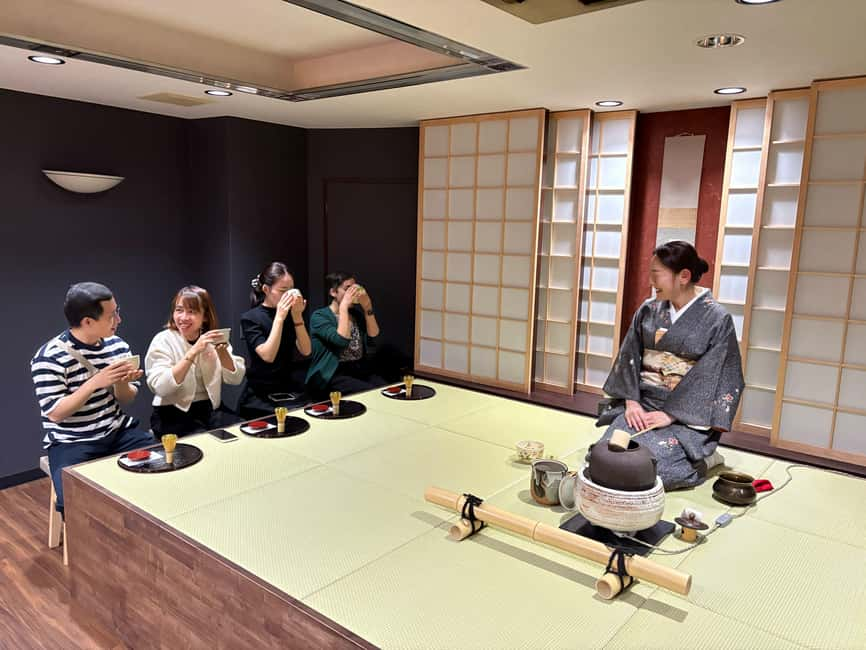
- Watch first, then whisk your own matcha: You see refined tea techniques up close before trying them yourself.
- Chair seating in Gion: You can enjoy the ceremony without sitting on the floor.
- Tea from a family-run farm: Your matcha comes from a local tea producer rather than an unspecified powder.
- Traditional sweets are part of the lesson: The sweets help explain how Japanese tea is served and enjoyed.
- English guidance and open questions: The tea master explains tea history, Zen ideas, and the ceremony itself.
- Kimono timing matters: Kimono rental, ceremony start times, and return time are linked, so plan carefully.
A quiet introduction to Kyoto tea culture
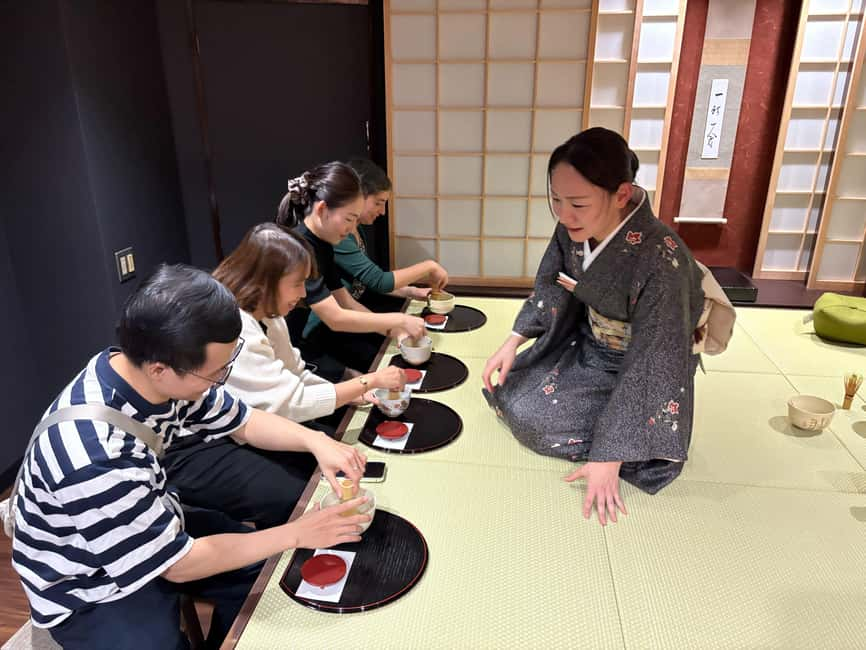
In the middle of Gion, Kyoto’s best-known historic district, this activity gives you a calm break from sightseeing. The point is not simply to drink green tea. You learn why the ceremony is arranged as it is, how matcha is prepared, and how tea became tied to hospitality, discipline, and Zen thought in Japan.
The atmosphere is intended to be welcoming rather than severe. That matters if this is your first tea ceremony. You can ask basic questions without feeling that you are interrupting a sacred ritual, and the English-speaking instructor explains the ideas behind the gestures instead of asking you to copy them blindly.
You should still expect quiet concentration. A tea ceremony has a slower rhythm than most sightseeing stops. The measured movements, hot water, bowl, whisk, and sweets all encourage you to pay attention to small details. You will get more from it if you resist the urge to treat the session as a quick photo opportunity.
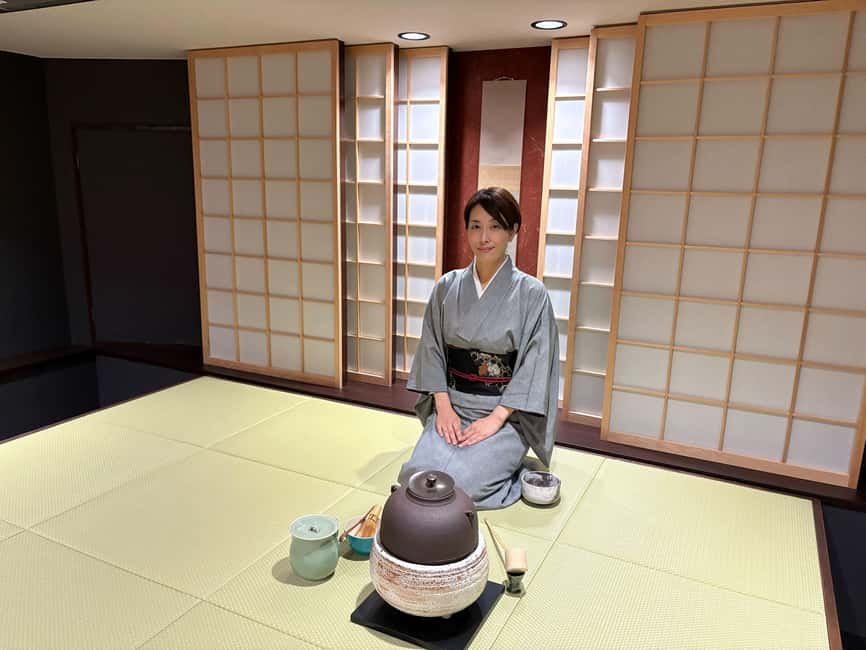
The host named Mai has been praised for being approachable, warm, and clear in her explanations. The activity is offered in English, and small-group availability can make it easier to hear the teaching and ask questions.
More Sweets & Dessert Tours in Kyoto
- Kyoto: Japanese Traditional Sweets Making and Tea Ceremony
★ 4.4 · 314 reviews - Kyoto Wagashi(Japanese sweets) Cooking Class near Fushimiinari
★ 5.0 · 60 reviews - Kyoto: Wagashi (Japanese sweets) Cooking near Fushimiinari
★ 5.0 · 40 reviews
Watching the tea master before making matcha
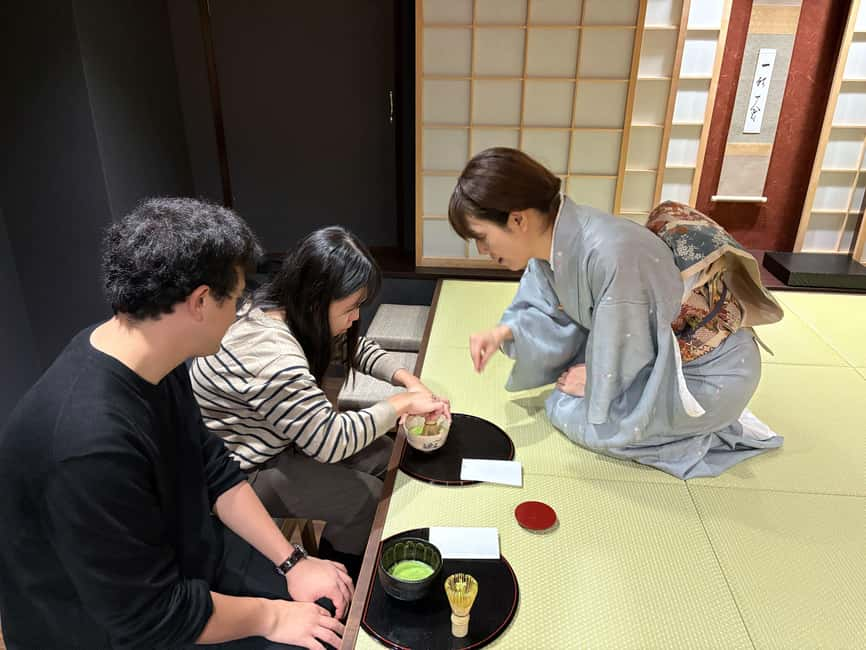
The first half centers on a demonstration by the tea master. You watch how the bowl, scoop, whisk, and water are handled, and you learn that the ceremony is about more than producing a cup of tea. Each movement has a purpose, from preparing the utensils to presenting the finished drink.
This is where the experience earns its cultural value. A basic matcha lesson could show you how to stir powder into water, but it would miss the social and historical context. Here, the instructor discusses the development of tea in Japan and the influence of Zen philosophy on the ceremony.
The demonstration also gives you a chance to notice the contrast between speed and care. Matcha preparation is not difficult in a technical sense, but the ceremony asks you to slow down. The tea master’s controlled movements show how practice turns a simple drink into a form of hospitality.
You are not expected to know the correct etiquette in advance. The teaching is designed for newcomers, and the relaxed tone keeps the experience from becoming a test of Japanese manners. If you have seen formal tea ceremonies in films or at cultural events, this offers a closer look without requiring you to understand every rule beforehand.
Making your own bowl with local matcha
In the second half, you prepare your own bowl of matcha. The powder comes from a local family-run tea farm, which gives the activity a useful connection to the product itself. You are not only hearing about matcha in the abstract. You are handling and tasting the ingredient discussed by the tea master.
The instructor guides you through the process, including how to mix the tea into a smooth, foamy drink. One useful detail from the experience is that you receive a simple recipe to take home. That makes the lesson more practical than a one-time cultural demonstration. You can try the same basic preparation in your daily routine after leaving Japan.
Your first bowl may not look as polished as the tea master’s, and that is part of the fun. The activity lets you see how much control and practice go into producing a fine foam. It also helps you understand why the whisk matters and why the amount of water changes the drink’s texture.
The matcha has caffeine, so keep that in mind when planning your day. It is not recommended for children under five. Infants and toddlers can attend free of charge, but they do not receive their own matcha portion. If they want to try the motions, they must use a parent or guardian’s bowl.
Traditional sweets that complete the lesson
The Japanese sweets are not just an extra snack. They are selected for the tea ceremony by the tea master and are meant to balance the bitterness of matcha. This pairing is one of the simplest ways to understand Japanese tea service. A sweet bite prepares your palate for the strong, grassy drink that follows.
You may be familiar with sweetened Western tea, but matcha is usually served without sugar. Traditional confections provide the sweetness instead. This makes the order of eating and drinking meaningful, even for someone who has never attended a ceremony.
The sweets also add a local touch. They come from long-established confectioners, so the activity connects tea with another part of Japanese food culture. You are tasting a small piece of Kyoto tradition rather than receiving a generic biscuit alongside the drink.
Do not expect a large food serving. The sweets are part of a tea lesson, not a meal replacement. If you book this around lunch, plan to eat separately.
More Tea Ceremony Experiences in Kyoto
- Kyoto: Tea Ceremony in a Traditional Tea House in Kiyomizu
★ 4.9 · 3,519 reviews - Kyoto: Tea Ceremony Ju-An at Jotokuji Temple
★ 4.9 · 3,207 reviews - Kyoto: 45-Minute Tea Ceremony Lesson Experience
★ 4.3 · 2,378 reviews - Kyoto: Table-Style Tea Ceremony at a Kyo-Machiya
★ 4.9 · 1,211 reviews
Why chair seating makes a real difference
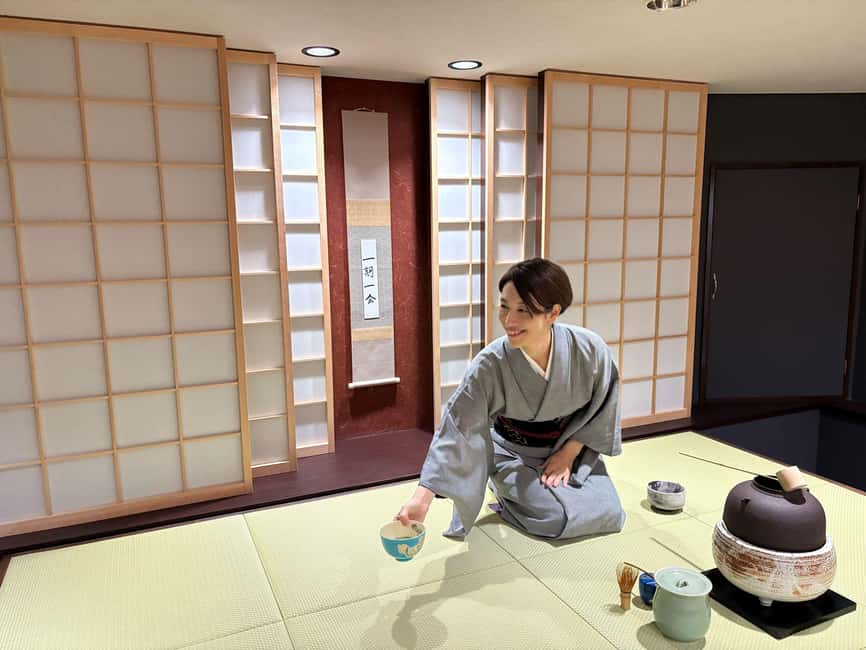
Traditional tea ceremonies often involve sitting on the floor, sometimes in a kneeling position. That can be uncomfortable even for fit people, especially if you are recovering from a long flight or spending several days walking around Kyoto.
This experience uses chairs. You still get the quiet, formal feeling of the ceremony, but you can focus on the tea instead of shifting your legs or worrying about getting up from the floor. The arrangement also makes the session more accessible for people with limited mobility.
Chair seating does slightly change the physical feel of a traditional ceremony. If your main goal is to recreate the most formal version of a tea gathering, this may feel less authentic than a floor-based setting. For most first-time visitors, though, the comfort is a fair trade. The ceremony’s movements, language, utensils, sweets, and tea remain central.
I especially recommend this format for families, older visitors, and anyone who is unsure about kneeling on tatami. You do not need to sacrifice the main cultural lessons to gain comfort.
How long to allow in your Kyoto schedule
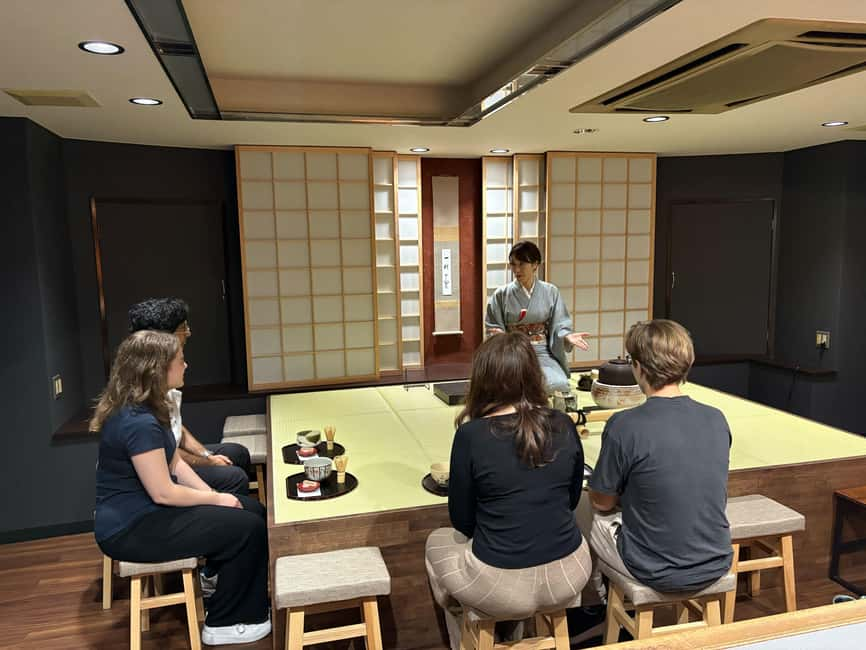
The advertised duration ranges from one hour to 150 minutes, depending on the selected option and schedule. The shorter format suits you if you want a focused cultural stop between Gion sightseeing and another activity. The longer option gives more room for explanations, questions, and the hands-on tea preparation.
Do not schedule a tight connection immediately afterward. The final question period is part of the experience, and rushing out can make the session feel less rewarding. The tea master provides a chance to ask about tea, ceremony customs, matcha preparation, and the ideas behind the tradition.
The activity takes place in or around Gion, so it fits naturally into a day exploring Kyoto’s old streets. The exact meeting point can vary by the option you select. Check the booking details closely rather than assuming every departure uses the same location.
If you choose the kimono option, allow extra time before and after the ceremony. You first go to the Kimono Rental Wargo Gion store, change there, and then walk to the tea ceremony meeting point. You need to arrive at the meeting point 10 minutes before the ceremony begins.
The kimono schedule is fixed:
- An 11:00 kimono start leads to the 12:30 tea ceremony.
- A 12:00 kimono start leads to the 14:00 tea ceremony.
- A 14:00 kimono start leads to the 15:30 tea ceremony.
After the experience, the kimono must be returned by 5:30 p.m. This option can make a lovely Kyoto photo day, but it requires more planning than the tea ceremony alone.
Is $22 good value for Kyoto?
At $22 per person, this is a reasonably priced cultural activity, particularly if you want more than a short demonstration. You receive a matcha drink, instruction from a tea master, traditional sweets, historical background, a hands-on preparation lesson, and a recipe for later use.
The value comes from the personal instruction. You could buy matcha and watch a video for less, but you would miss the live demonstration, the chance to ask questions, and the context surrounding the ceremony. You also get to taste sweets chosen for the tea rather than guessing at a pairing on your own.
The price is strongest for first-time visitors who want a clear introduction. If you already study tea ceremony or have attended several formal sessions, the material may feel basic. The relaxed format is built for access and understanding, not for advanced training in a particular tea school.
A small group can improve the experience because you have a better view of the tea master’s hands and more room for questions. Group size can vary by booking option, so check the details if that matters to you.
Free cancellation is available up to 24 hours before the activity for a full refund, and some bookings allow you to reserve now and pay later. Those policies are useful when your Kyoto schedule is still shifting.
Who will enjoy this tea ceremony most
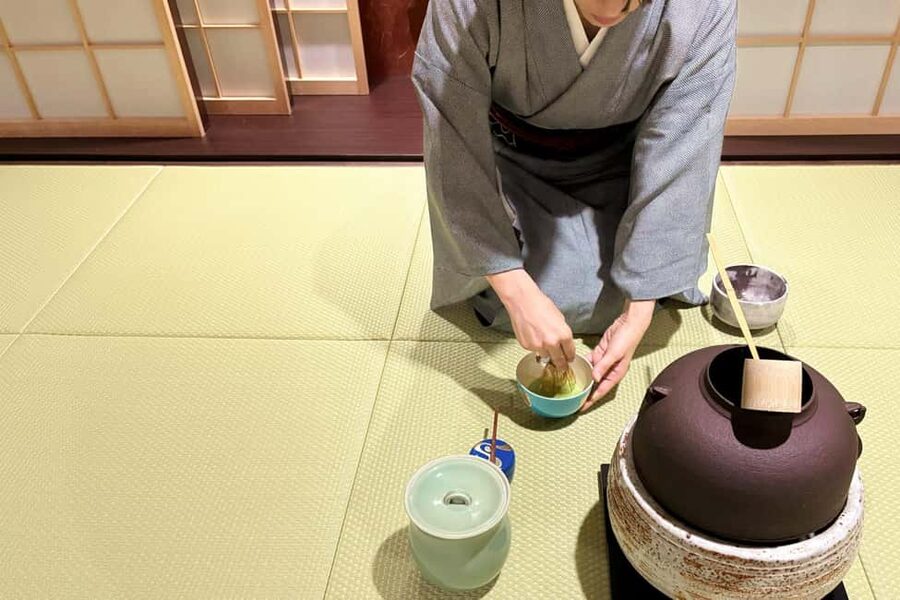
I would choose this activity for you if you want a cultural experience that is easy to understand and does not take half a day. It works especially well for:
- First-time visitors to Japan who want context for matcha and tea etiquette.
- Families who prefer chairs over floor seating.
- Couples or friends looking for a quiet activity in Gion.
- Anyone curious about Zen ideas and Japanese hospitality.
- Visitors who want to learn a skill they can repeat at home.
- People considering a kimono outing paired with a cultural activity.
It may be less suitable if you want a highly formal ceremony with strict silence and traditional kneeling. The relaxed approach is deliberate. You will learn the spirit and basic practice of tea, but this is not presented as an advanced ceremony-school lesson.
The caffeine content also matters for young children and anyone sensitive to caffeine. Children under five are not advised to drink the matcha.
What the high ratings tell you about the experience
The strongest pattern in the available feedback is the quality of the host. Mai is singled out for being approachable, hospitable, and passionate, and other comments describe the experience as clear, peaceful, and memorable. That matches the design of the activity, which places the instructor at the center rather than treating the ceremony as a silent display.
The calm atmosphere is another consistent strength. One person described relaxing as the hot pot began to whistle, which captures the appeal of the session. The gentle sounds and deliberate pace give you a break from Kyoto’s busy streets.
The explanations also receive strong praise. The lesson covers both the history of matcha in Japan and the correct way to whisk the tea into bubbles. That combination is useful because you learn the meaning behind the ritual and the practical method for making a good bowl.
The feedback includes enthusiastic comments in English, French, Portuguese, and other languages. Since the instruction is in English, you should be comfortable following an English-language lesson, even though the welcoming tone appears to work well for an international audience.
My advice before you book
Wear something that lets you sit comfortably for the full session, even though chairs are provided. Read the meeting point carefully, especially if you select the kimono package. For the standard experience, confirm the start time and location because the meeting point may vary by option.
Keep your expectations realistic. You are not signing up for a full professional tea-school apprenticeship. You are receiving an approachable lesson that combines demonstration, explanation, sweets, tasting, and practice in a historic Kyoto district.
Should you book this Gion matcha experience?
Book it if you want an affordable, gentle introduction to Japanese tea culture with a chance to do more than watch. The chair seating, English instruction, local-farm matcha, traditional sweets, and open questions make it especially practical for first-time visitors.
Choose another experience if you want a strict, highly formal ceremony or a long specialist lesson. For most people, though, this strikes a smart balance: enough tradition to feel meaningful, enough comfort to stay relaxed, and enough hands-on practice to make the memory last beyond your time in Kyoto.
FAQ
Where does the tea ceremony take place?
The experience takes place in Kyoto’s historic Gion district. The exact meeting point may vary depending on the option you book.
How long does the experience last?
The duration ranges from one hour to 150 minutes. Check the available starting times and the details of your selected option.
Is the tea ceremony taught in English?
Yes. The instructor language is English.
Do I need to sit on the floor?
No. The ceremony uses chairs, making it easier for people who are uncomfortable sitting on tatami or who have limited mobility.
What is included in the price?
The experience includes a matcha drink made with powder from a local tea farm, guidance from a tea master, an explanation of tea history, traditional Japanese sweets, and a simple matcha recipe for home use.
Can children attend?
Infants and toddlers are free of charge, but they do not receive their own matcha to prepare. If they want to try making tea, they must use a parent or guardian’s bowl. Matcha is not recommended for children under five because it contains caffeine.
How does the kimono option work?
For the kimono option, you first go to the Kimono Rental Wargo Gion store. After changing, you walk to the tea ceremony meeting point and arrive 10 minutes before the ceremony. An 11:00 kimono start connects to the 12:30 ceremony, a 12:00 start connects to the 14:00 ceremony, and a 14:00 start connects to the 15:30 ceremony. The kimono must be returned by 5:30 p.m.
Just added around Kyoto
- Sekka Cotton Furoshiki Class★ 5.0 · 19 reviews
- Kyoto Sword Experience – includes Museum Ticket/Ninja Experience★ 4.5 · 149 reviews
- Scenic Green Tea Fields of Hidden Kyoto & Local Tea Exp (Private)★ 5.0 · 32 reviews
- Secret Eastern Kyoto Biking Adventure★ 5.0 · 44 reviews
- Private Sake Tasting in Central Kyoto with Sake Sommelier★ 5.0 · 32 reviews
- Samurai School in Kyoto: Samurai for a Day★ 5.0 · 202 reviews
- SHIRAKAWA Japanese Culture Experiences with private English staff★ 5.0 · 16 reviews
- A Privately Guided Photoshoot in Beautiful Kyoto by a Pro★ 5.0 · 18 reviews
Tea Ceremony Experiences, compared.

Tea Ceremony in a Traditional Tea House in Kiyomizu
Our verdict →


World Heritage Kyoto & Nara Uji Authentic Matcha Experience
Our verdict →

Arashiyama Bamboo Forest, Monkeys, Matcha & Temple Tour
Our verdict →
Browse the lists this tour appears in