
Reviewed · CYCLING TOURS
Kyoto Satoyama Cycling with Lunch and English Guide
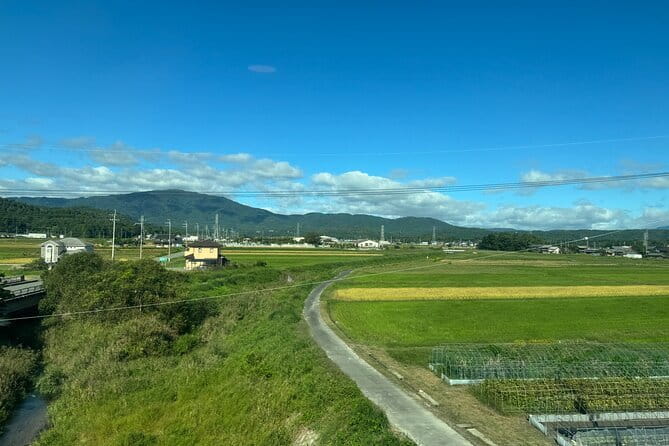
Kyoto’s best rural surprise may be Sonobe, where an e-bike carries you past rice fields, old houses, shrines, and the sound of a river. I like the hands-on soba lesson and the chance to see a quieter side of Kyoto with guides such as Maki and Yasu, who grew up in the area. I also like that this is a private tour, so the pace belongs to your group.
The main consideration is time. The basic outing lasts about four to five hours, but optional stops can push it past 2 PM. The meeting point is in Sonobe, not central Kyoto, and the price details deserve a quick check because the tour is listed at $78.83 while the additional information also gives a participation fee of 15,000 yen per person.
Key points to know before you book
- Sonobe is only about 30 minutes from Kyoto City by train, yet the setting feels far removed from the city.
- You ride an e-bike between four main stops, with about 10 to 20 minutes of cycling between points.
- Course A includes soba-making, using buckwheat grown locally, followed by freshly boiled noodles.
- Course B offers a local meal in a traditional Japanese house, with vegetarian, vegan, and allergy-friendly options available by request.
- The tour is private, so only your own group participates, with group discounts available.
- You can choose two or three extra activities, including a kimono photo, koto playing, spring water, castle visits, shrine worship, and Mt. Komugi.
Sonobe gives you a different kind of Kyoto morning
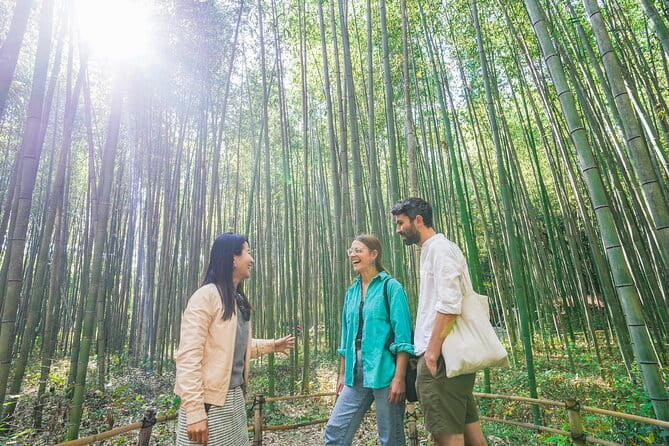
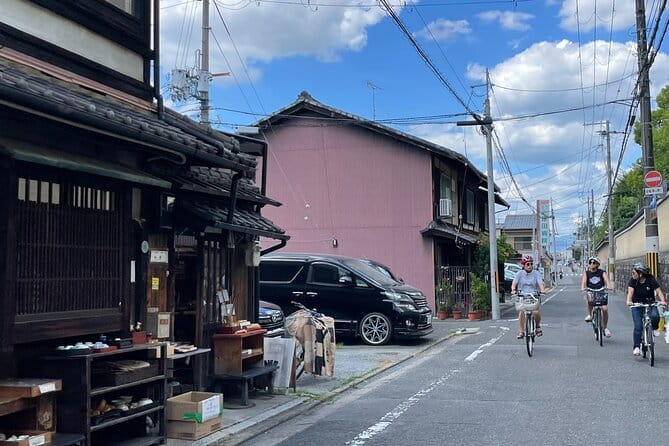
Most first-time visitors to Kyoto stay near temples, shopping streets, and famous gardens. Sonobe gives you something else: open fields, mountain views, traditional homes, and small religious sites reached by bicycle rather than by tour bus.
You meet at Mizobe-6-21 Sonobecho Oyama Higashimachi in Nantan, Kyoto, at 10 AM. From there, your guide fits the outing around your group and explains the stops in English. The guides are local people, not simply escorts passing through town. Maki, her husband, and Yasu are named as part of the welcoming team, and their connection to Sonobe adds useful local detail to a place that can otherwise be hard to understand on your own.
The e-bike matters. You are not signing up for a hard athletic ride, but you still need to be comfortable cycling for several short stretches. The trip between sites usually takes 10 to 20 minutes. That is enough time to enjoy the countryside without turning the day into an endurance test.
I especially like the private format. A school group of 16 has taken the tour, and the activity also works for families, couples, and solo participants. Your group can discuss which optional activities appeal to you at the start, rather than being locked into a fixed schedule designed for strangers.
More Bike Tours in Kyoto
- Hidden Kyoto E-Biking tour
★ 5.0 · 1,843 reviews - Bike Tour Exploring North Kyoto plus Lunch
★ 5.0 · 1,087 reviews - Arashiyama Bamboo Forest & Hidden Gems Bike Tour (Early Bird)
★ 5.0 · 613 reviews
Ikimi Tenmangu Shrine and the god of learning
The first listed stop is Ikimi Tenmangu Shrine, reached for about 10 minutes. It is described as the oldest Tenmangu Shrine in Japan and is dedicated to Sugawara no Michizane, a figure associated with learning and academic success.
That makes this a useful first stop because it introduces an important part of everyday Japanese religious life. People come to pray for success in exams, so the shrine is not only a pretty building for photographs. It has a practical role for families and students.
You should expect a short visit rather than a long temple tour. Ten minutes is enough to see the setting, hear the explanation, and take part in worship if you choose. One of the optional activities is shrine worship, so you can ask your guide at the beginning if you want more time for that side of the experience.
The stop also sets the tone for the day. You are not racing from one famous attraction to another. Instead, you get brief encounters with places that matter to local residents.
Sonobe Castle ruins, with a modern school connection
Next comes the ruins of Sonobe Castle, visited for about 20 minutes. The castle is described as the last castle built in Japan, and some surviving elements include the main gate, castle walls, turrets, and a guardhouse.
The unusual detail is that the main gate is now used by Sonobe High School. That gives you a clear sense of how Japanese communities often reuse historic structures rather than keeping them isolated as museum pieces. You see history in an active local setting, with students and school life nearby.
The visit can vary depending on the schedule, so do not expect a full castle complex or a long archaeological walk. It is a compact stop, best for understanding Sonobe’s place in Japanese history and for seeing preserved structures in an everyday setting.
A castle visit is also one of the extra options. Ask whether your preferred version is included in the day’s plan, especially if castle history is a major reason for booking.
Soba-making in a closed elementary school
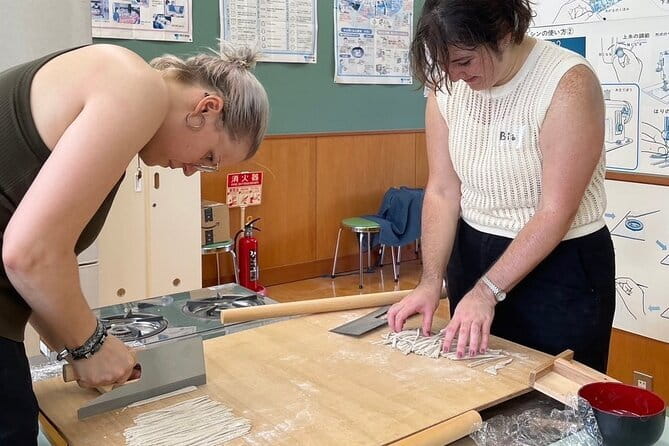
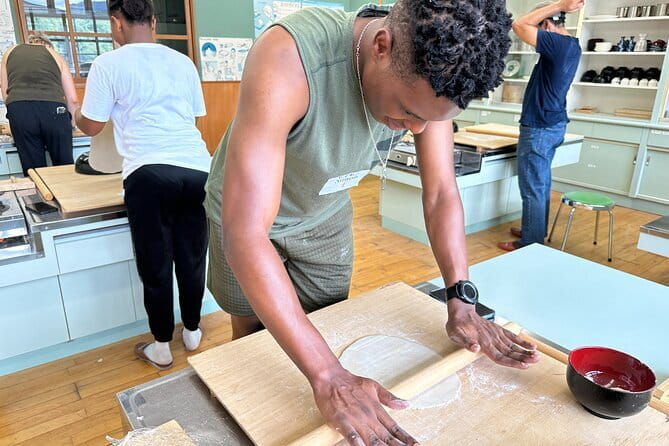
The longest stop is the old Maké Elementary School area, listed as about one hour and 50 minutes. Here, you can use locally grown buckwheat flour to make soba noodles and then eat them freshly boiled.
This is the heart of the experience for me. Eating soba is easy in Japan. Making it yourself, in a former school in the countryside, connects the meal with the people and produce of the area. You are not merely handed a plate and told that it is local. You take part in the process.
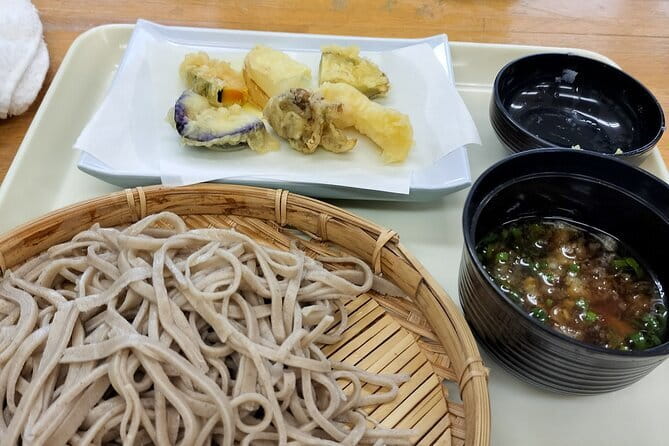
The meal also includes tempura and rice balls. That makes this more substantial than a small tasting, and it explains why the stop occupies so much of the schedule. You should allow yourself to slow down here. The point is not to make perfect noodles on your first attempt. It is to learn a food tradition and enjoy the result.
Course A is the soba option. Course B instead features local produce at a restaurant in a traditional Japanese house. The supplied information does not identify every dish on Course B, so choose it if the setting and seasonal food appeal more than the hands-on noodle lesson.
Vegan, vegetarian, and allergy-friendly meals are available when requested in advance. Make that request before the tour rather than waiting until lunch. The meal is included in the tour structure, but you should confirm which course and menu apply to your booking.
Same trip, a completely different kind of day:
- PERFECT KYOTO 1-Day Bus Tour
★ 5.0 · 13,518 reviews - Kyoto: Fushimi Inari, Kinkakuji, Bamboo Grove 1 Day Bus Tour
★ 4.8 · 4,316 reviews - Kyoto: Tea Ceremony in a Traditional Tea House in Kiyomizu
★ 4.9 · 3,519 reviews - Kyoto Geisha Walking Tour: Gion District & Hidden Gems
★ 4.7 · 3,273 reviews
Make Shrine and a thatched roof
After lunch, the ride continues to Make Shrine, dedicated to the agricultural god of the Tanba region. Tanba has historically supported Kyoto’s food supply, so this stop connects neatly with the local buckwheat and produce served earlier in the day.
The main hall has a traditional thatched roof, which gives the shrine a look you will not find at every urban religious site. The visit lasts about 30 minutes, enough time for your guide to explain the shrine and for you to take part in the proper worship if you choose.
This is where the tour’s pieces come together. You have seen a shrine associated with education, a castle tied to local history, a former school linked to food production, and an agricultural shrine. None of these stops is huge. Together, they give you a readable picture of Sonobe.
Optional activities, from kimono photos to Mario Mountain
At the beginning of the tour, you can choose two or three extra activities included in the price. The options listed are:
- Castle visit
- Shinto shrine worship
- Drinking spring water over a small mountain
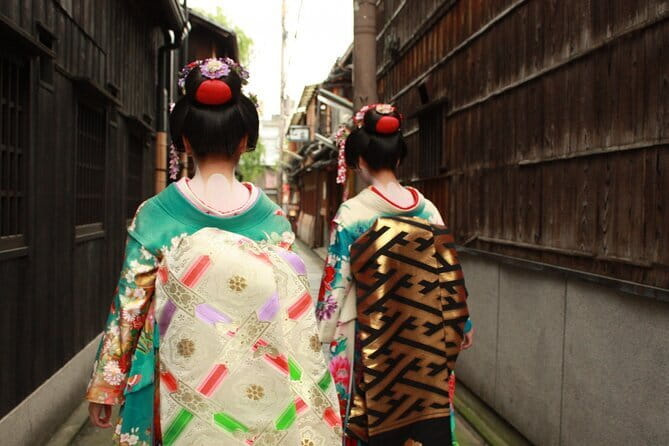
- Taking a photo in a kimono
- Playing the koto, a traditional Japanese instrument
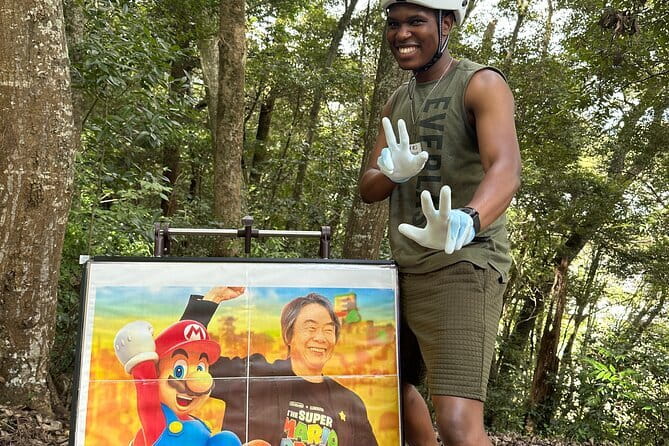
- Exploring Mt. Komugi, described as the birthplace of Mario
The last option is especially unusual. If you have a Nintendo fan in your group, Mt. Komugi may add a playful local angle to the day. It also requires extra time, and the tour can continue beyond 2 PM when this option is included.
The kimono and koto choices give you a cultural activity without requiring a separate paid workshop. They may suit families or groups looking for more than cycling and food. If you prefer a calm day outdoors, choose the spring water or shrine option instead.
Since the schedule depends on your choices, be clear at the start about your priorities. Trying to fit every option into a short outing would work against the relaxed pace that makes Sonobe appealing.
How much value do you get for $78.83?
The listed price is $78.83 per person, while the additional information gives a participation fee of 15,000 yen per person. Because those figures may reflect changing exchange rates, booking arrangements, or different pricing displays, I would confirm the exact amount before paying.
At either price, the value depends on what you compare it with. You are getting an English-speaking local guide, an e-bike, a private format, several sightseeing stops, and lunch or a meal experience. The soba course also includes the activity itself, not just the finished dish.
That is a fair package for someone who wants a full half-day with transportation between rural sights handled by the tour. It is less useful if you only want a bicycle rental or a quick ride through the countryside. You would then be paying for guiding, food, cultural stops, and organization that you may not need.
Group discounts may improve the value for families or larger parties. The tour has accommodated a group of 16, so it is worth asking about the group rate when several people are booking together.
Timing, meeting point, and weather
The activity begins at 10 AM and returns to the same meeting point. The total duration is about four to five hours, including cycling time. Optional activities can extend the day, especially Mt. Komugi exploration.
The meeting point is in Sonobe, near public transportation, and the town is about a 30-minute train ride from Kyoto City. You should build in enough time to reach the start point without rushing. The tour itself does not begin in central Kyoto, so it is not a hotel pickup activity.
Weather matters because this is an outdoor cycling tour. If poor weather forces cancellation, the operator gives notice by 5 PM the day before. You can then choose transportation by car, reschedule, or cancel without a fee. For an ordinary cancellation, full refunds are available when you cancel at least 24 hours before the start time. Changes or cancellations inside that window are not accepted.
The company also gives clothing advice based on the forecast. Past arrangements have included disposable hand warmers and neck warmers in cold weather, but you should still dress for cycling and changing conditions.
Who will enjoy this Sonobe outing most?
I would choose this tour if you want to see rural Kyoto without arranging several separate trains, rentals, meals, and visits. It suits families, school groups, couples, solo participants, and anyone who prefers a personal guide to a large coach.
It is particularly good for you if food is part of your sightseeing. The soba-making course gives the day a clear purpose, while Course B is a better fit if you want local produce in a traditional house.
You should think twice if you dislike bicycles, need a tightly fixed end time, or want a major historic monument. The attractions here are small and local. Their value comes from the connections between them, not from grand scale.
Should you book it?
Book this experience if you want a quiet, active half-day outside central Kyoto and like the idea of combining an e-bike ride with food and local culture. I would choose Course A for the hands-on soba lesson, especially for families and groups, and Course B for a more relaxed meal in a traditional house.
Before booking, confirm the current yen price, tell the operator about dietary needs, and decide which two or three extras matter most. If you can spare the time to reach Sonobe and do not need to be back immediately after lunch, this is a thoughtful way to add a less familiar side of Kyoto to your trip.
FAQ
How long does the Kyoto Satoyama cycling tour last?
The main activity lasts about four to five hours, including the time spent cycling between stops. Optional activities may extend the tour beyond 2 PM.
Where does the tour start and finish?
It starts at Mizobe-6-21 Sonobecho Oyama Higashimachi, Nantan, Kyoto 622-0041, Japan. The activity ends back at the same meeting point.
What time does the tour begin?
The listed start time is 10 AM.
Is this a private tour?
Yes. Only your own group participates in the activity.
What meal choices are available?
Course A includes soba noodle-making with freshly boiled soba, tempura, and rice balls. Course B includes local produce at a restaurant in a traditional Japanese house.
Can dietary requirements be accommodated?
Vegan, vegetarian, and allergy-friendly meals are available by request.
What extra activities can I choose?
You can choose two or three included extras from options such as a castle visit, shrine worship, spring water, a kimono photo, koto playing, and Mt. Komugi exploration.
What happens if the weather is bad?
If the tour is canceled because of poor weather, you can choose another date, transportation by car, or a full refund. Notice is given by 5 PM the day before.
Just added around Kyoto
- Sekka Cotton Furoshiki Class★ 5.0 · 19 reviews
- Kyoto Sword Experience – includes Museum Ticket/Ninja Experience★ 4.5 · 149 reviews
- Scenic Green Tea Fields of Hidden Kyoto & Local Tea Exp (Private)★ 5.0 · 32 reviews
- Secret Eastern Kyoto Biking Adventure★ 5.0 · 44 reviews
- Private Sake Tasting in Central Kyoto with Sake Sommelier★ 5.0 · 32 reviews
- Samurai School in Kyoto: Samurai for a Day★ 5.0 · 202 reviews
- SHIRAKAWA Japanese Culture Experiences with private English staff★ 5.0 · 16 reviews
- A Privately Guided Photoshoot in Beautiful Kyoto by a Pro★ 5.0 · 18 reviews
Cycling Tours, compared.
Arashiyama Bamboo Forest & Hidden Gems Bike Tour (Early Bird)
Our verdict →
Browse the lists this tour appears in