
Reviewed · RICKSHAW RIDES
Kyoto: Private Rickshaw Tour of Gion and Higashiyama Area
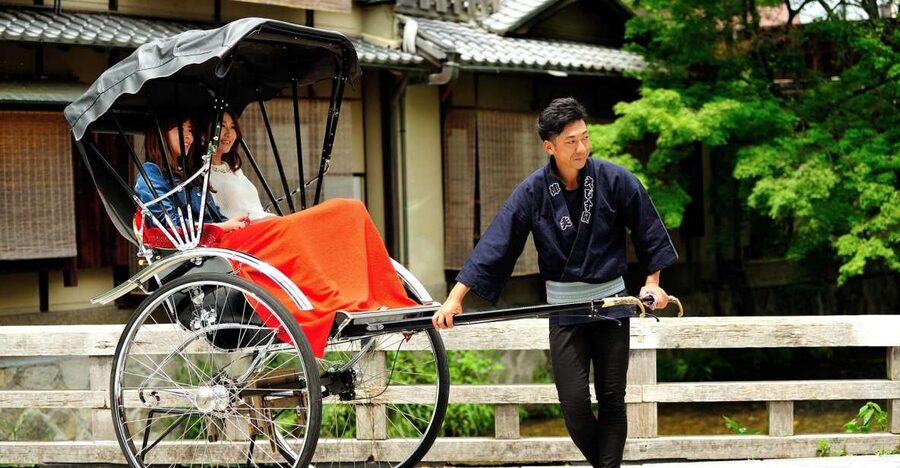
Kyoto’s old streets make far more sense from a rickshaw seat. You move slowly enough to notice wooden townhouses, temple gates, shop fronts, and the narrow lanes of Gion, while your guide handles the route and points out what you might otherwise miss. Fumi, Moto, Shiro, Daichi, and Kai are among the guides praised for their humor, clear English, local knowledge, and photography.
I like the private format, since you can ask questions and shape the route around your interests. I also like the built-in photo stops, especially if you want good pictures without asking strangers to take them. The main drawback is space: each rickshaw is only 21.1 inches, or 74 centimeters, wide, so two adults may find separate rickshaws more comfortable.
Key points to know before you book
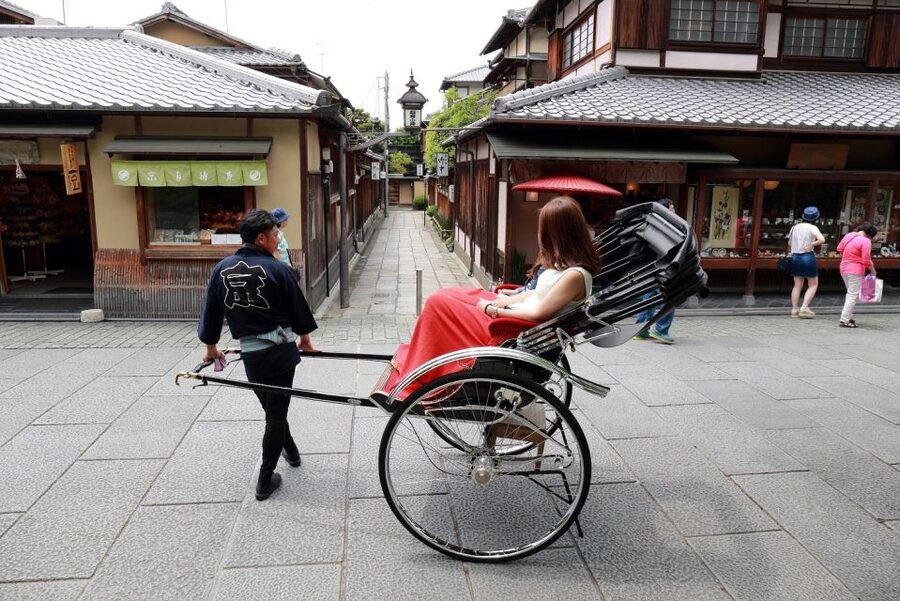
- Meet by Kodaiji Temple: The starting point is on the corner of Nene Street and Ichinenzaka Street, in the heart of historic Higashiyama.
- Choose your pace: Options range from a 45-minute introduction to longer rides that continue through northern Gion and more of Higashiyama.
- Your guide also works as photographer: Guides regularly stop at scenic spots and can take creative pictures with your phone.
- Private means flexible: You can ask for more temples, more Gion, more photo time, or a route suited to your group.
- Plan seating carefully: A rickshaw is narrow. Families may need two rickshaws, and young children have specific seating rules.
- Best for orientation: This is a good first look at Kyoto’s traditional districts, not a substitute for entering every temple or museum.
Why a rickshaw works so well in Higashiyama
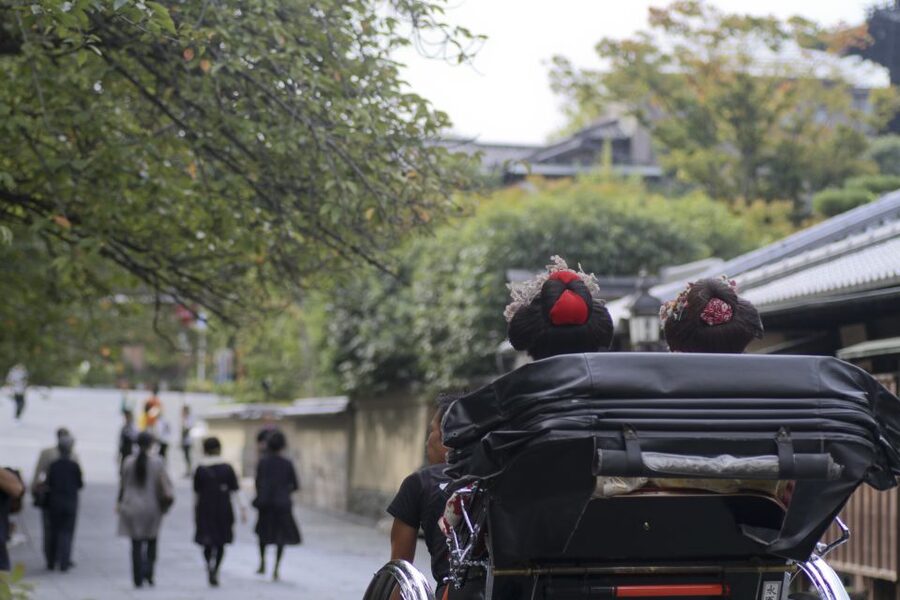
Higashiyama is one of Kyoto’s most attractive historic areas, but it can be tiring on foot. The streets around Kodaiji Temple, Nene Street, and Ichinenzaka are often crowded, and some lanes rise gently toward temples and viewpoints. A rickshaw lets you sit above the street while your guide does the pulling and explaining.
That higher seat changes what you notice. Instead of watching your feet on the cobbles, you can look at the dark timber fronts of traditional machiya townhouses, the signs above small shops, and the details around temple entrances. You also cover more ground than you would during a short walk, particularly if your Kyoto schedule is tight.
The ride itself is part of the attraction, but the guide makes the difference. The strongest guides do more than name buildings. They explain Japanese customs, the role of the geisha districts, local history, and the difference between a genuine maiko or geisha and a visitor dressed in a rented kimono. Shiro, Moto, Daichi, Fumi, and Kai have all been singled out for friendly conversation, strong English, good humor, and a personal approach.
You are not being carried through Kyoto in silence. Expect questions, short stories, directions, and chances to ask about what you see.
More Rickshaw Rides in Kyoto:
- Kyoto: Arashiyama Customized Rickshaw Tour & Bamboo Forest
★ 5.0 · 432 reviews - Kyoto Arashiyama Rickshaw Tour with Bamboo Forest
★ 5.0 · 354 reviews - Kyoto Rickshaw Tour
★ 5.0 · 210 reviews
Starting near Kodaiji Temple and Nene Street
You meet your guide at the corner of Nene Street and Ichinenzaka Street, close to Kodaiji Temple. This is a useful starting point because you are already in one of Kyoto’s most traditional parts, rather than being dropped at the edge of a modern shopping district.
The lanes here are lined with preserved wooden buildings, tea shops, souvenir stores, and restaurants. Even if you choose only the 45-minute ride, you get a quick look at the character of southern Higashiyama. Your guide can stop for photographs and explain the area as you move through it.
The short option is best seen as an introduction. It gives you a taste of the old streets and Gion, but it does not allow time for every temple and lane. One person who booked 45 minutes wished they had selected a longer ride, while another found the same length fully worthwhile. That difference makes sense: the short tour works well for a first orientation, but you should choose more time if you want a slower route and several stops.
Be ready to meet at the stated street corner rather than expecting hotel pickup. Hotel transportation is not included.
Riding through Higashiyama’s wooden streets
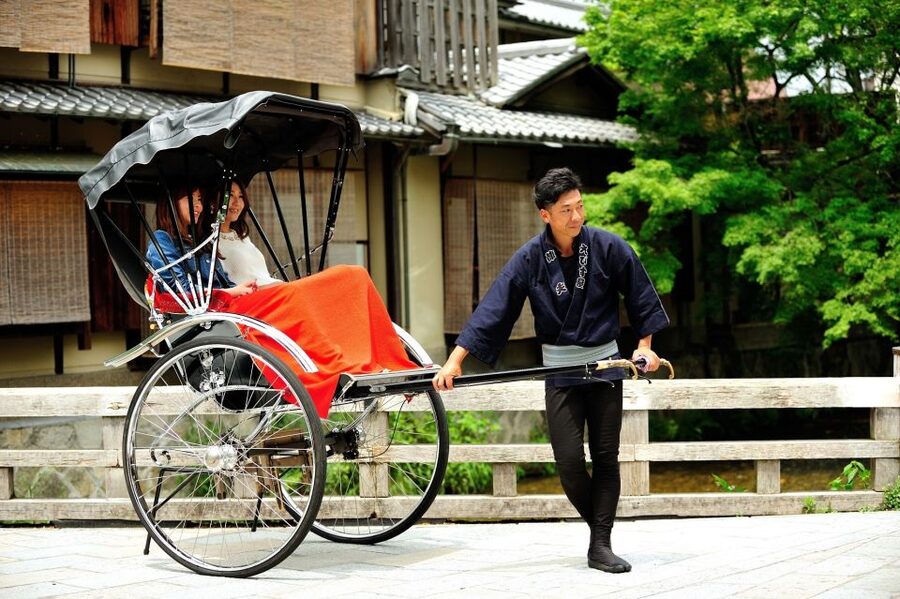
The main pleasure of this route is not a single monument. It is the steady change of scene as you pass old wooden houses, narrow lanes, shops, and temple approaches. Higashiyama gives you a strong sense of Kyoto’s traditional town planning, where homes and businesses sit close together along streets that still feel human in scale.
Your guide can point out places worth returning to on foot. This is valuable because the rickshaw is a moving introduction, not a full visit to every site. Entry fees are not included, and the tour does not turn into a temple admission program. Instead, you see the setting, hear the story, and decide where to spend more time later.
The private arrangement also helps here. If you are interested in architecture, ask for more detail about the wooden townhouses. If you care more about photographs, tell the guide. If you have already visited a major temple, you can spend more time in Gion or on quieter streets.
The vehicle is open to the surroundings, so you experience the sounds and air of the neighborhood rather than looking through a bus window. That also means weather matters. A rainy morning does not automatically ruin the experience, and Shuhei was praised for making a wet-day ride enjoyable, but you should dress for the conditions.
Passing temples and stopping for photographs
The route includes some of Kyoto’s well-known temples and scenic areas, though the exact stops depend on the duration and the route you request. Kodaiji Temple provides the immediate historical setting, while the surrounding lanes offer the classic Higashiyama views many people hope to see in Kyoto.
The photo stops are one of the tour’s strongest practical features. Guides know where a rickshaw can pause and where the background works well. Several guides have taken photos for passengers, and Fumi was especially praised for creating a large set of memorable images. Takumi even helped make a short video using a passenger’s phone.
You should not expect a formal professional photography session. The useful point is that your guide can frame quick pictures during the ride, so you are not left with only crowded selfies. Selfie sticks are not allowed, which is sensible on narrow streets and around other pedestrians.
Tell your guide early if photographs matter to you. A private tour gives you more control than a fixed group outing, and the route can be adjusted to include extra stops where practical.
A few more Kyoto half-days worth comparing
- PERFECT KYOTO 1-Day Bus Tour
★ 5.0 · 13,518 reviews - Kyoto: Fushimi Inari, Kinkakuji, Bamboo Grove 1 Day Bus Tour
★ 4.8 · 4,316 reviews - Kyoto: Tea Ceremony in a Traditional Tea House in Kiyomizu
★ 4.9 · 3,519 reviews - Kyoto Geisha Walking Tour: Gion District & Hidden Gems
★ 4.7 · 3,273 reviews
Entering Gion, Kyoto’s famous entertainment district
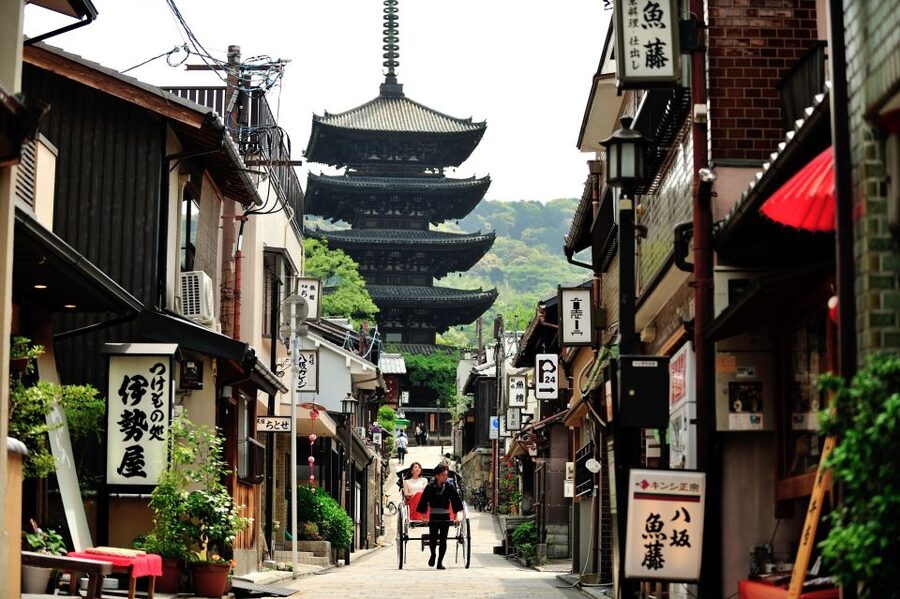
Longer routes continue toward Gion and, on some options, the northern part of the district. Gion is known for its traditional tea houses, refined wooden facades, and connection with geisha culture. It is also a working neighborhood, not a theme park, so your guide’s explanation helps you look with respect.
You may see maiko or geisha, though no sighting is guaranteed. You will also see many people wearing rented kimono, and your guide can help explain the difference. This context is important because Gion can be easy to misunderstand if you only take photographs of people in traditional dress.
The ride gives you a comfortable way to see the district without wandering aimlessly. Guides such as Yoshito and Kai have been praised for explaining Gion’s history and entertainment culture in clear, friendly language. If you are curious about etiquette, ask before photographing anyone. A good guide can help you understand where photography is appropriate and where it is better to simply observe.
The northern Gion section makes the longer options more appealing. You have time to move beyond the first famous streets and see a broader section of the neighborhood. If Gion is your main reason for booking, avoid treating the 45-minute tour as a full district visit.
Longer rides, river views, and a fuller picture
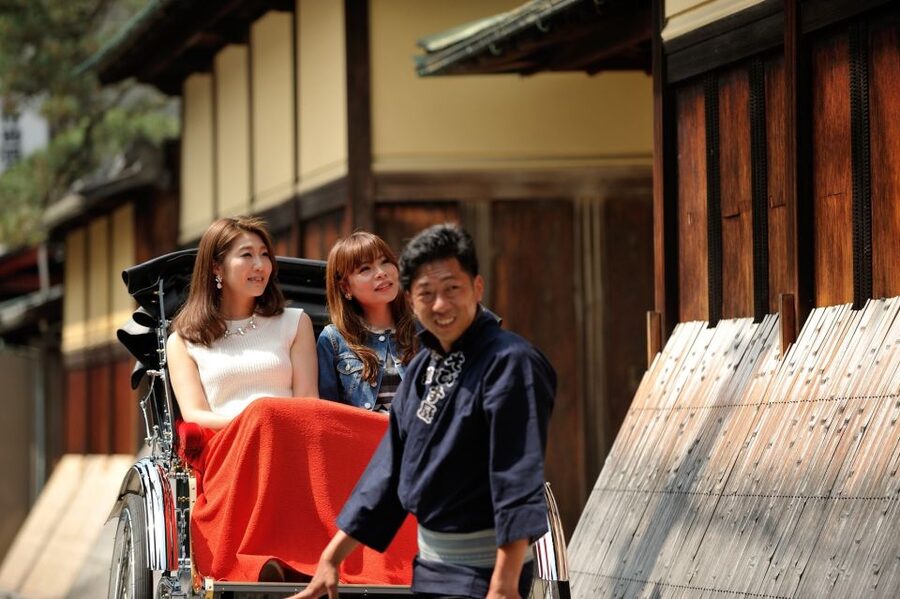
The longer options continue through more of Higashiyama and northern Gion. The supplied details describe choices from 45 minutes up to longer rides, including a 3-hour-and-10-minute comprehensive option, while the booking information also lists durations of 45 to 130 minutes. Because the duration descriptions do not match perfectly, check the exact option and start time before paying.
More time matters because Kyoto’s traditional districts are not compact in the way a map can suggest. You need time to stop, hear an explanation, take photographs, and move between separate areas. A longer ride can include ancient temples, additional streets, and a picturesque river lined with weeping willows.
I would choose the longer route if this is your first day in Kyoto and you want an overview without spending the entire morning walking. It can also suit visitors with limited stamina. One passenger with mobility problems found the rickshaw opened up more of the local area than walking would have allowed.
Still, the rickshaw does not remove every physical concern. The seat is compact, and people with back problems may find the ride unsuitable. The activity is also not recommended for pregnant women, particularly during the first 16 weeks. If comfort is a concern, ask about taking individual rickshaws rather than sharing.
How much value do you get for $51?
At $51 per person, this is not the cheapest way to see Kyoto. You can walk through Higashiyama for free, and many temples charge only modest admission fees. The price makes more sense when you count the private guide, the transport, the route planning, the photo stops, and the time saved.
You are paying for interpretation as much as for movement. A good guide helps you understand why the streets look the way they do, what the customs mean, and where to return after the ride. You also get a personal introduction rather than a large group experience.
The value is strongest for first-time visitors, couples, families, older adults, and anyone who wants a gentle overview. Families have used two rickshaws for four people, and children aged six and over pay the adult price. Up to two children aged five and under can ride with two adults, one child on each adult’s lap. A child aged five or under using one of the two rickshaw seats must be booked as a full-fare adult.
For a couple, the price can feel reasonable if the guide is engaging and the photographs are useful. For a larger family, the cost rises quickly because you may need more than one rickshaw. Compare the total price for your group, not just the per-person figure.
What the guides add to the ride
The guide quality is the clearest strength of this experience. The individual names vary, but the pattern is consistent: Moto, Shiro, Daichi, Fumi, Takuto, Yoshito, Kai, Shuhei, and others have been praised for clear English, warmth, humor, patience, and safe driving.
Moto appears often in the feedback, with special praise for his English, energy, local explanations, and photography. Daichi has been noted for adjusting the route and showing less obvious places. Fumi is praised for his gentle manner and creative pictures. Shiro is known for detailed explanations, while Kai has been praised for making the ride enjoyable for older passengers.
These details matter because a rickshaw ride without good commentary could become a short sightseeing loop. The guide turns it into a conversation. You can ask about Japanese words, temples, local customs, food areas, or places to visit later. Some guides also offer useful suggestions for the rest of your Kyoto stay.
The guides do the physical work, too. Passengers repeatedly note the strength and care required to pull a rickshaw through narrow and sometimes steep streets. That can be fun to watch, but remember that this is someone’s job. Listen to safety instructions, keep your belongings secure, and avoid asking for reckless speed.
Families, older adults, and mobility concerns
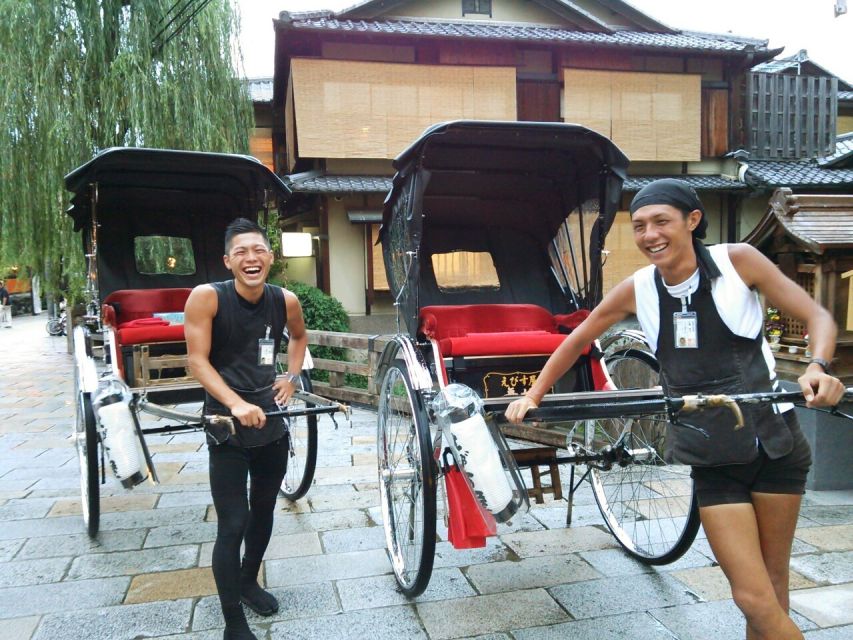
This tour suits families better than you might expect, provided you plan the seating. A family of four used two rickshaws, and children aged 11 and 14 enjoyed the experience. A toddler can ride under the stated rules, but you should account for the narrow seats and lap arrangement.
The activity can also help older adults see Higashiyama without a long walking route. An 80-year-old passenger was kept warm and safe during a ride, and another passenger with mobility problems was able to enjoy more of the area than would have been possible on foot.
That does not mean the tour is suitable for everyone with limited mobility. Wheelchairs and strollers are accepted, but the seat itself may still be difficult for some people. Back problems are specifically listed as a concern, and pregnancy is listed as unsuitable. Ask the operator if you have a condition not covered by the information here.
For two average-size adults, consider separate rickshaws. The listed width is only 74 centimeters, and one passenger specifically advised one rickshaw per average-size person unless both riders are small. This is one of the most useful details to settle before booking.
Practical timing and planning tips
I would place this tour near the beginning of your Kyoto stay. You get a clear orientation to Higashiyama and Gion, then you can return to the streets or temples that caught your attention. It also works nicely near the end of a trip, when you want a relaxed final look at Kyoto’s old neighborhoods.
Allow time to reach the meeting point at Kodaiji Temple. There is no hotel pickup or drop-off, and the voucher is valid for the Kyoto Higashiyama location, not the separate Arashiyama branch.
The tour is private, with English and Japanese available. Free cancellation is offered up to 24 hours before the activity, and you can reserve now and pay later. Those terms are helpful if your Kyoto schedule is still shifting, but they do not change the need to choose the correct branch and duration.
Bring a phone if you want the guide to take photographs or make a short video. Leave the selfie stick behind. Wear shoes and clothing suitable for walking before or after the ride, since the rickshaw is only one part of a day in Higashiyama.
Should you book the Kyoto rickshaw tour?
Book it if you want a personal introduction to Gion and Higashiyama, prefer conversation to a self-guided walk, or need to reduce the amount of walking. The combination of a private vehicle, local explanation, and photo stops gives you more than simple transportation.
Choose at least 70 minutes if Gion and several photo stops are important to you. Pick the shortest option if you have limited time or want a quick introduction before exploring on foot. Families and larger adults should check the seating arrangement carefully, and anyone with back problems or pregnancy concerns should skip it.
For most first-time visitors, this is a pleasant and useful way to get oriented. The best reason to book is not the novelty of sitting in a rickshaw. It is the chance to see Kyoto’s old districts with a guide who can explain what you are looking at and help you notice details you might otherwise pass by.
FAQ
Where does the Kyoto rickshaw tour meet?
Meet your guide at the corner of Nene Street and Ichinenzaka Street, near Kodaiji Temple in Higashiyama.
How long does the tour last?
Tour choices begin with a 45-minute introduction. The information also lists options lasting up to 130 minutes and describes a longest comprehensive option of 3 hours and 10 minutes, so check the exact duration when booking.
Is the tour private?
Yes. This is a private group experience, so you can discuss your interests and request route adjustments.
Which languages are available?
Live guiding is available in English and Japanese.
Can children ride the rickshaw?
Children aged six and over are charged the adult price. Up to two children aged five and under can ride with two adults, with one child sitting on each adult’s lap. A child aged five or under using a rickshaw seat must be booked as a full-fare adult.
Is the tour suitable for wheelchair users and people with strollers?
The activity is listed as wheelchair and stroller-friendly. However, each rickshaw is only 74 centimeters wide, and people with back problems may find the ride unsuitable. Pregnancy is also listed as a reason not to take the tour.
Just added around Kyoto
- Sekka Cotton Furoshiki Class★ 5.0 · 19 reviews
- Kyoto Sword Experience – includes Museum Ticket/Ninja Experience★ 4.5 · 149 reviews
- Scenic Green Tea Fields of Hidden Kyoto & Local Tea Exp (Private)★ 5.0 · 32 reviews
- Secret Eastern Kyoto Biking Adventure★ 5.0 · 44 reviews
- Private Sake Tasting in Central Kyoto with Sake Sommelier★ 5.0 · 32 reviews
- Samurai School in Kyoto: Samurai for a Day★ 5.0 · 202 reviews
- SHIRAKAWA Japanese Culture Experiences with private English staff★ 5.0 · 16 reviews
- A Privately Guided Photoshoot in Beautiful Kyoto by a Pro★ 5.0 · 18 reviews
Rickshaw Rides, compared.
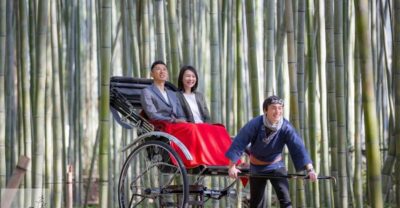
Arashiyama Customized Rickshaw Tour & Bamboo Forest
Our verdict →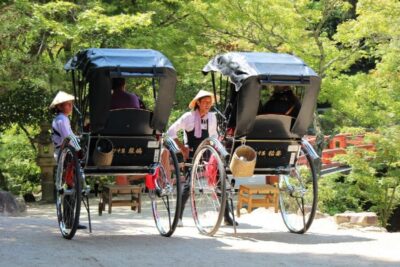
Miyajima: Private Rickshaw Tour to Itsukushima Shrine
Our verdict →
Browse the lists this tour appears in