
Reviewed · RICKSHAW RIDES
Tokyo Asakusa Rickshaw Tour
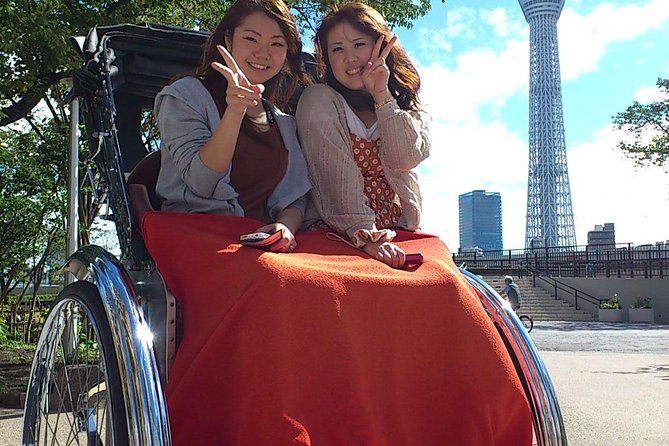
Asakusa makes the most sense from a rickshaw seat. You move slowly enough to notice old house fronts, shrine gates, raccoon figures, and small religious sites, yet cover far more ground than you would on foot. I like the custom route and the personal attention from drivers such as Koko, Kei, Micchy, and Taisei. The main drawback is space: two adults fit, but the 74-centimeter seat can feel snug.
I also like the way this ride joins Asakusa’s quieter corners to its famous sights. You may pause at Ushijima Shrine, Imado Shrine, or Honryuin Matsuchiyama Shoden, then catch a Skytree view across the Sumida River. Just remember that rickshaws cannot enter the Sensoji temple grounds or Nakamise shopping street, so part of the visit is on foot.
Key points to know before booking
- Choose from 30 minutes to three hours: Short rides give you an overview, while longer outings allow time for several shrines, retro streets, parks, and photo stops.
- The route is flexible: Tell your driver whether you care most about temples, shrines, old streets, gardens, entertainment history, anime-related spots, or photographs.
- The seat is narrow: A rickshaw is 74 centimeters wide and carries up to two adults. Booking one rickshaw per person may be more comfortable.
- The guides are a major part of the experience: Koko, Kei, Micchy, Taisei, Nene, Yusuke, BUCHI, and others are praised for humor, local facts, photography, and friendly conversation.
- Asakusa changes block by block: Expect religious landmarks, Edo-period facades, raccoon statues, old theaters, modern businesses, and the Asahi Beer Headquarters in one outing.
- Weather matters: The experience requires good weather, though the rickshaws can provide rugs and protection in light rain.
Why a rickshaw works so well in Asakusa
Asakusa is one of the best Tokyo neighborhoods for a slow ride. Its famous Sensoji Temple draws plenty of attention, but the area is much larger than the temple approach. Side streets lead to shrines, old homes, small gardens, entertainment districts, and riverfront paths. A rickshaw lets you connect these pieces without spending the whole afternoon walking.
The pace is the key. You sit high enough to see over some street activity, but you remain close to the neighborhood. Your driver pedals, steers, explains what you are seeing, and can stop for photographs. The result feels more personal than a bus tour and less tiring than covering the same distance on foot.
I would not book this simply as a fast ride past famous buildings. The best use of the experience is to tell your driver what interests you. A family might focus on Imado Shrine’s cat figures and the raccoon-themed street. A history-minded visitor might choose Edo-period streets, Rokku, and old religious sites. A first-time visitor may want a broad introduction with Skytree views.
The price is listed at $42.90 per person, though the final cost depends on the duration and option you select. That is reasonable if you want a private outing with a driver and a flexible route, especially during a short stay in Tokyo. It is less compelling if you only want transportation or prefer to stop at every site for a long visit.
More Rickshaw Rides in Tokyo:
- Tokyo: Asakusa Sightseeing Tour by Rickshaw
★ 4.9 · 195 reviews - Kyoto: Arashiyama Customized Rickshaw Tour & Bamboo Forest
★ 5.0 · 432 reviews - Kyoto Arashiyama Rickshaw Tour with Bamboo Forest
★ 5.0 · 354 reviews
Starting near Asakusa Station
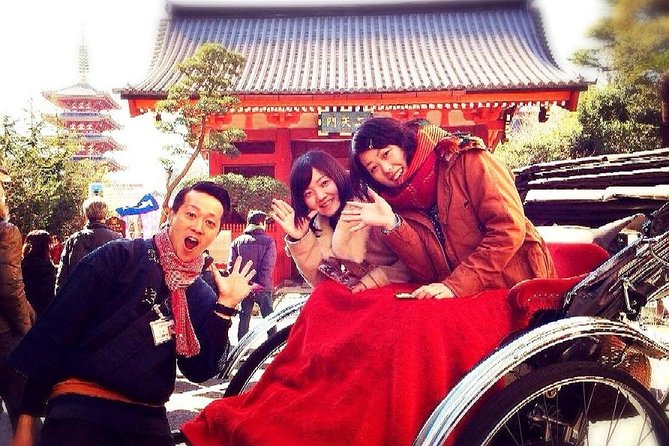
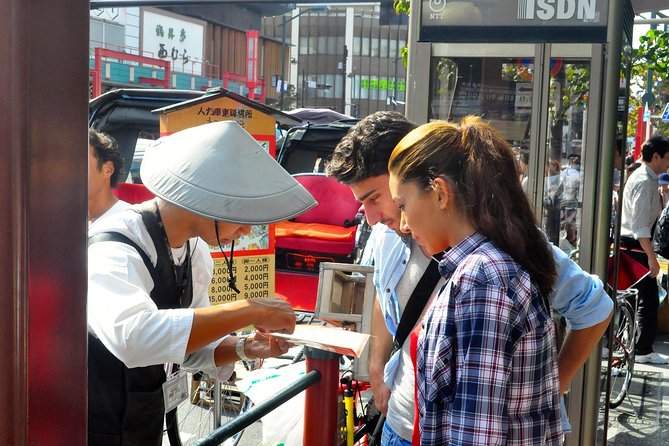
You make your own way to 1-chōme-1-4 Asakusa, close to Asakusa Station. The meeting point is near public transportation, and confirmation arrives when you book. Look for the rickshaw stand and your guide, who may be waiting with a sign showing your name.
The ride is private for your group. That matters because you can discuss the route rather than follow a fixed schedule shared with strangers. English and Japanese-speaking drivers are available, subject to availability, so request your preferred language at checkout.
Before setting off, explain what you want from the time. Ask for shrines and temples, older streets, gardens, entertainment history, family-friendly sights, or the best photo stops. You can also discuss where you would like to finish. The usual end point is around Kan’non-dōri, but another drop-off may bring an extra fee payable on the day.
Ushijima Shrine and the three-part gate
Ushijima Shrine is one of the most interesting stops because the visit comes with a specific question: why does its gate have three entrances instead of the more usual single entrance? Your driver explains the local background while you look around the Shinto site.
The stop lasts about 15 minutes, and admission is not included as a separate ticket. This is not a long shrine visit, but it gives you a useful pause from the city streets and a chance to notice how religious places fit into daily Asakusa.
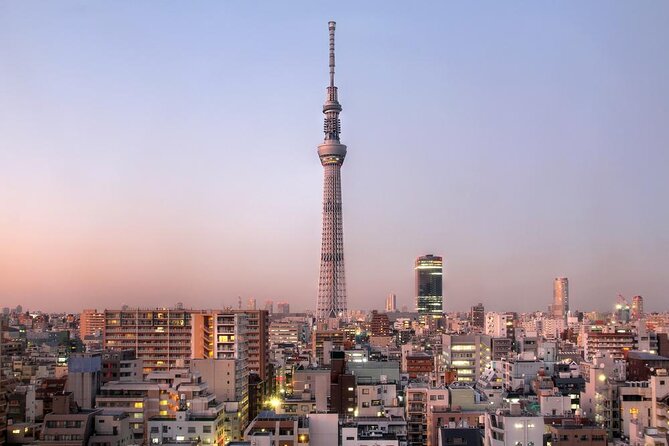
The nearby Sumida River offers one of the ride’s best views of Tokyo Skytree. Your driver can position the rickshaw for photographs, and the riverfront helps you see the contrast that defines this part of Tokyo: traditional buildings and trees in the foreground, a giant modern tower beyond them.
Sumida Park is another good seasonal stop. Cherry trees make it especially appealing in spring, while the long riverside park also works as a place to pause and rest during a longer outing. The route may include the park, but the exact stops depend on your selected duration and interests.
Honryuin Matsuchiyama Shoden and its radishes
Honryuin Matsuchiyama Shoden is a Buddhist temple connected with the Sensoji temple group. Its most memorable detail is the number of radishes shown around the temple and on its lanterns. Your driver explains why this vegetable has such a strong role here.
This is the sort of stop that makes the rickshaw worthwhile. You are not only looking at a gate or taking a quick photograph. You get a small piece of local symbolism that would be easy to miss while walking through Asakusa without guidance.
The temple stop is scheduled for about 15 minutes, with admission not included. You should expect a short visit rather than a long period for quiet reflection. If you choose a 30-minute ride, the route may not include it, so ask ahead or speak with your driver at the start.
A few more Tokyo half-days worth comparing
- 1-Day Tokyo Bus Tour
★ 5.0 · 14,250 reviews - Tokyo: TOKYO SKYTREE® Admission ticket
★ 4.5 · 11,192 reviews - Tokyo: teamLab Planets TOKYO Digital Art Museum Entry Ticket
★ 4.6 · 9,779 reviews - Tokyo: Sumo Show Experience with Chicken Hot Pot and a Photo
★ 4.8 · 6,678 reviews
Imado Shrine and the beckoning cats
Imado Shrine brings a lighter, more playful mood. It is known for cat figures, especially manekineko, the familiar beckoning cat associated with good fortune. The shrine is a natural choice if you enjoy quirky details, Japanese popular culture, or small visual discoveries.
The stop lasts about 15 minutes and does not include a separate admission ticket. Families may find it particularly appealing, although the rickshaw’s seating rules matter. Children aged five and under can ride free on an adult’s lap. A child using one of the two seats must be booked as an adult.
Imado also adds a useful cultural contrast to the Buddhist temple and Sensoji. Your driver can help explain the difference between Shinto and Buddhism, and how both traditions appear side by side in Japan. The short format works well for a first introduction without turning the ride into a lecture.
Sensoji, Asakusa Shrine, and what you cannot ride through
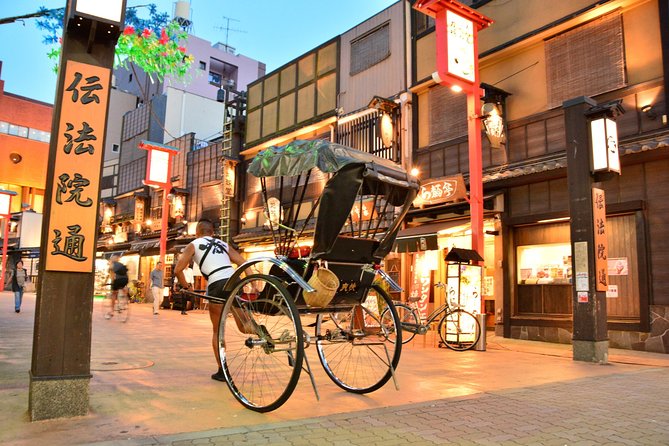
The colorful gate leading toward Sensoji Temple and Asakusa Shrine is one of the area’s essential sights. Asakusa Shrine sits on the grounds of the larger Sensoji complex, giving you a clear place to discuss the relationship between Shinto and Buddhism.
There is an important practical limit here. Rickshaws are not allowed in the Sensoji and Asakusa Temple area, including the temple buildings, grounds, and Nakamise shopping street. Your driver can bring you near the complex and explain what you are seeing, but you will need to explore the central temple area on foot.
This is not a flaw, but it affects your planning. If you want time inside Sensoji or a slow walk along Nakamise, book the rickshaw before or after that visit rather than expecting the ride to cover everything. A longer three-hour option gives you more freedom to combine the ride with walking, but the temple restrictions still apply.
Edo streets, raccoon figures, and old entertainment districts
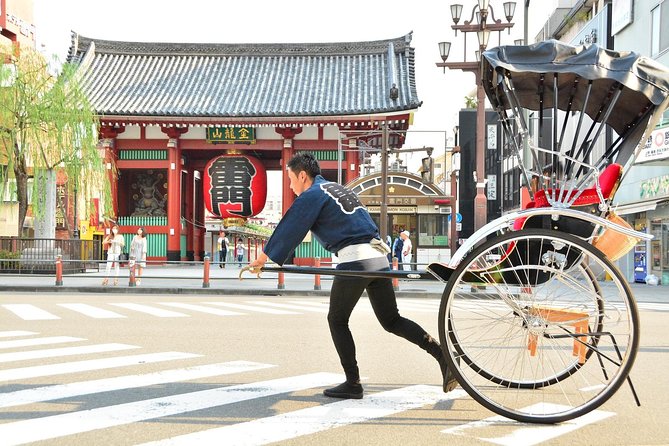
Asakusa’s older streets are where the ride feels least like a checklist. You may pass housing fronts and shops that recall the Edo period, when the neighborhood had a very different role in Tokyo. The views are not preserved in one single historic quarter. Instead, old details appear between newer buildings and businesses.
One unusual street uses raccoons as its theme. Raccoon figurines appear every few meters, creating a small visual hunt as you ride. It is a good example of the neighborhood’s quirky side, and a fun request if you have children or want photographs beyond the standard temple gates.
The route can also include one of Japan’s oldest amusement parks, still operating. The ride may pass the entertainment area rather than provide time for rides, so treat it as part of the neighborhood tour, not an amusement-park ticket.
Rokku Street adds another layer. Before the war, it was Tokyo’s leading entertainment district, filled with cinemas and theaters. Today it forms part of Asakusa’s retro district. Nearby venues still connect with comedy and stage shows, giving you a glimpse of the neighborhood’s long entertainment tradition.
This section is especially valuable if you have already seen Sensoji. It shows you how Asakusa became more than a religious center. You see a place shaped by temples, popular entertainment, old commerce, and modern Tokyo life.
Asahi Beer Headquarters and the best photo stops
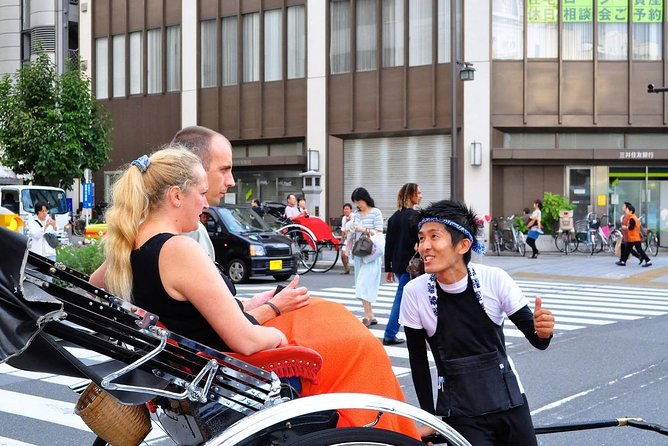
The Asahi Beer Headquarters is easy to recognize because of the golden flame-like form on top of the building. It creates one of the clearest visual contrasts on the route: a famous modern structure across the river from older Asakusa streets and religious buildings.
Your driver can help you frame the building and Skytree in the same general outing. The rickshaw itself also makes a good subject for photographs, and several drivers are praised for taking pictures during the ride. Yusuke, for example, is described as taking especially good photos and making sure the driver could appear in the image too.
Photo stops are not just a bonus here. They help you remember the changing character of Asakusa, from maple and cherry trees to temple lanterns, river views, and high-rise Tokyo. If photographs matter to you, say so at the start and allow enough time for stops rather than choosing the shortest option.
How much time should you book?
The experience runs from about 30 minutes to three hours. Each length serves a different purpose.
A 30-minute ride is best for a quick orientation. You will not see every listed stop, but you can get a feel for the streets, catch a few photographs, and hear an introduction to the area. This works well at the start of a busy day.
A 45-minute to one-hour ride gives you a more useful balance. You can see several key areas and still keep time for Sensoji, shopping, or food afterward. Many of the positive accounts describe rides in this range as highlights because they combine sightseeing with personal conversation.
A longer ride of two to three hours suits you if Asakusa is a main focus of your day. It gives the driver more room to include shrines, older streets, entertainment districts, riverside views, and photo stops. It is also the better choice if you want to shape the route around a special interest.
Do not assume a longer booking means three hours of nonstop riding. Stops, explanations, and photographs are part of the value. The best route is one that gives you time to look around instead of racing between landmarks.
Seating, families, and comfort
Each rickshaw carries up to two adults, but the seat is 74 centimeters wide. Two adults fit, yet the space can feel close. If you are concerned about comfort or size, book an individual rickshaw for each passenger. If you book only one and later find that two people do not fit comfortably, another rickshaw may not be available on the day, especially with an English-speaking driver.
Up to two children aged five or under can ride with two adults, provided they sit on adult laps. A five-year-old using one of the two seats must be booked as an adult. Adult pricing applies from age six.
The ride is suitable for most people, but you should remember that it is an open-air experience. It requires good weather, and poor conditions can lead to a rescheduled date or a full refund. In light rain, the rickshaws can keep you dry and warm with coverings, rugs, and seat warmers, but you should still dress for the season.
Who will enjoy this Asakusa ride most?
I would choose this experience for a first visit to Asakusa, especially if you want context before exploring on foot. It also suits repeat visitors who have already seen Sensoji and now want smaller shrines, old streets, and the district’s entertainment past.
Families get an easy introduction to the area, with cats, raccoons, amusement parks, and an unusual vehicle to keep younger children interested. Couples and friends may appreciate the private format and the chance to ask for photographs.
The ride is also a good choice if you have limited time or do not want to walk continuously. It is less suited to anyone who wants a long, quiet visit inside each temple or shrine. Those sites receive short stops, and Sensoji’s central area must be explored separately on foot.
The drivers are central to the experience. Names such as Koko, Kei, Micchy, Taisei, Nene, BUCHI, Takumi, and Yusuke appear in the supplied accounts, with particular praise for humor, energy, patience, language ability, local facts, restaurant suggestions, and photography. Driver availability varies, so you cannot book a specific person unless the provider confirms it.
Should you book the Tokyo Asakusa Rickshaw Tour?
I would book it if you want a friendly introduction to Asakusa that combines famous sights with smaller, stranger details. The private route, river views, old streets, and personal explanations offer more than a simple photo ride.
Choose at least 45 minutes if you want the experience to feel substantial. Consider a separate rickshaw for each adult if space may be an issue, and request English at checkout. Keep Sensoji and Nakamise as a walking stop, not a rickshaw stop.
At $42.90 per person, the ride offers fair value when you use the driver’s local knowledge and customize the route. It is not the cheapest way to move through Asakusa, but it gives you a memorable view of a neighborhood where Edo-era details, religious traditions, quirky streets, and modern Tokyo sit unusually close together.
FAQ
Where does the Tokyo Asakusa Rickshaw Tour start?
The meeting point is outside Asakusa Station at 1-chōme-1-4 Asakusa, Taito City, Tokyo 111-0032, Japan.
Where does the tour finish?
The listed finishing point is near Kan’non-dōri at 1-chōme-2-11 Asakusa. You can discuss a different finishing location with your guide, though an extra drop-off fee may apply.
How long does the rickshaw tour last?
Available options run from about 30 minutes to three hours. The shorter options cannot include every listed landmark.
Can I customize the route?
Yes. You can tell your driver what interests you most, including shrines, temples, old streets, gardens, entertainment areas, photo stops, and cultural details.
How many people fit in one rickshaw?
A maximum of two adults can ride in one rickshaw. The rickshaw is 74 centimeters wide, so booking separate rickshaws may be more comfortable for some passengers.
Can young children ride for free?
Children aged five and under may ride free when seated on an adult’s lap. If a five-year-old uses one of the two seats, that child must be booked as an adult.
Can the rickshaw enter Sensoji Temple or Nakamise shopping street?
No. Rickshaws cannot enter the Sensoji or Asakusa Temple buildings, temple grounds, or Nakamise shopping street. You can visit those areas on foot.
Just added around Tokyo
- Kawagoe Japanese Food Tour : Unagi Kaiseki and Sake near Tokyo★ 5.0 · 30 reviews
- Kawagoe 4hr Private Tour with Licensed Guide (Kawagoe Dep)★ 5.0 · 13 reviews
- Little EDO Sushi Making workshop in Kawagoe★ 5.0 · 18 reviews
- 【R34】Tokyo:Private Daikoku tour in Modified R34★ 4.9 · 92 reviews
- :Tokyo,Shibuya/ Pro Photography in Kimono / English-Friendly★ 5.0 · 26 reviews
- Tokyo:Celebrate Unique Japanese New Year Tradition Festivity★ 3.9 · 20 reviews
- Tokyo: Allstar Food Tour★ 4.7 · 29 reviews
- Tokyo: West-Side Cycling and Food Tour with Guide★ 5.0 · 37 reviews
Rickshaw Rides, compared.
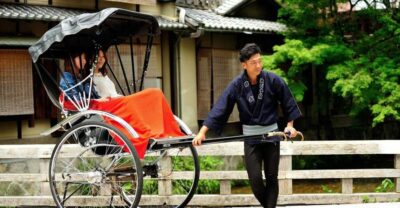
Arashiyama Customized Rickshaw Tour & Bamboo Forest
Our verdict →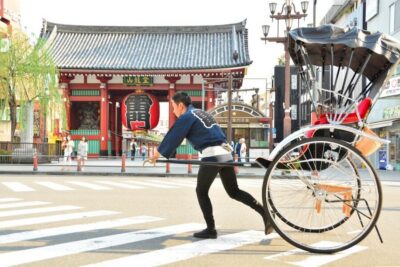
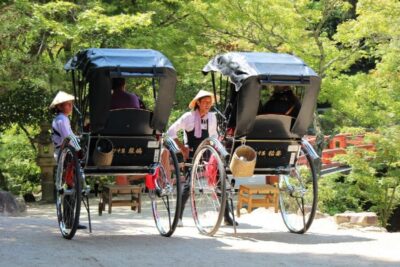
Miyajima: Private Rickshaw Tour to Itsukushima Shrine
Our verdict →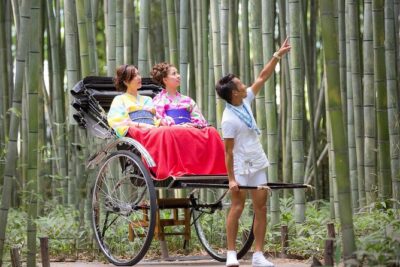
Browse the lists this tour appears in