
Reviewed · TEA CEREMONY EXPERIENCES
Kyoto: Newly Opened Tea Ceremony – Sanjo Chasuian
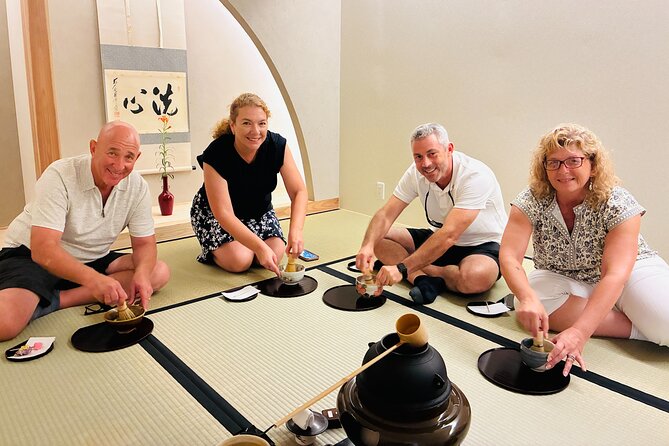
Kyoto tea ceremony is not just a cup of green tea. At Sanjo Chasuian, you step through a nijiriguchi, a small crawl-in door meant to leave the outside world behind, then watch a host prepare matcha with careful, deliberate movements. You also make a bowl yourself, which turns a formal custom into something you can understand with your hands.
I like the two-part format: first watch the host, then whisk your own tea. I also like the seasonal wagashi from a Kyoto confectioner with more than 100 years of history. The main consideration is the strict timing. Arrive late, even by one minute, and you cannot enter or receive a refund.
Key points at a glance
- Two bowls of matcha: One is prepared by the host, and the second is whisked by you or a companion.
- A five-minute walk from Karasuma Oike: The central location makes this easy to fit between sightseeing stops.
- A real nijiriguchi: You enter the tea room through the traditional low doorway, unless you prefer to use the regular entrance.
- English guidance: Hosts including Yuko and Reina explain the ceremony, its history, and the meaning behind the movements.
- Seasonal Kyoto sweets: The included wagashi comes from a confectioner with over a century of experience.
- Small shared session: Groups are limited to 10 people, though you may participate alongside other bookings.
Why this one-hour tea ceremony works
Kyoto offers tea experiences in many forms, from polished cultural shows to quiet lessons in private tea rooms. Sanjo Chasuian sits in the useful middle ground. You receive enough explanation to understand what is happening, but you also take part instead of simply watching.
The session lasts one hour. That is long enough for an introduction to the custom without consuming half your afternoon. If your Kyoto plans already include Nijō Castle, the downtown shopping streets, or the Karasuma area, this is a sensible cultural stop rather than a major detour.
The price is $31 per person. I consider that fair for two bowls of matcha, a traditional sweet, an English explanation, and a hands-on lesson in a small group. You are paying for instruction and setting as much as for tea. If you only want to taste matcha, a café will cost less. If you want to understand why the bowl, whisk, gestures, and room matter, this experience gives you much more.
A grand opening discount is offered until September 15, but check the current price when booking. The regular cost remains reasonable for Kyoto, especially if you value an English-speaking host and a structured introduction.
More Tea Ceremony Experiences in Kyoto
- Kyoto: Tea Ceremony in a Traditional Tea House in Kiyomizu
★ 4.9 · 3,519 reviews - Kyoto: Tea Ceremony Ju-An at Jotokuji Temple
★ 4.9 · 3,207 reviews - Kyoto: 45-Minute Tea Ceremony Lesson Experience
★ 4.3 · 2,378 reviews
Finding Sanjo Chasuian near Karasuma Oike
Sanjo Chasuian is about a five-minute walk from Subway Karasuma Oike Station. That central location is one of its practical strengths. You do not need a long ride out to a distant temple district, and you can pair the activity with other central Kyoto plans.
At the address, look for a large plate showing the Sanjo Chasuian logo and name. Open the door, and staff will be waiting to welcome you. The directions are simple, but do not cut the timing close. Entry begins five minutes before the scheduled start, and once the session starts, the door is locked.
That rule is not a minor formality. The room is kept quiet, and late entry would interrupt the ceremony. Plan to arrive early enough to find the building without rushing. Kyoto station transfers, crowded trains, and unfamiliar streets can easily turn a comfortable margin into a late arrival.
Wear or bring socks. You remove your shoes for the traditional setting, and socks are required. Comfortable clothing is sensible, particularly if you want to use the low entrance.
Beginning with the story behind matcha
The experience starts with an explanation of tea ceremony and its place in Japanese culture. The English-speaking host introduces the basic history, the purpose of the ceremony, and the reason small actions receive so much attention.
This opening matters. Without it, a formal tea preparation can look like a series of mysterious gestures. With the explanation, you begin to notice the order of events, the handling of the utensils, and the care shown to the person receiving the tea.
The hosts are a major part of the experience. Yuko and Reina are among the instructors named in the feedback, and both are praised for clear explanations and warm attention. The presentation is serious, but not stiff. You can ask questions before the quieter portion begins, and the host explains the process first so you know what to expect.
English ability can vary slightly by instructor. One person found the pronunciation difficult to follow, though the ceremony itself remained well organized. Most of the available comments describe the English guidance as clear, careful, and easy to follow. If you have hearing or language concerns, the private plan may give you more room to ask questions.
Watching the host prepare the first bowl
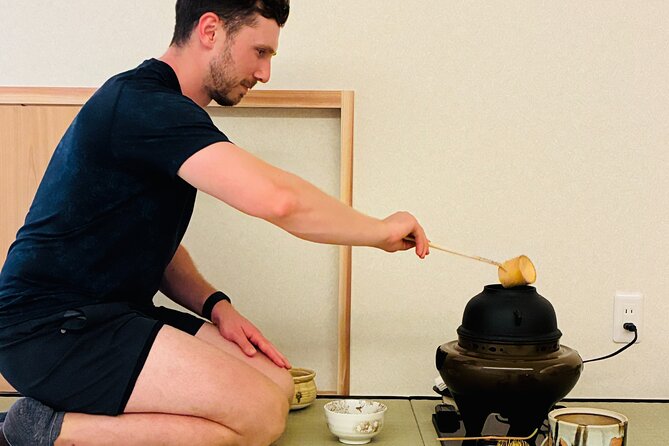
After the introduction, the host prepares the first bowl of matcha. Watch the movement rather than treating this as a simple demonstration of how to mix powdered tea.
The appeal is the deliberate pace. The bowl is selected, the utensils are handled with care, and the whisking has a precise rhythm. The host does not need to fill the room with conversation during this part. The earlier explanation lets you follow the ceremony quietly, which makes the sequence feel more focused.
You receive this first bowl along with a traditional seasonal sweet. The sweet is wagashi from a Kyoto shop with more than 100 years of history. Its purpose is not only to add dessert to the session. The sweetness prepares your palate for the sharper, grassy taste of matcha.
Seasonal wagashi can be delicate in appearance and flavor. The exact sweet changes, so do not book this expecting one fixed item. If you are new to matcha, take a bite of the confection before drinking. The contrast helps you appreciate the tea rather than judging it only as a bitter drink.
Same trip, a completely different kind of day:
- PERFECT KYOTO 1-Day Bus Tour
★ 5.0 · 13,518 reviews - Kyoto: Fushimi Inari, Kinkakuji, Bamboo Grove 1 Day Bus Tour
★ 4.8 · 4,316 reviews - Kyoto Geisha Walking Tour: Gion District & Hidden Gems
★ 4.7 · 3,273 reviews - Kyoto: Gion Magical Night Walking Tour with Geisha Trivia
★ 4.9 · 2,393 reviews
Making your own matcha
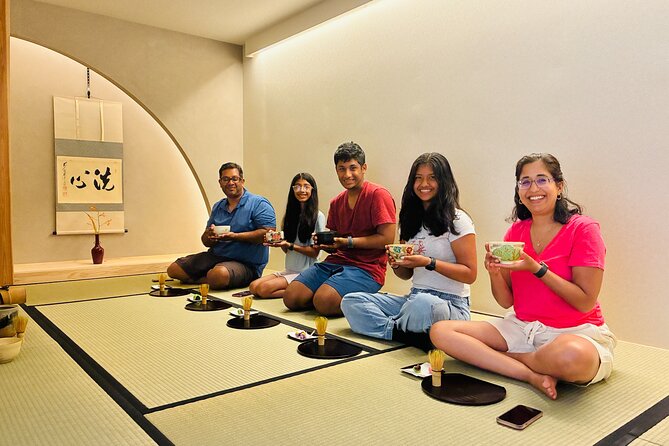
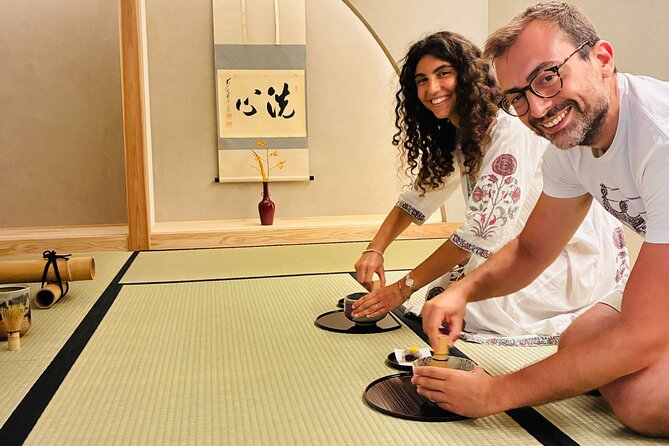
The hands-on portion is the best reason to choose this experience over a demonstration-only ceremony. You select a tea bowl, receive instructions, and whisk your own matcha. If you are attending with someone, one bowl can be made by you and the other by your companion, depending on how the host organizes the session.
The method is approachable. You watch the host, copy the movements, and learn how much focus is needed to create a smooth bowl. You do not need previous experience. The point is not to produce a professional tea master’s result. It is to feel the connection between the movement, the utensil, and the finished drink.
This second bowl also changes your understanding of the first. After trying to whisk matcha yourself, you recognize the patience and control in the host’s demonstration. A short practical lesson can explain more than a long lecture.
Hosts may take photos or videos while you prepare the tea. If you want pictures, ask politely during the activity. The room is intended to remain calm, so keep your phone use limited and follow the host’s instructions.
The nijiriguchi and the tea room atmosphere
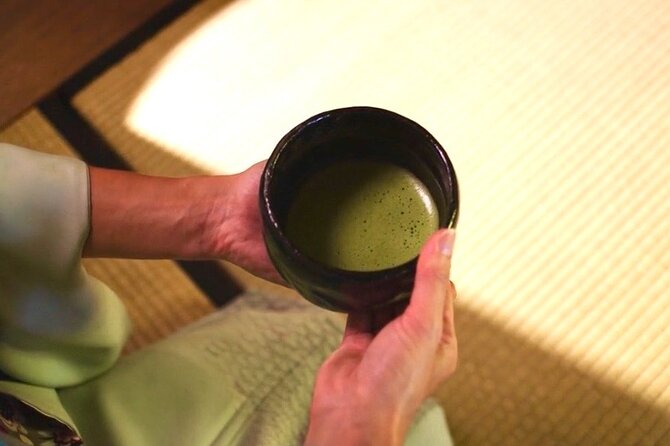
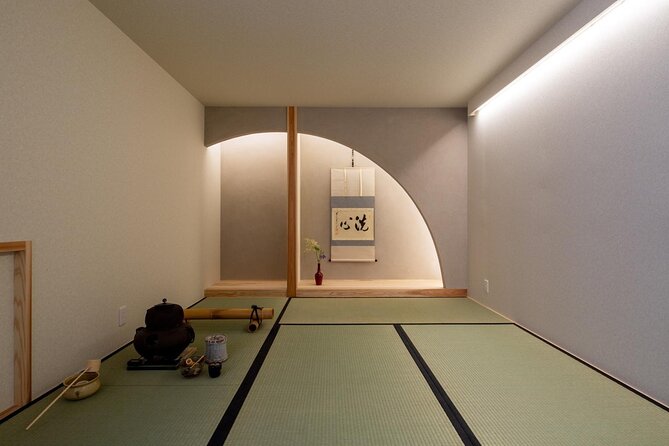
The nijiriguchi is the most distinctive physical feature here. This low doorway requires you to crouch or crawl slightly as you enter the tea room. Traditionally, the small entrance encouraged everyone to leave status and ordinary concerns outside. Every person entered the room in the same humble way.
You do not need to treat the doorway as a stunt. It is a reminder that the ceremony begins before the tea is served. Passing through it changes your pace and posture. In a city where an afternoon can quickly become a rush between temples and shops, that brief pause has real value.
Chairs are available if you prefer not to sit on the floor. That is useful for anyone who finds traditional seating uncomfortable, though the experience is not suitable for wheelchair users. Children under six are also not accepted, and children under five must not be booked into the shared session.
The calm setting is part of the activity, not decoration. Keep voices low and arrive on time so the atmosphere is not broken for the group.
Shared plan, group size, and private needs
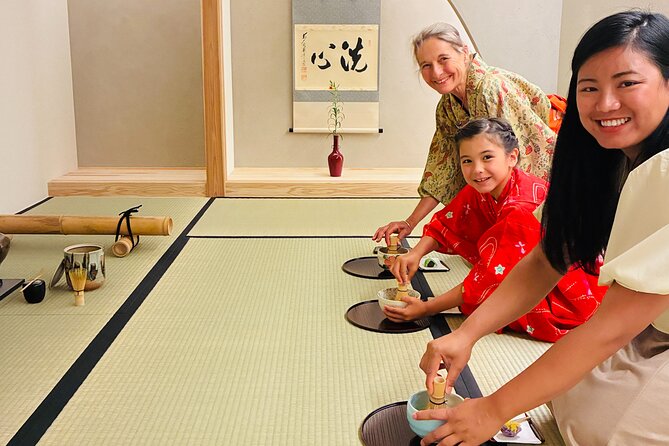
The shared plan is a group session with other people, limited to 10 participants. A small group gives the host enough time to explain the utensils and guide each person through making tea. It also means the mood can vary depending on the group.
If you want a quiet session with more personal attention, ask about the private plan. Anyone traveling with children under five or anyone who requires an interpreter must book privately. If you choose the shared plan incorrectly, participation and a refund are not available.
The activity is conducted in English. That makes it a practical choice if you want cultural context without trying to follow a Japanese-language explanation. Still, the ceremony itself includes periods of quiet. You are not signing up for nonstop commentary, and that is a benefit if you want the custom to feel like more than a lecture.
Clothing, chairs, and the optional uchikake
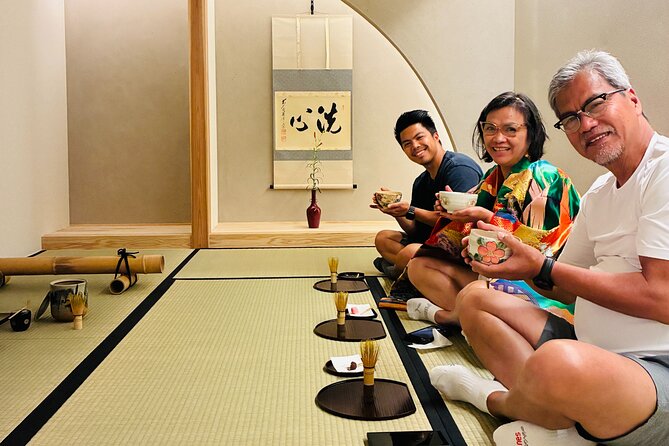
Bring socks. This is the most important clothing instruction.
Standard kimono rental and dressing are not included. An optional uchikake, a coat-style kimono, may be available for ¥1,500 including tax. You ask about it on the day, since advance reservations are not accepted and quantities are limited.
Do not book this expecting a full kimono makeover. The coat-style option adds a traditional touch, but it is not the same as a standard rental and dressing service. Some participants have enjoyed wearing traditional coats, while others have simply taken part in ordinary clothes.
Chairs are available for people who prefer them. The activity still has a traditional character, but you are not required to force yourself into a position that causes discomfort.
What the strongest praise tells you
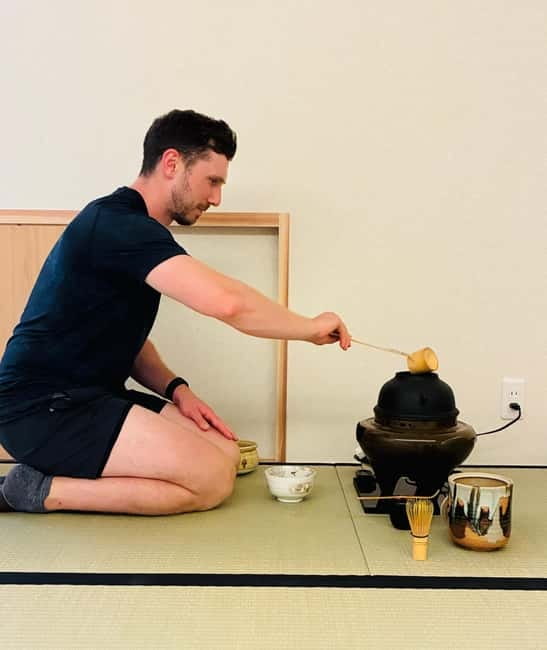
The consistent strength is the host. The instructors are repeatedly described as kind, careful, patient, and clear. That matters because tea ceremony has many small steps, and a hurried or vague explanation would make the experience feel mechanical.
The second strength is the balance between history and action. You learn what the ceremony means, watch a formal preparation, drink the host’s tea, and then make your own. The experience does not leave you sitting passively for an hour.
The peaceful pace is another real advantage. If your Kyoto schedule has been packed with trains, temples, queues, and shopping streets, this gives you an hour with fewer demands. It is not a meditation class, but the focus on movement and quiet can feel like a useful reset.
There is one small caution about communication. English guidance is provided, and the general standard appears strong, but pronunciation may be easier to follow with some instructors than others. Ask questions during the explanation, not once the ceremony has entered its quiet phase.
Who should book this experience
I would choose Sanjo Chasuian if you are new to Japanese tea ceremony and want a clear introduction without committing to a long formal program. The one-hour length works well for first-time visitors with full sightseeing schedules.
It also suits couples, friends, and solo participants. Making the second bowl with a companion gives you a shared activity, while the small group makes it possible to participate even if you arrive alone.
This is especially good for you if you care about:
- Understanding the meaning behind the rituals
- Trying matcha instead of only watching it being prepared
- Experiencing a real architectural feature such as the nijiriguchi
- Receiving English instruction
- Taking a quiet break in central Kyoto
It is less suitable if you want a full kimono rental, a private ceremony by default, or an accessible experience for wheelchair users. It also is not a good choice for anyone likely to arrive late.
Booking advice and final verdict
Book this tea ceremony if you want a compact, hands-on introduction to Kyoto culture. The two bowls give you both the polished example and the imperfect but useful attempt. The seasonal sweet adds a genuine local detail, and the nijiriguchi gives the setting a stronger sense of place than a standard café lesson.
I would schedule it early in your Kyoto stay. The host explains enough history and etiquette to make later encounters with matcha, tea utensils, and traditional sweets more meaningful. Leave a comfortable arrival margin, wear socks, and treat the hour as a pause rather than another item to rush through.
At $31, Sanjo Chasuian offers good value for the instruction, food, setting, and participation. Book it if you want to understand the ceremony from inside the ritual. Skip it only if you prefer a casual cup of matcha, need wheelchair access, or cannot guarantee punctual arrival.
FAQ
Where is Sanjo Chasuian located?
It is about a five-minute walk from Subway Karasuma Oike Station in Kyoto. At the address, look for the large plate with the Sanjo Chasuian logo and name.
How long does the tea ceremony last?
The experience lasts one hour.
How much does the experience cost?
The listed price is $31 per person. A grand opening discount is offered until September 15, but confirm the current price when you book.
How many bowls of matcha do I receive?
You receive two bowls. The host prepares the first, and you or your companion prepares the second.
Is the seasonal Japanese sweet included?
Yes. A traditional seasonal confection from a Kyoto sweet shop with more than 100 years of history is included.
Is the experience conducted in English?
Yes. The explanations and guidance are provided in English.
Do I need to bring anything?
You must bring or wear socks. No hotel transfer or transfer to the venue is included.
Can children join the shared session?
Children under six are not suitable for this activity. Anyone with children under five must book the private plan rather than the shared plan.
What happens if I arrive late?
Entry is allowed from five minutes before the start. Once the session begins, the door is locked. Even one minute late means you cannot join, and no refund is provided.
Just added around Kyoto
- Sekka Cotton Furoshiki Class★ 5.0 · 19 reviews
- Kyoto Sword Experience – includes Museum Ticket/Ninja Experience★ 4.5 · 149 reviews
- Scenic Green Tea Fields of Hidden Kyoto & Local Tea Exp (Private)★ 5.0 · 32 reviews
- Secret Eastern Kyoto Biking Adventure★ 5.0 · 44 reviews
- Private Sake Tasting in Central Kyoto with Sake Sommelier★ 5.0 · 32 reviews
- Samurai School in Kyoto: Samurai for a Day★ 5.0 · 202 reviews
- Samurai Performance and Casual Experience: Kyoto Ticket★ 4.5 · 115 reviews
- SHIRAKAWA Japanese Culture Experiences with private English staff★ 5.0 · 16 reviews
Tea Ceremony Experiences, compared.

Tea Ceremony in a Traditional Tea House in Kiyomizu
Our verdict →


World Heritage Kyoto & Nara Uji Authentic Matcha Experience
Our verdict →

Arashiyama Bamboo Forest, Monkeys, Matcha & Temple Tour
Our verdict →
Browse the lists this tour appears in