
Reviewed · TEA CEREMONY EXPERIENCES
Kyoto near Fushimiinari Wagashi making&Small Group Tea Ceremony
Making a Japanese sweet with your own hands, then eating it in a quiet tea room with matcha, gives this Kyoto experience its appeal. You are not only watching a ceremony. You are learning the small actions behind it, from shaping wagashi to whisking your own tea. The local-house setting feels more personal than a staged cultural show.
I especially like the maximum group size of eight, which leaves room for questions and individual help. I also like the location, about a 10-minute walk from Fushimi Inari Taisha, so you can pair this peaceful morning with Kyoto’s famous orange torii gates. The main consideration is that you must wear socks, and sitting on tatami may not suit everyone, though chairs can be requested in advance.
Key points to know before booking
- Make wagashi yourself: You take part in a hands-on Japanese sweets class rather than watching a demonstration.
- Two bowls of matcha: The session includes one bowl prepared by the instructor and one you prepare yourself.
- Near Fushimi Inari: The meeting point is roughly a 10-minute walk from Fushimi Inari Taisha.
- Small group format: No more than eight people take part, with English-speaking licensed guide interpreters.
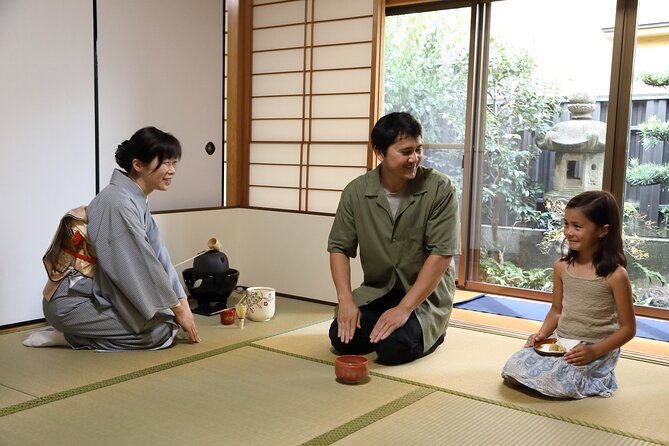
- Traditional room and garden: The ceremony includes a walk through a small garden and time on a tatami floor when weather allows.
- Plan for etiquette: Wear socks and easy-to-remove shoes. Children seven and under cannot participate.
Wagashi first, tea ceremony second
The session begins at 9:45 a.m. at a local house on Fukakusa Watamoricho in Kyoto’s Fushimi Ward. When you arrive, an English-speaking host takes you to the kitchen, where the first lesson begins with wagashi, the traditional Japanese sweet served with tea.
This is a practical choice for a short cultural activity. You are not spending the full 75 minutes listening to an explanation. Instead, you work with the ingredients and shape one type of wagashi yourself. The process may be a little sticky, so do not expect a polished pastry workshop. That hands-on quality is part of the fun.
The exact sweet can vary, but the important point is that you make one kind of Japanese confectionery and later eat it during the tea ceremony. That connection gives the class a clear rhythm: prepare the sweet, learn why it is served, and then enjoy it in the setting where it belongs.
The class also gives you a souvenir skill rather than a physical souvenir. You can take the method home and make wagashi for friends, although the finished sweet itself is not something you carry away as part of the tour.
More Tea Ceremony Experiences in Kyoto
- Kyoto: Tea Ceremony in a Traditional Tea House in Kiyomizu
★ 4.9 · 3,519 reviews - Kyoto: Tea Ceremony Ju-An at Jotokuji Temple
★ 4.9 · 3,207 reviews - Kyoto: 45-Minute Tea Ceremony Lesson Experience
★ 4.3 · 2,378 reviews
Entering the small garden and tea room
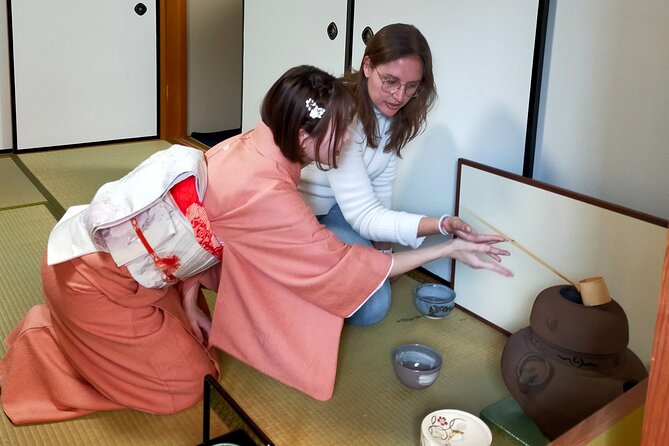
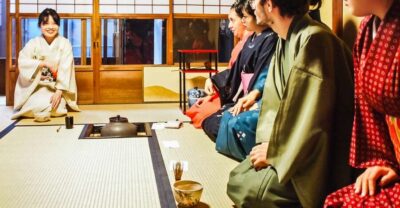
After the wagashi lesson, the experience shifts from kitchen work to formal tea practice. The host first explains how to attend a tea ceremony, so you are not expected to know when to bow, how to receive the bowl, or what to do with the sweet.
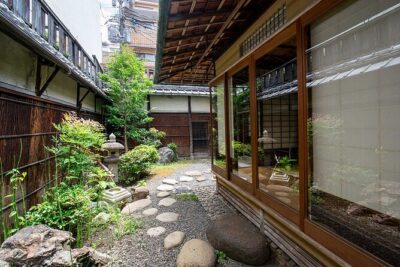
When weather permits, you walk through a tiny garden before entering the Japanese-style room. This short transition matters. It separates the ordinary activity of making food from the quieter pace of the ceremony, and it gives you a sense of how a traditional tea visit is arranged.
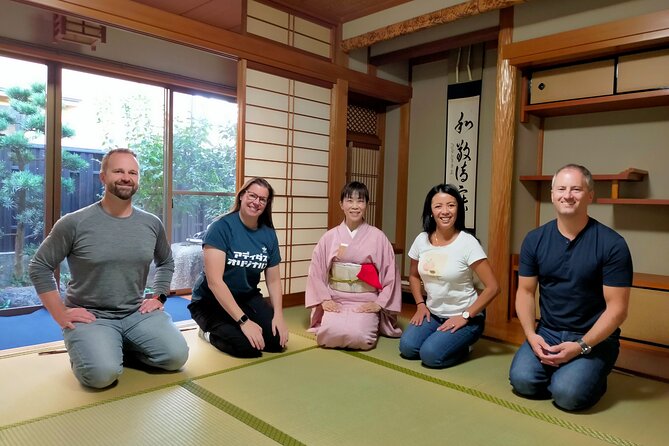
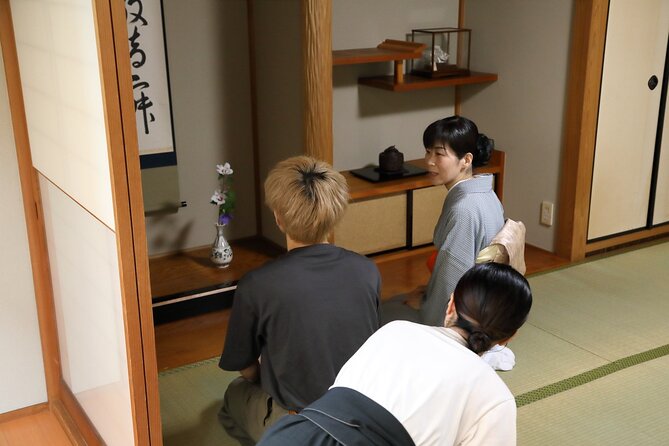
Inside, you sit on tatami and hear about the history of tea ceremony. The instructor also explains the meaning of the hanging scroll on the wall. These details help you understand that the room is not simply decorated in an old-fashioned style. The objects and the order of the actions have a purpose.
Tatami seating is traditional, but it is not comfortable for everyone, especially if you have trouble sitting on the floor. Chairs can be prepared instead, but you need to state how many you want when you book. That small request is worth making early rather than hoping it can be arranged at the door.
Understanding the ceremony without feeling lost
Tea ceremony can look mysterious if you see it without explanation. The deliberate movements, formal gestures, and quiet pauses may seem difficult to follow. Here, the instructor explains how to attend before the demonstration begins, making the ceremony easier to appreciate.
The English-speaking instructors are licensed guide interpreters. That is useful because the lesson covers more than a simple recipe. You learn about the tea ceremony, the room, the scroll, the sweets, and the meaning behind the preparation of matcha.
The tone is formal, but the setting is also described as visiting a friend in Japan for tea. That balance is important. You receive an introduction to a formal Japanese tradition without needing to treat the session like a performance where one wrong move ruins the experience.
Hostess Miho is specifically identified as friendly and highly capable in English. Her warm manner suits the format, especially for people who want cultural context but do not want an overly stiff lesson. The small group also helps. With eight people or fewer, the instructor can give clearer directions and answer questions without shouting across a crowded room.
Eating your wagashi with matcha
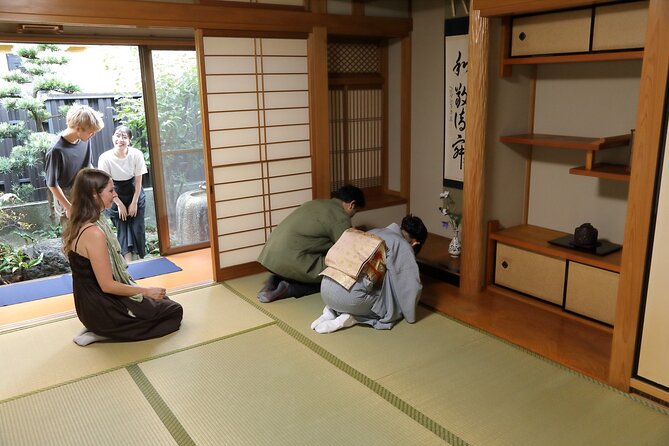
Once everyone is seated, you taste the wagashi you made earlier. The timing is more than a pleasant snack. Japanese sweets are traditionally paired with matcha because their sweetness balances the tea’s strong, grassy bitterness.
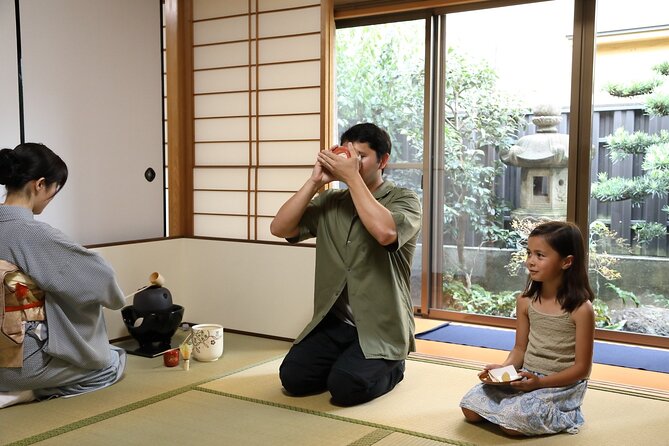
The instructor demonstrates how to drink a bowl of matcha, including the basic way to handle it. You then follow along and enjoy the tea with your own confectionery. If you have never attended a tea ceremony, this is the point where the earlier explanations become practical.
The included package provides two bowls of matcha and Japanese traditional confectioneries. One bowl is prepared for you by the instructor or host, and you have the chance to prepare another yourself. This makes the experience more useful than a simple tasting, since you learn a skill you can repeat at home.
The activity is not recommended if you do not take caffeine. Matcha contains caffeine, and the experience centers on drinking it rather than merely looking at the preparation. Coffee or tea is also listed among the inclusions, but matcha is clearly the main drink.
More Temple & Shrine Tours in Kyoto
- Kyoto: Fushimi Inari, Kinkakuji, Bamboo Grove 1 Day Bus Tour
★ 4.8 · 4,316 reviews - Fushimi Inari Hidden Hiking Tour (Private Option Available)
★ 5.0 · 1,750 reviews - Osaka/Kyoto:Kinkakuji,Arashiyama,FushimiInariShrine,NaraPark
★ 4.1 · 1,596 reviews - Arashiyama Bamboo, Temple, Monkeys, or Secret Sake Brewery
★ 4.8 · 886 reviews
Preparing your own bowl of matcha
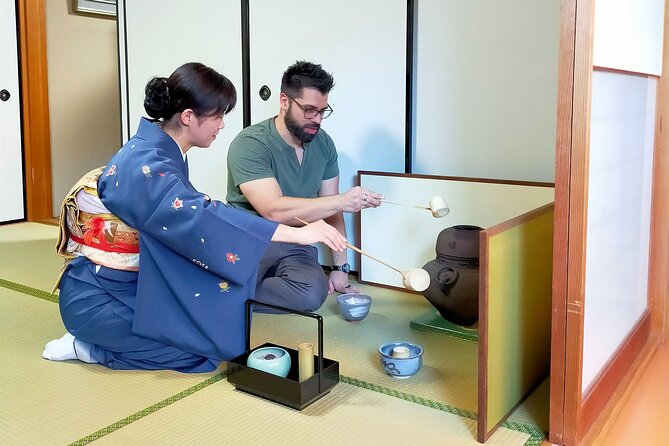
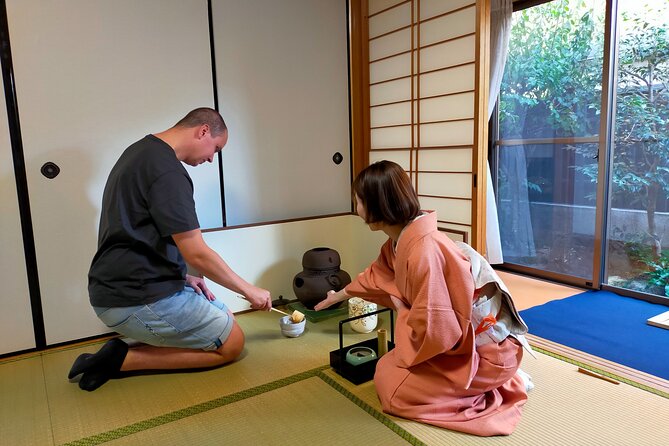
The final part gives you a turn at making matcha. First, the host demonstrates the ceremonial preparation. Then you prepare a bowl yourself under guidance.
This is where the session becomes especially practical. You see the preparation at close range, then repeat it with help. You may not leave ready to conduct a full formal ceremony, but you will know how to prepare and serve matcha to friends.
The lesson also makes the formal movements less intimidating. Instead of seeing tea preparation as a series of unexplained gestures, you learn the basic order and purpose of the process. For a first introduction, that is a sensible level of detail within a 75-minute session.
The experience ends back at the meeting point. There is no hotel pickup or drop-off, so you need to reach the house on your own. The location is near public transportation and close to Fushimi Inari Taisha, making it easy to combine with sightseeing in the same part of Kyoto.
Why the Fushimi Inari location helps
Fushimi Inari is one of Kyoto’s best-known sights, famous for its long corridors of orange torii gates. This activity begins in a quieter residential setting about a 10-minute walk from the shrine.
That contrast improves the morning. You can visit the shrine before or after the tea session, then step away from the crowds for a small-group lesson in a local home. The experience does not include a walking tour of the shrine, so you should allow separate time if you want to explore the torii gates.
The meeting point is 38-4 Fukakusa Watamoricho, Fushimi Ward, Kyoto, 612-0022. Since this is a house-based activity rather than a major attraction with a large entrance sign, check the meeting details carefully and allow enough time to arrive for the 9:45 start.
The end time is not given as an exact clock time, but the activity lasts about one hour and 15 minutes. You can reasonably plan for the session to finish around 11 a.m., while leaving a little flexibility for the walk and any questions.
Is $52.26 a fair price?
At $52.26 per person, this is not the cheapest way to drink matcha in Kyoto. You can find tea in many cafés for far less. The value here comes from the combination of instruction, hands-on wagashi making, a traditional room, two bowls of matcha, and a small group led in English.
You are also paying for context. A bowl of matcha without explanation is a pleasant drink, but it tells you little about the room, the scroll, the etiquette, or the connection between wagashi and tea. This experience puts those parts together in a compact session.
The price makes the most sense if you want a cultural activity that fits into a morning near Fushimi Inari. It is less compelling if you only want a quick cup of tea, dislike participating in demonstrations, or do not drink caffeine.
All fees and taxes are included. Gratuity is not included, so you may tip if you feel the instruction and welcome deserve it. The activity is free to cancel up to 24 hours before the start time for a full refund. Late cancellations and changes are not accepted, and poor weather can lead to a different date or a full refund.
Practical clothing and age advice
Wear socks. Bare feet are not allowed in the tea room, and this rule is easy to overlook when packing for a warm day in Kyoto. Choose shoes that come off easily, since you will need to remove them before entering the traditional room.
Children aged eight to 12 must attend with at least one adult. Children seven and under cannot participate. The group maximum is eight people, which keeps the session manageable but also means advance booking is sensible.
The activity is booked, on average, about 10 days ahead. That is not a guarantee of availability, but it suggests you should not leave it until the last morning of your Kyoto stay if this particular time and location matter to you.
Solo participants should contact the provider before booking. The stated reservation is for two people, but a solo arrangement may be possible. This is especially useful for solo visitors who want a small cultural activity without joining a large tour.
Who will enjoy this Kyoto experience?
I would choose this for first-time visitors who want an introduction to Japanese customs without committing to a long formal lesson. The combination of making wagashi, learning basic etiquette, and preparing matcha gives you several ways to take part.
It also suits families with children old enough to follow instructions, provided the youngest participant is at least eight and an adult joins children aged eight to 12. The hands-on sweet-making section may be the most engaging part for younger participants, while the tea ceremony adds a quieter cultural lesson.
Couples and small groups will appreciate the private-house setting and limited group size. Solo visitors should ask about availability before making plans. People who cannot drink caffeine, dislike floor seating, or prefer a casual café experience should choose something else.
You should also keep your expectations in check. This is a short introduction, not training for a tea master or an extended study of Japanese tea schools. Its strength is that it gives you a clear, friendly first look at the tradition in a real house setting.
Should you book this tea and wagashi class?
Book it if you want to do more than photograph Fushimi Inari. For $52.26, you get a compact lesson that combines making a Japanese sweet, learning tea etiquette, understanding the room, tasting matcha, and preparing a bowl yourself.
I like the balance between instruction and participation, along with the small group and English-speaking guidance. The main drawbacks are the caffeine, the need for socks, the possible discomfort of tatami seating, and the fact that the ceremony is brief.
If you can start at 9:45 a.m., can reach the Fushimi Ward meeting point, and enjoy hands-on cultural activities, this is a well-focused addition to a Kyoto morning. Request chairs in advance if needed, and plan time for Fushimi Inari separately.
FAQ
Where does the tea ceremony and wagashi class meet?
It meets at 38-4 Fukakusa Watamoricho, Fushimi Ward, Kyoto, 612-0022, Japan.
How long does the experience last?
The activity lasts approximately one hour and 15 minutes.
What time does it start?
The stated start time is 9:45 a.m.
Is the activity near Fushimi Inari Taisha?
Yes. The house is about a 10-minute walk from Fushimi Inari Taisha.
How many people can join the class?
The maximum group size is eight people.
Is an English-speaking instructor included?
Yes. The experience includes an English-speaking instructor, and the instructors are licensed guide interpreters.
Do I make the wagashi myself?
Yes. The wagashi section is hands-on, so you make one kind of Japanese sweet rather than only watching a demonstration.
How much matcha will I drink?
The experience includes two bowls of matcha. The host demonstrates the preparation, and you also have the opportunity to prepare a bowl yourself.
Do I have to sit on the tatami floor?
Tatami seating is part of the traditional room, but chairs can be prepared if you request them when making the reservation.
What should I wear or bring?
You must wear or bring socks because bare feet are not allowed in the room. Easy-to-remove shoes are recommended.
Just added around Kyoto
- Sekka Cotton Furoshiki Class★ 5.0 · 19 reviews
- Kyoto Sword Experience – includes Museum Ticket/Ninja Experience★ 4.5 · 149 reviews
- Scenic Green Tea Fields of Hidden Kyoto & Local Tea Exp (Private)★ 5.0 · 32 reviews
- Secret Eastern Kyoto Biking Adventure★ 5.0 · 44 reviews
- Private Sake Tasting in Central Kyoto with Sake Sommelier★ 5.0 · 32 reviews
- Samurai School in Kyoto: Samurai for a Day★ 5.0 · 202 reviews
- Samurai Performance and Casual Experience: Kyoto Ticket★ 4.5 · 115 reviews
- SHIRAKAWA Japanese Culture Experiences with private English staff★ 5.0 · 16 reviews
Tea Ceremony Experiences, compared.

Tea Ceremony in a Traditional Tea House in Kiyomizu
Our verdict →
World Heritage Kyoto & Nara Uji Authentic Matcha Experience
Our verdict →

Arashiyama Bamboo Forest, Monkeys, Matcha & Temple Tour
Our verdict →
Browse the lists this tour appears in