
Reviewed · TEA CEREMONY EXPERIENCES
Kyoto: Kimono Tea Ceremony with Matcha and Sweet
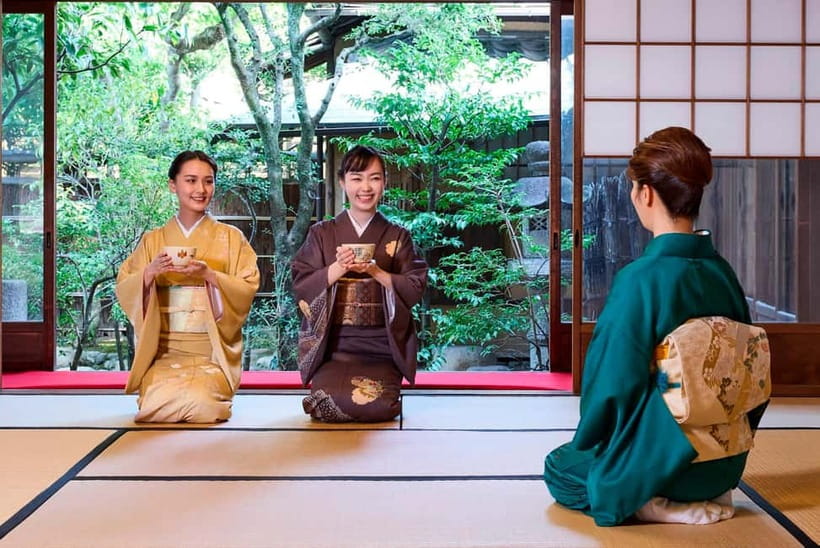
Kyoto’s tea ceremony becomes much easier to appreciate when you are wearing a kimono and learning the meaning behind each movement. You choose your outfit, receive help getting dressed, then enter a traditional tea room for a guided ceremony and hands-on matcha preparation. Hosts such as Maki and Megumi have been praised for their calm, clear instruction.
I especially like the choice of kimonos and the seasonal wagashi, since both make the experience feel personal rather than staged. I also like that the ceremony is explained in English, including the four Zen principles of harmony, respect, purity, and tranquility. The main consideration is that you prepare your own tea, so this is partly a cultural workshop rather than a completely formal ceremony where tea is served only to you.
Key points at a glance
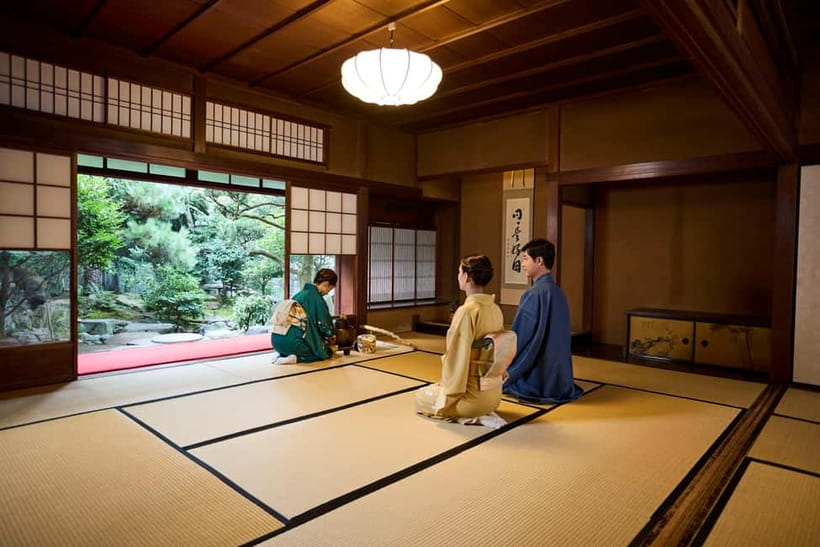
- Kimono first, tea ceremony second: Dressing is the opening part of the experience, with staff helping you select and wear your outfit.
- Premium matcha you prepare yourself: You learn the basic process and whisk your own bowl rather than simply watching.
- Seasonal wagashi included: The Japanese sweets change in color, design, and flavor during the year.
- English guidance throughout: The tea master explains history, utensils, movements, and etiquette in clear English.
- Tatami or bamboo chair seating: You can request a chair in advance if sitting on the floor is difficult.
- About 12 to 14 people may attend: The group size can vary because bookings from different sites are combined.
Choosing your kimono in Kyoto
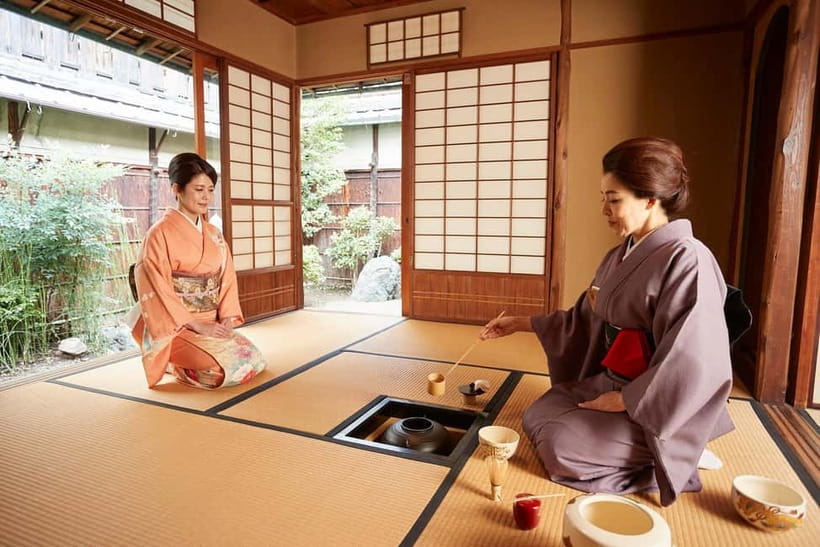
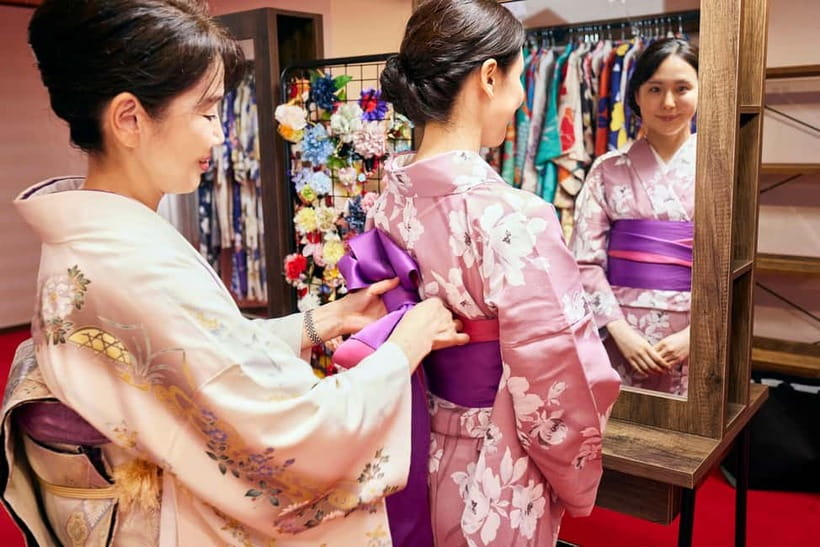
The experience begins with clothing, not tea. You choose from a selection of kimonos in different colors, patterns, and sizes, then staff help you put on the kimono and obi. This is more than a quick costume change. The layers, sash, socks, and careful arrangement help you understand why traditional Japanese dress takes skill to wear properly.
For many people, this is the most memorable part. You get a chance to see yourself in a formal Japanese outfit before the ceremony starts, and the setting gives you time for photographs. Several participants have particularly enjoyed the range of colors and the ability to choose hair decorations. Women with long hair can also receive hair styling, which completes the look.
Do not expect a leisurely salon appointment, though. One useful point to keep in mind is that the dressing process can move quickly, especially when several people arrive for the same time slot. If you want photographs with makeup already done, arrive prepared. The staff focus on getting everyone dressed properly and keeping the session on schedule.
The clothing also changes how you carry yourself. A kimono encourages slower movements and makes simple actions, such as sitting, standing, and handling a bowl, feel more deliberate. That physical awareness becomes useful once the tea ceremony begins.
More Kimono Experiences in Kyoto
- Kimono Tea Ceremony at Kyoto Maikoya, NISHIKI
★ 5.0 · 911 reviews - Kyoto: Kimono Rental with Hairstyling and Accessories
★ 4.8 · 653 reviews - Kyoto: Kimono Tea Ceremony at Orizuruya Gion
★ 4.9 · 618 reviews
Entering the tea room and settling in
After dressing, you move into a traditional tea room where the utensils are arranged for the ceremony. The room provides a quieter setting than the busy streets of Kyoto, and the display of tools helps you see that matcha preparation is not simply a matter of mixing green powder with hot water.
Sitting on tatami mats is customary. If kneeling or floor seating is uncomfortable, bamboo chairs are available by advance request. This detail matters because a tea ceremony can require you to remain seated for a while, and comfort makes it easier to pay attention to the explanations.
The session generally lasts about 90 minutes, though the full experience can run from 90 to 120 minutes because it includes dressing. Allow enough time in your day for both parts. Transportation is not included, so you need to make your own way to the venue and plan your next activity with some breathing room.
Group size is another practical point. A session may have around 12 to 14 participants because reservations from several booking sites are combined. At other times, the group can be smaller. A smaller class allows more direct help with the kimono and matcha, while a larger one may feel more like a shared cultural presentation.
Learning the tools, etiquette, and Zen principles
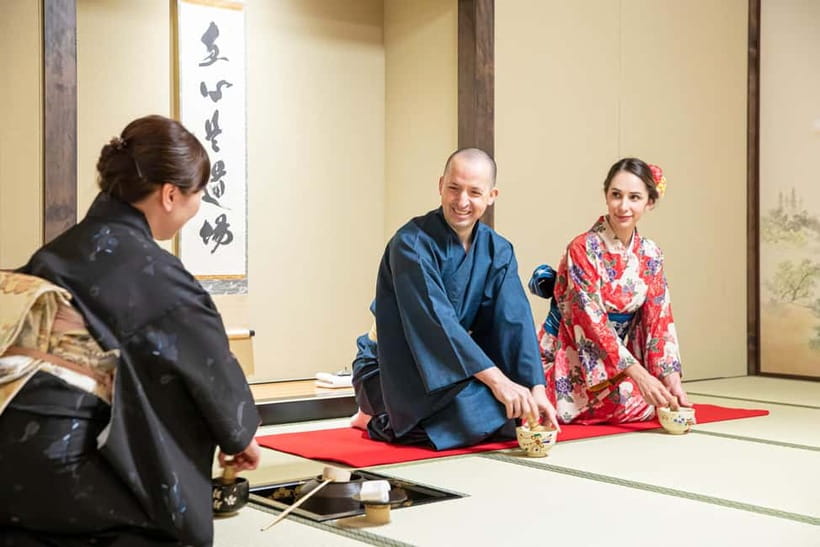
The tea master explains the purpose of the utensils and the order of the ceremony in English. You learn why each tool is placed where it is, how the host handles the bowl, and which movements show care and respect.
This explanation is what gives the activity more value than simply renting a kimono for photographs. Without context, the gestures can seem slow or overly formal. With context, you begin to see the logic behind them. The arrangement of the room, the preparation of the tea, and the way the bowl is handled all express attention to the present moment.
The ceremony is framed by four principles:
- Wa, harmony: creating a peaceful relationship between host, participants, and surroundings
- Kei, respect: showing consideration for the people, tools, and food involved
- Sei, purity: keeping the ceremony and its setting clean and orderly
- Jaku, tranquility: reaching a calm state through the rhythm of the ritual
These ideas are explained in practical terms rather than left as abstract philosophy. Hosts such as Maki and Megumi have been singled out for speaking clearly, moving at a comfortable pace, and encouraging participation. That matters in a group with different levels of English and no prior knowledge of tea ceremony customs.
The teaching style is friendly rather than severe. You are not expected to know the rules before arriving, and the staff guide you through each step. This makes the activity suitable for first-time visitors who want cultural understanding without joining a long or highly formal ceremony.
Making your own bowl of matcha
The hands-on matcha segment is the most active part of the session. After watching the tea master, you prepare your own bowl using high-quality matcha powder. You learn how to combine the tea and water and create the characteristic froth with a bamboo whisk.
This is a useful addition because it turns the ceremony from a performance into something you take part in. You may find that making smooth, creamy foam requires more control than expected. The process gives you a better sense of the care involved in an everyday bowl of matcha, even when you are following simple instructions.
The activity is not presented as professional tea training. Think of it as an introduction to the basic motions and meaning of matcha preparation. You watch first, then try it yourself with help close by. The staff encourage participation, and the English explanations make it easier to understand what you are doing rather than copying movements blindly.
There is also a small tradeoff. If you expected the tea master to prepare and serve the entire bowl while you quietly observed, you may find the workshop format less formal than imagined. If you prefer to learn by doing, the matcha preparation is one of the strongest parts of the experience.
More Tea Ceremony Experiences in Kyoto
- Kyoto: Tea Ceremony in a Traditional Tea House in Kiyomizu
★ 4.9 · 3,519 reviews - Kyoto: Tea Ceremony Ju-An at Jotokuji Temple
★ 4.9 · 3,207 reviews - Kyoto: 45-Minute Tea Ceremony Lesson Experience
★ 4.3 · 2,378 reviews - Kyoto: Table-Style Tea Ceremony at a Kyo-Machiya
★ 4.9 · 1,211 reviews
Seasonal wagashi with your tea
Traditional Japanese sweets, called wagashi, are served with the matcha. Their appearance and flavor change with the season, so the sweet is not just a snack added to the booking. Its colors and design reflect the time of year and give you another way to notice Japanese attention to presentation.
The wagashi balances the bitterness of matcha. Take a small bite before sipping the tea, as the sweetness changes the way the matcha tastes. This simple pairing is part of the pleasure of the ritual and helps explain why the tea ceremony includes food even though the tea itself is not sweetened.
Because the selection changes, you should not expect one fixed sweet every time. That variation gives repeat visitors a reason to try the experience in another season, though the exact wagashi available on your date is not specified.
What the kimono adds to the experience
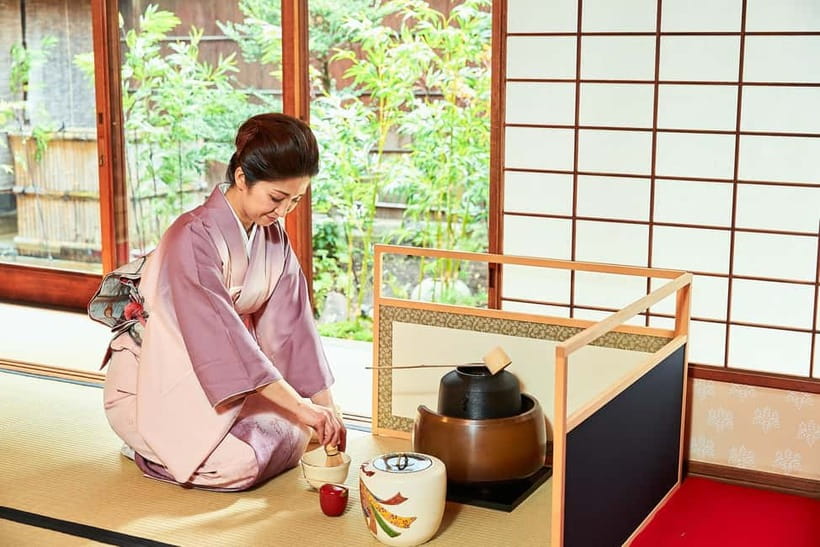
The kimono is not merely a photo prop. It changes your sense of the ceremony and helps you connect the clothing to the movements being taught. Sitting correctly, turning the bowl, and handling the sweets all feel different when you are dressed in traditional clothing.
You also have time for photographs before or after the tea ceremony. Several participants have found good photo spots nearby, and some have used professional photo services in the area. If pictures are important to you, bring that into your timing plan rather than assuming the 90-minute session includes an extended photo shoot.
Some people may feel overdressed during the practical matcha section. You are wearing formal clothing while whisking tea yourself, and that can feel slightly odd if you expected to remain an observer. Still, the contrast is useful: it shows how traditional clothes, etiquette, and food are connected rather than separate attractions.
The clothing is also part of the value at $66 per person. You are paying for dressing assistance, hair styling for women with long hair, the tea master’s instruction, matcha, sweets, and bilingual support. Compared with a simple kimono rental, the added cultural teaching makes the price easier to justify. Compared with a private ceremony, the shared format keeps the cost moderate but gives you less one-to-one attention.
Who will enjoy this Kyoto tea ceremony
I would recommend this for first-time visitors to Japan who want a structured cultural activity without committing to a full day. The 90 to 120-minute format fits neatly between sightseeing stops, and the English instruction removes much of the uncertainty around etiquette.
Couples often choose it for the photographs and shared experience, while families with older children can enjoy the dressing and hands-on tea preparation. Children under seven are not permitted, so this is not suitable for very young families.
It also suits anyone who wants more than a costume rental. You learn the names and purposes of the tools, hear about the history of tea ceremony, and connect the activity to Zen principles. If your main goal is simply to walk around Kyoto in a kimono for several hours, a dedicated rental service may be a better match.
The shared class works well if you enjoy meeting other people and learning together. If you prefer a quiet, private ceremony with extensive personal instruction, check the group arrangements before booking. The usual group may include 12 to 14 people, although the size can vary.
Practical details that affect your decision
The listed price is $66 per person. The booking includes kimono dressing, the ceremony, hands-on matcha preparation, wagashi, bilingual staff assistance, and long-hair styling for women. Transportation to the venue is not included.
The activity is conducted in English, and the instructor explains both the visible actions and the cultural meaning behind them. That is important because the ceremony has many small gestures that would be easy to miss without guidance.
Plan to arrive ready for the dressing portion. If you want to look polished in photographs, do your makeup beforehand, since the clothing process may be efficient rather than leisurely. Ask for a bamboo chair ahead of time if you do not want to sit on tatami mats.
The experience allows cancellation up to 24 hours before the start for a full refund, and you can reserve now and pay later. Those terms are useful if your Kyoto schedule may change, but you still need to check the available start time and arrange your own transportation.
Is this Kyoto kimono tea ceremony worth booking?
I would book it if you want a compact, well-explained introduction to Japanese culture, especially if wearing a kimono and taking photographs are important to you. The strongest points are the patient English guidance, seasonal wagashi, choice of clothing, and chance to prepare your own matcha.
I would hesitate only if you want a private, highly formal ceremony or a long period of kimono sightseeing outside the venue. This is a shared cultural workshop with a real tea ceremony at its center, not a private tea master appointment.
For most first-time visitors, $66 is fair value because the fee combines clothing, styling, instruction, food, and participation in one polished session. Request a chair early if needed, arrive ready for quick dressing, and leave enough time for photographs. With those expectations, this offers a thoughtful and approachable way to experience Kyoto’s tea tradition.
FAQ
How long does the Kyoto kimono tea ceremony last?
The experience takes about 90 minutes, though the full session may last 90 to 120 minutes because it begins with kimono dressing.
What is included in the $66 price?
The price includes kimono dressing, a traditional tea ceremony led by a tea master, hands-on matcha preparation, Japanese sweets, bilingual staff assistance, and hair styling for women with long hair.
Is the activity conducted in English?
Yes. English guidance is provided throughout the ceremony, including explanations of the tools, etiquette, history, and tea-making process.
Do I get to choose my kimono?
Yes. You choose a kimono from the available selection, and staff assist you with dressing and the obi.
Is hair styling included?
Hair styling is included for women with long hair.
Can I sit on a chair instead of the tatami floor?
Yes. Bamboo chairs are available by advance request for people who prefer not to sit on tatami mats.
Are children allowed to join?
Children under seven are not allowed to participate.
How many people are in each session?
A session may include about 12 to 14 participants because bookings from different sites are combined. The exact group size can vary.
Can I cancel the booking?
You can cancel up to 24 hours in advance for a full refund. Reserve now and pay later is also available.
Just added around Kyoto
- Sekka Cotton Furoshiki Class★ 5.0 · 19 reviews
- Secret Eastern Kyoto Biking Adventure★ 5.0 · 44 reviews
- Kyoto Sword Experience – includes Museum Ticket/Ninja Experience★ 4.5 · 149 reviews
- Scenic Green Tea Fields of Hidden Kyoto & Local Tea Exp (Private)★ 5.0 · 32 reviews
- Private Sake Tasting in Central Kyoto with Sake Sommelier★ 5.0 · 32 reviews
- Samurai School in Kyoto: Samurai for a Day★ 5.0 · 202 reviews
- SHIRAKAWA Japanese Culture Experiences with private English staff★ 5.0 · 16 reviews
- A Privately Guided Photoshoot in Beautiful Kyoto by a Pro★ 5.0 · 18 reviews
Tea Ceremony Experiences, compared.

Tea Ceremony in a Traditional Tea House in Kiyomizu
Our verdict →


World Heritage Kyoto & Nara Uji Authentic Matcha Experience
Our verdict →

Arashiyama Bamboo Forest, Monkeys, Matcha & Temple Tour
Our verdict →
Browse the lists this tour appears in