
Reviewed · TEA CEREMONY EXPERIENCES
Kyoto Japanese Tea Ceremony Experience in Ankoan
The most rewarding part of this Kyoto experience is that you do not just watch a tea ceremony. You learn the gestures, prepare your own matcha, and offer it to another person. Yuka’s warm welcome and clear English help turn a formal ritual into an easy cultural exchange.
I like the relaxed opening with welcome tea, and I like the small group size, capped at eight. The main consideration is physical: you may sit in a traditional tea-room style, so this is not recommended if you have knee pain. The published timing also varies, with the main details listing about one hour and the fuller description describing a 90-minute service.
Key points at a glance
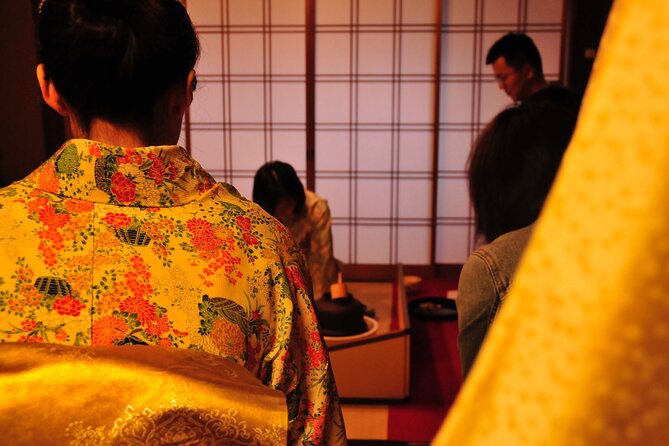
- You prepare your own matcha: Watch the tea master, then whisk your tea with step-by-step guidance.
- Yuka sets a friendly tone: Welcome tea and conversation give you time to settle in before the formal portion.
- Wagashi comes with the tea: The Japanese sweet helps explain the balance of flavors in the ceremony.
- You serve another participant: The experience includes the central social idea of making tea for someone else.
- The group stays small: A maximum of eight people allows room for questions and individual help.
- Ankoan is near public transportation: You reach the studio independently, and the activity ends at the same meeting point.
Why this tea ceremony feels more personal
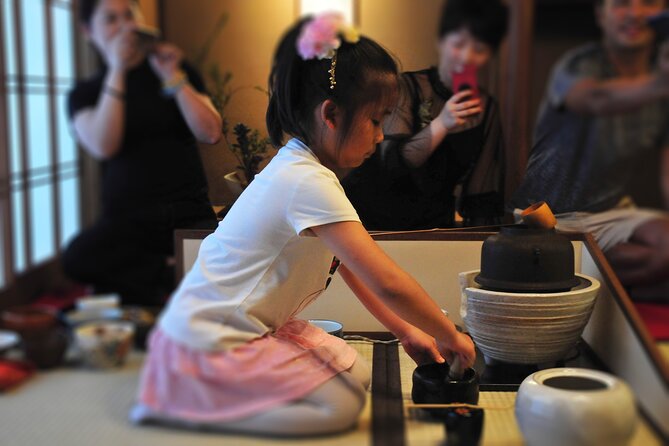
Many cultural demonstrations ask you to sit quietly and watch. At Ankoan, the structure is more hands-on. You first see the process, then copy it under instruction, and finally taste the matcha you prepared yourself.
That sequence matters. You are not expected to know the correct bow, gesture, or order of movements before arriving. The teacher explains the purpose behind the ceremony and lets you practice. This makes the hour useful for first-time visitors who want more than a photo opportunity.
The tone also appears intentionally informal at the beginning. Yuka welcomes you with tea and conversation, giving you a chance to rest after the journey from your hotel. You can ask about tea, Japanese customs, daily life, or how the ceremony developed. That open conversation is a strong part of the experience because it connects the formal movements with ordinary Japanese culture.
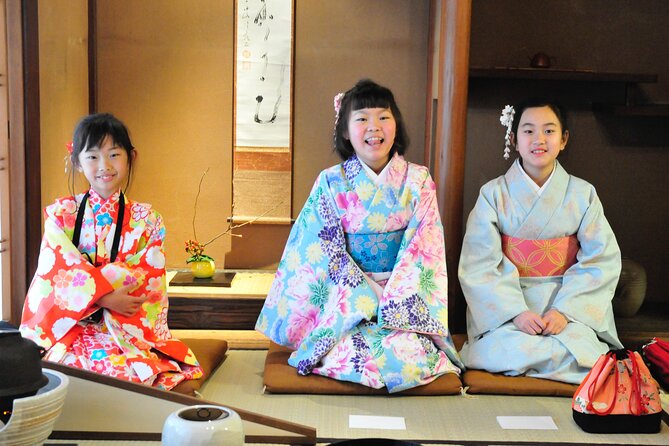
The group limit of eight is another practical advantage. You are not lost in a large demonstration, and the teacher can watch your technique when it is your turn to make matcha. If you are booking for a family, the hands-on format can also work well for children. An eight-year-old has been able to participate, and two young children were included in another family’s session.
More Tea Ceremony Experiences in Kyoto
- Kyoto: Tea Ceremony in a Traditional Tea House in Kiyomizu
★ 4.9 · 3,519 reviews - Kyoto: Tea Ceremony Ju-An at Jotokuji Temple
★ 4.9 · 3,207 reviews - Kyoto: 45-Minute Tea Ceremony Lesson Experience
★ 4.3 · 2,378 reviews
Arriving at Ankoan in Kyoto’s Kita Ward
The meeting point is Tea ceremonyJapan at Ankoan, 63 Murasakino Monzencho, in Kyoto’s Kita Ward, postal code 603-8216. The studio is near public transportation, but private transportation is not included, so you need to make your own way there.
Allow time to find the entrance. One useful planning detail is that the studio is close to temples, making it easy to pair the tea ceremony with nearby sightseeing. One participant visited temples around the corner beforehand. That can make the northwestern Kyoto location feel less like a separate detour and more like part of a neighborhood visit.
Your mobile ticket is convenient once you arrive. Confirmation is sent within 48 hours of booking, subject to availability, so do not treat the reservation as final until that confirmation comes through.
The activity returns to the meeting point when it ends. That makes the next step simple: continue sightseeing in the area, return to your hotel, or head to another Kyoto neighborhood by public transportation.
Welcome tea and a gentle introduction
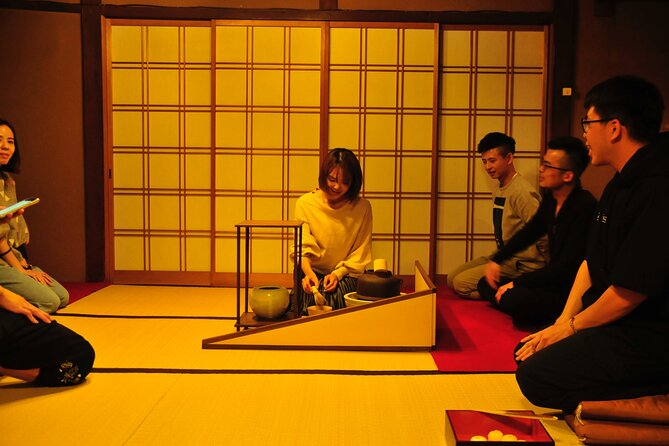
The session begins with a welcome cup of tea prepared by Yuka. This is not just a quick drink before the main event. It gives you time to settle down, talk with the host, and ask questions before you enter the more formal matcha room.
I like this opening because tea ceremony can feel intimidating if you are worried about making a mistake. The conversation helps remove that pressure. Yuka is described as having very good English, and the session is designed for cultural discussion as well as instruction. You can ask about Japanese customs and daily life without needing prior knowledge.
The opening also provides a useful contrast. You begin with an easy conversation, then move into a room where the movements become more deliberate. That shift helps you understand that the ceremony is not simply about drinking powdered tea. It is also about attention, hospitality, and the relationship between the person making the tea and the person receiving it.
The setting is a studio rather than a major tourist attraction. That keeps the focus on the host and the ritual. The tradeoff is that you are not visiting a large historic tea house with extensive public grounds. You are paying for a guided lesson and cultural exchange, not for a full sightseeing site.
Moving into the matcha tea room
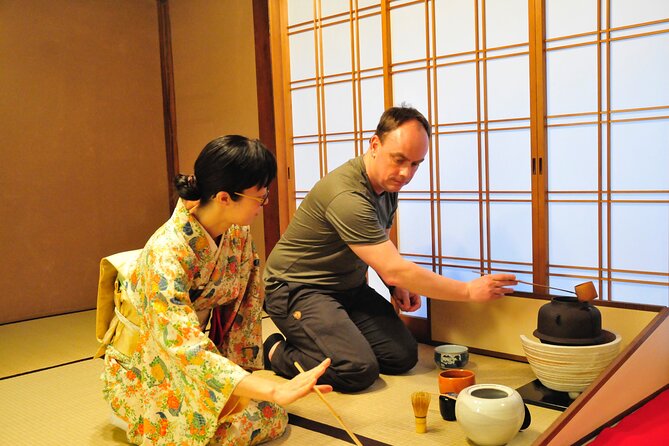
After the introduction, you move to another matcha tea room. Here, the teacher explains specific parts of the Japanese tea ceremony, including manners and the ideas behind the movements.
Expect the demonstration to be orderly and quiet. The tea master prepares matcha while you watch the sequence. You learn how the tea is handled, how it is presented, and how the recipient responds. The teacher also explains symbols and phrases used during the ceremony, giving the gestures a wider cultural meaning.
The experience is especially useful if you have seen tea ceremonies before but never understood what was happening. Instead of treating every movement as decoration, the class explains why the steps matter. You get a framework for noticing hospitality, respect, calm, and the care given to a shared moment.
The ceremony itself is formal, but the teaching style is not described as stiff. The host balances a proper demonstration with conversation and humor. That balance should suit you if you want cultural substance without committing to a long or highly rigid lesson.
Same trip, a completely different kind of day:
- PERFECT KYOTO 1-Day Bus Tour
★ 5.0 · 13,518 reviews - Kyoto: Fushimi Inari, Kinkakuji, Bamboo Grove 1 Day Bus Tour
★ 4.8 · 4,316 reviews - Kyoto Geisha Walking Tour: Gion District & Hidden Gems
★ 4.7 · 3,273 reviews - Kyoto: Gion Magical Night Walking Tour with Geisha Trivia
★ 4.9 · 2,393 reviews
Matcha, wagashi, and the taste of the ritual
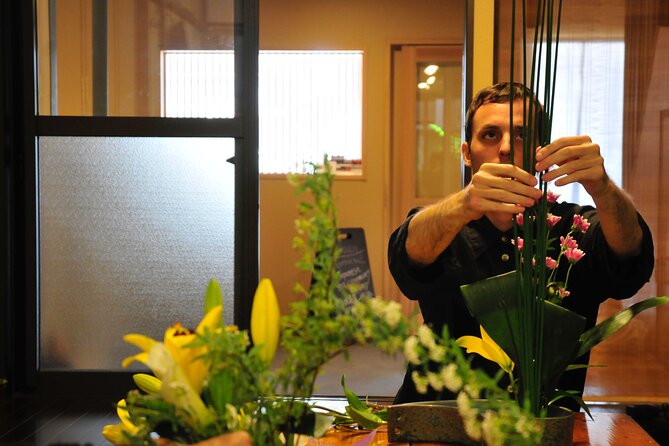
You taste the prepared matcha with wagashi, a traditional Japanese sweet. The sweet is an important detail because matcha can have a strong, grassy, or bitter flavor when you try it on its own. Wagashi provides a gentle contrast and helps you understand how tea and food are paired in the ceremony.
The tasting is also a chance to slow down. Rather than rushing through several drinks, you focus on one bowl and the way it was made. The experience presents tea as a shared social act, not simply as a beverage.
Coffee and tea are included in the listed inclusions. The specific welcome tea and matcha are central to the session, while the wagashi is part of the tasting sequence described in the activity. The listing does not provide a separate menu or details about the type of wagashi, so you should not book this expecting a large food component.
If you already enjoy matcha, you may appreciate the chance to taste it in a traditional setting. If you have never tried it, the teacher’s explanation and the sweet accompaniment make the introduction easier. The focus remains on culture and preparation, not on a tasting flight.
Making your own bowl of matcha
The most interactive section comes after the demonstration. You prepare matcha yourself while the teacher gives instructions and stays nearby to help.
This is where the experience earns its price. At $32.84 per person, you are paying for a guided lesson, the tea service, the cultural explanation, and a chance to practice. You are not simply observing a professional prepare a bowl that you never touch.
The teaching method follows a sensible pattern: watch first, then do it yourself. You learn the main concepts of the ceremony as you copy the movements. The teacher can correct your technique and explain what each action means. That support is useful because the process may look simple when performed by an expert, yet feel less familiar when you try it.
Do not worry about producing a perfect bowl. The value is in learning the method and understanding the care involved. You also get a memorable result: tasting tea that you prepared with your own hands.
A particularly meaningful part is offering your tea to another participant. This reflects the social heart of the ceremony. You are not making a private drink only for yourself. You prepare something for another person, and another participant may make tea for you. That exchange gives the class a sense of connection across cultures.
Conversation is part of the cultural lesson
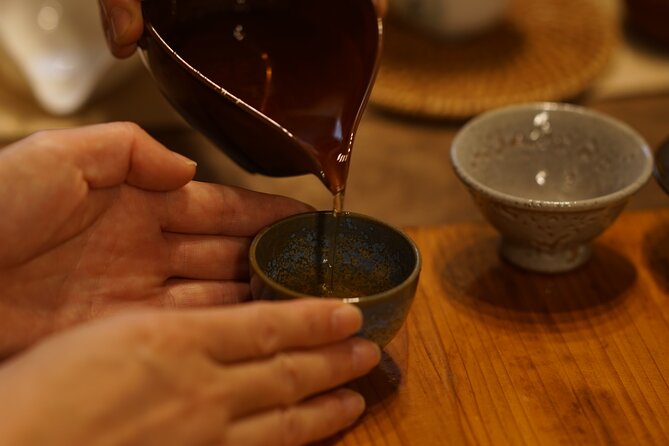
Ankoan treats conversation as part of the ceremony rather than an interruption. You can discuss how Japanese people live, how Japanese culture formed, and what the tea ritual means to Japanese people.
For you, this may be the best way to place the ceremony in context. A demonstration can show you what to do. A conversation helps explain why the actions continue to matter.
The language support is also a clear strength. The host speaks English well, and the experience is described as suitable for English and Chinese speakers. You can ask questions directly instead of relying on a translation app or guessing at the meaning of a gesture.
The session may also teach you a few Japanese words connected with tea. That is a small detail, but it makes the ceremony easier to remember and gives you a little language to carry into the rest of your Japan trip.
The tone is friendly and flexible. Families can take part, and children have been included in the matcha preparation. Still, this is not a loud entertainment program. You should be comfortable with a calm activity that asks you to pay attention and follow a sequence of movements.
Timing, group size, and the practical tradeoffs
The main tour information gives the experience an approximate duration of one hour. The fuller service description says 90 minutes, and one account of the activity lasted around two hours. In practice, you should allow more than the shortest advertised time, especially if the group asks questions or the session moves at a relaxed pace.
That uncertainty is worth noting when planning a tight Kyoto schedule. Do not place a timed train departure immediately afterward. Give yourself room for the teaching, the tasting, and the conversation.
The maximum group size is eight. That is large enough for a social exchange but small enough for individual participation. The precise number in your session may vary, but you should expect other participants rather than a private lesson unless the booking details say otherwise.
Indoor photography is allowed freely. This is helpful if you want to record the tea-making steps or take a few photos of the setting. Be respectful during the quietest parts of the ceremony, and follow any instructions from the host about where to place your phone.
The activity is not recommended for people with knee pain. The data does not specify the exact seating arrangement, but traditional tea settings often involve positions that can be hard on the knees. If kneeling or sitting low is difficult for you, contact the provider before booking and ask what alternatives are available.
Is $32.84 a fair price?
For Kyoto, $32.84 is a reasonable price for a small-group cultural lesson that includes instruction, tea, matcha preparation, and wagashi. The strongest value comes from the participation. You watch the host, practice the technique, serve another person, and taste your own tea.
The price is less compelling if you only want a quick cup of matcha in a photogenic room. You can find tea in many places in Kyoto without booking a formal session. This experience is for learning the ritual and talking with a host, not just buying a drink.
It is also good value for families if the children are willing to take part. Young children have been welcomed into the process, though the calm setting and formal gestures may suit some children better than others.
Because the maximum group size is eight, the cost also buys a more focused setting than a large public demonstration. You can ask questions, hear explanations, and receive help while making your own tea.
Who should book this experience?
I would choose Ankoan if you want a first introduction to Japanese tea ceremony without committing to a long, highly formal program. It suits solo visitors, couples, families, and small groups who enjoy learning by doing.
It is especially good for you if:
- You want to prepare matcha yourself.
- You like cultural explanations alongside a demonstration.
- You prefer a friendly English-speaking host.
- You want time for questions about Japanese customs.
- You are looking for a calm activity near temples in Kita Ward.
- You are comfortable with possible traditional tea-room seating.
I would be more cautious if you have knee pain, need a guaranteed one-hour finish, or want a large meal with your tea. I would also look elsewhere if you prefer a private experience, since the session can include up to eight people.
Free cancellation is available if you cancel at least 24 hours before the start time. Changes or cancellations inside that window are not refunded, and poor weather may lead to a new date or a full refund. Those terms are worth checking before you lock the activity into a tightly timed day.
Should you book Ankoan?
Book it if you want the ceremony explained in plain language and want to take part rather than sit silently. The welcome tea, conversation with Yuka, matcha practice, wagashi, and chance to serve another participant create a well-rounded introduction to the ritual.
At $32.84, it offers solid value for a small group and hands-on instruction. Just allow extra time beyond the one-hour estimate, plan your transport to Murasakino Monzencho, and think honestly about the seating if your knees are sensitive.
For a first tea ceremony in Kyoto, this is a practical choice: personal, participatory, and focused on understanding what you are doing.
FAQ
Where does the tea ceremony take place?
The activity takes place at Tea ceremonyJapan, Ankoan, 63 Murasakino Monzencho, Kita Ward, Kyoto, postal code 603-8216.
How long does the experience last?
The main details describe approximately one hour. The fuller service description gives 90 minutes, and one session was reported to last around two hours, so allow extra time.
What is the price?
The listed price is $32.84 per person.
Is transportation included?
No. Private transportation is not included. The meeting point is near public transportation, and you make your own way to the studio.
What is included?
Tea and coffee are listed as included. The experience also describes welcome tea, matcha tasting, wagashi, and guided preparation of your own matcha.
Can children participate?
Yes. Children have taken part in the ceremony and prepared matcha, including an eight-year-old and two small children in a family group.
Is photography allowed?
Yes. Indoor photography is allowed freely.
Is the experience suitable for people with knee pain?
It is not recommended for people with knee pain. The supplied details do not specify alternative seating arrangements, so ask the provider before booking if this is a concern.
Just added around Kyoto
- Sekka Cotton Furoshiki Class★ 5.0 · 19 reviews
- Kyoto Sword Experience – includes Museum Ticket/Ninja Experience★ 4.5 · 149 reviews
- Scenic Green Tea Fields of Hidden Kyoto & Local Tea Exp (Private)★ 5.0 · 32 reviews
- Secret Eastern Kyoto Biking Adventure★ 5.0 · 44 reviews
- Private Sake Tasting in Central Kyoto with Sake Sommelier★ 5.0 · 32 reviews
- Samurai School in Kyoto: Samurai for a Day★ 5.0 · 202 reviews
- SHIRAKAWA Japanese Culture Experiences with private English staff★ 5.0 · 16 reviews
- A Privately Guided Photoshoot in Beautiful Kyoto by a Pro★ 5.0 · 18 reviews
Tea Ceremony Experiences, compared.

Tea Ceremony in a Traditional Tea House in Kiyomizu
Our verdict →


World Heritage Kyoto & Nara Uji Authentic Matcha Experience
Our verdict →

Arashiyama Bamboo Forest, Monkeys, Matcha & Temple Tour
Our verdict →
Browse the lists this tour appears in