
Reviewed · HIDDEN GEMS TOURS
Kyoto Highlights & Hidden Gems in Nature (Private Van Eng-Guide)
Kyoto’s best surprise here is how quickly the day moves from famous sights to quiet mountain roads and local shrines. Daiki drives across the city, taking you from the Golden Pavilion and Fushimi Inari to cedar forests, gorge views, and places most visitors would not reach by bus.
I like the private van, especially for a six-hour visit with many stops, and I like Daiki’s flexible approach. The tour also gives you two useful views of Kyoto: the postcard temples and the countryside where giant trees are treated as sacred. The main drawback is pace. With roughly eleven stops, many visits last only five to fifteen minutes.
Key points to know
- A private van covers a lot of ground: Pickup and drop-off anywhere in Kyoto City, fuel, tolls, and parking are included.
- Daiki guides in fluent English: He explains Buddhism, Japanese history, bamboo, shrines, and local customs while also adjusting the day to your interests.
- Arashiyama gets more than the bamboo grove: You visit Gio-ji, Otagi Nenbutsu-ji, the mountain parkway, and viewpoints around Hozukyo.
- The northern countryside is the unusual part: Nakagawa Hachimangu Shrine and the Kitayama giant cedar area offer a quieter side of Kyoto.
- Famous sights still anchor the trip: Kinkakuji, the Heian Jingu torii, and Fushimi Inari are all included.
- Admission costs extra: Temple entry fees total about ¥1,400 per person, according to the tour information.
A Kyoto day built around the road
This is not a slow temple walk. It is a broad sweep across Kyoto, made practical by a private Japanese minivan and a local driver-guide. You begin at 1 p.m. and spend about six hours crossing from northern Kyoto to Arashiyama, into the mountains, and back toward central and southern Kyoto.
I see the van as the main reason to book. Kyoto’s major sights are spread far apart, and public transport can take time, especially when buses are crowded or routes require changes. Here, you can sit in air conditioning between stops, leave bags in the vehicle, and avoid figuring out each connection.
The price is listed as $230.61 per group up to one participant. Since the description and direct booking experience indicate a vehicle-based private tour, check the final price for your exact party before paying. For a family or small group, the cost can make good sense because it covers the vehicle rather than charging a separate tour fee for every person. Fuel, road tolls, parking, pickup, and drop-off are included. Temple admission is not.
Daiki is the named guide. He speaks English, drives, and walks around the sights with you. The strongest praise centers on his friendly manner, safe driving, local knowledge, and willingness to adjust the route. One family also found the air-conditioned van comfortable, which matters during Kyoto’s humid months.
The tradeoff is that this is an ambitious list. Some stops are quick photo pauses. You will see a great deal, but you will not have an hour at every temple.
More Hidden Gems Tours in Kyoto
- Kyoto Geisha Walking Tour: Gion District & Hidden Gems
★ 4.7 · 3,273 reviews - Private Kyoto Tour with a Local, Highlights & Hidden Gems, Personalised
★ 5.0 · 1,543 reviews - Arashiyama Bamboo Forest & Hidden Gems Bike Tour (Early Bird)
★ 5.0 · 613 reviews
Kinkakuji and the first famous view
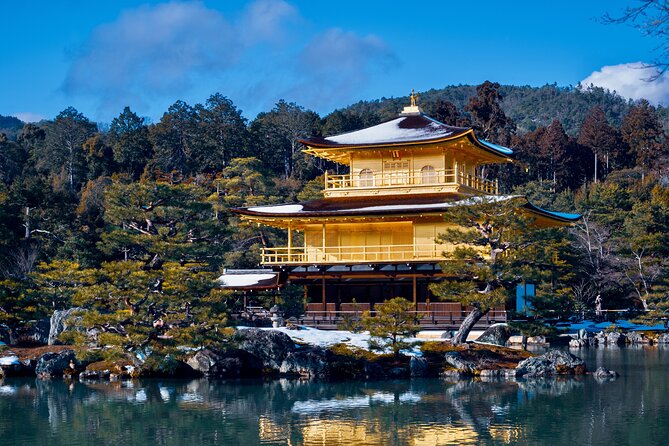
The day begins at Kinkakuji, the Golden Pavilion, in northern Kyoto. The bright gold building sits beside a pond and is one of the city’s most recognizable sights. The visit lasts about 45 minutes, making it the longest stop on the schedule.
That timing gives you enough room to follow the main path, see the pavilion from several angles, and take photographs without turning the visit into a rushed dash. Admission is extra, and the total entry fees for the full day are estimated at about ¥1,400 per person.
Expect Kinkakuji to be the busiest part of the day. That is not a flaw in the tour, but a useful warning. The private van gets you there efficiently, yet it cannot remove the crowds at the temple itself. If your main goal is quiet Kyoto, this first stop is the necessary famous sight before the route turns toward smaller places.
Daiki’s explanations about Buddhism and the temple’s place in Kyoto’s story add more value than simply arriving, taking a photo, and leaving. Still, the 45-minute visit is focused on the grounds rather than a long, reflective stay.
Arashiyama beyond the bamboo path
Arashiyama comes next, but this tour does not stop only at the well-known bamboo grove. That is important. The bamboo path can be packed, and the schedule acknowledges this by pairing it with smaller temples and roads north of the main district.
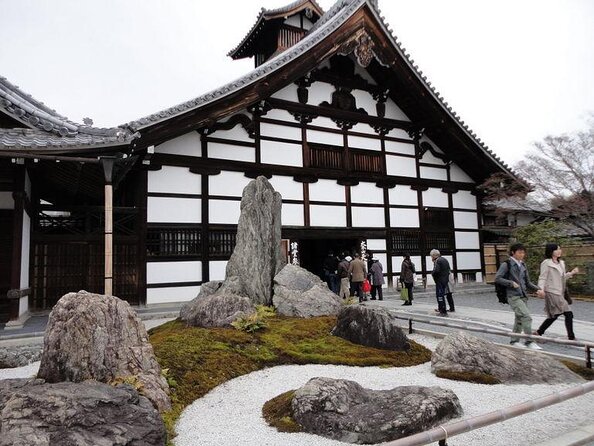
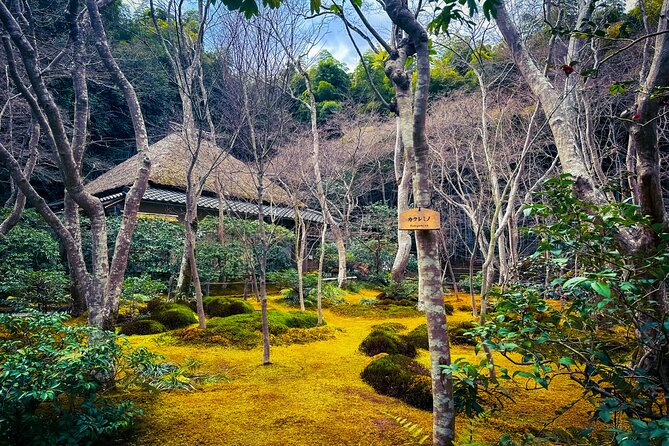
At Gio-ji, you get a compact scene of moss, a modest thatched building, and bamboo. The stop lasts about 15 minutes. That is short, but the temple is small, so you can see its main features without needing a long visit.
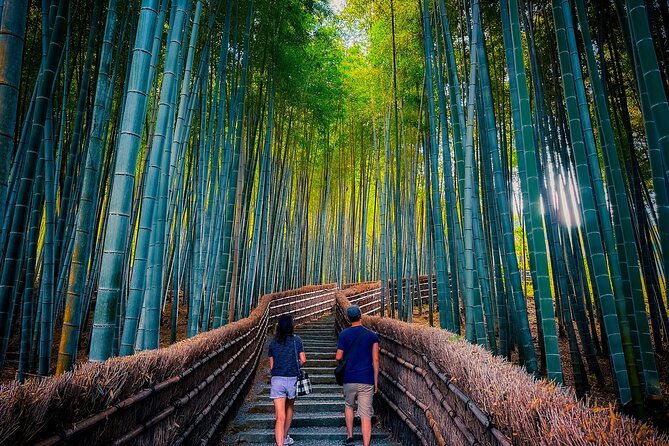
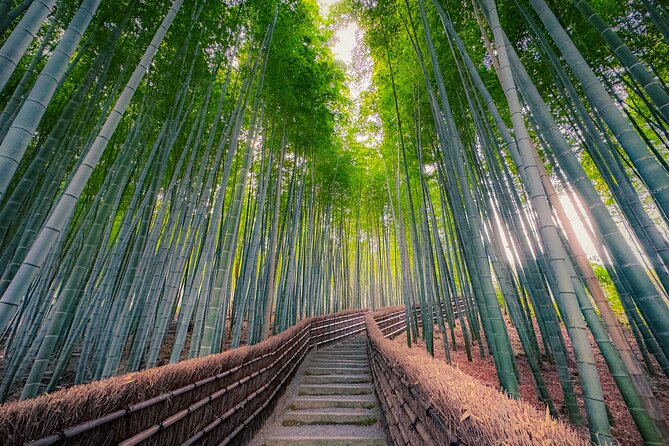
The Arashiyama Bamboo Forest also receives about 15 minutes. You walk the iconic path and hear about the origin of Japanese bamboo and its connection to Edison’s invention of electric lights. The visit is designed as a brief taste rather than a long forest walk. If you want quiet photographs, timing matters, and you should be prepared for other people on this part of the route.
Otagi Nenbutsu-ji gives you a different mood. It lies in the northern part of the Arashiyama historic district, an area described as one of the best-preserved old Kyoto settings. The temple is less crowded than the central Arashiyama sights, and it has a distinctive collection of stone figures. The listed stop is again about 15 minutes, so ask Daiki at the start how much walking time you can reasonably spend there.
This cluster is one of the strongest sections for first-time visitors. You see the famous bamboo, then quickly move into a quieter side of Arashiyama. I would not choose this tour if bamboo is your only priority, since the visit is brief. I would choose it if you want bamboo plus smaller temples and mountain views in one outing.
The mountain road to Ogura and Hozukyo
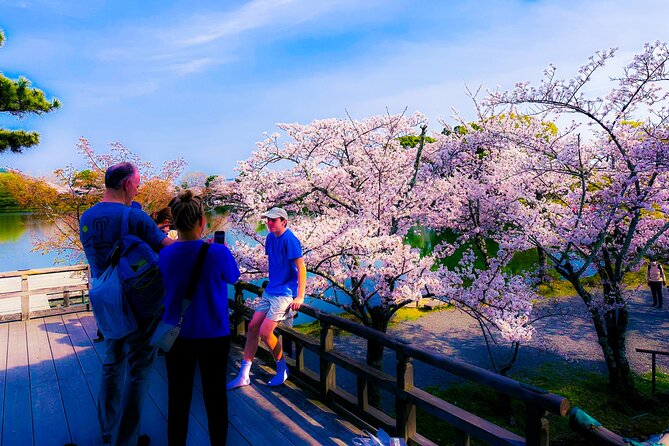
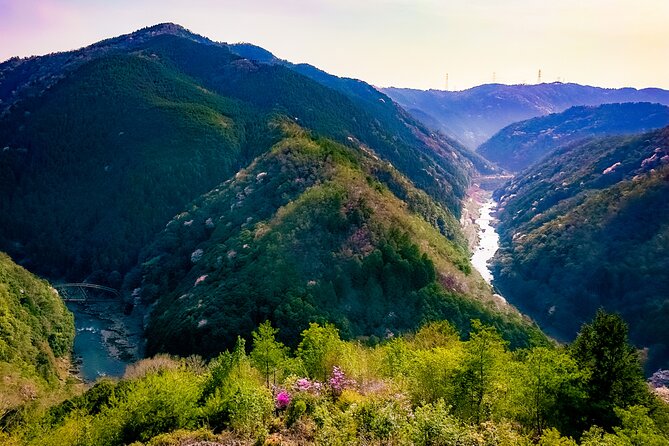
The Arashiyama-Takao Parkway changes the feel of the afternoon. This toll road runs into the mountains north of Arashiyama and is included in the tour price. In April, the road is lined with about 2,000 cherry trees. In November, maple trees provide the seasonal color.
The tour lists 45 minutes for the parkway, which gives you time to enjoy the drive rather than treating it as a simple transfer. This is where the private van has a clear advantage. You can reach roads that are awkward by public transport, and you can stop at viewpoints without organizing a separate mountain excursion.
Mount Ogura Observatory is a five-minute pause with a broad view over Kyoto. Hozukyo Observatory is another five-minute stop overlooking the Hozu Gorge, known for its traditional hard-stream boat rafting. These are quick views, not hikes or long walks, so keep your expectations in line with the schedule.
I like these stops because they show the physical setting of Kyoto. The city is not only temples and streets. Mountains surround it, and the gorge country begins surprisingly close to the urban center. The drawback is simple: five minutes goes quickly. If you use a mobility aid, have trouble with uneven ground, or want more time at viewpoints, tell Daiki before the day begins.
Same trip, a completely different kind of day:
- PERFECT KYOTO 1-Day Bus Tour
★ 5.0 · 13,518 reviews - Kyoto: Fushimi Inari, Kinkakuji, Bamboo Grove 1 Day Bus Tour
★ 4.8 · 4,316 reviews - Kyoto: Tea Ceremony in a Traditional Tea House in Kiyomizu
★ 4.9 · 3,519 reviews - Kyoto: Tea Ceremony Ju-An at Jotokuji Temple
★ 4.9 · 3,207 reviews
Sacred trees in northern Kyoto
The most unusual section takes you farther north to Nakagawa Hachimangu Shrine and the Kitayama Big Daisugi area. These stops are not major city attractions, and that is precisely their value.
Nakagawa Hachimangu is a local guardian shrine. Its old Japanese cedar is worshiped as a lord of the area, and the custom described for the visit is to touch the tree and receive the power of its spirit. The stop lasts about five minutes. Approach this respectfully. This is a place of local religious meaning, not simply a prop for a photograph.
Kitayama Big Daisugi is listed as a secret spot reached by a narrow cliff road. The area is known for giant platform cedar trees, and the visit lasts about ten minutes. The road itself is part of the experience, taking you well away from central Kyoto and into a place few independent visitors would think to seek out.
This is the part I would value most if you have already seen Kyoto’s major temples or want contact with rural Japan. You get a sense of how trees, mountains, and shrines connect in local Shinto practice. At the same time, the stop is brief and the road is narrow, so this is not the right choice for someone who wants a long forest walk or a full countryside day.
A drive through the old geisha district
The route also passes a 600-year-old street associated with geishas. You see it from the van rather than walking through the crowds. This saves time and lets the tour keep moving toward the major shrines.
It is a practical compromise. You can take photographs from the vehicle, but you must ask permission before photographing geishas. That rule matters. Treat the street as a living neighborhood and cultural setting, not a stage for close-up pictures.
If you want a long, quiet stroll through traditional lanes, this part may feel too quick. If you are short on time and want to see several parts of Kyoto in one afternoon, the drive-by view is useful.
Heian Jingu and the largest torii
Heian Jingu’s great torii gate is a five-minute photo stop. At 24.4 meters, or about 80 feet, it is one of the largest shrine gates in Japan and one of Kyoto’s most visible roadside landmarks.
You do not spend enough time here for a full shrine visit. Think of it as a chance to see the scale of the gate, hear why it matters, and take photographs. The short stop also shows how this tour works: it adds major sights even when the schedule does not allow a long stay inside each one.
Fushimi Inari after the city starts to quiet
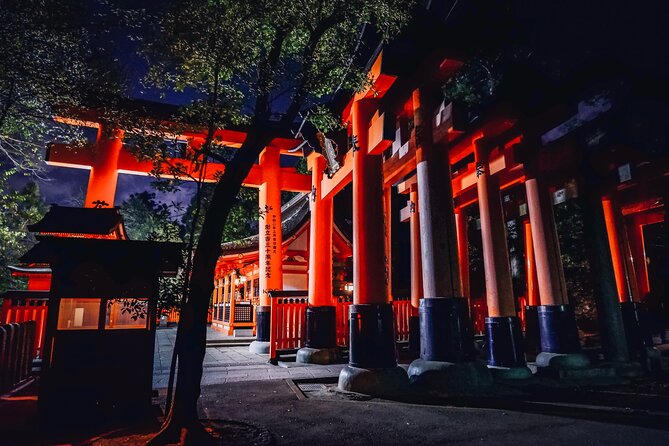
The final major stop is Fushimi Inari-taisha, famous for its thousands of red torii gates. The shrine now has more than 10,000 donated gates, forming paths up Mount Inari.
You have about 40 minutes here. That is enough to walk through the first section and get the essential Fushimi Inari experience. It is not enough to climb the entire mountain, so do not arrive expecting a full summit hike.
Timing can shape this stop. The tour begins at 1 p.m. and ends in the evening, and one account of the experience especially valued seeing the torii later in the day with fewer people. Conditions change, but the afternoon schedule gives you a chance of reaching Fushimi Inari after the busiest period.
Wear shoes suitable for stairs. The shrine paths rise and can become tiring, even if you stay near the entrance. If stairs are a concern, ask Daiki to help you choose a manageable section. The tour information says some temples require walking and stairs, and the route can be adjusted when you need to avoid them.
What the private format does well
The private format is the core benefit. You are not waiting for a large group to gather, and you can discuss what interests you as the day develops. Daiki has adjusted visits for specific interests and needs, including on a rainy day.
Rain does not necessarily ruin the experience. The van keeps the transfers comfortable, and the route includes indoor temple areas, shrines, and scenic drives. Still, mountain viewpoints may be less rewarding in poor weather, and some outdoor stops may change with the season or conditions.
The tour is also useful for families. One family of four found the van comfortable, and the private setup avoids the stress of keeping children together on buses across Kyoto. Teenagers may appreciate the mix of famous sights, viewpoints, and unusual cedar trees more than a day of temples alone.
For older people or anyone with limited walking ability, the van helps, but it does not remove every physical demand. Temple grounds can include stairs and uneven paths. Mention your needs before departure, not halfway through the afternoon.
The pace, timing, and small cautions
A six-hour tour with this many stops requires discipline. You will spend more time in the van than on a standard single-neighborhood walking tour. That is the price of seeing Kinkakuji, Arashiyama, the northern mountains, central Kyoto, and Fushimi Inari in one day.
A past pickup ran about ten minutes late, so allow a little patience at the start and keep your phone available. The stated start time is 1 p.m., and pickup is offered anywhere in Kyoto City. Confirm your exact pickup point and party size when booking.
The itinerary can change by season or other circumstances. That makes sense for cherry blossoms, autumn leaves, weather, road conditions, and temple hours. One planned Arashiyama visit was skipped because the area was too crowded, and another temple had closed by late afternoon. This is a useful reminder to treat the route as a flexible plan rather than a guarantee that every stop will receive the exact listed minutes.
Free cancellation is available up to 24 hours before the start time. Changes made inside that window are not accepted, and the local cutoff is based on Kyoto time.
Who should book this Kyoto tour?
I would book this tour if I had one open afternoon, wanted both famous Kyoto and rural scenery, and valued an English-speaking local guide more than a slow visit at one temple. It is especially well suited to families, small private groups, first-time visitors, and anyone who finds Kyoto’s bus network tiring.
I would also choose it after spending time in central Kyoto already. The northern cedar area, mountain parkway, and local shrine give the day a different character from the usual temple circuit.
I would skip it if you want to study each temple in detail, hike Mount Inari, or spend half a day wandering Arashiyama on foot. The schedule is broad and efficient, not leisurely. But if you want a comfortable van, a flexible guide, major sights, and a real look at Kyoto’s mountain edge, this is a strong use of six hours. The private format, included transport costs, and Daiki’s warm, adaptable guiding make the price easier to justify for a group sharing the vehicle.
FAQ
How long is the Kyoto private van tour?
The experience lasts approximately six hours and starts at 1 p.m.
Where does pickup take place?
Pickup and drop-off are offered anywhere in Kyoto City.
Is the tour private?
Yes. Only your group participates in the activity.
Who is the guide?
The guide is Daiki, a local Japanese guide who leads the tour in fluent English.
Are temple admission fees included?
No. Total entry fees are estimated at about ¥1,400 per person and are paid separately.
Is the bamboo forest visit included?
Yes. The route includes the Arashiyama Bamboo Forest, with about 15 minutes allocated for the walk.
Can the itinerary change?
Yes. Parts of the route may change because of the season or other circumstances, and you can ask the guide about avoiding temple walks or stairs if needed.
Just added around Kyoto
- Sekka Cotton Furoshiki Class★ 5.0 · 19 reviews
- Kyoto Sword Experience – includes Museum Ticket/Ninja Experience★ 4.5 · 149 reviews
- Scenic Green Tea Fields of Hidden Kyoto & Local Tea Exp (Private)★ 5.0 · 32 reviews
- Secret Eastern Kyoto Biking Adventure★ 5.0 · 44 reviews
- Private Sake Tasting in Central Kyoto with Sake Sommelier★ 5.0 · 32 reviews
- Samurai School in Kyoto: Samurai for a Day★ 5.0 · 202 reviews
- SHIRAKAWA Japanese Culture Experiences with private English staff★ 5.0 · 16 reviews
- A Privately Guided Photoshoot in Beautiful Kyoto by a Pro★ 5.0 · 18 reviews
Hidden Gems Tours, compared.
Kyoto Geisha Walking Tour: Gion District & Hidden Gems
Our verdict →
Small Group, Big Flavors & Hidden Local Secrets Tour
Our verdict →Browse the lists this tour appears in