
Reviewed · TEA CEREMONY EXPERIENCES
Kyoto Fushimiinari:Wagashi Making & Small Group Tea Ceremony
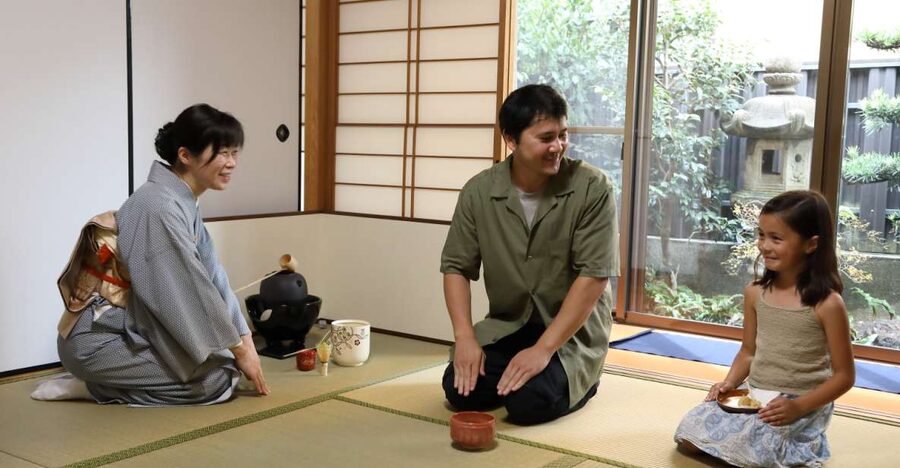
The most appealing part of this Kyoto experience is its setting: you leave the streets around Fushimi Inari and enter a quiet Japanese home with tatami rooms and a small garden. In 75 minutes, you make a traditional sweet, learn the manners behind tea ceremony, and prepare matcha with a bamboo whisk.
I like the hands-on wagashi class, since you are making the sweet rather than watching a demonstration. I also like the small group limit of six, which gives you room to ask questions and try the tea-making steps without feeling rushed. The main consideration is sitting on the tatami floor. Chairs and tables are available if you request them ahead of time, but the experience is not suitable for wheelchair users or children under eight.
Key points at a glance
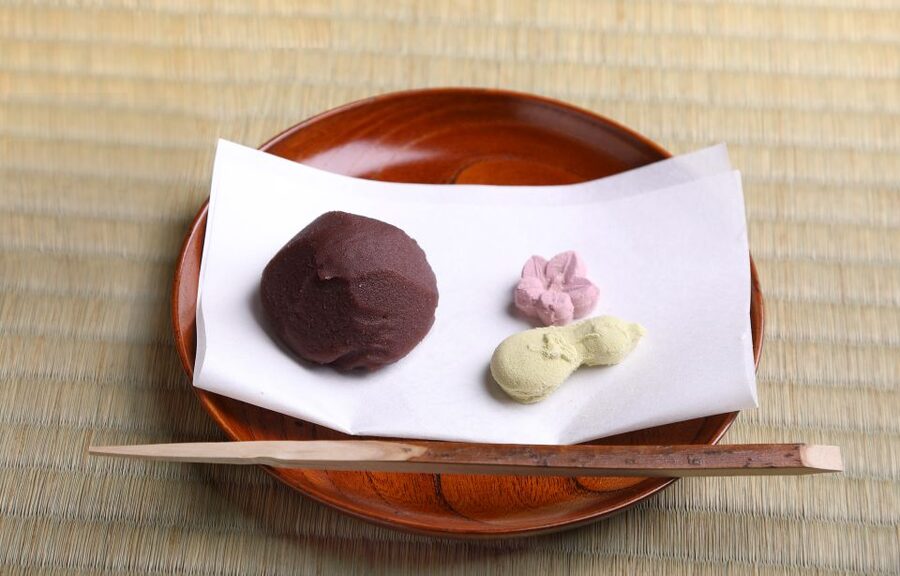
- Make your own wagashi: Learn one type of Japanese sweet in the kitchen, with the seasonal design and ingredients subject to change.
- Prepare one bowl of matcha: Watch the ceremonial method, then use a bamboo whisk to make your own tea.
- Enter an authentic tea room: When weather allows, you walk through a tiny garden before sitting in a traditional Japanese-style room.
- Learn the meaning behind the ritual: The instructor explains tea history, ceremony manners, and the hanging scroll in the alcove.
- Keep the group intimate: A maximum of six participants makes this a personal lesson rather than a large demonstration.
- Plan for tatami etiquette: Wear socks, avoid bare feet, and expect no flash photography or video recording.
A calm Kyoto lesson near Fushimi Inari
Fushimi Inari is famous for its long rows of red torii gates, but the area can feel crowded and noisy. This activity offers a useful change of pace. Instead of adding another major sight to your day, you spend time in a private home where the focus is on food, tea, and conversation.
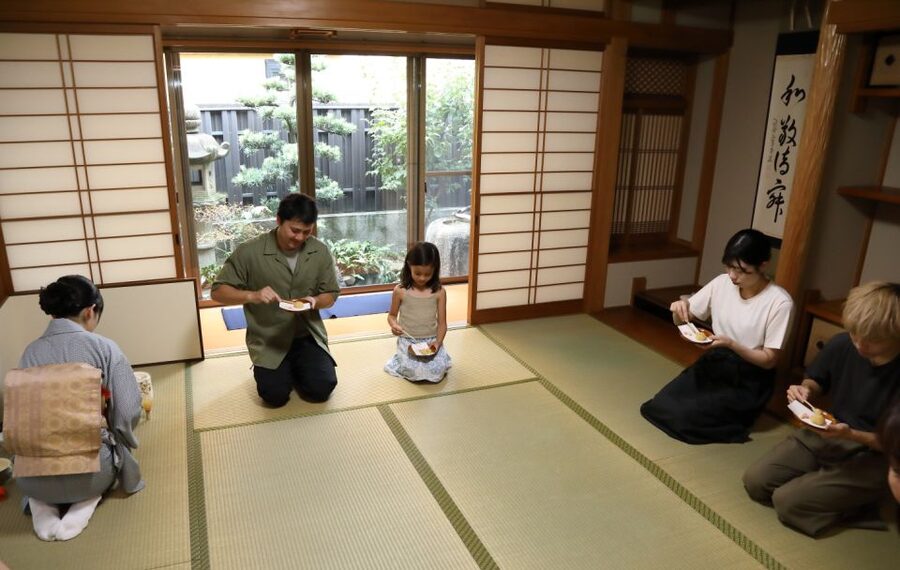
The house has Japanese-style rooms and a garden view. If it is not raining, you walk outside through a very small garden before entering the tea room. That short transition matters. You are not simply sitting down for a cup of matcha in a modern classroom. You move from the kitchen to the garden, then into a room arranged for tea ceremony.
I would not book this expecting a full-length formal tea ceremony with elaborate procedures lasting several hours. The session is a friendly, guided introduction. The instructor explains the customs clearly, and the tone is designed so you can participate at your own pace.
The English-speaking instructors are licensed guide interpreters. That is useful here because tea ceremony has many small details that are easy to miss. You will hear not only what to do, but also why the room, sweets, tea, and gestures matter.
More Tea Ceremony Experiences in Kyoto
- Kyoto: Tea Ceremony in a Traditional Tea House in Kiyomizu
★ 4.9 · 3,519 reviews - Kyoto: Tea Ceremony Ju-An at Jotokuji Temple
★ 4.9 · 3,207 reviews - Kyoto: 45-Minute Tea Ceremony Lesson Experience
★ 4.3 · 2,378 reviews
Making wagashi instead of just eating it
The class begins in the kitchen, where you learn to make one kind of wagashi. The exact sweet can change with the season, so the result may not always match the photos used when you book.
One session included mochi with red bean paste and white bean paste. That gives you a good idea of the balance: soft confectionery, sweet filling, and careful shaping. You should not expect to prepare a whole menu. The point is to learn one traditional sweet well enough to make it again at home.
This is the strongest part of the activity for anyone who enjoys practical cooking classes. You handle the ingredients and follow instructions rather than sitting through a simple demonstration. The instructor guides you through the process, and English explanations make it easier to understand both the technique and the place of wagashi in tea service.
The finished sweet is not just a snack. You later eat it during the tea ceremony, before drinking matcha. That gives the cooking lesson a clear purpose. You make something, learn how it fits into the ritual, and then enjoy it in the proper setting.
I also like the seasonal element. The sweet may change depending on the time of year, which means the class is not locked into one identical product. At the same time, this is worth noting if you have your heart set on a particular wagashi shown in a booking photo. Ask about food restrictions or allergies in advance.
Walking through the garden to the tea room
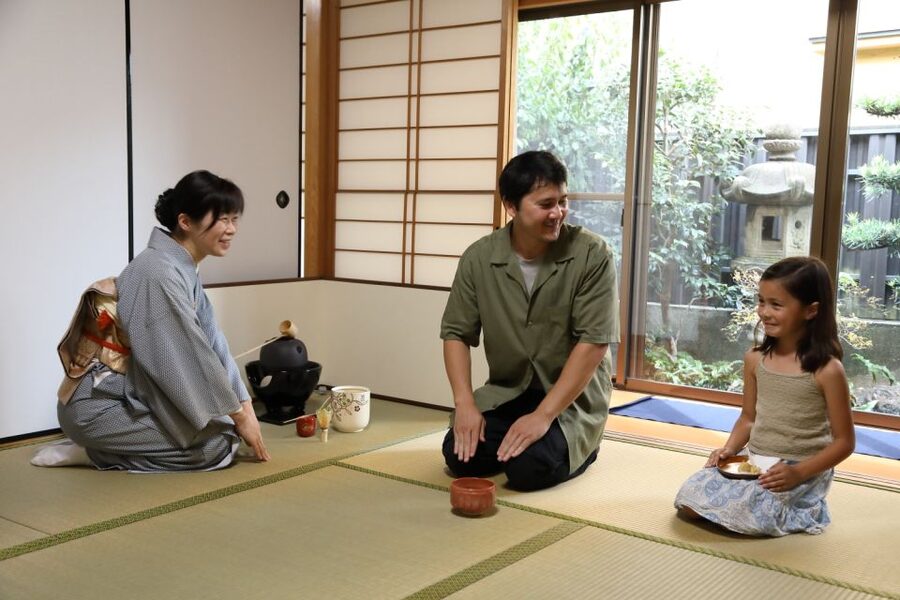
After the kitchen lesson, the host explains how to attend a tea ceremony and the basic manners used in a Japanese room. You then walk through the small garden and enter an authentic Japanese-style room when the weather permits.
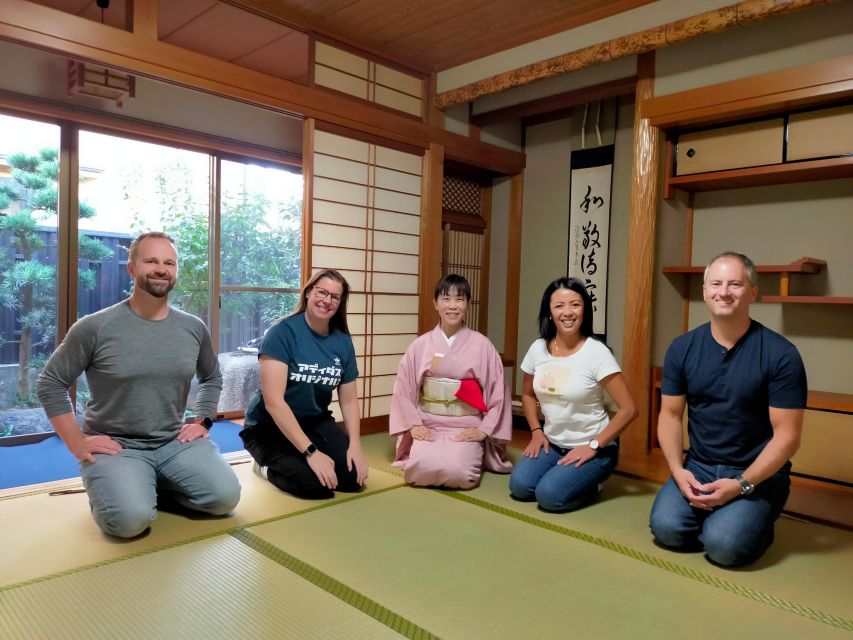
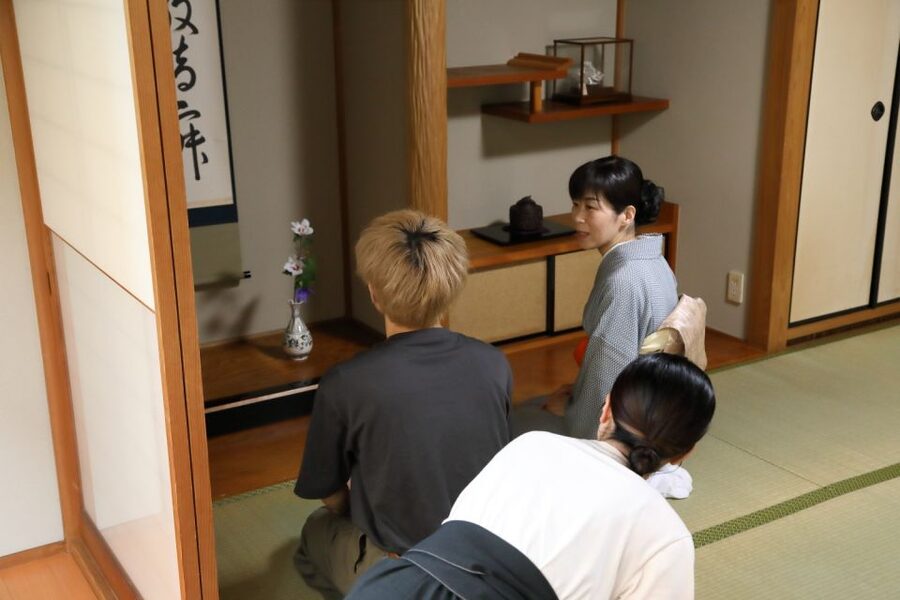
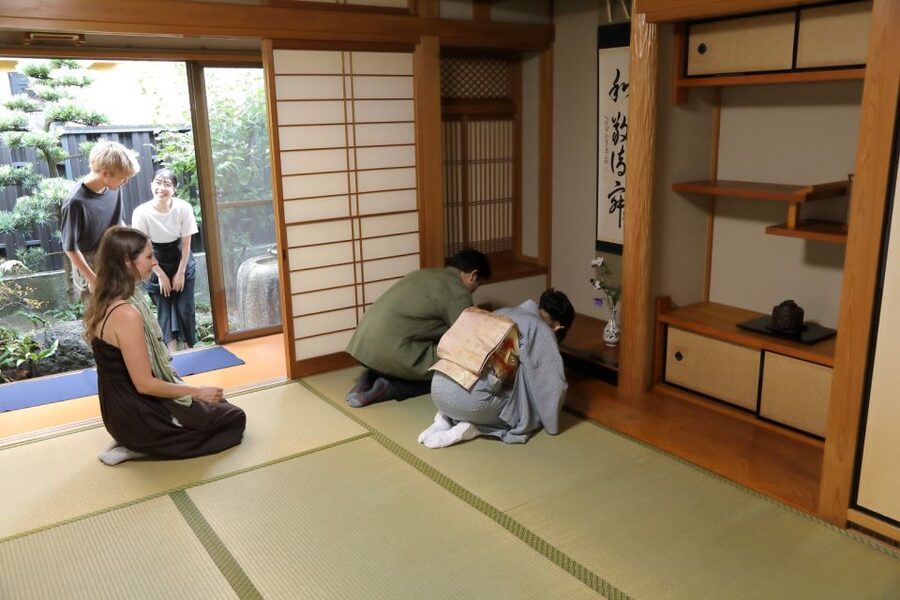
The tea room is arranged with tatami flooring and an alcove at the back. The instructor explains the hanging scroll in the alcove, along with the history of tea and the purpose of the ceremony. These details help you see that tea ceremony is not only about whisking green powder into hot water. The room, the scroll, the sweet, and the actions all form part of the occasion.
You will sit on the tatami floor for this part. Traditional floor seating can be hard on knees and hips, especially if you are not used to it. Chairs and tables are available for people who find floor seating difficult, but you need to tell the host in advance.
Socks are required, and bare feet are not allowed. This is a small point, but it is easy to overlook when packing for a summer day in Kyoto. Wear clean, comfortable socks and avoid arriving with footwear that makes changing or entering the room awkward.
Learning the manners without feeling tested
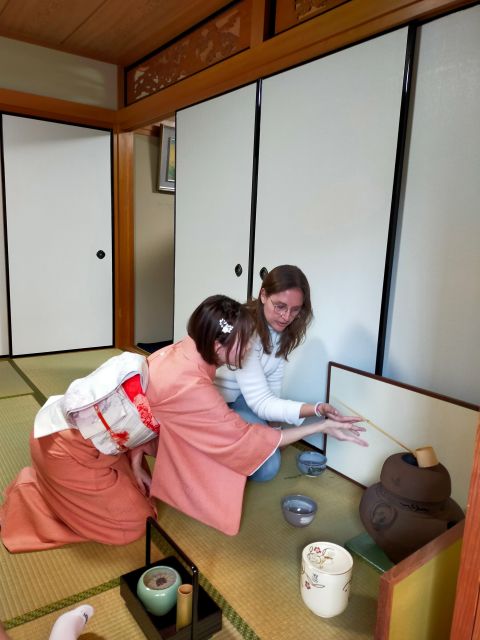
Tea ceremony has rules, but this activity does not treat them like an exam. The instructor first explains how to behave in the room and how to eat the sweet. You then watch a demonstration before trying the steps yourself.
That order works well. You get the cultural context before being asked to perform anything, and you can follow along without guessing. The English explanations are especially helpful when the host discusses details such as the hanging scroll or the reason sweets are served before matcha.
The ceremony is presented in a relaxed way, so you can ask questions about the ritual and Japanese culture. One host, Miho, has been praised for her warm welcome and clear English, while the tea master has been described as friendly and happy to discuss cultural questions. Since hosts can vary, do not assume that every session will have the same person, but the experience is conducted in English.
Photography is limited. Flash photography and video recording are not allowed, and the host may ask you not to take photos during certain parts of the session. That restriction can be disappointing if you want to document every gesture, but it protects the calm of the ceremony and keeps a phone from becoming the main event.
You should treat this as a chance to watch carefully and remember the experience. Photos may be possible in some portions, but follow the host’s instructions.
More Temple & Shrine Tours in Kyoto
- Kyoto: Fushimi Inari, Kinkakuji, Bamboo Grove 1 Day Bus Tour
★ 4.8 · 4,316 reviews - Fushimi Inari Hidden Hiking Tour (Private Option Available)
★ 5.0 · 1,750 reviews - Osaka/Kyoto:Kinkakuji,Arashiyama,FushimiInariShrine,NaraPark
★ 4.1 · 1,596 reviews - Arashiyama Bamboo, Temple, Monkeys, or Secret Sake Brewery
★ 4.8 · 886 reviews
Watching matcha become a ceremony
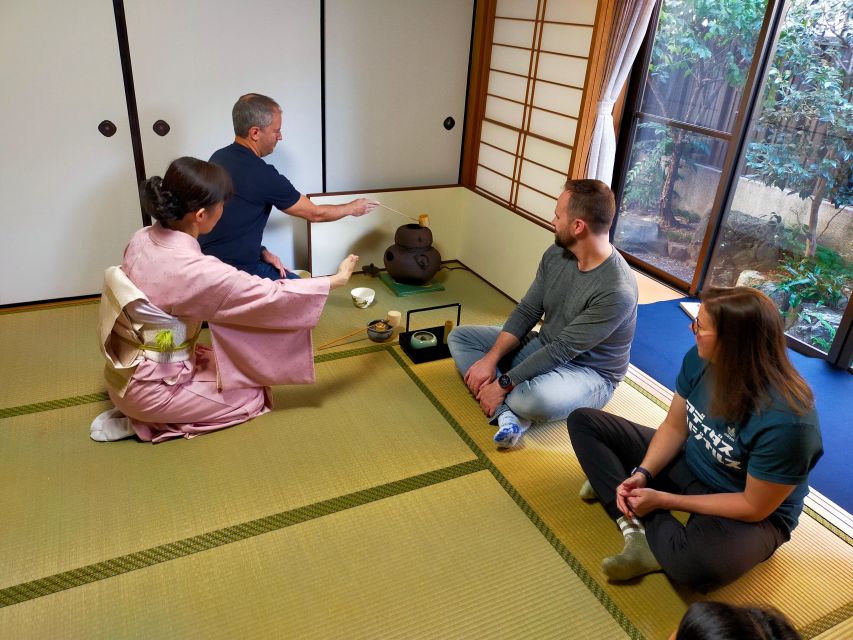
The tea portion includes two bowls of matcha. One is prepared by the host or tea master, and the other is prepared by you.
First, you savor the wagashi you have just made while the instructor demonstrates how to drink matcha. The timing is important. The sweet prepares your palate for the tea, and the demonstration shows you the order and manners before you pick up the bowl yourself.
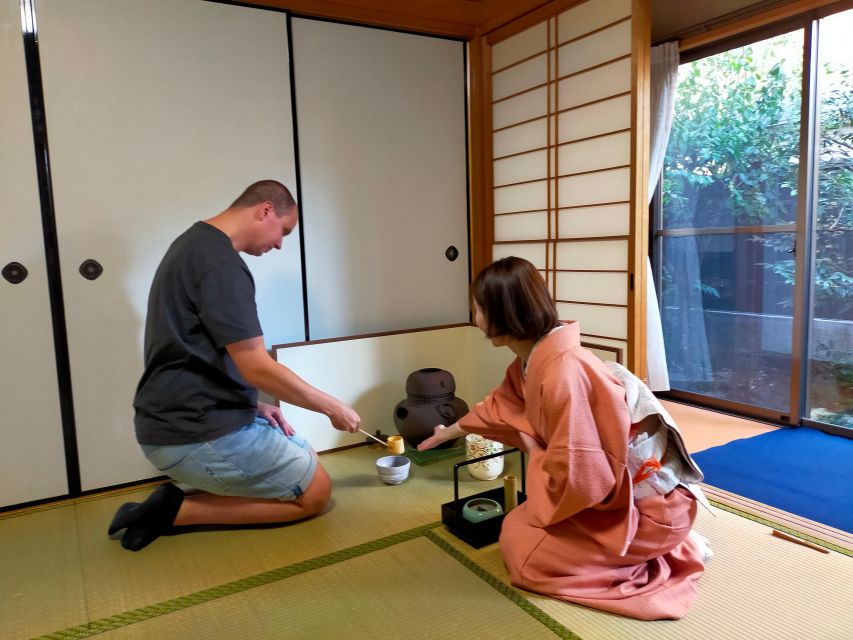
The host then demonstrates the ceremonial preparation of matcha. You watch the use of the bamboo tea whisk and the careful movements involved in making a bowl. Afterward, you get your own turn.
This is not a rushed photo opportunity. You are shown how to make one bowl and then given the chance to whisk it yourself. The result may not look perfect on your first attempt, which is part of the fun. You leave with a skill you can repeat for friends or family, rather than only a memory of someone else preparing tea.
The activity does not promise professional tea training, and 75 minutes is not enough to cover every school or style of tea ceremony. Its value is that it gives you a clear, approachable introduction. You learn the basic sequence, taste the tea, and understand why the ceremony is arranged as it is.
What the $55 price includes
At $55 per person, the cost is reasonable for a 75-minute small-group lesson if you want active participation. The fee includes an English-speaking instructor, the wagashi lesson, one type of traditional confectionery, two bowls of matcha, use of the tea-making equipment, explanations of tea and sweets, and all taxes and fees.
The group limit of six is important to the value. In a large class, you might spend most of the time watching someone else shape the sweet or whisk the tea. Here, the format gives you a better chance to ask questions and receive help with your own attempt.
You are paying for more than food and tea. You are also paying for access to a private home, a traditional room, a garden visit when weather allows, and guided cultural explanation in English. For many people, that makes the price stronger than a quick matcha tasting.
The value is less clear if you only want to sample Japanese sweets or drink a cup of tea. You can find simpler food and drink experiences elsewhere. This one makes sense if you want to understand the customs and take part in the preparation.
There is no hotel pickup or drop-off, and the host does not call a taxi for you. Plan your route to the meeting place around Fushimi Inari and allow enough time to arrive calmly. The supplied details do not give a specific walking time from the shrine or station, so check the meeting instructions carefully after booking.
Who will enjoy this experience most
I would recommend it to adults, older children who meet the minimum age of eight, couples, solo visitors, and small groups of friends who want a quiet cultural activity. It also works well for someone who has already seen Fushimi Inari and wants to do something less focused on sightseeing.
Food lovers will appreciate the wagashi lesson. People interested in etiquette and traditional arts will get more from the tea room explanation. First-time visitors to Japan may find it especially useful because the instructor connects the food, room, garden, scroll, and tea into one short lesson.
It may not suit you if you dislike sitting on the floor, have serious food allergies that cannot be managed, or want a completely private booking. The group is small but shared, with up to six participants.
Children under eight cannot join. Wheelchair users cannot take part, according to the activity information. If you have mobility needs but can use a chair in the room, contact the host in advance rather than assuming the arrangement will be ready.
Practical details that affect your visit
The experience lasts 75 minutes, so it fits neatly into a Kyoto day. You can schedule it around a visit to Fushimi Inari, but do not treat the start time casually. A late arrival would cut into the cooking lesson and tea ceremony, both of which depend on a shared sequence.
The activity is offered in English. The instructors are licensed guide interpreters, so explanations cover more than basic directions. You can ask about the ceremony, the sweets, or Japanese culture as the session unfolds.
Free cancellation is available up to 24 hours before the start time for a full refund. You can also reserve now and pay later, which helps if your Kyoto schedule is still changing.
Bring socks. Do not bring bare feet into the house, and be prepared to put away your camera during parts of the session. If you have allergies or food restrictions, give advance notice. Seasonal changes to the wagashi are normal, not a sign that the class is different from what you booked.
Should you book the wagashi and tea ceremony?
Book it if you want a small, participatory cultural lesson rather than another sightseeing stop. The strongest reasons are the hands-on sweet-making, the chance to prepare your own matcha, and the quiet setting in a Japanese home. The small group and clear English instruction add real value.
Skip it if you are looking only for a quick tea tasting, cannot sit on tatami, or prefer a large-scale performance with no participation. Also remember that the garden walk depends on weather and that photography is restricted.
For most visitors who have 75 minutes to spare near Fushimi Inari, this is a thoughtful choice. You leave having made a Japanese sweet, whisked matcha, and learned enough ceremony manners to repeat the experience at home. That is a useful souvenir, and one that does not need extra space in your suitcase.
FAQ
How long does the wagashi and tea ceremony experience last?
The activity lasts 75 minutes.
Is the experience conducted in English?
Yes. An English-speaking instructor leads the session, and the instructors are licensed guide interpreters.
How many people can join the group?
The group is limited to six participants.
What food and drink are included?
You learn to make one type of wagashi and receive one type of traditional Japanese confectionery. You also receive two bowls of matcha, with one prepared by yourself.
Do I need to sit on the floor?
The tea ceremony takes place on tatami flooring. Chairs and tables are available for people who find floor seating difficult, but you should request them in advance.
What should I bring and what is not allowed?
Bring socks, since bare feet are not allowed. Flash photography and video recording are prohibited, and the host may ask you not to take photos during parts of the session.
Just added around Kyoto
- Sekka Cotton Furoshiki Class★ 5.0 · 19 reviews
- Secret Eastern Kyoto Biking Adventure★ 5.0 · 44 reviews
- Kyoto Sword Experience – includes Museum Ticket/Ninja Experience★ 4.5 · 149 reviews
- Scenic Green Tea Fields of Hidden Kyoto & Local Tea Exp (Private)★ 5.0 · 32 reviews
- Private Sake Tasting in Central Kyoto with Sake Sommelier★ 5.0 · 32 reviews
- Samurai School in Kyoto: Samurai for a Day★ 5.0 · 202 reviews
- SHIRAKAWA Japanese Culture Experiences with private English staff★ 5.0 · 16 reviews
- A Privately Guided Photoshoot in Beautiful Kyoto by a Pro★ 5.0 · 18 reviews
Tea Ceremony Experiences, compared.

Tea Ceremony in a Traditional Tea House in Kiyomizu
Our verdict →


World Heritage Kyoto & Nara Uji Authentic Matcha Experience
Our verdict →


Arashiyama Bamboo Forest, Monkeys, Matcha & Temple Tour
Our verdict →
Browse the lists this tour appears in