
Reviewed · HIDDEN GEMS TOURS
Kyoto Full Course Tour: Explore 10 Must-See Sights & Hidden Gems
Kyoto’s biggest challenge is not finding beautiful places. It is connecting them. This fast-paced full-day tour links Arashiyama, the Golden Pavilion, Fushimi Inari, Kiyomizu-dera, Yasaka Pagoda, and Gion in roughly nine and a half hours, using local trains, buses, and plenty of walking.
I like two things here. First, guides such as Masako, Megumi, and Masa bring a warm, personal touch while explaining etiquette, daily life, and how Kyoto’s transport works. Second, the group size tops out at 10, which makes a packed day easier to manage than a large coach outing.
The tradeoff is clear: this is a sightseeing sprint, not a slow temple visit. You may walk more than 20,000 steps, pay extra for transport, food, and admissions, and have only about 30 minutes at each main stop.
Key points to know before booking
- Nine major Kyoto sights in one day: You visit Arashiyama, Ryoanji, Kinkakuji, Fushimi Inari, Kiyomizu-dera, Sanneizaka, Yasaka Pagoda, Kiyomizu-zaka, and Gion.
- More than 20,000 steps: Comfortable shoes are essential, and the tour requires moderate physical fitness.
- Public transport is part of the lesson: You ride Kyoto’s buses and trains with help from a local guide.
- Small group, early start: The maximum is 10 people, with a morning meeting at Saga-Arashiyama Station.
- Lunch is casual and flexible: The conveyor-belt restaurant offers sushi, vegetable sushi, ramen, fried chicken, mochi, and beer, but vegetarian choices may be limited.
- Budget extra money: Plan on about $10 for transport, $6.80 to $14 for lunch, and $11 for temple and shrine admissions.
Why this Kyoto day works for first-time visitors
Kyoto is spread across several separate sightseeing districts. Arashiyama sits in the west, Fushimi Inari lies south of the central area, and Kiyomizu-dera and Gion occupy the eastern hills. On your own, you can visit these places, but fitting them together in one day requires careful timing and a good grasp of local transport.
This tour gives you a practical introduction to that system. You meet near Saga-Arashiyama Station, then move by train, bus, and foot. Your guide handles the route while showing you how to get around, which can be especially useful if you have only a few days in Kyoto.
The experience is best understood as a first-day orientation. You see the city’s headline sights, learn which districts deserve a longer return visit, and get a sense of how Kyoto fits together. You will not have time to study every temple garden or wander every side street, but you will leave with a useful map in your head.
Guides named Masako, Megumi, and Masa have led this experience, and the strongest praise centers on their kindness, clear explanations, humor, and care with the group. That personal guidance matters here because the schedule is tight. A calm guide can make a complicated day feel manageable.
More Hidden Gems Tours in Kyoto
- Kyoto Geisha Walking Tour: Gion District & Hidden Gems
★ 4.7 · 3,273 reviews - Private Kyoto Tour with a Local, Highlights & Hidden Gems, Personalised
★ 5.0 · 1,543 reviews - Arashiyama Bamboo Forest & Hidden Gems Bike Tour (Early Bird)
★ 5.0 · 613 reviews
Starting in Arashiyama before the crowds build
The meeting point is Saga-Arashiyama Station in the western part of Kyoto. The supplied details give both 8:30 and 8:50 as start times, while the participation notes stress that the tour begins at 8:50 and late arrivals cannot join. Treat 8:50 as the firm start and arrive early enough to find the station meeting point without rushing.
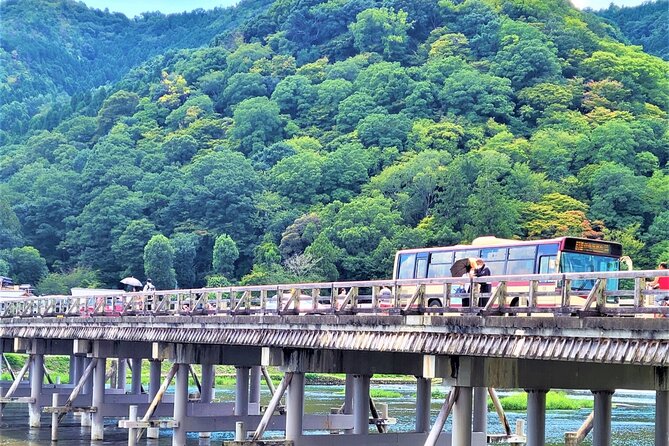
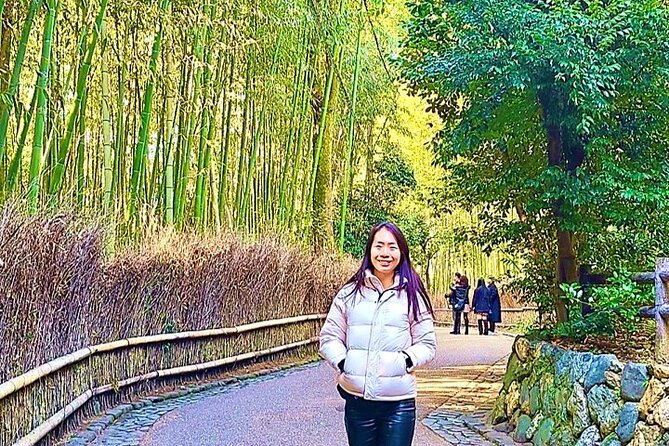
Arashiyama begins the day with a walk through its famous bamboo forest and the surrounding wooded hills. The bamboo path is photogenic and atmospheric, but the visit is brief, listed at about 30 minutes. You get a taste of the area rather than a full morning to explore Tenryu-ji, the riverfront, or the wider district.
That short visit is both a strength and a limitation. It lets you see one of Kyoto’s best-known scenes before moving on, but it will feel hurried if Arashiyama is high on your personal list. If you want quiet photographs or time in the temple gardens, plan to return on another day.
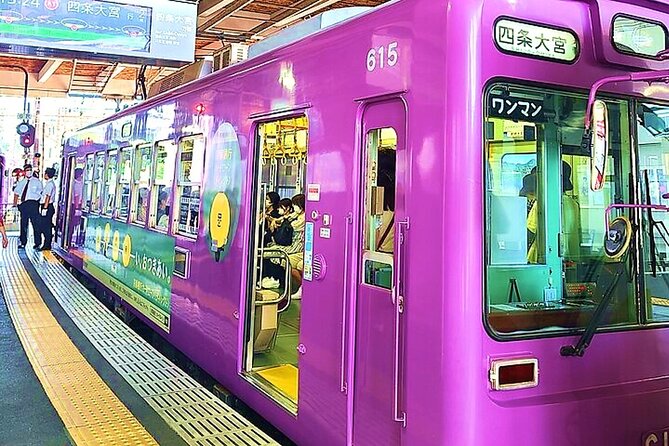
The Randen tram line is also part of the day. This is a useful local touch, since the route gives you more than a series of taxi rides between famous sights. You experience Kyoto as a working city, with public transport linking its historic districts.
Ryoanji and the calm of the stone garden
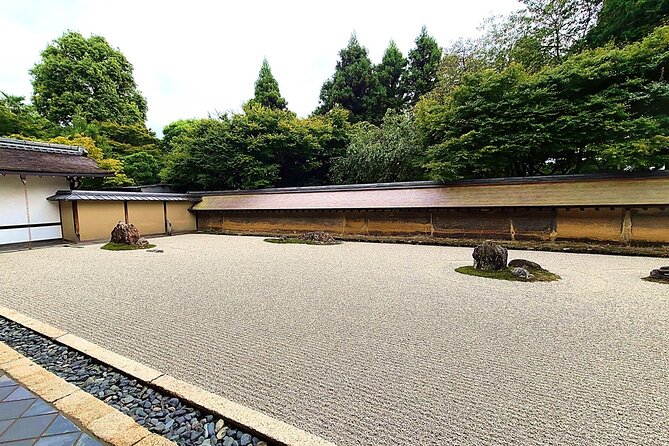
Ryoanji follows Arashiyama, with about 30 minutes at the temple. Its dry garden is one of Kyoto’s best-known examples of Zen temple design, using carefully arranged stones and raked gravel rather than plants and ponds as the main focus.
You should set your expectations correctly. Thirty minutes gives you time to enter, see the garden, and listen to an explanation, but not to explore every corner of the grounds at a leisurely pace. The visit works well as an introduction, especially if you are unsure what to look for in a Japanese rock garden.
The stop also adds a quieter note to a day otherwise packed with famous photo spots. The garden rewards a few minutes of stillness, though the schedule may encourage you to keep moving.
Kinkakuji, Kyoto’s famous Golden Pavilion
Kinkakuji, often called the Golden Pavilion, is one of Kyoto’s essential sights. Its bright gold exterior and setting beside the pond make it instantly recognizable, even if you have seen countless photographs.
The tour allows about 30 minutes here, and admission is not included. That time is enough for the main view and a walk through the required visitor route. It is not enough for a slow visit to every part of the grounds.
Kinkakuji is a place where the short format works reasonably well. The pavilion itself is the main event, and the route keeps you moving through the grounds. Still, expect other people and limited time for photographs. The point is to see Kyoto’s most famous temple rather than spend half a day studying its architecture.
Same trip, a completely different kind of day:
- PERFECT KYOTO 1-Day Bus Tour
★ 5.0 · 13,518 reviews - Kyoto: Fushimi Inari, Kinkakuji, Bamboo Grove 1 Day Bus Tour
★ 4.8 · 4,316 reviews - Kyoto: Tea Ceremony in a Traditional Tea House in Kiyomizu
★ 4.9 · 3,519 reviews - Kyoto: Tea Ceremony Ju-An at Jotokuji Temple
★ 4.9 · 3,207 reviews
A practical lunch at the conveyor-belt sushi restaurant
Lunch is at a conveyor-belt sushi restaurant, with food purchased separately. The stated choices include sushi, vegetable sushi, ramen, kara-age, mochi, and beer, with the usual bill expected to fall around $6.80 to $14 per person.
This arrangement keeps the group moving. You choose what you want, pay for your own order, and avoid a long formal meal. It also gives you a taste of a common Japanese dining format.
Vegetarians should take care here. Vegetable sushi is available, but the meal may not offer the range of meat-free choices you would expect from a specialist vegetarian restaurant. If dietary needs are important, ask before booking or request a private arrangement where applicable.
Lunch is also one of the few parts of the day where you may have a little choice in how much you eat and how much you spend. Keep the meal efficient, since the rest of the schedule remains tight.
Fushimi Inari and its corridor of red gates
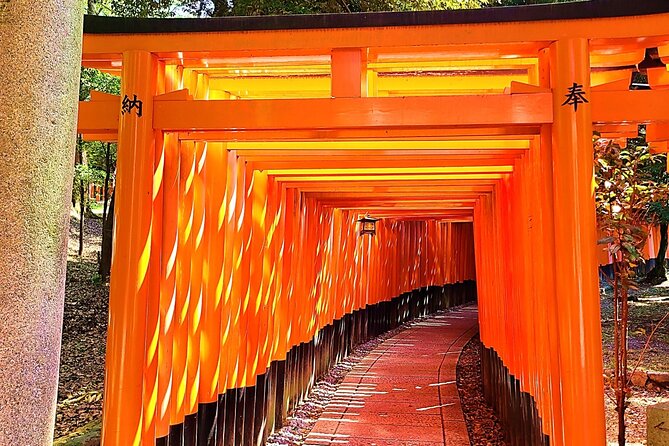
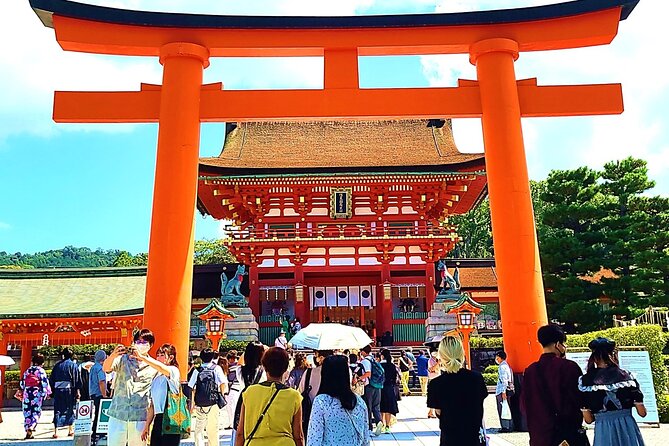
Fushimi Inari Taisha is one of Kyoto’s most memorable sights. Its path rises through a series of orange-red torii gates, donated over time by individuals and businesses. The gates create a long tunnel effect that has become one of Japan’s most recognizable images.
The official visit is about 30 minutes, so you will see the lower section rather than complete the full mountain walk. That is a sensible choice for a day already demanding more than 20,000 steps. The lower gates are the most concentrated and visually striking part of the shrine.
Fushimi Inari is also a good place to understand the difference between a shrine and a temple. Your guide can explain the customs, symbols, and reasons people come here, adding context that a quick photograph cannot provide.
Expect crowds, especially around the entrance. Stay close to your guide and do not wander away. The participation rules are strict: if you separate from the group, the host cannot search for you, and no refund is provided.
The eastern hills: Kiyomizu-zaka and Sanneizaka
The tour then shifts to the Higashiyama area, where Kiyomizu-zaka and Sanneizaka provide a change from temple grounds. These sloping pedestrian streets are lined with souvenir shops, sweets, crafts, and local food.
This section is less about a single monument and more about Kyoto’s old-town atmosphere. You get time to look at shop fronts, browse gifts, and see how the approach to a major temple has developed into a busy shopping district.
The slopes are attractive but not easy for everyone. Surfaces can be uneven, the streets are crowded, and the constant walking adds to the physical strain. Anyone using a wheelchair or dealing with mobility limitations should ask detailed questions in advance. One account of the experience made clear that many of the major sights are not fully accessible, and this route is not designed as a wheelchair-friendly tour.
Kiyomizu-dera and the wooden stage
Kiyomizu-dera is among Kyoto’s most popular temples, known for its large wooden stage projecting from the hillside. The structure is traditionally described as having been built without a single nail, an impressive detail to hear while looking across the valley.
The visit lasts about 30 minutes, with admission extra. You will have time to see the principal areas and hear the main story, but not to inspect every building, pagoda, or small shrine on the grounds.
Kiyomizu-dera can be one of the most rewarding stops on the route because it combines architecture, religious practice, city views, and the lively approach streets. It can also be one of the busiest. Keep your expectations realistic: the tour gives you a strong introduction, not an unhurried temple morning.
Yasaka Pagoda and the final walk through Gion
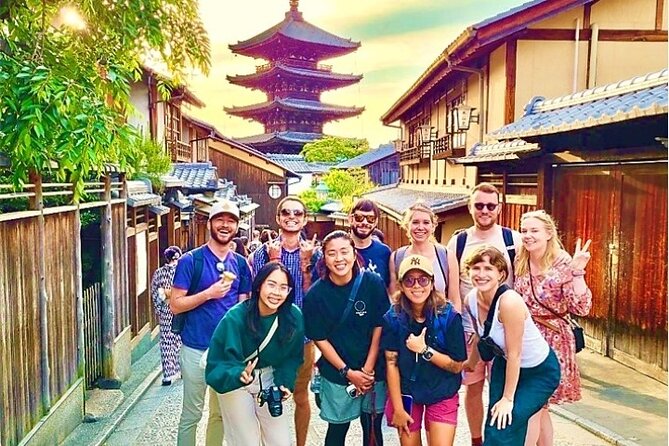
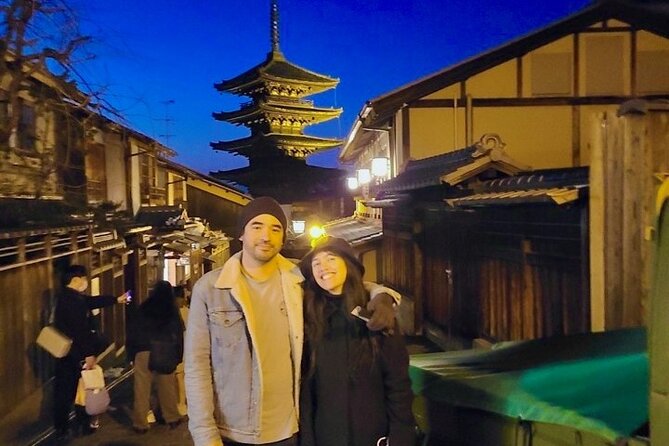
Hokan-ji Temple, better known through its Yasaka Pagoda, provides one of Kyoto’s most recognizable street scenes. The pagoda rises above the traditional buildings of Higashiyama, and the approach is especially attractive for photographs.
The stop is brief and does not include an admission ticket. You see the pagoda from the surrounding streets and continue through the area rather than spending a long time inside.
The final section reaches Gion, Kyoto’s historic entertainment district, ending near Gion Shopping Street. This is a fitting finish because the area brings together traditional architecture, shops, restaurants, and the possibility of seeing a geisha or maiko. One person on the tour happened to see a geisha, but that should be treated as luck, not a promised feature.
Gion is also where the day’s different threads come together. You have seen temples, shrines, shopping lanes, mountain paths, and public transport. Now you get a look at one of Kyoto’s best-known traditional neighborhoods before the tour ends.
What the $98.83 price really covers
The tour costs $98.83 per person and includes the guiding service and consumption tax. You should budget extra for three basic costs:
- About $10 for public transport
- About $6.80 to $14 for lunch and drinks
- About $11 for admissions
That brings the likely total to roughly $126.63 to $133.83 per person. The price is reasonable if your alternative is spending hours planning connections between nine major sights. You are paying for route design, local assistance, and the chance to cover a great deal of ground in one day.
It is less good value if you prefer slow travel. You pay for access to a packed schedule, not extended time at individual temples. If you already know Kyoto well, you may get more from buying individual transit fares and choosing two or three districts to explore at your own pace.
Bring cash, as the instructions recommend, and prepare a transport IC card such as Suica or PASMO. The guide helps with navigation, but you still need to keep up, board promptly, and manage your own spending.
Who should book this experience
I would choose this tour if you have only one full day in Kyoto, are visiting for the first time, or feel uneasy about the city’s transport system. It is also a useful choice if you want a broad introduction before returning to your favorite area independently.
I would hesitate if you want a relaxed pace, have limited mobility, or need a carefully planned vegetarian meal. The physical demand is substantial, and the route includes stairs, slopes, crowded streets, and repeated transfers.
Anyone under 18 must travel with a guardian. If your group includes a child under 13, you need to request a private tour. The maximum group size is 10, which keeps the experience more personal but does not remove the need to stay with the host.
Should you book this Kyoto tour?
Book it if your priority is seeing Kyoto’s biggest sights in one ambitious day and learning how to move around the city. Guides such as Masako, Megumi, and Masa have made the experience especially personable, and the small group format is a real advantage.
Skip it if you want to linger, shop at length, or sit quietly in temple gardens. The best way to use this tour is as a fast first look. Wear excellent walking shoes, arrive early at Saga-Arashiyama Station, bring cash and an IC card, and save another day for the places that deserve more time.
FAQ
Where does the tour start?
The meeting point is Saga-Arashiyama Station at 11-1 Sagatenryuji Kurumamichicho, Ukyo Ward, Kyoto. The participation information says the tour begins at 8:50 am, and late arrivals cannot join.
Where does the tour end?
The tour ends near Gion Shopping Street at 567-6 Gionmachi Minamigawa, Higashiyama Ward, Kyoto.
How long does the experience last?
The tour lasts approximately 9 hours and 30 minutes.
Is transportation included in the price?
No. Public transportation costs about $10, or ¥1,340, per person. You are advised to prepare an IC card such as Suica or PASMO.
Is lunch included?
No. Food and drinks are purchased separately. The expected cost is about $6.80 to $14 per person at a conveyor-belt sushi restaurant.
Are temple and shrine entrance fees included?
No. Entrance fees total about $11, or ¥1,600, per person.
Can I cancel or change my booking?
No. The experience is non-refundable and cannot be changed for any reason.
Just added around Kyoto
- Sekka Cotton Furoshiki Class★ 5.0 · 19 reviews
- Secret Eastern Kyoto Biking Adventure★ 5.0 · 44 reviews
- Kyoto Sword Experience – includes Museum Ticket/Ninja Experience★ 4.5 · 149 reviews
- Scenic Green Tea Fields of Hidden Kyoto & Local Tea Exp (Private)★ 5.0 · 32 reviews
- Private Sake Tasting in Central Kyoto with Sake Sommelier★ 5.0 · 32 reviews
- Samurai School in Kyoto: Samurai for a Day★ 5.0 · 202 reviews
- SHIRAKAWA Japanese Culture Experiences with private English staff★ 5.0 · 16 reviews
- A Privately Guided Photoshoot in Beautiful Kyoto by a Pro★ 5.0 · 18 reviews
Hidden Gems Tours, compared.
Kyoto Geisha Walking Tour: Gion District & Hidden Gems
Our verdict →
Small Group, Big Flavors & Hidden Local Secrets Tour
Our verdict →Browse the lists this tour appears in