
Reviewed · TRAIN EXPERIENCES
Kyoto: Arashiyama Tour with optional Sagano Romantic Train
The best part of this Arashiyama outing is its mix of moving scenery and famous Kyoto sights. The Sagano Romantic Train gives you a 30-minute view of the hills and river country, while the bamboo forest, Tenryu Temple, and Togetsukyo Bridge bring you back to Kyoto’s cultural heart.
I like the small group size, limited to nine people, and I like the way the guides add useful touches, from the best photo positions to restaurant suggestions. The main catch is that you will walk quite a bit, and food costs are extra. The train option also has a different meeting point, so check your booking carefully.
Key points to know before booking
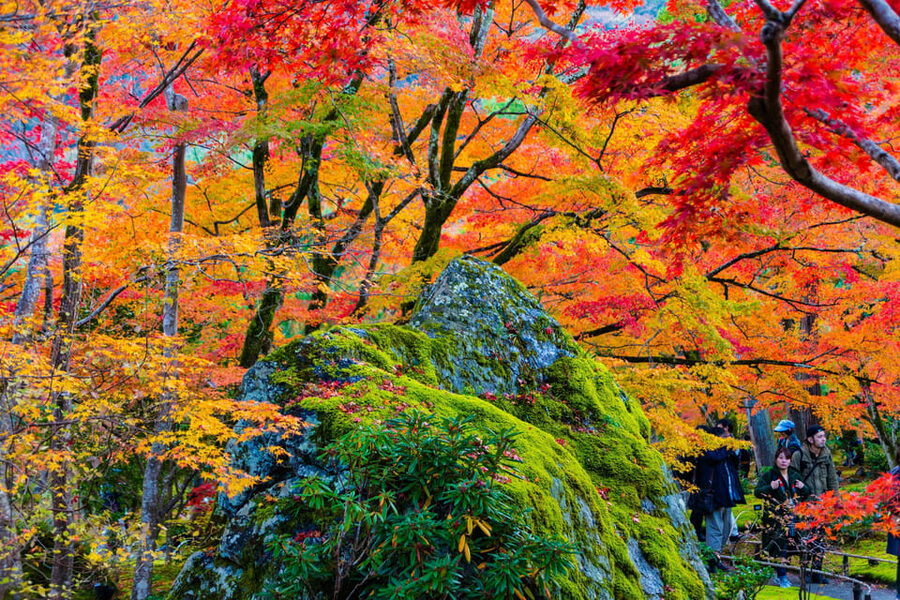
- The train ride takes 30 minutes: Choose the train option for a scenic journey from Umahori to Torokko Arashiyama, with especially colorful views during maple season.
- The bamboo forest is only one part of the visit: You also see Mikami Shrine, Tenryu Temple, Togetsukyo Bridge, Arashiyama Park, and local food stops.
- Tenryu Temple entry is included: You get a guided look at the Zen temple and its celebrated gardens without paying a separate admission fee.
- Small groups make a difference: With no more than nine people, it is easier to hear the guide and ask about history, religion, food, and photography.
- Bring cash for snacks: Street food and drinks are not included, so carry money if you want to taste Kyoto specialties.
- Expect a fair amount of walking: Comfortable shoes matter, and the tour is not suited to people with mobility impairments, heart problems, respiratory issues, or pregnancy.
Why this Arashiyama tour works well in half a day
Arashiyama can feel scattered when you visit on your own. The railway station, bamboo forest, temples, bridge, park, and food streets are all close enough to combine, but you still need to make sensible choices about order and timing. This tour gives you a clear route through the area in three to four hours.
You get nature first, then religious sites, then food and river views. That balance is useful if you have only part of a day in western Kyoto. You will not see every corner of Arashiyama, but you will cover the main sights without spending your morning working out the route.
The group is capped at nine people, which is a good middle ground. You get more personal help than on a large coach tour, but you are not paying for a fully private guide. Guides including Eloise, Shingo, Leo, and Arsushi have been praised for historical explanations, photo help, restaurant advice, and care with the group’s pace.
The tour costs $105 per person. That is not a bargain-priced walk, especially because food and drinks are separate. The price makes more sense if you want the train ride, the Tenryu Temple admission, and a guide who can connect the sights instead of simply pointing them out. If you plan to visit the same places independently, you may spend less, but you will need to handle transport, timing, and temple entry yourself.
More Train Trips in Kyoto:
- From Osaka: Sagano Train Ride and Kyoto Guided Day Tour
★ 4.3 · 180 reviews - Kyoto Railway Museum Admission Ticket
★ 4.3 · 23 reviews - Mt Fuji and Hakone 1-Day Bus Tour Return by Bullet Train
★ 5.0 · 26,383 reviews
Choosing between the two starting points
You have two possible starting locations: Umahori Station or Torokko Arashiyama Station. Your meeting point depends on the option you book.
Select the train version and you meet at JR Umahori Station. From there, the Sagano Romantic Train takes you toward Torokko Arashiyama Station. This arrangement makes the railway ride the opening chapter of the tour, before the walking portion begins.
The other option begins at Torokko Arashiyama Station. This is the practical choice if you want the Arashiyama walking tour without the railway ride, or if train seats are not available for your preferred time. Confirm the exact starting point before you leave your hotel. A mistake here could mean a long and unnecessary trip across Kyoto.
The tour ends at Arashiyama Station. That gives you a useful base for continuing on your own, although no onward transportation is included in the tour.
The Sagano Romantic Train through Kyoto scenery
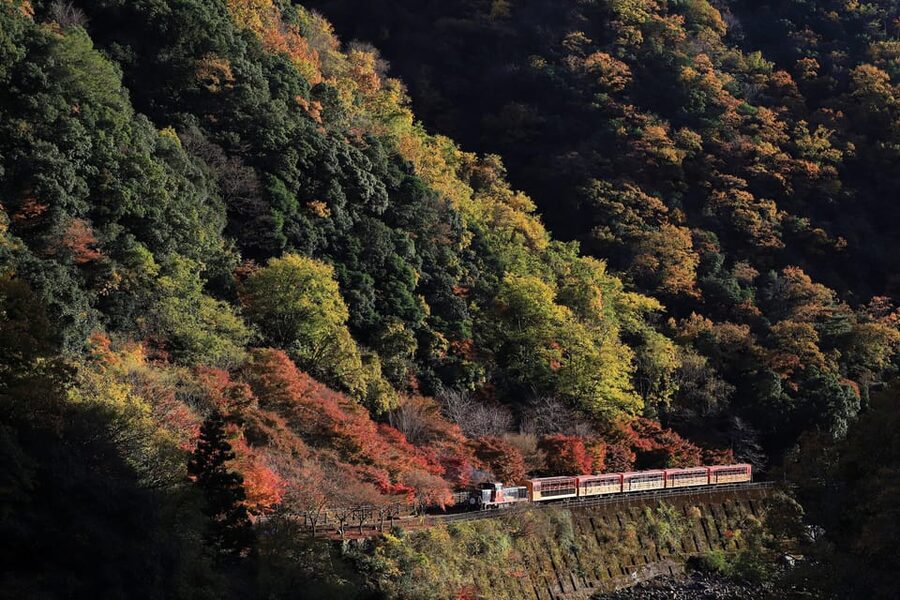
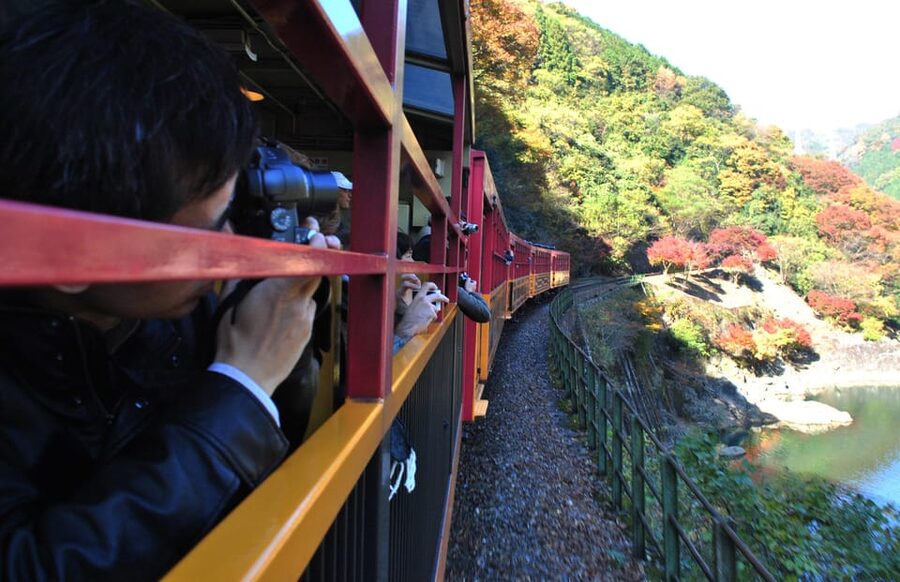
The optional train ride lasts about 30 minutes. It is the most scenic part of the transportation, with views of Kyoto’s wooded hills and surrounding countryside. During maple season, the red leaves add a strong splash of color to the journey.
This is not a long railway excursion, and you should think of it as a scenic introduction rather than a full-day train trip. Its value comes from the change of pace. Instead of rushing straight into Arashiyama’s busiest paths, you begin by looking out at the area from a moving train.
The train also shapes the day’s route. You start at Umahori, ride to Torokko Arashiyama, and then continue on foot. If the railway option matters to you, reserve early. One booking attempt had to be changed because the train was no longer available, although the guide helped explain the alternatives. That is a useful warning: the train is optional, but it may not be available if you wait too long.
If you visit in maple season, the ride is particularly appealing. Outside that period, you still get the scenery, but the color display will depend on the season. Do not book this solely for autumn leaves unless your dates line up.
Mikami Shrine and the God of Hair
After arriving near Arashiyama, the group visits Mikami Shrine for about 15 minutes. The shrine is dedicated to the God of Hair, an unusual detail that gives the tour a more distinctive stop than a simple procession between the area’s biggest sights.
Fifteen minutes is enough for an introduction and a short look around, not a long religious visit. Your guide can provide context about Japanese beliefs and the difference between Shinto shrines and Buddhist temples. That contrast becomes useful later at Tenryu Temple.
This brief stop also shows one advantage of having a guide. If you passed the shrine alone, you might not know why it matters. With a clear explanation, even a short visit can add another layer to the day.
A few more Kyoto half-days worth comparing
- PERFECT KYOTO 1-Day Bus Tour
★ 5.0 · 13,518 reviews - Kyoto: Fushimi Inari, Kinkakuji, Bamboo Grove 1 Day Bus Tour
★ 4.8 · 4,316 reviews - Kyoto: Tea Ceremony in a Traditional Tea House in Kiyomizu
★ 4.9 · 3,519 reviews - Kyoto Geisha Walking Tour: Gion District & Hidden Gems
★ 4.7 · 3,273 reviews
Walking through the Arashiyama Bamboo Forest
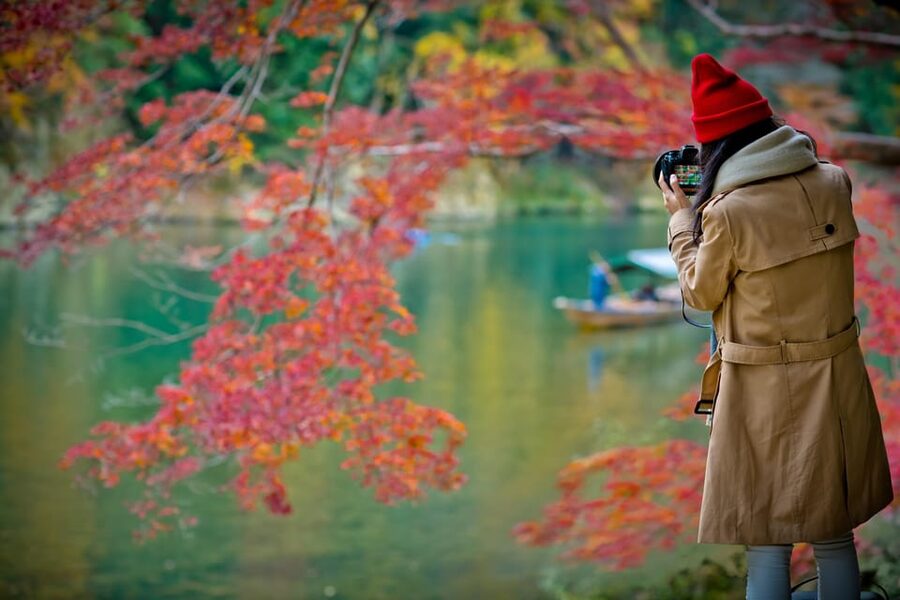
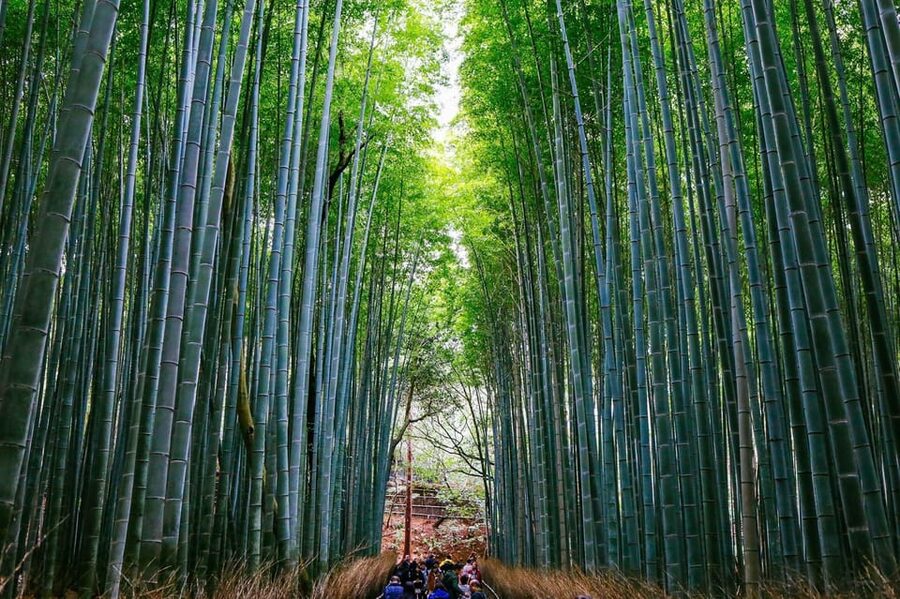
The bamboo forest receives about 45 minutes, making it one of the longest stops. You walk beneath tall bamboo stalks along paths that have become one of Kyoto’s most recognizable photo settings.
The forest is striking, but it is not a quiet secret corner. It is a famous public attraction, and the experience depends heavily on timing and crowd levels. Your guide can help you reach useful photo positions and keep the visit moving, but you should not expect complete solitude.
Forty-five minutes gives you time to walk, take pictures, and listen to the explanations without turning the stop into a rushed photo sprint. Wear shoes with good support. The tour includes several walking sections, and the pleasure of the bamboo path drops quickly if your footwear is uncomfortable.
This is also a place where a small group helps. A guide can gather nine people more easily than a large party, and you have a better chance of hearing the explanation without standing at the very back.
Tenryu Temple and its Zen gardens
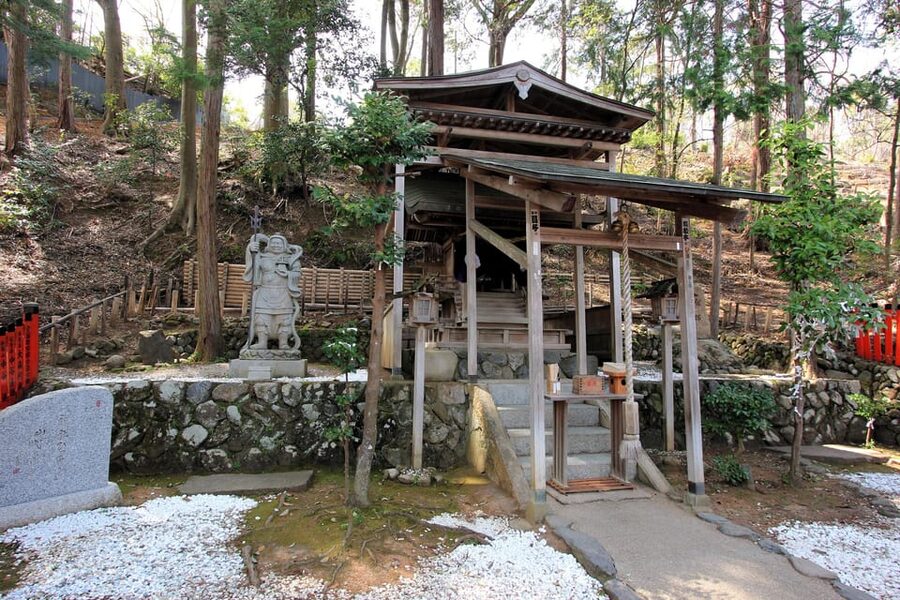
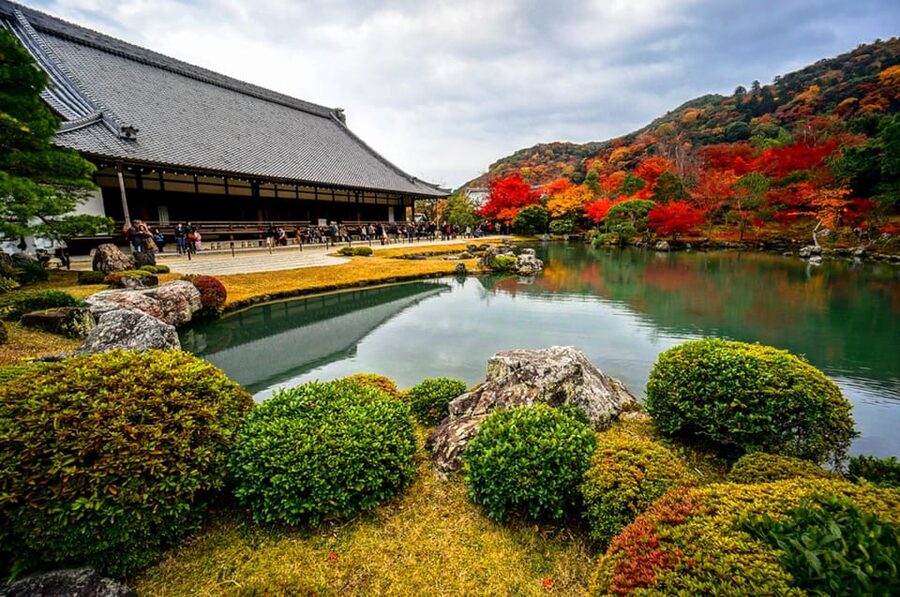
Tenryu Temple is the main cultural stop, with about 20 minutes set aside for a guided visit. The temple is a UNESCO World Heritage site and one of Arashiyama’s important Buddhist landmarks. Admission is included, which adds real value to the $105 price.
The visit is relatively short. You will get an introduction to the temple, its Buddhist setting, and its Zen gardens, but you should not expect a slow, detailed study of every building and garden view. If Tenryu Temple is your top priority, you may want to return independently after the tour for more time.
The temple visit works well after the shrine and bamboo forest because it gives the day a cultural center. You are not just collecting scenic photographs. You are also learning about Japanese religious traditions, including the difference between Shinto and Buddhist practice.
Arsushi, one of the guides associated with this experience, has been praised for explaining Buddhist and Shinto sites and Japanese history. That sort of commentary is especially useful here, where a garden may look simple but has a design and religious purpose that is easy to miss.
A 30-minute taste of Kyoto street food
The food stop lasts about 30 minutes and takes place around a local café or nearby food area. This is a chance to sample Kyoto flavors rather than sit down for a full meal.
Food and drinks are not included. Bring cash and treat this as a tasting break, not part of the prepaid admission. Your guide can point you toward appealing local choices and explain what you are eating, which is more useful than buying random snacks from the first counter you pass.
Keep your expectations modest. Thirty minutes is enough for a few bites and a rest, but not for a long restaurant meal. If you need lunch, arrange it separately before or after the tour.
The food portion is one of the more personal parts of the outing. Eloise has been praised for directing people toward good local food, and both Eloise and Shingo have provided restaurant suggestions. That kind of advice can save you from choosing a meal based only on the longest queue.
Togetsukyo Bridge and Arashiyama Park
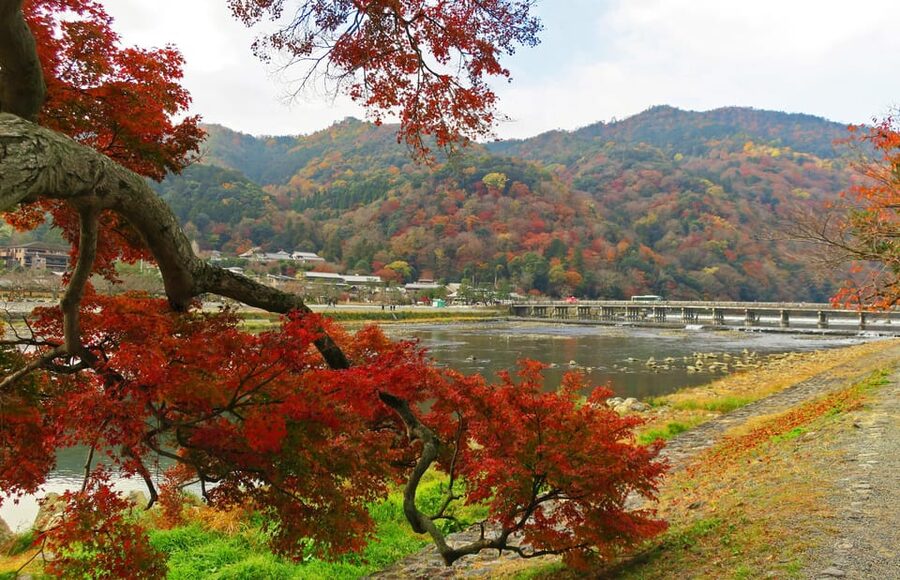
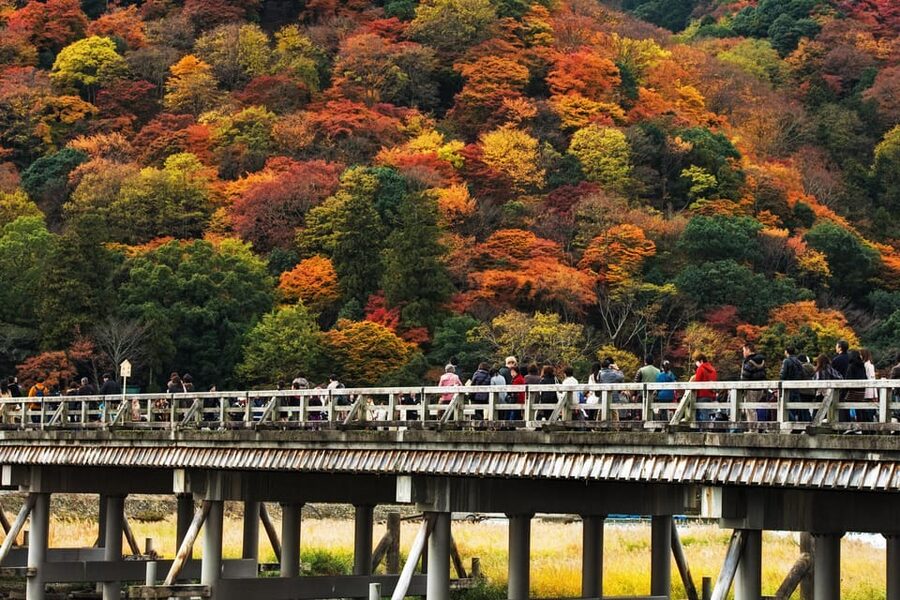
The later part of the tour brings you to Togetsukyo Bridge and Arashiyama Park. The bridge is one of the area’s signature views, with the river and hills creating a broad setting after the narrower bamboo paths and temple grounds.
This is the place to take wide photographs. The bamboo forest gives you close, vertical images, while Togetsukyo offers open views and a better sense of Arashiyama’s setting. Your guide can help identify good spots for pictures, a detail that has been especially appreciated on this tour.
Arashiyama Park provides a calmer ending. The visit is listed at about 30 minutes, giving you time to slow down after the earlier walking. It is a simple but sensible finish: scenery, a little breathing room, and then an end near Arashiyama Station.
There is also another 20-minute guided visit included in the route description without a named stop. Because the exact point is not specified, check with the guide on the day if you want to know precisely what it covers. Do not plan your independent schedule too tightly around that portion.
What the guides add
The guide is the main reason to choose this over a self-guided visit. The sights are accessible on your own, but the route has several points where context changes what you notice.
Eloise is particularly associated with historical explanations, photo locations, and food suggestions. Shingo has been described as attentive to the group’s needs, including stopping for rests and helping with photographs. Leo brings an enthusiastic explanation of Japanese culture and points out places you might otherwise pass by. Arsushi has focused on Buddhist and Shinto beliefs, Japanese history, and unusual details encountered during the visit.
These are not identical guiding styles, and your experience will depend on who leads your departure. The consistent strength is personal attention. With a small group, you can ask why a shrine is dedicated to hair, how Buddhist and Shinto sites differ, or where to eat later.
The tour also received strong praise for its relaxed feel and organization. I would still keep an eye on the clock, since three to four hours is enough for the planned route but not for long stops at every sight.
Walking demands and who should book
This is a walking tour with a train ride attached, not a train tour with only a little walking. You move between several sites, spend time on foot at the bamboo forest and temple, and finish near the bridge, park, and station.
Bring comfortable shoes, a camera, and cash. The camera is obvious, but the cash matters because street food and drinks are not included. You may also want water, although the tour information specifically emphasizes the need for comfortable footwear.
The experience is not suitable for pregnant women, people with mobility impairments, or people with heart or respiratory problems. The route may also feel demanding if you dislike walking for several hours. The guides can stop for rests, as Shingo did for one group, but you should still be comfortable with the basic physical demands.
I would recommend it most to first-time Kyoto visitors who want major Arashiyama sights explained in English. It also suits people who enjoy photography, local snacks, and short cultural explanations rather than a long academic temple tour.
Timing, flexibility, and value
The stated duration is three to four hours, with starting times depending on availability. That makes it easy to fit into a Kyoto day, but do not assume you can squeeze in a distant attraction immediately before or after it. The train option requires you to reach Umahori, while the walking option uses Torokko Arashiyama.
Free cancellation is available up to 24 hours before the activity for a full refund, and you can reserve while paying later. Those policies help if your Kyoto schedule is still changing, but the more important planning detail is the train choice and its meeting point.
At $105, I see this as a convenience and context purchase. You pay for the small group, the English guide, Tenryu Temple entry, and, if selected, the train ride. You do not pay for food, drinks, or personal purchases.
If you are confident navigating Kyoto and happy to research the sights, the price may feel high. If you want an organized half-day route and appreciate a guide who can improve your photos, explain religious traditions, and suggest food, the cost is easier to justify.
Should you book the Arashiyama tour?
Book it if you want an efficient introduction to Arashiyama, especially if this is your first visit to Kyoto. The strongest reasons are the nine-person limit, the useful cultural commentary, the included Tenryu Temple entry, and the option to add the scenic train.
Choose the train option early if the railway ride is important to you, and verify the meeting point before setting out. If the train is sold out, the walking version still covers the bamboo forest, Mikami Shrine, Tenryu Temple, street food area, Togetsukyo Bridge, and Arashiyama Park.
Skip it if you prefer a slow, independent day or want to spend a long time inside Tenryu Temple and its gardens. You will see the main sights, but the schedule keeps moving. For most first-time visitors who want a friendly guide and a clear route, this is a practical way to see Arashiyama without losing half a day to planning.
FAQ
How long does the Arashiyama tour last?
The tour lasts approximately three to four hours. Starting times depend on availability.
Where does the tour start?
There are two possible starting points: Torokko Arashiyama Station or JR Umahori Station. The meeting point depends on the option you book.
Is the Sagano Romantic Train included?
The Sagano Romantic Train is included only when you select the train option. The ride lasts about 30 minutes.
Is Tenryu Temple admission included?
Yes. The entrance fee to Tenryu Temple is included in the tour price.
Are food and drinks included?
No. Street food, café purchases, drinks, and other personal expenses are paid separately. Bring cash if you want to buy snacks.
Is the tour suitable for people with mobility problems?
No. The tour is not suitable for people with mobility impairments, pregnant women, or people with heart or respiratory problems. It also involves a fair amount of walking.
Just added around Kyoto
- Sekka Cotton Furoshiki Class★ 5.0 · 19 reviews
- Kyoto Sword Experience – includes Museum Ticket/Ninja Experience★ 4.5 · 149 reviews
- Scenic Green Tea Fields of Hidden Kyoto & Local Tea Exp (Private)★ 5.0 · 32 reviews
- Secret Eastern Kyoto Biking Adventure★ 5.0 · 44 reviews
- Private Sake Tasting in Central Kyoto with Sake Sommelier★ 5.0 · 32 reviews
- Samurai School in Kyoto: Samurai for a Day★ 5.0 · 202 reviews
- SHIRAKAWA Japanese Culture Experiences with private English staff★ 5.0 · 16 reviews
- A Privately Guided Photoshoot in Beautiful Kyoto by a Pro★ 5.0 · 18 reviews
Train Experiences, compared.

Mt Fuji and Hakone 1-Day Bus Tour Return by Bullet Train
Our verdict →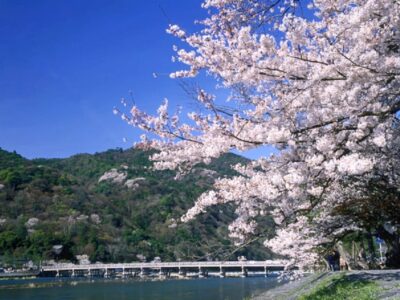
Private Samurai Experience – Train with Sword Master
Our verdict →
Wakayama Cat Train, Seafood market, Hot Springs Tour
Our verdict →
Dazaifu and Yanagawa Canal Cruise Private Guide Day Tour by Train
Our verdict →Browse the lists this tour appears in