
Reviewed · TEA CEREMONY EXPERIENCES
Kimono Tea Ceremony Experience at Kyoto Oritzuruya, Nishiki
The most memorable part of this Kyoto experience begins before the tea is served. You choose a kimono from more than 200 designs, select hair ornaments and obi details, and let the staff dress you properly. Then you enter a quiet tea room, learn the meaning behind the ceremony, and prepare your own bowl of matcha. I especially like the hands-on whisking lesson and the chance to wear the kimono outside afterward, if time allows.
I also like the warm, patient dressing staff, who have helped guests of different sizes and backgrounds feel comfortable. The small group, capped at 10 people, keeps the activity manageable. The main thing to consider is that this is partly a kimono photo and dressing experience. If your main goal is a long, formal tea ceremony with detailed instruction in every ritual, the tea portion may feel short.
Key points to know before you book
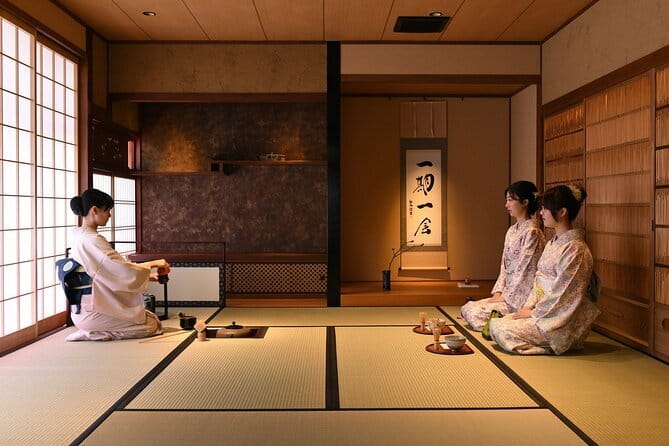
- Choose from more than 200 kimono designs: Staff help you select the kimono, obi, sandals, and hair accessories.
- Simple hairstyling is included for women: You can choose hairpins, flowers, and other adornments.
- Make your own matcha: An instructor demonstrates the proper use of a bamboo whisk, then you prepare your own tea.
- Enjoy wagashi with the tea: The Japanese sweet comes from a confectionery with a century of history.
- Optional calligraphy adds a personal souvenir: You can learn basic brushwork and take home your own piece.
- You may wear the kimono outside afterward: The kimono can be worn around the nearby area until the shop closes at 6 p.m., provided you return it on time.
Choosing a kimono near Nishiki Market
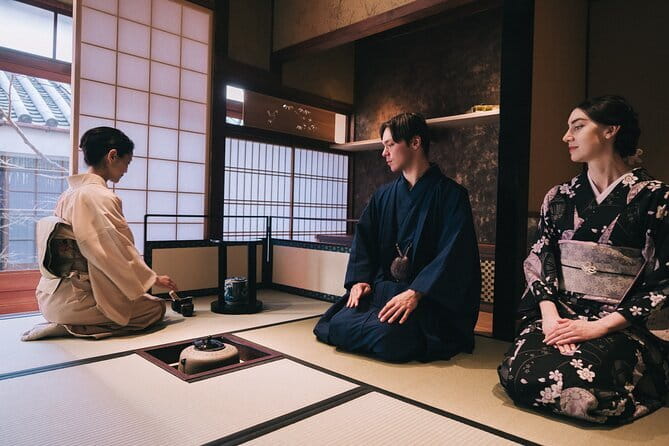
The experience begins at Nishiki Orizuruya, at 452 Jūmonjichō in Kyoto’s Nakagyo Ward. It is close to public transportation and Nishiki Market, so it fits easily into a day spent exploring central Kyoto.
You first choose your kimono. The large selection is one of the pleasures of the activity, since you are not simply handed a costume from a single rack. Designs come in many colors and patterns, and the staff help you coordinate the obi, the decorative cord, sandals, and hair accessories.
This is also where the experience feels most personal. You can take your time deciding how formal or colorful you want your outfit to look. The staff are used to helping people who are unfamiliar with kimono dressing, so you do not need to know what each piece is called before you arrive.
The selection includes a range of sizes. That matters if you are worried about finding a comfortable fit. Guests who wear plus sizes have found several suitable choices, so the activity is not limited to a narrow body type.
More Kimono Experiences in Kyoto
- Kimono Tea Ceremony at Kyoto Maikoya, NISHIKI
★ 5.0 · 911 reviews - Kyoto: Kimono Rental with Hairstyling and Accessories
★ 4.8 · 653 reviews - Kyoto: Kimono Tea Ceremony at Orizuruya Gion
★ 4.9 · 618 reviews
The dressing process takes patience
Kimono dressing is not the quick costume change you might expect. Several layers and accessories are arranged carefully, and the obi must be tied properly. The process itself gives you a useful glimpse into how much work goes into wearing traditional clothing.
For women, simple hairstyling is included. You can choose hairpins, flowers, and other decorative pieces, and the staff arrange your hair to match the kimono. The service is not presented as a full makeup session, so bring your own cosmetics if that part of the look matters to you.
The staff also provide a light, moisture-wicking underlayer. That is a small but practical detail, especially during Kyoto’s warmer months. A kimono can feel snug and formal, and the underlayer makes the outfit more comfortable.
Expect several people to assist with the dressing. This can feel like a fun moment of preparation, though it can also create some waiting if several people arrive at once. If you are booking mainly for the tea ceremony, keep in mind that a fair portion of the 90 minutes is spent getting dressed and ready.
A few photographs before the tea room
Once you are dressed, the staff take a few photographs. This gives you a record of the outfit and helps explain why the kimono portion is such a large part of the activity.
The setting has a polished, staged quality. That is not necessarily a problem, especially if you want attractive photographs without arranging a separate kimono rental. Still, you should set your expectations clearly. This is a cultural activity designed for visitors, not a private tea gathering in a family home.
The setting can look more theatrical than rustic, yet the staff put real care into the clothing and presentation. I think the best way to approach it is as an accessible introduction to several Japanese arts: clothing, hairstyling, sweets, tea, and calligraphy.
Purification and the move upstairs
Before the tea begins, the instructor explains the cleansing process. This is an important part of the ceremony because the tea room is not treated as an ordinary place to sit down and drink.
You are shown the basic movements and the proper way to enter the tea experience. Even a short explanation helps you understand that the ceremony is built around preparation, courtesy, and attention to small actions.
The tea room is upstairs. The transition from the dressing area to the room helps separate the playful photography portion from the calmer ceremony. The change of pace is welcome, though the tea instruction may feel brief if you hoped to study every gesture in detail.
One useful point is that sitting on the floor is not the only option. If your knees make floor seating difficult, the staff can provide a small table and chair. That makes the experience more workable for people with limited mobility, though you should still consider your comfort during the dressing process and movement around the venue.
More Tea Ceremony Experiences in Kyoto
- Kyoto: Tea Ceremony in a Traditional Tea House in Kiyomizu
★ 4.9 · 3,519 reviews - Kyoto: Tea Ceremony Ju-An at Jotokuji Temple
★ 4.9 · 3,207 reviews - Kyoto: 45-Minute Tea Ceremony Lesson Experience
★ 4.3 · 2,378 reviews - Kyoto: Table-Style Tea Ceremony at a Kyo-Machiya
★ 4.9 · 1,211 reviews
Learning to prepare matcha
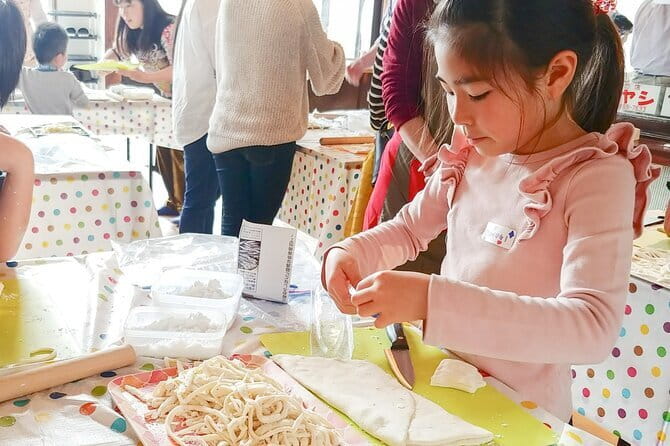
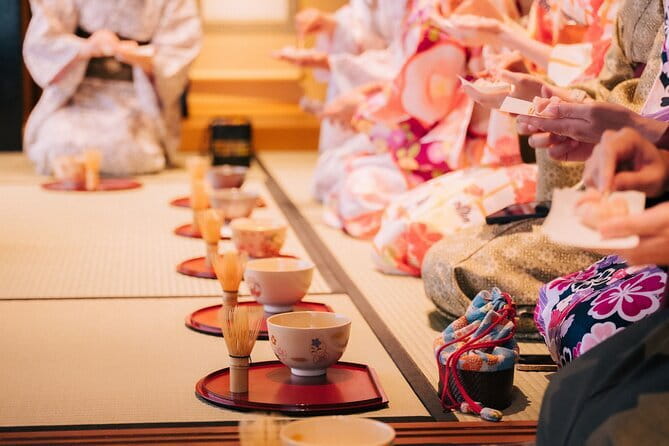
The instructor demonstrates how to prepare matcha with a traditional bamboo whisk, called a chasen. You then try making your own bowl of tea.
This is the most participatory part of the ceremony. You are not simply watching the instructor from start to finish. You learn how to handle the utensils, add the tea, and whisk it into a smooth drink. The activity gives you a skill you can repeat at home, even if your first bowl is not perfectly frothy.
The tea itself is paired with wagashi, a Japanese sweet. The sweet balances matcha’s strong, grassy flavor and gives you a familiar way into the ceremony. The wagashi comes from a confectionery with a century of history, which adds a small piece of Kyoto food culture to the experience.
The instructor also explains the meaning of the movements and the care taken before welcoming people into the tea room. Some participants find this portion calming and almost meditative. Others find that the ceremony is more of a demonstration, with only the matcha preparation offering direct participation.
Both impressions are fair. You take part in making the tea, but you are not learning to conduct a full formal ceremony by yourself. If your goal is to understand basic etiquette and prepare matcha, the lesson should suit you. If you want extensive discussion of tea philosophy, schools, or spiritual practice, you may want a longer specialist workshop.
The optional calligraphy lesson
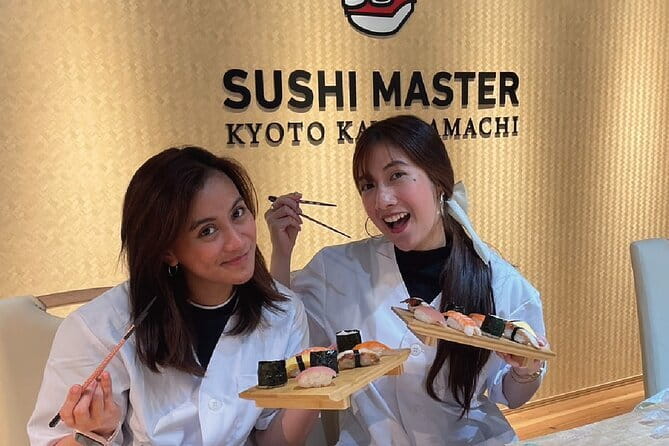
Calligraphy is available as an add-on. It is not included in the base price, so check the booking options and cost before you commit.
The lesson covers basic brushwork and lets you create a piece to take home. This can be a better souvenir than a standard photograph because you make it yourself. You can choose a Japanese character or phrase with guidance from the instructor, then keep the finished work as a reminder of the day.
The calligraphy session is especially appealing if you enjoy quiet, focused activities. It gives you another way to engage with Japanese culture beyond wearing the kimono. It also adds time to the visit, so allow for that if you have a tight Kyoto schedule.
Wearing the kimono around Nishiki
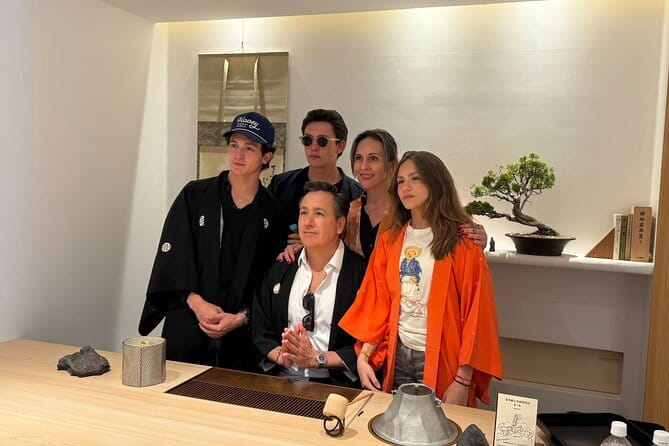
A particularly useful feature is the chance to continue wearing the kimono outside after the ceremony. You may walk around the nearby streets and shops, take photographs, and see how the outfit feels in a real Kyoto setting. The kimono must be returned by 6 p.m. when the venue closes.
This makes the price easier to justify for people who want more than a short indoor costume session. You have a chance to use the clothing around Nishiki Market and central Kyoto instead of changing back immediately.
Remember that walking in sandals and a tightly wrapped kimono is not the same as wearing ordinary sightseeing clothes. Keep your route short and easy, and do not plan a full day of temple hills or long walks. A stroll through the nearby area works better than an ambitious sightseeing circuit.
How the 90 minutes are divided
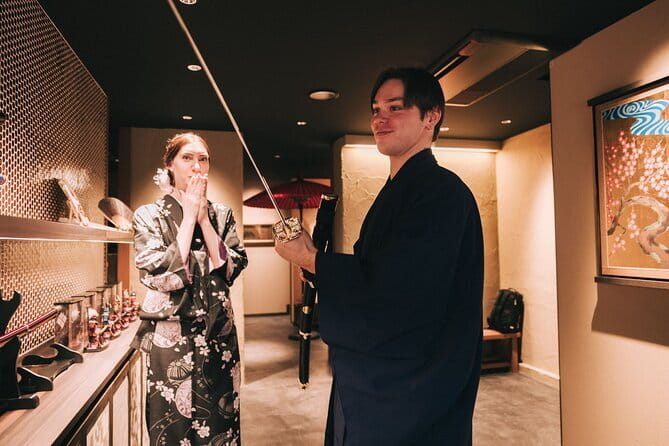
The advertised duration is about 1 hour and 30 minutes. That includes choosing your clothing, dressing, hairstyling for women, photographs, the ceremony, matcha preparation, and the wagashi.
The schedule is efficient, but it may not feel leisurely if the group is full. A maximum of 10 people keeps the size reasonable, yet several people may still need help with dressing at the same time.
A typical flow looks like this:
- Select your kimono and accessories.
- Receive help with dressing and, for women, simple hairstyling.
- Take a few photographs.
- Learn about purification and enter the tea room.
- Watch the instructor demonstrate the ceremony.
- Prepare and drink your own matcha with wagashi.
- Add calligraphy if you have booked it.
- Walk nearby in the kimono, if you choose, before returning it by 6 p.m.
The experience may run more smoothly if you arrive ready to follow staff instructions and do not schedule another activity immediately afterward. The meeting point is central, but transportation to and from the venue is not included.
What the price gives you
At $50.87 per person, the cost covers the kimono, utensils, matcha, wagashi, hairstyling for women, guide service, and taxes. You are paying for several services in one short visit, not only for a cup of tea.
I think the value is strongest if you plan to use the kimono outside afterward or add calligraphy. The outfit, hair arrangement, photographs, tea lesson, and sweet would cost more to arrange separately, and the staff save you the work of finding a rental shop and a tea instructor.
The value is weaker if you are interested only in the history and philosophy of tea. Much of the time goes to dressing and presentation, and the ceremony itself is relatively compact. For that purpose, seek a class that focuses solely on tea practice.
The 4.9 rating from 116 reviews and 97 percent recommendation suggest that the format works very well for most people. The occasional lower rating points to a real limitation: some participants feel the ceremony is staged and that the explanations do not go far enough. I would treat this as a friendly introduction rather than a complete study of chanoyu.
Who will enjoy this most
I would recommend this experience to first-time visitors who want a clear, low-pressure introduction to Japanese customs. You do not need prior knowledge of tea ceremony etiquette, kimono dressing, or calligraphy.
It suits couples, families, and friends who want photographs and a shared activity. It also works well for a honeymoon or special occasion, especially if you add calligraphy as a keepsake.
It is a good choice for you if:
- You want to wear a real kimono with staff assistance.
- You enjoy hands-on cultural activities.
- You have about 90 minutes in central Kyoto.
- You want to prepare matcha rather than only drink it.
- You would like the option of walking nearby in the kimono.
- You prefer a group of no more than 10 people.
You might choose another activity if you want a long, highly formal tea ceremony, extensive historical teaching, or a quiet private setting. The photo and dressing elements are central here, and the atmosphere can feel commercial even when the staff are kind and careful.
Practical details that can affect your day
Your booking confirmation includes a voucher with a link. You must open that link on your smartphone, press the Use button, and show the live page to the staff. Screenshots and printed tickets are not accepted, so make sure your phone can connect to the internet.
You arrange your own transport to Nishiki Orizuruya. The activity ends at the same address, although you may be allowed to continue in the kimono around the nearby area afterward.
Free cancellation is available if you cancel at least 24 hours before the start time. Changes made inside that window are not accepted, and late cancellations are not refunded. If poor weather causes the activity to be canceled, you are offered another date or a full refund.
The activity requires good weather, so avoid placing it at the center of a tightly packed itinerary if a weather change would cause major problems. You can also cancel and rebook if you need a different date or time, but the existing reservation must be canceled first.
Should you book the Kyoto kimono tea ceremony?
Book it if you want a friendly introduction to several Japanese traditions in one compact activity. The kimono selection, careful dressing, hair styling, matcha preparation, wagashi, and optional calligraphy create a full cultural outing near Nishiki Market.
Go in expecting a visitor-focused experience, not a private ceremony led by a tea master for advanced students. The tea portion teaches the basics and gives you a chance to make your own matcha, but the dressing and photographs take up much of the visit.
For most first-time visitors, I think the combination offers good value at $50.87. Choose a kimono you genuinely like, allow enough time for dressing, and add the calligraphy if you want a handmade souvenir. If the ceremony itself matters more to you than the clothing, look for a longer tea-specific lesson instead.
FAQ
Where does the kimono tea ceremony take place?
It takes place at Nishiki Orizuruya, 452 Jūmonjichō, Nakagyo Ward, Kyoto, 604-8121, Japan. The activity ends back at the same meeting point.
How long does the experience last?
The experience lasts about 1 hour and 30 minutes. The time includes kimono selection, dressing, hairstyling for women, photographs, the tea ceremony, matcha preparation, and wagashi.
How many people can join the activity?
The group has a maximum of 10 people.
Is kimono rental included?
Yes. The kimono costume and utensils are included in the price. Staff help you choose and put on the kimono.
Is hairstyling included?
Simple hairstyling is included for women. Hair accessories such as pins and flowers are available for you to choose.
Do I make my own matcha?
Yes. An instructor demonstrates how to use a bamboo whisk, then you prepare your own bowl of matcha.
Is calligraphy included?
Calligraphy is optional and requires an additional booking choice. The session teaches basic calligraphy and lets you create a piece to take home.
Can I wear the kimono outside after the ceremony?
Yes. You may walk around the nearby area in the kimono after the ceremony, as long as you return it by 6 p.m. when the venue closes.
Just added around Kyoto
- Sekka Cotton Furoshiki Class★ 5.0 · 19 reviews
- Kyoto Sword Experience – includes Museum Ticket/Ninja Experience★ 4.5 · 149 reviews
- Scenic Green Tea Fields of Hidden Kyoto & Local Tea Exp (Private)★ 5.0 · 32 reviews
- Secret Eastern Kyoto Biking Adventure★ 5.0 · 44 reviews
- Private Sake Tasting in Central Kyoto with Sake Sommelier★ 5.0 · 32 reviews
- Samurai School in Kyoto: Samurai for a Day★ 5.0 · 202 reviews
- SHIRAKAWA Japanese Culture Experiences with private English staff★ 5.0 · 16 reviews
- A Privately Guided Photoshoot in Beautiful Kyoto by a Pro★ 5.0 · 18 reviews
Tea Ceremony Experiences, compared.

Tea Ceremony in a Traditional Tea House in Kiyomizu
Our verdict →


World Heritage Kyoto & Nara Uji Authentic Matcha Experience
Our verdict →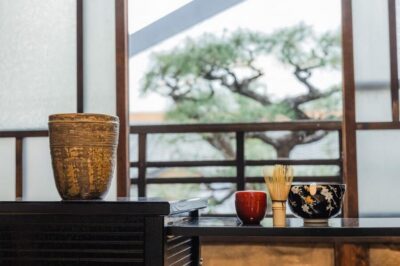


Arashiyama Bamboo Forest, Monkeys, Matcha & Temple Tour
Our verdict →
Browse the lists this tour appears in