
Reviewed · TAKAYAMA TOURS
From Nagoya: Hida Takayama & Shirakawa-go Tour w/Opt. Lunch
Shirakawa-go is the star here: a small mountain village of steep thatched roofs, rice fields, and wooden homes that look almost too tidy to be real. Add Takayama’s old streets, a comfortable bus, and a choice of Hida beef or tofu lunch, and you get a strong taste of rural Japan in one long day from Nagoya.
I like the easy transport most, since reaching these mountain towns on your own takes planning and several connections. I also like the freedom built into the stops: guides such as Alberto, Leo, Akari, and Bara-san provide maps, food tips, meeting reminders, and local pointers, then let you explore at your own pace.
The tradeoff is simple: 10 hours is a lot of road time, and Takayama can feel short at about 90 minutes. If you want slow shopping, sake tasting, or a full meal in every town, this is not that trip. It is a well-organized first look at two beautiful places.
Key points to know before booking
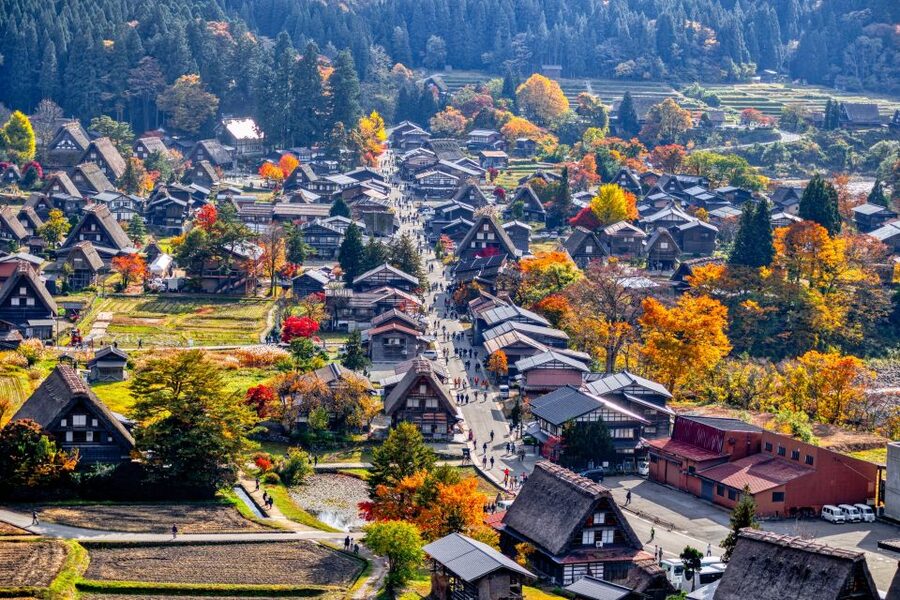
- Shirakawa-go’s thatched houses: See gassho-zukuri homes built more than 100 years ago and walk to the Ogimachi Castle Observation Deck for a broad view over the village.
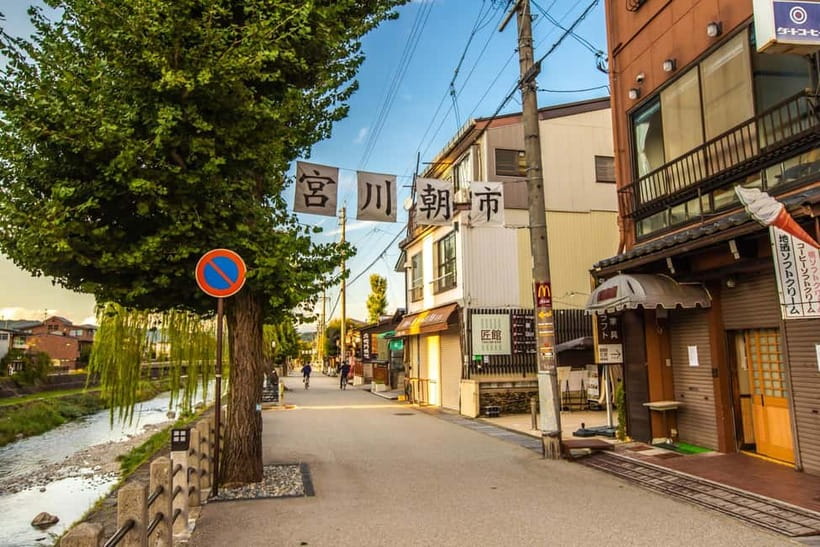
- Takayama in a short window: You get roughly 90 minutes for the old town area, with time for traditional streets, the Miyagawa Morning Market, Takayama Jinya, and local snacks if you move briskly.
- Optional Koshiyama lunch: Choose Hida beef steak, Hida pork, Kobe wagyu shabu-shabu, or vegetarian-friendly Gokayama tofu oden.
- Comfortable long-distance transport: The air-conditioned bus includes reclining seats, though one summer departure had trouble keeping the bus cool.
- Weather backup plan: If snow closes the road to Shirakawa-go, the day changes to Gujo Hachiman, known for its old streets, waterways, shops, and castle-town feel.
- A guide-led day with free time: English and Chinese commentary may share the same bus, followed by self-guided exploration at each main stop.
Why this Nagoya day trip works
The appeal is not just seeing two names on a map. Takayama and Shirakawa-go show a quieter side of Japan, far from the neon streets and packed stations of Nagoya, Kyoto, or Osaka.
Takayama gives you preserved wooden buildings and a taste of old merchant-town Japan. Shirakawa-go gives you mountain scenery and homes designed for heavy winter snow. The two stops complement each other, even though the schedule gives you only a quick look at each.
At about $61 per person, the value is mainly in the transport. The bus handles the long ride from Nagoya, the route between both destinations, and the return journey. You also receive a live guide in English or Chinese, with lunch included only if you select that version.
I would not book this expecting a private tour or a slow, detailed museum day. You are joining a planned group excursion, and the schedule must keep moving. But if you have one free day in Nagoya and want to see the Japanese Alps area without arranging trains, buses, and rural connections yourself, the price is reasonable.
A few more Takayama half-days worth comparing
- World Heritage Shirakawa-go and Experience Tours from Kanazawa
★ 5.0 · 4,049 reviews - Kanazawa: World Heritage Shirakawa-go Morning Guided Tour
★ 4.9 · 988 reviews - From Nagoya: Gujo, Hida Takayama, and Shirakawa-go Day Tour
★ 4.4 · 398 reviews
Leaving Nagoya by air-conditioned bus
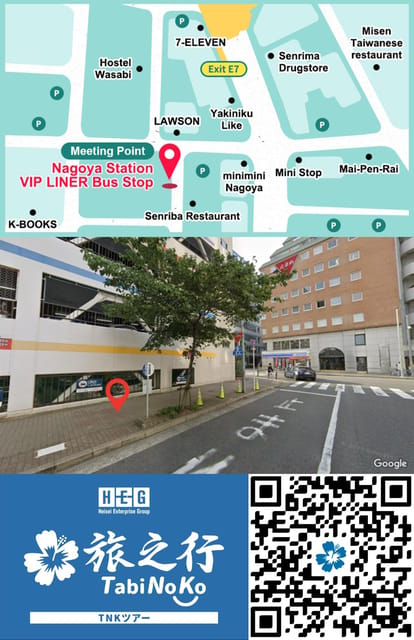
The meeting point is at the VIPLINER Nagoya bus stop at 20-20 Tsubakicho, though the precise meeting details can vary with the option you book. Check the meeting-point photograph and QR code carefully. One person found the address confusing because the taxi stopped nearby rather than directly at the departure spot.
This matters because the bus will not wait for late arrivals. The operator asks you to follow the timetable closely, and traffic, weather, or road conditions can change the schedule. Plan to arrive early, especially if you are unfamiliar with the Nagoya Station area.
The ride to the mountains is a major part of the day. The countryside views are pleasant, and the bus provides a place to rest between walks. Several departures have been praised for comfortable reclining seats and good organization. One summer departure had weak air conditioning, so bring water and a light layer rather than assuming the bus temperature will always be perfect.
Breaks may be made along the route, but the supplied information does not promise a fixed rest-stop schedule. Expect a full day away from Nagoya, with roughly four hours of total road time mentioned in one account. That is the cost of reaching these remote areas in a single day.
Takayama’s old streets in about 90 minutes
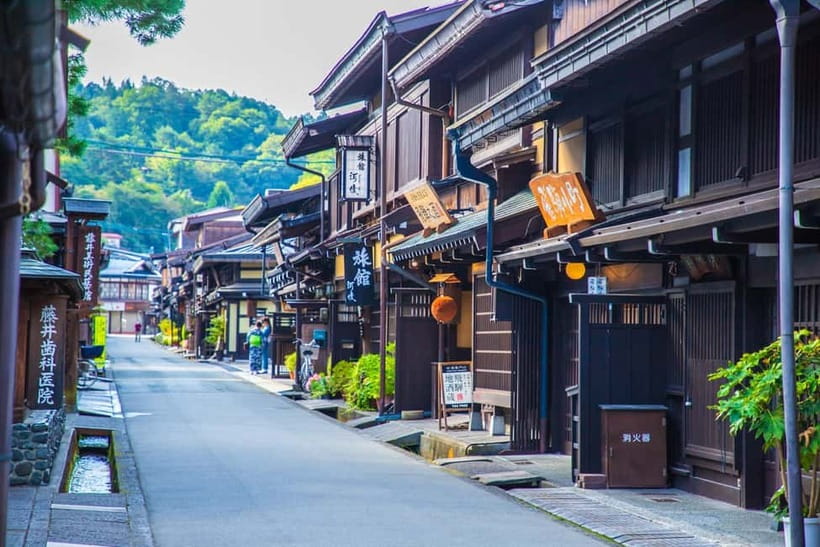
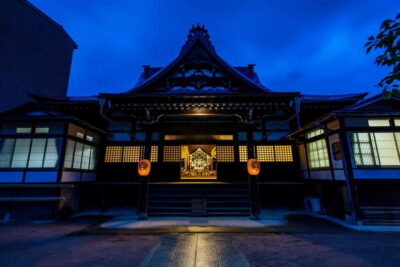
Takayama is your first major stop. Its old town has narrow lanes, dark wooden facades, small shops, food stalls, and buildings that recall the Edo period. You can walk through the historic streets without needing a long transfer between sights.
The planned area includes the Miyagawa Morning Market, Takayama Jinya, and Furuimachinami Guchi. The market is a useful place for a quick look at local produce, small goods, and snacks. Takayama Jinya adds cultural context, while the old streets provide the visual appeal.
The challenge is the clock. The listed self-guided visit is about 1.5 hours, and several people wanted more time here. That opinion makes sense. In 90 minutes, you can see the main street area and make a few stops, but you may need to choose between shopping, the market, food, photographs, and sake tasting.
I suggest deciding before you arrive what matters most. If you want photographs, head into the old town first. If food is your priority, look for Hida beef snacks or plan the Koshiyama meal. If you want a quieter cultural visit, spend less time browsing shops and focus on Takayama Jinya and the traditional streets.
The guide may provide a map and mark useful food and photo locations. Alberto was particularly praised for adding practical directions and reminders, while Leo and Akari were also described as helpful and organized. The level of historical explanation can vary by guide and by how easily you can hear from your seat on the bus. One person sitting near the back found it hard to hear without a microphone.
Choosing lunch at Koshiyama
The optional meal is served at Koshiyama Restaurant. This is convenient because you do not need to hunt for food during a tight schedule, but it also means the meal becomes part of the group timetable.
The choices cover several tastes:
- Hida beef steak, or yakiniku: Marbled local beef cooked on a hot plate.
- Hida pork lunch: A local pork dish focused on the meat’s natural flavor.
- Wagyu Kobe beef shabu-shabu: Thin slices gently cooked in a light broth.
- Gokayama tofu oden: A vegetarian-friendly option using firm local tofu.
The lunch option gives you 45 minutes to eat and 90 minutes, or 1.5 hours, to explore Shirakawa-go. The itinerary also lists Koshiyama as a one-hour lunch stop, so allow for some variation in the exact timing.
Several people liked the meal, and Hida beef was singled out as worth choosing. One person found the included Hida beef lunch less impressive than expected, so keep your expectations sensible. This is a practical group meal, not a long restaurant experience.
Another point is location. The restaurant is outside the main Shirakawa-go village area. If you prefer eating inside the village and using every minute for exploring, choose the no-lunch option. You then receive about two hours in Shirakawa-go instead of 90 minutes.
Same trip, a completely different kind of day:
- Kanazawa: World Heritage Shirakawa-go & Two Local Experience
★ 4.9 · 274 reviews - 1 Day Private Charter Tour to Shirakawa-go & Takayama
★ 4.5 · 253 reviews - [One-day bus tour departing from Kanazawa Station] Shirakawa-go and Gokayama – Two World Heritage Villages Enjoyable Bus Tour
★ 5.0 · 253 reviews - World Heritage Shirakawa-go Perfect Guided Tour from Kanazawa
★ 5.0 · 220 reviews
Shirakawa-go and the gassho-zukuri houses
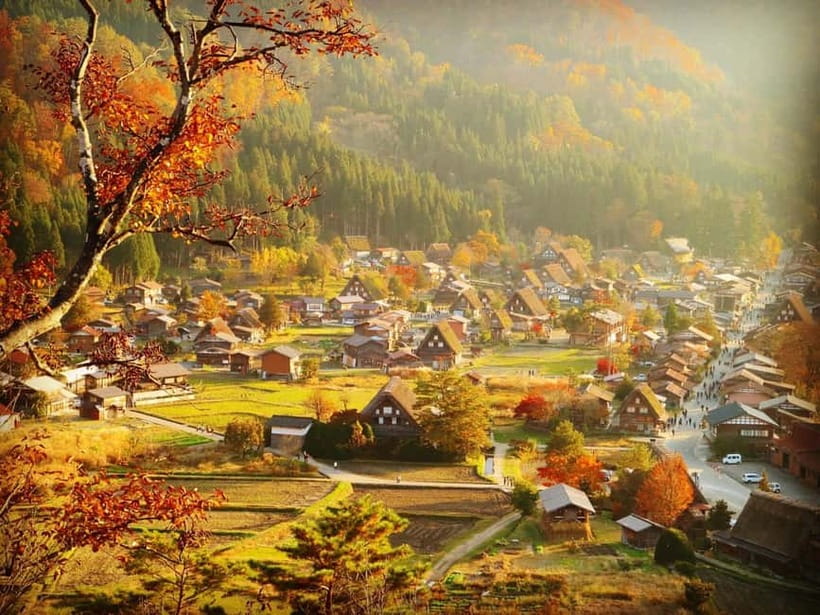
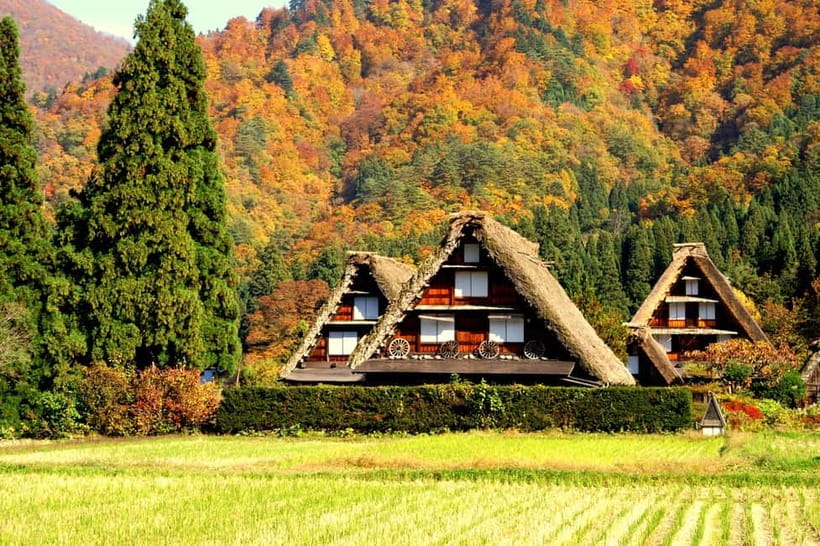
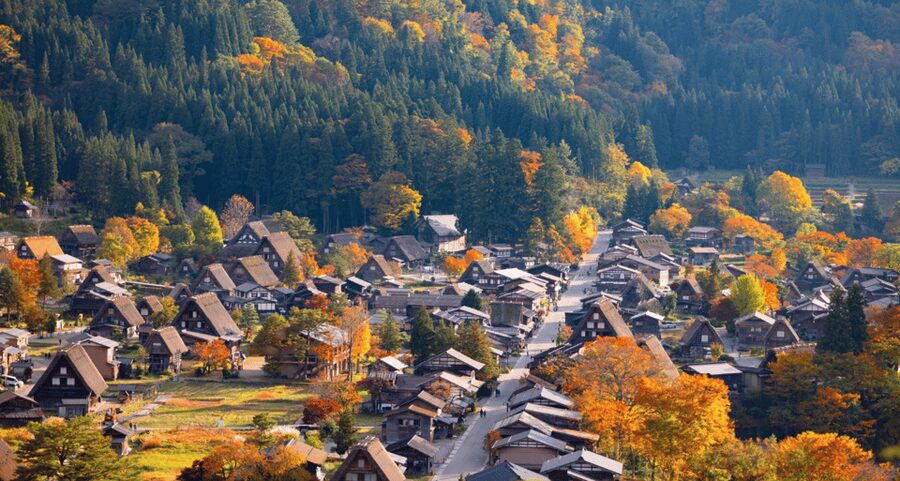
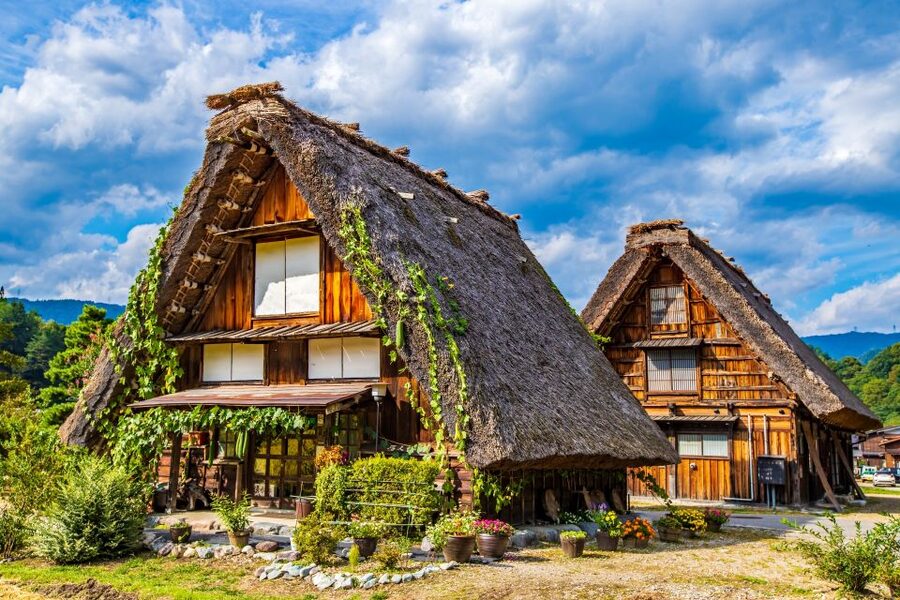
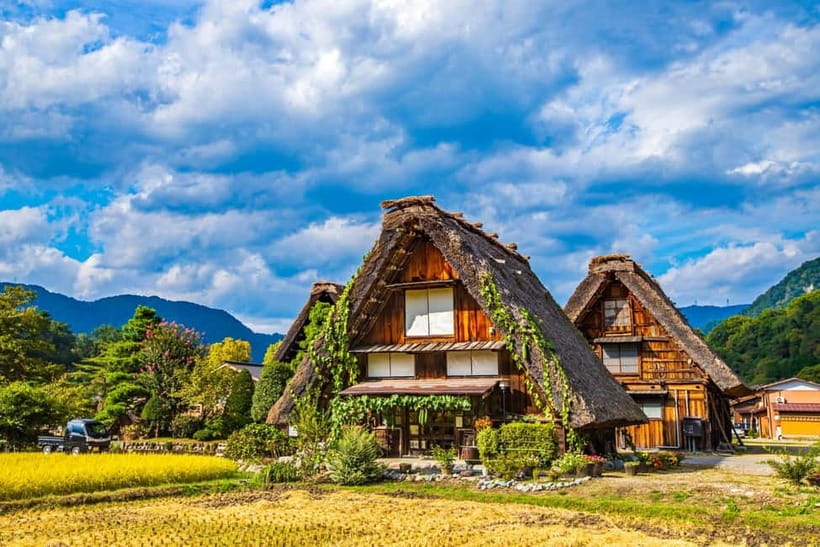
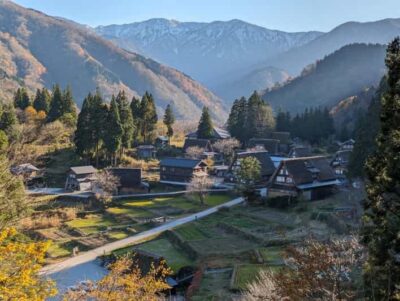
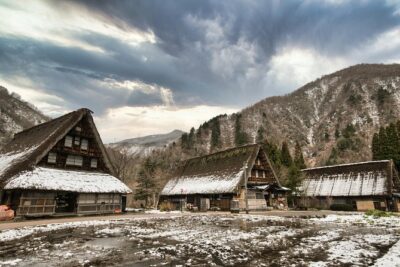
Shirakawa-go is the reason most people book this trip. The village is a UNESCO World Heritage Site, known for gassho-zukuri houses with sharply pitched roofs. The design helps shed the region’s heavy snow, and many of the remaining homes are more than a century old.
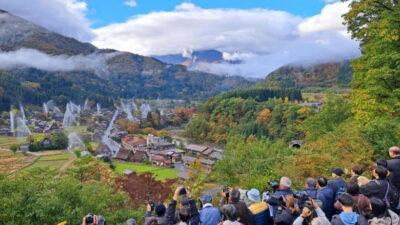
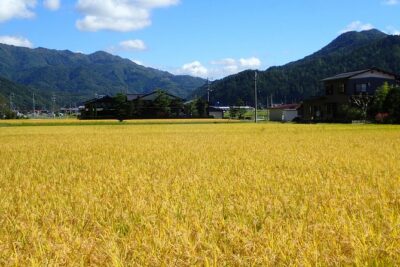
The first impression is the setting. Wooden houses sit among rice paddies and mountains, with small lanes connecting the village areas. In autumn, the colors can make the scene look painted. In winter, snow changes the village completely, though the same snow can close the road and force a replacement visit to Gujo Hachiman.
The usual visit includes Wada House and Kanda House Gassho-Zukuri. These give you a closer look at the construction style and the way traditional homes were used. You should also make time for the Ogimachi Castle Observation Deck. It requires an uphill walk, but it gives you the classic view over the rooftops and surrounding countryside.
Ninety minutes is enough for a walk, a few photographs, and one or two houses. It is not enough to inspect every building or shop at a leisurely pace. If Shirakawa-go matters more to you than lunch, the no-lunch version is the better choice because two hours gives you an extra 30 minutes.
You also need to watch the meeting time closely. The village is easy to wander through, and it is possible to lose track of time while walking between the houses and viewpoint. Guides may send reminders through a group chat, but you remain responsible for returning to the bus.
The winter alternative, Gujo Hachiman
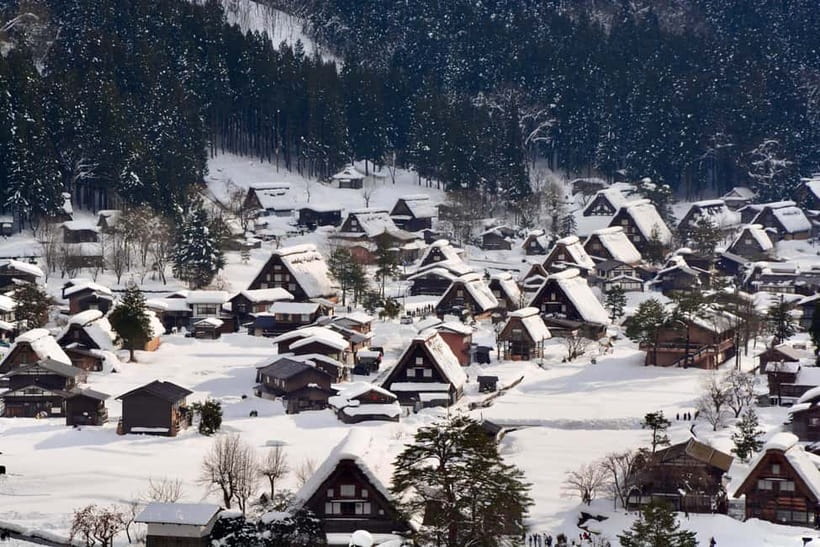
Snow can occasionally close the road to Shirakawa-go. When that happens, the tour changes to Gujo Hachiman, a historic town known as the Little Kyoto of Gifu.
You can expect old streets, traditional buildings, shops, castle-town scenery, and clear waterways running through the town. It is not a substitute for Shirakawa-go, so book this trip in winter only if you can accept that possibility.
The change is practical rather than disappointing by design. Road safety comes first, and Gujo Hachiman still gives you a look at an older side of Gifu. Check the forecast before departure, but remember that weather decisions can change quickly.
How the guiding works
The tour is available with English or Chinese commentary. Depending on the group size, both languages may be used on the same bus. That can mean longer announcements and less continuous commentary than you would receive on a private English-only tour.
The strongest part of the guiding is practical help. Guides have handed out maps, marked food and photograph spots, explained return times, and used group messages to help people find the bus. Alberto was praised for sending recommendations for both destinations and even Nagoya. Xiaoyu was described as especially organized on a winter departure, while Bara-san was praised for explaining Japanese customs.
Do not expect the guide to walk beside you through every street. The main visits are self-guided. This is a good arrangement if you like freedom, but less suitable if you want a detailed lecture at every house and shrine.
Clear communication matters. One older account describes a language mix-up in which an English booking became a Chinese-guided departure. The supplied tour information lists English and Chinese, not Japanese, so confirm your selected language and watch the meeting instructions closely.
Who should book this experience
I would choose this tour if you are staying in Nagoya, want to see rural Japan, and prefer a single organized day rather than several independent connections. It works especially well for first-time visitors who want a broad introduction to Takayama and Shirakawa-go.
It also suits people who like a balance of guidance and personal time. You receive orientation, maps, recommendations, and schedule reminders, then explore the old streets and village on your own.
I would hesitate if you dislike long bus rides, need a slow pace, or want to spend most of the day in Takayama. The schedule favors Shirakawa-go, and many people would happily add another hour in Takayama. Families and older visitors should also remember that the observation deck involves an uphill walk and that the day includes substantial time on foot.
The tour runs in rain, with cancellation only in extreme weather such as a typhoon. Road traffic can still cause delays or shorten sightseeing time. Free cancellation is available up to 24 hours before departure, and the reserve-now, pay-later option helps if your schedule is still changing.
Should you book it?
Book this trip if your priority is convenient access to two hard-to-reach destinations. At $61, the bus transportation, guide, and optional meal offer useful value for a full day from Nagoya.
Choose the lunch option for convenience and a chance to try Hida beef, pork, wagyu shabu-shabu, or tofu oden. Skip lunch if you want the maximum time in Shirakawa-go. Either way, accept that Takayama will feel like an introduction rather than a full visit.
My practical choice would be the no-lunch version for independent eaters who want more village time. I would choose the lunch option for anyone who values a simple schedule and wants to sample regional food without searching during the day. If your main goal is Shirakawa-go and you can handle a long ride, this is a sensible, fairly priced way to reach it.
FAQ
How long is the Nagoya to Takayama and Shirakawa-go tour?
The tour lasts about 10 hours, including transportation, sightseeing stops, lunch if selected, and the return journey to Nagoya.
Where does the tour meet in Nagoya?
The listed meeting point is the VIPLINER Nagoya bus stop at 20-20 Tsubakicho. The exact meeting point can vary by booking option, so check the product photograph and QR code before departure.
Is lunch included?
Lunch is included only if you select the meal option. The choices are Hida beef steak, Hida pork, Kobe wagyu shabu-shabu, and Gokayama tofu oden.
How much time do I get in Shirakawa-go?
The lunch option provides about 90 minutes in Shirakawa-go. The no-lunch option provides about two hours.
What languages are available?
The live guide is available in English or Chinese. Depending on the number of people booked, both languages may be used on the same bus.
What happens if snow closes the road to Shirakawa-go?
The tour changes to Gujo Hachiman, known for its traditional streets, waterways, shops, and castle-town setting.
Is the tour canceled in the rain?
The tour operates in rain and normally cancels only in extreme weather, such as a typhoon. Weather, traffic, and road conditions can still cause schedule changes or delays.
Can I cancel the booking?
You can cancel up to 24 hours in advance for a full refund. The reserve-now, pay-later option allows you to book without paying immediately.
Just added around Takayama
- Takayama and Shirakawago/Photoshoot by professional photographer★ 5.0 · 67 reviews
- Shirakawago & Kanazawa from Kanazawa★ 5.0 · 51 reviews
- Private Tour of Shirakawago and Gokayama from Kanazawa★ 5.0 · 50 reviews
- Private Tour of Shirakawago from Kanazawa (Half Day)★ 5.0 · 24 reviews
- Private Tour Kanazawa, Shirakawago, Hida Furukawa,Takayama★ 5.0 · 108 reviews
- Private transfer Kanazawa to Takayama Including Shirakawago★ 5.0 · 15 reviews
- Gokayama and Shirakawago/Photoshoot by professional photographer★ 5.0 · 51 reviews
- From Kanazawa: Shirakawa-go, Gokayama and Wood Carving Village★ 5.0 · 90 reviews
Takayama Tours, compared.

Gokayama and Shirakawago/Photoshoot by professional photographer
Our verdict →Browse the lists this tour appears in