Reviewed · KYOTO TOURS
Hammer Pattering Experience of Ring
The most interesting part of this Kyoto workshop is the hammer work. You begin with a prepared ring, then use Japanese-style Tankin techniques to mark its surface with your own pattern. It is hands-on, quick, and far more personal than picking a souvenir from a shop shelf.
I like the custom texture and the fact that you take the finished ring home the same day. I also like the friendly, patient help from the small Itoaware Kyoto team, especially for families and first-time jewelry makers. The main consideration is simple: this is not a complete ring-forging class. There is no welding or soldering, so you shape the finish rather than build the ring from a strip of metal.
- Hammer your own pattern: Use special tools to add texture to a prepared ring.
- Choose key design details: Select the material, thickness, shape, and surface style available for your session.
- Finish in about one hour: The short format fits neatly between sightseeing stops in Kyoto.
- Take the ring home that day: Staff polish and clean the piece before you leave.
- A private group activity: Only your own group participates.
- A useful Kyoto keepsake: Some participants have had the ring engraved with Kyoto as a honeymoon memory.
What You Actually Make in the Tankin Workshop
Tankin is a Japanese metalworking approach based on shaping and texturing metal with a hammer. Here, you use that idea on a ring that has already been welded and polished. Your task is to add the visible character.
That distinction matters. If you imagine starting with a flat strip, bending it around a mandrel, soldering the ends, and building a ring from raw metal, this class will not match that picture. The ring base is ready before the hammering begins. You are making the surface your own, not completing every stage of jewelry production.
For many people, that is exactly the right level of craft. You get the satisfying part quickly: choosing a look, holding the tools, making marks, and watching a plain band change under your hands. You do not need prior metalworking experience, and staff support you through the process.
The finished design can be subtle or more pronounced, depending on how you work the surface. The appeal is not perfect factory precision. Small differences in the marks show that you made it yourself.
Choosing the Ring Before the Hammer Comes Out
The session begins with design choices. You select your preferred material, thickness, shape, and texture from the options available at the shop. The supplied information and customer comments refer to silver and gold rings, but exact choices can depend on the current workshop selection.
This is a good moment to think about how you will wear the ring. A thinner band may feel light and simple, while a thicker ring gives the hammer marks more presence. A smoother shape has a quieter look, while a textured surface catches light and makes the handmade quality easier to see.
If you are making rings as a couple, you do not have to create identical pieces. Matching materials with different textures can look coordinated without being overly formal. You can also make two rings with the same texture and different thicknesses.
The staff can help with sizing during the class. That is especially useful if you are unsure of your ring size or are making a gift. Still, I would pay close attention during this stage. A one-hour workshop moves at a good pace, and the decisions you make early on affect the final result.
A few more Kyoto half-days worth comparing
- PERFECT KYOTO 1-Day Bus Tour
★ 5.0 · 13,518 reviews - Kyoto: Fushimi Inari, Kinkakuji, Bamboo Grove 1 Day Bus Tour
★ 4.8 · 4,316 reviews - Kyoto: Tea Ceremony in a Traditional Tea House in Kiyomizu
★ 4.9 · 3,519 reviews
The Hammering Process, Step by Step
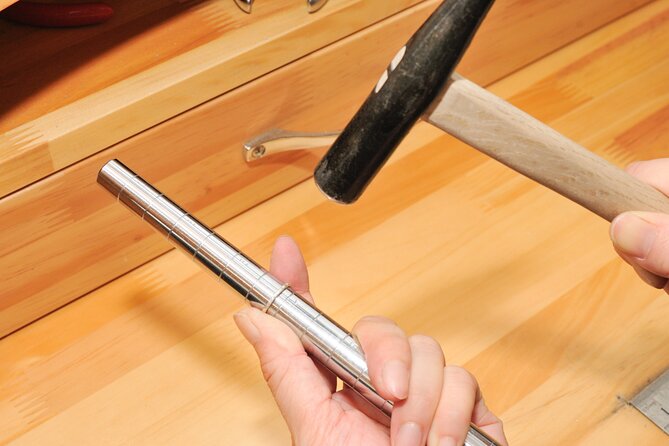
Once you have selected the ring, staff explain the tools and show you how to place the texture. You then use the special hammers to create marks across the metal.
The method is approachable, but the hammer is not a magic stamp. Pressure, angle, spacing, and rhythm all affect the finish. A light touch may produce fine marks. A firmer strike can make a deeper pattern. Staff help you understand the process and remain available while you work.
This is where the workshop becomes more than a souvenir purchase. You are not simply choosing a finished pattern from a display. Your hand controls the result, and the ring records those small decisions.
The process also gives families a manageable creative activity. A family with two boys, a husband, and a wife found the lesson quick enough to hold everyone’s attention, and each person left with a wearable keepsake. That makes this a practical choice if you want an activity that works for different ages and does not consume half a day.
You will want to work carefully rather than rush. The staff are there to help until the end, so ask for guidance if your pattern is becoming uneven or if you are unsure how much pressure to use. The goal is not to compete with a professional jeweler. The goal is to make a ring that carries your choices.
Final Polishing and Taking It Home
After the hammering, skilled craftsmen polish and clean the ring. This final step removes some of the roughness from the working process and gives the piece a finished appearance.
You can take the ring home on the day of the workshop. That is a useful advantage for anyone on a short Kyoto visit. You do not need to return later or arrange delivery, and the ring can go straight into your luggage as a ready souvenir.
The polishing also helps balance the handmade look. Your texture remains visible, but the ring receives a professional final clean. This combination is part of the value: your work creates the pattern, while the staff handle the finishing stage that can be difficult to do properly in a short class.
A commemorative photo is also part of the support offered during the experience. It gives you a record of the activity, not just the object you made. If you are visiting Kyoto for a honeymoon, anniversary, or family trip, that small extra can be worthwhile.
Why the One-Hour Length Works in Kyoto
The workshop takes about 60 minutes. That is short enough to fit around a day in Higashiyama, where you may already be visiting temples, lanes, shops, and traditional streets.
A one-hour class also keeps the activity focused. You choose the ring, learn the hammering method, texture the surface, and receive the final polish without a long lecture or a drawn-out production stage. If you have limited time, you can add a physical souvenir without giving up a major sightseeing block.
The tradeoff is that the class cannot cover every part of jewelry making. There is no extended design consultation, metal preparation, welding, or soldering. You are paying for a concentrated texturing session, not a full trade course.
That makes the workshop best for people who want an accessible introduction. If your main goal is learning how a jeweler constructs a ring from raw materials, look for a longer class that includes cutting and soldering. If you want a finished ring with your own marks on it, the one-hour format is sensible.
Same trip, a completely different kind of day:
- Kyoto Geisha Walking Tour: Gion District & Hidden Gems
★ 4.7 · 3,273 reviews - Kyoto: Tea Ceremony Ju-An at Jotokuji Temple
★ 4.9 · 3,207 reviews - Kyoto: Gion Magical Night Walking Tour with Geisha Trivia
★ 4.9 · 2,393 reviews - Kyoto: 45-Minute Tea Ceremony Lesson Experience
★ 4.3 · 2,378 reviews
A Private Activity for Couples and Families
This is a private activity, so only your own group participates. That changes the feel of the class. You are not sharing the workbench with a large public group, and the staff can focus on your party.
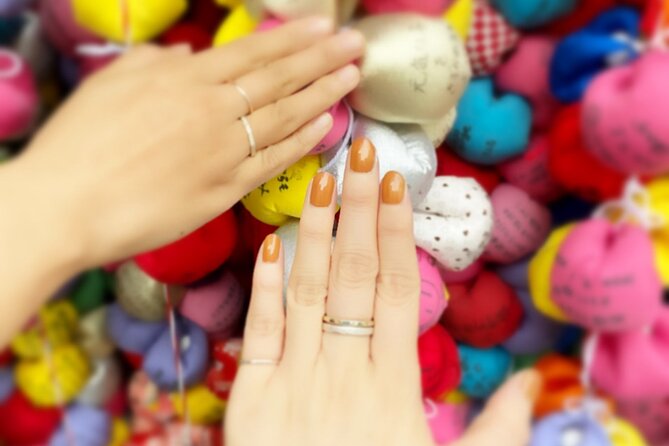
For couples, the format has clear appeal. You can make matching rings, choose different finishes, and add a personal reminder of Kyoto. One couple had Kyoto engraved on their rings during a honeymoon visit, turning a simple object into a marker of the trip.
For families, the session offers a shared task rather than a passive demonstration. Each person makes a ring, and the final pieces can differ according to age, taste, and patience. The quick lesson helps keep the activity from becoming tiring.
The private setup may also make it easier to ask questions. If you are uncertain about sizing or the hammering technique, staff can offer direct help instead of leaving you to work it out in a crowd.
Value at About $21.68 Per Person
At approximately $21.68 per person, the price is reasonable for a private, guided craft activity that includes a ring you take home. The value is strongest if you want both a Kyoto souvenir and an activity connected to it.
A normal purchased souvenir gives you an object. This workshop gives you an object plus the memory of making it. That difference matters if you are marking a honeymoon, family holiday, or special visit.
The cost is also modest compared with many jewelry-making classes, though the shorter format explains part of that price. You are not paying for a full raw-metal construction course. You are paying for the prepared ring, use of the tools, staff instruction, and final polishing.
Material choice can affect how you judge the value. If you want a precious-metal ring, confirm the available options and any related conditions when booking. The class information refers to choosing your material, and a customer specifically described working with silver or gold, but the exact selection should be checked for your date.
The Location and Getting There
The meeting point is Itoaware Kyoto at 91-5 Hoshinocho, Higashiyama Ward, Kyoto, postal code 605-0853. The activity begins and ends at this same location.
The shop is near public transportation, but no specific station or walking time is provided. I would allow enough time to find the address, especially if you are coming from a temple visit or moving through the narrow streets of Higashiyama.
Because the class lasts only an hour, arriving late could cut into the main hands-on portion. Check the meeting instructions carefully and aim to be at 91-5 Hoshinocho before the scheduled start.
The surrounding Higashiyama setting makes the workshop easy to pair with other Kyoto plans, but the activity itself remains indoors at the meeting point. It is a useful backup for a hot, rainy, or tiring sightseeing day, though the experience details do not promise a tour of the neighborhood.
What I Like Most, and What I Would Watch For
The staff support is one of the strongest parts of the activity. They explain the process, help with sizing, guide you as you use the tools, and polish the ring at the end. The tone described by participants is friendly, patient, and encouraging, with some calling the staff funny and welcoming.
I also like the practical finish. You do not leave with an unfinished project or wait several days for delivery. You receive the cleaned ring on the same day.
The main limitation is the narrow definition of ring making. The class adds texture to a ring that has already been welded and polished. If the word making brings to mind soldering, shaping raw metal, or constructing the band from scratch, adjust your expectations before booking.
The other point to consider is personal precision. Hammer marks are made by hand, so the final surface may not look perfectly uniform. That is part of the charm, but someone seeking a flawless professional finish may prefer to buy a finished ring instead.
Who Should Book This Experience
I would recommend it to couples who want a small shared memento, families looking for a short creative activity, and anyone who prefers souvenirs with a personal story.
It also suits people who have never tried jewelry work. The staff explain the tools and remain available, so you do not need a technical background. The one-hour schedule is helpful if your Kyoto itinerary is already full.
This may not suit you if you specifically want to learn soldering or build a ring from raw metal. It is also less suitable if you dislike handmade variation and want an exact, prefinished design.
The experience is accessible to most participants, and service animals are allowed. Since the activity is private, you can enjoy the workshop with your own group rather than joining strangers.
Booking Timing and Cancellation
The activity is booked about eight days in advance on average, so it is sensible to reserve ahead if you have fixed Kyoto dates. Confirmation is provided within 48 hours of booking, subject to availability.
You can cancel for a full refund up to 24 hours before the start time. Cancellations or changes made less than 24 hours before the experience are not accepted for a refund. The cut-off follows local Kyoto time.
For questions, the provider directs participants to contact Itoaware Kyoto through Instagram direct message at @itoaware.kyoto. Check the number of participants against the number on your reservation before the workshop.
Should You Book the Hammer Pattering Experience of Ring?
Book it if you want a personal Kyoto souvenir, a private activity, and a finished ring in about an hour. The price is fair for the guided hammering, ring, polishing, and same-day takeaway.
Just book with the right expectation. You will texture a prepared ring using Tankin-style hammering, not weld one from raw metal. For a quick, friendly, hands-on keepsake, that is a worthwhile tradeoff. For a full jewelry-making lesson, choose a longer workshop that includes construction and soldering.
FAQ
How long does the ring workshop take?
The workshop takes approximately one hour.
Where does the activity begin?
It begins at Itoaware Kyoto, 91-5 Hoshinocho, Higashiyama Ward, Kyoto, 605-0853, Japan.
Where does the activity end?
The activity ends back at the same meeting point.
What technique is used?
The workshop uses a Japanese traditional hammering style called Tankin to add texture to the ring.
Do I build the ring from raw metal?
No. The rings have already been welded and polished. You use hammers and tools to add patterns and texture.
Can I choose the ring design?
Yes. You can choose from available options for material, thickness, shape, and texture.
Can I take the ring home immediately?
Yes. Staff polish and clean the ring during the final stage, and you can take it home on the same day.
Is the activity private?
Yes. Only your own group participates in the activity.
Are service animals allowed?
Yes. Service animals are allowed.
Can I cancel for a full refund?
Yes. You can cancel at least 24 hours before the experience start time for a full refund. Cancellations made less than 24 hours in advance are not refunded.
Just added around Kyoto
- Sekka Cotton Furoshiki Class★ 5.0 · 19 reviews
- Secret Eastern Kyoto Biking Adventure★ 5.0 · 44 reviews
- Kyoto Sword Experience – includes Museum Ticket/Ninja Experience★ 4.5 · 149 reviews
- Scenic Green Tea Fields of Hidden Kyoto & Local Tea Exp (Private)★ 5.0 · 32 reviews
- Private Sake Tasting in Central Kyoto with Sake Sommelier★ 5.0 · 32 reviews
- Samurai School in Kyoto: Samurai for a Day★ 5.0 · 202 reviews
- SHIRAKAWA Japanese Culture Experiences with private English staff★ 5.0 · 16 reviews
- A Privately Guided Photoshoot in Beautiful Kyoto by a Pro★ 5.0 · 18 reviews
Kyoto Tours, compared.
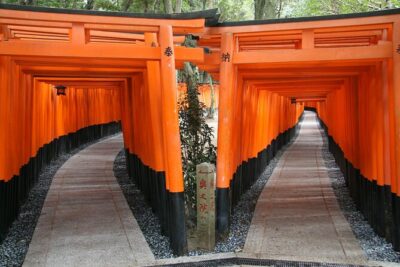

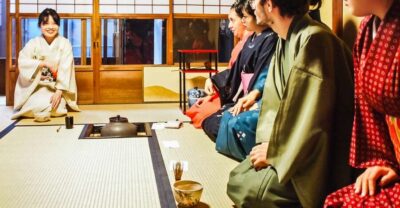
Tea Ceremony in a Traditional Tea House in Kiyomizu
Our verdict →
Kyoto Geisha Walking Tour: Gion District & Hidden Gems
Our verdict →
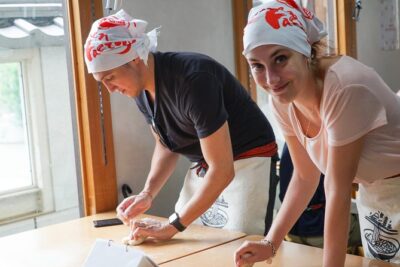
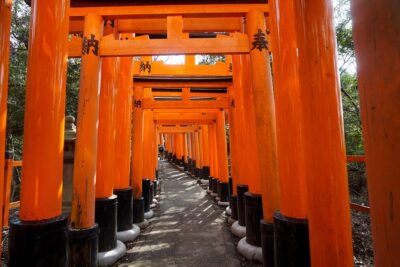
Fushimi Inari Hidden Hiking Tour (Private Option Available)
Our verdict →