
Reviewed · COOKING CLASSES
Gyoza Cooking Class in Kyoto: Traditional Japanese Dumplings
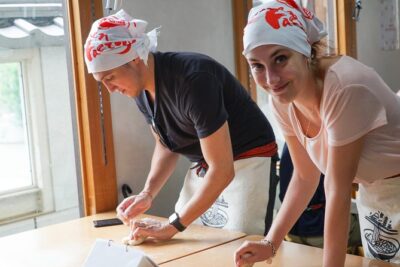
Kyoto’s best food souvenirs are often skills, not snacks. In this class, you make Japanese gyoza from scratch, starting with the wrapper and ending with a plate of roughly 10 to 12 dumplings per person. Along the way, your English-speaking instructor explains the dish’s Chinese roots, Japanese development, and a few points about samurai culture inside a traditional Kyoto townhouse.
I like two things here. First, you choose your filling and work at your own station, so this is hands-on rather than a cooking demonstration. Second, the optional samurai armor photos give the class a playful Kyoto finish. The main caution is the price: at $118.19 per person, this is a costly way to eat dumplings, so its value depends on how much you want the lesson, cultural context, and keepsakes.
Key points at a glance
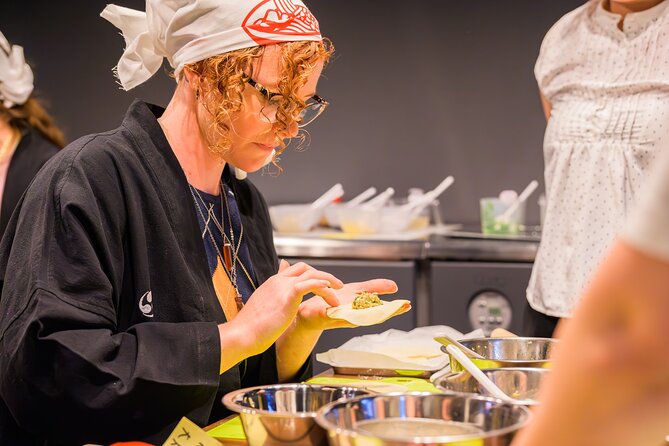
- Make the wrappers yourself: You are not simply stuffing premade skins. The class includes preparing gyoza wrappers from scratch.
- Choose your filling: You can select the filling you prefer before folding and cooking your dumplings.
- Expect about 10 to 12 gyoza: The portion is substantial enough to serve as a light meal, especially if you arrive hungry.
- Learn with named English-speaking instructors: Hama, Maya, Ryo, and Yo have all led classes, with a teaching style that suits families and older children.
- Leave with more than photographs: An apron souvenir is provided, and cooking instructions may be available to take home.
- Add a samurai moment: After cooking, you can put on samurai armor and take photos, though this part is optional.
Starting in a Kyoto townhouse
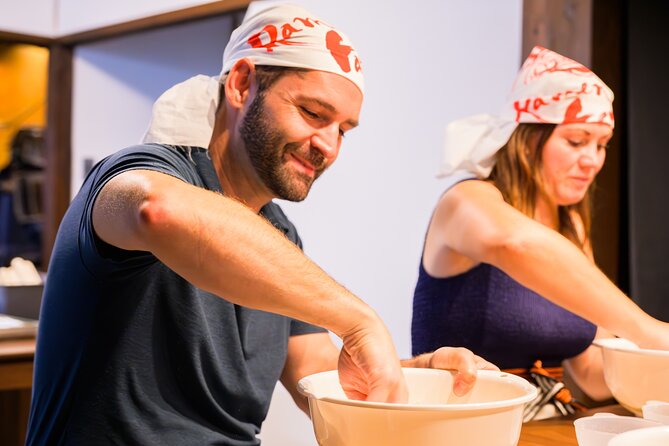
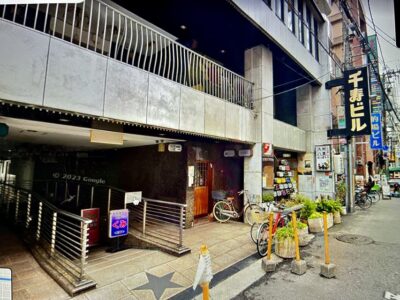
The class meets at 230-1 Kamimyōkakujichō in Kyoto’s Nakagyo Ward, postal code 604-0025. The meeting point is near public transportation, but private transportation is not included, so you need to make your own way there.
The setting matters. A traditional townhouse gives the class a more local feel than a modern cooking studio with rows of identical counters. You are still in a practical cooking space, with tools supplied and personal working stations available, but the older Kyoto setting adds a sense of place before you even touch the dough.
I would arrive with a little extra time. The supplied details identify the address and note nearby public transport, but they do not provide a pickup service or hotel transfer. Check your route before leaving, especially if you are fitting this between temple visits or an evening meal.
The group can reach a maximum of 20 people. That is not a private lesson by default, yet individual stations help keep the activity active rather than purely observational. If you happen to book during a quiet time, you might find yourself in a much smaller group. One person even received a private class, but that should be treated as a happy possibility, not a promise.
More Cooking Classes in Kyoto
- Ramen Cooking Class at Ramen Factory in Kyoto
★ 5.0 · 1,937 reviews - Kyoto: Ramen Cooking Class at a Ramen Factory with Souvenir
★ 4.9 · 532 reviews - Kyoto: Ramen, Gyoza, and Onigiri Cooking Class
★ 5.0 · 445 reviews
Choosing a filling and learning the dumpling story
The first cooking decision is your filling. That small choice helps make the lesson personal, since you are not just following a fixed recipe without input.
Your instructor also places gyoza in context. The dumpling began in China, then changed over time in Japan, where different sizes and styles developed. That short food history is useful because it explains why Japanese gyoza are not simply a copy of Chinese dumplings. You learn about a familiar dish as part of Japan’s food culture, not as an isolated recipe.
Instructors include Hama, Maya, Ryo, and Yo. The teaching language is English, and the class is designed to keep the steps clear and approachable. Hama is especially good at making the process feel manageable for first-time cooks, while Ryo has a warm, personable approach that works well with older children and teenagers. Maya’s classes combine simple instruction with a light, friendly tone.
The history section is not a substitute for a full Kyoto history tour. It is a compact introduction woven into the cooking. That balance works well if you want a cultural note without sitting through a long lecture.
Rolling wrappers from scratch
The most useful part of the class is making the wrappers. Many dumpling activities begin with ready-made skins, which saves time but removes one of the key skills. Here, you learn how the wrapper is prepared before the filling goes inside.
That makes the class more demanding than a simple fold-and-fry session. You will handle dough, work through the shaping process, and then use the wrapper for your own dumplings. The instructor provides the cooking tools, so you do not need to bring equipment.
The class also appears friendly to beginners. Several people found the steps easy to understand, and practice materials may be used before you work on the final dumplings. One useful detail is that paper practice can help you learn the fold without wasting food. If you have never shaped gyoza, this is the point where the pace may slow down, but that is part of the value.
Do not expect every dumpling to look identical. The point is to learn the technique, not produce a display case of perfect folds. A slightly crooked dumpling still cooks and tastes good, and making your own batch gives you a better sense of how the dish comes together.
Folding, cooking, and eating 10 to 12 gyoza
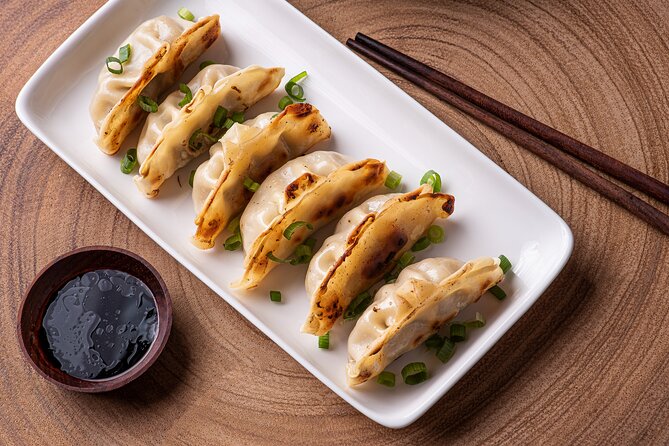
Once the wrappers and filling are ready, you learn the folding method. This is often the most satisfying part for families and groups because everyone can compare shapes, improve with each attempt, and see a pile of finished dumplings grow.
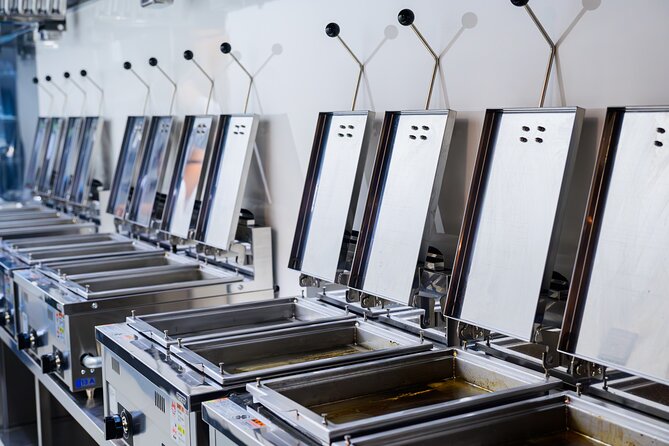
The class provides a professional baking machine for cooking the gyoza. That helps keep the final cooking stage controlled and avoids asking beginners to manage unfamiliar equipment on their own. The instructor guides you through cooking the dumplings properly, so the meal is not left to chance after all the preparation.
Expect around 10 to 12 gyoza per person. That is a useful portion to know before booking. You should arrive hungry, particularly if this replaces lunch or dinner, though the class is still a food activity rather than a multi-course restaurant meal.
The strongest reason to book is that you can repeat the process at home. You learn the basic sequence: choose a filling, make wrappers, fold the dumplings, and cook them. The class may provide take-home instructions, and an instructor can help if you need the recipe later. One person accidentally left without the recipe but still received an apron, so check that you have the instructions before walking out.
Same trip, a completely different kind of day:
- PERFECT KYOTO 1-Day Bus Tour
★ 5.0 · 13,518 reviews - Kyoto: Fushimi Inari, Kinkakuji, Bamboo Grove 1 Day Bus Tour
★ 4.8 · 4,316 reviews - Kyoto: Tea Ceremony in a Traditional Tea House in Kiyomizu
★ 4.9 · 3,519 reviews - Kyoto Geisha Walking Tour: Gion District & Hidden Gems
★ 4.7 · 3,273 reviews
Samurai armor as an optional finale
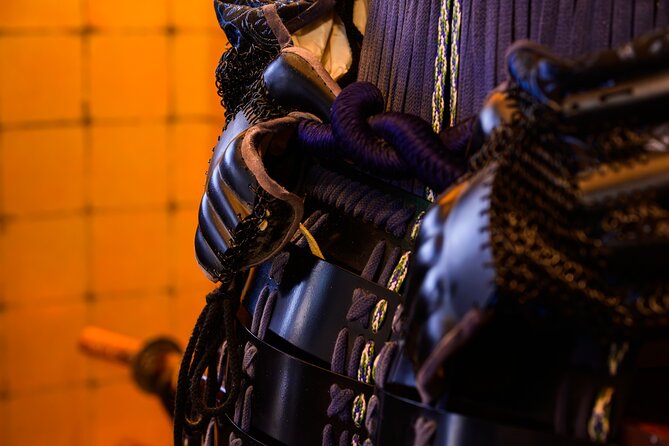
After eating, you can choose to dress in samurai armor and take photos. This is not required, and it should not be the main reason to book the class if you have no interest in costume pictures.
For families, children, and first-time visitors to Japan, it can be a fun closing scene. The cooking gives you a practical activity, while the armor adds a visual memory from Kyoto. It also explains why the class includes more than food alone: the organizers are pairing a Japanese dish with a light introduction to samurai culture.
The samurai portion is optional, so people in the group can decide for themselves. That is helpful if some want photos and others would rather finish the class without dressing up. The available details do not specify how long the armor session lasts, so keep your expectations modest and treat it as an extra photo opportunity.
What makes the $118.19 price worthwhile
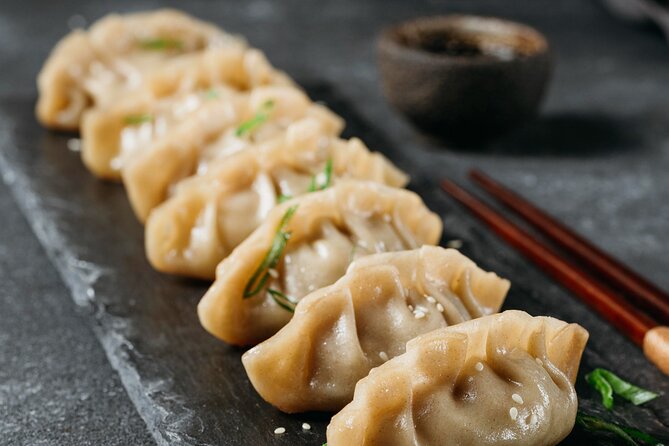
At $118.19 per person, this is not a bargain meal. If your only aim is to taste gyoza, Kyoto restaurants will give you cheaper options, and you will not need to set aside 90 minutes for preparation.
The price makes more sense when you count the activity rather than the food. You receive an English-speaking instructor, cooking tools, a guided lesson, your own dumplings, an apron souvenir, cultural background, and the chance to use samurai armor for photos. The apron is a particularly practical touch because it gives you something physical to take home, rather than leaving you with only pictures.
I would compare it with other hands-on activities, not with a casual restaurant lunch. For a family, the cost buys shared time and a clear project that adults and older children can do together. For a solo person, the value depends on your interest in cooking. A private class can make the price feel stronger, but private treatment is not guaranteed.
The reviews include people who felt the cost was justified because they learned so much, received a private lesson, or gained a skill they could share with friends and family. That is the right test. If you want a recipe you can repeat at home, the price may feel fair. If you are trying to keep food costs low, choose a restaurant instead.
Who will enjoy this class most
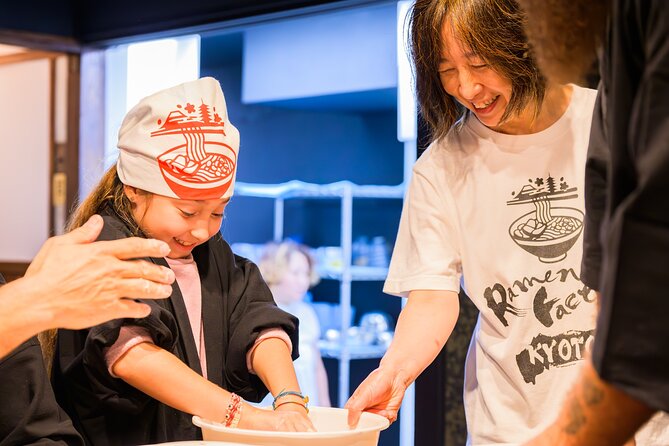
This is a good match for:
- Families with older children: A 10-year-old has taken part successfully, and older children and teenagers can manage the hands-on steps.
- First-time cooks: The process is broken into simple stages, with tools supplied and an instructor present.
- Food-focused visitors: You learn how a familiar Japanese dish is made rather than simply ordering it.
- People who like useful souvenirs: The apron and cooking instructions have more long-term value than another small trinket.
- Solo bookers: A small group or private session might give you extra attention, though group size can reach 20.
- Couples and friends: Folding dumplings together is an easy shared activity and gives everyone a role.
It may be less suitable if you want a quiet sightseeing stop, a cheap meal, or a serious culinary school lesson. The class is social and practical, with a cultural explanation and a playful photo option. It is not presented as advanced professional training.
Timing, group size, and practical planning
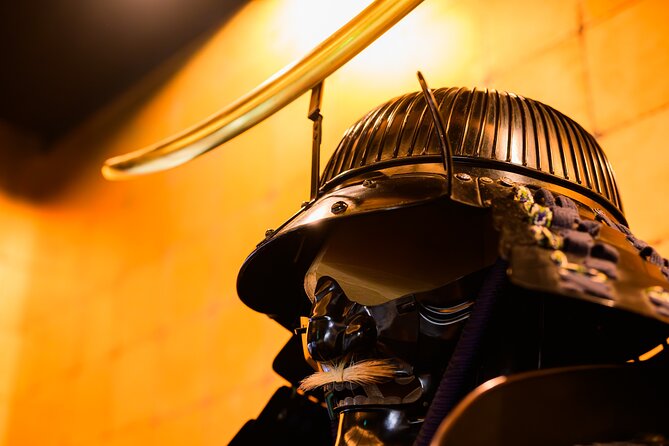
The stated duration is approximately 1 hour and 30 minutes. One class took about two hours, so I would avoid booking another timed activity immediately afterward. The extra time may come from the group, questions, photos, or the cooking pace.
The class begins and ends at the same Kyoto meeting point. Since no private transportation is included, plan your route in advance and allow time to locate 230-1 Kamimyōkakujichō. The activity is near public transportation, which makes it workable as part of a day in central Kyoto.
The maximum group size is 20. That is large enough to create a lively class, but the individual workstations keep you involved. If personal instruction is important to you, booking at a less popular time might improve your chances of a smaller group, though the provider does not promise this.
Confirmation arrives at booking. Free cancellation is available if you cancel at least 24 hours before the local start time. Changes or cancellations inside that 24-hour window are not accepted for a refund, so check your Kyoto schedule before committing.
My verdict: book it for the skill, not just the meal
I recommend this class if you want an active Kyoto memory and like the idea of making a dish you can repeat at home. The strongest features are the homemade wrappers, choice of filling, friendly English instruction from people such as Hama, Maya, Ryo, and Yo, and the chance to finish with optional samurai photos.
At $118.19, it is expensive for gyoza alone. Book it if the cooking lesson, townhouse setting, apron, cultural explanation, and shared family time add up to the kind of souvenir you value. Skip it if you mainly want inexpensive food or a quick cultural stop.
For most families, food lovers, and older children, this is a well-shaped Kyoto activity: practical, cheerful, and easy to remember after the last dumpling is gone.
FAQ
Where does the gyoza cooking class meet?
It meets at 230-1 Kamimyōkakujichō, Nakagyo Ward, Kyoto, 604-0025, Japan.
How long does the class last?
The stated duration is approximately 1 hour and 30 minutes. Some sessions may take about two hours.
What is the price per person?
The listed price is $118.19 per person.
Is the class taught in English?
Yes. An English-speaking instructor leads the cooking class. Instructors include Hama, Maya, Ryo, and Yo.
What is included?
Cooking tools and an English-speaking instructor are included. An apron souvenir is also provided according to class details shared by participants.
Do I make the gyoza wrappers myself?
Yes. The class teaches you to make gyoza wrappers from scratch, choose a filling, fold the dumplings, and cook them.
Is samurai armor included?
Samurai armor is an optional part of the activity. You can dress in the armor and take photos after the cooking class if you choose.
Can I cancel for a full refund?
Yes, if you cancel at least 24 hours before the experience start time. Cancellations or changes made less than 24 hours before the start time are not accepted for a refund.
Just added around Kyoto
- Sekka Cotton Furoshiki Class★ 5.0 · 19 reviews
- Kyoto Sword Experience – includes Museum Ticket/Ninja Experience★ 4.5 · 149 reviews
- Scenic Green Tea Fields of Hidden Kyoto & Local Tea Exp (Private)★ 5.0 · 32 reviews
- Secret Eastern Kyoto Biking Adventure★ 5.0 · 44 reviews
- Private Sake Tasting in Central Kyoto with Sake Sommelier★ 5.0 · 32 reviews
- Samurai School in Kyoto: Samurai for a Day★ 5.0 · 202 reviews
- SHIRAKAWA Japanese Culture Experiences with private English staff★ 5.0 · 16 reviews
- A Privately Guided Photoshoot in Beautiful Kyoto by a Pro★ 5.0 · 18 reviews
Cooking Classes, compared.
Browse the lists this tour appears in