
Reviewed · COOKING CLASSES
Bento Box Cooking Class
The best part of this Kyoto class is that you do not simply watch a chef prepare a bento. You build a meal from several small dishes, learn why each belongs in the box, and sit down to eat the results. Tempura, sushi rolls, layered egg omelets, and seasonal sides give you a useful tour of Japanese home cooking in one morning.
I like the hands-on format and the patient English instruction. I also like that the menu changes about every three months, so the food follows the season rather than sticking to one fixed tourist menu. The main consideration is that this is a busy class: you prepare many dishes before lunch, and some ingredients or prep work may already be handled for you.
Key points about the Kyoto bento class
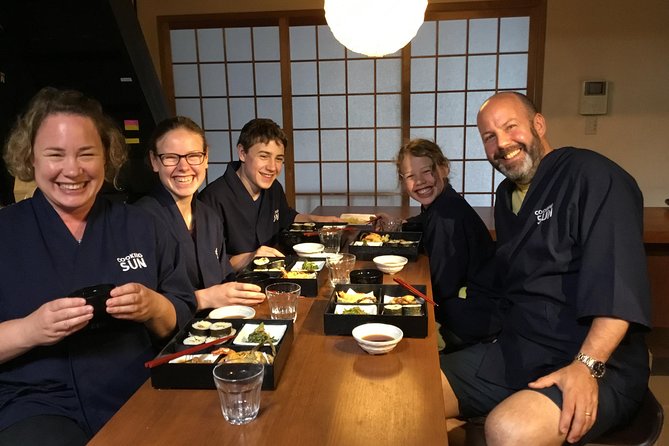
- A full handmade lunch: Prepare several bento dishes, then eat the finished meal at the studio.
- More than sushi: Depending on the seasonal menu, you may make miso soup, tempura vegetables or shrimp, teriyaki chicken, egg rolls, spinach with sesame, and sushi.
- English-speaking instruction: The class leader demonstrates each technique and gives hands-on help as you cook.
- Small advertised group size: Bookings are limited to a maximum of eight people, though the overall class setup can include several instructors.
- Recipes to take home: You receive copies of the recipes so you can repeat the dishes after returning home.
- Useful for food allergies: Dietary requirements should be given when booking, and the class has provided careful help with food allergies.
Why a bento class makes sense in Kyoto
A bento is easy to mistake for a simple lunch box. In practice, it is a compact lesson in Japanese cooking: rice, protein, vegetables, fried food, pickles or side dishes, and careful presentation all share one container.
This class gives you a way to understand that structure from the inside. You are not only learning how to fry vegetables or roll an omelet. You are also learning how several flavors, textures, and colors are arranged into one meal.
The course begins with background on the word and idea of bento. The history presented in class reaches back to the 13th century, when bento was used in the Song Dynasty as a slang term for something convenient. That short introduction helps explain why bento remains such a practical part of daily Japanese life, from school lunches to train meals and ordinary home cooking.
I find this cultural context useful because it keeps the class from becoming a random list of recipes. Each item has a place in the box, and you learn how Japanese food can be tidy, balanced, and portable without feeling plain.
More Cooking Classes in Kyoto
- Ramen Cooking Class at Ramen Factory in Kyoto
★ 5.0 · 1,937 reviews - Kyoto: Ramen Cooking Class at a Ramen Factory with Souvenir
★ 4.9 · 532 reviews - Kyoto: Ramen, Gyoza, and Onigiri Cooking Class
★ 5.0 · 445 reviews
Arriving at Cooking Sun Kyoto at 9:30
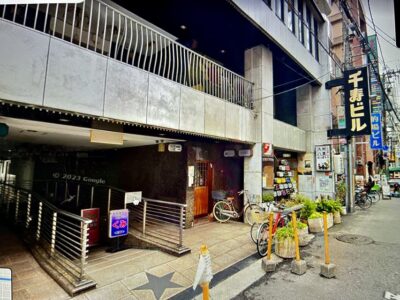
The class begins at 9:30 a.m. at Cooking Sun Kyoto, located at 679 Funayacho in Kyoto’s Shimogyo Ward. The activity starts and finishes at this cooking studio, with no hotel pickup or drop-off included.
Plan your route before class and allow enough time to find the address. The meeting point is near public transportation, but the supplied details do not name a particular station or give a walking time. Your confirmation should be the final check for the exact location and meeting instructions.
The morning start works well with a sightseeing schedule. You finish with lunch rather than having to find another place to eat, and the class takes about three hours, sometimes closer to three and a half. That makes it a good fit between other Kyoto plans, but do not place a major timed attraction immediately afterward.
You may want a small breakfast first. The meal comes at the end, and the cooking portion keeps you waiting for the food you are preparing. A light breakfast is sensible, especially if you tend to get hungry while cooking.
The opening lesson: bento culture before cooking
The session starts with an explanation of bento and its role in Japanese food culture. This is a short but worthwhile introduction because it gives meaning to the dishes you are about to prepare.
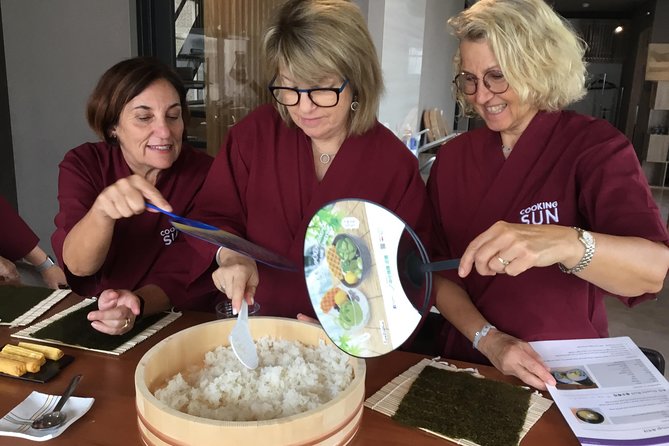
Then an English-speaking instructor demonstrates the cooking methods. The teaching style is practical rather than lecture-heavy. You watch the technique, try it yourself, and receive help from the class leader as needed.
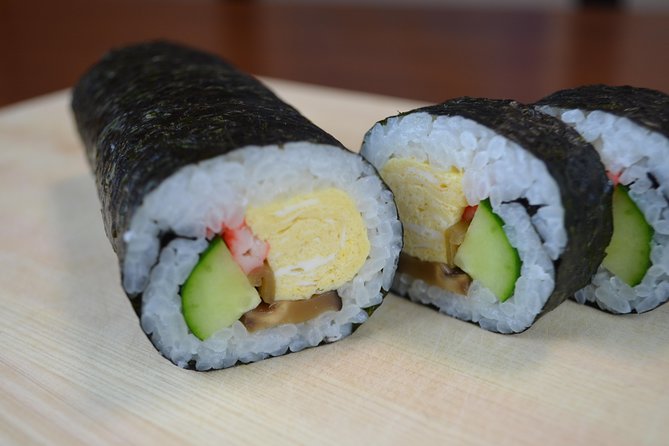
That pattern matters for dishes such as rolled egg omelet and sushi. They look simple when a practiced cook handles them, but the motion takes some control. The class gives you a chance to see the process slowly and then repeat it with guidance.
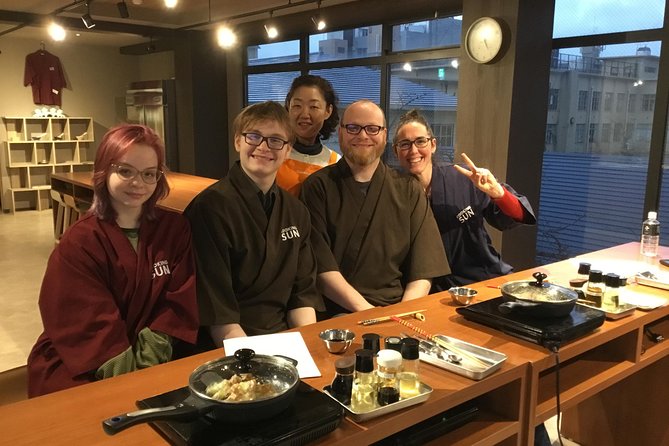
The instructors are described as friendly, patient, and clear. Several classes have used three chefs to supervise the cooking, giving participants individual attention. The advertised maximum is eight people per booking and the activity also lists a maximum of eight participants, so check the booking details if group size is especially important to you.
The class is suitable for beginners, but it is not only for people new to cooking. Participants who already prepare Asian food can pick up small technique lessons, including tips about dashi and when to use different types of soy sauce.
Making the bento: several dishes, one meal
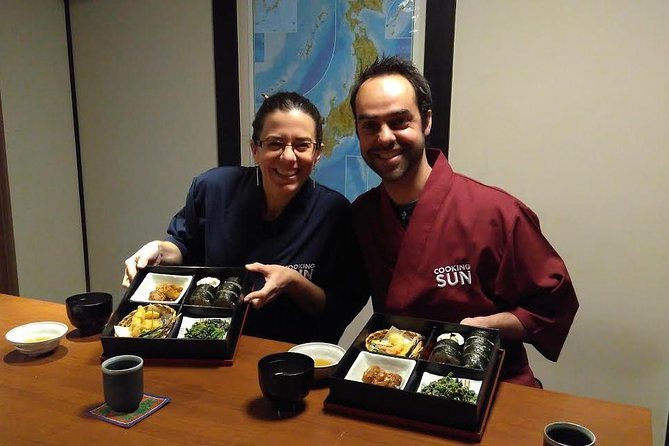
The exact menu changes with the season, roughly every three months. That is a real strength. Ingredients are chosen according to what is available, so your class may not match someone else’s menu exactly.
The dishes associated with this experience include:
- Miso soup
- Tempura vegetables and, on some menus, tempura shrimp
- Japanese egg rolls or layered omelet
- Teriyaki chicken
- Spinach with sesame
- Sushi rolls
- Rice and other seasonal bento components
The variety is what makes this class more useful than a lesson devoted to one famous Japanese dish. You practice boiling, frying, seasoning, rolling, assembling, and presenting food in the same session.
Same trip, a completely different kind of day:
- PERFECT KYOTO 1-Day Bus Tour
★ 5.0 · 13,518 reviews - Kyoto: Fushimi Inari, Kinkakuji, Bamboo Grove 1 Day Bus Tour
★ 4.8 · 4,316 reviews - Kyoto: Tea Ceremony in a Traditional Tea House in Kiyomizu
★ 4.9 · 3,519 reviews - Kyoto Geisha Walking Tour: Gion District & Hidden Gems
★ 4.7 · 3,273 reviews
The rolled egg omelet
The layered egg roll is one of the more interesting technical tasks. It is a familiar food for Japanese schoolchildren, but making one neatly requires timing and a steady hand.
You watch the instructor build the layers, then try the process yourself. The shape may not look perfect on the first attempt, which is part of the value. You learn how thin layers are added and rolled rather than simply being handed a finished omelet.
Tempura and frying
Tempura gives the class another practical skill. You learn how vegetables or shrimp are coated and fried, with the instructor demonstrating the more technical steps.
The result is especially satisfying because it becomes part of your lunch. Keep in mind that frying requires close attention, so this is not a class where every task happens at the same time with no supervision. The teaching team helps keep the cooking organized.
Sushi rolling
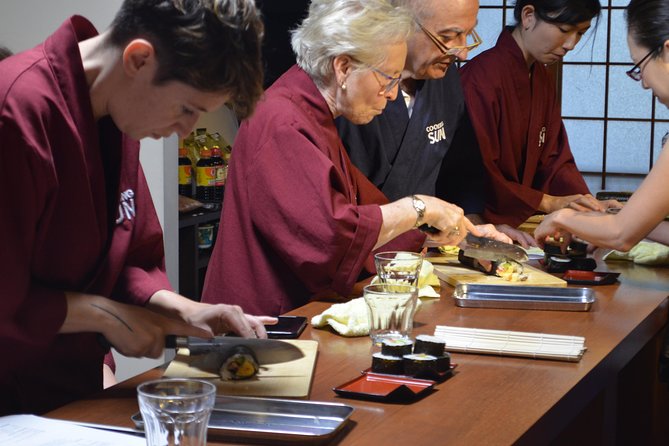
Rolling sushi is another popular section. The class gives you the chance to assemble and roll your own maki rather than only watching a chef do it.
Sushi rolling is useful beyond this one meal because the method can be repeated at home with ingredients that are easier to find. The instructor can also answer questions about sushi technique and the reasons behind the preparation steps.
Soup, chicken, and vegetable sides
Miso soup, teriyaki chicken, and sesame spinach bring familiar Japanese flavors into the box. The class also introduces the making of dashi, the stock that forms the base of many Japanese dishes.
These recipes are practical choices for home cooking. They do not require you to reproduce an elaborate restaurant dish, yet they show how Japanese meals build flavor through stock, soy sauce, miso, sesame, and careful cooking.
The bento also teaches restraint. Each portion is small, but you are preparing several items. A good box feels generous because of its variety, not because one dish is oversized.
How hands-on is the class?
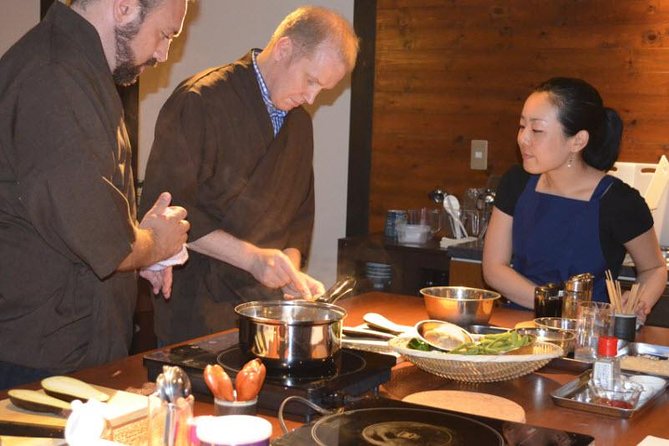
You should expect to cook, not simply watch a demonstration. The class is arranged so that the instructor explains a task, shows the technique, and lets you try it.
The staff provide aprons, ingredients, and cooking guidance. The class has been praised for clear demonstrations and patient corrections, which is important when several dishes are underway at once.
There is one practical detail to understand. Some preparation may be completed before you begin, particularly chopping and other time-consuming setup work. That keeps the three-hour class manageable and lets you focus on techniques that are useful to learn. At the same time, the course covers enough from start to finish that you still get a strong sense of the work behind a bento.
If you want to personally chop every ingredient, ask about the day’s setup before booking. If your priority is learning several techniques and eating a complete meal within a morning, the prepared ingredients are probably a benefit.
Eating the finished lunch
After the cooking is complete, you put away the knife and apron and sit down to eat. This is not a tasting of tiny samples. The bento is your lunch, and the meal can be quite filling.
Eating at the end gives you a clear reward for the work. You can see how the individual dishes fit together, compare your presentation with the other boxes, and notice how different textures work in one meal.
The social side is also part of the appeal. You share the table with other people taking the class, but the food remains the focus. For couples, families, and parent-teen combinations, this creates an activity you can discuss and enjoy together rather than a passive demonstration.
The food is not only decorative. The class aims to teach dishes you can make again, and the finished box gives you an immediate test of the recipes and techniques.
Recipes and skills you can use at home
You receive copies of the recipes after the class. That makes the $71.35 price easier to judge because you are paying for instruction, lunch, ingredients, and a set of material you can use later.
The recipes are especially useful if you are trying to recreate a Japan trip at home. Miso soup, teriyaki chicken, sesame spinach, tempura, and sushi rolls can become separate meals, not just components of one bento.
You also leave with technique rather than only a souvenir. The class can show you how to prepare dashi, roll an omelet, form sushi, fry tempura, and think about contrasting flavors in one meal.
Do not expect a professional culinary qualification. This is a compact, accessible class designed for visitors with limited time. Its value is in the number of practical ideas you can take home and the cultural explanation that connects them.
Is $71.35 a fair price?
At $71.35 per person, the class is not the cheapest way to eat lunch in Kyoto. A convenience-store bento costs far less, and you can order excellent Japanese food without spending a morning in a studio.
The comparison changes once you count what is included: all cooking ingredients, the English-speaking instructor, apron use, the completed lunch, and the recipes. You are also getting roughly three hours of organized instruction and access to several chefs or class leaders, depending on the session.
The value is strongest if you enjoy cooking or want an activity with a clear takeaway. It is less compelling if you only want to sample Japanese food quickly. You could eat a bento anywhere, but you would not learn why it is assembled the way it is or how to make its individual dishes.
Group discounts may be available, and the class accepts mobile tickets. The booking information says confirmation arrives at the time of booking. Cancellation is free up to 24 hours before the start time, while later cancellations and changes are not accepted.
Who should book this class?
I would choose this for a food-focused visitor who wants a structured morning in Kyoto. It works particularly well for couples, families, friends, and anyone who likes to return from a trip with recipes rather than another photograph.
It is also a strong option for a parent and teenager. The tasks are varied, the meal comes at the end, and both people can take part instead of watching one person do all the work.
You should give dietary requirements when booking. Food allergies have been handled with care, but you still need to communicate your needs in advance so the staff can prepare properly.
Service animals are allowed. The studio is near public transportation, and the experience begins and ends at the meeting point.
Should you book the Kyoto bento class?
Book it if you want to understand Japanese home cooking through several dishes in one sitting. The class offers clear instruction, hands-on practice, a full lunch, and recipes you can use later. The seasonal menu and careful attention to dietary needs add useful flexibility.
Skip it if your Kyoto schedule is too tight for a three-hour morning, or if you would rather spend your food budget on a restaurant meal. Also remember that some prep work may already be done, so this is a guided cooking class, not a full professional kitchen shift.
For most food lovers, the balance is good. You get a substantial lunch, learn techniques that are realistic at home, and come away with a better sense of why the humble bento is such an important part of everyday Japanese eating.
FAQ
Where does the bento cooking class begin?
The class begins and ends at Cooking Sun Kyoto, 679 Funayacho, Shimogyo Ward, Kyoto, 600-8466, Japan.
What time does the class start?
The stated start time is 9:30 a.m.
How long does the experience take?
The class lasts about three hours, with the detailed schedule describing a possible duration of three to three and a half hours.
What food will I prepare?
The menu changes seasonally, but dishes may include miso soup, tempura vegetables or shrimp, egg rolls, teriyaki chicken, spinach with sesame, and sushi rolls.
Is lunch included?
Yes. You eat the bento you prepare during the class, and the ingredients, apron, and English-speaking cooking instructor are included.
Can I tell the class about dietary requirements or allergies?
Yes. You should provide any specific dietary requirements when booking. Service animals are also allowed.
Just added around Kyoto
- Sekka Cotton Furoshiki Class★ 5.0 · 19 reviews
- Kyoto Sword Experience – includes Museum Ticket/Ninja Experience★ 4.5 · 149 reviews
- Scenic Green Tea Fields of Hidden Kyoto & Local Tea Exp (Private)★ 5.0 · 32 reviews
- Secret Eastern Kyoto Biking Adventure★ 5.0 · 44 reviews
- Private Sake Tasting in Central Kyoto with Sake Sommelier★ 5.0 · 32 reviews
- Samurai School in Kyoto: Samurai for a Day★ 5.0 · 202 reviews
- SHIRAKAWA Japanese Culture Experiences with private English staff★ 5.0 · 16 reviews
- A Privately Guided Photoshoot in Beautiful Kyoto by a Pro★ 5.0 · 18 reviews
Cooking Classes, compared.
Browse the lists this tour appears in