
Reviewed · HIDDEN GEMS TOURS
Arashiyama Hidden Gems: Walking Tour escaping crowds
Arashiyama is famous for its bamboo forest, but this walk quickly moves beyond the usual photo stop. Guide Yusuke Tanaka leads you through mossy shrine grounds, old temples, an imperial retreat, and Japan’s oldest artificial pond. Choose the Tale of Genji option, and the same route gains a literary thread tied to many of the places you visit.
I like the small group of six or fewer, which gives Yusuke room to answer questions and help with photos. I also like the route’s quiet finish at Daikakuji and Osawaike, far calmer than the main tourist streets. The main caution is stamina: you walk about 3 kilometers, much of it outdoors, and the full outing can last close to four hours, so a warm day may feel long.
Key points at a glance
- A different Arashiyama route: Visit the bamboo forest, then continue to temples and pond scenery that many visitors skip.
- Yusuke guides the walk himself: He has guided more than 3,000 people and includes an original booklet of about 15 pages.
- The group stays small: A maximum of six people makes it easier to ask questions and arrange photo help.
- Two storytelling options: Both follow the same route, but the Tale of Genji choice adds literary and historical context.
- Budget for admission fees: Temple and pond tickets add ¥1,300 per person, based on the stated fees.
- Plan for a one-way finish: The walk ends at Daikakuji, though Yusuke offers a free walking return to the starting point if you prefer.
Why this Arashiyama walk feels different
Most first visits to Arashiyama center on the bamboo forest and the riverfront. Those places are worth seeing, but they can feel crowded and hurried. This tour uses the bamboo as an opening chapter, then takes you toward older religious buildings and quieter grounds.
The route links five stops: Nonomiya Shrine, Arashiyama Bamboo Forest, Seiryoji Temple, Daikakuji Temple, and Osawaike Pond. You cover about 3 kilometers, with roughly 55 minutes of actual walking time listed within a tour lasting about three to four hours. The rest of the time goes to temple visits, explanations, photos, and pauses to look around.
I see the appeal for anyone who wants more than a checklist. Yusuke explains how to visit and pray at a shrine, points out differences between Shinto shrines and Buddhist temples, and places the buildings within Kyoto’s long imperial and religious story. You get a walk with a clear shape rather than a simple transfer from one famous sight to another.
The small group matters here. With no more than six people, the guide can adjust his pace and help individual visitors. He also takes photos as part of the service, which is useful if you are traveling alone or want a picture that includes everyone in your party.
More Hidden Gems Tours in Kyoto
- Kyoto Geisha Walking Tour: Gion District & Hidden Gems
★ 4.7 · 3,273 reviews - Private Kyoto Tour with a Local, Highlights & Hidden Gems, Personalised
★ 5.0 · 1,543 reviews - Arashiyama Bamboo Forest & Hidden Gems Bike Tour (Early Bird)
★ 5.0 · 613 reviews
Nonomiya Shrine and the meaning of a black torii
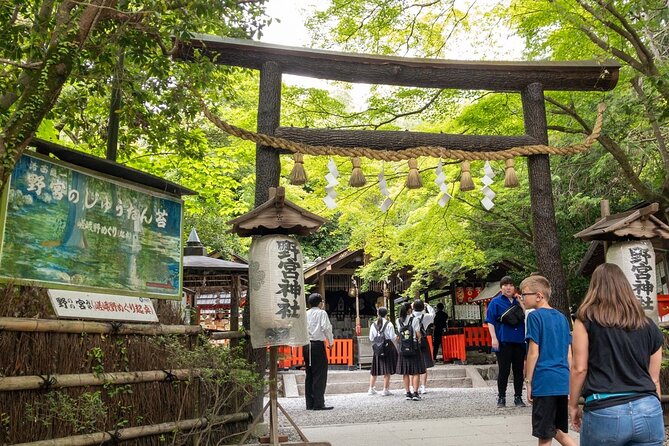
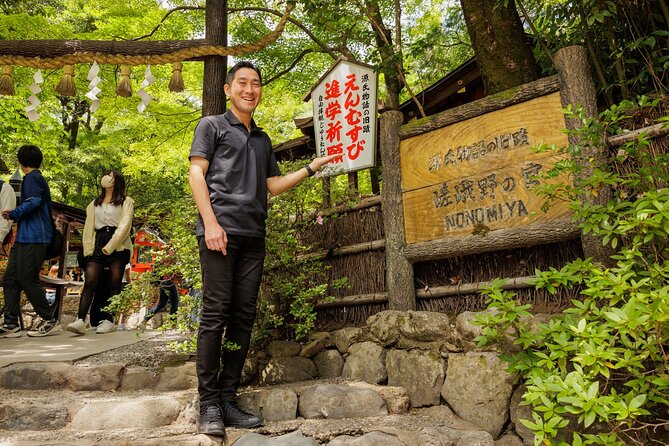
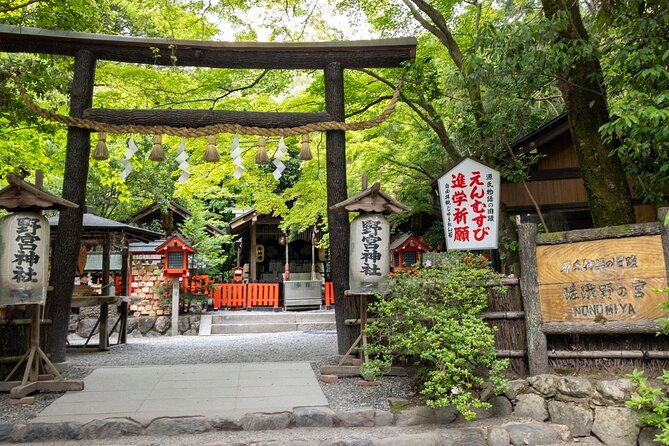
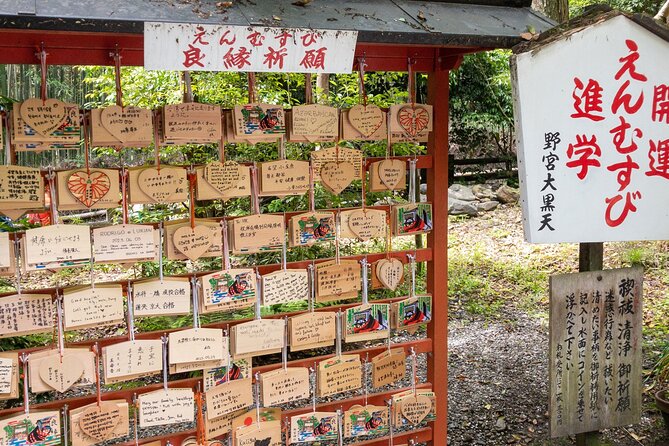
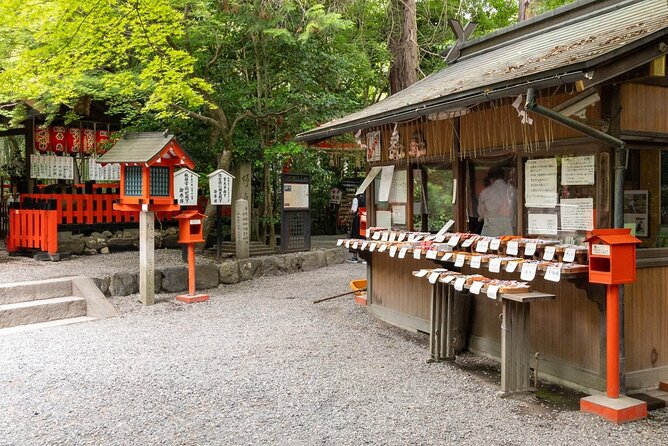
The first stop is Nonomiya Shrine, where you see a black wooden torii gate. The tour points out that only two shrines in Japan have black torii gates, making this an unusual detail to notice before you even reach the main buildings.
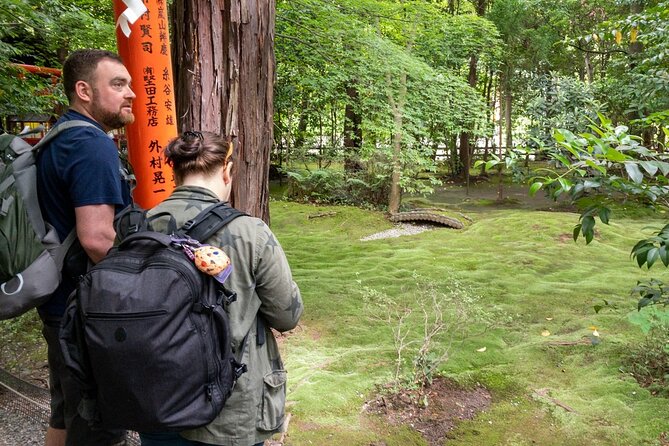
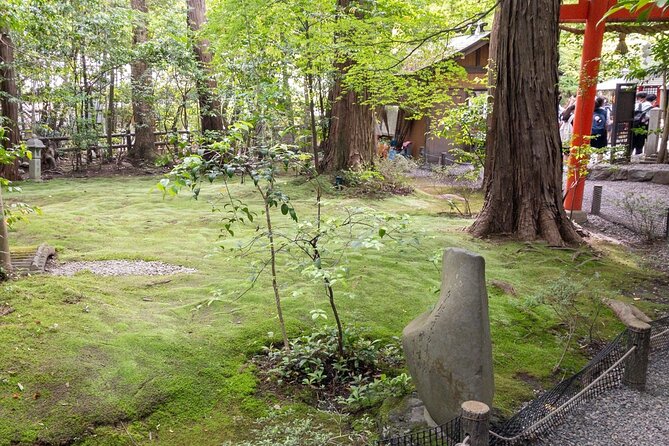
You also spend time in the shrine’s moss garden. It is a small setting, but the moss gives the visit a softer, quieter feel than the broad public spaces around central Arashiyama. Yusuke explains the proper way to approach and pray, along with the basic difference between a shrine and a temple.
That instruction is practical, especially if you are unsure about Japanese customs. Instead of copying the nearest person or rushing through the motions, you learn what you are doing and why. This is one of the tour’s most useful touches because the lesson applies throughout your time in Japan.
Nonomiya also helps set the tone. You begin with a place that has religious meaning and a distinct visual character, not just a scenic photo stop. Allow about 30 minutes, with no admission fee.
The bamboo forest, seen at a sensible pace
The bamboo forest receives only about 15 minutes on this tour. That may sound brief, but it reflects the walk’s main purpose. You see the tall bamboo, listen to the sound of the stalks, and have time for photos, but you do not spend the entire morning waiting for a clear path.
Yusuke helps take memorable pictures in the forest. This is useful because the narrow paths and steady flow of people can make photography awkward. The tour does not promise an empty bamboo grove, and you should not expect total solitude. It does give you a planned visit without letting the famous attraction take over the day.
I like this balance. If the bamboo forest is your only reason for coming to Arashiyama, you may want more time there on your own. If you have already seen it, or if you want to place it within a wider visit, 15 minutes is enough to experience its sound, height, and atmosphere before moving on.
Seiryoji Temple and a 1,200-year story
Seiryoji is the first major temple visit and receives about 55 minutes. The original temple was established about 1,200 years ago, while the present buildings date from roughly 300 years ago. That contrast gives you a useful sense of how Japanese religious sites can preserve old traditions even when the visible structures have been rebuilt.
A major highlight is the Buddhist statue of Shaka Nyorai, identified as a Japanese national treasure. The visit also includes time inside the temple, where you must remove your shoes. Wear socks and footwear that you can take off without fuss, especially since another shoe-removal visit follows later.
Admission is not included. The stated fee is ¥500 per person. That extra cost is reasonable if you value temple interiors and guided explanation, but it is worth adding to your budget before booking. The tour is not simply an outside walk past gates and roofs. You pay for access to two temple settings and the chance to understand what you are seeing.
The route can feel tiring here if the day is hot. One person who took the walk at age 68 found the distance demanding in warm weather, despite enjoying the historical and literary material. I would take that as useful planning advice rather than a warning for everyone: bring water, wear comfortable shoes, and do not schedule a rushed afternoon immediately afterward.
More Walking Tours in Kyoto
- Kyoto: Gion Magical Night Walking Tour with Geisha Trivia
★ 4.9 · 2,393 reviews - Kyoto: Gion Geisha District Walking Tour – Stories of Geisha
★ 4.7 · 2,187 reviews - Night Walk in Gion: Kyoto’s Geisha District
★ 4.5 · 2,003 reviews - Kyoto Gion Geisha District Walking Tour – The Stories of Geisha
★ 5.0 · 1,441 reviews
Daikakuji, the former Saga imperial palace
Daikakuji is the tour’s strongest stop for visitors who want a quieter historic setting. The temple began as the former imperial palace known as Saga Gosho, built about 1,200 years ago. Its role as an imperial residence gives the site a different character from a standard temple visit.
You have about 50 minutes here. The focus is on the traditional palace buildings and distinctive architectural details, with far fewer crowds than you encounter around the central bamboo route. You remove your shoes to enter, so the same practical advice applies: comfortable footwear and clean socks help.
Daikakuji rewards patience. The value is not just in seeing an old building, but in recognizing how Kyoto’s religious and imperial worlds overlap. The tour gives you a guide who can explain that connection instead of leaving you to read a few signs on your own.
The stated admission cost for Daikakuji and Osawaike together is ¥800 per person. Since the pond is also listed separately at ¥300, check the exact ticket arrangement when planning your cash. In any case, these fees are not part of the $89 tour price.
Osawaike Pond and the quiet end of the route
Osawaike is described as Japan’s oldest artificial pond. It is also the final stop, with about 20 minutes set aside for views, seasonal scenery, and a quieter bamboo area.
The pond changes the mood of the tour. After the tighter paths near the famous forest and the formal interiors of the temples, you get open water and a calmer place to pause. The surrounding scenery is meant to be enjoyed across the seasons, so the appeal is not limited to one particular month.
There are not many restaurants around the ending point. Bring a snack if you need food soon after the tour. Japanese snacks are also available as an optional part of the experience for about ¥500, but you should not count on a full meal at Daikakuji or Osawaike.
The walk officially ends at Daikakuji Temple. If you would rather return to the starting point near Randen Arashiyama Station, Yusuke offers a free walking return. Ask about this at the beginning if your transportation plans depend on finishing where you started.
The Tale of Genji option
The literary option follows the same route and visits the same locations. You are not choosing a different set of sights. You are choosing a fuller layer of storytelling.
Most of the stops, apart from the bamboo forest, appear in The Tale of Genji. If you have read the novel, this can give the walk a clear purpose. One person who had read the book several times joined specifically to follow its fictional footsteps and found the historical setting especially meaningful.
You do not need to be a literature specialist to choose this option. Still, it will suit you best if you enjoy stories, court culture, and the link between places and written works. If you mainly want temple customs, architecture, and scenery, the standard version may be enough.
The literary option is a good example of how the tour can change depending on your interests without changing its route. The same moss, temple buildings, and pond gain another meaning when connected to a famous work of Japanese literature.
What the $89 price includes
The cost is $89 per person. That is not a low-cost stroll, but the value becomes clearer when you consider the small group and the time involved. You receive Yusuke’s guiding, photo help, and an original booklet of about 15 pages. The guide has worked with more than 3,000 people, yet the group limit remains six.
You also visit two paid temple sites and Osawaike rather than stopping at free public paths. The tradeoff is that admission remains separate:
- Seiryoji: ¥500 per person
- Daikakuji and Osawaike: ¥800 per person as stated
- Optional Japanese snacks: about ¥500
That means you should add ¥1,300 per person for the listed temple and pond admissions, plus any snack purchase. Insurance is not included, and gratuities are left to your choice.
I would call the price fair for a visitor who wants interpretation and a controlled route through several sites. It is less compelling if you only want to walk through the bamboo forest, since you can visit that area without a paid tour. The real value comes from the connections between the stops, the small group, and Yusuke’s personal guidance.
Timing, walking, and practical comfort
The meeting point is Randen-yaJapan inside the Randen Arashiyama station area. The tour is near public transportation, which makes the starting point convenient. It ends at Daikakuji unless you take the free walking return.
The experience lasts about four hours, including walking and sightseeing. The stated walking distance is about 3 kilometers, with 55 minutes of walking time. That is manageable for most people, but it is not a short stroll. Warm weather can make the route feel harder, and the path includes enough outdoor time that you should dress for the day.
You need to remove your shoes at both Seiryoji and Daikakuji. Sandals may be less comfortable than shoes with easy fastenings, and socks are a good idea.
The tour requires good weather. If poor weather forces cancellation, you are offered another date or a full refund. You can cancel for a full refund up to 24 hours before the start time. Changes or cancellations inside that window are not accepted and are not refunded.
Who should book this experience
I would recommend this walk to you if you have already seen the main Kyoto sights and want a slower, more local-feeling side of Arashiyama. It also suits first-time visitors who prefer context over speed and want someone to explain shrine etiquette, Buddhist sites, imperial connections, and literary references.
The Tale of Genji option is especially appealing if you have read the novel or enjoy seeing literature tied to real places. The regular option is better if your priorities are temples, architecture, scenery, and practical cultural explanation.
You should think twice if you dislike extended walking, have limited stamina in warm weather, or need a quick tour that ends near the starting station. The route is not designed as a short bamboo-forest visit, and the finish near Daikakuji is some distance from the opening point.
Should you book the Arashiyama Hidden Gems walk?
Book it if you want Arashiyama to feel like more than a famous grove and a crowded photo stop. Yusuke’s route gives you Nonomiya Shrine, Seiryoji, Daikakuji, and Osawaike, with enough time to understand why each place matters.
Skip it if you want to set your own pace, spend a long time in the bamboo forest, or avoid extra admission fees. For everyone else, the combination of a six-person limit, thoughtful storytelling, photo help, and a quieter finish makes the $89 price defensible. Bring water, budget for about ¥1,300 in entry fees, and leave room in your schedule for the walk to run close to four hours.
FAQ
How long does the Arashiyama walking tour take?
The tour takes about three to four hours. The stated walking time is about 55 minutes, included within the total experience.
How far do you walk?
You walk about 3 kilometers while enjoying the local scenery and visiting the listed sites.
What is the maximum group size?
The group has a maximum of six travelers.
Who leads the tour?
Yusuke Tanaka designed and guides the experience himself. He has guided more than 3,000 guests.
Does the tour include the bamboo forest?
Yes. The route includes Arashiyama Bamboo Forest, with about 15 minutes for scenery and photos.
Are temple admission fees included?
No. Seiryoji costs ¥500 per person. Daikakuji and Osawaike are listed together at ¥800 per person.
Do I need to remove my shoes?
Yes. You must remove your shoes when entering Seiryoji Temple and Daikakuji Temple.
Where does the tour end?
The tour ends at Daikakuji Temple. Yusuke offers a free walking return to the starting point if you prefer.
Is the Tale of Genji option a different route?
No. Both options visit the same locations. The Tale of Genji option adds literary and historical storytelling.
What happens if the weather is poor?
The experience requires good weather. If it is canceled because of poor weather, you can receive another date or a full refund.
Just added around Kyoto
- Sekka Cotton Furoshiki Class★ 5.0 · 19 reviews
- Kyoto Sword Experience – includes Museum Ticket/Ninja Experience★ 4.5 · 149 reviews
- Scenic Green Tea Fields of Hidden Kyoto & Local Tea Exp (Private)★ 5.0 · 32 reviews
- Secret Eastern Kyoto Biking Adventure★ 5.0 · 44 reviews
- Private Sake Tasting in Central Kyoto with Sake Sommelier★ 5.0 · 32 reviews
- Samurai School in Kyoto: Samurai for a Day★ 5.0 · 202 reviews
- Samurai Performance and Casual Experience: Kyoto Ticket★ 4.5 · 115 reviews
- SHIRAKAWA Japanese Culture Experiences with private English staff★ 5.0 · 16 reviews
Hidden Gems Tours, compared.

Kyoto Geisha Walking Tour: Gion District & Hidden Gems
Our verdict →
Small Group, Big Flavors & Hidden Local Secrets Tour
Our verdict →Browse the lists this tour appears in