
Reviewed · TEMPLES & SHRINES
Miyajima: Cultural Experience in Zen Temple
Miyajima’s busiest sights can feel crowded, so this visit to Tokujuji Temple offers a welcome change of pace. You choose a kimono, learn a traditional craft, and spend time in a peaceful garden rather than simply ticking off another shrine. The kimono dressing and the patient instruction are the two strongest parts for me.
I also like that your finished work comes home with you. Calligraphy gives you a personal souvenir, while amulet making lets you choose the fabric, cord, and wish. The main consideration is access: you must remove your shoes, sit or move through temple spaces, and the activity is not recommended for people with limited mobility.
Key points at a glance
- Choose your cultural focus: Book a session featuring tea, calligraphy, amulet making, or a combination of activities.
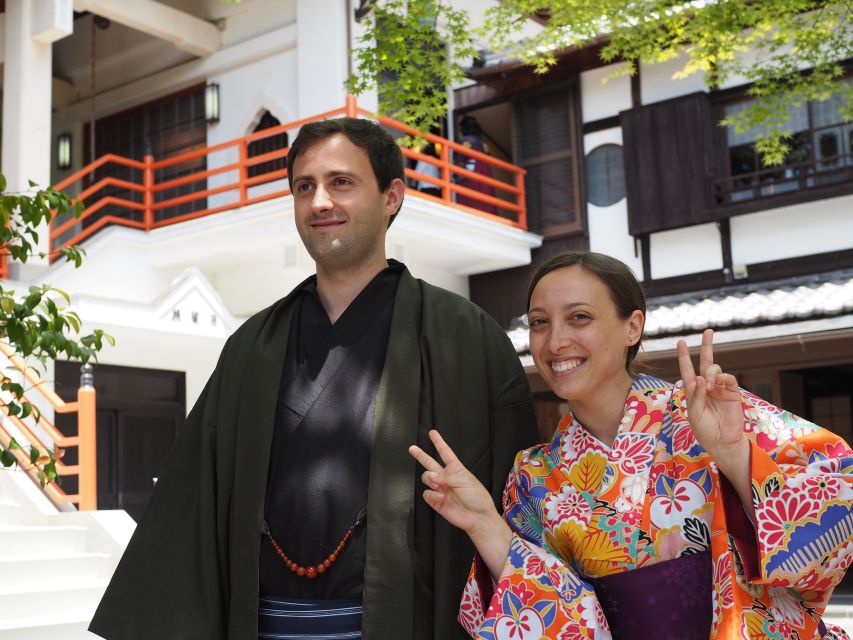
- Wear a real kimono: Staff help you select the kimono, obi, and other pieces, then take photographs in the garden.
- Learn the full tea ritual: The Ryurei-style ceremony uses a table and chairs, with matcha, two sweets, and instruction on preparing and drinking the tea.
- Make a useful souvenir: Practice Kanji and your Japanese name before creating a finished calligraphy piece to carry home.
- Create a personal amulet: Select from more than 300 handmade kimono-fabric bags, then add a Kumihimo cord and written wish.
- Plan for a quiet two hours: Sessions last one to two hours, and English or Japanese instruction is available in a small group setting.
A quieter side of Miyajima at Tokujuji Temple
This experience takes place at Tokujuji Temple, away from the island’s most crowded approach to the famous torii gate. That change matters. You still get a strong sense of place, but the focus shifts from taking a quick picture to learning why small actions in Japanese culture are done with care.
The temple setting does much of the work. You enter, remove your shoes, and settle into a space where the pace is slower. Staff welcome you and help with the clothing before the lesson begins. If you have just arrived from the ferry area, this can be a pleasant pause in your Miyajima day.
The atmosphere is traditional without requiring you to know anything in advance. English instruction is available, and Yoko is specifically noted as speaking fluent English. Other sessions may be led in English or Japanese, so check the option you book if language support is important to you.
More Temple & Shrine Tours in Hiroshima
- Hiroshima and Miyajima Day Trip with Itsukushima Shrine & Ferry
★ 5.0 · 378 reviews - Day Trip to Hiroshima & Miyajima with Itsukushima Shrine
★ 4.6 · 124 reviews - Hiroshima & Miyajima 6.5h Guided Tour – Dome, Park & Shrine
★ 4.9 · 83 reviews
Choosing and wearing a kimono
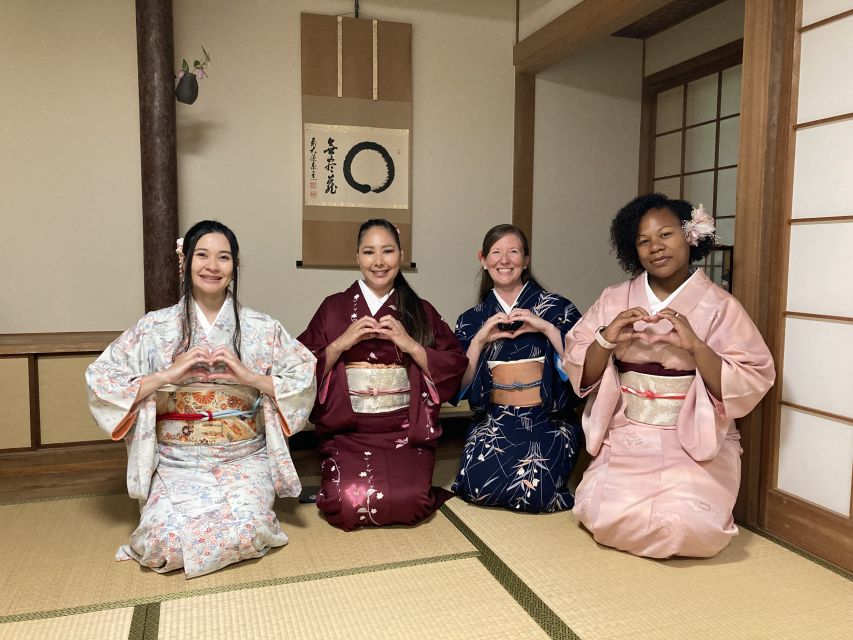
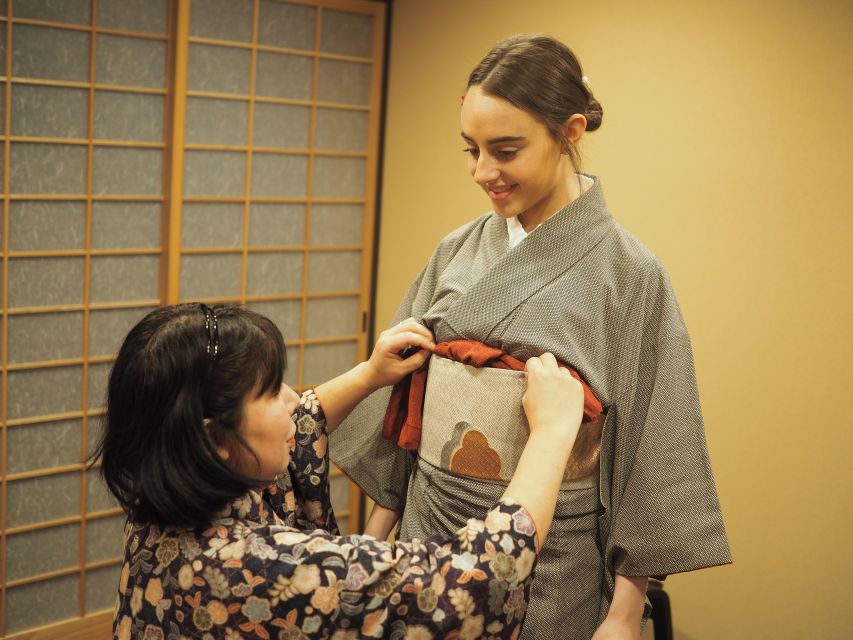
The kimono portion is not just a quick costume change. You select your own garment from the available collection, then staff help coordinate the obi and other pieces. The dressing process is part of the lesson because traditional clothing involves more steps, layers, and careful tying than most visitors expect.
I like this part because it gives you time to notice the details. Staff are patient while helping you choose colors and patterns, and the obi is tied properly rather than simply added as a prop. Several visitors found the dressing itself as memorable as the tea or calligraphy, especially because the staff made them feel comfortable throughout.
The clothing is also practical to consider. A kimono can restrict your stride, and traditional footwear or temple flooring may not suit everyone. You will need to remove your shoes before entering, so wear clean socks if that matters to you. The experience is not suitable for children under six, and people with mobility impairments may find the movement and seating arrangements difficult.
Once dressed, you have time for photographs in the Japanese garden. Staff take pictures for you, offer suggestions for poses, and send the images by email or AirDrop on site. That is a real benefit: you do not have to rely only on rushed self-timer shots or ask another visitor to take a picture.
One useful caution concerns lighting. Some garden spots may put your face in shadow depending on the sun, so ask the staff to check the light before settling into a pose. You can also take your own pictures, but the staff photographs let you enjoy the moment instead of managing your phone.
The Ryurei tea ceremony, with chairs instead of floor seating
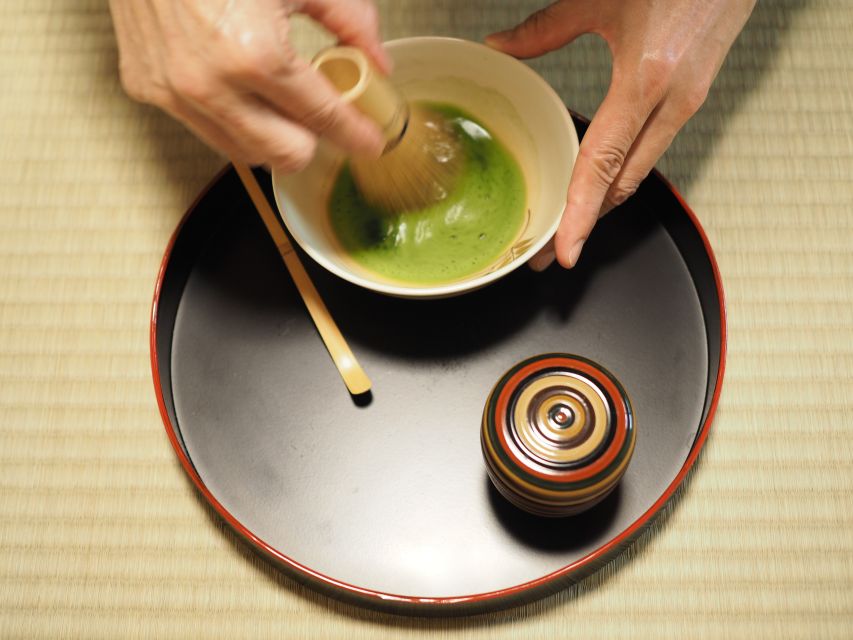
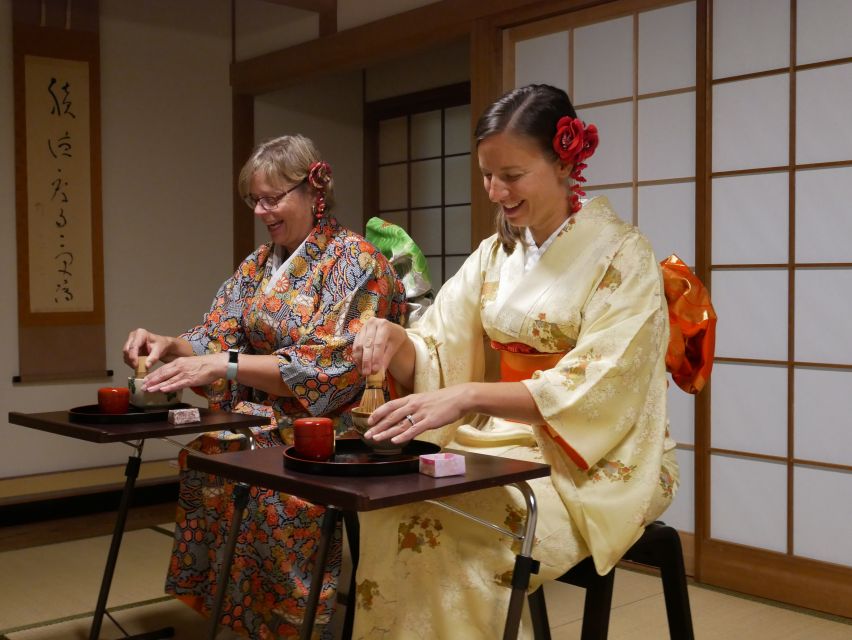
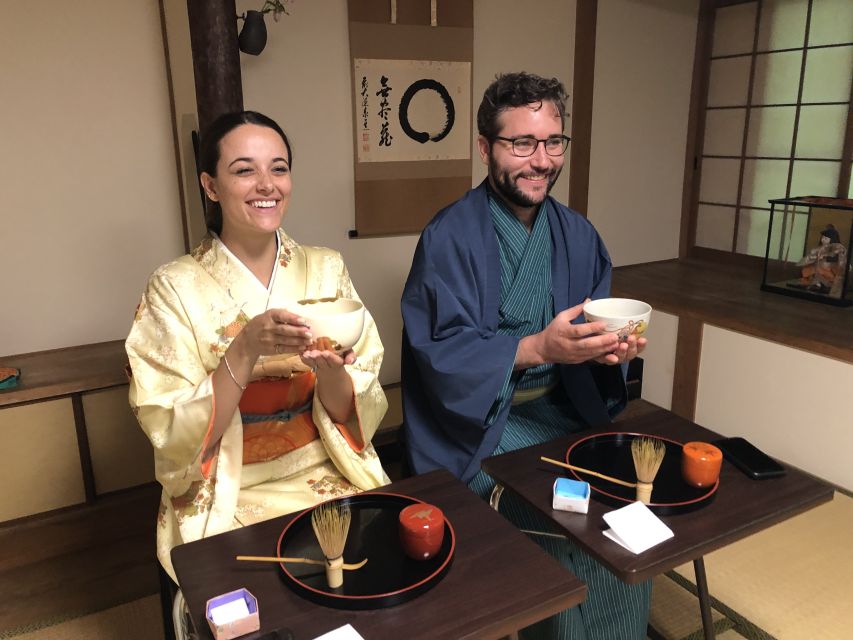
The tea ceremony follows the Ryurei style, which uses a table and chairs. That makes it more approachable than a ceremony requiring you to sit on the floor, though it is still not a good match for everyone with mobility concerns.
The ceremony has a set order. It begins with greetings, followed by the purification of the tools, preparation of the tea, cleaning of the tools, and closing. The point is not simply to drink matcha. You see how each movement has a place, and the instructor explains how to receive, turn, and drink the tea correctly.
You receive two bowls of matcha and two types of sweets. The sweets balance the bitter tea, and having two servings gives you a chance to watch the process first and then try some of it yourself. The session is structured, but the tone is relaxed enough for questions.
I find this option especially good for anyone who wants cultural context rather than a photo opportunity alone. The ceremony shows how attention is given to objects, greetings, order, and hospitality. It is also a calm activity for families, provided children are old enough to take part and remain engaged.
Do not expect a long lecture on the entire history of tea. The value is in seeing the procedure close up and trying the matcha yourself. You learn enough to understand the ceremony, then take part rather than simply watch.
Calligraphy from first strokes to finished souvenir
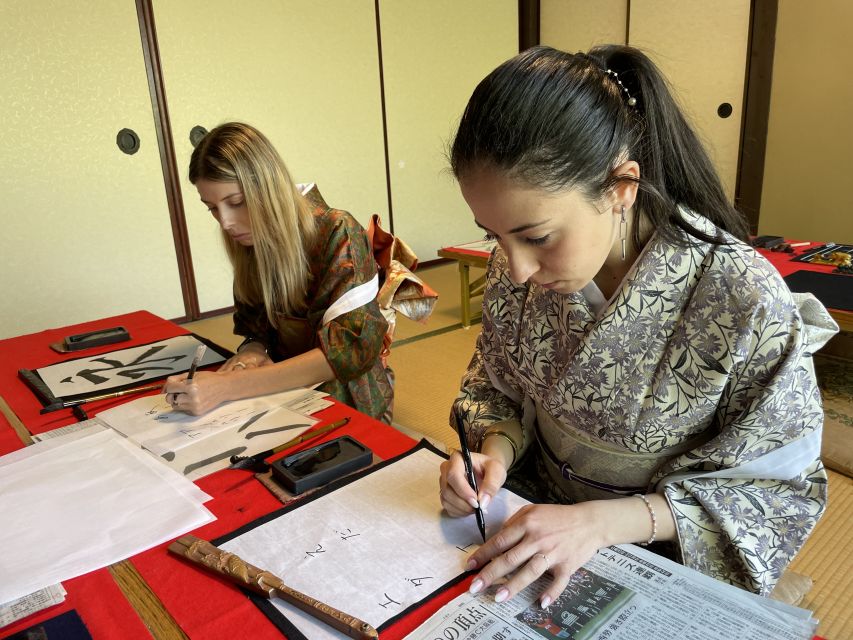
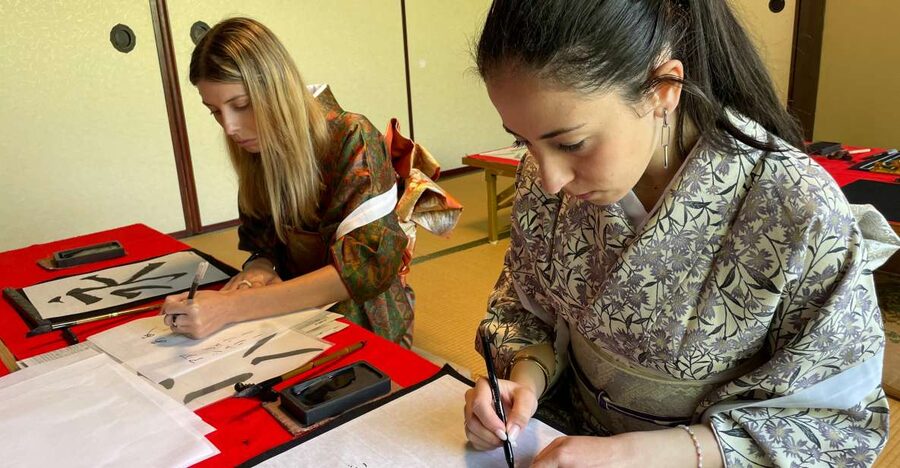
The calligraphy lesson is one of the most rewarding choices because it gives you something you made yourself. The instructor first explains how to draw the lines, then guides you through practice on draft paper.
You can work with one or more Kanji characters, the Chinese characters used in Japanese writing. The lesson also includes writing your name in Hiragana or Katakana, the Japanese phonetic alphabets. While you practice, the instructor prepares a sample of your name so you have a model to follow.
This step-by-step approach suits beginners. You do not need to recognize the characters before arriving. You practice the shape, pressure, and order of the strokes, then sign your finished work in Japanese. The instructor helps you correct the forms rather than leaving you to guess.
Families should find this activity manageable for older children and teenagers. One particularly useful feature is the encouragement given during practice. You get time to repeat a character, which makes the final piece feel less like a worksheet and more like a personal souvenir.
The artwork is wrapped so you can carry it home safely. That matters if you are traveling for several more days. A photograph disappears into your phone quickly, but a piece of calligraphy can remind you of the sounds, shapes, and concentration involved in the lesson.
If you want the most hands-on part of the experience, I would choose calligraphy. It is quieter than the kimono dressing and more active than watching the tea ceremony. It also works well if you want a souvenir that has a clear connection to your own effort.
Same trip, a completely different kind of day:
- Peaceful Hiroshima & Miyajima UNESCO 1 Day Bus Tour
★ 5.0 · 5,309 reviews - Hiroshima: Hiroshima and Miyajima UNESCO Sites 1-Day Tour
★ 4.9 · 2,330 reviews - Hiroshima / Miyajima Full-day Private Tour with Government Licensed Guide
★ 5.0 · 1,298 reviews - Osaka/Kyoto: Hiroshima Miyajima Bus Tour & Shinkansen Ticket
★ 4.7 · 919 reviews
Making an amulet from kimono fabric
Amulet making offers a different kind of souvenir. You choose from more than 300 amulet bags, all made by hand from kimono fabric. The large selection means you can spend time looking for a color or pattern that feels personal.
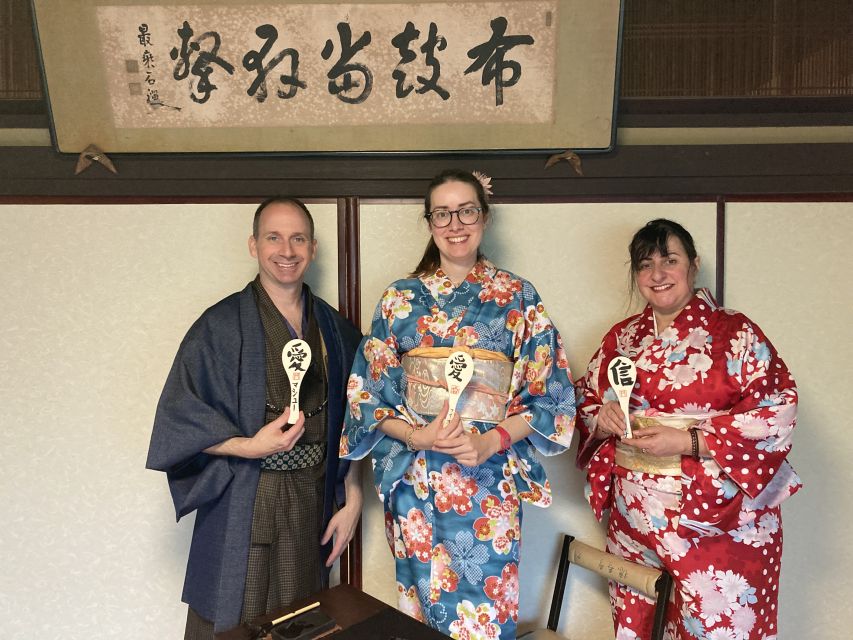
Next, you choose a Kumihimo cord. Kumihimo is a traditional Japanese cord made and tied in a special way. You select a wish, then write or stamp it onto a miniature rice scoop, which carries that wish. The parts are assembled into one amulet.
The activity takes place in the temple’s main hall. When the amulet is complete, you greet Kinseki Jizou, the temple’s Buddha, to report that you have come to make a wish. That final step gives the craft a connection to the temple rather than making it feel like a generic souvenir workshop.
I would choose amulet making if you prefer color, design, and symbolism to brushwork. It is also a nice option for someone who has already attended a tea ceremony elsewhere or wants an activity that feels less formal.
The amulet is personal, but it is not presented as a guaranteed solution to a problem. Think of it as a meaningful reminder of the wish you selected and the time you spent making it.
How the activities fit into one to two hours
The exact program depends on the option you reserve. Some combinations include kimono dressing, tea, and calligraphy, while others include amulet making. Because the meeting point may vary by option, read the booking details carefully before heading to the temple.
A one-hour session can work well if you have a tight Miyajima schedule. For a fuller visit with kimono photographs, tea, calligraphy, and amulet making, allow closer to two hours. Some sessions may run beyond the stated time when the pace is unhurried, so avoid scheduling a ferry, meal, or train connection immediately afterward.
The small-group format is another advantage. You get more direct help with the kimono, brushwork, and tea steps than you would in a large class. It also means the experience can feel more personal, though a larger family group may take longer to dress and photograph.
If you are visiting Miyajima as a day trip from Hiroshima, schedule this before or after the island’s main sights rather than trying to squeeze it between two fixed departures. You will enjoy it more when you are not watching the clock.
What the $90 price includes
At $90 per person, this is more expensive than simply visiting a temple or attending a short tea tasting. The price makes more sense if you choose several elements and value the staff time involved in dressing, instruction, photographs, and preparation.
The included items are the calligraphy tools, two types of sweets, and two bowls of matcha. The staff also take and send photographs, which saves you from arranging your own photo session. Your calligraphy work or handmade amulet gives you a physical keepsake as well.
I would not book this only for a cup of matcha. The tea is one part of a broader cultural session. The better value comes from the combination of traditional dress, guided practice, garden photographs, and a finished item to take home.
Families and couples may find the price easier to justify because the session creates shared photographs and a common activity. Solo visitors can also enjoy it, especially if they want staff to take well-composed pictures while they focus on the experience.
The biggest value question is how much time you have. If you have only a brief stop on Miyajima, a shorter option may be sensible. If you can spare two calm hours, the price buys more than a standard sightseeing stop.
Who should book this Miyajima cultural experience
I would recommend it most strongly to you if you want to take part rather than only look. The calligraphy and amulet options require your hands and attention, while the tea ceremony gives you a clear introduction to formal Japanese hospitality.
It suits first-time visitors to Japan because the instructors explain the basic actions. You do not need previous knowledge of Kanji, tea preparation, or kimono dressing. It also works for families with children six and older, couples, and small groups of friends.
It is a particularly good choice if you want photographs in traditional clothing but prefer a temple setting to a commercial photo studio. The staff help with the clothing, pose suggestions, and garden pictures, so you do not have to organize every detail yourself.
I would think twice if you dislike formal procedures, sweets, matcha, or wearing layered clothing. The tea ceremony has a set order, and the calligraphy lesson rewards patience more than speed. People with limited mobility should also choose carefully because of the shoes-off temple setting and the physical demands of dressing and moving in a kimono.
The experience is available in English or Japanese, with small groups offered. Since the meeting point can vary by selected activity, confirm the exact option and location before you go.
My verdict on Tokujuji Temple
I would book this if you want one well-organized cultural session that combines learning with photographs and a keepsake. The strongest reasons are the patient kimono dressing, the quiet garden, and the chance to make something personal rather than buying another souvenir.
Choose tea and calligraphy if you want a classic introduction to Japanese customs. Choose amulet making if you prefer a craft with color and personal meaning. If your schedule allows, combining the options gives you the fullest visit, but even one focused activity can make good use of two hours on Miyajima.
Skip it only if your day is too tightly planned, you have mobility concerns, or you want a fast photo stop with no formal instruction. For everyone else, this is a thoughtful way to experience the island beyond the main sights.
FAQ
How long does the Miyajima cultural experience last?
The experience lasts one to two hours. Check the selected option for available starting times and allow extra time if you are combining several activities.
What activities can I choose?
Options may include a tea ceremony, Japanese calligraphy, amulet making, and wearing a kimono. The exact meeting point and combination depend on the option booked.
Is the tea ceremony held on the floor?
No. The ceremony uses the Ryurei style, with a table and chairs. You receive two bowls of matcha and two types of sweets.
Can I take home something I make?
Yes. In the calligraphy lesson, you practice Kanji and your name in Japanese before signing and wrapping your finished work. Amulet making also produces an original amulet for you.
Are photographs included?
Staff take photographs in the Japanese garden and send the images by email or AirDrop on site. You may also take your own pictures.
Can young children or people with limited mobility participate?
Children under six cannot participate in the activities. The experience is not recommended for people with mobility impairments, and you must remove your shoes to enter.
Just added around Hiroshima
- Full Day Hiroshima and Miyajima Tour by Bullet Train from Kyoto★ 4.5 · 120 reviews
- Hiroshima Saijo Sake Tasting Tour with visit to 7 Breweries★ 5.0 · 104 reviews
- The Peace Memorial to Miyajima : Icons of Peace and Beauty★ 4.5 · 31 reviews
- Shore Excursion from Hiroshima Port : Private Tour in Hiroshima★ 5.0 · 17 reviews
- Okunoshima Rabbit Island Cycling Tour with Local Guide★ 4.5 · 17 reviews
- Hiroshima & Miyajima All-Inclusive Tour w/Licensed guide Pancho★ 5.0 · 54 reviews
- Private Full Day Hiroshima Tour★ 4.5 · 29 reviews
- Hiroshima Country Cycling: Explore Rural Life 1 HR from City★ 5.0 · 22 reviews
Temples & Shrines, compared.

Tea Ceremony in a Traditional Tea House in Kiyomizu
Our verdict →

Meiji Shrine, Asakusa, Skytree Bus Tour and Cruise
Our verdict →
Fushimi Inari Hidden Hiking Tour (Private Option Available)
Our verdict →
Osaka/Kyoto:Kinkakuji,Arashiyama,FushimiInariShrine,NaraPark
Our verdict →
Nikko: Kegon Falls, Lake Chuzenji & Toshogu Temple
Our verdict →
Kamakura & Enoshima Day Trip including Temple Tickets
Our verdict →Browse the lists this tour appears in