
Reviewed · TEMPLES & SHRINES
Hiroshima & Miyajima 6.5h Guided Tour – Dome, Park & Shrine
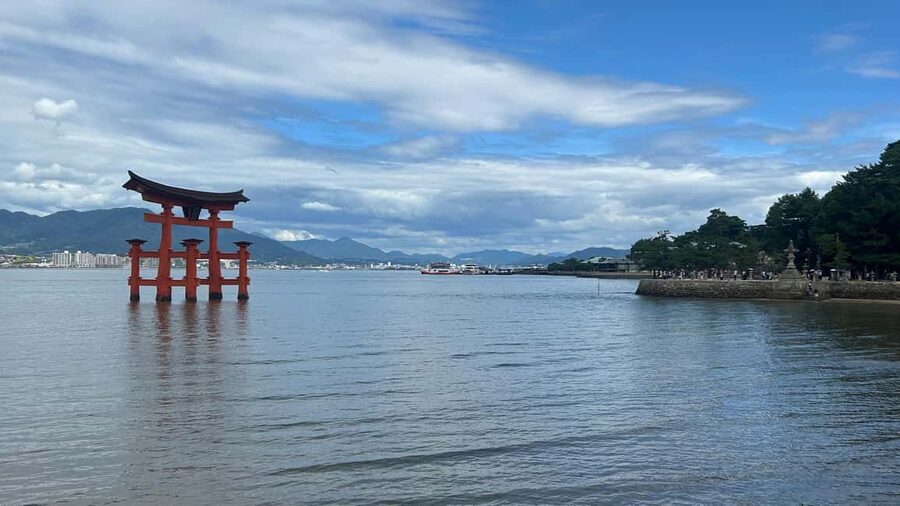
Miyajima’s red torii gate and Hiroshima’s Peace Memorial sites make an unusually powerful pairing. One part of the day brings sea views, shrine architecture, deer-filled streets, oysters, and momiji manju. The other asks you to slow down and face the events of August 6, 1945. Itsukushima Shrine and the Atomic Bomb Dome are both UNESCO World Heritage Sites, but they offer very different kinds of meaning.
I like that the tour uses public transportation instead of hiding you behind a coach window. I also like the small group, limited to 10 people, which gives you a better chance to ask questions and stay connected to your guide. The main drawback is time: 80 minutes at the shrine, 45 minutes on Omotesando Street, and one hour at the museum can feel tight, especially on a crowded day.
Key points at a glance
- Two major UNESCO sites in one day: Visit Itsukushima Shrine on Miyajima, then the Atomic Bomb Dome in central Hiroshima.
- A local guide makes the difference: Guides including Shion, Bo, Rie, Hayato, and Rei have been praised for clear English, local insight, and practical help.
- Public transport is part of the experience: The route uses a 25-minute train, a 15-minute ferry, a 45-minute return train, and another ferry crossing.
- The museum is moving but time is limited: You have about one hour inside, and crowds may reduce the time available for careful viewing.
- Come ready to walk: Comfortable shoes, cash in Japanese yen, and rain protection are essential.
- Small-group value: With no more than 10 participants, the guide can answer questions and adjust slightly when conditions change.
Why this Hiroshima and Miyajima pairing works
This tour gives you two sides of Hiroshima in 6.5 hours. Miyajima offers a slower, more scenic start, with the Seto Inland Sea, a historic shrine, and a pedestrian shopping street. Hiroshima city then brings the day into a far more serious mood, with memorials and museum displays about the atomic bombing.
I like the order. Beginning on Miyajima gives you time to enjoy the island before moving into the solemn part of the tour. By the afternoon, the Atomic Bomb Dome and Peace Memorial Park have more impact because your day has already introduced you to Hiroshima as a living place, not only as a site of tragedy.
The price is $96 per person, not including train and ferry fares or meals. That is fair if you want a guide to organize the route, explain the sites, and help you manage a busy day. It is less attractive if you are comfortable navigating Japanese trains and ferries yourself and prefer to spend several hours at one attraction.
More Temple & Shrine Tours in Hiroshima
- Hiroshima and Miyajima Day Trip with Itsukushima Shrine & Ferry
★ 5.0 · 378 reviews - Miyajima: Cultural Experience in Zen Temple
★ 5.0 · 258 reviews - Day Trip to Hiroshima & Miyajima with Itsukushima Shrine
★ 4.6 · 124 reviews
Meeting at Hiroshima Station without confusion
The meeting point is at Hiroshima Station’s North Exit, also called the Shinkansen Exit, on the second floor. Do not go to the South Exit, which serves the tram and bus side of the station.
Look for the benches between the JR Green Ticket Office, called Midori no Madoguchi, and the Starbucks directly opposite it. Your guide will have a bright fluorescent green band attached to their bag. This is a useful detail in a large station, where finding the right person can otherwise take extra time.
I would arrive early enough to locate the North Exit and the benches before the tour begins. Bring Japanese yen in cash. You will need to pay separately for public transportation, food, and anything you buy on Miyajima.
The train and ferry ride to Miyajima
The first train takes about 25 minutes. Then comes a 15-minute ferry ride to Miyajima, one of the most scenic and spiritual destinations in the area.
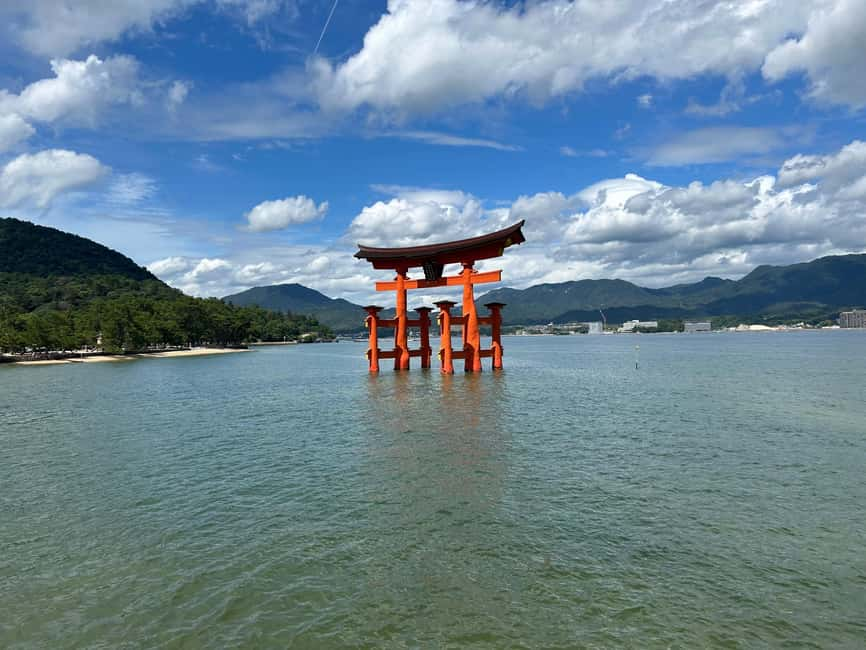
The ferry is not just a transfer. It gives you a gradual approach to the island and its famous shrine setting. Tide levels affect how the torii gate looks, so do not expect the same view in every season or at every departure time. At higher water, the gate appears to float offshore. At lower water, the shoreline may be more exposed.
Public transportation keeps the tour grounded in everyday Hiroshima. You will need to keep pace with the group, board on time, and manage the transitions between train, ferry, and walking routes. That can feel more active than a private vehicle tour, but it also helps you understand the distances involved.
Itsukushima Shrine and the floating torii
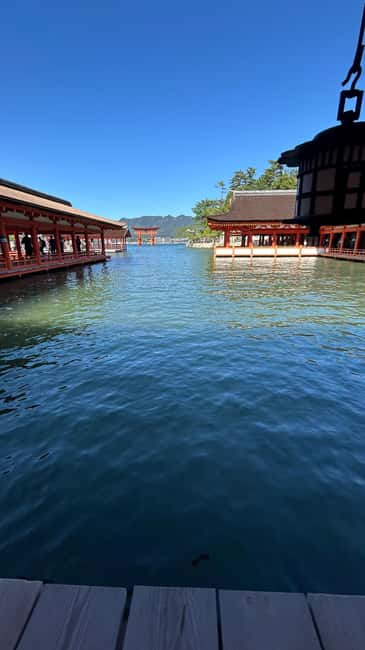
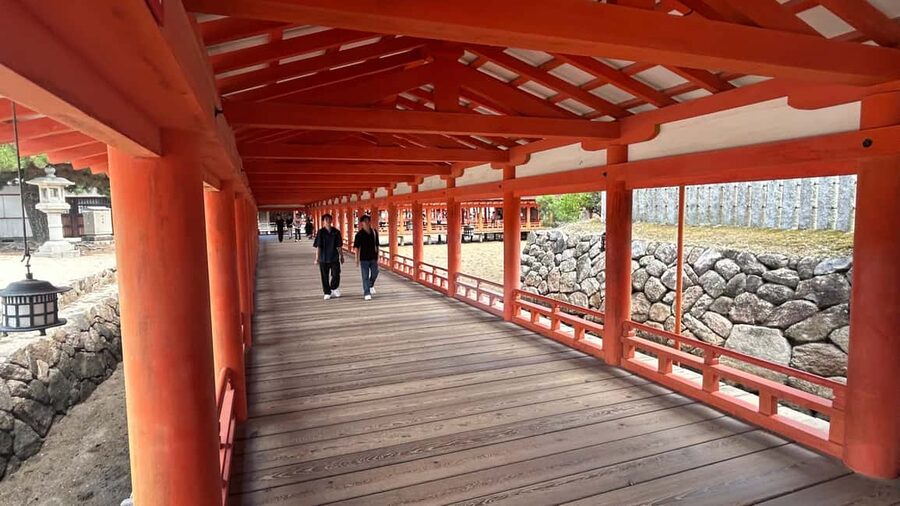
You have 80 minutes at Itsukushima Shrine for a visit, guided tour, sightseeing, and photographs. This is the first major stop, and it deserves your attention. The shrine’s red structures, water setting, and famous torii create one of Japan’s most recognizable views.
Your guide can add the cultural context that a quick photograph misses. The island has long been treated as a sacred place, and the shrine’s setting gives the visit a sense of ceremony even when the approach is crowded.
Crowds are the main concern. One recent tour day had such a long line at the temple area that the group chose not to enter and instead visited other nearby sights with the guide. This is a good example of the tour’s flexibility, but it also means you should not assume every planned entrance will be quick.
The shrine time is enough for an introduction and photographs. It is not enough for a slow architectural study, extended prayer, and a relaxed exploration of every corner. If you want to hike, visit more temples, or spend hours on Miyajima, book a separate island day.
Same trip, a completely different kind of day:
- Peaceful Hiroshima & Miyajima UNESCO 1 Day Bus Tour
★ 5.0 · 5,309 reviews - Hiroshima: Hiroshima and Miyajima UNESCO Sites 1-Day Tour
★ 4.9 · 2,330 reviews - Hiroshima / Miyajima Full-day Private Tour with Government Licensed Guide
★ 5.0 · 1,298 reviews - Osaka/Kyoto: Hiroshima Miyajima Bus Tour & Shinkansen Ticket
★ 4.7 · 919 reviews
Omotesando Street, oysters, and momiji manju
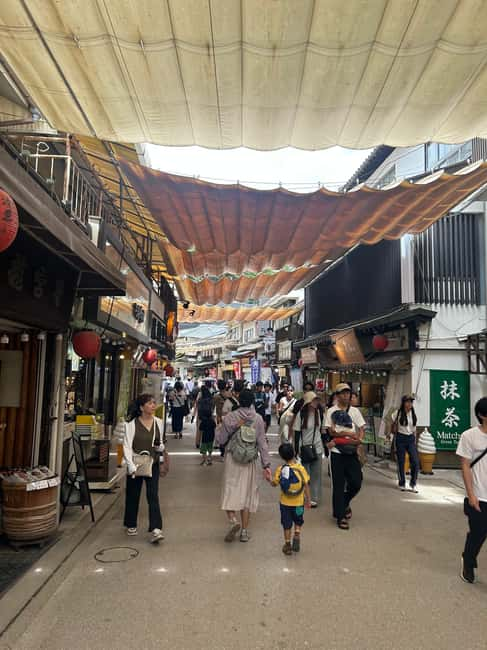
After the shrine, you get about 45 minutes on Omotesando Shopping Street. This is the island’s lively commercial center, filled with food, souvenirs, and local specialties.
Look for oysters, a regional favorite, and momiji manju, a maple-leaf-shaped cake often filled with sweet paste. The street gives you a chance to taste something local rather than treating Miyajima as a series of monuments.
Forty-five minutes passes quickly. You may have time for a snack, a few shops, and a short look around, but not a leisurely meal. If you want oysters at a proper sit-down pace, you may need to use free time carefully or return to Miyajima later during your trip.
The shopping street can also be crowded. Stay aware of the meeting time, since the group must catch the ferry and train back to Hiroshima. A small group helps here, but it does not remove the need to watch the clock.
Returning to Hiroshima for the Atomic Bomb Dome
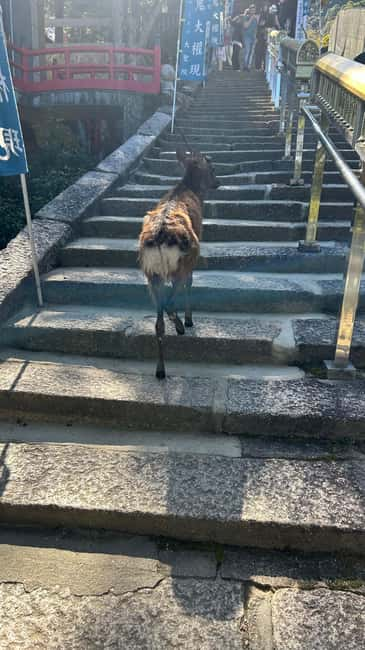
The return journey includes another 15-minute ferry and a 45-minute train ride. After the beauty and commercial energy of Miyajima, the mood changes sharply at the Atomic Bomb Dome.
You have about 30 minutes for a guided visit and photographs. The building’s damaged structure is difficult to view casually. It serves as a physical reminder of the blast and of the city’s decision to preserve a painful place rather than erase it.
A guide can help connect the building to the surrounding memorial sites. This is especially useful if you have limited time in Hiroshima and want to understand what you are seeing rather than simply take a photograph.
Do not expect a long, quiet stop here. Thirty minutes is enough for an explanation and a look around, but you may want to return on your own if the Dome makes a strong impression.
Walking through Peace Memorial Park
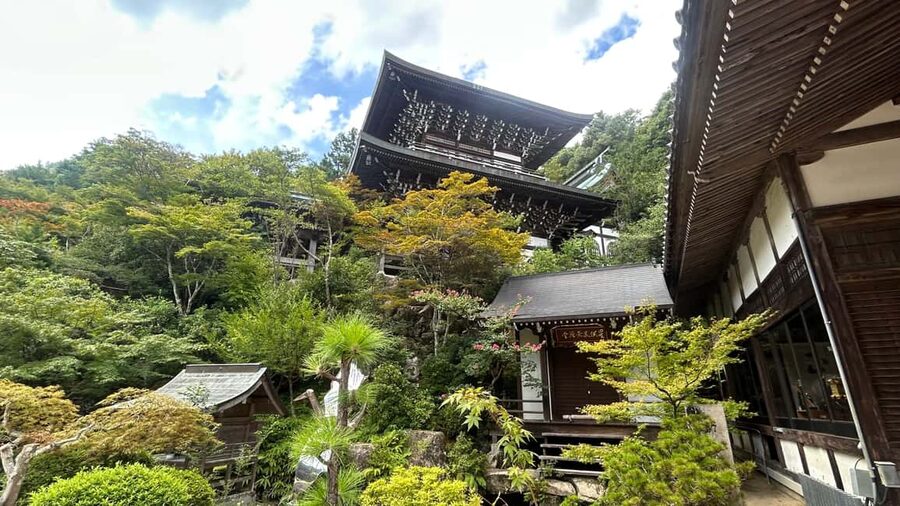
The tour then spends about 40 minutes in Peace Memorial Park. You will pause at monuments dedicated to the victims and move through the park with your guide.
This section gives shape to the human cost of the bombing. The park is not only a place for photographs. It asks you to consider the people represented by the memorials, the city that was destroyed, and the message of peace that Hiroshima carries today.
I appreciate having a guide at this point, provided the explanation is handled with care. The strongest guides make room for questions and silence instead of rushing from one monument to the next. Shion, a local Hiroshima guide, has shared family connections to people who survived the bombing and to those who died. That kind of personal connection can add weight to the visit, though each guide’s background and approach will differ.
The park involves walking outdoors. Wear shoes that can handle several hours on foot and bring rain gear if the forecast is poor. The tour runs rain or shine.
One hour inside the Peace Memorial Museum
The Peace Memorial Museum is scheduled for about one hour. Its exhibits offer detailed insight into Hiroshima before, during, and after the bombing, using personal belongings, photographs, and historical displays.
This is likely to be the most emotionally difficult part of the day. The museum is direct rather than decorative. Give yourself time to read, pause, and absorb what you are seeing.
The main limitation is the short visit. One hour introduces the museum, but many people will want longer. Crowds can make the galleries slower to move through, and you may have to choose which displays to read closely. One useful approach is to listen carefully to the guide first, then spend your remaining time with the exhibits that matter most to you.
The tour ends at the museum, not back at Hiroshima Station. Plan your onward journey from there. If you need to catch a train to Kyoto or Osaka, tell your guide early. Shion has helped a participant reach a train on time, but you should not treat that as a guarantee. Build in a sensible margin whenever possible.
The museum closes from February 16 through 21. During those dates, the tour continues with the other locations, but the museum visit is skipped.
The guides and the value of a small group
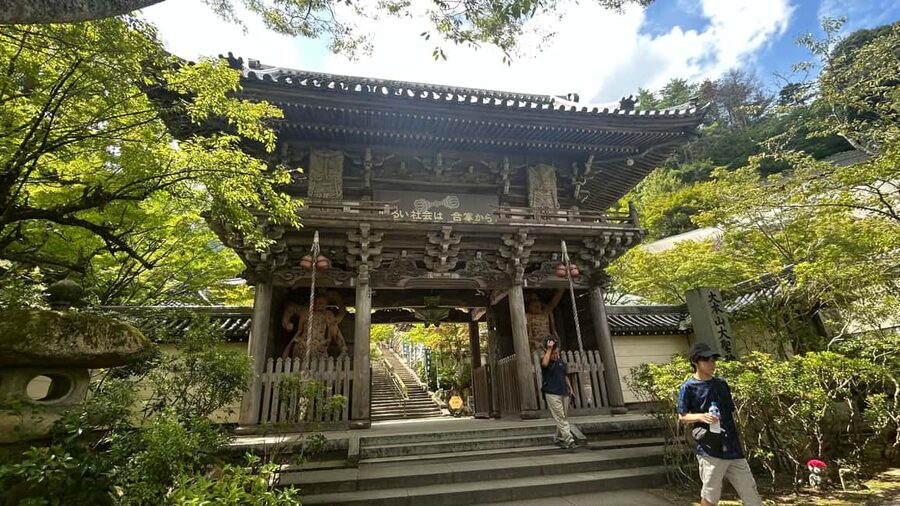
The guide can shape the day more than any single attraction. Guides named in the feedback include Shion, Bo, Rie, Rei, Hayato, Lena, Kana, Angel, and Shion. The strongest praise centers on clear English, warmth, local understanding, and the ability to answer questions without making the tour feel like a lecture.
Shion is from Hiroshima and has family connections to the bombing. Bo has been praised for fluent English, Chinese, and Japanese. Rei has also helped with practical needs, including finding a pharmacy. These details matter because a good guide does more than recite dates. You want someone who can help with trains, explain local customs, and respond when the group’s plans change.
The group is limited to 10 people. That is small enough for personal questions and easier movement through stations and crowded streets. It is not a private tour, so you will still need to follow a shared schedule.
English is the stated tour language. One booking had a guide who struggled somewhat to express himself in English, although the day remained informative and well paced. That is a fair reminder that guide quality can vary from one departure to another.
Walking, crowds, and practical limits
This is not a good choice for anyone who wants a relaxed, seated sightseeing day. You will walk through stations, ferry terminals, shrine grounds, a shopping street, a park, and a museum. The tour is not suitable for children under six, wheelchair users, people with mobility impairments, or anyone bringing an electric wheelchair.
Large bags and oversize luggage are not allowed. Leave your main luggage elsewhere and bring only what you need for the day. Comfortable walking shoes are more important than stylish ones.
Miyajima and the Peace Memorial Museum can both be crowded. The tour helps you use your time, but it cannot remove queues or create quiet around famous sites. A weekday or less busy season may feel easier, though the tour information does not promise low crowds at any departure.
Meals are not included. Use Omotesando Street for a quick local snack, but do not count on a long restaurant break. Carry cash in yen for food, fares, and purchases.
Is $96 a fair price?
At $96, the tour is priced for guidance and organization rather than transportation alone. You are paying for an English-speaking local guide, admission fees, route planning, and a small group that connects Miyajima and Hiroshima in one day.
You still pay for trains, ferries, and meals. That extra cost should be part of your budget before booking. The overall value is strongest if you are visiting Hiroshima for the first time, have only one day, and want someone to explain the memorial sites with care.
The value is weaker if you already know Hiroshima well or want long, unhurried time at the museum. In that case, independent travel may give you more control. You could spend a full morning at the museum, then visit Miyajima at your own pace.
Who should book this tour?
I would choose this tour if you want the major Hiroshima and Miyajima sights in one organized day, especially if Japanese public transportation feels intimidating. It also suits people who value context, personal stories, and practical help over total freedom.
It is a good fit for first-time visitors, solo participants, couples, and small families with children aged six and older who can walk for much of the day. The small group can make the day feel more social without the size of a big bus tour.
I would skip it if your priority is climbing Miyajima, lingering over lunch, shopping slowly, or spending several hours in the museum. The schedule is efficient, but efficiency means tradeoffs.
FAQ
Where does the tour meet?
Meet at Hiroshima Station’s North Exit, also called the Shinkansen Exit, on the second floor. Wait on the benches between the Midori no Madoguchi JR Green Ticket Office and the Starbucks opposite it.
How can I identify the guide?
The guide will have a bright fluorescent green band attached to their bag.
Is transportation included?
No. The tour uses public trains and ferries, but transportation fares are not included. Meals are also separate.
Is the Peace Memorial Museum always included?
The museum is included in the normal itinerary, but it is closed from February 16 through 21. On those dates, the museum visit is skipped and the rest of the tour continues.
How long does the tour last?
The tour lasts 390 minutes, or 6.5 hours. Starting times vary, so check availability when booking.
Is the tour suitable for wheelchair users?
No. The tour is not suitable for wheelchair users, people with mobility impairments, or electric wheelchairs. It is also not suitable for children under six.
Should you book it?
Book this tour if you want Hiroshima’s two essential experiences, Miyajima and the Peace Memorial sites, tied together by a local English-speaking guide. The route is well chosen, the group is small, and the mix of scenic island time and serious historical sites gives the day real balance.
Just set the right expectations. You will walk a lot, pay transportation costs separately, face crowds, and have limited time at the museum. If that sounds manageable, $96 is a sensible price for a focused first look at Hiroshima. If you want a slower, more personal visit, use this tour as an introduction and return to the places that deserve more time.
Just added around Hiroshima
- Full Day Hiroshima and Miyajima Tour by Bullet Train from Kyoto★ 4.5 · 120 reviews
- Hiroshima Saijo Sake Tasting Tour with visit to 7 Breweries★ 5.0 · 104 reviews
- The Peace Memorial to Miyajima : Icons of Peace and Beauty★ 4.5 · 31 reviews
- Shore Excursion from Hiroshima Port : Private Tour in Hiroshima★ 5.0 · 17 reviews
- Okunoshima Rabbit Island Cycling Tour with Local Guide★ 4.5 · 17 reviews
- Hiroshima & Miyajima All-Inclusive Tour w/Licensed guide Pancho★ 5.0 · 54 reviews
- Private Full Day Hiroshima Tour★ 4.5 · 29 reviews
- Hiroshima Country Cycling: Explore Rural Life 1 HR from City★ 5.0 · 22 reviews
Temples & Shrines, compared.

Tea Ceremony in a Traditional Tea House in Kiyomizu
Our verdict →
Meiji Shrine, Asakusa, Skytree Bus Tour and Cruise
Our verdict →
Fushimi Inari Hidden Hiking Tour (Private Option Available)
Our verdict →
Osaka/Kyoto:Kinkakuji,Arashiyama,FushimiInariShrine,NaraPark
Our verdict →
Nikko: Kegon Falls, Lake Chuzenji & Toshogu Temple
Our verdict →
Kamakura & Enoshima Day Trip including Temple Tickets
Our verdict →Browse the lists this tour appears in