
Reviewed · KYOTO TOURS
Let’s make only one original onigawara in the world!!
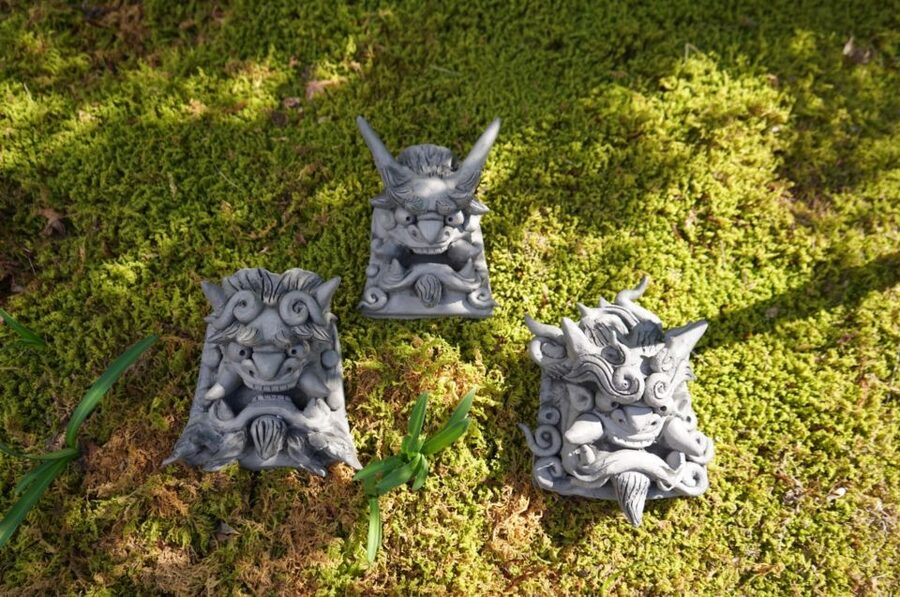
The most unusual souvenir in Kyoto may be one you make yourself: a small onigawara, the fierce demon-faced roof tile traditionally placed at the ends of Japanese roof ridges. At Kawarakoubouyouya, Yuya turns a lump of clay into a protective monster through a clear process that beginners can follow.
I like the patient, hands-on teaching and the way the class connects your craft to roughly 1,400 years of Japanese tile culture. I also like that you do not need to be an artist, and that the workshop ships the fired tile to your home once it has dried and been kiln-fired.
The main consideration is practical: shipping costs extra, and you must wait one to two months for firing and delivery. The workshop can also be tricky to find because the Google Maps position may be about 40 meters off.
Key points to know before booking
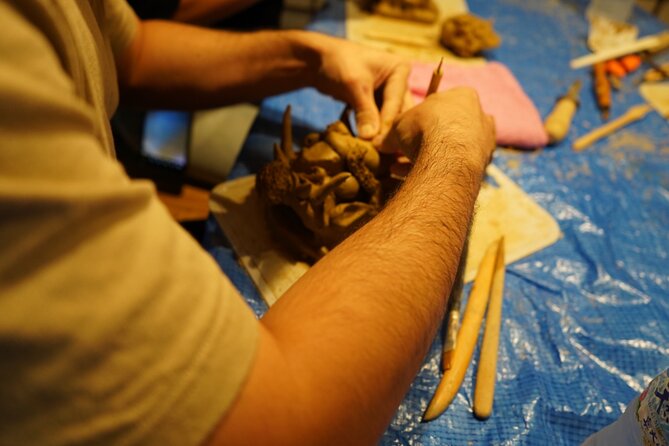
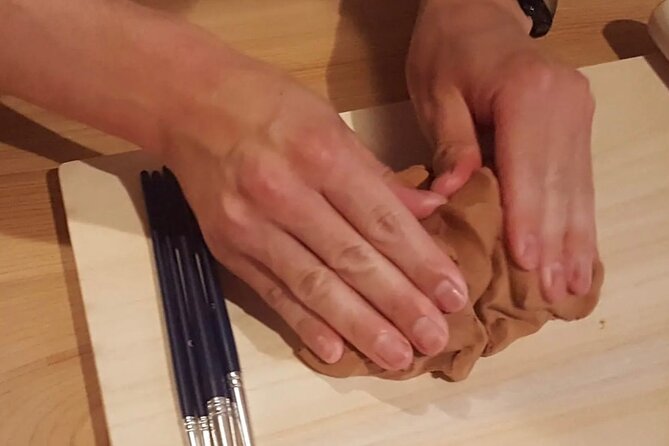
- Make a real clay onigawara: You build a small demon-faced roof tile by hand, piece by piece.
- Yuya teaches a beginner-friendly method: His developed process is designed for children, first-time makers, and people who do not consider themselves artistic.
- Small groups keep the class personal: No more than five people take part, with English and Japanese support.
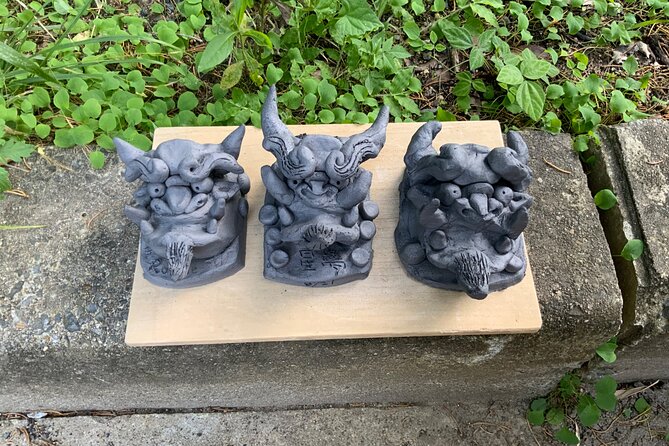
- Your tile changes after the class: The clay is fired at the workshop, then turns the traditional silver color.
- Plan for extra postage: Shipping is not included in the $90 price and is paid separately on the day.
- Allow time to find the shop: Search for Kawarakoubouyouya on Google Maps, then check your position carefully because the pin has been reported as inaccurate.
Making a protective monster from soft clay
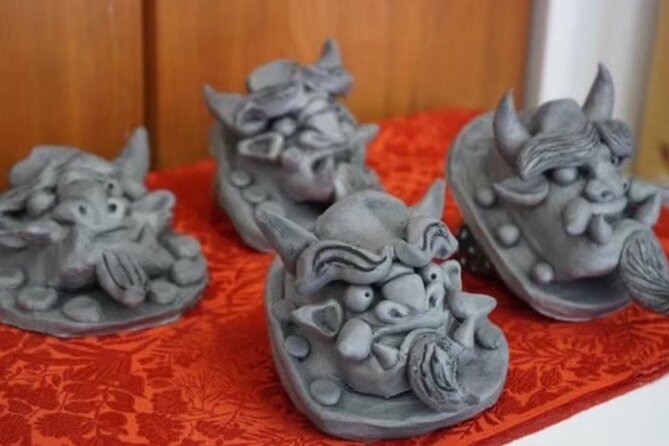
This experience is not a quick craft table where you decorate a ready-made souvenir. You begin with soil and gradually give it shape, expression, and purpose. The finished object is a small version of an onigawara, a roof ornament traditionally made with the face of an ogre or gargoyle.
The fierce face is not just decoration. Onigawara have been used on Japanese buildings to help protect roofs from evil and rainwater. Their placement at the ends of the main roof ridge gives them a practical role as well as a symbolic one. You are making a small object, but it belongs to a much older building tradition.
Yuya has developed a procedure that breaks the work into manageable steps. That matters because an onigawara can look difficult when you see the finished form. Instead of asking you to sculpt the entire face from instinct, he guides you through the individual parts and shows you how to manipulate and assemble them.
You can expect to concentrate. The process calls for care as you shape the clay and fit the different pieces together. That focus is part of the appeal. You leave the sightseeing pace of central Kyoto behind for a while and work with your hands.
A few more Kyoto half-days worth comparing
- PERFECT KYOTO 1-Day Bus Tour
★ 5.0 · 13,518 reviews - Kyoto: Fushimi Inari, Kinkakuji, Bamboo Grove 1 Day Bus Tour
★ 4.8 · 4,316 reviews - Kyoto: Tea Ceremony in a Traditional Tea House in Kiyomizu
★ 4.9 · 3,519 reviews
What happens during the two-hour workshop
The class takes place at Kawarakoubouyouya, Yuya’s workshop. The meeting point is the shop itself, so search for the workshop by name on Google Maps before you set out. One important tip: the map location may be wrong by about 40 meters. If you reach the area and do not see the shop, check roughly 40 meters to the east rather than assuming you have made a major navigation mistake.
At the start, your work station is prepared with clay. The class then moves through the construction process step by step. Yuya explains how to handle the material and helps you create the various sections of the demon face.
The teaching pace is steady rather than rushed. You have time to focus on getting each part into shape before joining the pieces. This is especially useful if you are working with children or have little experience with clay. You do not need to arrive with a sculptor’s confidence.
The exact session may run close to two hours, though one participant described spending about three hours at the workshop. Treat two hours as the advertised duration, while leaving some flexibility if the group takes its time. A small class of up to five people makes that possible. If only two people are booked, you can expect more room for conversation and individual guidance.
At the end, you have a completed clay onigawara ready for the next stage. The satisfaction comes from seeing the separate pieces become one recognizable face. It is also the point when you understand why the patient instruction matters. The object looks complex, but the process has been divided into tasks you can manage.
Why the traditional silver finish matters
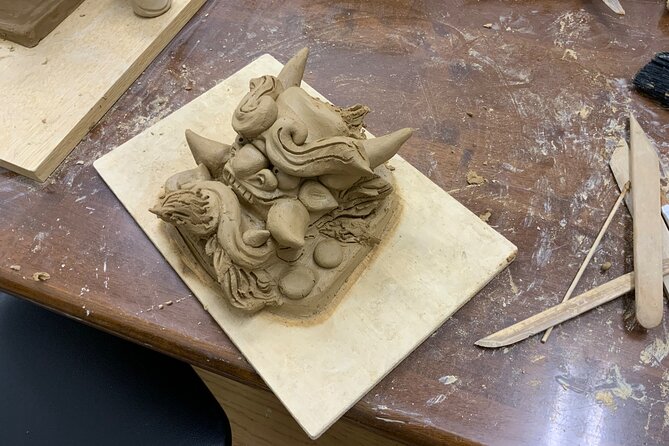
Your onigawara does not leave the workshop in its final form. After the clay dries, Yuya fires it in a kiln at the factory. Over roughly one to two months, the piece changes into the traditional silver color and is then sent to your home.
That delayed finish gives this activity a useful advantage over many handmade souvenirs. You do not need to carry a fragile clay object through the rest of your Japan trip. You also get a second moment of anticipation when the finished piece arrives.
Shipping is not part of the $90 price. You pay the postage separately on the day, and the final delivery takes place after firing. The exact shipping amount is not provided, so ask Yuya about the cost before you leave the workshop.
Be realistic about the timing. This is not an item you receive before your flight home. The workshop needs time for drying, firing, and sending the tile. If your trip is short, make sure the workshop has your correct home address and understands where you want the parcel sent.
A craft class with real cultural context
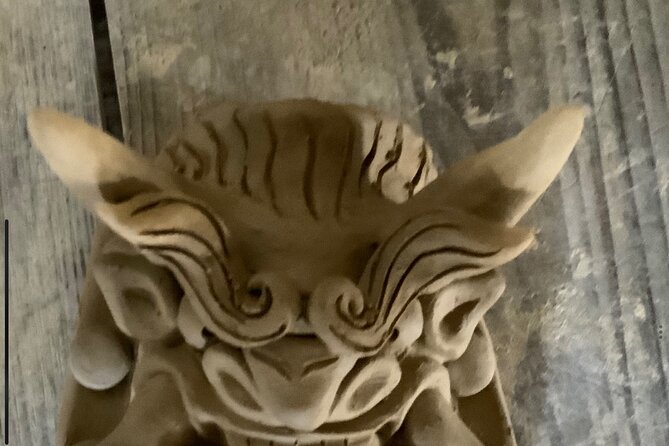
The strongest part of this experience is the connection between the object and Japanese buildings. Roof tiles can disappear into the background when you walk through Kyoto, but onigawara draw attention with their bold faces. Making one helps you look at those roof ornaments differently after the class.
The activity also offers a direct link to the work of earlier tile makers. Japanese tile production has changed with modern methods, yet this class lets you handle the material and create an ogre tile through a handmade process. You are not simply buying an object associated with Kyoto. You are taking part in a small piece of its making.
That does not mean the workshop recreates every historical production method in full. You make a simplified, small onigawara using Yuya’s beginner-friendly procedure. Still, the basic act of shaping clay by hand gives the tradition a physical meaning that a shop-bought souvenir cannot provide.
I especially like the protective idea behind the tile. Your finished monster can become a decoration in your home, but it also carries the old role of guarding a building. The result is personal without being disconnected from its cultural purpose.
Same trip, a completely different kind of day:
- Kyoto Geisha Walking Tour: Gion District & Hidden Gems
★ 4.7 · 3,273 reviews - Kyoto: Tea Ceremony Ju-An at Jotokuji Temple
★ 4.9 · 3,207 reviews - Kyoto: Gion Magical Night Walking Tour with Geisha Trivia
★ 4.9 · 2,393 reviews - Kyoto: 45-Minute Tea Ceremony Lesson Experience
★ 4.3 · 2,378 reviews
Who will enjoy this experience most
This workshop suits anyone who likes making things and wants a quieter activity during a Kyoto visit. It is a good choice if temples, gardens, and city walks are starting to blend together and you want an experience that asks you to slow down and concentrate.
Families should consider it seriously. The procedure is designed to work for children, and the activity has been described as suitable for all ages. Younger makers may need help with some parts, but the class is not presented as an advanced art lesson.
It also works well for couples, friends, or solo visitors. With a maximum of five people, the class avoids the feel of a large demonstration. If your group is small, you can spend more time speaking with Yuya while you work.
You do not need to be naturally crafty. That is one of the clearest strengths here. The method takes away much of the guesswork, and Yuya’s patient approach helps you keep moving when a piece does not look right immediately.
The experience may be less suitable if you need a finished souvenir the same day, dislike working with clay, or have no room in your budget for separate shipping. You should also wear clothes that can get dirty. This is a hands-on workshop with soil, not a polished showroom visit.
The teaching style and group atmosphere
Yuya’s role is central to the experience. He provides instructions in English and Japanese and leads you through the process rather than leaving you to work from a printed guide. The teaching is calm and patient, with attention to how you handle the clay and connect the pieces.
That matters in a craft class because a small correction can change the final face. Yuya can show you how to manipulate the material and help you understand the order of the steps. You can still make choices within the process, but you are not expected to solve the technique alone.
The setting is friendly and informal. You work at your own station, concentrate on the figure, and chat as the class develops. It is a social activity without requiring constant conversation. If you prefer a little time away from crowded sightseeing areas, this can provide a useful pause.
A small group also means that the mood may depend on who books the same time. The maximum is five participants, not a private class by default. Still, that is a manageable number for personal instruction and makes it easier to hear the guide and see the demonstrations.
Is $90 good value?
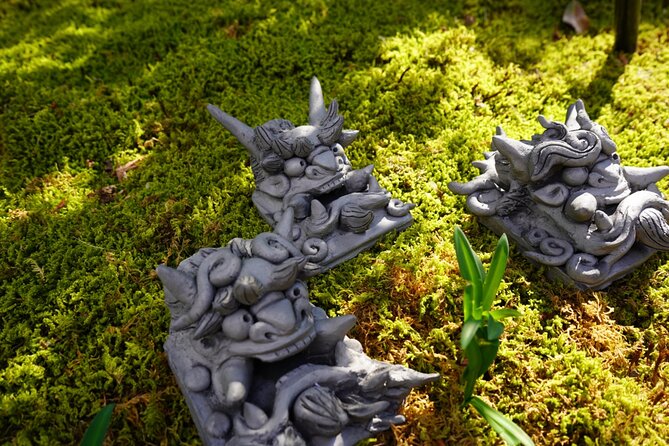
At $90 per person, this is not the cheapest craft activity in Kyoto. The value comes from what is included in the experience rather than from the raw amount of clay. You receive guided instruction, a hands-on cultural activity, kiln firing, and a finished object sent to your home after the process is complete.
The shipping charge is extra, so calculate the real cost before booking. The experience is best value if you care about the making process and want a souvenir with a personal connection. If you only want a small decorative item, buying a ready-made tile may cost less and avoid the wait.
I would also factor in the small group size. A class limited to five people gives you a better chance to ask questions and receive help with the details. That is particularly important for first-time clay workers, children, and anyone who wants to make a face that looks deliberate rather than accidental.
The $90 price is easier to justify if you see the tile as both an activity and a future keepsake. You are paying for two hours of instruction, the chance to make the object yourself, and the later arrival of the fired piece. It is not the right choice for a quick, low-cost souvenir, but it offers more meaning than a standard shopping stop.
Useful planning details for Kyoto
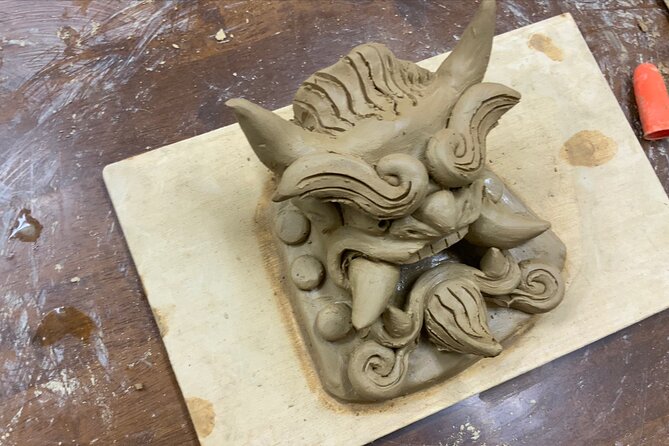
The advertised duration is two hours, with starting times available according to the date you select. Since some sessions may take longer, avoid placing a tight appointment immediately afterward. You will be working with clay, so clothing that may get dirty is essential.
The meeting point is Kawarakoubouyouya, the workshop itself. Use the shop name in Google Maps, but do not rely blindly on the pin. The map may place you about 40 meters away, so allow a few extra minutes to locate the entrance.
The activity is wheelchair accessible, and the host or greeter can assist in English or Japanese. The group is limited to five people. You can reserve now and pay later, and cancellation is free up to 24 hours before the activity for a full refund.
Most importantly, remember the delayed delivery. The tile must dry and be fired before it can be sent. The expected wait is one to two months, and postage is paid separately on the day.
Should you book the onigawara workshop?
Book it if you want a hands-on Kyoto experience with a clear cultural connection, especially if you enjoy crafts, are traveling with children, or want a souvenir you helped create. Yuya’s structured method makes the activity accessible even if you have never sculpted before.
Think twice if you need instant gratification, have limited luggage or shipping funds, or prefer sightseeing that keeps you moving. The finished onigawara will not be ready immediately, and the extra postage is part of the real cost.
For most people who like making things, the wait is a fair trade. You leave with clay on your hands, a better understanding of the demon faces on Japanese roofs, and a small protector that will eventually arrive in its traditional silver color.
FAQ
How long does the onigawara workshop last?
The advertised duration is two hours. One session was reported to last about three hours, so allow some extra time if your schedule is tight.
What does the $90 price include?
The price covers the onigawara-making experience. Shipping after firing is not included and must be paid separately on the day.
When will my finished onigawara arrive?
After the clay dries and is fired, the tile is sent to your home. The expected timeline is about one to two months.
Do I need sculpting experience?
No. Yuya developed a step-by-step procedure intended to help children, beginners, and people who feel they are not good with their hands.
What languages are available?
The host or greeter can provide support in English and Japanese.
Where does the workshop meet?
You meet at Kawarakoubouyouya, the workshop shop. Search for the shop on Google Maps, but check the location carefully because the map pin may be about 40 meters off.
Just added around Kyoto
- Sekka Cotton Furoshiki Class★ 5.0 · 19 reviews
- Secret Eastern Kyoto Biking Adventure★ 5.0 · 44 reviews
- Kyoto Sword Experience – includes Museum Ticket/Ninja Experience★ 4.5 · 149 reviews
- Scenic Green Tea Fields of Hidden Kyoto & Local Tea Exp (Private)★ 5.0 · 32 reviews
- Private Sake Tasting in Central Kyoto with Sake Sommelier★ 5.0 · 32 reviews
- Samurai School in Kyoto: Samurai for a Day★ 5.0 · 202 reviews
- SHIRAKAWA Japanese Culture Experiences with private English staff★ 5.0 · 16 reviews
- A Privately Guided Photoshoot in Beautiful Kyoto by a Pro★ 5.0 · 18 reviews
Kyoto Tours, compared.

Tea Ceremony in a Traditional Tea House in Kiyomizu
Our verdict →
Kyoto Geisha Walking Tour: Gion District & Hidden Gems
Our verdict →


Fushimi Inari Hidden Hiking Tour (Private Option Available)
Our verdict →