
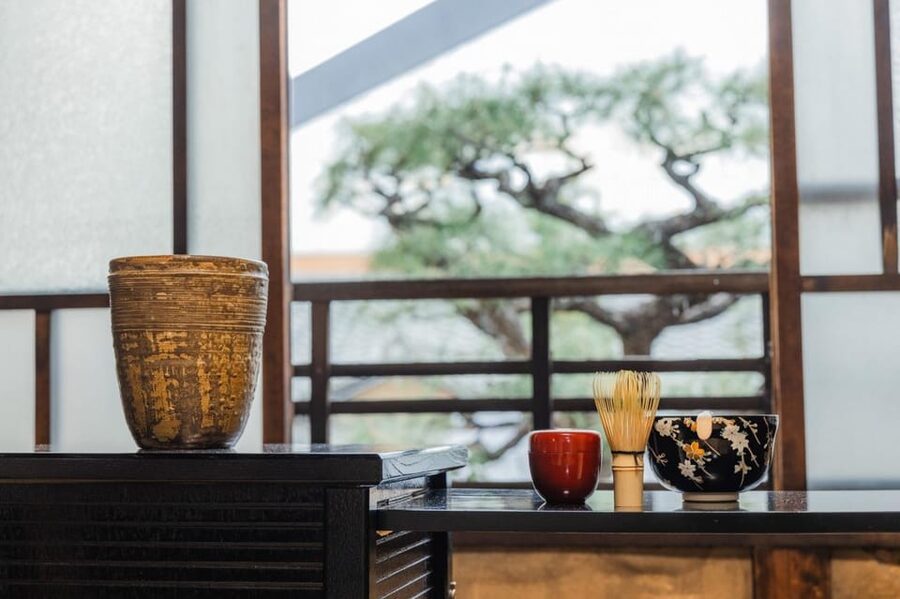
Reviewed · TEA CEREMONY EXPERIENCES
Kyoto: Table-Style Tea Ceremony at a Kyo-Machiya
A tea ceremony can sound formal, even intimidating. This one softens the edges without turning Japanese customs into a stage show. You sit at a table, learn the meaning behind the gestures, whisk your own matcha, and try calligraphy inside a more than 100-year-old Kyoto townhouse.
I especially like the chair seating, which makes the experience workable for anyone who finds floor sitting difficult. I also like the mix of tea, sweets, calligraphy, flower arranging, and time to explore the house. The main drawback is location: you will spend about 20 to 25 minutes reaching southern Kyoto, and the townhouse is not suitable for wheelchair users.
Key points at a glance
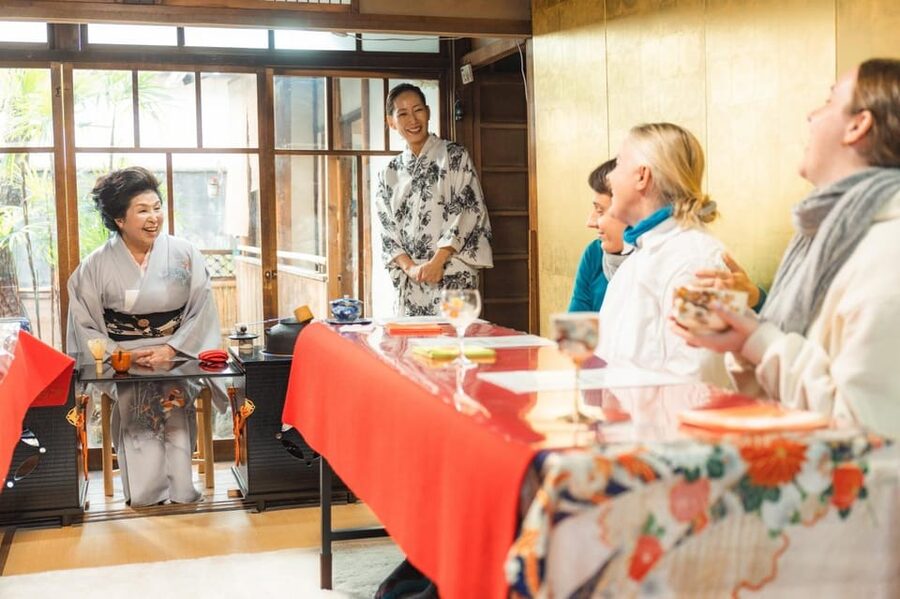
- Table seating instead of floor seating: Take part in the ceremony without kneeling on tatami.
- A real old townhouse setting: Walk through a 100-year-old Kyo-machiya with a garden, Buddhist and Shinto altars, antiques, and traditional details.
- More than a cup of tea: Make matcha, taste sweets, try calligraphy, and take part in flower arranging.
- Optional kimono rental: Arrive 30 minutes early for dressing, hairstyling, and photos around the house and garden.
- A useful southern Kyoto base: Combine the visit with Fushimi Inari, Fushimi’s sake district, Uji, Osaka, or Nara.
- English instruction in a small setting: Private and small-group formats are available, with an activity score of 4.9 from 1,211 ratings.
Why this tea ceremony feels different
Many visitors picture a tea ceremony as a silent ritual performed on the floor. Here, the format is friendlier to first-time visitors. You watch the host demonstrate the order of the ceremony, learn the basic manners, and then try parts of the process yourself from a chair at a table.
That choice matters. You can pay attention to the tea utensils, hand movements, and explanations instead of worrying about stiff knees. If you have a leg injury or simply dislike sitting on the floor, this is a sensible option. The experience still introduces the formality and care of tea preparation, but it does not demand advanced flexibility.
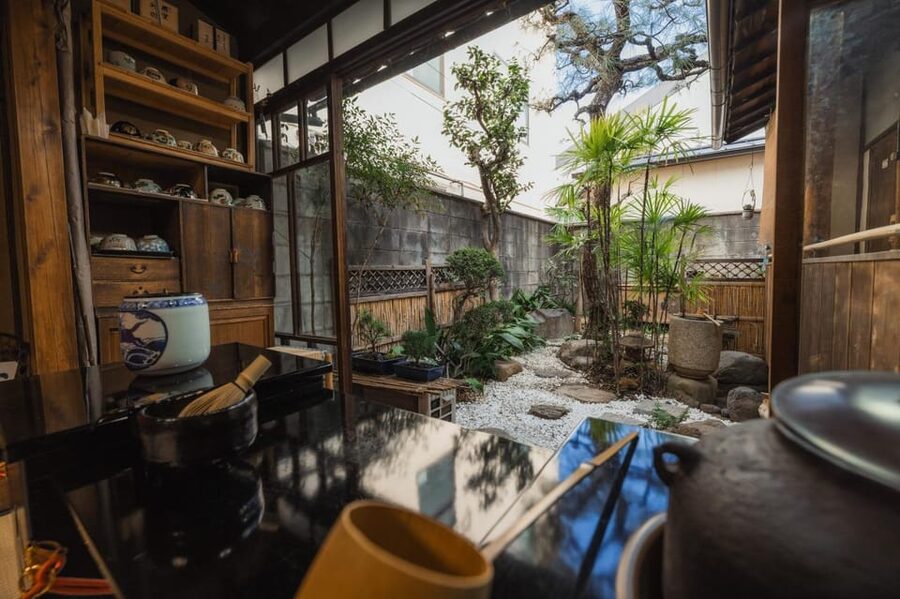
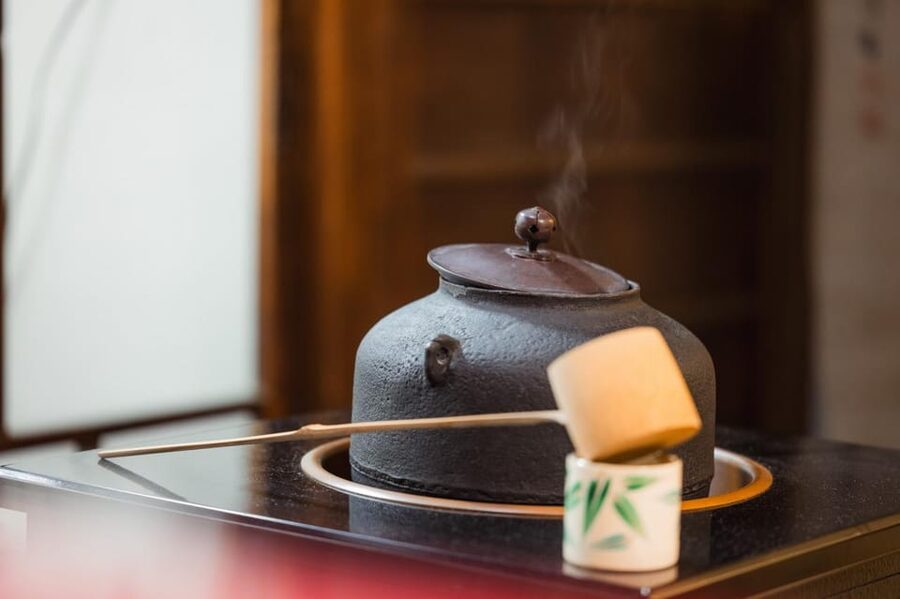
The setting does much of the work. The townhouse has the feel of an old Kyoto home rather than a modern event room. You can stroll through its rooms, look at old Buddhist and Shinto altars, notice antiques, and step into the garden. A stone basin introduces the idea of purifying yourself before entering a sacred or formal space, much as you might at a shrine.
Do not expect a full professional tea-school apprenticeship in 90 minutes. You receive an accessible introduction, not years of training compressed into one afternoon. That is exactly why it works well for families, couples, teenagers, and anyone who wants context before visiting more temples and tea shops.
More Tea Ceremony Experiences in Kyoto
- Kyoto: Tea Ceremony in a Traditional Tea House in Kiyomizu
★ 4.9 · 3,519 reviews - Kyoto: Tea Ceremony Ju-An at Jotokuji Temple
★ 4.9 · 3,207 reviews - Kyoto: 45-Minute Tea Ceremony Lesson Experience
★ 4.3 · 2,378 reviews
What happens during the 90 minutes
The experience begins with a welcome drink. Depending on the arrangement, this can include sake or juice, along with Japanese tea. It is a relaxed opening, giving you time to settle into the house before the more formal portion begins.
You may also see a presentation explaining how tea ceremony developed in Japan, along with the spirit, etiquette, and manners behind it. This background helps you understand why a simple movement, bow, or turn of a bowl matters. The explanations are given in English, and the hosts leave room for questions.
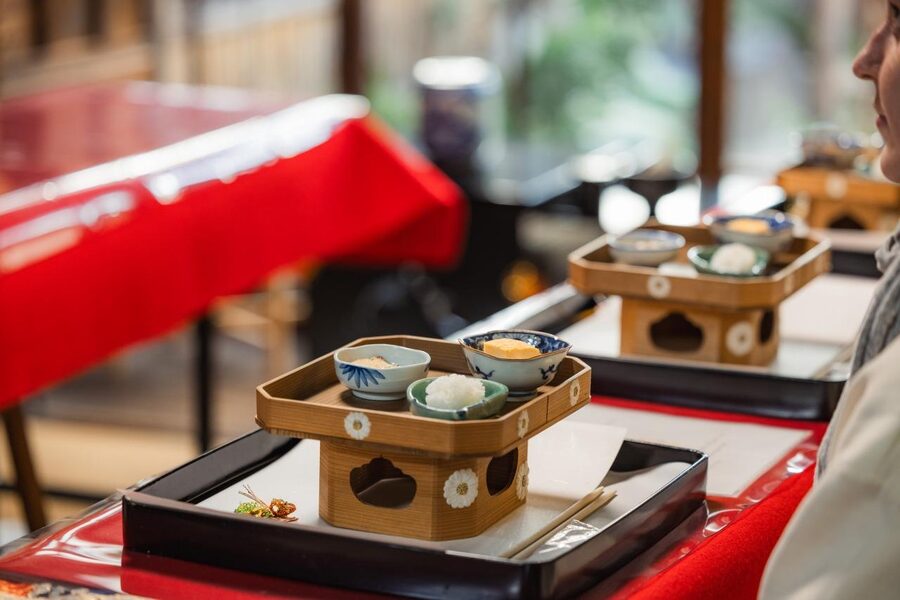
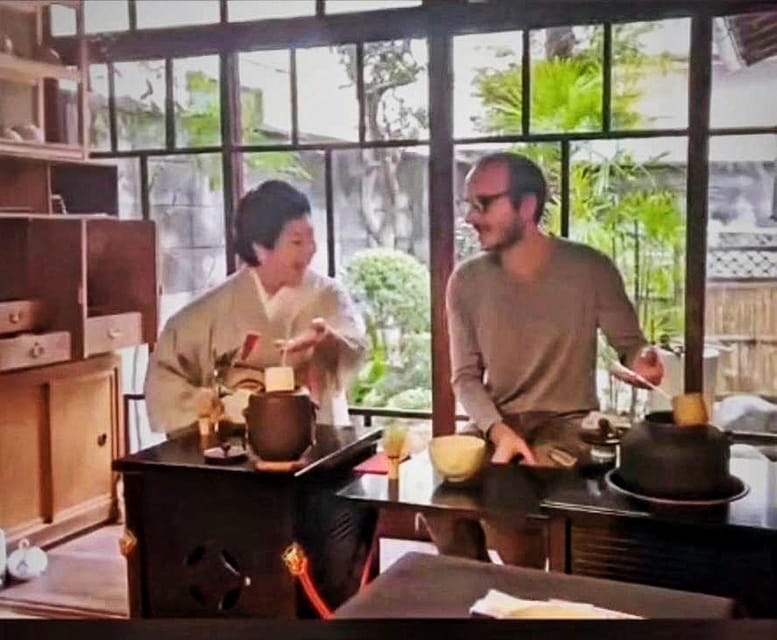
The hosts then guide you through the tea ceremony. Watch closely as the tea is prepared and served, but do not worry about memorizing every detail. You are shown how to receive the tea, how to handle the bowl, and how to take part respectfully.
Traditional sweets accompany the tea. Their sweetness balances the strong, grassy taste of matcha and gives the ceremony a pleasant rhythm. This is not simply a tasting session. The sweets are part of the structure of the tea service, helping you understand how flavor and presentation work together.
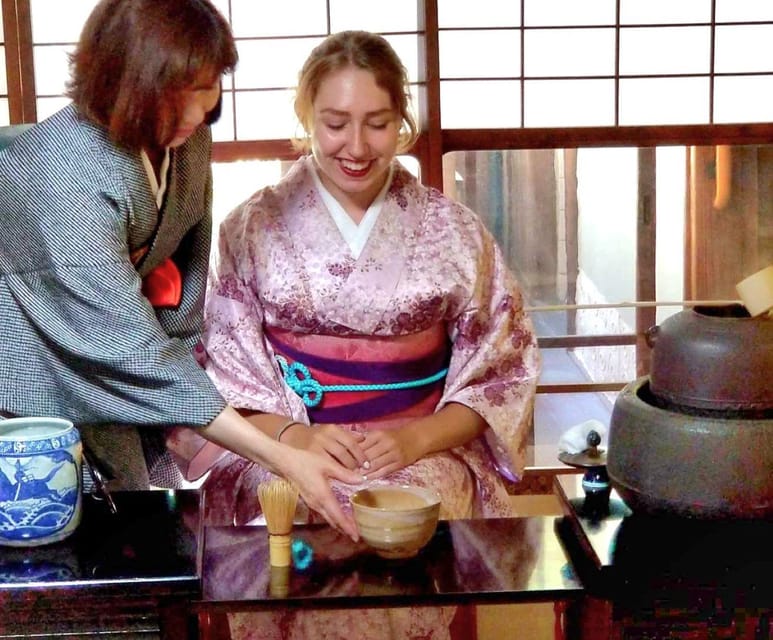
One of the most enjoyable parts comes afterward, when you prepare your own matcha. You use a bamboo whisk to turn powdered tea and hot water into a creamy, frothy drink. The first attempt may not look as smooth as the host’s, which is part of the fun. You get a hands-on lesson rather than a polished performance that leaves you sitting on the sidelines.
There is also a latte-art activity using thick tea. The exact design can depend on the session, but the point is to let you play with the texture and appearance of matcha. It gives the ceremony a lighter, creative finish.
The townhouse, garden, and photo time
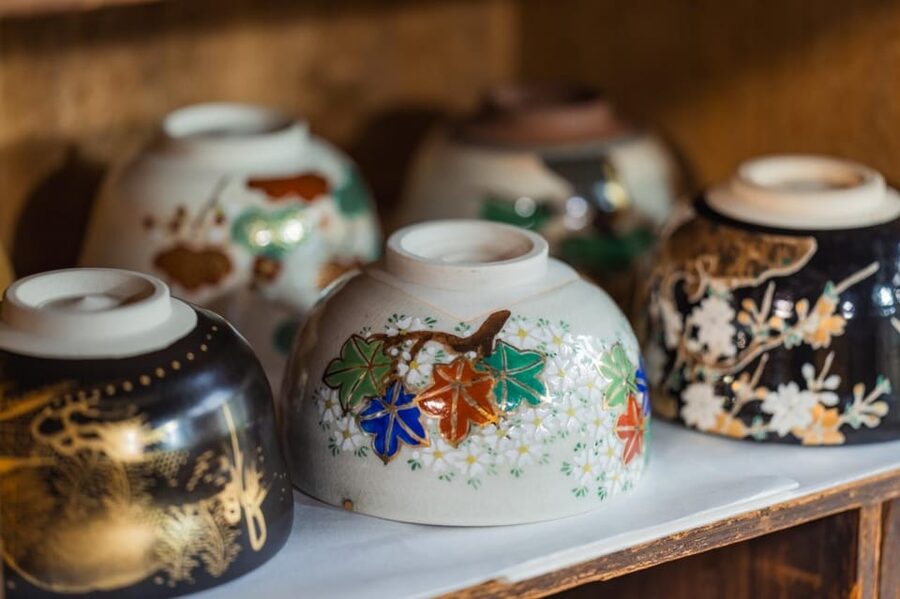
The house is one of the strongest reasons to choose this activity. It is more than 100 years old and offers a glimpse of ordinary Kyoto architecture and domestic life. You can walk through the townhouse instead of spending the whole session in one room.
The garden includes a stone basin used to explain purification. This is a small detail, but it gives the ceremony a physical connection to Japanese religious customs. You are not just told that cleanliness and preparation matter. You see the object and learn how it fits into traditional practice.
Photo time is built into the experience. Depending on the option you choose, you can pose with Japanese umbrellas, folding fans, and a katana sword. These props create lively pictures, especially if you are wearing a kimono. The garden and old house provide a more convincing setting than a studio backdrop.
Keep your expectations sensible. This is a cultural activity with photo opportunities, not a dedicated professional photo shoot. You are given time to take pictures and videos, but the main focus remains the tea ceremony and related customs.
Adding the kimono option
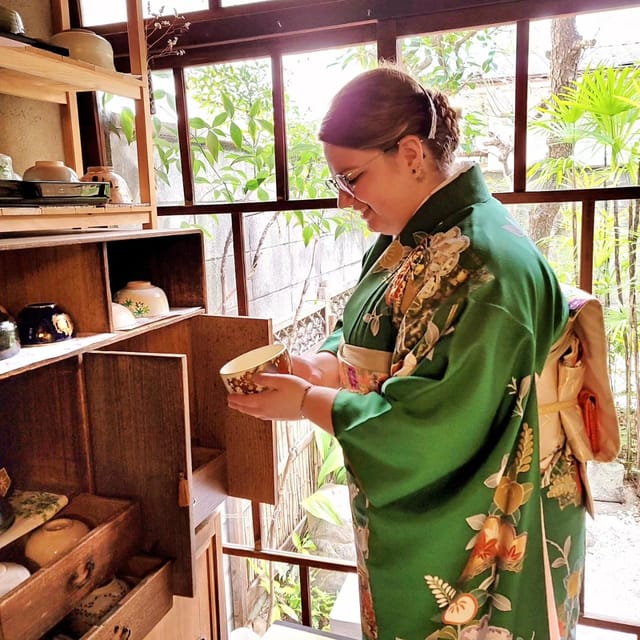
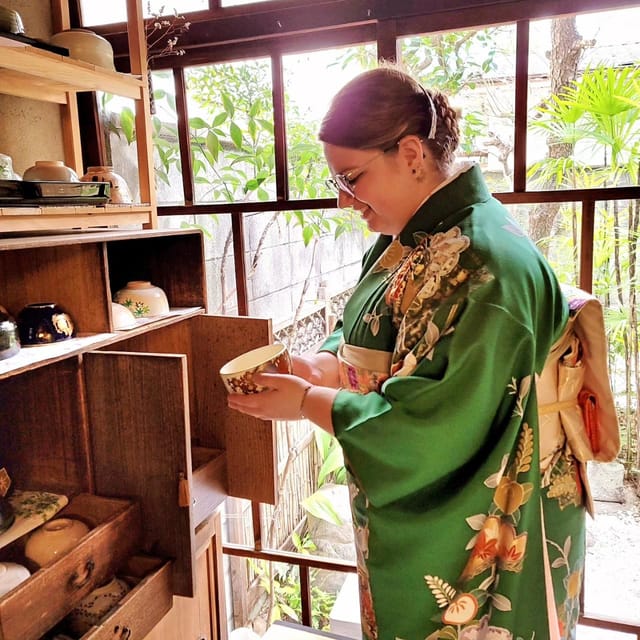
The kimono option adds a strong visual and cultural element. You choose from available outfits, and the hosts help dress you before the main activity. If you select it, arrive 30 minutes early. That extra time is important because dressing is part of the appointment, not something to squeeze in after the ceremony begins.
The kimono also changes how the visit feels. Walking through the townhouse, sitting at the tea table, and posing in the garden all become more memorable when you are dressed for the setting. Several people have found the dressing and hairstyling to be among the highlights, and the hosts are used to helping visitors look put together.
This option is especially appealing for couples, families, and anyone who wants strong holiday photographs. It is also useful if you want one activity that combines clothing, customs, tea, and calligraphy instead of booking separate experiences.
There are practical limits. Anyone who is pregnant is asked not to wear a kimono for health and safety reasons. The experience is also not suitable for wheelchair users. If you have limited mobility but can manage stairs and the house layout, mention your needs when booking, since the activity takes place in a historic townhouse rather than a purpose-built accessible venue.
Same trip, a completely different kind of day:
- PERFECT KYOTO 1-Day Bus Tour
★ 5.0 · 13,518 reviews - Kyoto: Fushimi Inari, Kinkakuji, Bamboo Grove 1 Day Bus Tour
★ 4.8 · 4,316 reviews - Kyoto Geisha Walking Tour: Gion District & Hidden Gems
★ 4.7 · 3,273 reviews - Kyoto: Gion Magical Night Walking Tour with Geisha Trivia
★ 4.9 · 2,393 reviews
Calligraphy and your Japanese name
Near the end, you write your name in Japanese. You may work with hiragana, katakana, or kanji, depending on the instruction provided. The hosts help you form the characters, so you do not need prior Japanese language skills.
Your name can be written on a hanging scroll or envelope as a keepsake. This is a better souvenir than a generic shop purchase because it connects directly to the activity. You leave with something made for you and a small understanding of how Japanese writing looks and feels on paper.
Calligraphy is also a good change of pace after the tea ceremony. Tea requires quiet attention and careful movements. Writing lets you slow down in a different way, concentrating on brush control and the shape of each character. Children and teenagers often find this part especially engaging.
You may also take part in a Japanese flower arranging activity. It adds another short introduction to traditional aesthetics, where placement, balance, and restraint matter. The flower activity is not presented as a long formal class, but it gives the 90-minute visit more variety.
Where it is and how to fit it into your day
The townhouse is in southern Kyoto, in the Fushimi area. From Kintetsu Kyoto Station, take an express train toward Kintetsu Momoyama-Goryo-mae. The train ride takes about 15 minutes, followed by a walk through the Otesuji shopping arcade.
From Keihan Gion-Shijo, take the train to Fushimi-Momoyama Station. From JR Momoyama Station, walk northwest, pass Gokogu Shrine, continue to the arcade, and turn near Mizuho Bank or the Rakuten mobile shop. The townhouse has a blue curtain, and guides in kimono wait for arriving participants.
Give yourself enough time to find the entrance. The directions are useful, but this is not a major station-front attraction with a large sign. Look for the old townhouse and blue curtain rather than relying only on a street number.
The southern location is not a disadvantage if you plan well. Fushimi is known for sake, so you can eat, browse shops, and visit breweries before or after the ceremony. Fushimi Inari Shrine is also nearby by train, and Uji, famous for tea, takes about 20 minutes by train. Osaka is roughly 40 minutes away by express train, while Nara takes about 50 minutes.
A good plan is to visit Fushimi Inari earlier in the day, have lunch in Fushimi, and attend the tea ceremony afterward. You could also pair the activity with Uji if tea culture is a main interest. Avoid stacking it with a distant Kyoto sight on the opposite side of town, since the travel time will make the day feel rushed.
Is $45 a fair price?
At $45 per person, this is not the cheapest way to drink matcha in Kyoto. A tea shop can serve you a bowl for much less. But the price here covers a 90-minute cultural lesson, traditional sweets, welcome drinks, guided tea preparation, calligraphy, a name keepsake, flower arranging, access to a historic townhouse, and photo time.
That is solid value if you want an activity rather than a drink. You are paying for instruction and personal attention, not just the ingredients. The small-group or private format also helps, particularly if you have questions or want help with calligraphy and matcha whisking.
The kimono option costs extra, though the exact supplement is not provided here. I would consider it worthwhile if photographs and dress-up are important to you. If your main interest is learning about tea, the basic option should be enough.
The score of 4.9 from 1,211 ratings suggests unusually consistent satisfaction, and the repeated praise centers on the hosts’ warmth, patience, English explanations, and attention to detail. Those qualities matter more than fancy equipment in an activity built around manners and personal instruction.
Who should book it
I would recommend this for a first tea ceremony in Japan, especially if you want clear explanations in English. It suits couples, families, solo visitors, and teenagers because the schedule keeps changing: welcome drink, presentation, tea service, matcha preparation, photos, calligraphy, and flower arranging.
It is also a good choice for anyone who wants a more personal setting than a large cultural show. The hosts work in a historic home and guide you through the details at a steady pace. You can ask questions without feeling that you are interrupting a formal public performance.
The activity may not suit you if you want a strict, highly traditional ceremony lasting several hours. It is adapted for international visitors and includes playful elements such as props, latte art, and name writing. That makes it approachable, but less austere than a formal tea-school appointment.
Plan carefully if you have mobility concerns. You will use a historic house, and wheelchair access is not available. Pregnant visitors should skip the kimono option.
Book this tour if you want to understand the ideas behind tea ceremony while also having something to do with your hands. Choose the kimono option if photos and dress are central to your Kyoto memories. Skip it only if your schedule cannot spare the trip south or if you want a purely formal ceremony with no added activities.
FAQ
How long does the tea ceremony experience last?
The activity lasts 90 minutes. If you select the kimono option, arrive 30 minutes before the start time for dressing.
Do I have to sit on the floor?
No. The tea ceremony uses tables and chairs, so you do not need to sit on the floor.
Is the activity conducted in English?
Yes. English instruction is provided.
What is included in the experience?
The experience includes the tea ceremony, traditional sweets, a welcome drink such as sake or juice, matcha preparation, latte art using thick tea, calligraphy, and a Japanese name written on a hanging scroll or envelope. Flower arranging is also included.
Is kimono rental included?
Kimono rental is included only if you select the kimono option when booking.
Can I take photographs and videos?
Yes. You can take photos and videos around the traditional house and garden, including with umbrellas, folding fans, and a katana sword.
Where is the townhouse located?
It is in southern Kyoto, near the Fushimi area. It is about 20 minutes by train from Keihan Gion-Shijo Station and about 25 minutes by train from Kintetsu Kyoto Station, followed by a short walk.
Can I combine this with Fushimi Inari or Uji?
Yes. Fushimi Inari is nearby, and Uji is about 20 minutes away by train. The area also has sake-related attractions, casual restaurants, and shopping streets.
Is the activity accessible for wheelchair users?
No. The experience is not suitable for wheelchair users. Pregnant visitors are also asked not to wear a kimono for health and safety reasons.
Just added around Kyoto
- Sekka Cotton Furoshiki Class★ 5.0 · 19 reviews
- Kyoto Sword Experience – includes Museum Ticket/Ninja Experience★ 4.5 · 149 reviews
- Scenic Green Tea Fields of Hidden Kyoto & Local Tea Exp (Private)★ 5.0 · 32 reviews
- Secret Eastern Kyoto Biking Adventure★ 5.0 · 44 reviews
- Private Sake Tasting in Central Kyoto with Sake Sommelier★ 5.0 · 32 reviews
- Samurai School in Kyoto: Samurai for a Day★ 5.0 · 202 reviews
- SHIRAKAWA Japanese Culture Experiences with private English staff★ 5.0 · 16 reviews
- A Privately Guided Photoshoot in Beautiful Kyoto by a Pro★ 5.0 · 18 reviews
Tea Ceremony Experiences, compared.

Tea Ceremony in a Traditional Tea House in Kiyomizu
Our verdict →


World Heritage Kyoto & Nara Uji Authentic Matcha Experience
Our verdict →

Arashiyama Bamboo Forest, Monkeys, Matcha & Temple Tour
Our verdict →
Browse the lists this tour appears in