
Reviewed · TEA CEREMONY EXPERIENCES
Kyoto Matcha Green Tea Tour
Uji is where Kyoto’s matcha story becomes real. On this three-hour walk, you’ll visit temples and shrines, follow the Uji River, stop for local food, and learn how tea leaves become the bright green powder in your bowl. The best part is the hands-on matcha-making class, not just another tea tasting.
I like the small group, limited to eight people, and the mix of culture and food. You get Byodoin Temple, an older shrine, matcha soba, wagashi sweets, ice cream, tea tasting, and shopping time in one compact outing. The main catch is the tight schedule: arriving late can mean missing the group, and the tour cannot wait beyond five minutes.
Key points at a glance
- Meet at Keihan Uji Station: This is not JR Uji Station, so check your route carefully before leaving Kyoto.
- Taste matcha beyond a teacup: Expect matcha soba, sweets, ice cream, and a traditional tea-making session.
- See Uji’s major sights: Byodoin Temple, a shrine, the Uji River, and historic town streets all fit into the route.
- Small group of up to eight: The format allows guides such as Karim, Miki, Sanae, Thomas, and Jamelah to adjust explanations and help with questions.
- Plan for a three-hour outing: Food, temples, tea, and shopping make this feel fuller than a basic tea ceremony.
- Bring dietary details to the booking: Food is included at several stops, but special requirements need to be shared ahead of time.
Why Uji makes a better tea stop than central Kyoto
Kyoto has no shortage of tea shops, but Uji gives you the setting behind the cup. It sits about 40 minutes from Kyoto City and has long been linked with tea production, religious sites, noble retreats, and the Uji River.
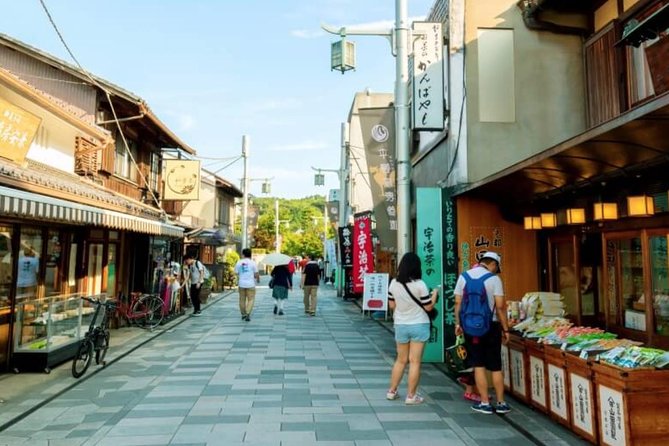
That setting matters. You are not simply shown a bowl of green tea and told it is important. You walk through the town where matcha is part of the local identity, then taste it in several forms. The river, old streets, shops, shrines, and temple grounds give the tea a sense of place.
I also like the pace. Three hours is enough to see the main sights and eat well without turning the day into a long march. The group size keeps the experience personal, though it also means you need to be punctual. The guide departs after a five-minute grace period and cannot stop to give directions once the tour is under way.
More Tea Ceremony Experiences in Kyoto
- Kyoto: Tea Ceremony in a Traditional Tea House in Kiyomizu
★ 4.9 · 3,519 reviews - Kyoto: Tea Ceremony Ju-An at Jotokuji Temple
★ 4.9 · 3,207 reviews - Kyoto: 45-Minute Tea Ceremony Lesson Experience
★ 4.3 · 2,378 reviews
Meeting at Keihan Uji Station
Your meeting point is the entrance of Keihan Uji Station, at Otsukata Uji, Kyoto 611-0021. This detail deserves attention because Uji also has a JR station. They are not the same meeting point.
Your English-speaking guide will hold a sign. Since the tour leaves quickly, allow extra time to find the correct station entrance. You should not count on calling the guide after the start time, as phone contact and directions are not available once the walk begins.
This is a good tour for someone who wants the day organized from the beginning. It is less suitable if you prefer to wander in late or decide your route at the last minute. The minimum booking is two people, and children must be accompanied by an adult. Unaccompanied minors cannot join.
Byodoin Temple and Uji’s older sacred places
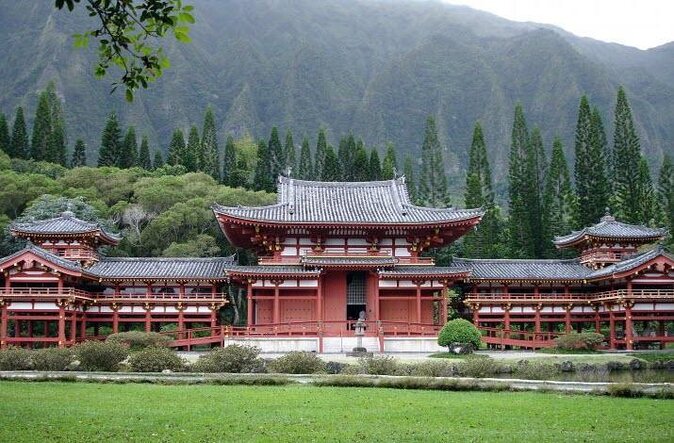
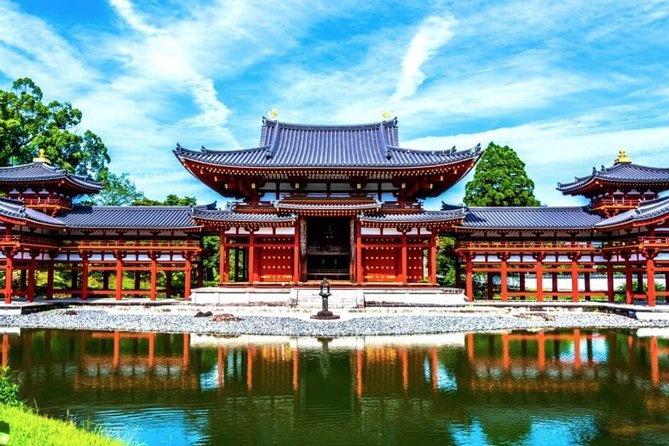
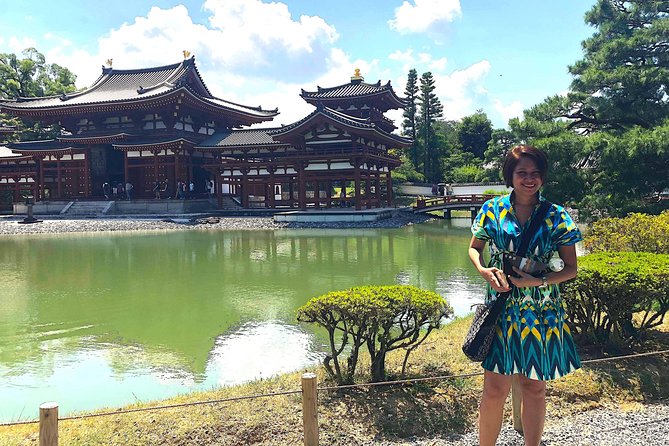
The cultural part of the route includes Byodoin Temple, one of Uji’s major sights and a World Heritage site. The temple is especially striking for its balance of architecture, water, and open space. Your guide explains what you are seeing and places it in the story of Uji, rather than leaving you to guess why the site matters.
The route also includes an older shrine. Here, the guide can explain basic shrine customs, including how to pray. That small lesson is useful. Japanese religious sites often have quiet rules and gestures that are easy to miss, and a local explanation helps you behave with confidence instead of copying the nearest person.
The exact order of the stops can vary, but you should expect a blend of temple grounds, shrine details, riverside views, and town streets. Some of the most useful help may come in small moments. One guide stopped so a participant could collect a goshuin stamp, and another helped translate when communication became difficult. Those details show the practical value of a guide beyond memorized facts.
Do keep the time limit in mind. You are not getting a full museum-style tour of every temple room. This is a compact introduction to Uji’s key places, with tea and food taking a large share of the afternoon.
Following the Uji River through the tea town
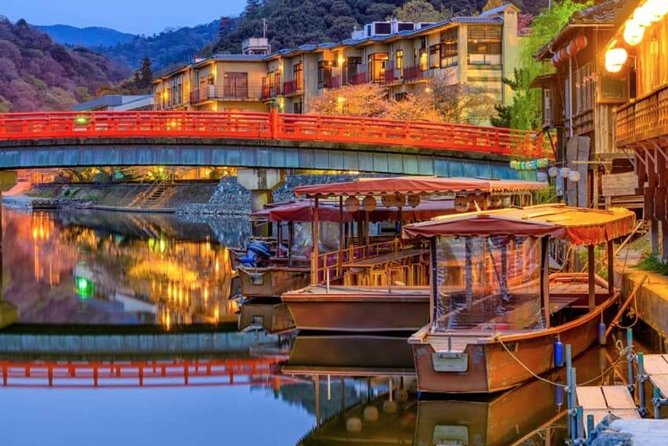
The Uji River gives the walk a welcome change of pace. After temple and shrine visits, you can enjoy the sound of the water and the calmer feel of the riverside. The route also takes you through Uji’s attractive streets, where local shops sell tea and matcha products.
I like this part because it connects the famous sights with everyday Uji. The town is not only a backdrop for Byodoin. It is a place where tea shops, snacks, souvenirs, and traditional customs continue alongside the historic sites.
This is also your chance to ask questions. Depending on your interests, the guide may focus more on tea types, prayer customs, local food, or Uji’s past. Guides named in the tour’s feedback include Karim, Jamelah, Miki, Sanae, and Thomas. Their styles differ, but the recurring strength is clear: you can ask questions in English and get help navigating the cultural details.
Same trip, a completely different kind of day:
- PERFECT KYOTO 1-Day Bus Tour
★ 5.0 · 13,518 reviews - Kyoto: Fushimi Inari, Kinkakuji, Bamboo Grove 1 Day Bus Tour
★ 4.8 · 4,316 reviews - Kyoto Geisha Walking Tour: Gion District & Hidden Gems
★ 4.7 · 3,273 reviews - Kyoto: Gion Magical Night Walking Tour with Geisha Trivia
★ 4.9 · 2,393 reviews
Matcha served as soba, sweets, and ice cream
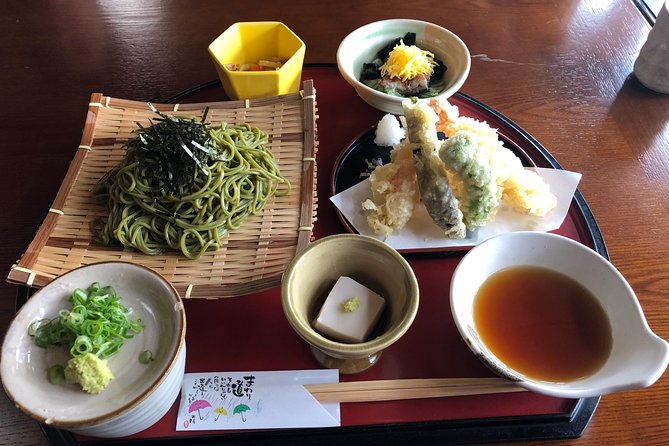
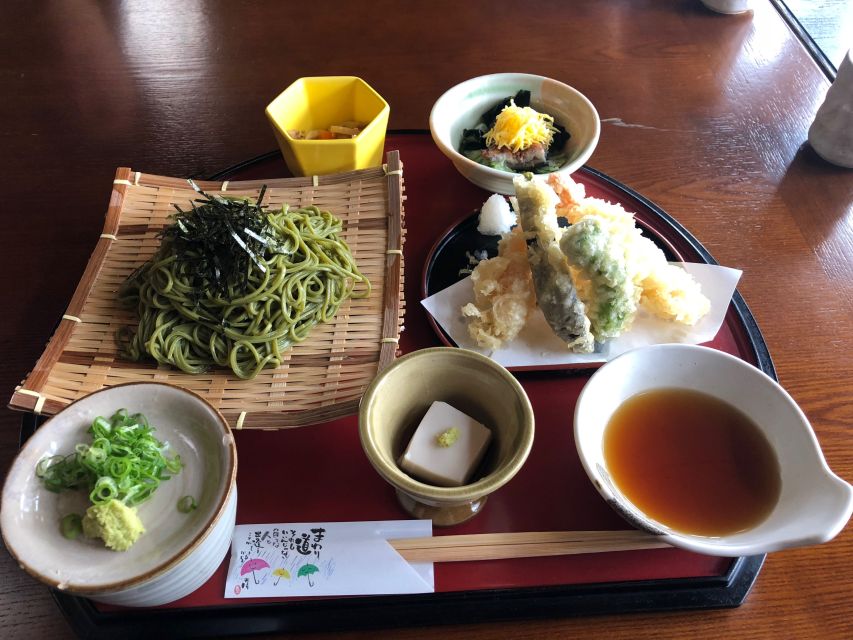
The food stops give the outing more substance than a standard tea ceremony. You receive a variety of dishes at multiple stops, with examples including matcha soba, wagashi sweets, and matcha ice cream.
Matcha soba is a particularly useful tasting because it shows how Uji tea appears in an everyday meal, not only in a formal bowl. The sweet stops then shift the flavor in another direction. Wagashi offers the traditional pairing, while matcha ice cream is familiar and easy to enjoy even if the more bitter side of tea is not your favorite.
The food is included, but additional drinks and food cost extra. Specific dishes can vary, so tell the supplier about dietary requirements when you book. The supplied details do not promise a special menu for every restriction, so you should not wait until the first restaurant stop to raise the issue.
You should also note the minimum drinking age is 21. That rule may matter if the tour includes any drink beyond tea, even though the central focus is matcha.
Grinding leaves and making your own matcha
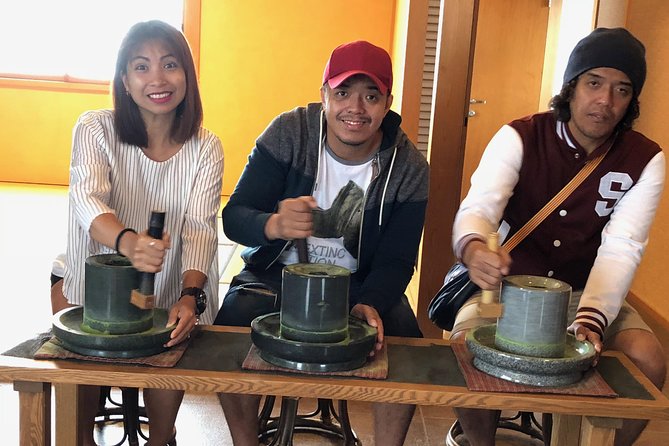
The hands-on tea portion is the heart of the experience. You learn about tea grinding and make your own matcha, then take part in a tasting. This is much more memorable than simply watching someone whisk a bowl for you.
The process helps you notice texture, aroma, color, and bitterness. You can see how the preparation changes the drink and why fresh whisking matters. The activity also makes the tea less mysterious. Instead of treating matcha as a fashionable green powder, you get a simple lesson in how it is prepared and enjoyed.
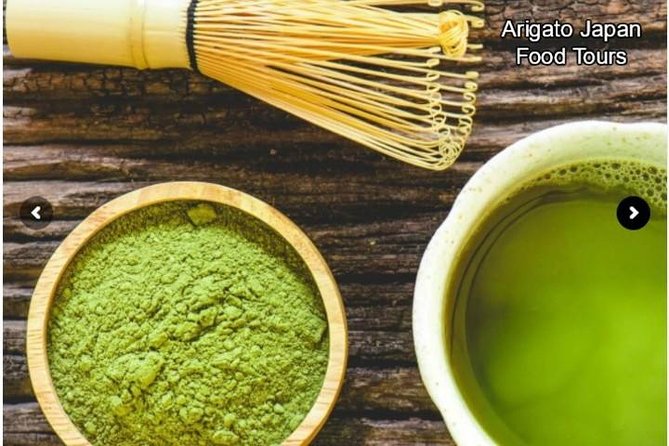
The tea experience includes wagashi and matcha ice cream, so you can compare matcha in a traditional sweet, a cold dessert, and the drink itself. That range is one of the tour’s strongest features. It works for tea enthusiasts, but it is also friendly to anyone who is curious and not yet sure about matcha.
Expect instruction rather than a formal, silent tea ceremony. The focus is participation, tasting, and understanding. If you want a highly ritualized ceremony with an elaborate setting, this may feel more casual than expected. If you want to learn by doing, it is a good fit.
Shopping time in Uji’s tea shops
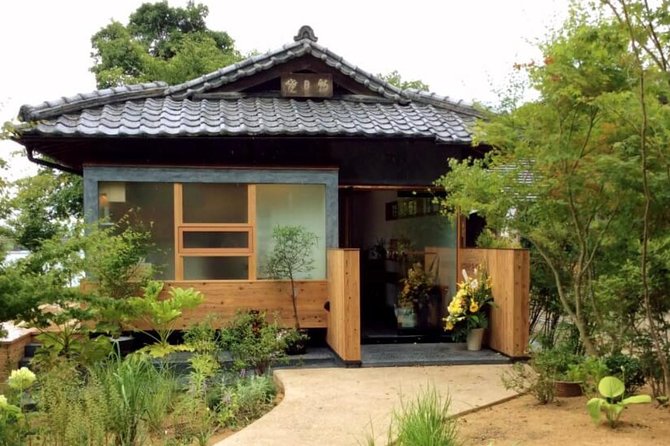
The tour includes time to browse local shops. This is useful after the tasting because you will have a better sense of what you like before buying anything.
You might find matcha, tea sweets, and other local products, but the provided details do not specify a fixed shop list or guarantee particular brands. Treat shopping as an opportunity rather than the main reason to book. The guide can help explain products and local customs, but purchases are your own expense.
The timing matters here. The activity ends with time to roam around town, so you may have a chance to browse after the main group portion. One practical advantage is that Uji is close enough to Kyoto for you to return without losing an entire day.
How much value do you get for $173?
At $173 per person, this is not a budget walk. The value depends on how much you would otherwise pay for separate food tastings, a guided Uji visit, and a matcha class.
You receive food at several stops, matcha tasting, a tea-making session, sweets, ice cream, cultural explanations, and a small group capped at eight. Transportation to and from Uji is not included, and you pay for any extra food or drinks. Still, the package can make sense if you want one organized visit rather than arranging each part yourself.
The price is easiest to justify for first-time visitors to Uji. A guide helps you understand the temples and shrine, keeps the food stops moving, and explains tea in a practical way. It is less compelling for someone who already knows Uji, has visited Byodoin, and mainly wants to buy tea independently.
The English guidance is another part of the value. Past guides have included Karim, Jamelah, Miki, Sanae, and Thomas, and the experience can be adjusted to suit questions and interests. Since the group is small, you are not lost in a large crowd or limited to listening from the back.
Who will enjoy this three-hour Uji outing?
I would recommend it to first-time visitors who want history, food, and tea in one morning or afternoon. Couples, friends, families with children accompanied by adults, and solo visitors who prefer a planned route can all find something useful here.
It also suits people who enjoy tasting local food but do not want a full restaurant tour. The servings at several stops create variety without making food the only focus. Matcha fans will appreciate the preparation lesson, while beginners get several gentle ways to try it.
The tour may be less suitable for you if you need a completely flexible schedule, dislike matcha flavors, or want extensive free time at every temple. The route covers several interests in three hours, so each stop has a limit.
Families should note that children need adult supervision. The activity is not offered to unaccompanied minors. The private booking described by one family happened because no one else booked their selected time, but you should not assume every departure will be private.
Booking details worth getting right
You can cancel up to 24 hours before the tour for a full refund, and the reserve-now, pay-later option lets you hold a place without paying immediately. Starting times vary, so check availability before planning trains and other Kyoto activities.
Allow enough time to reach Keihan Uji Station, not JR Uji Station. Transportation costs are not included, and there is no hotel pickup.
The tour runs in English with a live guide. Gratuity is not included. If you have food restrictions, tell the supplier at booking. Also remember that at least two people are needed per booking.
Should you book the Kyoto Matcha Green Tea Tour?
Book it if you want an efficient, small-group introduction to Uji that combines Byodoin Temple, shrine customs, riverside streets, local food, shopping, and hands-on tea preparation. The strongest reason to choose it is the balance: you learn about matcha, eat it in several forms, and see the town that gives the tea its name and character.
Skip it if you only want a short tea ceremony or prefer to explore Uji without a schedule. At $173, the tour needs to deliver more than one cup of tea, and it does that through the food stops and cultural visits. Just arrive early at the correct station, share dietary needs in advance, and expect a brisk but well-filled three hours.
FAQ
Where does the Kyoto Matcha Green Tea Tour meet?
The meeting point is at the entrance of Keihan Uji Station, at Otsukata Uji, Kyoto 611-0021. It is not at JR Uji Station.
How far is Uji from Kyoto City?
Uji is about 40 minutes from Kyoto City. Transportation to and from Uji is not included in the tour price.
How long does the tour last?
The activity lasts three hours.
What language is the tour conducted in?
The live tour guide provides the tour in English.
How large is the group?
The group is limited to eight participants.
What food and drinks are included?
The experience includes a variety of dishes at multiple food stops, plus matcha tasting. Matcha soba, wagashi sweets, and matcha ice cream are featured.
Is the matcha-making activity included?
Yes. You learn to make matcha, with tea grinding and tasting included in the experience.
Is shopping included?
Yes. The tour provides shopping time in Uji. Any purchases, additional food, or extra drinks are at your own expense.
Can children join the tour?
Children can join when accompanied by an adult. Unaccompanied minors are not allowed.
What is the cancellation policy?
You can cancel up to 24 hours in advance for a full refund. The reserve-now, pay-later option is also available.
Just added around Kyoto
- Sekka Cotton Furoshiki Class★ 5.0 · 19 reviews
- Kyoto Sword Experience – includes Museum Ticket/Ninja Experience★ 4.5 · 149 reviews
- Scenic Green Tea Fields of Hidden Kyoto & Local Tea Exp (Private)★ 5.0 · 32 reviews
- Secret Eastern Kyoto Biking Adventure★ 5.0 · 44 reviews
- Private Sake Tasting in Central Kyoto with Sake Sommelier★ 5.0 · 32 reviews
- Samurai School in Kyoto: Samurai for a Day★ 5.0 · 202 reviews
- A Privately Guided Photoshoot in Beautiful Kyoto by a Pro★ 5.0 · 18 reviews
- Samurai Performance and Casual Experience: Kyoto Ticket★ 4.5 · 115 reviews
Tea Ceremony Experiences, compared.

Tea Ceremony in a Traditional Tea House in Kiyomizu
Our verdict →


World Heritage Kyoto & Nara Uji Authentic Matcha Experience
Our verdict →

Arashiyama Bamboo Forest, Monkeys, Matcha & Temple Tour
Our verdict →
Browse the lists this tour appears in