
Reviewed · SUSHI EXPERIENCES
Osaka Sushi Making Experience
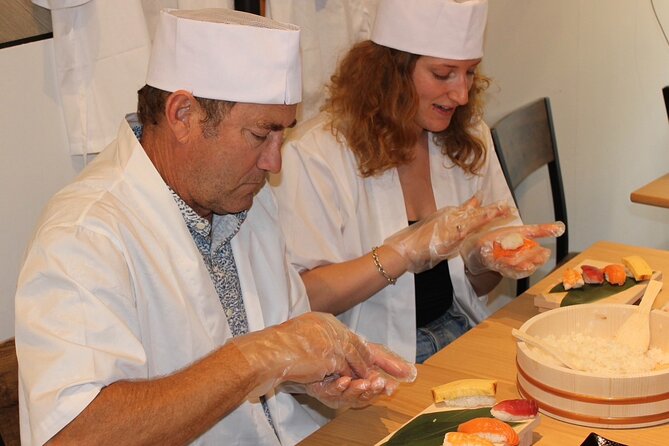
Making sushi here is less about watching a chef work and more about getting your hands busy. In about 90 minutes, you learn to prepare 12 pieces in two styles, including nigiri and gunkan-sushi, then eat what you made in the middle of Dōtonbori.
I like the clear, beginner-friendly teaching and the personal help from instructors such as Mika, Kosei, Yui, Mako, Shiori, Toshiki, and Hana. I also like the small, social format, with a maximum of 16 people and guidance in English, Chinese, and Korean. The possible drawback is that the class can feel brisk and a little commercial if you want a slow, traditional sushi apprenticeship.
Key points at a glance
- Central Dōtonbori setting: The class meets at Sushi Making Experience Namba, at 2-6-11 Nishishinsaibashi, close to Namba and Shinsaibashi.
- Hands-on 12-piece set: You make nigiri and gunkan-sushi rather than simply watching a demonstration.
- Useful home-cooking lessons: The class covers ingredients, rice portions, shaping, and basic sushi techniques you can repeat at home.
- Flexible meal timing: Afternoon and evening sessions let you schedule the class when you are ready to eat.
- Dietary choices by request: Vegetarian, vegan, and halal sushi can be arranged.
- Good value for a short activity: At $29.85 per person, the class includes the sushi, instruction, and taxes.
What happens during the 90-minute sushi class
The experience begins at Sushi Making Experience Namba1A in the Nishishinsaibashi area of Osaka. The address is 2-6-11 Nishishinsaibashi, Chuo Ward, Osaka, 542-0086. It is near public transportation and sits in the Dōtonbori area, so you can pair the class with an evening walk, shopping, or dinner nearby.
Allow a little extra time to find the entrance. One person had trouble locating the place, so do not cut it close, especially if you are arriving for an evening session. The activity ends at the same meeting point, which keeps the logistics simple.
Once the class starts, the instructors explain the ingredients and the different kinds of sushi you will prepare. The teaching is offered in English, Chinese, and Korean. That matters here because sushi looks simple, but rice temperature, portion size, and hand pressure all affect the result.
You will make 12 pieces in total. The main styles are nigiri, rice shaped by hand and topped with an ingredient, and gunkan-sushi, the small oval form wrapped with seaweed around the sides. Some sessions also include a third style, according to the details shared by people who took part, but the core promise is the two-style set.
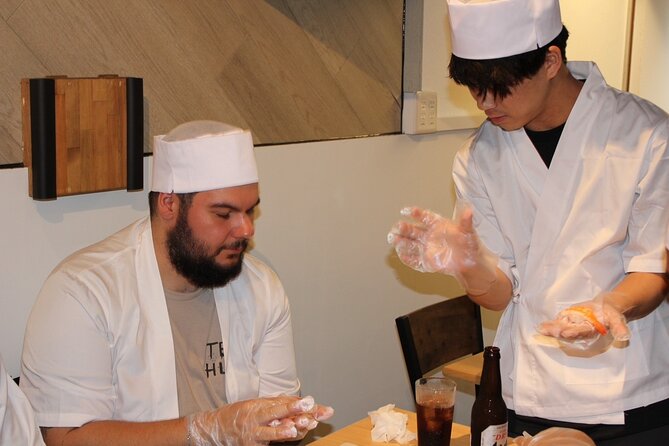
The process is practical rather than technical. You watch a demonstration, copy the movement, and get help as you go. One particularly useful tip is the 10-gram rice portion for a consistent ratio. That is the kind of small instruction that helps you repeat the technique at home, instead of simply producing one plate during a class.
More Sushi Experiences in Osaka
- Sushi Making Osaka Roll and Authentic Japanese Sushi Class
★ 5.0 · 1,220 reviews - Osaka Sushi Making Class – Hands-On Nigiri & Rolls (Same-Day OK)
★ 5.0 · 352 reviews - Osaka: Roll and Authentic Sushi Making Class in Dotonbori
★ 4.9 · 239 reviews
Nigiri, gunkan, and the value of making your own lunch
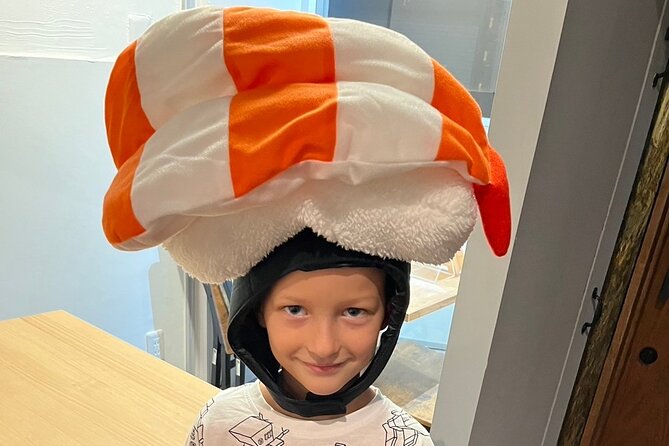
The best part of this activity is the switch from eating sushi to understanding it. At a restaurant, you notice freshness and presentation. Here, you also see how much control goes into each piece.
Nigiri looks easy until you try to shape rice that is firm enough to hold together but loose enough to remain pleasant to eat. The instructors help with the amount of rice and the way to form it. You do not need prior cooking experience, and the class is designed for beginners.
Gunkan-sushi gives you a different lesson. The seaweed creates a small container, so you learn how sushi can be shaped around a topping rather than laid flat over rice. The contrast between the two forms keeps the session from feeling repetitive.
The activity also explains the differences between sushi styles and gives some background on where and how they developed. The cultural explanation is not the main event, but it adds useful context. You learn why the pieces look different, not just which hand movement to copy.
I would not book this expecting professional chef training. You get a friendly introduction to basic sushi making, not knife-skills practice or a full lesson in fish preparation. Still, for a short Osaka activity, the class gives you a skill you can try again with ingredients from a supermarket.
The instructors make the class work
The tone depends heavily on the people leading the session. The instructors are described as young, energetic, patient, and friendly, with names including Mika, Kosei, Yui, Mako, Shiori, Toshiki, and Hana appearing in individual sessions.
That personal attention is important. Sushi shaping is easier when someone can correct your hand position right away. Several sessions included two instructors helping at the same time, which can be useful when the group is larger or when you are struggling with the first pieces.
The teaching style is relaxed and social. You can ask about Osaka, Japanese writing, sushi traditions, or the food itself while you work. Some participants received a certificate with their name written in Kanji, along with a photograph or a small personalized touch such as a name on a candy. These extras are not the reason to book, but they make the activity feel more personal.
The tone may not suit everyone. One account found the presentation a little overdone and felt the group was being moved along quickly. That is a fair warning. This is a short, organized class built for a steady flow of people, not a quiet chef-to-student lesson. If you like lively instruction and easy conversation, that energy should work well. If you want a slow, formal experience, you may find it too polished for tourists.
Eating your 12 pieces at the end
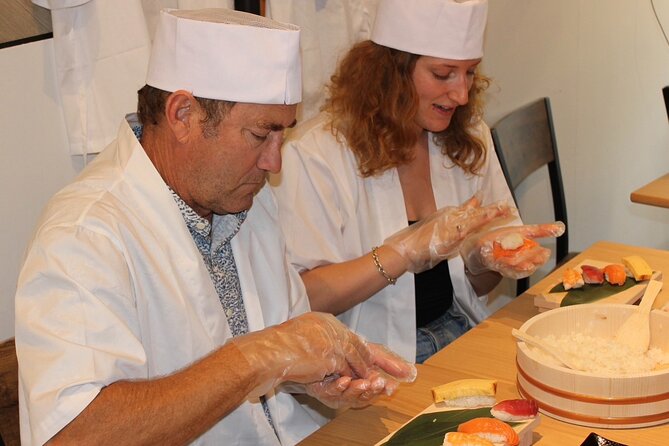
The reward comes quickly: you eat the sushi you have just made. The included food is described as 12 pieces of sushi, along with snacks, and the class includes all fees and taxes.
The quantity is enough to make the activity feel like more than a tasting, but I would not treat it as a full replacement for a large dinner. If you are booking an afternoon class, it can work as a substantial snack. An evening class may function as a light meal before you continue through Dōtonbori.
You can also have Japanese sake or beer during the experience, although alcoholic drinks are not included in the price. That distinction is worth noting when you compare the total cost. Your sushi and the class fees are covered, but your drinks are extra.
The food is the strongest part for people who enjoy the satisfaction of making something themselves. Your pieces may not look perfect, and that is part of the fun. The point is to learn how rice weight, pressure, seaweed, and toppings work together, then eat the result while the lesson is still fresh.
Same trip, a completely different kind of day:
- Osaka Go Karting Tour with Funny Costume
★ 5.0 · 2,658 reviews - Osaka Castle: Museum and Tower Entry Ticket
★ 4.5 · 2,380 reviews - Osaka: Shinsekai Food Tour with 13-15 Dishes at 5 Eateries
★ 4.8 · 2,204 reviews - Osaka Food Tour: 13 Dishes at 5 Local Eateries
★ 5.0 · 2,149 reviews
Vegetarian, vegan, and halal choices
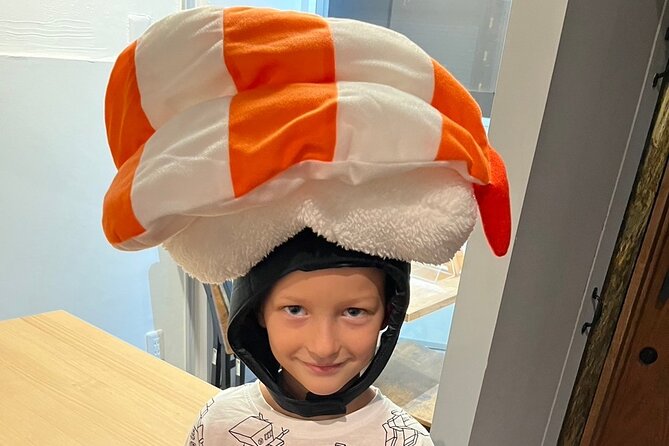
Vegetarian, vegan, and halal sushi are available by request. This is a useful option for mixed groups, since one person can choose a different menu without skipping the activity.
You should request your dietary menu in advance rather than waiting until you arrive. The information confirms that alternatives are available, but it does not provide a full ingredient list for each menu.
There is one fair limitation to keep in mind. The vegan version may use a simpler range of vegetables than the seafood menu, so the plate can feel less varied for the same price. That does not make the option unsuitable, but it is worth knowing if your main reason for booking is a wide tasting selection.
The class also provides vegetarian sushi as part of its stated facilities, and service animals are allowed. The maximum group size is 16 people, which is small enough for instruction without promising a private class.
Is $29.85 a fair price?
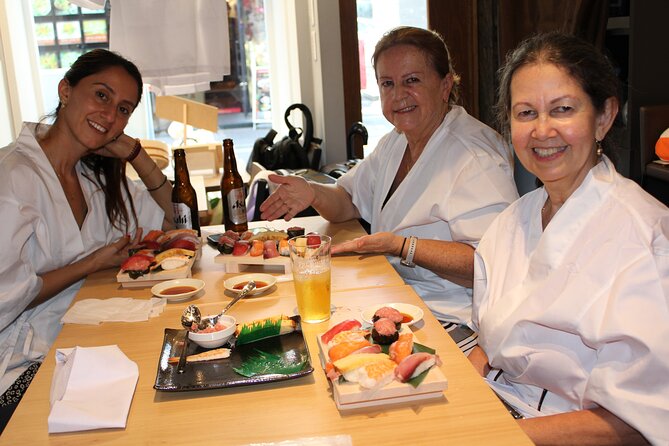
At $29.85 per person, this is a strong value for a short Osaka activity if you want food, instruction, and a central location in one package. You are not paying only for a plate of sushi. The price covers the lesson, the 12 pieces you prepare, snacks, and taxes.
The real value comes from the hands-on format. A sushi meal in Dōtonbori may cost more or less depending on the restaurant, but it will not teach you how to portion rice or shape gunkan-sushi. A cooking class elsewhere may offer a longer session, yet cost more and require extra travel.
The price is less attractive if you are looking only for a large meal. The class lasts about an hour and a half, and the included sushi is a set portion. You may still want dinner later, especially after a morning or afternoon session.
For couples, families, and solo visitors, the cost also buys an easy shared activity. Families with children found the class accessible and fun, while couples can turn it into a casual date. Solo participants should not feel out of place, since the structure gives you something to do and makes conversation natural.
Timing your class around Osaka
Afternoon and evening options are available, so you can choose based on your appetite and daily plans. An afternoon booking works well after exploring another part of Osaka, while an evening session fits naturally before a walk through Dōtonbori.
Because the class finishes where it starts, you do not need to arrange a second pickup or find a distant restaurant afterward. The central location also gives you plenty of choices for continuing the night, though the class itself does not include a wider Dōtonbori tour.
I would avoid booking this immediately after a very large lunch. You will be eating the sushi you make, and the activity works best when you are ready to taste it. The duration is short enough to fit into a busy Osaka itinerary, but long enough that you should arrive ready to participate rather than rush through it.
Free cancellation is available if you cancel at least 24 hours before the local start time. Cancellations or changes made within 24 hours are not refunded or accepted.
Who should book this Osaka activity?
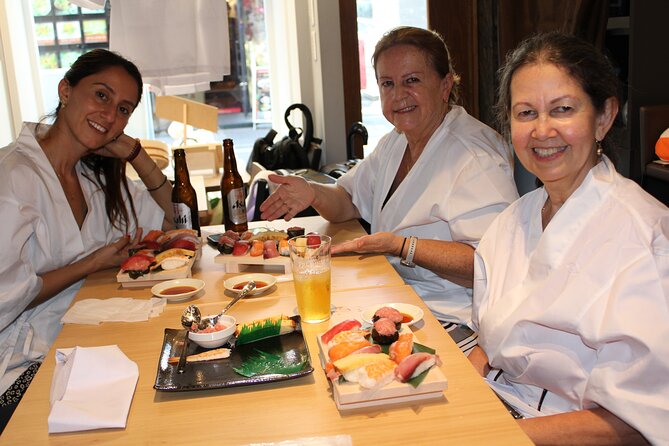
I would recommend it to you if you want a practical food experience in a central part of Osaka and prefer making something to simply ordering it. It suits first-time sushi makers, families, couples, and solo visitors.
It is especially good for:
- People who want a short activity between sightseeing stops
- Anyone curious about the difference between nigiri and gunkan-sushi
- Families looking for something children can take part in
- Couples who want a shared meal with a little structure
- Visitors who want instruction in English, Chinese, or Korean
- Diners with vegetarian, vegan, or halal requirements who request the right menu ahead of time
I would hesitate if you want advanced culinary training, a long chef-led course, or a highly traditional atmosphere. The class is friendly and accessible, but it is built for a broad international audience. The energy can feel a bit rehearsed, and the schedule may feel quick if you want to linger over every technique.
Should you book the Sushi Making Experience Namba?
Book it if you want to leave Osaka with more than a food photo. You will learn a few repeatable techniques, make 12 pieces of sushi, and eat them in a central Dōtonbori location for a reasonable price.
The strongest reasons to go are the patient instruction, the chance to shape both nigiri and gunkan-sushi, and the lively help from instructors such as Mika, Kosei, Yui, Mako, Shiori, Toshiki, and Hana. Request dietary arrangements early, allow extra time to find the meeting point, and do not expect a full dinner or professional chef course.
For most first-time participants, this is a well-priced, easy-to-fit Osaka activity with enough substance to feel worthwhile.
FAQ
Where does the sushi-making class meet?
The class meets at Sushi Making Experience Namba1A, 2-6-11 Nishishinsaibashi, Chuo Ward, Osaka, Osaka Prefecture 542-0086, Japan. It is located in the Dōtonbori area and is near public transportation.
How long does the activity last?
The experience lasts approximately 1 hour and 30 minutes. It ends back at the meeting point.
How many pieces of sushi will I make?
You will make 12 pieces of sushi. The class includes two main styles, nigiri and gunkan-sushi.
Is the class available in English?
Yes. Guidance is available in English, Chinese, and Korean.
Are vegetarian, vegan, and halal menus available?
Yes. Vegetarian, vegan, and halal sushi are available by request. Make the request before the class so the suitable menu can be arranged.
Are drinks included?
The sushi, snacks, fees, and taxes are included. Alcoholic beverages such as Japanese sake and beer are not included.
Can I cancel for a refund?
Yes, if you cancel at least 24 hours before the experience start time, you can receive a full refund. Cancellations or changes made less than 24 hours before the start time are not accepted for a refund.
Just added around Osaka
- Exclusive Sushi Making Experience with a Master Chef – Osaka Area★ 5.0 · 25 reviews
- Private Home-Style Cooking Class in Osaka with Local Mom Yoshiko★ 5.0 · 46 reviews
- Hidden Osaka – Yukaku Red Light Tour & Culinary Adventure★ 4.8 · 96 reviews
- Osaka: Walking Tour and Top Highlights★ 4.8 · 104 reviews
- Osaka: Private Ceramic Painting Workshop★ 5.0 · 13 reviews
- Pickleball in Osaka, Kobe & Kyoto with Locals!★ 4.7 · 80 reviews
- Eat Like a Local in Osaka – Private Custom Street Food Tour★ 4.3 · 33 reviews
- Osaka:SUMO BEATS SHOWCASE: Taiko Drum and Wagyu burger!★ 4.2 · 37 reviews
Sushi Experiences, compared.
Sushi Making Tokyo Roll and Authentic Japanese Sushi Class
Our verdict →
Sake Omakase in Tokyo: Guided Tasting by Certified Sommeliers
Our verdict →
Browse the lists this tour appears in