
Reviewed · COOKING CLASSES
Private Kyoto Market Tour and Authentic Cooking Class with Aki
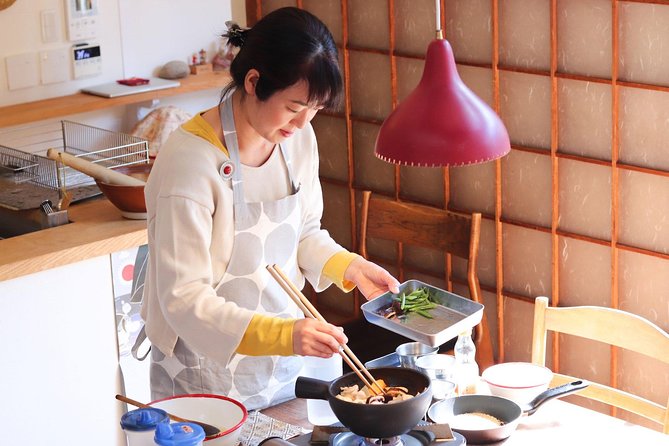
Kyoto’s best food lesson may begin with a simple market stroll. With Aki, you spend about 45 minutes at Demachiyanagi Shoutengai, choosing ingredients before taking a short bus ride to her home kitchen for a private Japanese cooking class.
I like the personal format and the useful link between shopping and cooking. You see an ingredient at the market, then learn how it becomes lunch. I also like that the class covers home dishes that may not appear on a restaurant menu, including tips for familiar foods such as miso soup. The main consideration is the non-refundable booking policy, so commit only when your Kyoto plans are firm.
Key points to know
- Market first, kitchen second: Spend about 45 minutes shopping with Aki at Demachiyanagi Shoutengai before cooking with what you select.
- A genuinely private lesson: Only your group participates, giving beginners room to ask questions and experienced cooks a chance to focus on Japanese methods.
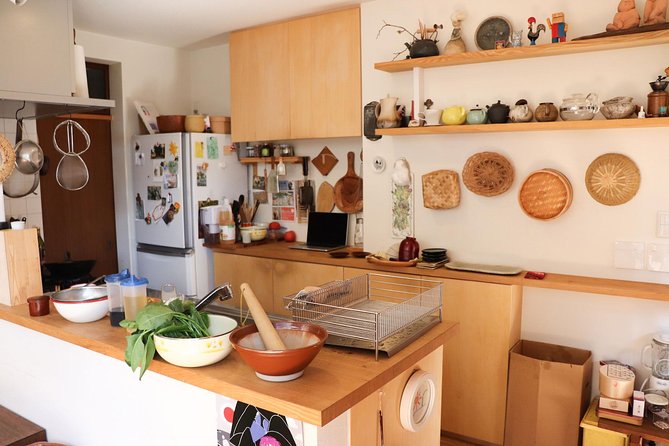
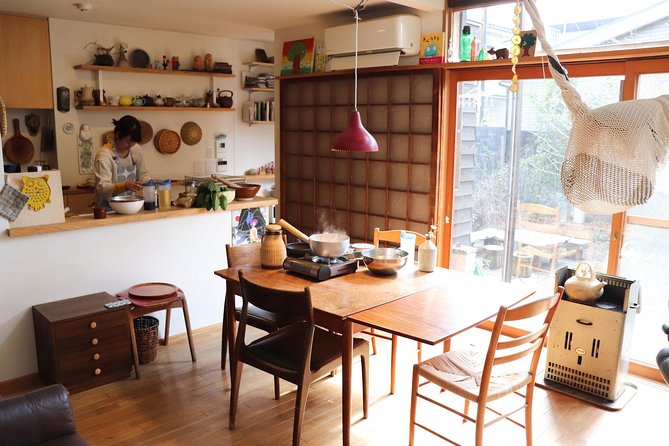
- Aki hosts in her Kyoto home: The class gives you a look at how a local home kitchen works, not just a lesson in a commercial studio.
- A four-hour food experience: The day includes the market walk, a roughly 10-minute bus ride, about an hour of cooking, and the meal afterward.
- Seasonal menus are part of the appeal: Dishes change with the season, and vegetarian meals can be requested when booking.
- A good value for a private meal: At $119 per person, the price covers the market tour, instruction, food, non-alcoholic drinks, and a home-cooked meal.
Why the market visit gives the class its purpose
The experience starts at 10:30 am at Demachi Futaba, 236 Seiryūchō, in Kyoto’s Kamigyo Ward. From there, Aki leads you through Demachiyanagi Shoutengai, a local street market with basic Japanese ingredients and higher-quality regional produce.
This first section lasts about 45 minutes. That is enough time to look around without turning the morning into a long shopping expedition. More important, the market is not just a warm-up. You help choose vegetables and other ingredients that will later appear on your plate.
I like this setup because it gives you a better sense of how Japanese cooking begins. Instead of receiving a premeasured box of ingredients, you see the raw materials and learn how to select them with Aki’s help. The market also takes you away from Kyoto’s main sightseeing lanes and into a neighborhood setting with small shops and local food businesses.
The exact menu depends on the season. That is a benefit if you want food that reflects the time of year, though it means you cannot plan around a fixed list of dishes. If you have allergies, dietary restrictions, or strong cooking preferences, tell the provider when you book. A vegetarian option is available with advance notice.
More Cooking Classes in Kyoto
- Ramen Cooking Class at Ramen Factory in Kyoto
★ 5.0 · 1,937 reviews - Kyoto: Ramen Cooking Class at a Ramen Factory with Souvenir
★ 4.9 · 532 reviews - Kyoto: Ramen, Gyoza, and Onigiri Cooking Class
★ 5.0 · 445 reviews
The short bus ride to Aki’s home
After the market, you take the bus to Aki’s home. The ride takes about 10 minutes and covers four bus stops. Hotel pickup and drop-off are not included, so you are responsible for reaching the starting point.
The move from market to home is part of what makes the experience feel personal. You are not simply walking into a cooking school built for groups. You are changing settings, from neighborhood shopping street to Aki’s own kitchen, and getting a small look at local daily life along the way.
The transport is also worth noting for timing. The whole experience lasts about four hours, but the cooking itself is scheduled for roughly one hour before the meal. Market time, bus travel, preparation, and eating fill out the rest of the morning and early afternoon. You should avoid booking a tight next activity, especially one on the other side of Kyoto.
The listed end point is back at the meeting point. Since the cooking takes place at Aki’s home, check the exact return arrangements and allow room for the group’s pace. The supplied details confirm the bus trip to her home but do not provide a full return timetable.
Cooking Japanese home food with Aki
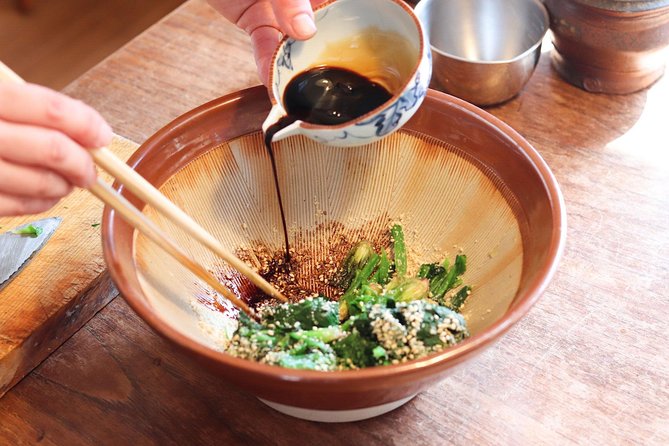
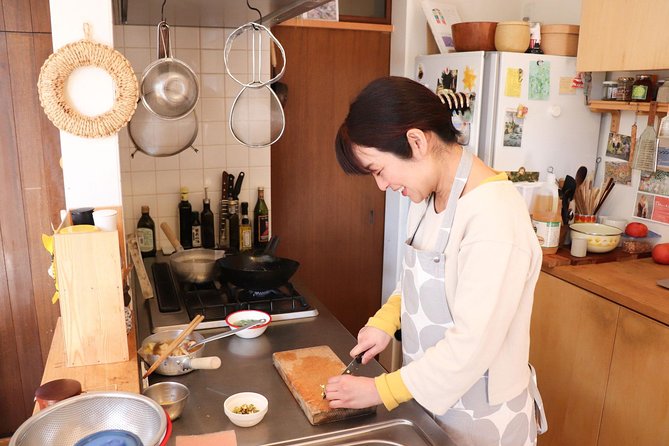
Aki provides recipes in English and guides you through the cooking process. The lesson is hands-on, so you are not only watching a demonstration. You help prepare the food you will later eat.
The menu can include dishes that are not commonly served in restaurants, along with familiar staples such as miso soup. That distinction matters. Restaurant food often shows you polished dishes, while a home lesson can explain the everyday habits behind Japanese meals.
I especially like the chance to learn the small decisions that recipes often skip. A written recipe may tell you what to add, but a local cook can show you how ingredients are handled and how a dish fits into a larger meal. Aki also explains Japanese food and culture as you work, so the lesson is not limited to technique.
The private format makes this a good choice for mixed cooking abilities. If you are new to Japanese cooking, you can ask basic questions without holding up a large class. If you already cook, you can focus on details and compare methods. The class is described as suitable for both beginners and experienced cooks.
The cooking portion lasts about an hour. That is long enough for a focused lesson, but it is not an all-day culinary school. If you want to master several complex dishes or spend hours practicing knife work, this may feel brief. If you want a manageable introduction linked to a real meal, the length works well.
The meal is part of the lesson
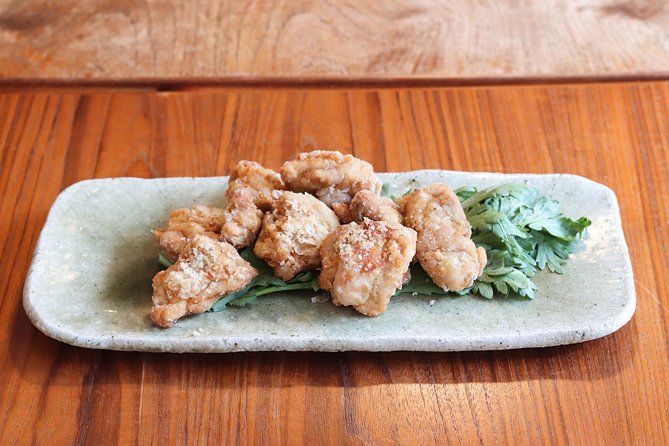
After cooking, you sit down to eat what you prepared. The meal is included, as are non-alcoholic beverages. The experience description also includes 1 to 2 glasses of local alcohol, so this adds a modest drink pairing rather than a separate bar stop.
Eating together gives the class a relaxed finish. You can see how the dishes work as a meal instead of tasting each item in isolation. It also gives you time to continue talking with Aki about Japanese food and life in Kyoto.
The menu changes by season, which keeps the experience tied to the market visit. It also means the meal may not match the dishes you had in mind before booking. I would choose this class for the chance to learn and eat a seasonal home menu, not for a guaranteed signature dish.
The food is prepared in Aki’s home kitchen. That is a key part of the experience, but it also means the setting is more personal and less formal than a restaurant or culinary school. If you prefer a polished demonstration space with professional equipment and a fixed curriculum, look elsewhere. If you want to see how a local host cooks and eats, the home setting is the point.
More Market Tours in Kyoto
- Nishiki Market Brunch Walking Tour (7 Tastings + Brunch)
★ 5.0 · 1,355 reviews - Kyoto Nishiki Market Food and Culture Walking Tour
★ 5.0 · 412 reviews - Kyoto: Nishiki Market Tea Ceremony with Koto Performance
★ 4.8 · 294 reviews - Kyoto: Nishiki Market Brunch Walking Tour-7 Tastings+Brunch
★ 4.8 · 197 reviews
What the $119 price really covers
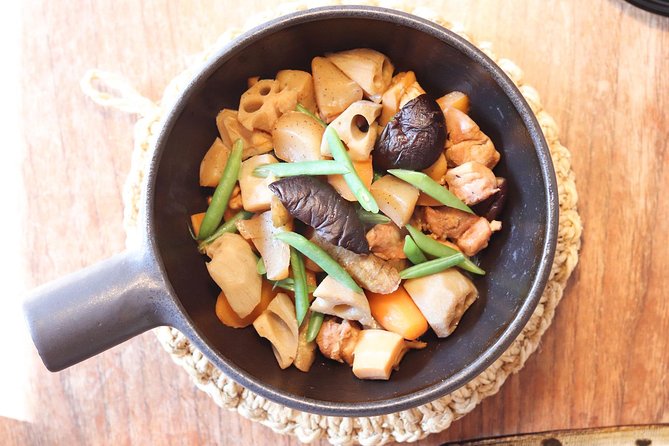
At $119 per person, this is not the cheapest way to eat in Kyoto. A market lunch or restaurant meal will cost less. But the comparison changes when you count the private guide, ingredient shopping, instruction, food, drinks, and home setting.
You are paying for about four hours of individual attention. The price includes:
- A private market tour with Aki
- Ingredients selected during the market visit
- A private cooking class in her home
- Recipes in English
- The meal you prepare
- Non-alcoholic beverages
- 1 to 2 glasses of local alcohol, according to the experience details
The private format is the main value. A larger class might offer a lower per-person price, but you would have less time to ask questions and less connection between the shopping and cooking. Here, the same host leads both parts, which gives the morning a clear thread.
The value is strongest for people who will actually use the recipes at home. If you simply want lunch, $119 is a high price. If you want a personal introduction to Japanese ingredients, home cooking, and everyday food culture, the cost is easier to justify.
The experience is also booked an average of 97 days ahead. That is a useful planning clue. You do not need to treat the number as a guarantee of limited availability, but you should reserve early if the date matters, especially since the activity is private and confirmation is subject to availability.
What makes this different from a standard Kyoto cooking class
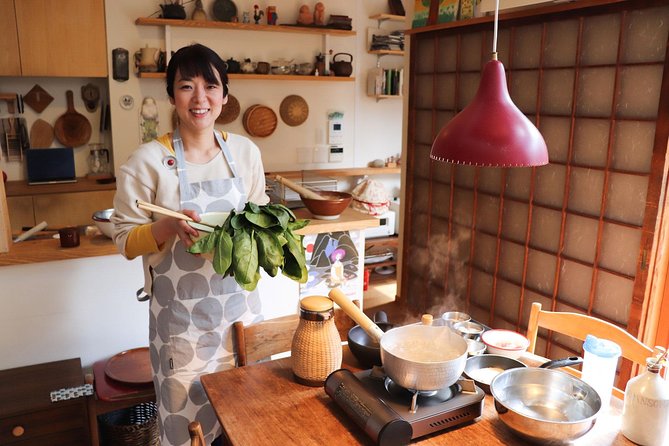
Many cooking lessons begin and end in one studio. This one connects three parts of the food chain: the neighborhood market, ingredient selection, and the home kitchen.
That connection gives you more context. At the market, you learn what is available and how a local shopper might choose ingredients. On the bus, you move into a residential setting. In the kitchen, you turn those ingredients into dishes and then eat them at the source.
The experience also offers a more personal view of Kyoto than a food-focused stop in a restaurant district. The market is called Demachiyanagi Shoutengai, and the activity is designed around a local neighborhood rather than a major tourist attraction. You should not expect famous sights or a long historical lecture. The reward is a closer look at ordinary food shopping and home dining.
The strongest part may be the human connection. Aki is both instructor and host, and the private format allows the class to feel more like being welcomed into someone’s routine than attending a scheduled show. The experience details describe her kitchen as beautiful, but the bigger benefit is access to a domestic setting that most short Kyoto visits do not provide.
Who should book this experience
I would recommend it most strongly to you if:
- You enjoy Japanese food and want to recreate some dishes at home.
- You prefer small, personal activities to large group tours.
- You want a neighborhood experience away from Kyoto’s busiest sightseeing areas.
- You are comfortable with a seasonal menu that may change.
- You want both a market visit and a cooking lesson in one morning.
- You appreciate learning through conversation and shared food.
It also suits families and mixed-age groups, provided everyone can take part in the market walk and cooking session. One especially warm account describes a child remembering Aki’s kind presence long after the class, which suggests that the welcoming tone can work well for families.
You may want to skip it if your schedule is packed, you need a guaranteed menu, or you want a highly technical course with many hours of instruction. The cooking section is about one hour, and the full experience is built around hospitality as much as formal training.
Practical details before you reserve
The activity lasts approximately four hours and begins at 10:30 am. The starting point is Demachi Futaba, 236 Seiryūchō, Kamigyo Ward, Kyoto, 602-0822, Japan. It ends back at the meeting point according to the supplied details.
A mobile ticket is available. Confirmation arrives within 48 hours of booking, subject to availability. Since this is a private activity, only your own group participates.
Tell the provider about allergies, dietary restrictions, vegetarian needs, or cooking preferences at the time of booking. Do not wait until the market visit. The menu varies by season, and the host needs that information before planning the ingredients.
The cancellation terms deserve attention. The experience is non-refundable and cannot be changed for any reason. If your plans are uncertain, this is a risk. Book after your Kyoto dates and transport plans are settled.
Should you book Aki’s Kyoto cooking class?
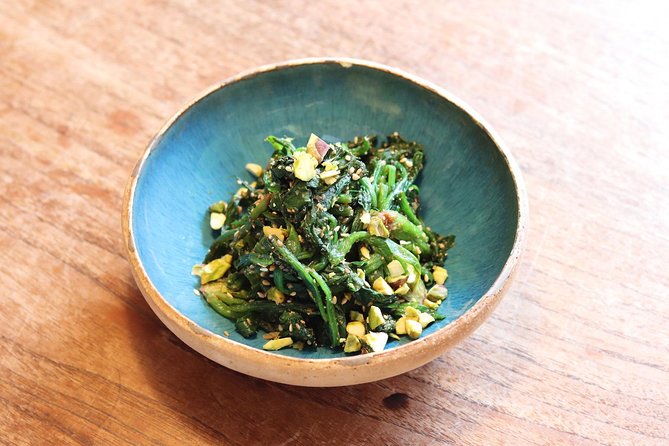
Yes, if you want more than a recipe demonstration. The market visit, bus ride, home kitchen, seasonal ingredients, and shared meal create a personal four-hour window into Kyoto food culture.
The price is fair for a private experience with food and drinks included, though it is not a budget meal. Book it for the access and instruction, not simply for the amount of food. If you are curious about Japanese home cooking, want recipes in English, and value time with a local host, this is one of the better ways to use a morning in Kyoto.
Reserve early, notify Aki about food needs, and leave your schedule open around the four-hour window. If you do those three things, the experience offers a useful blend of market shopping, practical cooking, and a meal you helped make.
FAQ
Where does the experience begin?
It begins at 10:30 am at Demachi Futaba, 236 Seiryūchō, Kamigyo Ward, Kyoto, 602-0822, Japan.
How long does the activity last?
The experience lasts approximately four hours.
Is the cooking class private?
Yes. Only your group participates in the private market tour and cooking class with Aki.
How long is the market visit?
You spend about 45 minutes walking through Demachiyanagi Shoutengai and selecting ingredients with Aki.
How do I get to Aki’s home kitchen?
You take a bus from the market to Aki’s home. The ride takes about 10 minutes and covers four bus stops.
Is a vegetarian option available?
Yes. A vegetarian option is available, but you should request it when booking. You should also report allergies, dietary restrictions, or cooking preferences at that time.
Are food and drinks included?
Yes. A home-cooked Japanese meal and non-alcoholic beverages are included. The experience also includes 1 to 2 glasses of local alcohol.
Just added around Kyoto
- Sekka Cotton Furoshiki Class★ 5.0 · 19 reviews
- Secret Eastern Kyoto Biking Adventure★ 5.0 · 44 reviews
- Kyoto Sword Experience – includes Museum Ticket/Ninja Experience★ 4.5 · 149 reviews
- Scenic Green Tea Fields of Hidden Kyoto & Local Tea Exp (Private)★ 5.0 · 32 reviews
- Private Sake Tasting in Central Kyoto with Sake Sommelier★ 5.0 · 32 reviews
- Samurai School in Kyoto: Samurai for a Day★ 5.0 · 202 reviews
- SHIRAKAWA Japanese Culture Experiences with private English staff★ 5.0 · 16 reviews
- A Privately Guided Photoshoot in Beautiful Kyoto by a Pro★ 5.0 · 18 reviews
Cooking Classes, compared.
Browse the lists this tour appears in