
Reviewed · TEA CEREMONY EXPERIENCES
Kyoto: Quiet and Graceful Tea Ceremony
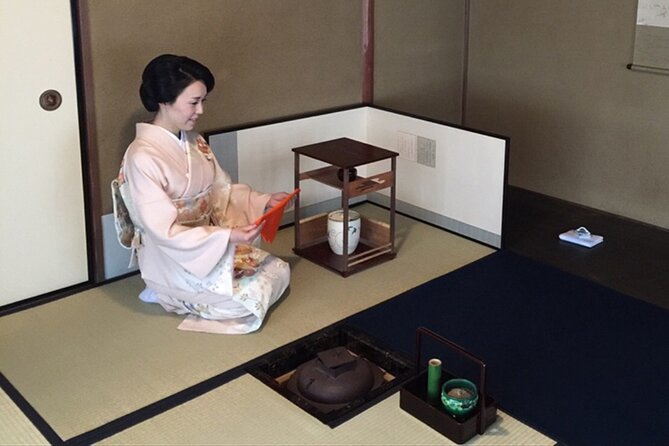
Kyoto’s tea ceremony is less about drinking a cup of matcha than learning how attention, hospitality, and simple movements can turn tea into an art. At Omotenashi Tea Ceremony, a tea master prepares matcha in a quiet tatami room, explains the customs, and then lets you try the process yourself. I especially like the small group setting and the inclusion of seasonal sweets and premium Kyoto matcha.
The 45-minute format is short enough to fit neatly into a busy Kyoto day. It also keeps the experience focused rather than turning it into a long lecture. The main drawback is that this is a private-house style ceremony, not a grand tea-house production. Kimono rental is not included, and you cannot take photos during the central performance.
Key points to know
- A calm, private-house setting: The ceremony takes place at the tea master’s specially designed private home, rather than a large commercial venue.
- Hands-on matcha preparation: After watching the tea master, you get the chance to prepare your own tea.
- Seasonal sweets included: Traditional Japanese sweets are served before or with the matcha.
- Small groups only: The maximum is eight people, making it easier to ask questions and follow the demonstration.
- No kimono rental: Come in your own clothing. Kimono dressing is not part of this experience.
- Photos are limited: You can take pictures before and after, but not while the tea performance is underway.
A quiet introduction to Kyoto’s tea tradition
I like this ceremony because it gives you the heart of the tea ritual without making you commit half a day to it. In about 45 minutes, you see the room prepared, learn basic etiquette, watch matcha being made, taste a seasonal sweet, and take part in the process.
That compact schedule matters in Kyoto. You might have temples booked in the morning, a walk through Gion later, and dinner reservations at night. This experience can fit between them without swallowing your day. It is best viewed as a focused cultural lesson, not a full formal tea-school course.
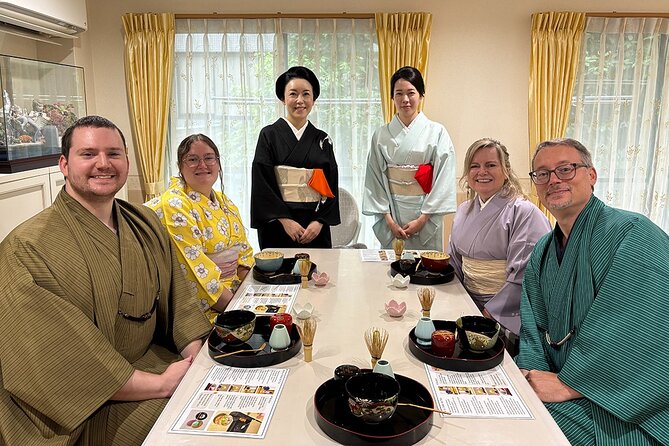
The tone is calm and deliberate. The tea master’s movements are carefully ordered, from handling the utensils to whisking the matcha. The room is designed for tea ceremony, and the private setting helps the ritual feel less like a stage show and more like an introduction into someone’s practice.
More Tea Ceremony Experiences in Kyoto
- Kyoto: Tea Ceremony in a Traditional Tea House in Kiyomizu
★ 4.9 · 3,519 reviews - Kyoto: Tea Ceremony Ju-An at Jotokuji Temple
★ 4.9 · 3,207 reviews - Kyoto: 45-Minute Tea Ceremony Lesson Experience
★ 4.3 · 2,378 reviews
What happens during the 45-minute ceremony
The visit begins at Omotenashi Tea Ceremony 南茶道教室, at the listed meeting point on Sanbongichō in Kyoto’s Nakagyo Ward. The activity ends at the same location, so you do not need to arrange a separate return transfer.
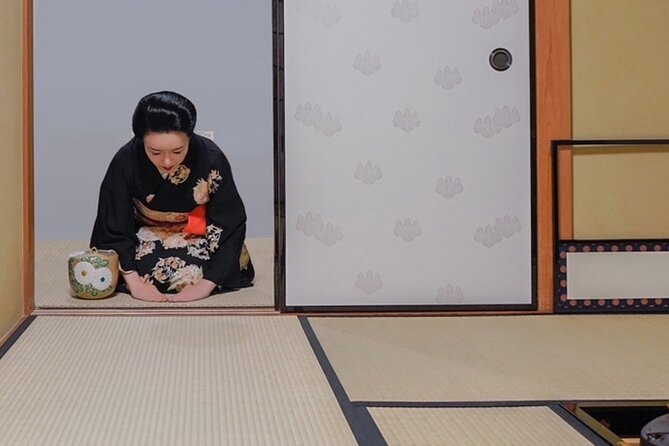
Once inside, expect a short explanation of how to enter and sit in the tea room. This small lesson is useful because tea ceremony etiquette can seem mysterious if you have never encountered it. You will learn how to behave around the utensils, sweets, and tea, without being expected to know Japanese customs in advance.
The tea master then demonstrates the preparation of matcha. This is the part to watch closely. The movements are slow, exact, and purposeful. The quiet is part of the experience. One highly praised host, Mai, is described as both precise and warm, with clear explanations and a helpful question-and-answer period.
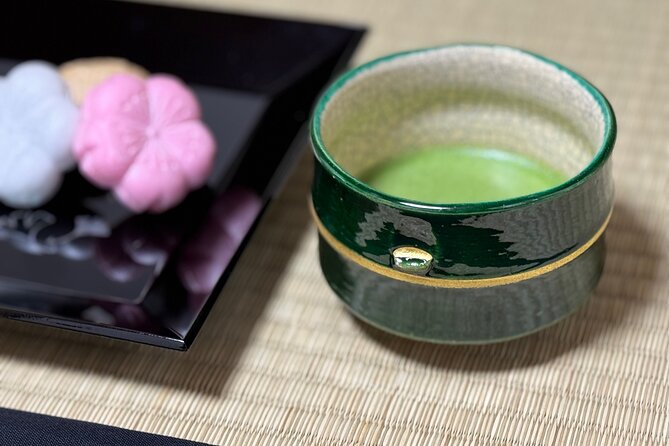
The demonstration is followed by sweets and matcha. The sweets are traditional Japanese seasonal confections, chosen to balance the bitterness of the tea. The contrast is intentional: the sweet comes first or alongside the tea, preparing your palate for the strong, grassy taste of matcha.
You then have the chance to make your own tea. This hands-on section is one of the most useful parts of the visit. It changes the ceremony from something you simply watch into something you understand through your own movements. The process is approachable, and the hosts explain what to do as you go.
The activity does not appear to include a full formal tea-school curriculum. It is better suited to learning the basic rhythm and meaning of the ceremony. You leave with a clearer sense of why the utensils, gestures, silence, and sweets matter.
The tea room is the main attraction
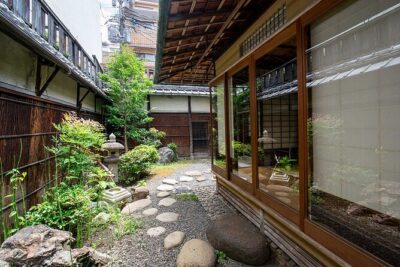
The private-house setting deserves a realistic explanation. The ceremony is held in the tea master’s home, which was specially designed for tea ceremony. That gives the experience a personal quality, but it also means you should not expect a lavish historic tea house or a polished hotel salon.
Some people will find this exactly right. The room is quiet, intimate, and free from the noise of a large group. You can pay attention to the tea master’s hands and ask questions without competing with dozens of other people.
Others may find the setting plain or even slightly cold. One November visit was described as uncomfortable because the house was chilly. If you tend to feel cold, dress in warm layers, especially in cooler months. The tea room’s restrained design is part of its character, but it does not offer the visual drama of a famous temple or garden.
The atmosphere also depends on timing. A few early arrivals caused a slight interruption during one session. Arriving at the appointed time, rather than well before it, is a sensible courtesy in a small private space.
Matcha, sweets, and the value of doing it yourself
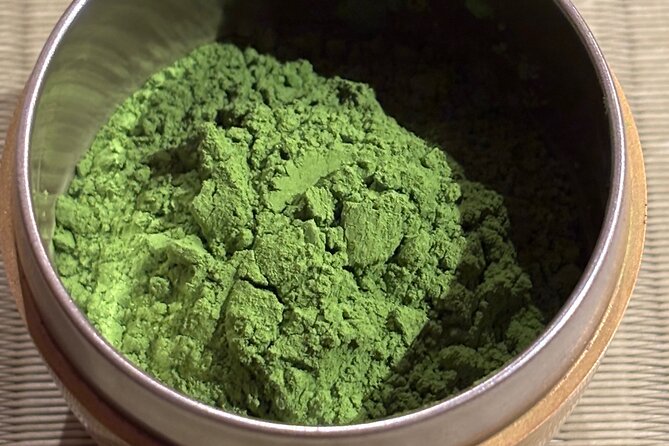
The food and drink are simple, but they carry much of the ceremony’s meaning. You receive premium matcha sourced from Kyoto producers, along with a traditional seasonal sweet. This is not a snack stop in the ordinary sense. The sweet and tea are meant to be experienced together.
Matcha has a powerful flavor that can surprise first-time drinkers. It is grassy, bitter, and finely textured. The sweet provides the balance. If you already enjoy green tea, you may appreciate the quality of the matcha more immediately. If you are unsure about the taste, the ceremony gives you useful context instead of asking you to judge it like an ordinary café drink.
The hands-on preparation is especially valuable for families and first-time visitors. Children have enjoyed taking part, and the hosts have shown flexibility when a child did not care for the traditional sweet. Do not expect a separate children’s menu, but the welcoming approach makes the activity workable for families who can manage a quiet 45-minute session.
You should also expect to follow the room’s rules. The tea performance itself is not a time for phones or cameras. You can photograph before and after the ceremony, and the restriction protects the silence and concentration of the central ritual.
Same trip, a completely different kind of day:
- PERFECT KYOTO 1-Day Bus Tour
★ 5.0 · 13,518 reviews - Kyoto: Fushimi Inari, Kinkakuji, Bamboo Grove 1 Day Bus Tour
★ 4.8 · 4,316 reviews - Kyoto Geisha Walking Tour: Gion District & Hidden Gems
★ 4.7 · 3,273 reviews - Kyoto: Gion Magical Night Walking Tour with Geisha Trivia
★ 4.9 · 2,393 reviews
A small group changes the experience
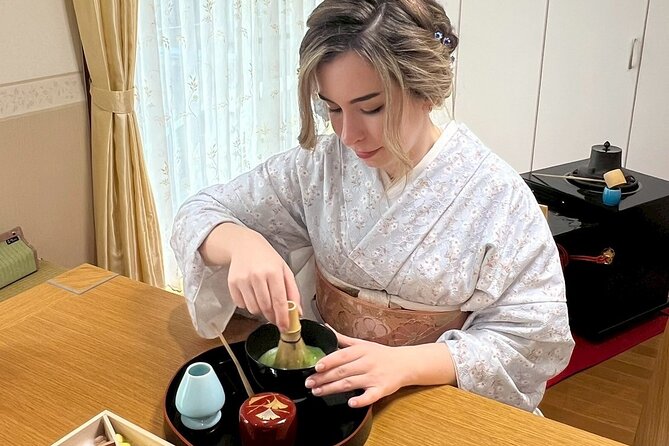
The maximum group size is eight people. That is small enough for the tea master to explain the details and watch as you prepare your own matcha. It also gives solo visitors and couples a better chance to ask questions.
This format is particularly useful if you want a gentle introduction rather than a large demonstration aimed at a crowd. The atmosphere can feel personal even when you are not booking the entire room. Solo visitors have found the hosts warm and attentive, and couples can share an activity that is quieter than another sightseeing stop.
The small size has a trade-off. In a private room, an early arrival or late arrival can be noticeable. The ceremony also has a fixed rhythm, so it may feel slightly rushed if you want a long conversation about tea history or Japanese aesthetics.
English explanations are available, and one host has been singled out for speaking very clearly. The precise language support can vary by session, but the experience is structured around demonstration, repetition, and visual cues, which helps even when every detail cannot be explained at length.
What this experience does not include
The clearest point to understand before booking is that kimono rental is not included. You will not be dressed in traditional clothing as part of the activity. If putting on a kimono and taking photographs is your main goal, you should choose a combined kimono and tea package instead.
You also cannot photograph or record the tea performance. This may disappoint anyone hoping to document every gesture for social media. The restriction is deliberate, and it helps preserve the quiet mood. You can take pictures before and after, including around the preparation portion when the hosts permit it.
This is not a theatrical show with elaborate staging, a garden stroll, or a large historic building. It is a concentrated tea lesson in a private setting. The experience works best when you value the ritual itself more than the setting’s decoration.
The 45-minute length can also cut both ways. It is convenient and manageable, but some people may want more time for questions or a second bowl of tea. If you are paying primarily for a long cultural lecture, this may feel brief.
Is $56.49 fair for 45 minutes?
At $56.49 per person, this is not the cheapest way to drink matcha in Kyoto. You can find tea and sweets at ordinary cafés for far less. The price is paying for the instruction, the private tea-room setting, the small group size, the ceremony, and the chance to prepare the tea yourself.
I think the value is strongest for someone who wants context. A bowl of matcha in a café gives you the flavor. This activity explains why the bowl is handled in a certain way, why the sweet comes with it, and how the host’s movements express hospitality.
The price is less convincing if you expect a grand venue, kimono rental, extensive food, or a long performance. Those elements are not included. The experience is simple and focused, so your satisfaction depends on wanting an intimate cultural lesson rather than a photo-heavy package.
Compared with a large tourist ceremony, the small maximum of eight is a real benefit. You are less likely to feel like one face in a crowd, and the hands-on portion has more room to breathe. Compared with a luxury tea experience, the private-house format feels modest.
Who will enjoy this Kyoto tea ceremony?
I would recommend it to you if you:
- Want a short, structured introduction to Japanese tea ceremony
- Prefer a quiet room over a large tourist attraction
- Like learning by watching and then trying the activity yourself
- Are visiting Kyoto as a couple, solo, or in a small family group
- Enjoy traditional sweets and want to taste good Kyoto matcha
- Appreciate etiquette and ritual but do not need a long academic lecture
Families can enjoy it, especially if children can sit quietly and follow simple instructions. The hosts have made children feel welcome, but the ceremony still requires respect for the room and its silence.
It also suits couples looking for a calm break between temples. The setting is intimate without being romantic in a staged or theatrical way. Solo visitors should feel comfortable too, since the group is small and the host can answer questions directly.
I would hesitate if you mainly want to wear a kimono, take photos during the ceremony, or see a grand historic tea house. Those expectations do not match what is offered.
Practical details before you go
The activity lasts approximately 45 minutes and finishes back at the meeting point. It is near public transportation, and confirmation is provided when you book. Mobile tickets make the arrival process straightforward.
The listed meeting point is 南総合会計事務所, 450-1 Sanbongichō, Nakagyo Ward, Kyoto, postal code 604-0871. Check the exact meeting instructions on your confirmation before setting out, since the activity takes place in a private tea setting rather than an obvious large attraction.
Service animals are allowed. The maximum group size is eight people. Since the tea room can feel cool in November, warm clothing is a sensible choice for cold-weather visits.
You can cancel for a full refund up to 24 hours before the start time. Cancellations or changes made within 24 hours are not refunded or accepted, and the cut-off follows Kyoto local time.
Should you book it?
Book this ceremony if you want to slow down for 45 minutes and pay attention to a distinctly Japanese form of hospitality. The best parts are the quiet private room, the careful demonstration, the seasonal sweet, and the chance to make your own matcha.
Skip it if you want kimono dressing, a grand tea-house setting, or unrestricted photography. At $56.49, the value comes from personal instruction and atmosphere, not from luxury decoration or a long itinerary.
For a first tea ceremony in Kyoto, this is a sensible, intimate choice. Arrive on time, dress warmly in cool weather, put your phone away during the performance, and let the small details do the work.
FAQ
How long does the tea ceremony last?
The experience lasts approximately 45 minutes.
How much does the experience cost?
The listed price is $56.49 per person.
Where does the tea ceremony take place?
The meeting point is 南総合会計事務所, 450-1 Sanbongichō, Nakagyo Ward, Kyoto, 604-0871, Japan. The activity ends back at the same meeting point.
How many people can join?
The maximum group size is eight people.
Are tea and sweets included?
Yes. The experience includes premium matcha and traditional Japanese seasonal sweets.
Can I make my own matcha?
Yes. The tea master demonstrates the process, and you have the chance to prepare your own tea.
Is kimono rental included?
No. Kimono rental and dressing are not included in this experience.
Can I take photos during the ceremony?
Photography and video are not allowed during the tea performance. Photos may be taken before and after the ceremony.
What is the cancellation policy?
You can cancel at least 24 hours before the start time for a full refund. Cancellations or changes made within 24 hours are not accepted and are not refunded.
Just added around Kyoto
- Sekka Cotton Furoshiki Class★ 5.0 · 19 reviews
- Kyoto Sword Experience – includes Museum Ticket/Ninja Experience★ 4.5 · 149 reviews
- Scenic Green Tea Fields of Hidden Kyoto & Local Tea Exp (Private)★ 5.0 · 32 reviews
- Secret Eastern Kyoto Biking Adventure★ 5.0 · 44 reviews
- Private Sake Tasting in Central Kyoto with Sake Sommelier★ 5.0 · 32 reviews
- Samurai School in Kyoto: Samurai for a Day★ 5.0 · 202 reviews
- SHIRAKAWA Japanese Culture Experiences with private English staff★ 5.0 · 16 reviews
- A Privately Guided Photoshoot in Beautiful Kyoto by a Pro★ 5.0 · 18 reviews
Tea Ceremony Experiences, compared.

Tea Ceremony in a Traditional Tea House in Kiyomizu
Our verdict →


World Heritage Kyoto & Nara Uji Authentic Matcha Experience
Our verdict →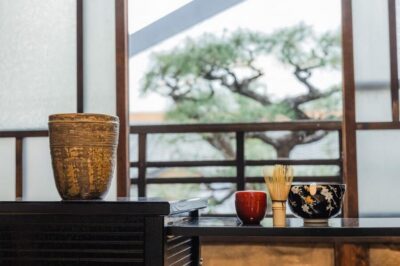
Arashiyama Bamboo Forest, Monkeys, Matcha & Temple Tour
Our verdict →
Browse the lists this tour appears in