
Reviewed · TAIKO & TRADITIONAL MUSIC
Shamisen Discovery in Kyoto 【Group】
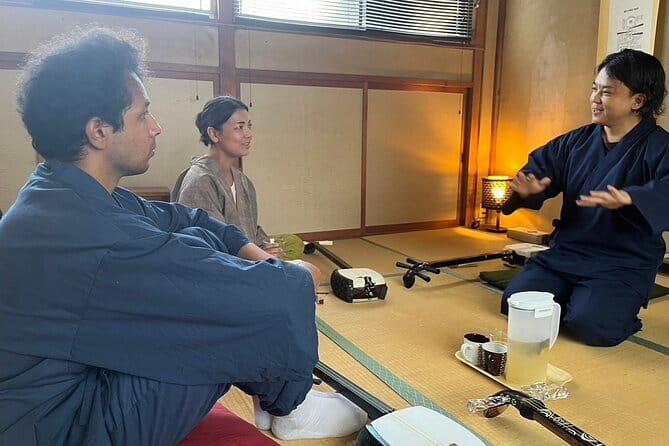
The most unusual part of this Kyoto activity is that you do not just watch a traditional instrument being played. You pick up a real shamisen, learn how to hold the large bachi pick, and make your own first sounds. Instructor Jack then guides the group through a scale and a simple jam using five signature sounds of Japan.
I like the small maximum of five people, since you get far more help than in a large cultural demonstration. I also like the mix of music and memory-making: you receive a tea or coffee break, a photo session, and time to play alongside Jack rather than simply listening to a lecture.
The main limitation is the short one-hour format. At $65.89 per person, it is a fair price for a focused cultural lesson, but you should book it to gain an introduction and a memorable first session, not to become a shamisen player in one morning.
Key points at a glance
- A real hands-on lesson: You hold and play a rented shamisen, rather than only watching a performance.
- Jack teaches the class: He has more than 20 years of experience and adjusts the lesson to different musical backgrounds.
- Small groups matter: The class has a maximum of five people, giving you a good chance to receive personal help.
- A jam closes the lesson: You use one scale and create melodies while Jack provides accompaniment.
- Practical touches are included: Tea or coffee, instrument rental, photos, and left-handed shamisen are part of the session.
- A quiet change of pace: The meeting point is in Kyoto’s Kita Ward, away from the city’s major sightseeing crowds.
Your first hour with the shamisen
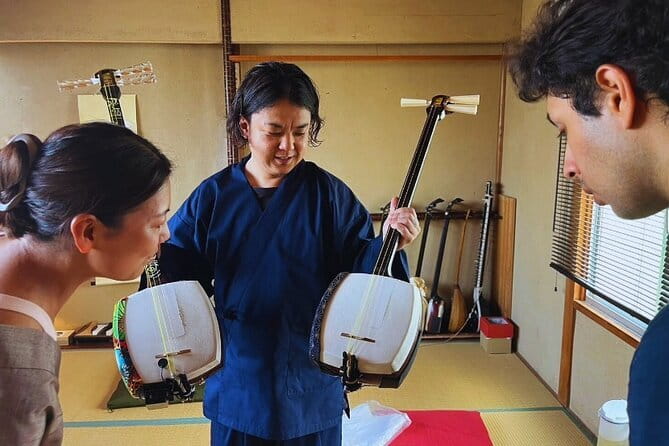
The class begins with an introduction to the instrument. Jack explains the main shamisen types, its place in Japanese music, and the basic ideas you need before playing. This opening matters because the shamisen is not simply a Japanese version of a guitar. Its shape, strings, pick, and playing style all require a different approach.
You then learn how to sit or hold the instrument correctly and how to grip the bachi. That large pick is one of the first details that can surprise beginners. The technique is less familiar than plucking a guitar string with your fingers, so a patient instructor makes a real difference here.
The session moves quickly from explanation to practice. You learn basic playing techniques and are introduced to one shamisen scale. You may already have musical experience, or you may have never played a string instrument. The format allows both types of students to take part, since the core lesson focuses on simple, clear steps.
Jack’s teaching style is particularly useful for a short class. He has more than 20 years of experience, and the lesson is adjusted to your level rather than delivered as a fixed speech. Musicians can work with the scale and rhythm more quickly, while complete beginners have time to learn the hand position and first notes.
More Taiko & Music Experiences in Kyoto:
- Kyoto: Nishiki Market Tea Ceremony with Koto Performance
★ 4.8 · 294 reviews - Kyoto: Japanese Koto & Shamisen Concert and Koto Class
★ 4.9 · 31 reviews - Private Koto Lesson in Kyoto with a Professional Koto Performer
★ 5.0 · 13 reviews
Why the group size makes a difference
The class is limited to five people. That is small enough for Jack to watch how each person holds the instrument, correct the bachi grip, and help when a sound does not come out as expected.
A larger class might give you a cheaper introduction, but it can leave you copying the person beside you. Here, you have a better chance to ask about hand position, rhythm, or the sound you are making. This is important with a shamisen because small changes in pressure and angle affect the result.
The group setup also works well for siblings, partners, parents and teenagers, and friends. You can book alone, but bringing someone you know gives the final jam a more relaxed feel. The class is not designed as a formal concert, so a little laughter and experimentation are part of the point.
The small class does not mean you receive a private lesson. Other people will share the hour, and the pace must suit the group. Still, with only five places, the balance is much closer to personal instruction than to a standard sightseeing activity.
The instrument, the bachi, and the first sounds
A shamisen has three strings and a long neck, with a body traditionally covered in animal skin. You are not expected to provide one. A rental shamisen is included, and you can choose the instrument you prefer during the photo session.
The bachi is the broad pick used to strike the strings. Learning to use it is part of the fun, but it also takes control. Your first sounds may be sharper or louder than expected. That is normal for a beginner, and the class gives you a safe place to try without needing prior technique.
You learn one scale rather than a large amount of theory. This is a sensible choice for a 60-minute session. One scale gives you enough material to make sounds that belong together, while too much information would leave you focused on memory instead of listening.
Jack also introduces five signature sounds of Japan during the free playing portion. The exact musical result will depend on your ability and confidence, but the idea is appealing: you are not forced to reproduce a full performance. You get room to create a melody of your own.
The guided jam is the best part for many people
After the basic instruction, the group has free time to play the shamisen. Jack accompanies you, and you can create melodies using what you have learned.
This turns the lesson from a technical demonstration into a shared music session. You are not simply repeating notes after the teacher. You can try a phrase, listen to Jack’s accompaniment, and respond with another phrase. That makes the final part useful even if your playing is still rough.
Students with musical backgrounds may find this section especially satisfying. Several people have been able to work through a song or play together within the hour, though your result will depend on how quickly you pick up the technique. Beginners should not feel pressured to perform. The class is meant to introduce the instrument, not test you.
I would book this activity for the jam rather than for the promise of mastering a song. The pleasure is in hearing your first real shamisen phrases supported by an experienced musician. It is a small taste of ensemble playing, and it gives the hour a clear finish.
A few more Kyoto half-days worth comparing
- PERFECT KYOTO 1-Day Bus Tour
★ 5.0 · 13,518 reviews - Kyoto: Fushimi Inari, Kinkakuji, Bamboo Grove 1 Day Bus Tour
★ 4.8 · 4,316 reviews - Kyoto: Tea Ceremony in a Traditional Tea House in Kiyomizu
★ 4.9 · 3,519 reviews - Kyoto Geisha Walking Tour: Gion District & Hidden Gems
★ 4.7 · 3,273 reviews
Tea, photos, and useful extras
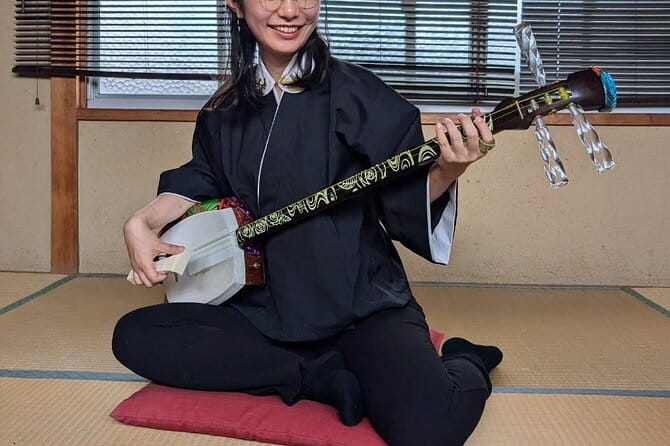
Coffee or tea is included, with green tea available. This is a small detail, but it helps break up the concentration of learning a new instrument. It also gives you a moment to talk with Jack and the other people in the group.
A photo session is included as well. You can hold the shamisen you like and have pictures taken while playing. This is more useful than it may sound. A photo gives you a simple reminder of the activity, especially if you are collecting experiences rather than buying souvenirs.
Left-handed players are covered too. Lefty shamisen are available, so you do not need to force yourself into an uncomfortable position. If you play another instrument, it may help to tell Jack about your background at the start so he can judge how much explanation you need.
The activity does not include private transportation. You make your own way to the meeting point in Murasakino Nakakashiwanocho, in Kyoto’s Kita Ward. The location is near public transportation, and the class ends at the same place.
Where it fits into a Kyoto day
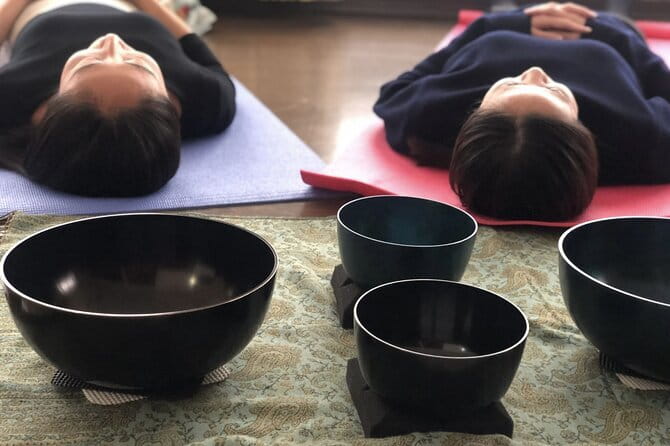
The meeting point is in northern Kyoto, away from the most concentrated sightseeing areas. That can be a benefit if you want a break from temples, shops, and crowded walking routes. It also means you should allow time to reach the class from central Kyoto.
One useful pairing is a visit to Kinkaku-ji in the morning, followed by the shamisen lesson. That combination gives you a classic Kyoto sight and then a hands-on cultural activity. The order makes practical sense if you are already planning to visit the Golden Pavilion, though you should check your own transport timing.
The class itself lasts about 60 minutes, so it is easy to fit into a larger day. Do not expect the activity to fill half a day. Its value comes from its focus. You spend one hour doing something that most Kyoto sightseeing does not offer: making music with guidance from a local instructor.
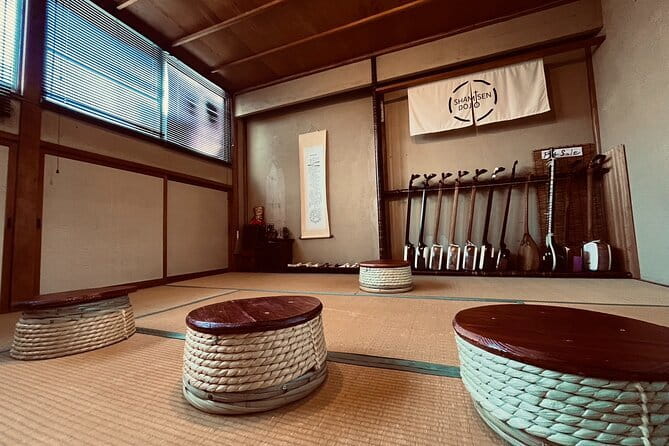
The quiet setting may also appeal if you have had enough of packed attractions. The activity takes place at the Shamisen Dojo, and the experience is centered on teaching rather than on moving a large group from one sight to the next.
Is $65.89 a fair price?
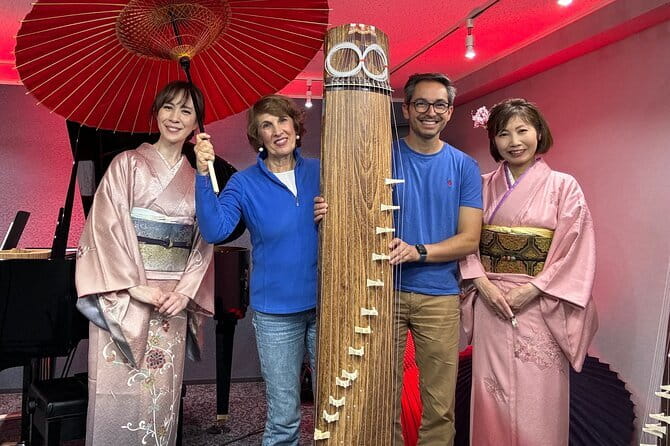
At $65.89 per person, this is not the cheapest one-hour activity in Kyoto. The price makes more sense when you add up what is provided: a rented shamisen, instruction from Jack, a small group capped at five, a photo session, tea or coffee, and a guided jam.
You are also paying for access to an instrument that would be difficult to try casually. A shamisen is not the sort of item most people carry into Japan or find ready for use at a regular cultural attraction. The lesson removes that barrier and gives you an instructor who can correct mistakes right away.
The value is strongest if you enjoy music, Japanese culture, or hands-on activities. It is also a good choice for a repeat visitor who has already seen Kyoto’s major temples. If you only want a polished performance, this is not the right purchase. You are paying to take part, and your own effort shapes the result.
The short duration keeps the cost from becoming a major budget commitment. Still, if you are traveling with a large family, the total price can rise quickly. Since the maximum group size is five, you should also understand that separate booking arrangements may be needed for a larger party.
Who will enjoy this most
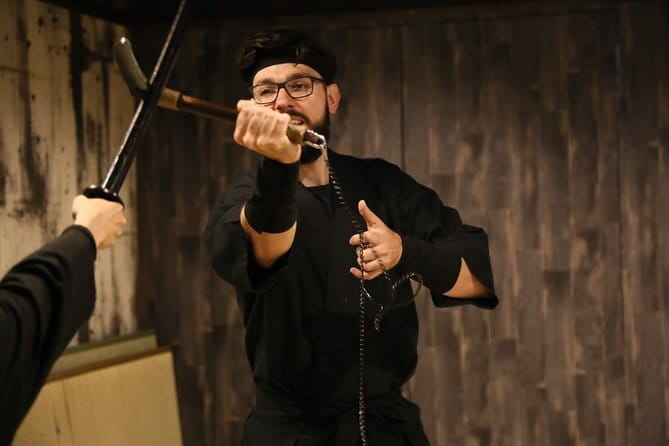
This lesson suits complete beginners. You do not need to read music or know how to play another instrument. The class covers the basics and gives you time to try the shamisen under supervision.
It also suits experienced musicians. A few participants with backgrounds in guitar, harp, Indian music, or other instruments have been able to make fast progress and enjoy the chance to compare musical traditions. Jack can adjust the conversation and practice to your level.
Families with older children and teenagers can also consider it. A 17-year-old and a parent have taken part together, and the activity works well when both people want something active rather than another passive tour. The main requirement is an interest in trying an unfamiliar instrument.
You should think twice if you want a long, formal study of shamisen technique. One hour is enough for an introduction, a scale, and a first jam. It is not enough for advanced forms, detailed repertoire, or sustained practice.
Booking, timing, and cancellation
This activity is often booked around 25 days ahead, so it is wise to reserve early if your Kyoto dates are fixed. Confirmation is provided at booking, and a mobile ticket is available.
You can cancel for a full refund up to 24 hours before the start time. Cancellations or changes made less than 24 hours before the local start time are not accepted for a refund.
Most people can participate, and left-handed players have access to suitable instruments. The activity is near public transportation, but private transport is not included. Plan your route to the Kita Ward meeting point before the day begins, especially if you are connecting it with Kinkaku-ji or another timed visit.
Should you book the Shamisen Discovery in Kyoto?
Book it if you want active contact with Japanese culture, enjoy music, or need a break from looking at famous buildings. The small class, patient instruction from Jack, left-handed instruments, tea, photos, and final jam give the hour more substance than a simple demonstration.
I would be most likely to recommend it to couples, siblings, musical families, solo visitors who enjoy meeting a small group, and anyone who has always wanted to try a shamisen. The price is reasonable for the personal attention and included equipment, but keep your expectations practical. You will leave with a first taste of the instrument, not a full course.
If that sounds right, this is one of the more memorable ways to spend an hour in Kyoto. If you prefer a long sightseeing tour or a polished stage performance, use your time and money elsewhere.
FAQ
How long does the shamisen lesson last?
The lesson lasts approximately 60 minutes.
Where does the activity begin?
It begins at Murasakino Nakakashiwanocho, Kita Ward, Kyoto, 603-8312, Japan.
Where does the activity end?
The activity ends back at the meeting point.
What is included in the price?
The price includes a rental shamisen, a photo session with the instrument, and coffee, tea, or green tea.
Is transportation included?
No. Private transportation is not included. The meeting point is near public transportation.
How many people can join the class?
The class has a maximum of five people.
Do I need previous musical experience?
No specific musical experience is required. The class is designed as an introduction and teaches basic playing techniques.
Are left-handed players able to participate?
Yes. Left-handed shamisen are available.
What is the cancellation policy?
You can cancel at least 24 hours before the local start time for a full refund. Cancellations or changes made less than 24 hours before the start time are not accepted for a refund.
Just added around Kyoto
- Sekka Cotton Furoshiki Class★ 5.0 · 19 reviews
- Kyoto Sword Experience – includes Museum Ticket/Ninja Experience★ 4.5 · 149 reviews
- Scenic Green Tea Fields of Hidden Kyoto & Local Tea Exp (Private)★ 5.0 · 32 reviews
- Secret Eastern Kyoto Biking Adventure★ 5.0 · 44 reviews
- Private Sake Tasting in Central Kyoto with Sake Sommelier★ 5.0 · 32 reviews
- Samurai School in Kyoto: Samurai for a Day★ 5.0 · 202 reviews
- Samurai Performance and Casual Experience: Kyoto Ticket★ 4.5 · 115 reviews
- SHIRAKAWA Japanese Culture Experiences with private English staff★ 5.0 · 16 reviews
Taiko & Traditional Music, compared.

Mt Fuji & Hakone Cruise, Drum Show Bullet Train 1 Day from Tokyo
Our verdict →
Open-air theater “Tao- no-Oka” Drum TAO Live performance
Our verdict →

Experience the Soul of Hiroshima: A Peaceful Koto Workshop
Our verdict →
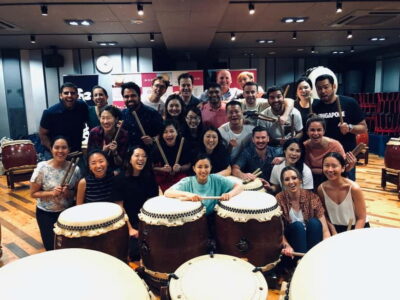
Tokyo’s Authentic and Finest Taiko Drumming Experience
Our verdict →Browse the lists this tour appears in