Reviewed · PRIVATE
Kyoto: Descending Arashiyama (Private)
Arashiyama has one famous postcard view, the Sagano Bamboo Grove, but this tour takes you much farther. You’ll follow a guide from Togetsukyo Bridge through old temples, mossy paths, a pottery studio area, an Edo-period tea stop, and the remarkable 1,200 stone Buddhas at Otagi Nenbutsu-ji.
I like the way the route trades some crowded headline sights for quieter corners, and I like the guide-led pacing. Guides such as Andrew are praised for making garden details and local stories easier to understand. The main drawback is cost: $690 per group is a serious outlay, and you still need about 5,000 yen per person for admissions.
Key points to know before booking
- The 1,200 stone Buddhas at Otagi Nenbutsu-ji give this tour its most unusual temple visit.
- The route lasts about 7 hours and 30 minutes, with substantial walking between stops.
- The bamboo experience comes twice, first in the quieter grove at Adashino Nenbutsu-ji, then on the well-known Sagano Bamboo Grove trail.
- Private pricing works best for a group of four, since the $690 rate covers up to four people.
- Admission fees are extra, and each person must bring 5,000 yen in cash.
- The tour begins and ends at Randen Arashiyama Station, making the meeting point easy to identify.
Why this Arashiyama route feels different
Most first-time visitors come to Arashiyama for three things: the bridge, the bamboo, and Tenryu-ji. All three are here, but they are only part of the day. The route keeps moving west and uphill into less familiar parts of the district, where temple grounds, memorial stones, gardens, and old rural scenery take over.
That matters because Arashiyama can feel like two different places. Near the station and bamboo grove, foot traffic can be heavy. Farther along, the mood becomes quieter and more reflective. A guide helps you make that transition without wasting time on maps or wrong turns.
This is not a quick photo walk. You spend roughly an hour at several temples and gardens, with shorter visits at the bridge and main bamboo trail. The result is a fuller picture of Arashiyama, but you should be ready for a long day on foot.
A few more Kyoto half-days worth comparing
- PERFECT KYOTO 1-Day Bus Tour
★ 5.0 · 13,518 reviews - Kyoto: Fushimi Inari, Kinkakuji, Bamboo Grove 1 Day Bus Tour
★ 4.8 · 4,316 reviews - Kyoto: Tea Ceremony in a Traditional Tea House in Kiyomizu
★ 4.9 · 3,519 reviews
Starting at Togetsukyo Bridge
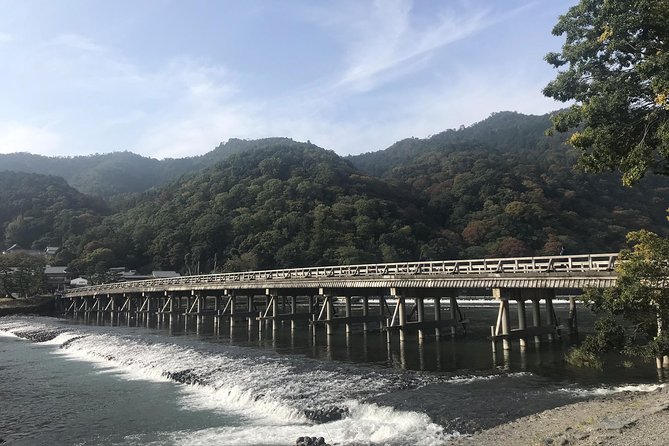
The meeting point is the center of Randen Arashiyama Station at 9:30 a.m. From there, the day starts at Togetsukyo Bridge, one of Kyoto’s most familiar views. You get about 20 minutes here, enough to see the river setting and take photographs before moving toward the temples.
The bridge is a sensible first stop. It gives you a clear sense of Arashiyama’s geography and provides an easy landmark for the beginning and end of the tour. Admission is free.
Do not expect a long riverside visit. The bridge is an introduction, not the main event. If you want extended time for photographs or a slow look at the river, you may need to use your own time before or after the tour.
Tenryu-ji and its famous Zen garden
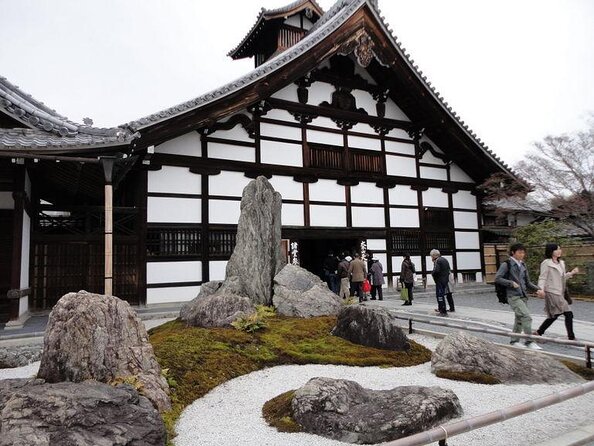
Tenryu-ji is the first major temple visit, with about an hour set aside. It is one of Japan’s early Zen temples and is known for its garden, where carefully arranged water, rocks, trees, and borrowed mountain views create a composed scene.
A guide is especially useful here because a garden can look simple at first glance. The value comes from learning what you are looking at and why the elements are arranged as they are. Andrew is noted for explaining garden details, including what they may suggest and how they were created.
The admission fee is not included. That is a recurring feature of the day, so keep cash ready rather than assuming the tour price covers temple entry.
Tenryu-ji is also one of the more expected stops on an Arashiyama visit. If you have already spent a great deal of time there, the later temples may be more rewarding. For a first visit, though, this is a strong opening because it connects famous Kyoto scenery with Zen design.
Otagi Nenbutsu-ji and its 1,200 stone figures
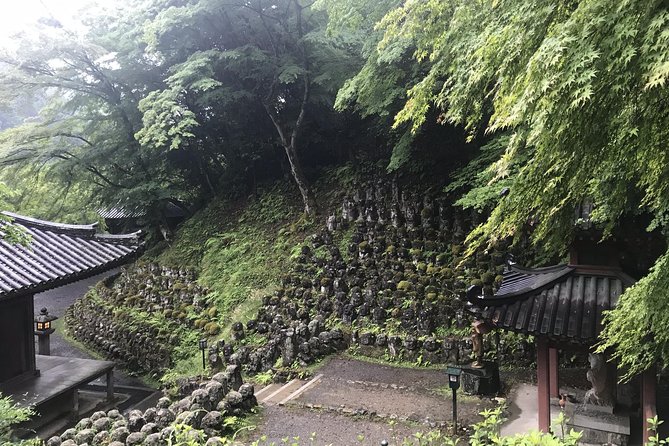
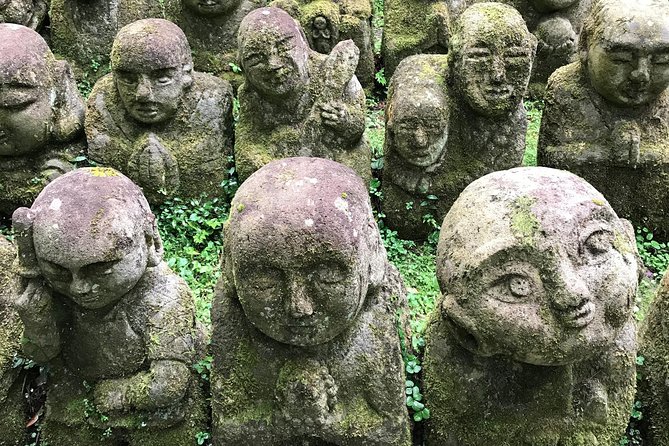
Otagi Nenbutsu-ji is the tour’s most distinctive stop. The temple’s story reaches back to the Heian period, and its grounds hold about 1,200 stone Buddha figures. They are not lined up as a single formal display. Instead, they fill the grounds with different expressions and poses, giving the visit a more personal and playful feel than many formal temple precincts.
You spend about an hour here, which is useful. A short stop would let you photograph the statues but not really take in their variety. Your guide can give the figures context and help you notice details that you might otherwise pass by.
This is also where the tour earns its claim to offer more than the standard Arashiyama circuit. The bamboo grove may be the district’s best-known sight, but Otagi Nenbutsu-ji is the kind of place that gives the day its own character.
The temple admission is extra. The route also moves steadily from one site to the next, so comfortable shoes matter more than stylish footwear.
More Private-Only Departures in Kyoto:
- Fushimi Inari Hidden Hiking Tour (Private Option Available)
★ 5.0 · 1,750 reviews - Private Kyoto Tour with a Local, Highlights & Hidden Gems, Personalised
★ 5.0 · 1,543 reviews - Kyoto 6hr Private Tour with Government-Licensed Guide
★ 5.0 · 1,369 reviews - 10 Must-see Spots in Kyoto One Day Private Tour (up to 7 people)
★ 5.0 · 1,108 reviews
Tea and sweets at Ayuchaya Hiranoya
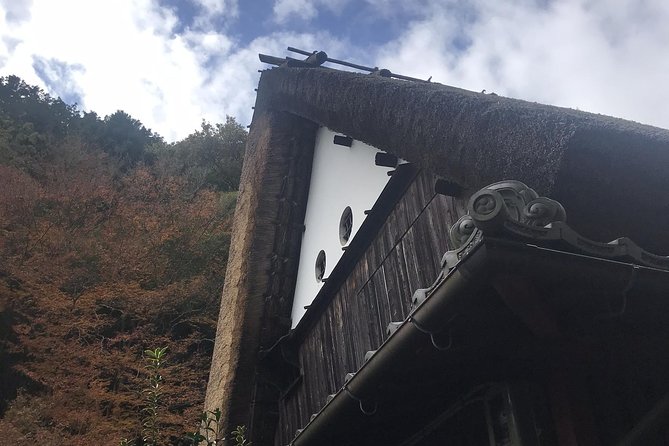
After the temples, the schedule allows about an hour at Ayuchaya Hiranoya, a cafe with roots in the Edo period. Tea and sweets provide a welcome pause after the morning’s walking, and this is one of the few points in the day designed for sitting still.
The stop adds a local food and social element without turning the tour into a full meal. Lunch is separate, and the stated lunch cost should not exceed 1,500 yen per person. Ask your guide about the timing if you need a larger meal, since tea and sweets will not replace lunch for everyone.
The age of the cafe is part of the appeal. You are not simply stopping at an anonymous refreshment counter. You are visiting a place connected with an older period of Japanese life, which gives the break more meaning than a standard cafe stop.
Still, the one-hour allocation may feel long if you prefer to keep walking or if tea and sweets are not your thing. It suits people who value a measured pace, conversation, and a chance to rest.
Adashino Nenbutsu-ji and its memorial stones
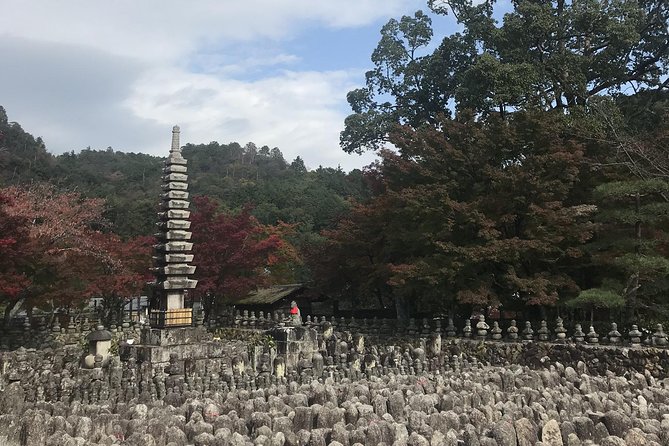
Adashino Nenbutsu-ji shifts the mood again. More than 8,000 memorial stones are gathered here from the surrounding mountains, creating a site that feels solemn and visually powerful. This is not just another temple photo stop. The stones point to the area’s long connection with remembrance and Buddhist practice.
You also walk through a small bamboo grove here. That is important because it gives you a quieter bamboo experience before you reach the famous Sagano path. The grove is smaller, but its scale can make it easier to appreciate the shapes and light of the bamboo without treating the visit as a race for one perfect photograph.
Plan on about an hour. The combination of memorial stones and bamboo makes this one of the more thoughtful parts of the route. It also asks for respectful behavior. Keep voices low and remember that this is a memorial setting, not simply a scenic attraction.
Admission is not included, and the ground-to-ground walking continues. If your legs tire easily, this is one of the stops where the long day may begin to show.
Gio-ji and the moss garden
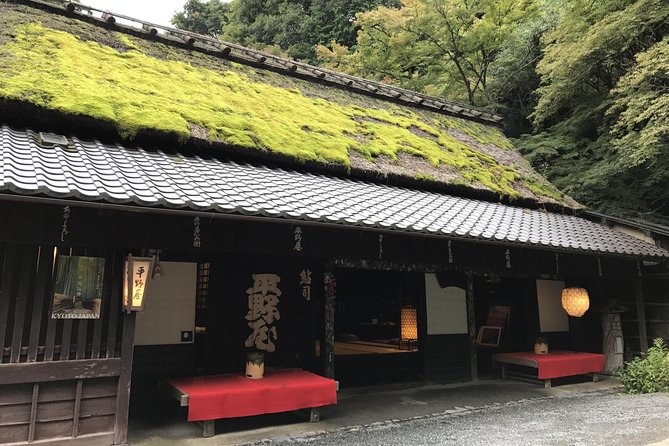
Gio-ji receives about 30 minutes, making it one of the shortest temple visits. The site was once a nunnery founded by two former geisha, and its setting is defined by a moss garden surrounded by bamboo.
The appeal here is atmosphere rather than scale. Moss, shade, and bamboo create a compact garden that feels very different from the broad views at Okochi Sanso. You do not need a large temple complex to get a strong sense of place.
The short visit is probably appropriate. Gio-ji is small, and half an hour gives you time to walk through the garden without turning the stop into a long pause. It also helps the schedule accommodate the many other sites.
As with the other temple visits, entry costs extra. Watch your footing on garden paths, especially if the weather has been wet. The tour requires moderate physical fitness, and the day includes repeated walking on uneven outdoor surfaces.
Okochi Sanso Garden and the best high views
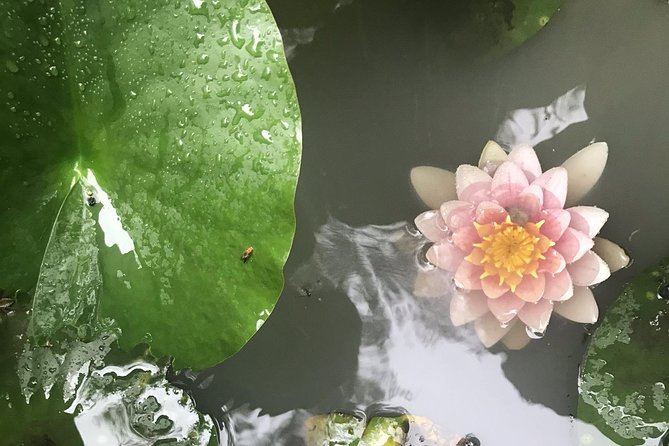
Okochi Sanso Garden occupies the former estate of a well-known silent film actor. You get about an hour to explore the grounds and take in some of the strongest views in Arashiyama.
This stop changes the rhythm of the day. Earlier temples focus your attention inward, toward gardens, stones, and religious spaces. Okochi Sanso opens the view outward, giving you a broader look over the area. That contrast makes the estate a good late-afternoon stop.
The garden is sprawling, so expect more walking rather than a single viewpoint. You should also keep some energy in reserve. By this point, you may have already spent several hours on your feet, and the estate comes before the final bamboo trail.
Admission is not included. The extra charge is easier to justify here if you value gardens and views, but it adds to the total cost along with the other temple tickets.
Finishing on the Sagano Bamboo Forest Trail
The final major sight is the well-known Sagano Bamboo Grove. You spend about 30 minutes walking through the trail, which is enough for the essential experience but not an extended exploration.
Ending here is a smart choice. You first encounter a smaller, quieter bamboo grove at Adashino Nenbutsu-ji, then finish with the famous route. That gives you a useful comparison. The Sagano path has the name recognition, while the earlier grove may feel more intimate.
Because this trail is one of Kyoto’s most photographed locations, you should not expect solitude. The guide handles the route, allowing you to focus on the tall bamboo and the changing light instead of checking a map. Still, the short time means you may need to keep moving.
The activity returns to the original meeting point. That makes the day simpler, especially if you do not know the district well.
What the $690 group price really buys
The advertised price is $690 per group of up to four people. That works out to $172.50 per person for four people, before admission fees and lunch. For two people, the same booking becomes $345 per person, which is much harder to justify.
The main value is time and interpretation. You get about 7.5 hours with a professional guide, a carefully connected route, and private participation for your own group. You are paying to avoid planning a long day across several temples and to gain explanations along the way.
You also need to budget for the required 5,000 yen in cash per person for admissions. That amount is separate from the tour price. Lunch should stay at or below 1,500 yen per person, but your total food cost may depend on what you choose.
For a family or group of four, the price can make sense, especially if everyone wants the same pace and interests. For a couple, compare it with a shorter private guide service or a self-guided day. Arashiyama’s main sights are accessible without a private tour, but the outlying temples and detailed garden discussions are harder to arrange efficiently on your own.
Walking, timing, and group fit
This is a long, active day. The listed stops add up to several hours of visits, and the walking between them is not incidental. You need moderate physical fitness, comfortable shoes, and enough stamina to remain interested late in the afternoon.
The tour is described as private, with only your group participating, while the group size is also listed as a maximum of seven and the price covers up to four. If your party is larger than four, confirm the final group and price before booking.
Strollers can be taken along while walking between sites, but they are not allowed inside the sites. They can be stored at each reception desk. That makes the outing possible with a stroller, but it will require repeated stops to leave and collect it.
The 9:30 a.m. start gives you a full day in Arashiyama. Since the experience depends on outdoor walking and requires good weather, keep some flexibility in your schedule. Cancellation is free up to 24 hours before the start time, and a weather cancellation offers another date or a full refund.
Should you book this Arashiyama tour?
Book it if you want Arashiyama explained rather than simply photographed. It is a strong choice for a group of four that values temples, gardens, local stories, and a full day away from the busiest central sights. The 1,200 stone Buddhas, memorial stones at Adashino Nenbutsu-ji, Gio-ji’s moss, and Okochi Sanso’s views give the route real variety.
Skip it if you dislike long walks, want only the bamboo grove, or are traveling as a couple on a tight budget. The extra admissions and long schedule raise the final cost.
For the right group, this is a thoughtful way to see Arashiyama beyond its famous path. Just arrive ready to walk, carry the required cash, and treat the day as a full cultural outing rather than a quick sightseeing loop.
FAQ
How long does the tour last?
The experience lasts approximately 7 hours and 30 minutes.
Where does the tour begin?
It begins at the center of Randen Arashiyama Station, at 20-2 Tsukurimichi-cho in Kyoto.
Where does the tour end?
The tour ends back at the original meeting point.
What time does the tour start?
The scheduled start time is 9:30 a.m.
Are admission tickets included?
No. Each person must bring an additional 5,000 yen in cash for admission tickets.
Is lunch included?
No. Lunch is not included. The stated lunch cost should not exceed 1,500 yen per person.
Is this a private tour?
Yes. Only your group participates. The price is listed for up to four people, while the tour information gives a maximum group size of seven.
What happens if the weather is poor?
The experience requires good weather. If it is canceled because of poor weather, you can choose another date or receive a full refund.
Just added around Kyoto
- Sekka Cotton Furoshiki Class★ 5.0 · 19 reviews
- Kyoto Sword Experience – includes Museum Ticket/Ninja Experience★ 4.5 · 149 reviews
- Scenic Green Tea Fields of Hidden Kyoto & Local Tea Exp (Private)★ 5.0 · 32 reviews
- Secret Eastern Kyoto Biking Adventure★ 5.0 · 44 reviews
- Private Sake Tasting in Central Kyoto with Sake Sommelier★ 5.0 · 32 reviews
- Samurai School in Kyoto: Samurai for a Day★ 5.0 · 202 reviews
- SHIRAKAWA Japanese Culture Experiences with private English staff★ 5.0 · 16 reviews
- A Privately Guided Photoshoot in Beautiful Kyoto by a Pro★ 5.0 · 18 reviews
Private, compared.
Private Tour to Mt. Fuji and Hakone (Fully Licenced Operator)
Our verdict →
Fushimi Inari Hidden Hiking Tour (Private Option Available)
Our verdict →
Private Kyoto Tour with a Local, Highlights & Hidden Gems, Personalised
Our verdict →
Tokyo Customized Private Tour (Must See Places in 1 Day)
Our verdict →
Tokyo 4hr Private Tour with Government-Licensed Guide
Our verdict →
Tokyo, Shaped Around You: A Private Experience with a Local
Our verdict →