
Reviewed · TEA CEREMONY EXPERIENCES
Oboro | Mindful Tea Ceremony in a 100-Year-Old Kyoto Teahouse
Oboro’s tea ceremony is less about putting on a show and more about slowing down. In a 100-year-old Kyoto teahouse, candlelight, simple décor, and careful movements give you a quiet view of a tradition that is easy to miss in a busy café. You watch the host clean the utensils, prepare the matcha, and serve one bowl at a time.
I especially like the small maximum of eight people, which keeps the room peaceful and gives you a fair chance to see the details. I also like the English explanations from hosts such as Taku and Naoki, since they turn a silent ritual into something you can understand. The main consideration is timing: arriving more than 10 minutes late means you cannot join.
Key points to know
- Candlelit setting: The ceremony takes place in a softly lit, minimally decorated teahouse rather than a casual tea shop.
- English guidance: Taku, Naoki, and other hosts explain the steps and answer questions in English.
- Small group size: The experience accepts no more than eight people, making it easier to focus.
- Two tea moments: You begin with a welcome tea and sweets, then watch matcha prepared and taste it yourself.
- Mindful pace: The emphasis is on quiet attention, respect, and noticing the tea, bowl, light, and surroundings.
- Short but focused: The full experience lasts about 50 minutes and ends where it began.
A candlelit introduction to Kyoto tea culture
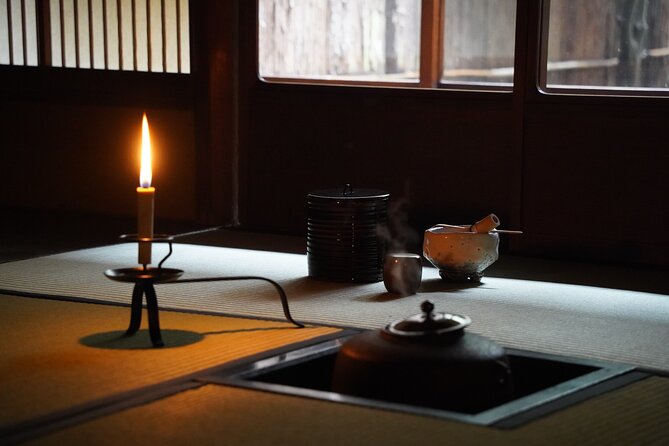
Many tea experiences in Kyoto take place in bright shops or restaurants, where the ceremony can feel squeezed between other activities. Oboro takes a different approach. The room is kept quiet and lightly decorated, with handmade candles providing much of the atmosphere.
That setting matters. A tea ceremony is not simply a lesson in how to whisk green tea. It is also a lesson in attention. The host’s slow movements, the arrangement of the utensils, and the pause before drinking all ask you to stop rushing for a while.
You begin with a welcome tea and sweets. This gives you time to settle in before the main ceremony begins. It also makes the experience easier for first-time visitors, since you are not expected to understand every custom immediately.
The mood is peaceful without requiring strict perfection from you. The emphasis is on shared respect and quiet wonder, not on catching you out for using the wrong gesture.
More Tea Ceremony Experiences in Kyoto
- Kyoto: Tea Ceremony in a Traditional Tea House in Kiyomizu
★ 4.9 · 3,519 reviews - Kyoto: Tea Ceremony Ju-An at Jotokuji Temple
★ 4.9 · 3,207 reviews - Kyoto: 45-Minute Tea Ceremony Lesson Experience
★ 4.3 · 2,378 reviews
Moving from welcome tea to the main ceremony
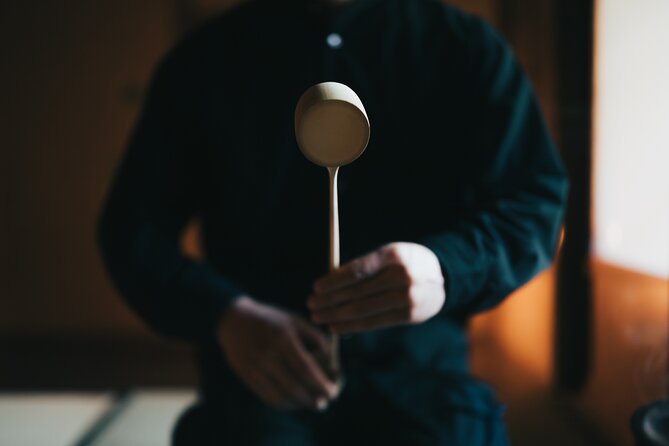
After the opening tea and sweet, you move into the tearoom for the central part of the experience. The host carefully cleans and prepares the utensils before making the matcha.
This preparation is part of the ceremony, not filler between the important moments. You see how the bowl, whisk, scoop, and other tools are handled. The process gives you a better sense of why tea ceremony is treated as an art form rather than a quick way to serve a drink.
The matcha is prepared one bowl at a time. That pace keeps the focus on the person receiving the tea and prevents the ritual from feeling like a group demonstration delivered on autopilot.
The tea itself is described as a rare organic green tea. You can expect the host to explain the preparation and offer a chance to notice its taste and texture. If you already enjoy matcha, the careful preparation will likely be the main attraction. If you do not usually drink tea, the setting and explanation still give the experience purpose.
One useful detail from the experience is that alternatives are possible within the session. A child attending with a parent chose matcha, while the parent had black tea. The activity is therefore not only for committed matcha drinkers, though you should expect tea to remain at its center.
What makes the old teahouse special
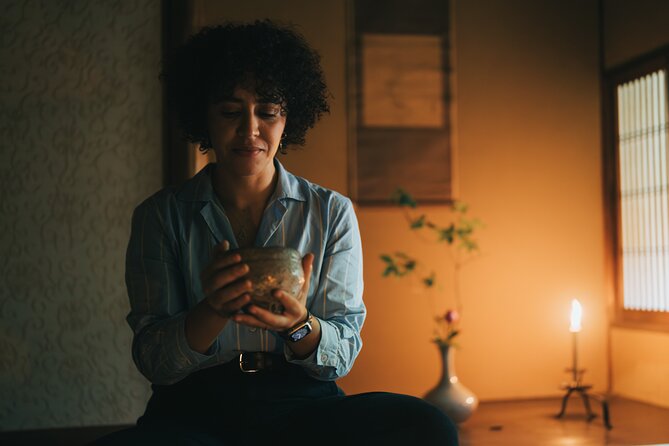
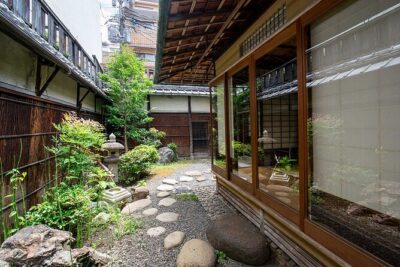
The age of the building adds a sense of place that a modern café cannot easily copy. You are not just watching someone whisk tea in a neutral room. You are sitting inside an old Japanese house arranged for a slower kind of social ritual.
The décor is intentionally restrained. You will not find a crowded display of souvenirs or a long list of flavored drinks. Instead, the candles, utensils, tea bowl, and sound of the room do most of the work.
That simplicity may appeal to you if you want a break from sightseeing. Kyoto can fill your day with temples, buses, shops, and crowds. Fifty minutes in a quiet room can feel like a useful change of gear.
It is worth keeping expectations realistic. This is not a full-day study of Japanese tea schools, nor is it a hands-on class in which you spend most of the time making your own matcha. The main activity is watching the host perform the ceremony, listening to the explanation, and tasting the tea.
For many first-time visitors, that is an advantage. You can pay attention without worrying about remembering every step.
English explanations from Taku, Naoki, and the host team
Language can make a traditional ceremony hard to follow. At Oboro, an English-speaking guide explains what is happening and helps connect each movement to the wider idea of mindful living.
Taku is specifically praised for combining clear information with an entertaining manner. He also speaks excellent English, which helps if you want to ask questions about the history of tea or the meaning behind the ritual.
Naoki is described as soft-spoken, a good fit for a session built around calm and reflection. Other hosts are noted for patience, politeness, and care when explaining locally made tea.
The teaching style seems to vary slightly by host, but the common thread is direct access to the ceremony. You are not left trying to guess why the host cleans a utensil, turns a bowl, or pauses before serving.
That translation is one of the strongest reasons to choose this experience instead of simply watching a tea performance. You receive context while the movements are happening, so the details have a better chance of staying with you after you leave.
Same trip, a completely different kind of day:
- PERFECT KYOTO 1-Day Bus Tour
★ 5.0 · 13,518 reviews - Kyoto: Fushimi Inari, Kinkakuji, Bamboo Grove 1 Day Bus Tour
★ 4.8 · 4,316 reviews - Kyoto Geisha Walking Tour: Gion District & Hidden Gems
★ 4.7 · 3,273 reviews - Kyoto: Gion Magical Night Walking Tour with Geisha Trivia
★ 4.9 · 2,393 reviews
The sensory side of the ritual
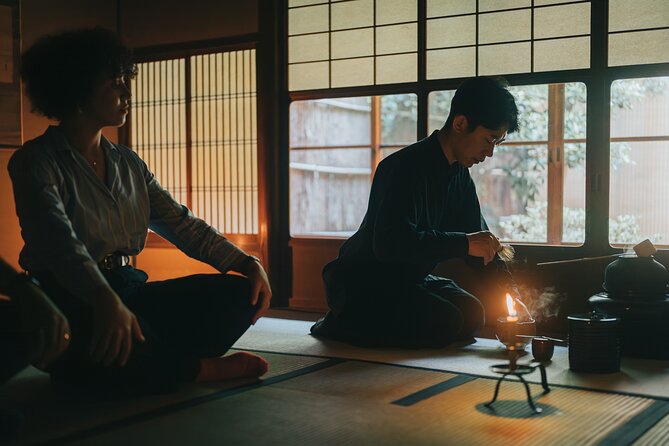
Oboro asks you to notice more than flavor. You are encouraged to pay attention to the warmth of the bowl in your hands, the scent and taste of the tea, the gentle light from the candles, and the quiet mood of the room.
This can sound abstract, but the short format keeps it practical. You do not need special knowledge or a particular spiritual outlook. You simply need to slow down and observe.
The candles are handmade, and you receive a small handmade candle at the end as a reminder of the calm created during the session. It is a modest souvenir, but it fits the experience better than a generic gift-shop item.
The ceremony also places value on drinking tea in the company of other people. You share the room with a small group, yet the focus remains personal. You can watch the preparation closely, taste your tea, and take a quiet moment without being pushed through a large crowd.
If you are hoping for lively conversation and lots of movement, this may feel too restrained. If you want a peaceful cultural activity between louder parts of your Kyoto schedule, the tone should suit you well.
Is 50 minutes enough time?
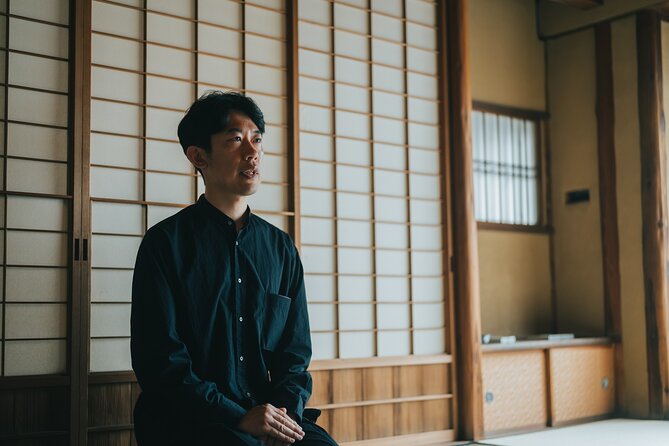
The experience lasts about 50 minutes. That is long enough to create a clear beginning, middle, and end, but short enough to fit into a packed Kyoto itinerary.
You start with a welcome tea and sweet, shift into the main tearoom, watch the utensils being cleaned and arranged, and see the matcha whisked and served. The final candle gives the session a clear closing moment.
A short duration also helps if you are unsure about committing to a more formal ceremony. You can sample the tradition without giving up half a day.
The tradeoff is depth. You will not cover every regional custom, tea school, or historical period in under an hour. The experience is best understood as a focused introduction with a strong atmosphere, not an academic course.
The timing also makes punctuality important. The meeting point is at 237 Nakaogawachō in Kyoto’s Kamigyo Ward, near public transportation. Arrive early enough to find the address and settle in, since you cannot participate after 10 minutes have passed from the start.
Small groups make a real difference
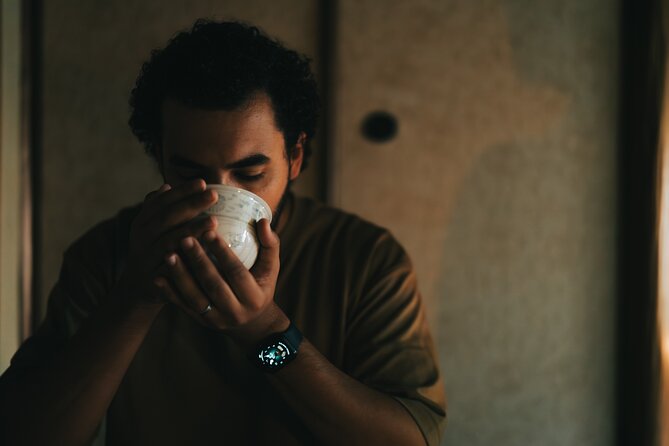
The maximum group size is eight people. That limit is more than a marketing detail. It affects what you can see and how the room feels.
In a large group, you may end up watching the back of someone’s head while the host repeats basic instructions. With eight or fewer people, the ceremony can keep its quiet character, and you are more likely to see how the tools are handled.
A small group also suits questions. You can ask about the tea, the utensils, or the meaning of a gesture without turning the session into a formal lecture.
Still, small does not mean private. You share the experience with other people, and the exact group size can vary. If you want a one-on-one ceremony, this is not designed as a private booking based on the details provided.
The group setting is part of the point. Tea ceremony has traditionally involved respect and attention between people, not only a host performing for an isolated observer.
How the $45.98 price compares with the experience
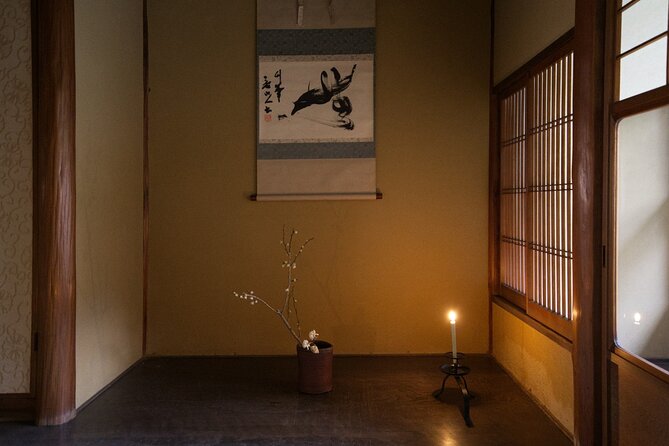
At $45.98 per person, Oboro is not the cheapest way to drink matcha in Kyoto. A café can serve you tea for far less.
But the price covers something different. You are paying for access to an old teahouse, an arranged ceremony, English interpretation, welcome tea, sweets, the prepared matcha or tea, and a small handmade candle to take away. The value comes from the setting and guidance, not the quantity of food or drink.
I would consider it good value if you want a calm cultural activity that fits into less than an hour. The small group limit also helps justify the cost, since you are not being placed in a large, noisy presentation.
The value is weaker if your only goal is to taste matcha. In that case, a tea shop will give you more choice at a lower price. Oboro makes sense when you want to understand the ritual and enjoy the atmosphere as much as the drink.
The experience has earned a 4.9 rating from 19 ratings, with 100 percent recommending it. That is a small sample, so I would not treat the number as a guarantee. Still, the consistent praise for the calm setting, kind hosts, clear explanations, and quality tea points to the parts most likely to shape your visit.
Who should book Oboro?
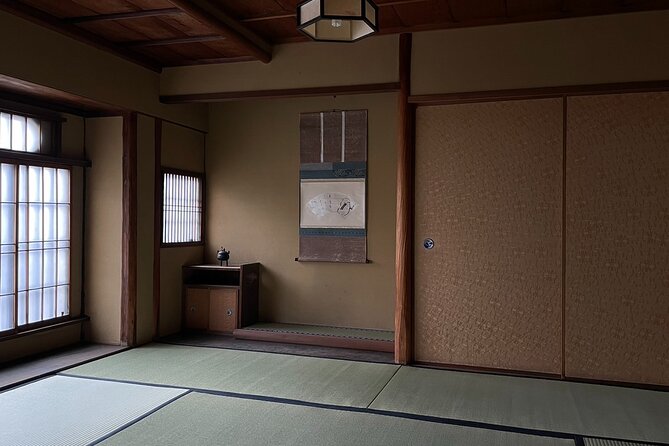
I would recommend this to first-time visitors who want an approachable introduction to Japanese tea ceremony. You do not need prior knowledge, and the English guide removes much of the uncertainty.
It also suits couples, friends, and families who want a shared cultural activity without a long commitment. Children may enjoy the visual side of the preparation, though the quiet pace may not suit every child.
Tea lovers will appreciate the care given to the matcha and utensils. Non-tea drinkers can still enjoy the ritual, and the experience has accommodated someone who preferred black tea.
This is especially good for you if:
- You want a peaceful break from sightseeing.
- You care more about ritual and setting than a large meal.
- You prefer small groups.
- You want English explanations during the ceremony.
- You are curious about Japanese culture but new to tea ceremony.
You may want something else if you prefer a hands-on workshop, a long meal, or a highly formal ceremony with extensive instruction. Oboro is primarily a guided observation and tasting experience.
Booking and cancellation details to keep in mind
You receive confirmation at the time of booking, and the ticket is mobile, so you do not need a printed voucher. The activity begins and ends at the same meeting point.
Free cancellation is available up to 24 hours before the start time. Changes or cancellations inside that 24-hour window are not accepted for a refund. The supplied conditions also state that the activity requires good weather and a minimum number of participants. If poor weather or low enrollment causes cancellation, you are offered another date, another experience, or a full refund.
No gratuity is included. Tips are not listed as part of the price, so plan for that separately only if you feel the service deserves it.
Should you book this Kyoto tea ceremony?
Book Oboro if you want a short, calm, well-explained look at tea ceremony in a genuine old-house setting. The combination of candlelight, a group capped at eight, careful matcha preparation, and English guidance gives the experience more substance than a simple tea tasting.
I would make this a strong choice for your first tea ceremony, especially if you have already spent enough time in busy sightseeing areas and want one quiet hour. Arrive early, keep your expectations focused on watching and tasting rather than making your own tea, and let the ceremony’s slower pace do its work.
FAQ
How long does the Oboro tea ceremony last?
The experience lasts approximately 50 minutes.
Where does the tea ceremony start?
It starts at 237 Nakaogawachō, Kamigyo Ward, Kyoto, 602-0053, Japan. The activity ends back at the same meeting point.
Is an English-speaking guide included?
Yes. An English-speaking guide is included to explain the ceremony and translate for you.
How many people can join?
The activity has a maximum of eight travelers.
What happens during the ceremony?
You begin with welcome tea and sweets, then move into the tearoom. The host cleans and prepares the utensils, makes organic green tea, serves it one bowl at a time, and explains the ritual.
Is matcha the only tea available?
Matcha is the central tea, but the experience can also accommodate black tea. The included experience lists coffee and/or tea.
What happens if I cancel?
You can cancel for a full refund up to 24 hours before the start time. Cancellations or changes made less than 24 hours before the experience are not refunded or accepted.
Just added around Kyoto
- Sekka Cotton Furoshiki Class★ 5.0 · 19 reviews
- Kyoto Sword Experience – includes Museum Ticket/Ninja Experience★ 4.5 · 149 reviews
- Scenic Green Tea Fields of Hidden Kyoto & Local Tea Exp (Private)★ 5.0 · 32 reviews
- Secret Eastern Kyoto Biking Adventure★ 5.0 · 44 reviews
- Private Sake Tasting in Central Kyoto with Sake Sommelier★ 5.0 · 32 reviews
- Samurai School in Kyoto: Samurai for a Day★ 5.0 · 202 reviews
- SHIRAKAWA Japanese Culture Experiences with private English staff★ 5.0 · 16 reviews
- A Privately Guided Photoshoot in Beautiful Kyoto by a Pro★ 5.0 · 18 reviews
Tea Ceremony Experiences, compared.

Tea Ceremony in a Traditional Tea House in Kiyomizu
Our verdict →


World Heritage Kyoto & Nara Uji Authentic Matcha Experience
Our verdict →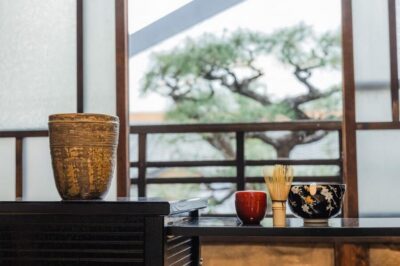

Arashiyama Bamboo Forest, Monkeys, Matcha & Temple Tour
Our verdict →
Browse the lists this tour appears in