
Reviewed · TEA CEREMONY EXPERIENCES
Tea ceremony by the tea master in Kyoto SHIUN AN
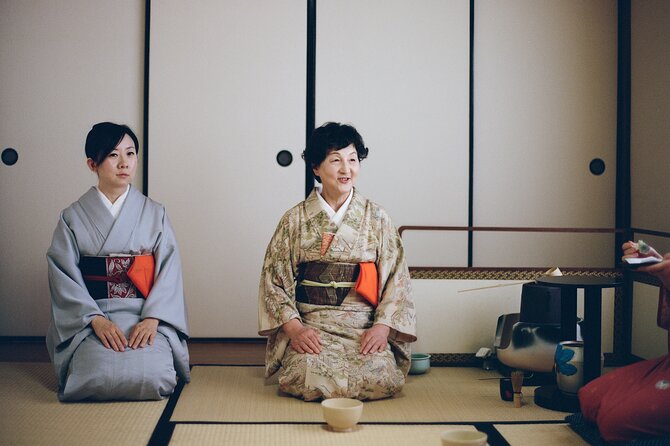
Kyoto’s tea ceremony is not a quick cup of green tea. At SHIUN AN, you watch a trained tea master handle each bowl, scoop, whisk, and movement with care, then learn to make matcha yourself. The small setting near Daitoku-ji gives the experience a quiet, personal feel.
I like the hands-on lesson, which turns a formal demonstration into something you can repeat at home. I also like the cultural setting, with a hanging scroll, seasonal flowers, traditional sweets, and a tea room connected to Kyoto’s Zen and tea traditions. The main drawback is the location: it is outside the usual Gion sightseeing zone, can be tricky to find, and includes stairs and floor seating.
Key points to know before booking
- Two bowls of matcha: You watch the tea master prepare one bowl, then make your own.
- Near Daitoku-ji: The setting connects the ceremony to one of Kyoto’s important Zen temple areas.
- Small sessions: Groups usually have no more than six people, rising to eight during busy seasons.
- English support: An interpreter helps explain the ceremony, history, utensils, and questions.
- Traditional extras: Tea bowls, tea containers, scoops, whisks, white socks, a folding fan, and sweets are supplied.
- Plan your route: There is no pickup or drop-off, and several people have found the residential location hard to locate.
A quiet tea room near Daitoku-ji
SHIUN AN sits at 955-1 Idacho in Kyoto’s Kamigyo Ward, close to Daitoku-ji Temple. This is a useful location for anyone who wants more than a polished activity near the city center. Daitoku-ji has a long connection with Zen Buddhism and Japanese tea culture, so the setting gives the ceremony a clear sense of place.
You are not being taken to a large performance space built for crowds. The ceremony takes place in a small house in a quiet residential area. That makes the mood calmer, but it also means you need to allow extra time to arrive. The building can be difficult to spot, especially if you are following a map while walking through unfamiliar streets.
The meeting point is easy enough to enter once you find it, but the approach is not the most convenient part of the experience. Use Google Maps, check the route before leaving, and avoid arriving at the last minute. Public buses serve the area. Kinkaku-ji, the Golden Pavilion, is only four bus stops away, so you can combine the tea ceremony with that famous temple if your schedule allows.
There is no hotel pickup or return transportation. If buses feel confusing, one practical option is to take public transportation toward the area and use a taxi or ride service for the final stretch. One published experience put that short taxi ride at roughly 1,000 yen, though the exact fare will depend on where you start.
More Tea Ceremony Experiences in Kyoto
- Kyoto: Tea Ceremony in a Traditional Tea House in Kiyomizu
★ 4.9 · 3,519 reviews - Kyoto: Tea Ceremony Ju-An at Jotokuji Temple
★ 4.9 · 3,207 reviews - Kyoto: 45-Minute Tea Ceremony Lesson Experience
★ 4.3 · 2,378 reviews
Entering the room and reading the details
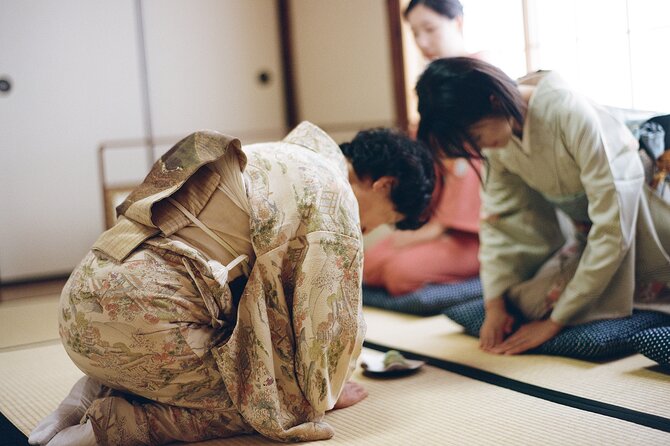
The session begins with an introduction to the tea room. Before the tea is served, you have time to notice the hanging scroll, flowers, room layout, and other small details. These are not random decorations. In tea practice, the room helps set the mood, reflects the season, and gives you clues about the host’s preparation.
This is one of the strongest parts of the experience for anyone new to Japanese tea. Without an explanation, you might see a flower arrangement or scroll and simply think it looks attractive. The tea master explains why these details matter, which helps you pay attention to the room in a different way.
The hosts wear traditional clothing, and the formal setting is balanced by a friendly tone. An English interpreter helps connect the tea master’s actions with the wider meaning of the ceremony. That support matters because the movements can look simple at first, while the reasons behind them are not always obvious.
Each tea master has a tea name, described here as a qualification equivalent to a full professor level in the tea tradition. You are therefore learning from someone with serious training rather than watching a casual matcha demonstration.
Watching the formal preparation
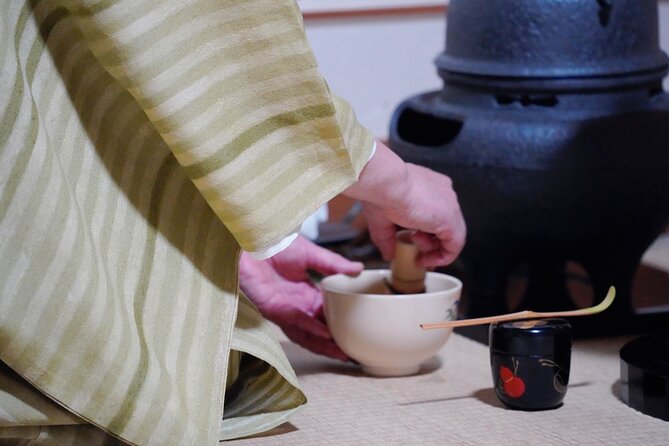
The tea master prepares matcha while you watch the order and precision of the ceremony. The utensils include a tea bowl, tea container, tea scoop, and bamboo whisk. Each object has a purpose, and the way it is handled is part of the practice.
The ceremony is slower than an ordinary drink service. That is exactly the point. You are encouraged to notice the movements, the silence, the placement of the utensils, and the relationship between host and participant. The process reflects the idea that tea practice can lead to insight through careful attention and self-discovery, much like Zen practice.
You receive a Japanese sweet with the tea. Seasonal sweets are often small, carefully shaped, and made to balance the bitter taste of matcha. Here, you receive two kinds of Japanese sweets during the session, giving you a chance to see how food is used alongside tea rather than treated as a separate snack.
You also drink two bowls of matcha. The first is prepared for you, which lets you focus on the flavor and ceremony. The second is the one you prepare yourself, making it easier to understand the difference between watching and doing.
Making your own matcha
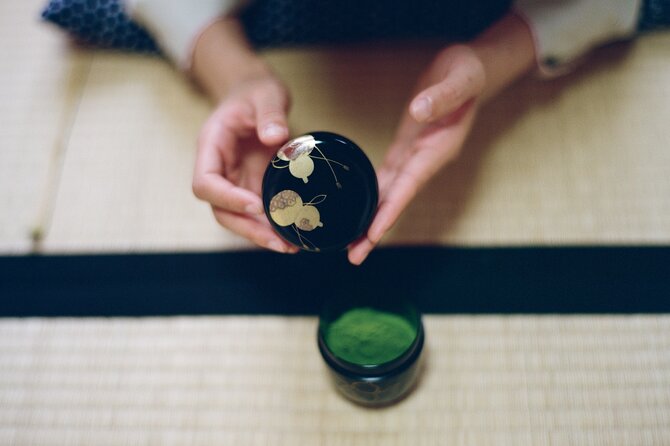
The practical lesson is the part I would not skip. You receive a tea bowl, scoop, and whisk, then follow instructions for making your own bowl of matcha. The tea master shows you the basics, and the interpreter helps explain what you are doing and why.
You do not need previous experience. The lesson is designed as an introduction, not an examination. Still, the contrast between the tea master’s smooth technique and your first attempt can be amusing. That difference gives you a better sense of how much practice the formal movements require.
The hands-on portion also makes the experience useful after your trip. You leave with a basic understanding of how matcha is measured, whisked, and served. The activity does not provide a full tea-school course, but it gives you enough structure to recognize the main steps and try the drink again.
The tea master and interpreter also answer questions after the demonstration and practice. This is a good time to ask about the utensils, tea customs, room arrangement, or the role of sweets. The small group size helps keep the exchange personal.
Same trip, a completely different kind of day:
- PERFECT KYOTO 1-Day Bus Tour
★ 5.0 · 13,518 reviews - Kyoto: Fushimi Inari, Kinkakuji, Bamboo Grove 1 Day Bus Tour
★ 4.8 · 4,316 reviews - Kyoto Geisha Walking Tour: Gion District & Hidden Gems
★ 4.7 · 3,273 reviews - Kyoto: Gion Magical Night Walking Tour with Geisha Trivia
★ 4.9 · 2,393 reviews
What the 45-minute schedule feels like
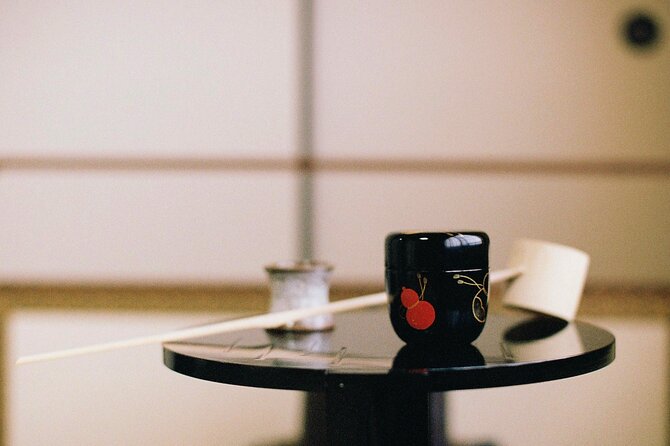
The listed duration is about 45 minutes, though several descriptions refer to the experience as roughly an hour. Either way, this is a compact cultural activity rather than a half-day commitment. It fits well between temple visits, especially if you are planning Daitoku-ji and Kinkaku-ji on the same side of Kyoto.
The session follows a clear order:
- You arrive at the meeting point and enter the tea room.
- You look at the scroll, flowers, and room arrangement.
- The host explains the ceremony and the utensils.
- You watch the tea master prepare matcha.
- You enjoy sweets and tea.
- You prepare your own bowl of matcha.
- You ask questions before returning to the meeting point.
The group limit is normally six people, although it can rise to eight during peak periods. A small group gives you a better chance to see the utensils and receive help with your own tea. If you prefer a private experience, note that the information does not promise exclusive use of the room. At quieter times, the session may have very few participants.
Floor seating, stairs, and comfort
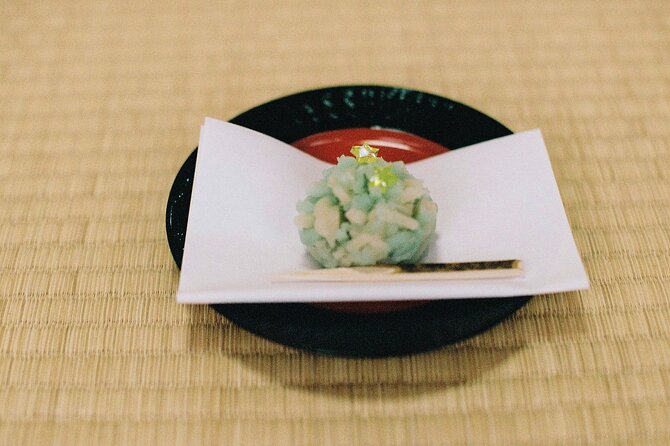
Traditional tea rooms often involve sitting on the floor, and this experience follows that style. One participant found it difficult to stay in the preferred sitting position for the full period, while another appreciated that the hosts accommodated a husband who could no longer sit on the floor comfortably.
The practical lesson is simple: tell the provider about mobility needs in advance. The hosts have shown flexibility, but you should not assume that every seating arrangement or access detail will suit you. The location also includes stairs, which can be a concern for some people.
White socks are provided for the tatami floor, along with a folding fan. These small touches help you follow the customs of entering a traditional room. If you have food allergies, notify SHIUN AN before the activity. The provider also allows service animals.
Is $33.03 good value?
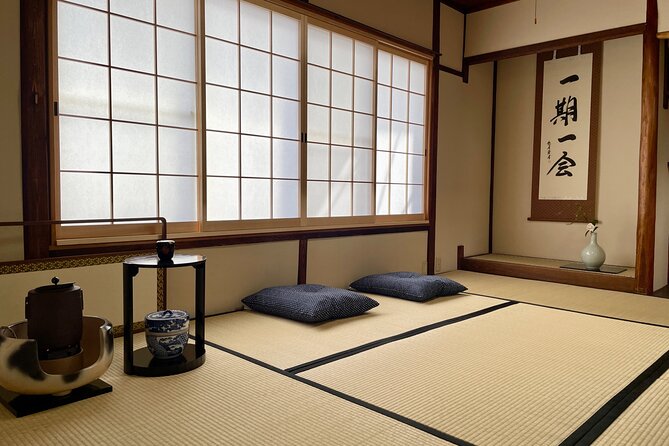
At $33.03 per person, this is a fairly modest price for a short cultural activity in Kyoto. You receive two bowls of matcha, two kinds of sweets, instruction from a qualified tea master, an interpreter, and use of the tea equipment. The white socks and folding fan are also included.
The value depends on what you want. If you only want to taste matcha, you can find cheaper drinks around Kyoto. If you want a formal demonstration, historical context, a traditional room, and the chance to make your own tea, the price is easier to justify.
The small group is important here. You are not paying only for a beverage. You are paying for access to a carefully ordered practice and for direct instruction. At a maximum of six people in normal periods, the activity offers more personal attention than a large cultural show.
The main cost is not financial but practical. Reaching the residential neighborhood takes planning, and the short activity may not be worth a long cross-city trip if your schedule is tight. It makes the most sense when paired with nearby sightseeing.
Who will enjoy SHIUN AN most?
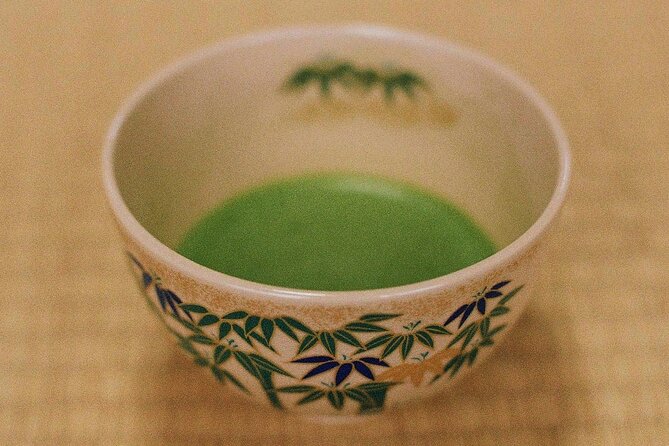
I would recommend this experience if you want to understand what happens inside a tea ceremony rather than simply take a few photos in a kimono. The English interpretation makes it suitable for first-time visitors who want context as well as ritual.
It also works well for families and couples. A young person interested in Japanese culture can take part in making matcha, while adults can appreciate the history and precision. The experience has a quiet pace, so it can provide a welcome break from Kyoto’s crowded temple routes.
Matcha fans will enjoy it, but you do not need to like strong green tea to benefit. The ceremony is as much about conduct, space, utensils, and attention as it is about flavor.
This may not suit you if you dislike floor seating, have trouble with stairs, or want a major sightseeing landmark built into the activity. It is also not the best choice if you need transportation included or prefer a large, easy-to-find venue near Gion.
Booking and cancellation basics
Confirmation is provided when you book, and the ticket is mobile, so you do not need to print a paper voucher. The activity returns to the same meeting point when it ends.
Free cancellation is available up to 24 hours before the start time for a full refund. Changes or cancellations made within 24 hours are not accepted or refunded. The provider may also cancel if the minimum number of participants is not reached, in which case you are offered another option or a full refund.
The activity is highly rated at 4.8 out of 5, with 96 percent recommended. The most consistent strengths are the warm instruction, calm setting, clear interpretation, and chance to make matcha yourself. The recurring cautions are the hard-to-find address, distance from central sightseeing areas, stairs, and floor seating.
Should you book this tea ceremony?
Book it if you want a small, traditional introduction with real instruction instead of a quick tourist photo stop. The tea master, interpreter, sweets, room details, and hands-on preparation give the 45-minute session more substance than its short length suggests.
Plan carefully for the address, leave early, and mention mobility or food concerns ahead of time. If you are already visiting Daitoku-ji or Kinkaku-ji, SHIUN AN fits especially well. If your Kyoto plans stay around Gion and Kyoto Station, the extra travel may be the deciding factor.
For a modest price, you get a thoughtful look at one of Japan’s most precise cultural practices, plus the chance to whisk your own bowl. That makes it a good choice for curious visitors who value explanation, quiet, and participation.
FAQ
How long does the tea ceremony last?
The activity lasts approximately 45 minutes. Some descriptions of the experience refer to it as roughly an hour.
Where does the tea ceremony take place?
It takes place at 955-1 Idacho, Kamigyo Ward, Kyoto, 602-8302, Japan, near Daitoku-ji Temple.
How many people can join each session?
The normal maximum is six participants. During peak seasons, the group may increase to eight people.
Is transportation included?
No. Pickup and drop-off are not included. The activity begins and ends at the meeting point.
Is the activity near Kinkaku-ji?
Yes. Kinkaku-ji, also called the Golden Pavilion, is four bus stops away from the location.
What will I do during the ceremony?
You will view the tea room decorations, learn about the ceremony and utensils, watch the tea master prepare matcha, enjoy sweets and tea, and make your own bowl of matcha.
How much matcha will I drink?
You can enjoy two bowls of matcha during the experience. One is prepared for you, and you make the other yourself.
Are Japanese sweets included?
Yes. Two kinds of Japanese sweets are included.
What equipment is provided?
Tea bowls, tea containers, tea scoops, tea whisks, white socks, and a folding fan are provided.
Is English interpretation available?
English interpretation is available to explain the ceremony, utensils, history, and hands-on tea-making lesson.
Can I cancel for a refund?
You can cancel at least 24 hours before the start time for a full refund. Cancellations or changes made less than 24 hours before the start time are not refunded.
Just added around Kyoto
- Sekka Cotton Furoshiki Class★ 5.0 · 19 reviews
- Kyoto Sword Experience – includes Museum Ticket/Ninja Experience★ 4.5 · 149 reviews
- Scenic Green Tea Fields of Hidden Kyoto & Local Tea Exp (Private)★ 5.0 · 32 reviews
- Secret Eastern Kyoto Biking Adventure★ 5.0 · 44 reviews
- Private Sake Tasting in Central Kyoto with Sake Sommelier★ 5.0 · 32 reviews
- Samurai School in Kyoto: Samurai for a Day★ 5.0 · 202 reviews
- SHIRAKAWA Japanese Culture Experiences with private English staff★ 5.0 · 16 reviews
- A Privately Guided Photoshoot in Beautiful Kyoto by a Pro★ 5.0 · 18 reviews
Tea Ceremony Experiences, compared.

Tea Ceremony in a Traditional Tea House in Kiyomizu
Our verdict →


World Heritage Kyoto & Nara Uji Authentic Matcha Experience
Our verdict →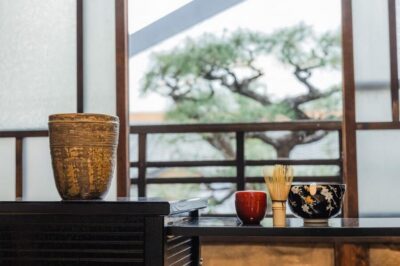


Arashiyama Bamboo Forest, Monkeys, Matcha & Temple Tour
Our verdict →
Browse the lists this tour appears in