
Reviewed · TEA CEREMONY EXPERIENCES
Authentic Kyoto Tea Ceremony: Camellia Flower Teahouse
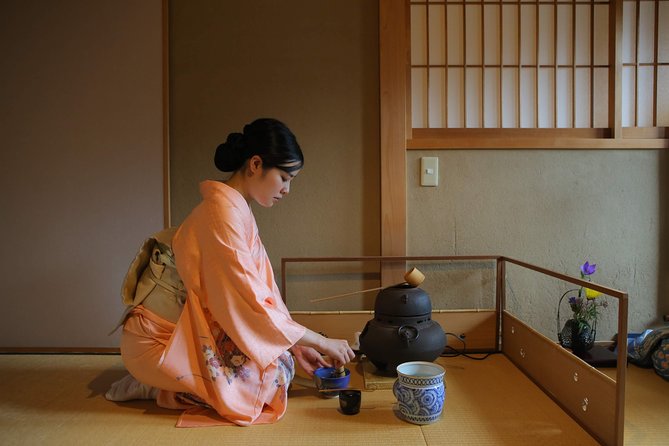
Kyoto’s tea ceremony is less about drinking a cup of tea than learning how attention, respect, and simplicity shape a centuries-old ritual. At Camellia Flower, you’ll watch the ceremony, learn why the room and utensils matter, then whisk your own bowl of frothy matcha.
I like the small groups of up to eight, which leave room for questions, and the practical format: you do not simply sit and watch. I also like the choice of floor seating or chairs and tables. The main consideration is that the session lasts about 45 minutes, so it offers a clear introduction rather than a long formal ceremony.
Key Points
- You whisk your own matcha: Tea bowls, scoops, and bamboo whisks are supplied, so you practice the basic technique yourself.
- English-speaking instruction: Instructors come from one of Kyoto’s three main schools of tea ceremony and explain each step in English.
- Seasonal sweet included: Your matcha is served with a Japanese sweet, an important part of the tea ritual.
- Convenient Higashiyama setting: The tea room is near public transportation and close to one of Kyoto’s most useful sightseeing areas.
- Small, family-friendly groups: The maximum is eight people, though children must be at least 6 years old.
- Optional kimono rental: You can request kimono rental for an added charge, and the dressing service can include a quick updo.
What Camellia Flower Actually Teaches You
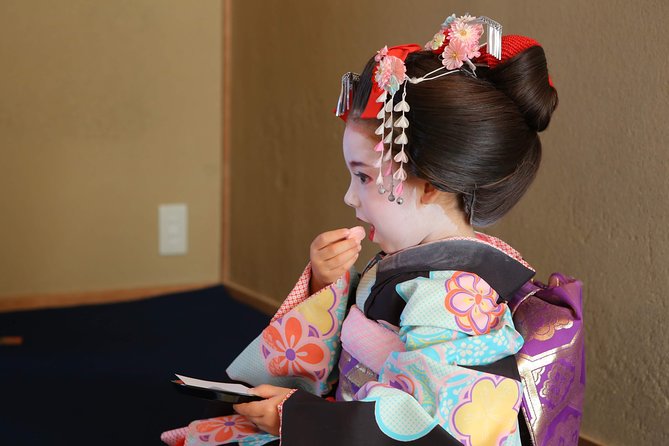
This is a short, hands-on lesson in the Japanese tea ceremony, held at Tea Ceremony Camellia Flower in Kyoto’s Higashiyama Ward. The session begins with a welcome and an introduction to matcha. Your instructor then explains the utensils, the order of the ceremony, and the meaning behind the room’s decoration and layout.
You will see a formal preparation before making tea yourself. That order matters. First, you watch the careful movements. Then you have enough context to understand what your own hands are doing when you pick up the scoop or whisk.
The tea ceremony is tied to ideas of mindfulness, respect, cleanliness, and simplicity. Those themes are explained through small actions. Water is used for cleansing, utensils are handled with care, and the preparation is directed toward the person receiving the tea.
I appreciate that the ceremony is not treated as a mysterious performance. You are encouraged to ask questions, and the English-speaking instructors explain both the mechanics and the cultural meaning. That makes this a good choice if you want more than a photo opportunity in traditional clothing.
More Tea Ceremony Experiences in Kyoto
- Kyoto: Tea Ceremony in a Traditional Tea House in Kiyomizu
★ 4.9 · 3,519 reviews - Kyoto: Tea Ceremony Ju-An at Jotokuji Temple
★ 4.9 · 3,207 reviews - Kyoto: 45-Minute Tea Ceremony Lesson Experience
★ 4.3 · 2,378 reviews
The 45-Minute Flow, From Welcome to Your Own Bowl
The experience takes place at one stop in Kyoto and ends where it begins. There is no hotel pickup or drop-off, so you make your own way to 349-13 Masuyacho in Higashiyama Ward.
At the start, your host gives a brief introduction to matcha and the tea ceremony. This is the point where you learn what to watch for. The host explains the utensils, the steps, and why the position of objects in the room matters.
Next comes the demonstration. The instructor prepares matcha with deliberate movements, including the handling of the bowl, scoop, whisk, and water. The careful pace gives you a chance to notice details that would be easy to miss if you simply visited a tea house without an explanation.
You then receive a seasonal sweet with your tea. The sweet is not just a snack on the side. In the tea ceremony, it balances the bitter taste of matcha and forms part of the rhythm of the experience.
The final section is the most interactive. Each person receives a tea bowl, tea scoop, and whisk, then makes a bowl of matcha. The instructors guide you through the basic whisking technique and help you understand why producing a smooth, frothy drink takes practice.
The time is well judged for a first introduction. You have enough time to watch, taste, practice, and ask questions without committing half a day. One family found the session a little short, and that is a fair point if you already have a strong interest in tea ceremony. For most sightseeing schedules, though, 45 minutes is an advantage.
Why the Setting and Utensils Matter
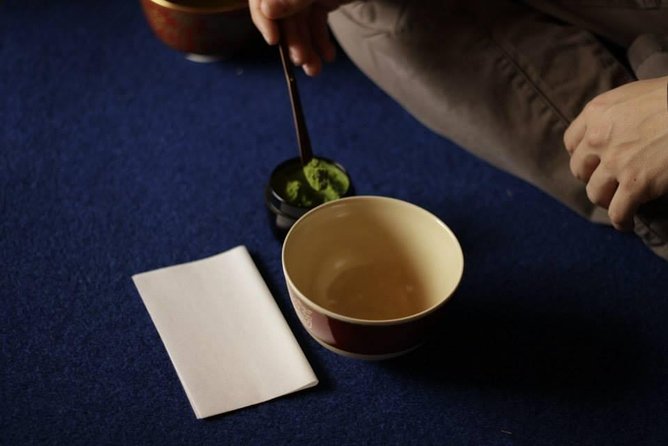
A tea ceremony can look simple from the outside: hot water, powdered tea, a bowl, and a whisk. The explanation shows why it is far more considered than that.
The room’s layout and decorations help set the mood. The utensils are selected and handled with purpose. The process is not built around speed. Instead, it gives importance to the act of preparing something carefully for another person.
This is also where the ceremony connects to Kyoto. The city is famous for temples, gardens, and traditional arts, but those subjects can feel distant when you only look at them. Making matcha gives you a small physical connection to the culture. You use the same basic tools, follow the same broad sequence, and begin to see why precision matters.
The tea itself may be an adjustment. Matcha is grassy, bitter, and strong compared with ordinary brewed tea. The seasonal sweet helps, and the instructor explains how the two are meant to be enjoyed together. If you already like matcha, you will probably enjoy the tasting. If you do not, the value still lies in the ritual and the lesson.
The Best Part Is Making Matcha Yourself
Watching the tea master is calming, but the practical lesson is what makes this activity worth booking. You do not leave with only an impression of the ceremony. You have tried the central task yourself.
The supplied whisk, called a chasen, creates the familiar foam when you move it correctly through the tea. The motion looks easy when performed by someone trained in the art. It becomes less easy when you hold the whisk yourself. That small surprise helps you respect the years of practice behind a polished ceremony.
You will also handle the scoop and bowl, learning that each movement has a place. The instructor’s job is not to turn you into a tea master in one sitting. It is to give you the basics and help you understand the discipline involved.
Several important aspects are covered in plain English:
- The history of the tea ceremony
- The purpose of the utensils
- The order of the preparation
- The meaning of cleansing with water
- The importance of respect and mindfulness
- The connection between the sweet and the tea
You should ask questions as you go. The activity is designed for conversation, and the instructors speak English fluently. That makes it easier to ask about etiquette, matcha preparation, or the different schools of tea ceremony without worrying that you have missed a key point.
Same trip, a completely different kind of day:
- PERFECT KYOTO 1-Day Bus Tour
★ 5.0 · 13,518 reviews - Kyoto: Fushimi Inari, Kinkakuji, Bamboo Grove 1 Day Bus Tour
★ 4.8 · 4,316 reviews - Kyoto Geisha Walking Tour: Gion District & Hidden Gems
★ 4.7 · 3,273 reviews - Kyoto: Gion Magical Night Walking Tour with Geisha Trivia
★ 4.9 · 2,393 reviews
Small Groups Keep the Lesson Personal
The maximum group size is eight. That is small enough for the instructor to demonstrate clearly and give basic guidance while you make your own tea.
A group of eight is not the same as a private ceremony, so do not expect a completely personal session. Still, it is a sensible middle ground. You get the social feel of a shared activity without being placed in a large crowd.
A private option may suit you better if you want a slower pace or more individual attention. One family specifically felt that a private ceremony would have been preferable. For most people, the standard session offers enough interaction, especially because questions are welcomed.
The activity is open to all ages from 6 upward. Children can take part in the whisking section, and the process gives them something active to do. It is still a quiet cultural lesson, so very young children may not be a good fit. Children under 6 cannot join.
Floor Seating, Chairs, and Kimono Choices
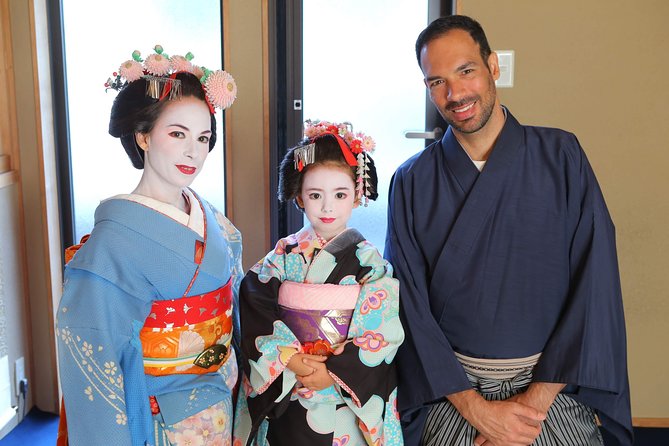
Traditional tea ceremony often involves sitting on the floor. Camellia Flower also provides chairs and tables if you prefer not to sit that way. That is a useful accommodation, particularly after a full day of walking around Kyoto.
You should request the seating arrangement in advance if it matters to you. The available information confirms that chairs and tables are offered, but it does not specify how early you must request them.
Kimono rental is not included in the base price. You can request it by message for an additional charge. Several people found that dressing in a kimono and having a quick updo added to the sense of occasion.
I would treat the kimono as an optional extra, not a requirement. The tea ceremony itself remains the main experience. A kimono can make the visit feel more special and provides a strong visual connection to the setting, but it also adds cost and preparation time.
If you are planning to rent one, allow enough time for the clothing process and confirm the extra charge before booking. The basic tea session does not include kimono rental.
The Higashiyama Location Helps Your Day
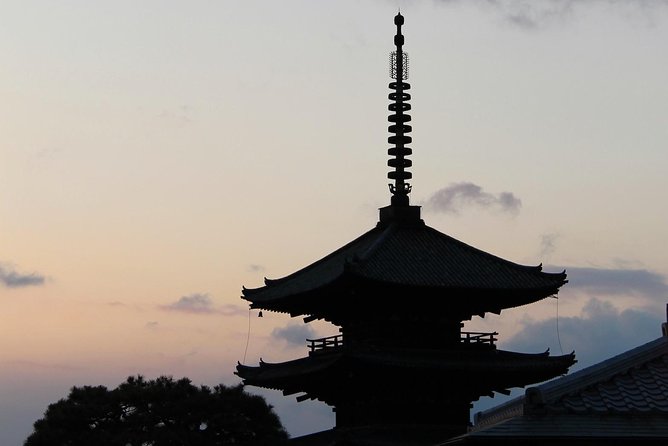
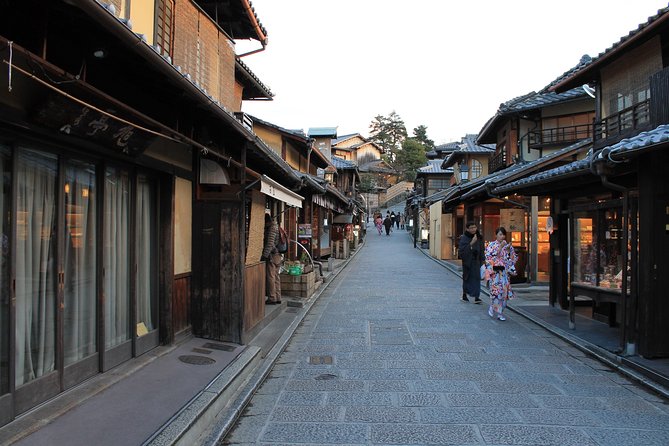
The meeting point is in Higashiyama Ward, one of the most useful areas of Kyoto for traditional sights. The activity is near public transportation and ends at the same place, so it is easy to fit into a day of sightseeing.
You can use the ceremony as a quiet break between major sights. After temples, shops, and busy streets, 45 minutes of deliberate movement and conversation can change the pace of your day. Several people found the experience calming after a long period of sightseeing.
Because no pickup or drop-off is provided, you need to plan your route to the tea room. Confirm the address, 349-13 Masuyacho, before setting out. The activity begins and ends there, so you can continue to another Kyoto sight afterward.
The location also makes the ceremony more useful for first-time visitors. You do not need to travel far outside the city center or devote a full morning to a formal tea school. You can place it within a wider Higashiyama itinerary.
Is $36.48 a Fair Price?
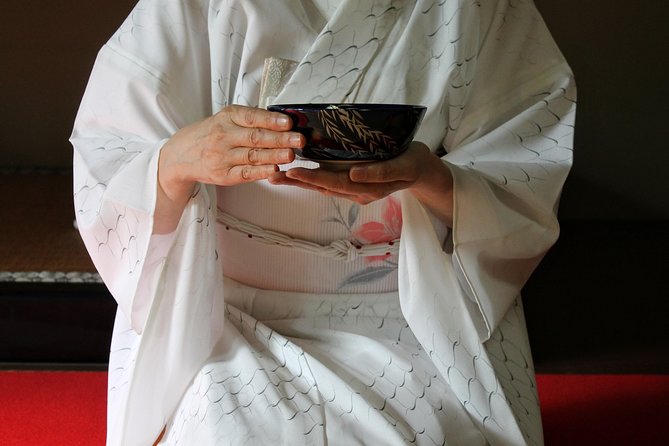
At $36.48 per person, this is a reasonable price for a compact cultural activity. You receive instruction, a traditional demonstration, matcha, a seasonal sweet, and the chance to prepare your own bowl. The tea bowls, scoops, and whisks are supplied.
The value depends on what you want. If you are looking for a long, highly formal ceremony with extensive discussion, this session may feel brief. If you want a clear introduction that fits between other Kyoto plans, the price is easier to justify.
The small group size adds value. So does the English instruction, especially when the subject involves etiquette and symbolism. Without explanation, many of the gestures would simply look beautiful but confusing.
Group discounts are available, though the exact saving is not specified. If you are booking for a family or several friends, check the group price before paying. The standard admission does not include transportation, hotel transfers, or kimono rental.
The activity has a 4.8 rating from 269 ratings and a 95 percent recommendation rate. Those figures point to consistently strong satisfaction, but the one recurring limitation is clear: the session is short, and the room may feel plain or small to some people. Go for the teaching and participation, not for an elaborate stage set.
Who Will Enjoy This Tea Ceremony Most?
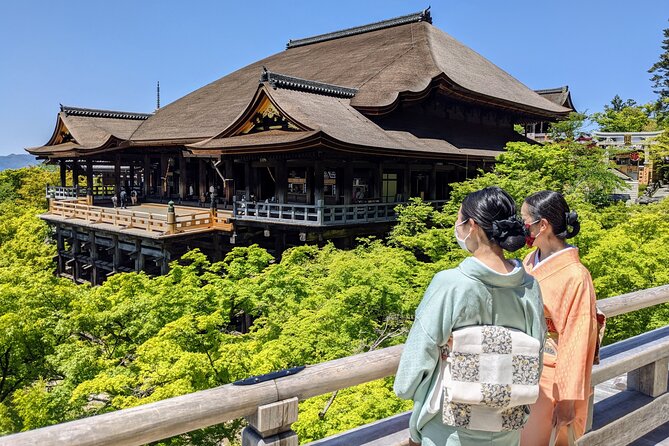
I would recommend Camellia Flower to you if you want a first introduction to Japanese tea culture, especially if you prefer to learn by doing.
It suits:
- First-time visitors to Japan
- Families with children aged 6 and older
- Couples looking for a calm cultural activity
- Anyone curious about matcha preparation
- People who want an English-speaking instructor
- Visitors with limited time in Kyoto
- Anyone who prefers a small group over a large class
It may be less suitable if you need wheelchair access, since the activity is not wheelchair accessible. It may also disappoint you if you expect a long ceremonial performance or a grand, richly decorated tea room. One person found the room small and plain, so keep your expectations focused on the ritual rather than the setting.
Service animals are allowed. Chairs and tables are available, and you may take photos and short videos. Be considerate during the formal demonstration and follow the instructor’s guidance about when to photograph.
Practical Details Before You Book
You receive confirmation when you book, and a mobile ticket is available. Free cancellation applies when you cancel at least 24 hours before the start time. Changes or cancellations made within 24 hours are not accepted for a refund.
The stated policy also says the activity requires good weather. If poor weather causes cancellation, you are offered another date or a full refund. Since the ceremony takes place indoors, check the provider’s instructions close to your date if the forecast is uncertain.
The experience is not wheelchair accessible. Children under 6 cannot join. The maximum group size is eight, and the activity lasts approximately 45 minutes.
Wear clothing that lets you sit comfortably if you plan to use the traditional floor seating. If you prefer chairs and tables, ask about that arrangement. Photos and short videos are permitted, but the ceremony is best enjoyed by putting the phone away for part of the session.
Should You Book Camellia Flower?
Book it if you want a short, friendly, hands-on lesson that explains what a tea ceremony means instead of simply presenting it as a pretty ritual. The best features are the English instruction, small groups, seasonal sweet, and chance to whisk your own matcha.
Add the kimono option if clothing and photographs matter to you. Choose the standard session if you mainly want cultural context and practical instruction.
Skip it if you need wheelchair access, want a long formal ceremony, or expect an elaborate room. For everyone else, this is a well-priced way to slow down in Kyoto, learn the purpose behind familiar Japanese symbols, and discover that making good matcha takes more care than it first appears.
FAQ
Where does the tea ceremony take place?
It takes place at Tea Ceremony Camellia Flower, 349-13 Masuyacho, Higashiyama Ward, Kyoto, Japan.
How long does the experience last?
The tea ceremony lasts approximately 45 minutes.
How many people can join the group?
The maximum group size is eight people.
What is included in the price?
Tea bowls, tea scoops, and tea whisks are provided. The experience also includes matcha and a seasonal sweet.
Can I make my own matcha?
Yes. Each person has the opportunity to prepare a bowl of frothy matcha using the supplied bowl and whisk.
Is the ceremony conducted in English?
Yes. The instructors speak English fluently and explain the ceremony, utensils, history, and preparation steps in English.
Can children join?
Children can join if they are at least 6 years old. Children under 6 cannot take part.
Is kimono rental included?
No. Kimono rental is not included, but it can be requested by message for an additional charge.
Can I cancel for a full refund?
Yes. You can receive a full refund if you cancel at least 24 hours before the experience start time.
Just added around Kyoto
- Sekka Cotton Furoshiki Class★ 5.0 · 19 reviews
- Kyoto Sword Experience – includes Museum Ticket/Ninja Experience★ 4.5 · 149 reviews
- Scenic Green Tea Fields of Hidden Kyoto & Local Tea Exp (Private)★ 5.0 · 32 reviews
- Secret Eastern Kyoto Biking Adventure★ 5.0 · 44 reviews
- Private Sake Tasting in Central Kyoto with Sake Sommelier★ 5.0 · 32 reviews
- Samurai School in Kyoto: Samurai for a Day★ 5.0 · 202 reviews
- SHIRAKAWA Japanese Culture Experiences with private English staff★ 5.0 · 16 reviews
- A Privately Guided Photoshoot in Beautiful Kyoto by a Pro★ 5.0 · 18 reviews
Tea Ceremony Experiences, compared.

Tea Ceremony in a Traditional Tea House in Kiyomizu
Our verdict →


World Heritage Kyoto & Nara Uji Authentic Matcha Experience
Our verdict →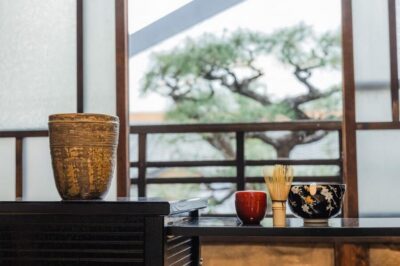


Arashiyama Bamboo Forest, Monkeys, Matcha & Temple Tour
Our verdict →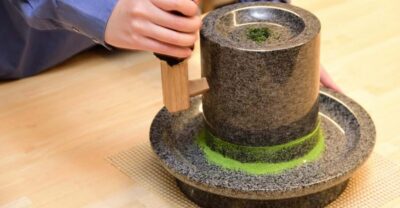
Browse the lists this tour appears in