
Reviewed · WALKING TOURS
Half Day Private Guided Walking Tour in Hiroshima City
Hiroshima’s past feels different when it is explained by someone whose family was touched by the bombing. Guide Tetsuo Hamano, called Pancho, is the son of an A-bomb survivor, and he brings that family connection to a four-hour walk through shrines, temples, memorials, and Peace Memorial Park. The result is more personal than a standard sightseeing circuit.
I like the way the tour connects small physical clues, such as surviving trees and a temple that shows the force of the blast, with the larger story of Hiroshima. I also like the flexible food stop: Pancho can point you toward Hiroshima-style okonomiyaki, ramen, or sushi, and he can discuss vegetarian, vegan, and gluten-free choices.
The main consideration is cost. At $200 per person, before lunch, transportation, and the ¥200 Peace Memorial Museum admission, this is a serious purchase. You are paying for a private guide and personal interpretation, so it makes the most sense for people who want conversation and context rather than a quick walk past famous sights.
Key points to know before booking
- Personal family connection: Pancho is the son of an A-bomb survivor and ties Hiroshima’s public history to his family story.
- Four hours on foot and by local transport: The route includes Hiroshima Station, shrines, temples, the hypocenter, Peace Memorial Park, and several monuments.
- Private experience: Only your group participates, allowing time for questions and changes in pace.
- Food guidance is included, but lunch is not: You can ask for okonomiyaki, ramen, sushi, or suitable vegetarian, vegan, and gluten-free options.
- Survivor details receive real attention: Expect discussion of trees, buildings, and objects that endured the blast.
- Extra costs are modest but important: Public transportation is about $4 per person, and the Peace Memorial Museum costs ¥200 per person.
A personal way into Hiroshima’s difficult story
Hiroshima can be a hard city to visit. The subject is not distant or tidy, and the memorial sites ask you to think about real lives rather than simply admire architecture. This tour works best because it gives you a human guide through that difficult material.
Pancho’s role is not limited to pointing out monuments. His family connection gives him a reason to explain how the bombing affected Hiroshima and how the city worked to recover. You still see the major sights, but you also get room to ask questions, pause, and discuss what you are seeing.
That personal approach matters most at places that might otherwise take only a few minutes. A stone marker or surviving tree can look like a small stop on a map. With context, it becomes evidence of what happened and of how Hiroshima remembers it.
The tour is also private. You do not have to match the pace or interests of a large group, and your guide can spend more time on the parts that matter most to you. The tradeoff is price: $200 per person is easier to justify for a small family or group that wants a dedicated guide than for someone traveling alone on a tight budget.
More Walking Tours in Hiroshima
- Hiroshima Historical Walking Tour – Why A-Bomb was Dropped
★ 4.8 · 893 reviews - Hiroshima Peace (Heiwa) Walking Tour at World Heritage Sites
★ 5.0 · 872 reviews - Hiroshima City 4hr Private Walking Tour with Licensed Guide
★ 5.0 · 437 reviews
Meeting Pancho at Hiroshima Station
The tour can begin at the bullet train platform in Hiroshima Station if you arrive from Osaka, Kyoto, or Tokyo. You can also arrange a hotel pickup meeting point. The station option is especially useful if Hiroshima is a stop between cities and you want to begin soon after stepping off the train.
Allow a little time to find one another. The station is large, and the guide has used text messages and exchanged photos with participants to make meeting easier. That sort of simple communication can save time, particularly if you are arriving with luggage or using the station as your first point in town.
The initial station period is listed as about 20 minutes. It is not a major sightseeing stop, but it gives you a chance to meet Pancho, settle the plan, and begin the route. The tour uses public transportation or taxis from the station or your hotel. Private transportation is available for an added fee, but it is not part of the base price.
Shirakami Shrine and Hiroshima’s surviving trees
The first substantial stop is Shirakami Shrine, a Shinto shrine with a familiar form but an unusual connection to the story of Hiroshima. Pancho explains why Hiroshima became an atomic bomb target and uses the shrine to introduce the city’s wartime setting.
You will also see trees that survived the bombing. These are powerful precisely because they are ordinary living things. The bark, trunks, and continued growth offer a direct reminder that survival in Hiroshima was not only a human story recorded in photographs and documents.
This stop lasts about an hour, making it one of the most useful parts of the walk for anyone who wants background before reaching the central memorial sites. You can ask questions here rather than trying to reconstruct the story later from scattered plaques.
The shrine does not have the instant visual impact of the Atomic Bomb Dome. That is part of its value. It slows the tour down and shows how the bombing is woven into familiar places of daily and religious life.
The hypocenter and the exact point of impact
At the hypocenter monument, you reach the ground-level point directly associated with the atomic bomb’s detonation. The stop lasts about 10 minutes and includes a look at a photograph of the area after the bombing.
This is a brief stop, but it can feel more exact than the larger memorial spaces. The monument marks a specific place, not an abstract zone. Pancho can explain what you are looking at and give the photograph a setting.
You will want to keep this part quiet and focused. It is not a place for a long sightseeing pause, and the meaning comes from understanding the location rather than collecting another picture. The tour’s personal style helps keep the stop from becoming a rushed photo opportunity.
Same trip, a completely different kind of day:
- Peaceful Hiroshima & Miyajima UNESCO 1 Day Bus Tour
★ 5.0 · 5,309 reviews - Hiroshima: Hiroshima and Miyajima UNESCO Sites 1-Day Tour
★ 4.9 · 2,330 reviews - Hiroshima / Miyajima Full-day Private Tour with Government Licensed Guide
★ 5.0 · 1,298 reviews - Osaka/Kyoto: Hiroshima Miyajima Bus Tour & Shinkansen Ticket
★ 4.7 · 919 reviews
Saiko-ji Temple and physical evidence of the blast
Saiko-ji Temple offers another way to grasp the scale of the explosion. The guide points out evidence connected to the heat and blast, helping you understand that the destruction was not confined to one building or one street.
The visit is listed at about 10 minutes, so expect a compact explanation rather than a long temple visit. It works as a bridge between the exact point of the hypocenter and the larger memorial area.
I like this kind of stop because it gives you something physical to study. Hiroshima’s story is often presented through written accounts and photographs. A temple with visible evidence brings the force of the event into the present without needing exaggerated language.
Atomic Bomb Dome and the Peace Flame
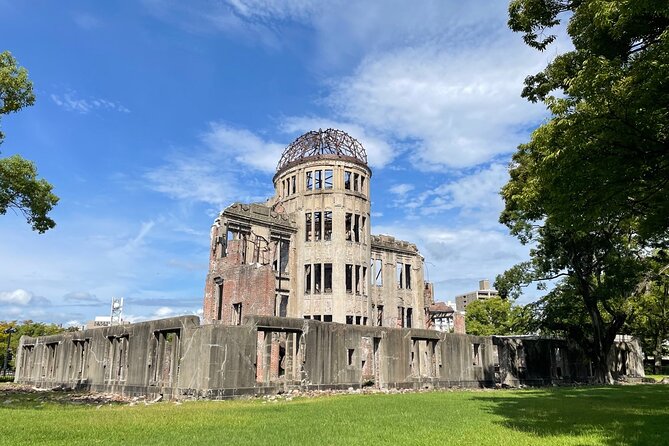
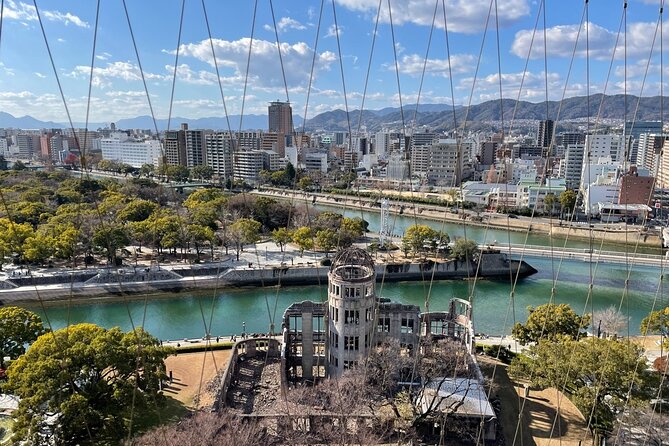
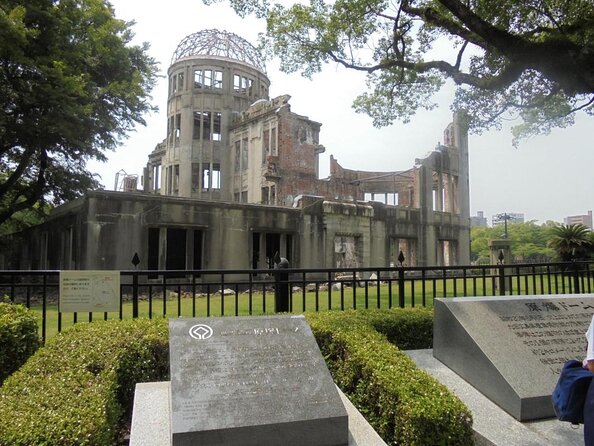
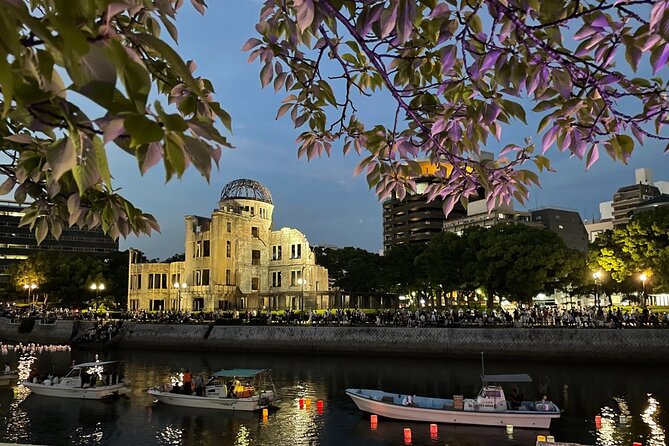
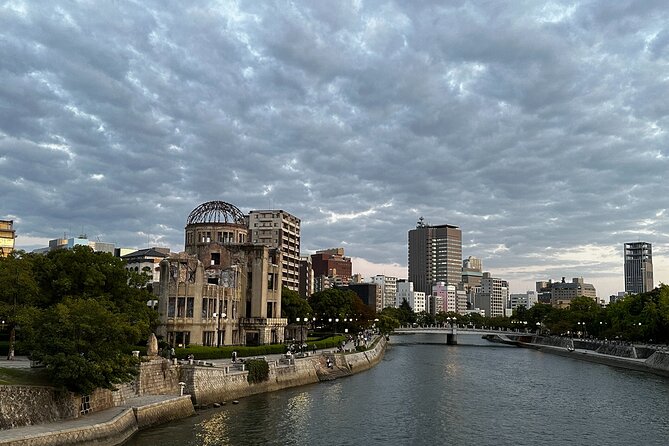
The Atomic Bomb Dome is one of Hiroshima’s most recognizable sights. The building was used before the bombing and remains as a reminder of what happened there. You have about 20 minutes to look at it and hear its place in the city’s memory.
The Dome is visually striking, but the guide’s explanation is what makes the stop useful. You can ask about the building’s purpose, its survival, and why it has become such a lasting symbol. Its location also helps you understand how close the major memorial sites are to the city center.
The next stop is the Peace Flame, a five-minute visit with a simple but important question behind it: why does the flame continue to burn? Pancho explains its meaning rather than leaving you with a sign to read and a quick photograph to take.
These stops are short, but they fit together. The Dome recalls the physical destruction, while the flame points toward Hiroshima’s wish for peace and the end of nuclear weapons. You will get more from both if you listen for that contrast.
Lunch near Peace Memorial Park
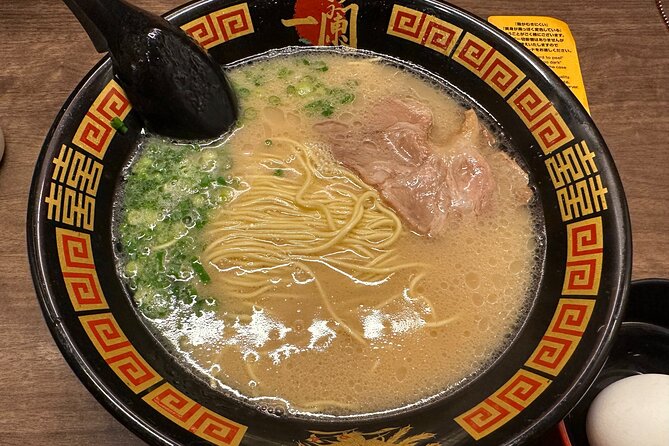
Lunch takes about 50 minutes and is not included in the $200 price. Pancho can introduce you to local restaurants near Peace Memorial Park and help you choose among Hiroshima-style okonomiyaki, ramen, and sushi.
Hiroshima-style okonomiyaki is the obvious local specialty to consider. If that does not suit you, ramen or sushi gives you another route. Vegetarian, vegan, and gluten-free diners should mention their needs in advance so the food suggestions can be more useful.
This is not a formal food tour, and you pay for your own meal and drinks. Still, the stop adds a welcome local element to a morning centered on grief and war. It also gives you a chance to sit down, ask follow-up questions, and reset before the final memorial sites.
If food matters to you, text Pancho before the tour with your preferences. Past communication has included dietary restrictions and plans for the day, which can make this short lunch break more productive.
The Rest House, cranes, and a child’s story
The Rest House of Hiroshima Peace Park is one of the surviving buildings from the bombing. Today it serves as a tourist information point and includes a small museum area. The visit lasts about 15 minutes.
This stop adds another layer to the tour. The Atomic Bomb Dome is the famous surviving structure, but the Rest House lets you see how a building used by ordinary people endured. The small museum may be worth your time if you want another close look at the physical record of the bombing.
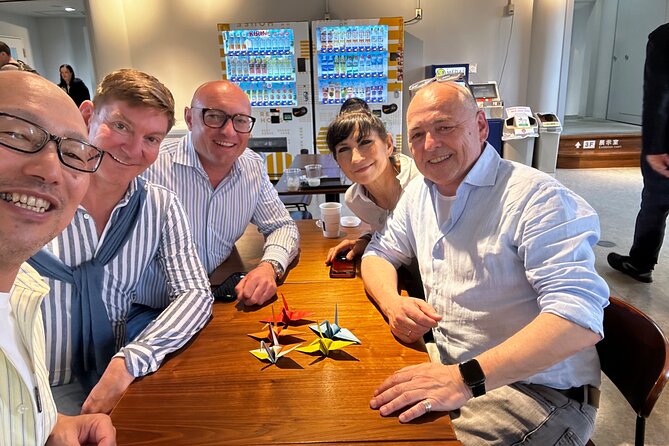
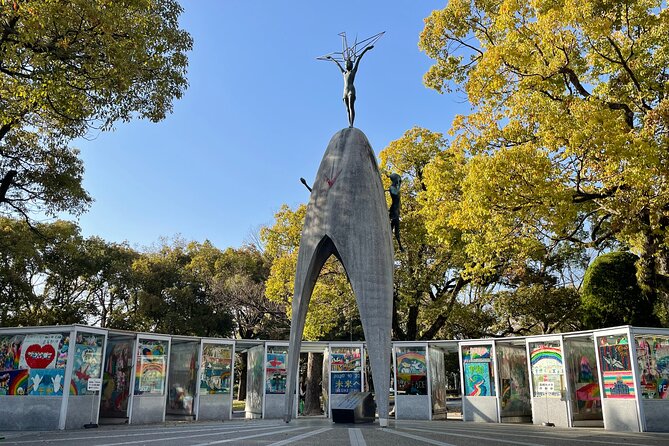
You may also have the chance to try an origami activity. Pancho has taught people to fold paper cranes, connecting the craft with the story of Sadako Sasaki and the Japanese belief that cranes are linked with hope for recovery.
The Children’s Peace Monument follows, with about 10 minutes devoted to the story of one girl who tried to fold paper cranes while hoping to recover from leukemia. Her story gives the monument a personal focus, especially for families and younger visitors.
The paper crane activity is not just a cheerful diversion. It helps you engage with a difficult subject through a simple action. You leave with a better sense of why cranes, folded paper, and children have such a strong place in Hiroshima’s memorial culture.
The Cenotaph and the final message
The Hiroshima Peace Memorial City Monument Cenotaph for the Atomic Bomb Victims is the final listed stop. Pancho explains the history of the monument, the reason for its shape, and the idea behind its design.
The visit is planned for about 10 minutes, but you may want to stay quiet for a little longer. The Cenotaph is not simply another monument to photograph. It frames the names of the atomic bomb victims and expresses the city’s wish that the tragedy not be repeated.
Ending here gives the route a clear shape. You begin with the city’s background and physical signs of survival, move through the point of destruction and the Dome, then finish with memorials centered on remembrance and peace.
Because the tour is private, you can ask Pancho to clarify the symbolism or connect it to something you saw earlier. That flexibility is one of the strongest reasons to choose a personal guide instead of walking through the park alone.
What the $200 price really buys you
The base price is $200 per person and covers the guide fee. It does not cover lunch, public transportation, private transportation, or the Peace Memorial Museum entrance fee of ¥200 per person.
Public transportation adds about $4 per person. A taxi or private vehicle can cost more, and private transportation is an optional extra. You should also budget for your meal and drinks.
The value depends on how you use the guide. If you want only the Atomic Bomb Dome and Cenotaph, you can see those places without paying for a private tour. If you want Pancho’s family perspective, help with the difficult questions, local restaurant advice, and a route that includes less obvious evidence such as the shrine, trees, and temple, the price has a clearer purpose.
The tour is also booked an average of 108 days ahead, which suggests that you should plan early if your Hiroshima dates are fixed. Confirmation is sent within 48 hours of booking, subject to availability.
Who will get the most from this walk
I would recommend this experience to you if Hiroshima is a major reason for your visit and you want more than a checklist of monuments. Families may especially appreciate the origami crane activity and the ability to adjust the conversation for children.
It also suits people who have already seen the main memorial sites but want more context. The route includes familiar places, yet the shrine, survivor trees, Saiko-ji Temple, and Rest House can give a second visit more depth.
You should think twice if you dislike walking, want a strictly museum-based experience, or are watching every dollar. The tour includes several short stops and local transportation, and the emotional subject may feel heavy. Most people can participate, and service animals are allowed, but you should still be comfortable spending several hours moving between memorial places.
The tour is near public transportation, and the meeting can be arranged at Hiroshima Station or your hotel. That makes it practical for a day arrival by bullet train, though you will need to handle your own luggage and transport costs.
Should you book Pancho’s Hiroshima tour?
Book it if you want a private, personal explanation of Hiroshima and are willing to pay for the guide rather than just the sights. Pancho’s connection as the son of an A-bomb survivor, his attention to survivor trees and buildings, and his willingness to discuss food and origami give the four hours a human scale.
Skip it if you only need a quick orientation or plan to spend your time inside the Peace Memorial Museum. In that case, the added guide fee may not fit your priorities.
For most people choosing this tour, the deciding question is simple: do you want to see Hiroshima, or do you want time with someone who can help you understand it? If the second answer is yes, reserve early and send your meeting point, food needs, and interests to Pancho before arrival.
FAQ
How long does the Hiroshima walking tour last?
The tour lasts approximately four hours.
How much does the tour cost?
The listed price is $200 per person.
Is this a private tour?
Yes. Only your group participates.
Who is the guide?
The English-speaking guide is Tetsuo Hamano, who is also known as Pancho.
Does the guide have a family connection to Hiroshima’s bombing?
Yes. Pancho is the son of an A-bomb survivor.
Where can I meet the guide?
You can meet at the bullet train platform in Hiroshima Station if arriving from cities such as Osaka, Kyoto, or Tokyo. A hotel meeting point can also be arranged.
Is lunch included?
No. Lunch and drinks are not included, but the guide can introduce you to local restaurants serving Hiroshima-style okonomiyaki, ramen, and sushi.
Are vegetarian, vegan, or gluten-free food options possible?
The guide can provide restaurant options for vegetarian, vegan, and gluten-free diners. You should communicate your dietary needs before the tour.
Are admission fees included?
No. The Hiroshima Peace Memorial Museum entrance fee is ¥200 per person. The listed outdoor monuments have no admission charge.
Can I cancel for a full refund?
Yes, if you cancel at least 24 hours before the experience start time. Cancellations made less than 24 hours in advance are not refunded.
Just added around Hiroshima
- Full Day Hiroshima and Miyajima Tour by Bullet Train from Kyoto★ 4.5 · 120 reviews
- Hiroshima Saijo Sake Tasting Tour with visit to 7 Breweries★ 5.0 · 104 reviews
- The Peace Memorial to Miyajima : Icons of Peace and Beauty★ 4.5 · 31 reviews
- Shore Excursion from Hiroshima Port : Private Tour in Hiroshima★ 5.0 · 17 reviews
- Okunoshima Rabbit Island Cycling Tour with Local Guide★ 4.5 · 17 reviews
- Hiroshima & Miyajima All-Inclusive Tour w/Licensed guide Pancho★ 5.0 · 54 reviews
- Private Full Day Hiroshima Tour★ 4.5 · 29 reviews
- Hiroshima Country Cycling: Explore Rural Life 1 HR from City★ 5.0 · 22 reviews
Walking Tours, compared.

Kyoto Geisha Walking Tour: Gion District & Hidden Gems
Our verdict →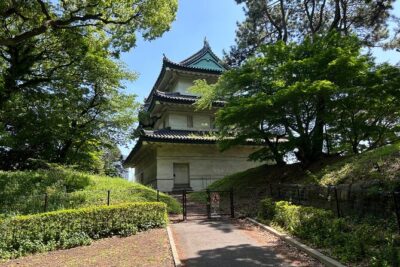
Imperial Palace and Shogun Historical Walking Tour
Our verdict →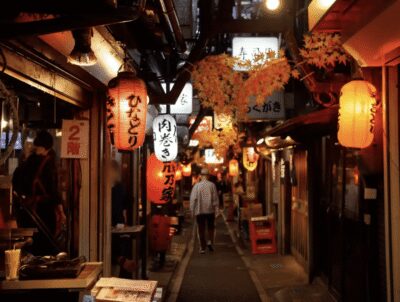
Shinjuku Local Bar and Izakaya Guided Walking Tour
Our verdict →

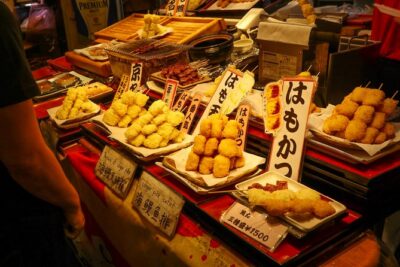
Nishiki Market Brunch Walking Tour (7 Tastings + Brunch)
Our verdict →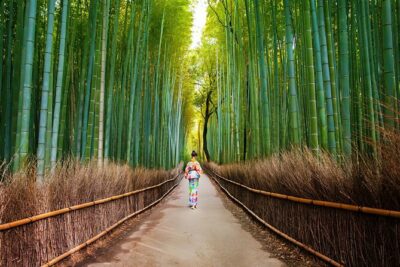
Kyoto Arashiyama Walking Tour: Bamboo, Monkeys, Gardens & Secrets
Our verdict →
Tokyo Castle & Imperial PalaceーShogun Walking Tour
Our verdict →Browse the lists this tour appears in