
Reviewed · FISH MARKET TOURS
Tokyo: Tsukiji Fish Market Guided Walking Tour
Tsukiji is easiest to enjoy when someone helps you read the signs, choose the stalls, and keep you moving through the crowds. This two-hour walk pairs Tsukiji Hongwan-ji Temple with the Outer Market, where you can sample foods ranging from tamago and sushi to wagyu beef, eel, oysters, and sweets.
I like the freedom to choose what you eat rather than being locked into a set menu. I also like the small groups, limited to 10 people, and the practical help from guides such as Jim, Rie, Yayoi, and Sayaka. The main catch is simple: food is not included, and some prized bites can cost more than you expect, so carry cash and set aside extra spending money.
Key points to know before you book
- Start with a temple, not just seafood: The tour opens at Tsukiji Hongwan-ji, with about 15 minutes for its carvings, interior, and cultural background.
- Choose your own food: Buy only what appeals to you at each stall, which helps with allergies, preferences, and appetite.
- Expect expert navigation: Your guide leads you to selected stalls and helps make the market less confusing.
- Bring cash: Food and drinks cost extra, and some tastings can be pricey.
- Small groups matter: With no more than 10 people, it is easier to ask questions and stay together.
- Allow two hours of walking and eating: The schedule gives roughly 100 minutes to the Outer Market after the temple visit.
Why Tsukiji works better with a guide
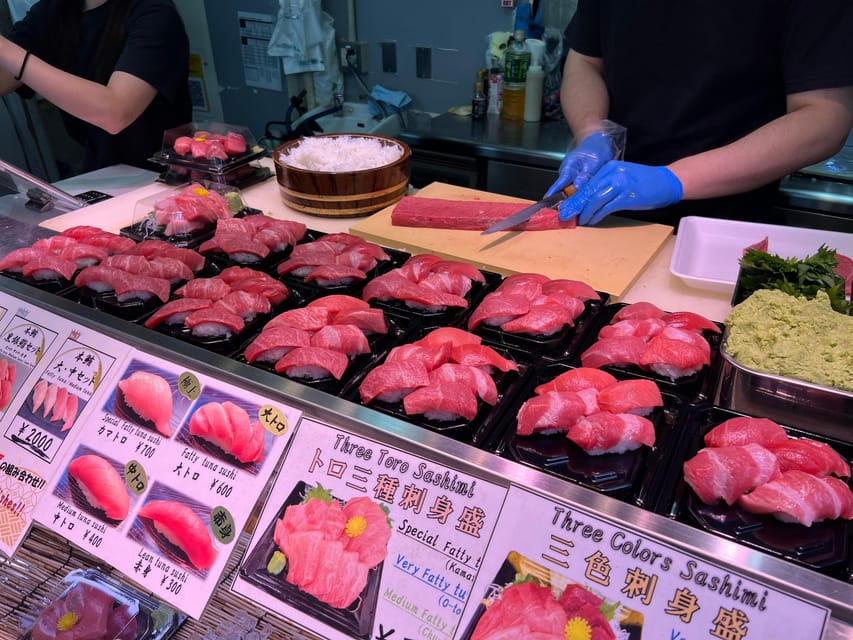
Tsukiji Outer Market is not one neat food hall with a single entrance and an easy route. It is a network of shops and stalls selling seafood, produce, dried goods, spices, sweets, cooked food, and kitchen items. You can walk through on your own, but it is not always clear what a product is, how it is used, or which stop fits your budget.
That is where this tour earns its modest price. Your guide gives the market a framework. Instead of wandering past unfamiliar foods, you can ask what something is, how Japanese cooks use it, and whether it is worth trying. Guides have also helped with ordering and payment, useful when a stall is crowded or the menu is not easy to understand.
The group size is capped at 10. That is small enough for a guide to keep an eye on everyone, answer questions, and adjust the food stops to suit the group. It is not a private tour, so you will still share the experience with other people, but it should feel more personal than a large walking group.
The English-speaking guide can vary. Jim, Rie, Yayoi, Sayaka, Haydn, Nicolas, Minori, Shino, and others have led recent departures. The strongest part of the experience is the guide’s ability to explain food and culture in plain language while helping you get through the market at a sensible pace.
More Market Tours in Tokyo
- Tokyo Tsukiji Fish Market Food and Culture Walking Tour
★ 5.0 · 3,184 reviews - Tokyo: Tsukiji Fish Market Food and Walking tour
★ 5.0 · 1,724 reviews - Tsukiji Fish Market Guided Tour and Sushi Making with Pro Chef
★ 5.0 · 775 reviews
Beginning at Tsukiji Hongwan-ji Temple
Meet your guide outside the Starbucks in front of Tsukiji Station. From there, it is about a five-minute walk to Tsukiji Hongwan-ji Temple, also written as Tsukiji Hongan-ji.
The temple gives the tour a useful opening. If you went straight to seafood, you might see only a busy market. Starting with a religious site helps place Tsukiji in its wider setting and introduces parts of Japanese culture before the food begins.
You spend about 15 minutes here. The temple is known for detailed carvings and a calm interior, a sharp contrast to the activity outside. Guides explain the temple and its role in the area, giving you a few ideas to watch for as the tour continues.
This stop is short, so do not expect a full temple tour or a long religious lecture. Its value is as an introduction. It also gives you a quiet first pause before entering the crowded market streets.
Some guides have included nearby shrines or temples as well, but the stated route centers on Tsukiji Hongwan-ji. The exact commentary and nearby stops can vary by guide and by the pace of the group.
Entering Tsukiji Outer Market
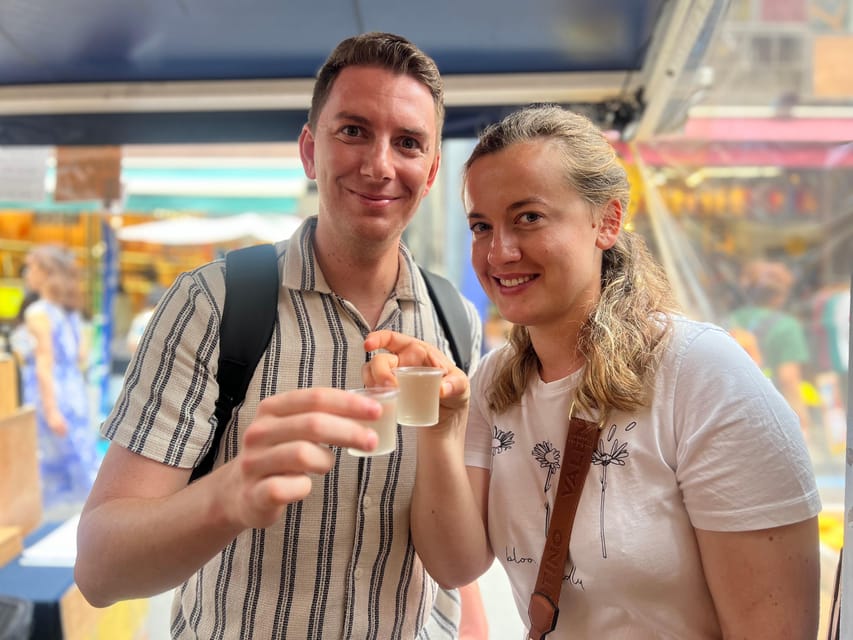
After the temple, you walk about five minutes to the Outer Market. Most of the tour time is spent here, with roughly 100 minutes divided between guided walking, shopping, and food stops.
The first thing you will notice is the range of goods. Seafood is the star, but the market is also a place to see vegetables, dried fish, shrimp, scallops, specialty ingredients, sweets, nuts, and other products used in Japanese cooking. Your guide explains the difference between ingredients and points out ways they appear in everyday meals.
The market can feel crowded even on a weekday morning. That is one reason the guide matters. Rie, Sayaka, Jim, and other guides have led groups through busy passages, helping everyone stay together and reach selected stalls without wasting the short tour time.
You should expect some standing, walking, and waiting at food counters. This is not a sit-down meal with a fixed sequence. It is a guided tasting walk, and the rhythm depends on the market, the group, and the stalls you choose.
What you can eat, and what you pay for

Food is purchased separately, which is both a strength and a limitation. You are not paying for a package of dishes you may not want. Instead, you decide what to order at each stop.
Possible foods mentioned during the tour include:
- Tamago, the sweet Japanese omelet often served with sushi
- Sushi and fatty tuna
- Oysters and sea urchin
- Wagyu beef skewers
- Eel
- Sashimi
- Dried fish, shrimp, and scallops
- Nuts and other snacks
- Japanese sweets
- Matcha-related treats
- Sake at some departures
The selection is not guaranteed. Do not book expecting every item above. Your guide may choose different stalls, and your own appetite, budget, or dietary needs will shape the stops.
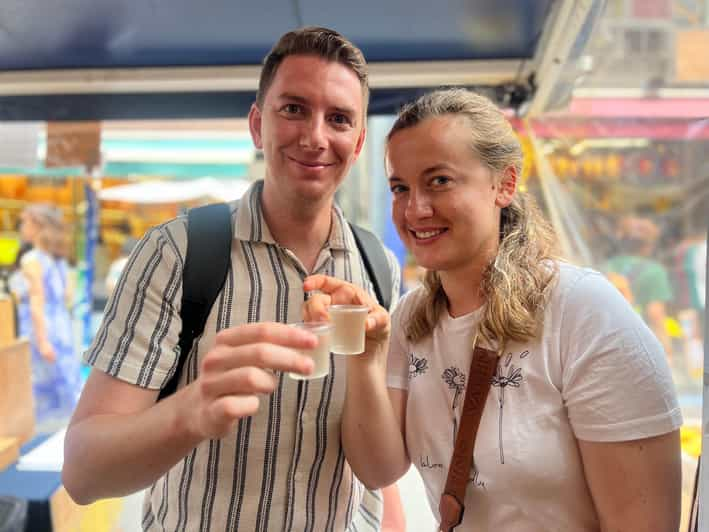
I like the pay-as-you-go setup for another reason: it gives you control. One person can try seafood while another chooses beef or a dessert. You can also skip an item without wasting money. One person with little interest in seafood still found enough other foods to try, while another discovered that sea urchin and whale sashimi were personal highlights.
The downside is that the $22 tour price is not your final food budget. Some items, especially premium beef or seafood, can be expensive. Bring cash, and ask the guide about prices before ordering if you are watching your spending. The tour can be good value, but you should not mistake the low booking price for an all-inclusive tasting menu.
More Walking Tours in Tokyo
- Tokyo: Imperial Palace and Shogun Historical Walking Tour
★ 5.0 · 2,251 reviews - Tokyo: Shinjuku Local Bar and Izakaya Guided Walking Tour
★ 4.9 · 1,794 reviews - Tokyo: Asakusa Walking Tour with Sensoji Temple Visit
★ 4.8 · 1,583 reviews - Tokyo Castle & Imperial PalaceーShogun Walking Tour
★ 4.7 · 1,068 reviews
How the guide improves the food stops
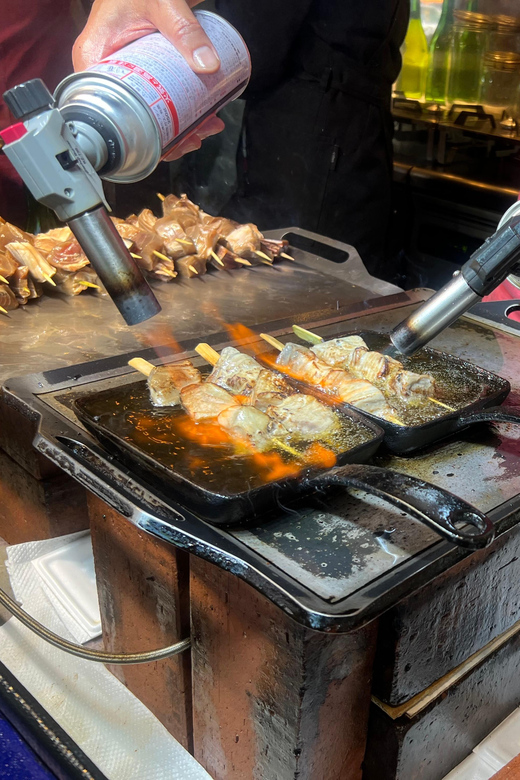
The market’s real challenge is not finding something to eat. It is deciding what is worth your time and money.
A guide can point you toward favorite stalls, explain what to order, and help you avoid buying blindly. Guides have introduced groups to wagyu, tuna, eel, dried seafood, sweets, and free samples. They can also explain the difference between a quick snack and a more expensive specialty item.
Some people appreciate this most for the food. Others value the cultural explanations. A piece of dried seafood is not just a snack when you understand how it is prepared or used in Japanese cooking. A sweet omelet becomes more interesting when you know its place in a market breakfast or sushi meal.
The guides also help with practical details. Sayaka has helped people order at several stalls while allowing them to choose foods that suited their allergies or preferences. Other guides have helped with payments, pointed out water at a convenience store, or suggested restaurants for later meals.
Do not expect the guide to pay for your food or provide a set number of tastings. You are buying your own food at the stalls. Free samples may appear, but they should be treated as a bonus, not as the main meal.
The history and food culture behind the stalls
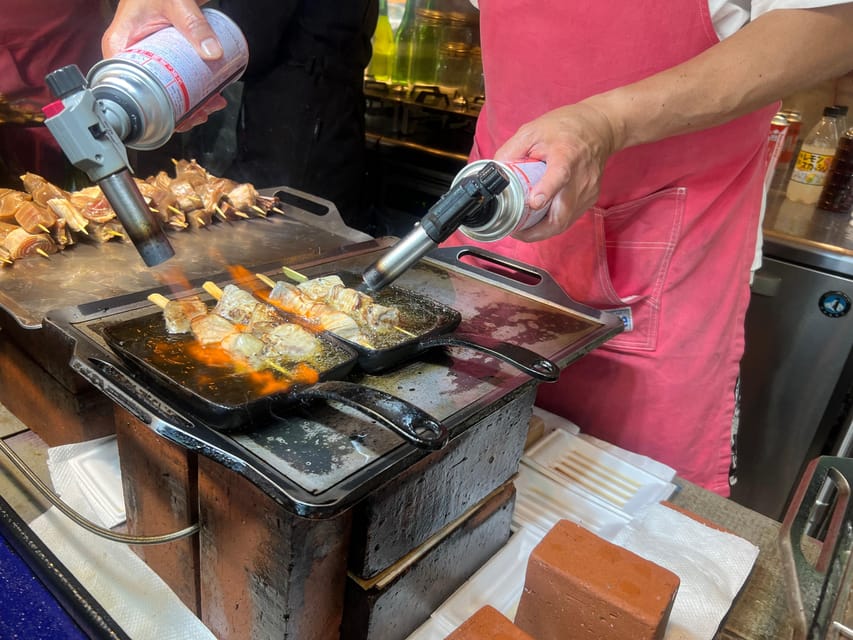
This tour is more than a stroll past seafood counters. The guide explains how the market fits into Tokyo’s food culture and why its ingredients matter.
You will hear about the market’s long role in the city’s food life, along with explanations of seafood traditions and the ingredients central to Japanese cooking. The historical context keeps the experience from feeling like a series of unrelated snacks.
The temple visit also helps. Japanese food culture does not sit apart from daily customs, regional products, seasonal habits, and religious traditions. The tour does not claim to teach everything in two hours, but it gives you useful starting points for the rest of your time in Japan.
The best guides add personal perspective. Jim has been praised for connecting food, culture, history, and life in Japan. Haydn has explained both the temple and the market in detail. Rie has combined local food advice with an easygoing approach. These differences matter because your guide is not simply reading out facts. The guide shapes how much context you get and how quickly the group moves.
Is two hours enough?
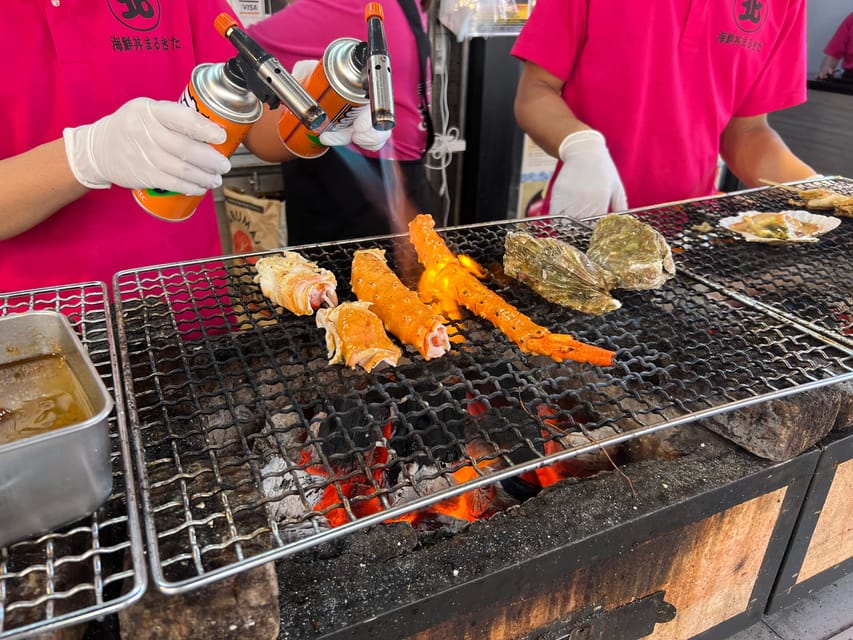
Two hours is enough for an introduction, not a complete study of Tsukiji.
About 15 minutes is set aside for the temple, with five-minute walks between the meeting point, temple, and market. That leaves most of the time for the Outer Market, where your group may visit several food stalls and shops.
The schedule is well suited to a first morning in the area. You get an overview, several tasting options, and a better sense of where to return later. It is also short enough to fit before another Tokyo activity.
The tradeoff is that the tour cannot linger everywhere. If you stop for a long meal, shop for souvenirs, or want detailed explanations of every ingredient, you will need extra time after the tour. The market is worth exploring independently once you know the layout and have a few recommendations.
The tour is also not an early fish auction visit. The stated route covers Tsukiji Hongwan-ji and the Outer Market. If your main goal is an auction, a wholesale fish operation, or a long restaurant meal, this is not the right format.
Who will get the most from this tour
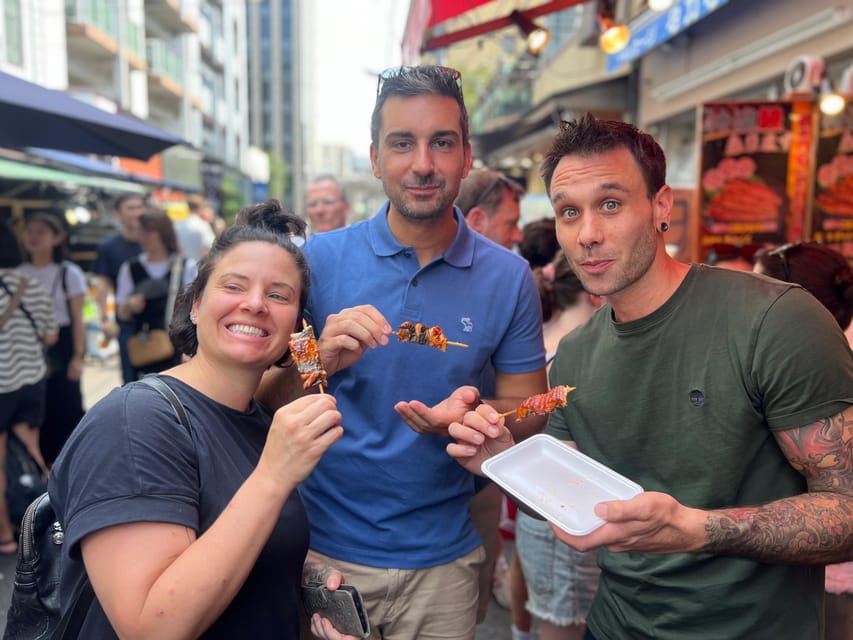
I would recommend this walk to first-time visitors who want help making sense of Tsukiji. It is especially useful if you are curious about Japanese food but do not recognize many ingredients or feel confident ordering at a crowded stall.
Families and mixed groups can also benefit from the flexible food setup. One person can try sushi, another can choose wagyu, and someone else can focus on sweets. Since food is optional at every stop, you are not forced into a meal that does not suit you.
It is a good match for people who enjoy small bites rather than one large lunch. Come ready to taste several things, but do not arrive expecting a formal restaurant experience.
I would be more cautious if you dislike crowds, cannot walk comfortably for two hours, or want a quiet, private food tour. The group is small, but the market itself is not. You may also find the extra food costs frustrating if you have a strict budget.
For anyone with food allergies or strong dietary limits, the flexible ordering helps, but you should explain your needs to the guide before buying. The tour data does not promise a special dietary menu, so do not assume every stall will have suitable options.
Value, timing, and practical details
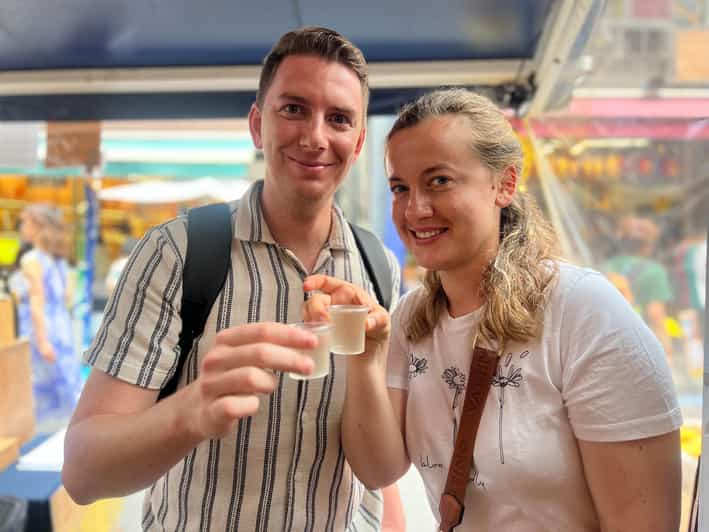
At $22 per person, the tour is priced as a guided introduction rather than a full food package. That is good value if you want orientation, cultural context, and help selecting stalls. It is less of a bargain if you mainly want to walk around and buy food on your own.
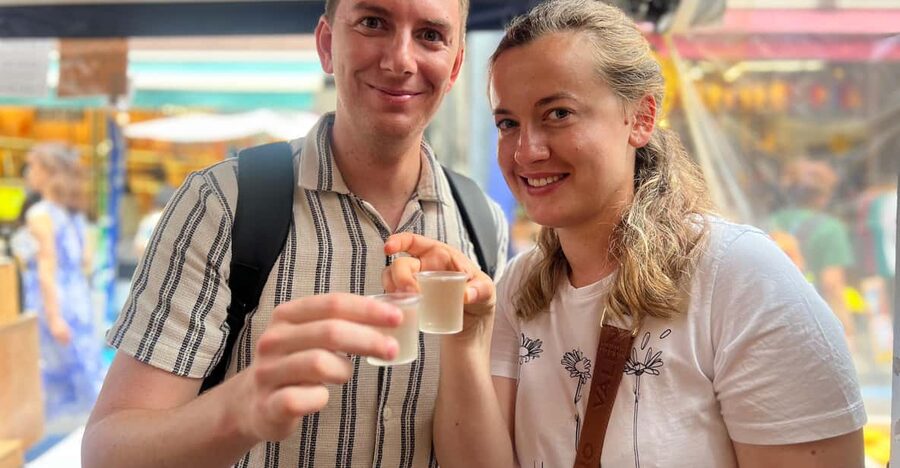
The small group and English-language guidance add most of the value. You are paying for local direction, explanations, and time saved, not for the food itself. The photos taken during the tour are included, along with entry to the market area and Hongwan-ji Temple, where entry fees are free.
Wear comfortable shoes and bring cash. The meeting point is easy to identify: Starbucks in front of Tsukiji Station, with the guide waiting near the bench. Check the start time when booking, since departure times can vary.
Cancellation is flexible up to 24 hours before the tour for a full refund, and you can reserve now and pay later. Those policies are useful if your Tokyo schedule is still changing, but the bigger planning point is to place this tour early in your stay if possible. You will get food ideas and market advice that can guide later meals.
Should you book the Tsukiji walking tour?
Book it if you want a friendly introduction to Tsukiji, practical help with ordering, and a chance to taste several Japanese foods without committing to a fixed menu. The temple opening, small group, and flexible food stops make the two hours feel broader than a simple market walk.
Skip it if you prefer to explore alone, need a guaranteed menu, or want an auction or wholesale-market experience. Also budget for food beyond the $22 booking price.
For most first visits, I think the guide is worth the cost. Tsukiji is easy to visit but harder to understand quickly. A good guide turns unfamiliar stalls into choices you can make with confidence.
FAQ
Where does the Tsukiji tour meet?
You meet your English-speaking guide outside the Starbucks located in front of Tsukiji Station. The guide waits near the bench.
How long does the tour last?
The tour lasts two hours.
How large is the group?
The group is limited to 10 participants.
Is the tour conducted in English?
Yes. The live tour guide speaks English.
Is food included in the tour price?
No. Food and drinks are not included. You pay separately for anything you choose to order at the market stalls.
Should I bring cash?
Yes. Cash is listed as an item to bring, and you will need to pay separately for food and drinks.
Does the tour visit Tsukiji Hongwan-ji Temple?
Yes. The route includes a guided visit of about 15 minutes at Tsukiji Hongwan-ji Temple.
How much time is spent at Tsukiji Outer Market?
About 100 minutes of the two-hour route is allocated to guided walking and shopping at Tsukiji Outer Market.
Are entry fees included?
Entry to Tsukiji Fish Market and Hongwan-ji Temple is included, and the stated entry fees are free.
Can I cancel the booking for a refund?
Yes. You can cancel up to 24 hours in advance for a full refund. You can also reserve now and pay later.
More Fish Market Walks in Tokyo
- Tokyo Sushi Making Class in Tsukiji with Professional Chef
★ 5.0 · 1,177 reviews - Tokyo: Tsukiji Fish Market Food and Culture Walking Tour
★ 4.7 · 757 reviews - Tsukiji Fish Market: Street Food & Culture Walking Tour
★ 5.0 · 669 reviews - Tsukiji Fish Market Small-Group Food Walking Tour
★ 5.0 · 621 reviews
Just added around Tokyo
- Kawagoe Japanese Food Tour : Unagi Kaiseki and Sake near Tokyo★ 5.0 · 30 reviews
- Kawagoe 4hr Private Tour with Licensed Guide (Kawagoe Dep)★ 5.0 · 13 reviews
- Little EDO Sushi Making workshop in Kawagoe★ 5.0 · 18 reviews
- 【R34】Tokyo:Private Daikoku tour in Modified R34★ 4.9 · 92 reviews
- :Tokyo,Shibuya/ Pro Photography in Kimono / English-Friendly★ 5.0 · 26 reviews
- Tokyo:Celebrate Unique Japanese New Year Tradition Festivity★ 3.9 · 20 reviews
- Tokyo: Allstar Food Tour★ 4.7 · 29 reviews
- Tokyo: West-Side Cycling and Food Tour with Guide★ 5.0 · 37 reviews
Fish Market Tours, compared.
Tokyo Sushi Making Class in Tsukiji with Professional Chef
Our verdict →

Wakayama Cat Train, Seafood market, Hot Springs Tour
Our verdict →
Awesome Private Tour: Tsukiji, Asakusa, Shinjuku, Shibuya
Our verdict →Browse the lists this tour appears in