
Reviewed · TEMPLES & SHRINES
Tokyo: Meiji Jingu Shrine and Shinto Culture Walking Tour
Meiji Shrine gives you a rare pause in the middle of Tokyo. You walk from Harajuku into a sacred forest of 100,000 trees, then learn why each gate, barrel, bow, and offering matters in Shinto practice. The contrast between city noise and quiet shrine paths is the main attraction.
I like two things especially: the small-group format, which leaves room for real questions, and the practical guidance on shrine etiquette. Guides such as Maya, Minori, Nicholas, Hoshi, Yota, and Andres have helped visitors understand both the Meiji period and everyday Japanese customs. The main consideration is that this is a walking tour, and two hours can feel short if you want lots of time for photos or a slow visit.
Key points to know before you book
- A forest walk leads into the spiritual heart of Harajuku: The route feels far removed from nearby shopping streets.
- You learn what to do, not just what to look at: Your guide explains shrine etiquette, prayer steps, and Shinto symbols.
- The $19 price is unusually practical: Shrine admission, an English-speaking guide, historical context, and photos are included.
- Small groups make a difference: Past groups have been as small as one to four people, with a usual maximum of about 12.
- Start early if you can: Morning visits offer a quieter atmosphere, according to guide advice shared during the tours.
- It works well as a first Tokyo activity: You can ask about Japanese customs, local food, nearby sights, and using the city’s transport system.
Why Meiji Shrine makes a good first stop in Tokyo
You may arrive in Tokyo expecting neon signs, packed trains, and high-rise streets. Meiji Shrine shows you another side of the city almost at once. The meeting point is in front of the Starbucks closest to Meiji Shrine, near Harajuku, at coordinates 35.6705208, 139.7031067.
That detail matters. Harajuku has several Starbucks locations, so use the map pin rather than relying on the neighborhood name alone. Once you meet your guide, the route heads toward the shrine grounds and away from the busiest retail streets.
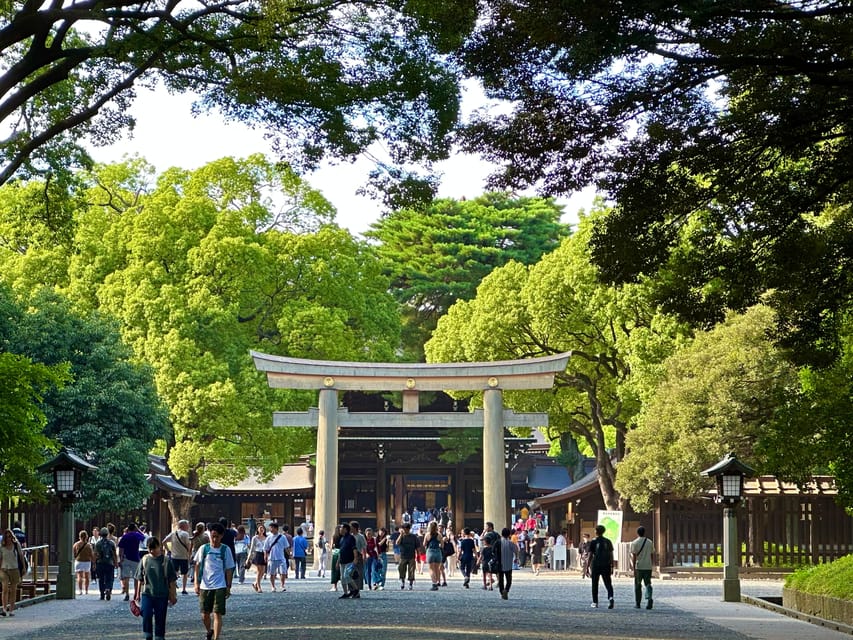
The walk through the forest is not just a way to reach the main buildings. It sets up the central idea of the tour: in Shinto, nature and spiritual life are closely connected. Your guide can explain why the grounds feel deliberately calm and how the forest shapes the experience of arriving at the shrine.
This is also a useful orientation to Japanese religious customs. The guides explain how Shinto differs from Buddhism, a topic that several visitors found especially helpful. You learn the basic actions for approaching a shrine and praying respectfully, rather than copying the person in front of you and hoping for the best.
More Temple & Shrine Tours in Tokyo
- Tokyo: Meiji Shrine, Asakusa, Skytree Bus Tour and Cruise
★ 4.7 · 1,986 reviews - Tokyo: Asakusa Walking Tour with Sensoji Temple Visit
★ 4.8 · 1,583 reviews - Tokyo Panoramic 1 Day: Meiji Shrine, Asakusa, Odaiba and SKYTREE®
★ 4.5 · 1,222 reviews
Meiji Jingu Gyoen and the first thirty minutes
The first planned stop is Meiji Jingu Gyoen, the garden area associated with Meiji Shrine. You spend about 30 minutes here with the guide, using the time to become familiar with the grounds and their connection to the shrine.
This part is valuable because it slows the pace. Instead of rushing straight to the main building for a quick photograph, you begin by looking at the setting. The garden and surrounding forest help explain why this shrine feels separate from Harajuku, even though the neighborhood is only a short walk away.
Your guide may point out features you would probably pass without noticing. The activity promises attention to less obvious details, and the small group gives you a chance to stop and ask what you are seeing. If you are interested in Japanese customs, this is a good time to ask about purification, offerings, prayer, and the proper behavior around sacred spaces.
The practical drawback is time. Thirty minutes is enough for an introduction and a guided look, but not for a leisurely exploration of every path. If you want a long independent visit to the garden, plan to return later or allow extra time after the tour.
Walking beneath the Big Torii
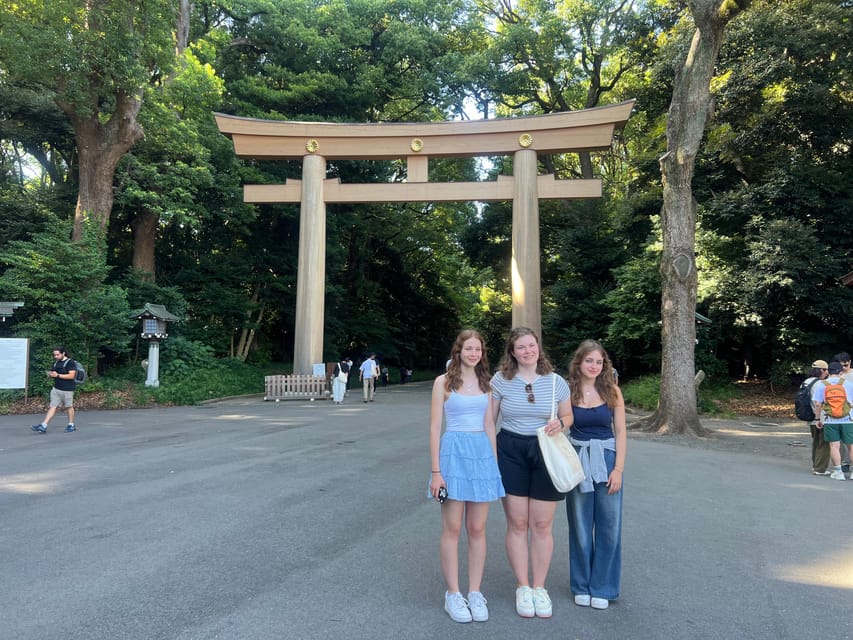
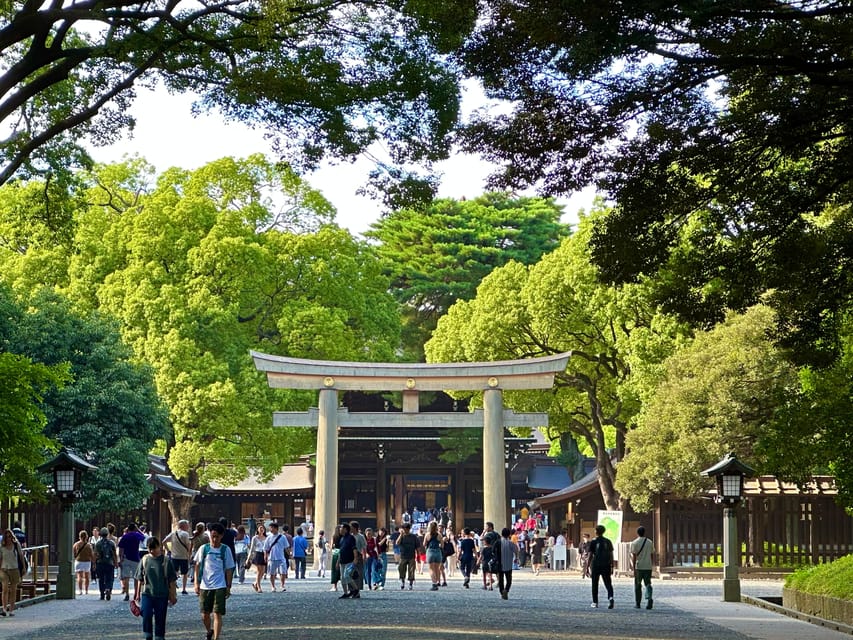
The Big Torii receives about 10 minutes of guided attention. It is a brief stop, but it helps frame the transition from ordinary city space to the shrine grounds.
A torii marks the approach to a Shinto shrine. Your guide can explain the meaning of passing beneath it and the respectful habits expected in the area. This is the kind of information that gives structure to the visit. You are not simply walking under a large wooden gate because it looks impressive. You are entering a place with its own rules and symbols.
The gate also makes a strong first photograph, especially when viewed against the long forest approach. Your guide can take photos during the tour, which is useful if you are traveling alone or want a picture with your whole group.
Do not expect a long lecture here. The stop lasts around 10 minutes, so the guide keeps the explanation focused. That suits the setting. The forest path is best experienced with some quiet, not with nonstop talking.
Sake barrels and wine barrels
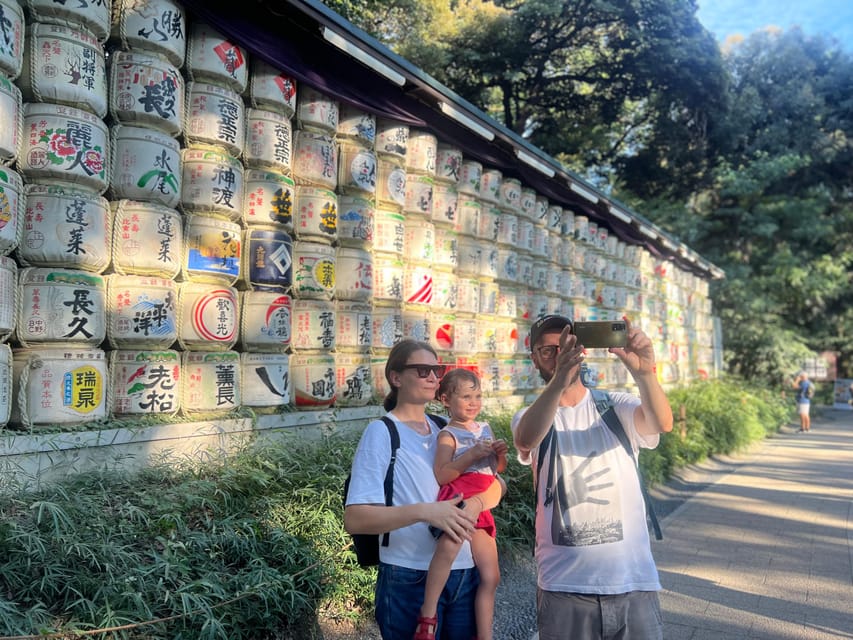
The next stops are the consecrated sake barrels and the consecrated wine barrels, with about 10 minutes devoted to each. These displays give you a concrete look at how offerings and support connect to shrine life.
The sake barrels are one of the most recognizable sights on the approach. Your guide explains their religious and cultural meaning, as well as why they are displayed at the shrine. You will likely see visitors photographing the colorful labels and stacked barrels, but the explanation turns the stop into more than a photo break.
The wine barrels offer a useful reminder that Meiji Shrine’s story belongs to a period when Japan was engaging with ideas and products from outside the country. Guides also use the area to discuss the Meiji period and changes in Japanese society.
These are short stops, so the depth depends on your questions and your guide. Guides such as Andres have been praised for giving historical background alongside practical cultural advice, while guides including Ryota and Yota have been especially good at taking photos and keeping the walk personal. The exact guide varies, but the format gives you a chance to ask for more detail if a subject catches your interest.
More Walking Tours in Tokyo
- Tokyo Tsukiji Fish Market Food and Culture Walking Tour
★ 5.0 · 3,184 reviews - Tokyo: Imperial Palace and Shogun Historical Walking Tour
★ 5.0 · 2,251 reviews - Tokyo: Shinjuku Local Bar and Izakaya Guided Walking Tour
★ 4.9 · 1,794 reviews - Tokyo: Tsukiji Fish Market Food and Walking tour
★ 5.0 · 1,724 reviews
The main shrine and Shinto rituals
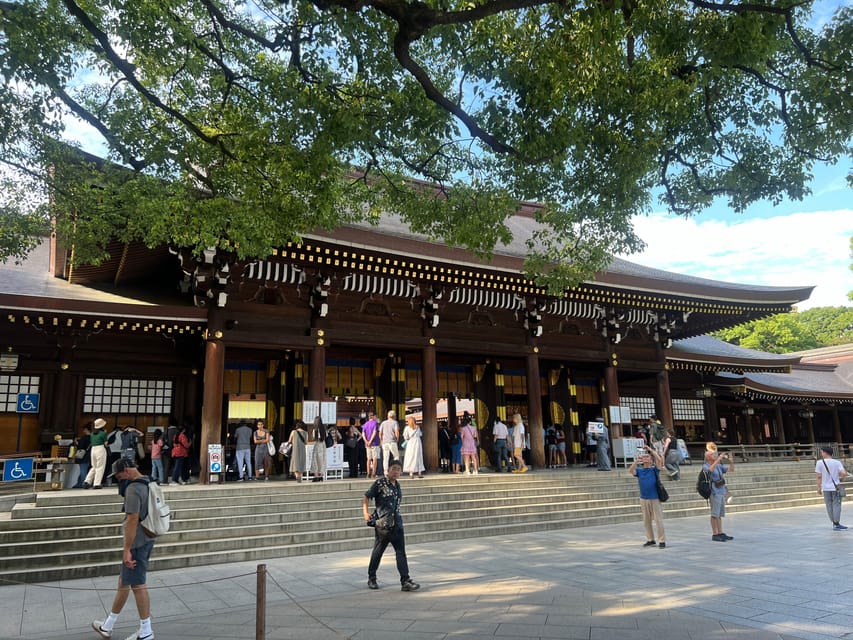
The main Meiji Shrine visit takes about an hour. This is the heart of the experience and where the earlier explanations begin to make sense.
Your guide shows you how to approach the shrine respectfully and how to pray. You learn the basic sequence rather than treating the ritual as a performance for a camera. That small lesson is one of the tour’s best values because it can help you feel more comfortable at other shrines during your time in Japan.
The guide also explains the shrine’s history and its link to the Meiji period. Several guides have been praised for making the subject understandable to first-time visitors while still answering more detailed questions from people who already know the basics.
You may also have time to notice smaller features on the grounds. One family used the visit to write wishes on an ema, a wooden prayer plaque, and have books stamped. Those activities are not listed as guaranteed parts of the tour, so treat them as possibilities rather than promised inclusions. Your guide can explain what you are seeing and how these customs fit into shrine life.
The main shrine area can attract more people as the day goes on. That is why the advice to visit early is sound. A morning start will not make the site empty, but it can give you more space to listen and observe without constant movement around you.
What the small group changes
The tour usually allows as many as 12 people, but several groups have been much smaller. Some visitors have had a private tour when others did not arrive, while other groups numbered only two, four, or a few more people.
That matters at a shrine. A large group can turn a quiet cultural visit into a march behind a flag. With fewer people, you can hear the guide more clearly, stop when a question comes up, and get help with photos without holding up a crowd.
Small groups also make the cultural conversation more useful. Guides have answered questions about Shinto, Buddhism, Japanese history, food, language, and daily customs. Some have offered advice on restaurants and other Tokyo sights, which can help you plan the rest of your stay.
The group size is not guaranteed. If the tour reaches its stated limit, you may have less personal time with the guide. Even so, the maximum is modest compared with many city tours.
The guides and the English experience
The tour is conducted in English. The guide names associated with the experience include Maya, Minori, Nicholas, Hoshi, Naruto, Matt, Sara, Yumi, Haydn, Andres, Yota, Ryota, and others. You cannot select a particular guide from the information provided, but the repeated pattern is clear: the experience depends heavily on the person leading your walk.
The strongest guides do more than recite dates. They explain why rituals are performed, make room for questions, and adjust the pace to the group. Minori and Nicholas, for example, were noted for explaining the shrine’s history and the difference between Shinto and Buddhist teachings. Hoshi was praised for answering questions clearly, while Haydn was especially effective at giving both an introduction and more detailed cultural context.
Photos are included, and guides such as Ryota and Yota have made a point of taking pictures at the stops. Local recommendations are another useful extra. Andres, Maria, and several other guides have shared food and sightseeing suggestions, while Yota has helped visitors find places for ramen, sushi, wagyu, and other Japanese dishes.
These extras are helpful, but they should not be the main reason you book. The core product is a two-hour guided visit to Meiji Shrine. Food stops and restaurant recommendations depend on the guide and are not part of the listed itinerary.
Is $19 good value?
At $19 per person, this is a strong value if you want context rather than a self-guided walk. The price includes an English-speaking guide, photos, historical information about the district, and entry to Meiji Shrine and the Imperial Garden.
You could walk through the shrine grounds on your own for less, but you would need to research the rituals and history before arriving. The tour saves that preparation time and gives you someone to answer questions in the moment.
The value is strongest for first-time visitors to Tokyo. You learn how to behave at a shrine, gain an introduction to Shinto and Buddhism, and receive practical advice that can help with the rest of your trip. If you already know Meiji Shrine well and prefer quiet independent time, the guided explanation may feel less necessary.
The tour does not include a meal, transportation, or a long independent visit. Keep that in mind when comparing it with larger half-day excursions. For two focused hours, however, the price is hard to criticize.
Who should book this Meiji Shrine walk?
I would choose this tour if you are visiting Japan for the first time, want help with cultural etiquette, or prefer learning through conversation. Families can also benefit, since guides have kept children engaged while explaining the shrine’s story.
It suits solo visitors particularly well. You get company, help with photographs, and a chance to ask as many questions as the group allows. It also works for repeat visitors who have seen the shrine but never understood the rituals or the symbolism.
You may want to skip it if you strongly prefer exploring alone, need a slow pace with long photo stops, or have only a short window and cannot commit to two hours. The tour is wheelchair accessible, but the route takes place across shrine grounds and forest paths, so check the exact meeting details and route conditions when booking if mobility is a concern.
The free cancellation policy allows cancellation up to 24 hours in advance for a full refund, and you can reserve now and pay later. Those terms are useful when your Tokyo schedule is still changing.
Final call: book it for context, not just photos
Book this tour if you want Meiji Shrine to make sense. The forest, torii, sake barrels, wine barrels, rituals, and main shrine are all worth seeing on their own, but the guide connects them into a clear introduction to Shinto culture.
The best timing is early in your Tokyo stay and, if possible, early in the day. You will get practical customs, neighborhood suggestions, and a cultural framework that can improve later visits to shrines and temples.
Skip it only if you want complete independence or a longer, slower shrine visit. At $19, with admission and a live English-speaking guide included, this is a sensible, low-cost way to begin exploring Tokyo.
FAQ
How long does the Meiji Shrine tour last?
The tour lasts two hours.
Where does the tour meet?
You meet in front of the Starbucks closest to Meiji Shrine, near Harajuku. The stated coordinates are 35.6705208, 139.7031067.
What language is the tour conducted in?
The tour is conducted in English with a live English-speaking guide.
What does the $19 price include?
The price includes the professional guide, photos taken during the tour, historical information about the districts, and entry to Meiji Shrine and the Meiji Shrine Imperial Garden.
Is the tour wheelchair accessible?
Yes, the activity is listed as wheelchair accessible.
Can I cancel the booking for a refund?
Yes. You can cancel up to 24 hours in advance for a full refund.
Can I reserve now and pay later?
Yes. You can reserve your place and pay later, so you do not need to pay at the time of booking.
Just added around Tokyo
- Kawagoe Japanese Food Tour : Unagi Kaiseki and Sake near Tokyo★ 5.0 · 30 reviews
- Kawagoe 4hr Private Tour with Licensed Guide (Kawagoe Dep)★ 5.0 · 13 reviews
- Little EDO Sushi Making workshop in Kawagoe★ 5.0 · 18 reviews
- 【R34】Tokyo:Private Daikoku tour in Modified R34★ 4.9 · 92 reviews
- :Tokyo,Shibuya/ Pro Photography in Kimono / English-Friendly★ 5.0 · 26 reviews
- Tokyo:Celebrate Unique Japanese New Year Tradition Festivity★ 3.9 · 20 reviews
- Tokyo: Allstar Food Tour★ 4.7 · 29 reviews
- Tokyo: West-Side Cycling and Food Tour with Guide★ 5.0 · 37 reviews
Temples & Shrines, compared.

Tea Ceremony in a Traditional Tea House in Kiyomizu
Our verdict →

Meiji Shrine, Asakusa, Skytree Bus Tour and Cruise
Our verdict →
Fushimi Inari Hidden Hiking Tour (Private Option Available)
Our verdict →
Osaka/Kyoto:Kinkakuji,Arashiyama,FushimiInariShrine,NaraPark
Our verdict →
Nikko: Kegon Falls, Lake Chuzenji & Toshogu Temple
Our verdict →
Kamakura & Enoshima Day Trip including Temple Tickets
Our verdict →Browse the lists this tour appears in