
Reviewed · FISH MARKET TOURS
Tokyo: Guided Walking Tour of Tsukiji Market with Lunch
Tsukiji is best understood with someone who knows how to read its narrow lanes, busy counters, and unfamiliar foods. This small-group market walk takes you from the striking exterior of Tsukiji Hongwanji Temple into the Outer Market, where working wholesalers and food sellers share space with curious visitors.
I like the broad tasting menu, especially the chance to try dashi, Japanese omelette, tuna sushi, fried fish paste, and grilled meat or seafood in one morning. I also like the cultural angle, since your guide explains the link between Japanese cuisine, religion, and daily life. The main caution is value: at $113 per person, the food portions and quality need to matter to you, and some past tastings have felt ordinary rather than special.
Key points to know before you book

- Nine tastings make this more than a sightseeing walk: Expect grilled seafood or beef, tuna sushi, omelette, fried fish paste, filled rice balls, dessert, a drink, tea, and dashi soup stock.
- Tsukiji Hongwanji Temple is the starting point: You meet outside this unusual Buddhist temple, whose exterior draws on ancient Indian-inspired design.
- The group is capped at 10 people: That is small enough for questions and easier movement through tight market lanes.
- English-speaking guides add the real value: Hide, Tomoko, Yumiko, and Sachiko have led tours with a calm, friendly approach and useful food and history explanations.
- The tour lasts 165 minutes: You have time for tastings and context, but the actual market area covered is fairly compact.
- The food is varied, not luxurious: This is a street-food introduction, not a high-end sushi meal. That distinction matters at this price.
Starting at Tsukiji Hongwanji Temple
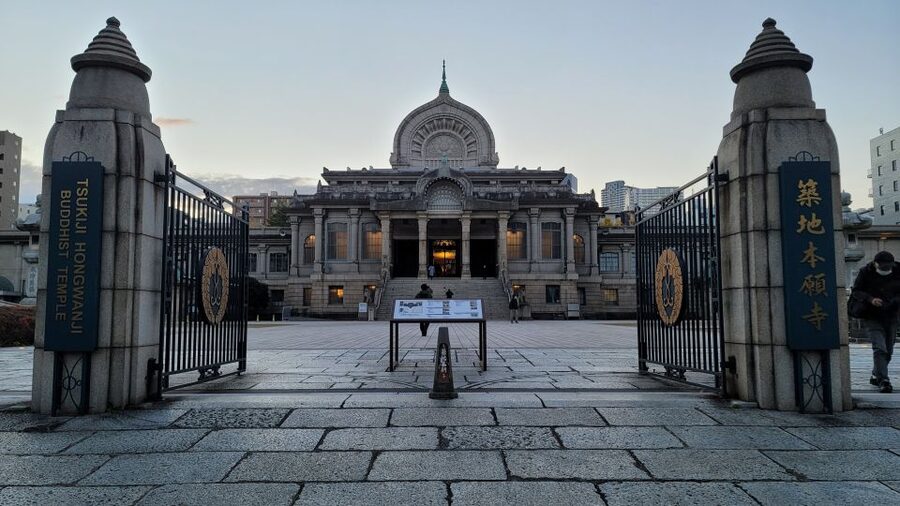
Your meeting point is in front of Tsukiji Hongwanji Temple, just outside Tsukiji Station on the Hibiya Line. Take Exit A1, turn left, and the temple entrance is about 50 meters away. That makes the beginning refreshingly simple, especially in a city where meeting points can sometimes require a long search.
The temple exterior gives the tour a useful opening scene. Its design is Buddhist, but it has an ancient Indian-inspired look rather than the familiar wooden temple style many people expect in Japan. You see the building from outside, so this is not a temple interior visit or a long religious ceremony.
That short stop matters because the tour is trying to connect food with culture, not simply march you from one snack counter to the next. Your guide can explain why temples, offerings, ingredients, and seasonal eating all matter in Japanese life. The temple also helps you understand that Tsukiji is more than a place to buy breakfast.
Guides who have led this experience include Hide, Tomoko, and Yumiko, sometimes with an assistant such as Sachiko. Their styles may differ, but the strongest part of the guiding is the personal explanation: what to try, how the market works, and why a simple stock or omelette has a place in Japanese cooking.
More Market Tours in Tokyo
- Tokyo Tsukiji Fish Market Food and Culture Walking Tour
★ 5.0 · 3,184 reviews - Tokyo: Tsukiji Fish Market Food and Walking tour
★ 5.0 · 1,724 reviews - Tokyo: Tsukiji Fish Market Guided Walking Tour
★ 4.9 · 1,397 reviews
Entering Tsukiji Outer Market
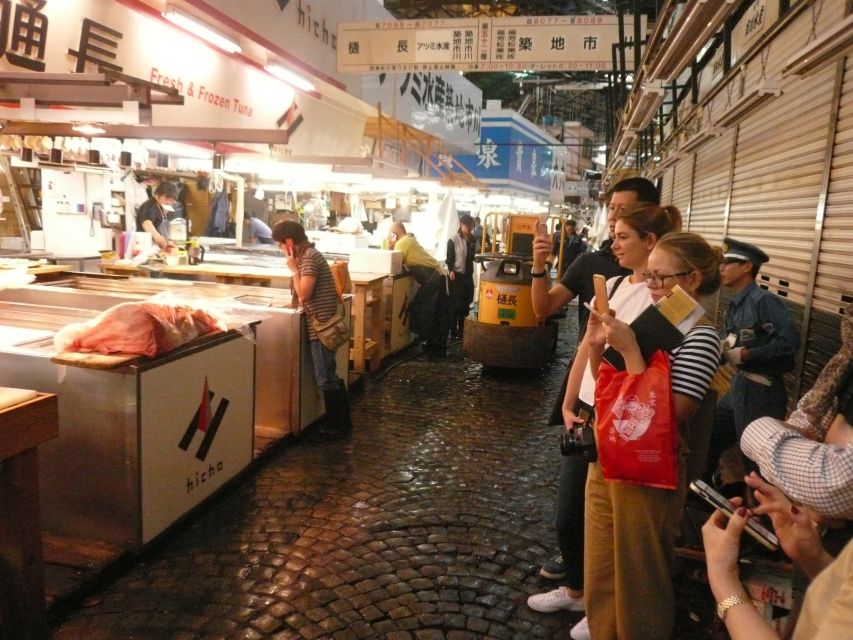
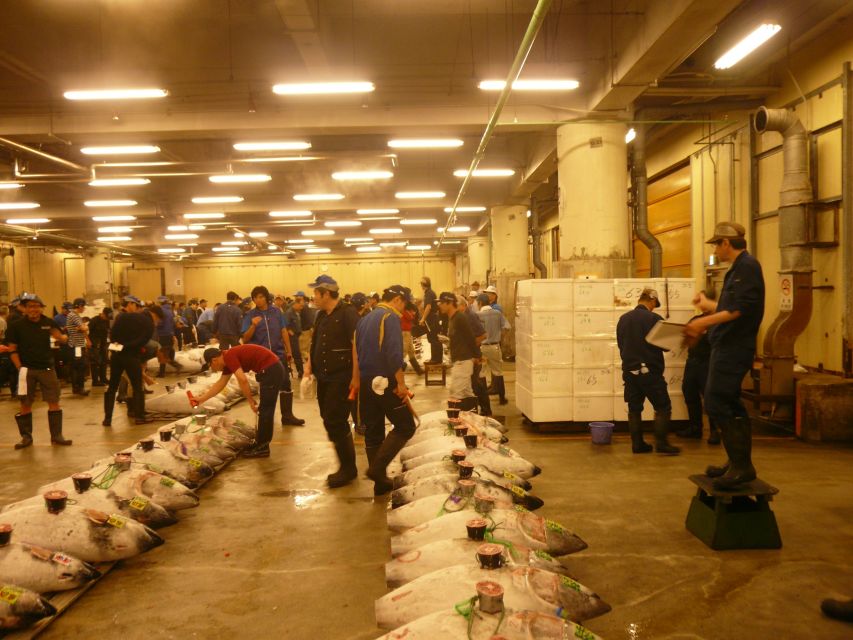
From the temple, you move into Tsukiji Outer Market, a dense district of food shops, stalls, restaurants, and market businesses. The famous wholesale fish auction moved to Toyosu, but Tsukiji Outer Market remains a major food destination and an active place of work.
That distinction is important. You are not entering a quiet museum arranged for sightseeing. You are walking through a working market where sellers, cooks, wholesalers, and shoppers share limited space. Expert wholesalers may be busy with their normal tasks, and the most interesting moments can be the quick ones: a product being selected, a shop preparing an ingredient, or a worker moving through a lane with purpose.
Your guide helps you avoid the usual problem of arriving with no idea where to begin. Tsukiji can be confusing at first because many stalls sell products you may not recognize, and the most appealing foods are not always easy to order without help. A guide can point out what you are eating, explain how it is prepared, and help you keep moving without stopping in the wrong place.
The tradeoff is scale. The market area covered by this tour is relatively small, so do not expect to see every corner of Tsukiji. Some of the walking time can feel stretched if the group moves slowly or if queues are short. I would choose this tour for orientation and guided tasting, not for an all-day market expedition.
What the nine tastings actually include
The tasting list is the heart of the experience. You receive nine local specialties, with the exact selection built around the following categories:
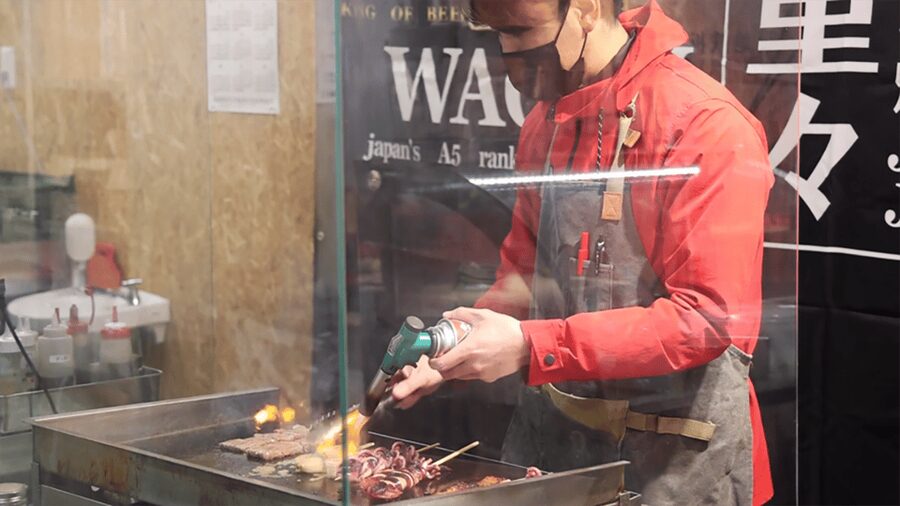
- Grilled seafood or beef skewers
- Japanese-style omelette
- Tuna sushi
- Fried fish paste skewers
- Filled rice balls
- Dessert
- A drink
- Japanese tea
- Dashi soup stock
This is a good range for a first look at Japanese market food. You are not eating only raw fish, so the tour can work for someone who wants variety or feels unsure about sushi. The grilled skewer, omelette, rice ball, and dessert provide familiar entry points, while dashi and fish paste introduce flavors you might otherwise pass by.
The dashi sample is especially useful. Dashi is a basic Japanese soup stock, and tasting it on its own helps you notice the savory foundation behind many dishes. It may seem like a tiny sample, but it gives you a better sense of Japanese cooking than another random bite of sushi would.
The omelette offers a different lesson. Japanese-style omelette is often softly layered and lightly sweet, which can surprise you if you expect a salty breakfast egg. The fried fish paste skewer also shows how Japanese cooks turn seafood into a convenient street snack.
You should think of the meal as nine small introductions, not nine full dishes. The grilled seafood or beef may be the most satisfying bite, while the sushi may be simple rather than a special-occasion serving. One past menu experience included tuna mayonnaise rice balls and average tuna sushi, so anyone booking this mainly for premium fish should adjust expectations.
Dessert and the drink help break up the savory food. The exact dessert can vary, and one tasting was described as strawberry-based. The tour also includes a sample of Japanese tea, giving you a quiet contrast to the salty, grilled, and fried items.
A closer look at the market food

The best part of a market food tour is often not the most expensive bite. It is the explanation around it. A guide can tell you why an ingredient is sold in a particular form, how the food fits a quick meal, or what makes a product common in Japanese cooking.
That is where the guides have made the biggest difference. Hide has led visitors through the market while helping them choose what to taste. Tomoko has been praised for a relaxed, fuss-free approach and for explaining the culture and history behind familiar stalls. Yumiko and Sachiko have worked together to guide people through the lanes and keep the group organized.
One practical detail from Tomoko’s tours is worth noting: she has helped manage queues and used food boxes and cleaning wipes to keep the group tidy. That may sound minor, but it matters when you are eating several samples while walking through a crowded food district. You want someone thinking about where to stand, what to do with packaging, and how to keep the pace comfortable.
Still, the food will not please everyone equally. Some people may find the grilled fish greasy or the sushi too basic. At $113, that can feel expensive if you measure value only by the amount and quality of food. The price makes more sense if you value the guide, the cultural explanation, the help choosing food, and the confidence to navigate the market.
More Walking Tours in Tokyo
- Tokyo: Imperial Palace and Shogun Historical Walking Tour
★ 5.0 · 2,251 reviews - Tokyo: Shinjuku Local Bar and Izakaya Guided Walking Tour
★ 4.9 · 1,794 reviews - Tokyo: Asakusa Walking Tour with Sensoji Temple Visit
★ 4.8 · 1,583 reviews - Tokyo Castle & Imperial PalaceーShogun Walking Tour
★ 4.7 · 1,068 reviews
How the 165-minute schedule feels
The tour lasts 165 minutes, or two hours and 45 minutes. That is long enough to include the temple exterior, a guided market walk, nine tastings, and explanations without turning into a full-day commitment.
The pace should suit you if you like to stop often and ask questions. A small group of no more than 10 people makes it easier for the guide to explain ingredients and keep everyone together. It also reduces the chance that you will miss an instruction while standing near a food counter.
The schedule may feel less satisfying if you want constant movement or a large amount of market coverage. Two past experiences found the area covered rather limited, with some time seeming to fill the allotted duration. That does not make the tour poor, but it confirms that this is a focused introduction rather than an exhaustive tour of Tsukiji.
Plan to wear comfortable shoes. You will be on your feet in market lanes, and the food stops may involve standing rather than sitting down for a formal lunch. The experience is wheelchair accessible, though the supplied information does not describe the width of individual lanes or the exact handling of every stall, so it is wise to confirm any specific mobility needs before booking.
Is $113 a fair price?
The cost is $113 per person. That is a serious price for a 165-minute food walk, especially since the meal consists of tasting portions rather than a restaurant lunch.
I would not book it expecting $113 worth of sushi alone. Tsukiji has many places where you can buy individual foods on your own, and independent visitors may spend less. The tour earns its price through access to a guide, nine planned tastings, language help, and the chance to understand what you are seeing instead of wandering from stall to stall.
Value depends on how you travel. If you are comfortable ordering unfamiliar food, reading menus, and finding your own way, you may prefer to explore Tsukiji independently. If you have one short visit, want a clear introduction, or are traveling with family members who need help deciding what to eat, the guided format becomes more useful.
The price also buys some practical ease. You do not need to research every snack before arriving, and you have someone explaining the difference between a rice ball, fish paste skewer, sushi serving, and dashi sample. That convenience has real value, but only if you enjoy learning as much as eating.
Who will enjoy this tour most
I would recommend this experience most strongly to first-time visitors to Tokyo who want a guided introduction to Japanese food without spending an entire day in a formal cooking class. It also suits families, since the nine tastings provide variety and not every bite is raw fish.
It is a good match for you if you like:
- Learning the story behind ordinary foods
- Trying small portions of many dishes
- Visiting a working market with a local guide
- Asking questions in English
- Keeping your group small
- Combining food with religion and local history
You may want to skip it if you are seeking a premium sushi meal, a large lunch, or a long tour of every market street. It is also not the best pick if you dislike standing, close quarters, or foods that may be fried, grilled, salty, or unfamiliar.
The guide matters greatly here. Hide, Tomoko, Yumiko, and Sachiko have all brought different strengths, from food suggestions to cultural context and practical help. You cannot assume which guide you will receive, but the quality of the experience will depend heavily on how well your guide manages the tastings and explains the market.
Booking details that affect your day
The tour is offered in English and is limited to 10 participants. That small-group size is one of the better features because Tsukiji’s lanes are not suited to a large tour bus style group.
You meet in front of Tsukiji Hongwanji Temple. From Tsukiji Station, use Exit A1 and turn left. The temple entrance is roughly 50 meters from the station, so arriving by subway is straightforward.
The activity includes the guide and the nine local tastings. You should bring comfortable shoes and arrive ready for a walking food experience rather than a seated restaurant meal. The tour is wheelchair accessible.
You can cancel up to 24 hours before the start for a full refund, and the reserve-now, pay-later option keeps payment off your plate until closer to the tour. Starting times vary, so check availability for your chosen date before building the rest of your morning around it.
Should you book the Tsukiji market walk?
Book this tour if you want a friendly English-speaking guide to make Tsukiji easier to understand, and if nine small tastings sound more appealing than one large meal. The temple opening, market access, and explanations of dashi, tea, sushi, and street food give the experience more substance than a simple snack crawl.
Think twice if you are booking mainly for expensive seafood. The food can be uneven, and the market section is compact. At $113, you are paying for guidance and context as much as for the bites.
My practical call: good for first-time visitors, families, and curious eaters, but less convincing for independent food experts. If you value a calm guide who can manage queues, explain customs, and help you taste without guesswork, this is a useful Tsukiji introduction. If you want the biggest meal for your money, explore the market on your own.
FAQ
Where does the Tsukiji walking tour meet?
The meeting point is in front of Tsukiji Hongwanji Temple. From Tsukiji Station on the Hibiya Line, take Exit A1, turn left, and walk about 50 meters to the temple entrance.
How long does the tour last?
The tour lasts 165 minutes, or two hours and 45 minutes.
What language is the tour conducted in?
The live tour guide speaks English.
How many people are in the group?
The tour is a small-group experience limited to 10 participants.
What food is included?
The tour includes nine local tastings: grilled seafood or beef skewers, Japanese-style omelette, tuna sushi, fried fish paste skewers, filled rice balls, dessert, a drink, Japanese tea, and dashi soup stock.
Is lunch a full restaurant meal?
No. Lunch is presented as a selection of Japanese street-food tastings while you walk through Tsukiji Outer Market.
Is the experience wheelchair accessible?
Yes, the activity is listed as wheelchair accessible.
Can I cancel for a refund?
Yes. You can cancel up to 24 hours in advance for a full refund. You can also reserve now and pay later.
More Fish Market Walks in Tokyo
- Tokyo Sushi Making Class in Tsukiji with Professional Chef
★ 5.0 · 1,177 reviews - Tsukiji Fish Market Guided Tour and Sushi Making with Pro Chef
★ 5.0 · 775 reviews - Tokyo: Tsukiji Fish Market Food and Culture Walking Tour
★ 4.7 · 757 reviews - Tsukiji Fish Market: Street Food & Culture Walking Tour
★ 5.0 · 669 reviews
Just added around Tokyo
- Kawagoe Japanese Food Tour : Unagi Kaiseki and Sake near Tokyo★ 5.0 · 30 reviews
- Kawagoe 4hr Private Tour with Licensed Guide (Kawagoe Dep)★ 5.0 · 13 reviews
- Little EDO Sushi Making workshop in Kawagoe★ 5.0 · 18 reviews
- 【R34】Tokyo:Private Daikoku tour in Modified R34★ 4.9 · 92 reviews
- :Tokyo,Shibuya/ Pro Photography in Kimono / English-Friendly★ 5.0 · 26 reviews
- Tokyo:Celebrate Unique Japanese New Year Tradition Festivity★ 3.9 · 20 reviews
- Tokyo: Allstar Food Tour★ 4.7 · 29 reviews
- Tokyo: West-Side Cycling and Food Tour with Guide★ 5.0 · 37 reviews
Fish Market Tours, compared.
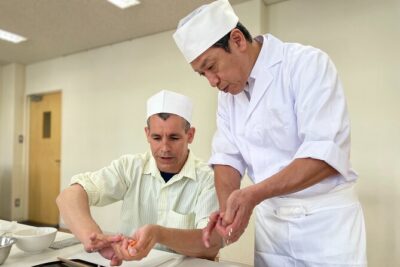
Tokyo Sushi Making Class in Tsukiji with Professional Chef
Our verdict →

Wakayama Cat Train, Seafood market, Hot Springs Tour
Our verdict →
Awesome Private Tour: Tsukiji, Asakusa, Shinjuku, Shibuya
Our verdict →Browse the lists this tour appears in