
Reviewed · TEA CEREMONY EXPERIENCES
Osaka: Tea Ceremony Experience
The most appealing part of this Osaka tea ceremony is that you do more than watch. After an English introduction and demonstration, you whisk your own bowl of matcha using the same kind of traditional tools used in the ceremony. I like the calm tatami-room setting and the chance to ask questions without needing Japanese.
I also like the sensible price: $25 includes the tea, sweets, and instruction. Guides such as Yuki, Akiko, Kazu, Mayumi, and Kana have been praised for their gentle teaching and clear English. The main drawback is practical: the address can be tricky to find, and you sit on the floor for much of the session.
Key points to know before you book
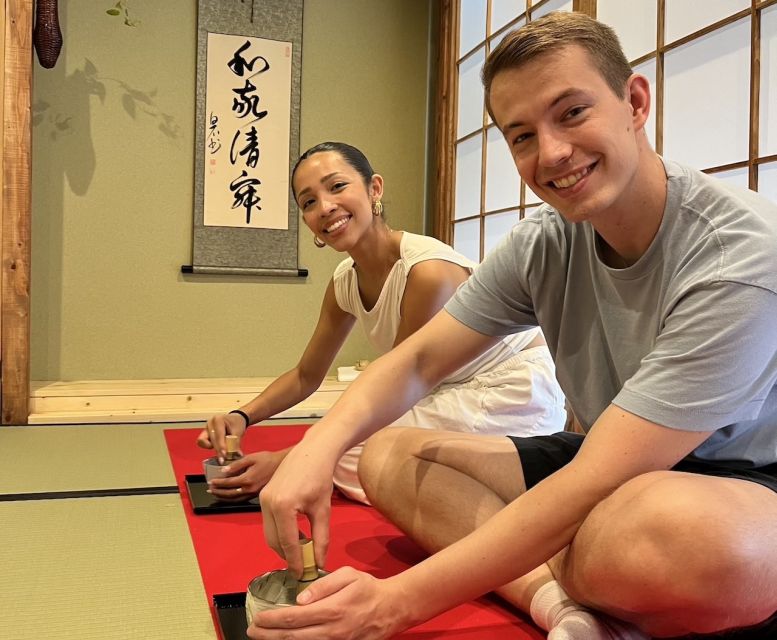
- A hands-on 45-minute lesson: You watch the ceremony, then prepare and drink your own matcha.
- English instruction: Japanese instructors explain the history, manners, tools, and meaning of each step in clear English.
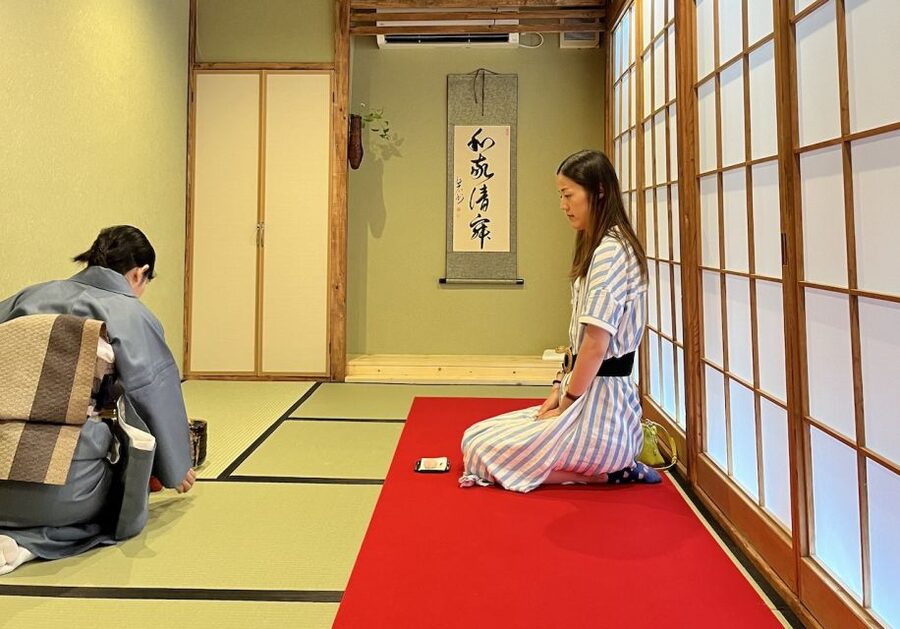
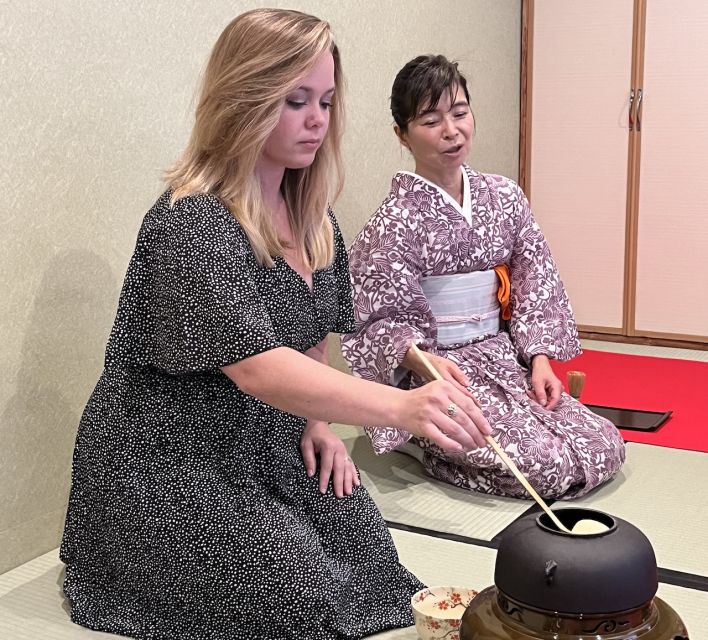
- Traditional setting: The activity takes place in a tatami room, with instructors wearing kimono.
- Seasonal sweets included: Small Japanese confections are served with the matcha and provide a sweet balance to its earthy taste.
- Dotonbori location: The venue is on the second floor at 1-5-26 Dotonbori Higashi, Chuo Ward, Osaka.
- Plan your arrival carefully: Use Google Maps and search for tea ceremony osaka the osaka, since the meeting point can be easy to miss.
A quiet cultural break in the heart of Osaka
Osaka is famous for bright signs, street food, shopping arcades, and late-night energy. This tea ceremony gives you a short change of pace without sending you across the city. The venue is in the Dotonbori area, but the activity itself takes place in a peaceful traditional room.
I like that contrast. You can spend the morning or afternoon walking through one of Osaka’s busiest districts, then sit down on tatami and pay attention to small movements: how a bowl is held, how the tea is whisked, and how sweets are presented.
This is an introduction, not an advanced study of tea ceremony. In 45 minutes, you will not learn every rule of a formal school of tea. You will, however, gain a useful understanding of the ceremony’s purpose and basic manners, then get to take part yourself.
The instructors wear kimono and guide the session in English. Names mentioned by participants include Yuki, Akiko, Kazu, Mayumi, Kana, Hise, and Ayaka, though your instructor will depend on the date and schedule. I would book this for the teaching style rather than for one particular person.
More Tea Ceremony Experiences in Osaka
- Tea Ceremony Experience in Osaka Doutonbori
★ 5.0 · 754 reviews - Matcha Making Class in Osaka with Authentic Japanese Sweets Set
★ 5.0 · 509 reviews - Osaka: Matcha Making Experience with Japanese Sweets
★ 5.0 · 146 reviews
The welcome and history lesson
The session begins in a traditional Japanese room, where the instructor welcomes you and explains the history and meaning of tea ceremony. This opening matters because the ritual can seem overly formal if you only watch the movements without context.
The best instructors make the details easy to follow. You learn why the host handles the tools with care, how tea is served, and what basic manners apply. The teaching is aimed at international visitors, so you do not need prior knowledge of Japanese customs.
This is also the point when you can ask questions. Several descriptions of the activity emphasize patient answers and clear explanations, especially from hosts such as Kazu, Mayumi, and Yuki. I would use this time to ask about the tea bowl, the seasonal sweets, or the symbolism behind particular gestures.
Do not expect a long lecture. The format is informal and approachable, which suits a first encounter. You get enough background to understand what you are seeing, then move on to the demonstration.
Watching the kimono-clad tea ceremony
Next, the instructor performs the ceremony. The demonstration shows how to use the tea scoop, whisk, bowl, and other traditional tools, while explaining the basic manners of serving and receiving tea.
The appeal is in the precision. The ceremony is not simply about making a green drink. The movements are measured, and the presentation gives importance to the host, the guest, the bowl, the tea, and the moment itself. Even a short demonstration can make an ordinary cup of tea feel more deliberate.
I especially like this watch-first approach. You see the full sequence before you try it, so the hands-on part feels manageable rather than awkward. The instructors also explain what they are doing as they go, which helps you connect the physical movements with the cultural meaning.
The demonstration may be calming, but it is not meant to be a silent performance that you simply observe from a distance. The English explanations keep it practical and friendly. You can follow along even if this is your first time seeing matcha prepared in the traditional way.
Making your own matcha
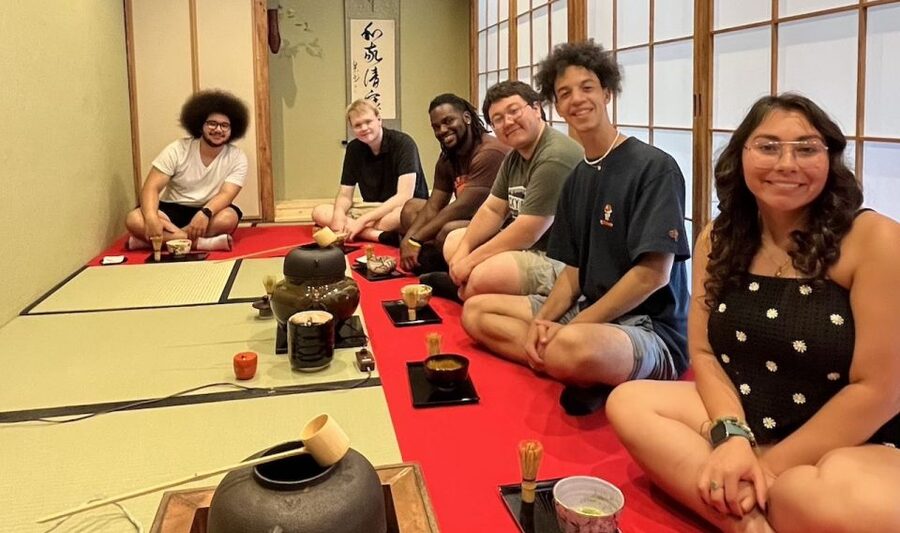
The most useful part of the activity comes next: you prepare your own bowl of matcha. The instructor shows you how to measure the powdered tea, add water, and whisk it with the bamboo tool.
You are not expected to perform perfectly. The point is to try the method and understand the care involved. Whisking matcha takes a little practice, and the hands-on element gives you a better sense of the technique than a demonstration alone.
I like this part because it turns the ceremony from a performance into a shared activity. You see the instructor’s smooth movements first, then feel the tools in your own hands. The result may not look identical to the guide’s bowl, but that is part of the fun.
After making the tea, you drink it yourself. Matcha has a strong, grassy, slightly bitter flavor that can surprise anyone accustomed to sweetened tea. The accompanying confection helps balance that taste and gives you a traditional pairing rather than a modern snack.
The activity is a good choice if you are curious about matcha but not yet convinced you like it. You get to taste it in a setting that explains how and why it is served. One participant admitted that the experience did not turn them into a matcha fan, but still considered the ceremony well worth doing. That is a fair expectation.
Same trip, a completely different kind of day:
- Osaka Go Karting Tour with Funny Costume
★ 5.0 · 2,658 reviews - Osaka Castle: Museum and Tower Entry Ticket
★ 4.5 · 2,380 reviews - Osaka: Shinsekai Food Tour with 13-15 Dishes at 5 Eateries
★ 4.8 · 2,204 reviews - Osaka Food Tour: 13 Dishes at 5 Local Eateries
★ 5.0 · 2,149 reviews
Seasonal sweets and the rhythm of the session
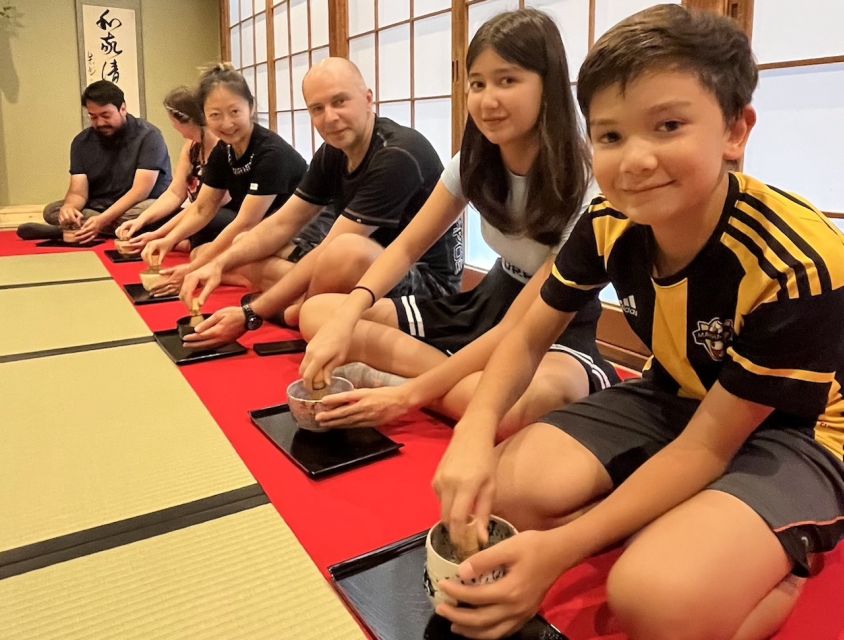
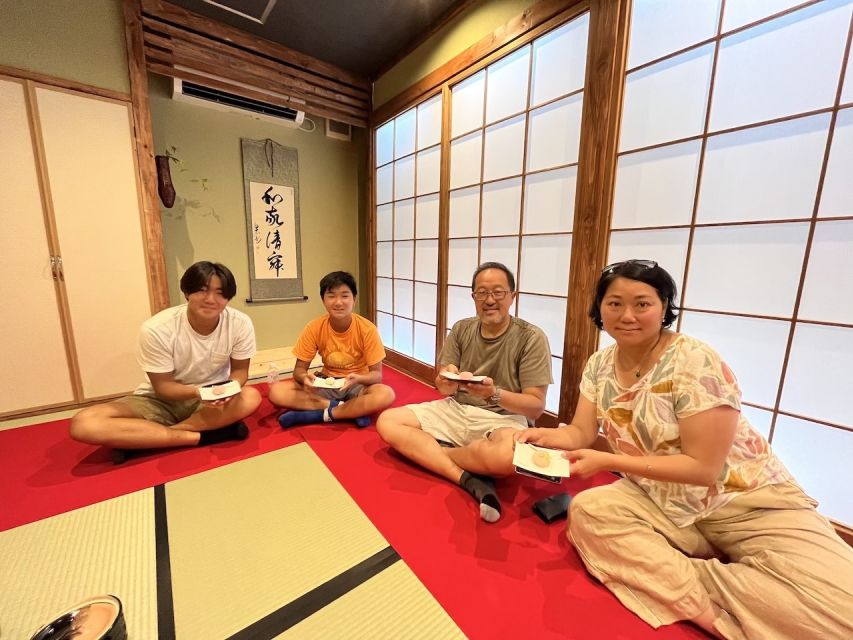
The Japanese sweets are small, delicate confections chosen to go with the tea. They are not a full meal, and you should not arrive expecting a dessert tasting. Their role is to prepare your palate for the matcha and offset its bitterness.
The sweets have received particularly warm praise, and that makes sense. Their colors, shapes, and textures add another visual detail to the ceremony. You taste something sweet first, then sip the matcha, noticing how the flavor changes.
One description of the experience notes drinking matcha twice, although the standard outline specifically guarantees the chance to make and drink your own bowl after the demonstration. The exact flow may vary with the instructor, so I would not book solely on the expectation of two servings.
Food is not allowed in the activity area, but the included confections are part of the experience. If you have dietary concerns, the supplied information does not specify ingredients or substitutions, so you should ask before booking.
What $25 gets you
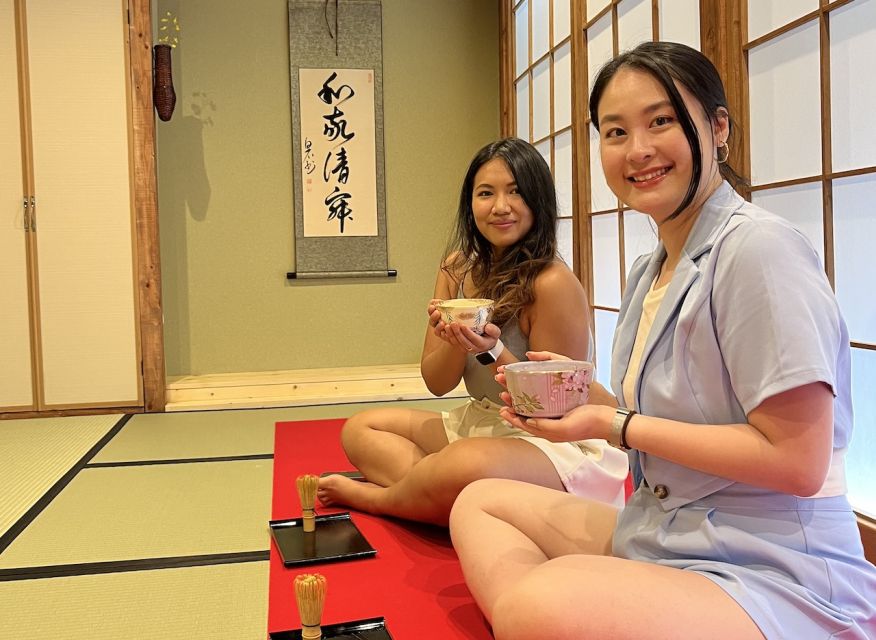
At $25 per person, this is a reasonable cultural activity for Osaka. The price includes entrance, matcha, and Japanese confections, so there are no listed add-on costs for the central parts of the session.
I see the value in three things. First, you receive direct instruction from Japanese hosts with more than 10 years of tea ceremony experience. Second, the lesson is conducted in English, which makes the cultural details accessible. Third, you participate rather than simply watch.
The session is short, but that can be a strength during a busy Japan itinerary. You can fit it between sightseeing stops in Dotonbori without giving up half a day. It also offers a calm pause after time spent in crowded streets.
The price is less compelling if you want a long, highly formal ceremony or a deep study of a particular tea school. This experience is designed as an introduction. For most first-time visitors, the combination of demonstration, explanation, hands-on practice, tea, and sweets makes the cost fair.
Finding the second-floor meeting point
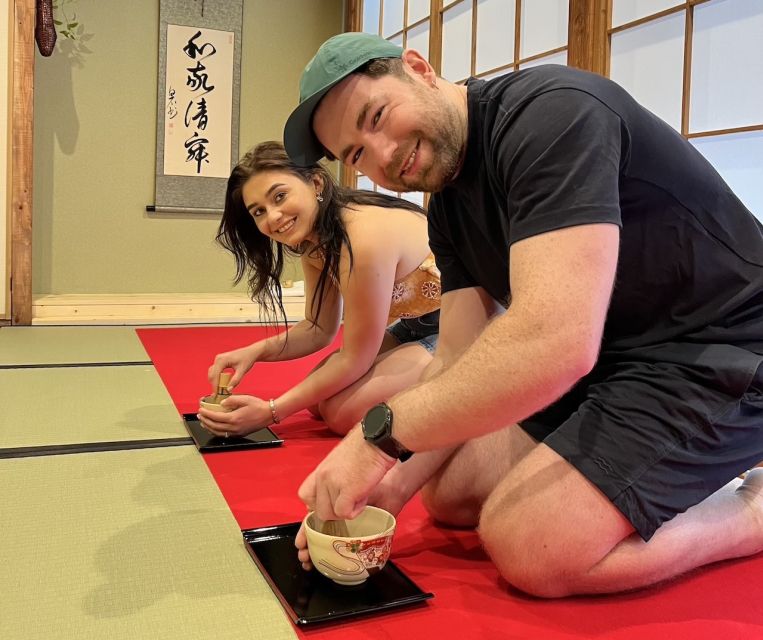
Give yourself extra time to find the venue. The address is 1-5-26 Dotonbori Higashi, Chuo Ward, Osaka, written in Japanese as 大阪市中央区道頓堀1丁目東5-26. The tea ceremony takes place on the second floor.
Use Google Maps and search for tea ceremony osaka the osaka. The supplied directions specifically warn that people occasionally arrive late because they cannot locate the entrance. The coordinates are 34.6688508, 135.5063291, which can help if the street address does not immediately make sense.
I would arrive with enough time to locate the building, but not extremely early. One person found the meeting point difficult to identify and noted that there was nowhere to sit while waiting. That is a small issue, but it matters if you are carrying shopping bags or traveling with tired children.
The venue is near Dotonbori, so it works well as part of a walking plan. Still, do not assume that being in the neighborhood means the second-floor entrance will be obvious. Check the map before leaving your hotel and keep the exact address ready.
Sitting on tatami and other practical details
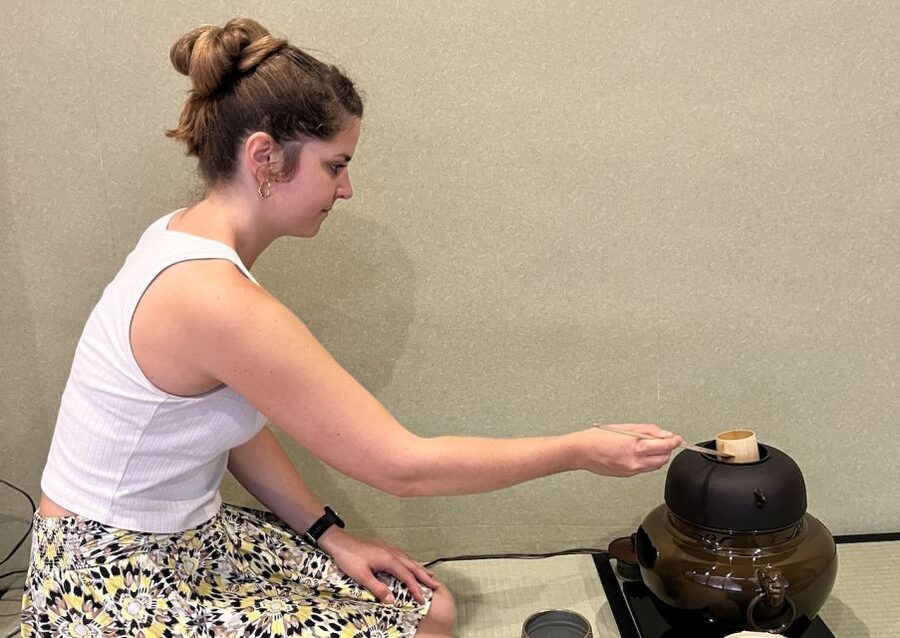
You will sit on the floor in the tatami room for much of the session. One person specifically noted sitting on the floor for about an hour, while the official duration is 45 minutes. If floor sitting is uncomfortable for you, consider contacting the provider before booking to ask about arrangements.
Baby strollers and baby carriages are not allowed. Food is also not allowed, and the instructions request that participants avoid jumping and loud noise. Those rules fit the quiet setting and the careful nature of the ceremony.
Children aged 5 and older need their own ticket. Children under 5 are not allowed to enter, and anyone accompanying a child under 4 should contact the provider in advance. The wording around children is important, so check your group’s ages carefully before reserving.
The activity is offered in English, including the host or greeter and the audio guide. That makes it a practical choice for visitors who want cultural context without relying on translation apps.
Who will get the most from this activity
I would choose this tea ceremony if you want a short, clear introduction to Japanese culture. It suits first-time visitors, couples, solo visitors, and families with children who meet the age requirements.
It is also a good fit for people who enjoy learning by doing. Watching the host is pleasant, but the chance to handle the whisk and prepare your own matcha gives the session its purpose.
You will probably enjoy it most if you appreciate quiet, orderly experiences. The room is peaceful, the ceremony moves at a measured pace, and the instructor focuses on small details. If you prefer high-energy entertainment, this may feel too subdued.
This activity is less suitable if you cannot sit on the floor comfortably, need to bring a stroller, or want a full meal. It is also not the right choice if your main goal is advanced instruction in tea ceremony. Think of it as a welcoming first lesson with a taste of the tradition.
Should you book the Osaka tea ceremony?
I would book it for $25 if you want a compact cultural experience that fits easily into a Dotonbori sightseeing day. The strongest reasons are the English instruction, the kimono-clad demonstration, the chance to prepare your own matcha, and the seasonal sweets.
I would take the meeting-point warning seriously and arrive prepared with the Japanese address or map coordinates. I would also make sure everyone in the group can sit on tatami for the duration.
The experience has earned a 4.9 rating from 1,426 reviews, and the repeated praise centers on the same useful qualities: kind hosts, clear explanations, a calm setting, and enjoyable hands-on practice. Those are exactly the qualities that matter in a short cultural lesson.
Book it if you want to understand what tea ceremony means, not just photograph it. Skip it if you need a longer formal ceremony, cannot sit on the floor, or are traveling with a child under 5.
FAQ
How long does the Osaka tea ceremony last?
The activity lasts 45 minutes. Some participants describe the overall visit as closer to an hour, so allow a little extra time around the scheduled session.
How much does the tea ceremony cost?
The price is $25 per person. The fee includes entrance, matcha, and Japanese confections.
Is the tea ceremony conducted in English?
Yes. The host or greeter speaks English, and an English audio guide is included.
What happens during the session?
You receive a welcome and introduction, learn about the history and meaning of tea ceremony, watch a demonstration, then prepare and drink your own matcha with a seasonal sweet.
Do I get to make matcha myself?
Yes. The instructor shows you how to use traditional tea tools, and you then prepare your own bowl of matcha.
Where is the meeting point?
The venue is on the second floor at 1-5-26 Dotonbori Higashi, Chuo Ward, Osaka. The Japanese address is 大阪市中央区道頓堀1丁目東5-26.
How can I find the venue?
Use Google Maps and search for tea ceremony osaka the osaka. The location coordinates are 34.6688508, 135.5063291. Allow extra time because the entrance can be difficult to identify.
Are children allowed to participate?
Children aged 5 and older need their own ticket. Children under 5 are not allowed to enter. If you are accompanying a child under 4, contact the provider in advance.
Can I cancel or pay later?
You can cancel up to 24 hours in advance for a full refund. The reserve-now, pay-later option lets you book without paying at the time of reservation.
Just added around Osaka
- Exclusive Sushi Making Experience with a Master Chef – Osaka Area★ 5.0 · 25 reviews
- Private Home-Style Cooking Class in Osaka with Local Mom Yoshiko★ 5.0 · 46 reviews
- Hidden Osaka – Yukaku Red Light Tour & Culinary Adventure★ 4.8 · 96 reviews
- Osaka: Walking Tour and Top Highlights★ 4.8 · 104 reviews
- Osaka: Private Ceramic Painting Workshop★ 5.0 · 13 reviews
- Pickleball in Osaka, Kobe & Kyoto with Locals!★ 4.7 · 80 reviews
- Eat Like a Local in Osaka – Private Custom Street Food Tour★ 4.3 · 33 reviews
- Osaka:SUMO BEATS SHOWCASE: Taiko Drum and Wagyu burger!★ 4.2 · 37 reviews
Tea Ceremony Experiences, compared.

Tea Ceremony in a Traditional Tea House in Kiyomizu
Our verdict →


World Heritage Kyoto & Nara Uji Authentic Matcha Experience
Our verdict →

Arashiyama Bamboo Forest, Monkeys, Matcha & Temple Tour
Our verdict →
Browse the lists this tour appears in