
Reviewed · SUMO EXPERIENCES
Sapporo: Sumo Show Experience with Japanese food & Photo
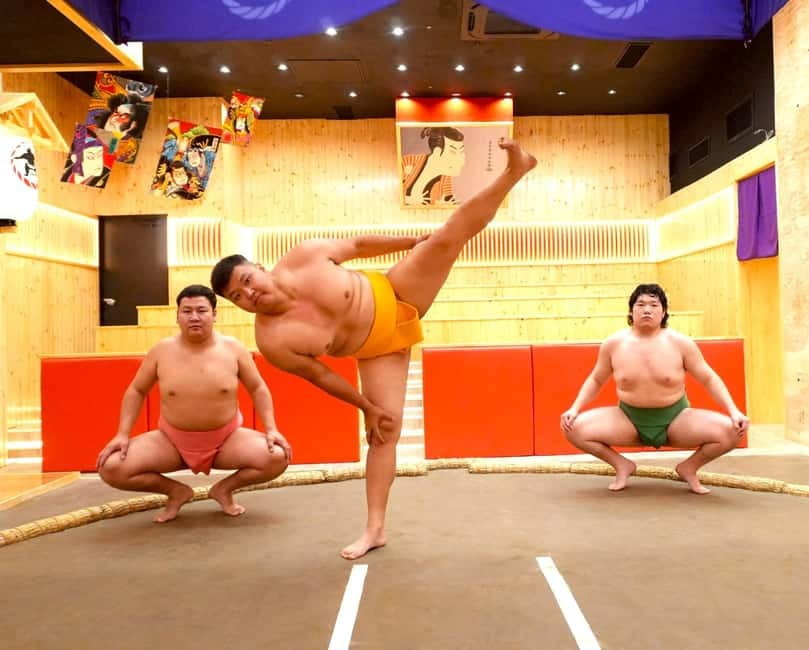
Former sumo wrestlers take the ring just a few feet from your table at Sapporo Sumo Club Entertainment. This is not a tournament or a morning practice visit. It is a lively, family-friendly show that explains the sport, then turns the action into dinner theater.
I like the close view of the dohyo from every seat and the chance to see real former wrestlers demonstrate their strength. I also like the friendly bilingual hosting, audience games, mochi making, traditional dance, photo, and gift bag.
The main thing to keep in mind is that the sumo matches are only part of the two-hour program. If you want a full evening of bouts, a professional tournament or morning-practice visit is a better choice. Food quality may also vary, so choose your meal option carefully.
Key points to know before booking
- Former yokozuna backing: The Sapporo venue is endorsed by the 63rd Yokozuna Asahifuji and 70th Yokozuna Harumafuji.
- A show, not a training stable: You learn sumo through demonstrations, commentary, and entertainment rather than observing a working beya.
- Best-of-three match: The former wrestlers explain rituals and techniques before competing seriously in the ring.
- Audience participation: You may try sumo yourself, but participation is limited and may be decided by lottery.
- Meal choices matter: Beef sukiyaki, crab shabu-shabu, and vegetarian options are available by reservation, with vegan meals requiring advance notice.
- Useful keepsakes: Adults receive a printed photo with a former wrestler and a souvenir bag.
Finding the Sapporo sumo club
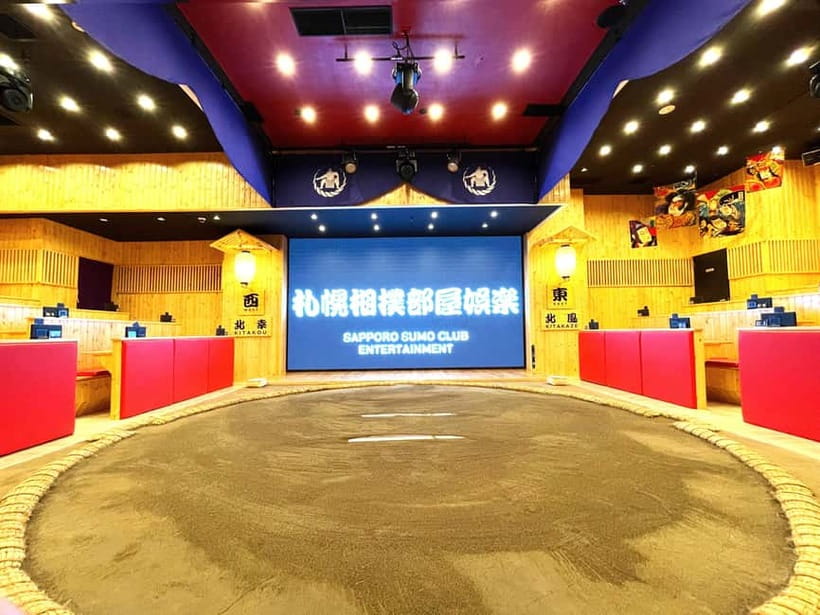
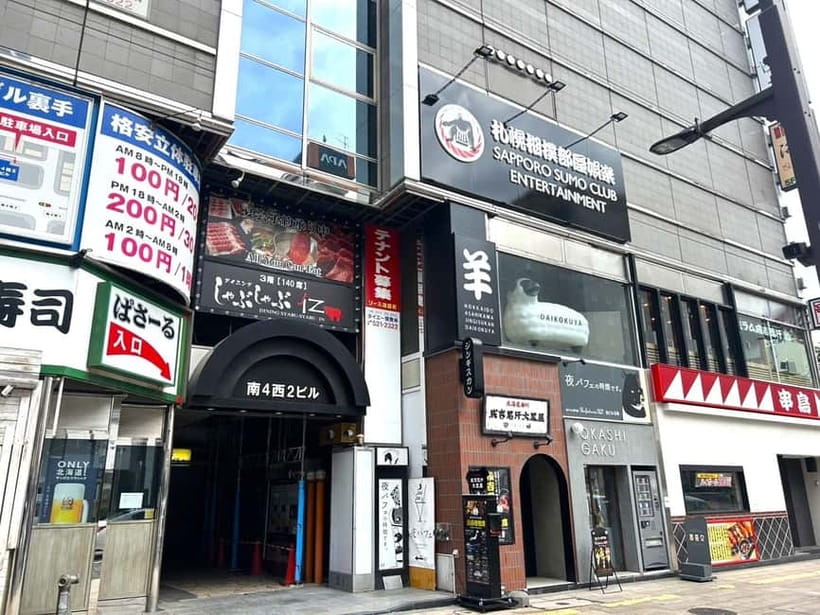
The venue is on the basement floor of the Minami 4-Nishi 2 building in central Sapporo. You do not get hotel pickup, so plan to make your own way there and allow enough time to find the building and head downstairs.
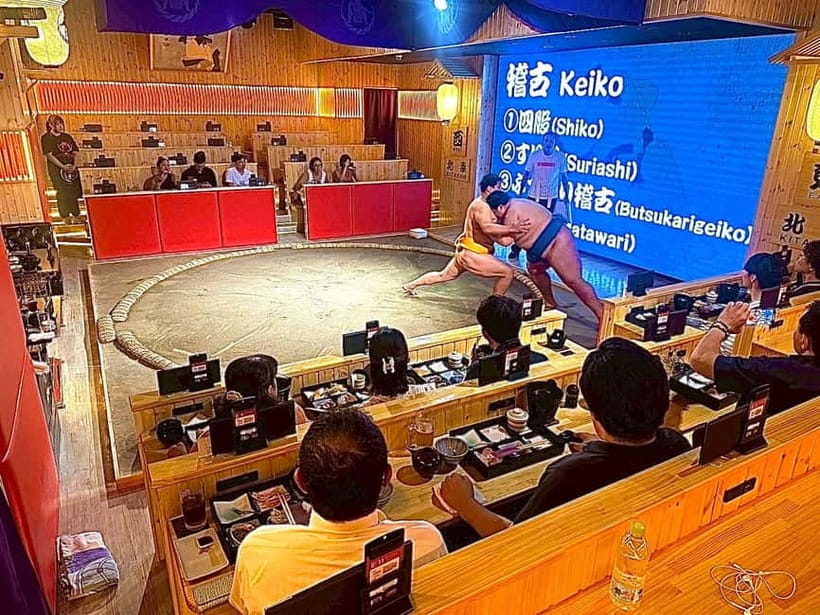
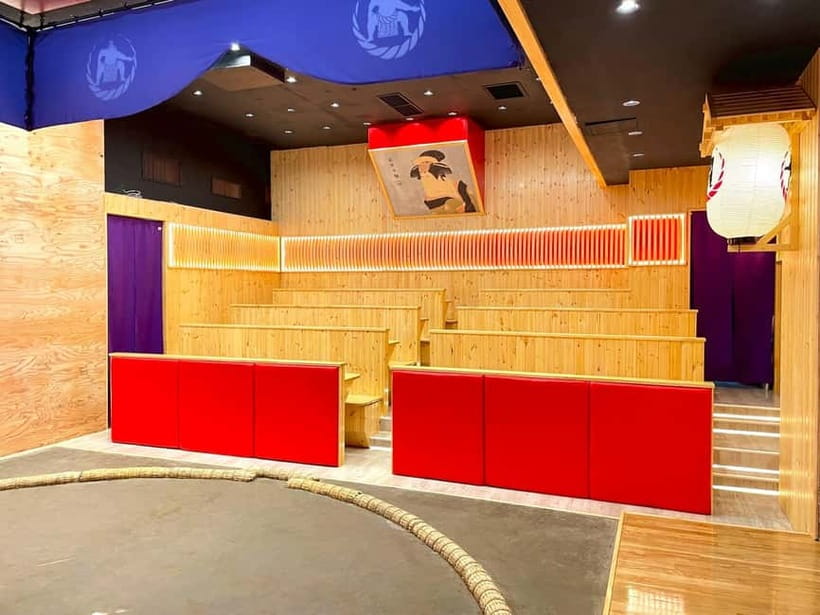
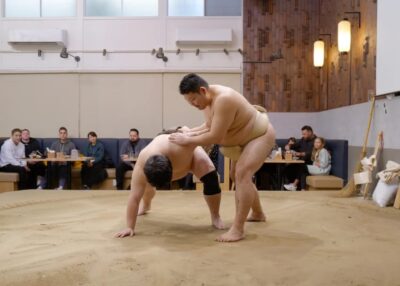
The basement setting gives the event a compact, indoor feel. You are not sitting in a huge arena with distant action. The dohyo is visible from all seats, and the front row is available as an upgrade for anyone who wants the closest possible view.
That seating point matters more here than it might at a standard stage show. Sumo is about footwork, balance, timing, and sudden bursts of force. A close seat lets you see the wrestlers’ expressions and the small movements that are easy to miss from far away.
The activity lasts about two hours. Starting times vary, so check availability when booking. Small-group availability is offered, though the exact size and seating arrangement can depend on the date.
More Sumo Experiences in Sapporo:
- Tokyo: Sumo Show Experience with Chicken Hot Pot and a Photo
★ 4.8 · 6,678 reviews - Tokyo: Sumo Show and Dining Experience
★ 4.8 · 2,742 reviews - the SUMO show
★ 5.0 · 1,960 reviews
Dinner comes before the main bout
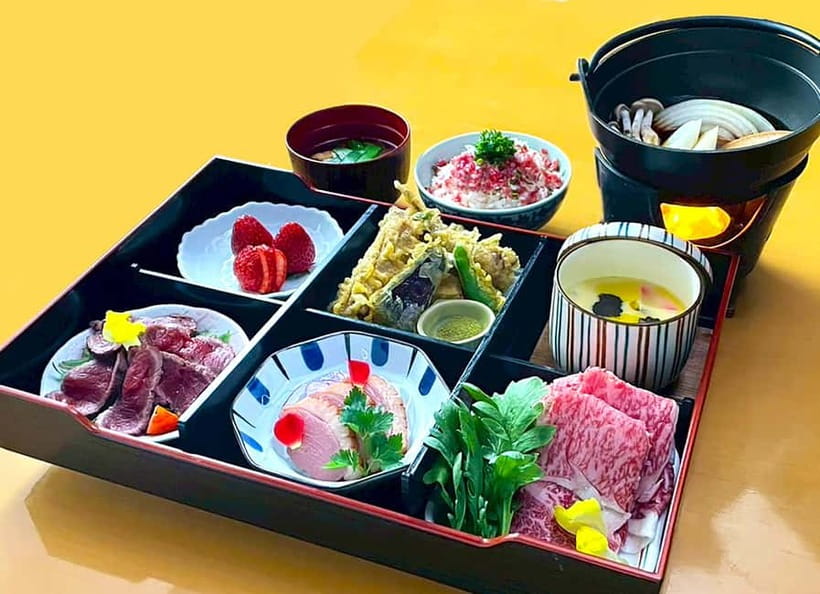
The meal is part of the evening, not a separate add-on. The standard plan is described as a Japanese set meal with a hot-pot course, with the exact menu depending on the option you choose.
The usual meal may include Wagyu beef sukiyaki and tempura. Crab shabu-shabu and vegetarian meals are also offered by reservation. The included information also refers to a chicken hot pot, so menus can differ by booking channel or selected package. Read the meal choices carefully before paying, rather than assuming every date serves the same dishes.
One drink is included. Additional drinks are available to buy.
I see this as a useful part of the experience for families and first-time visitors. You can eat while the host introduces sumo, shows videos, or explains what you are about to see. It makes the evening feel like a cultural dinner show rather than a short wrestling demonstration.
Food is not the sole reason to book, though. Several people found the meal good and generous, while one account described some dishes as lukewarm, with cold tempura and overdone crab rice. That suggests the entertainment is the safer part of the purchase. If food quality is especially important to you, choose your meal in advance and keep your expectations at the level of a set dinner attached to a show, not a destination restaurant.
Vegetarian and vegan meals must be requested at least two days ahead. Gluten-free and halal meals are not provided, but you may bring your own food. The venue cannot provide meals, seating, or souvenirs for infants.
A traditional opening sets the mood
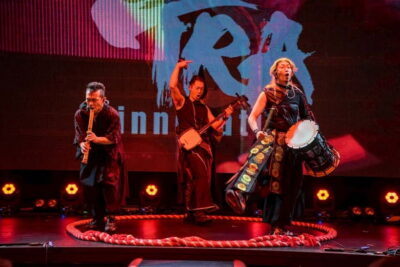
The program can include more than wrestling. One account describes a maiko dance opening the show, adding a graceful contrast to the heavy, physical action that follows. The combination gives the evening a broader Japanese cultural flavor.
Mochi making is another interactive element. You may watch the preparation and take part in the pounding activity. The mochi can also appear in the final gift bag, giving you a small edible reminder of the evening.
These additions are important because the sumo matches themselves do not fill the entire two hours. You are getting a sequence of short cultural and entertainment segments, with dinner woven into the program. If you enjoy variety, that pacing works well. If you came only for bouts, it may feel like the show takes a while to reach its main event.
The host keeps the room involved through questions, explanations, and humor. Miki is named in one account as part of the team that helped make the evening engaging. The bilingual commentary is in English and Japanese, making the rituals easier to follow even if you know little about sumo.
Learning the rules without a lecture
Before the competition, the moderator explains the basics of sumo in plain terms. You learn about the morning exercises called asa geiko, the ceremonial movements, and the techniques known as kimarite.
That explanation gives the action a purpose. Instead of seeing two large men push and shove, you begin to notice the stance, the initial charge, the attempt to force an opponent outside the ring, and the techniques used to win.
The show also covers the do’s and don’ts of sumo. This is helpful if you are unfamiliar with the sport or visiting Japan with children. The format is lively rather than academic, so you do not need prior knowledge or a special interest in professional sumo.
Videos may be shown during the meal or around the explanations. They provide extra context, though some people would prefer more bout footage and more historical anecdotes. The introduction covers the long development of sumo, but the amount of history may not satisfy someone looking for a detailed study of the sport.
More Food & Drink in Sapporo:
- Sapporo Bar Hopping Food Tour
★ 5.0 · 232 reviews - Tokyo: Shinjuku Food Tour (13 Dishes at 4 Local Eateries)
★ 5.0 · 6,603 reviews - Tokyo Tsukiji Fish Market Food and Culture Walking Tour
★ 5.0 · 3,184 reviews - Osaka: Shinsekai Food Tour with 13-15 Dishes at 5 Eateries
★ 4.8 · 2,204 reviews
The former wrestlers take the dohyo
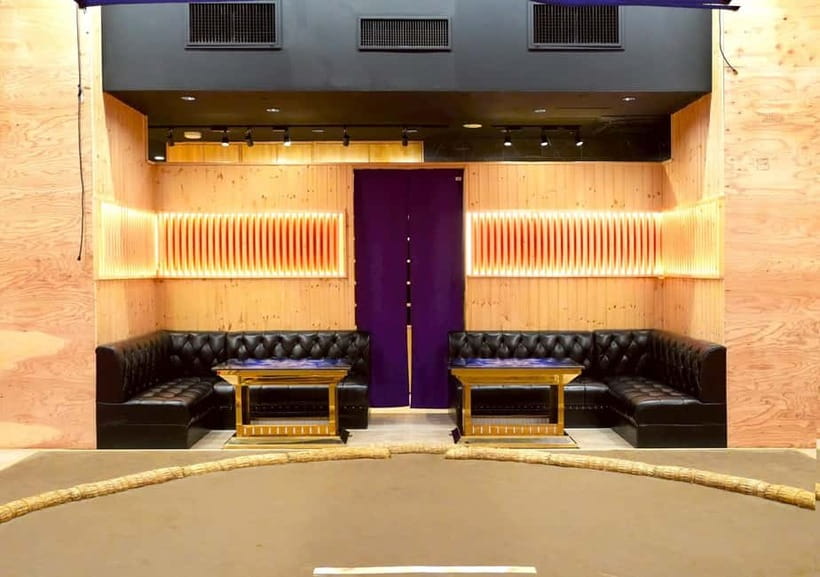
The main contest is a best-of-three match between former sumo wrestlers. These men no longer compete professionally, but the contest is presented seriously, and their size and strength are easy to appreciate at close range.
The show makes room for demonstrations before the competition. You see the stretching, training movements, rituals, and selected winning techniques. Then the pace changes as the wrestlers face each other in the ring.
The best part is the physical immediacy. Sumo does not require a large stage to make an impact. A short charge, a sudden turn, or a wrestler stepping outside the ring can be more exciting when it happens right in front of your table.
Keep the scale of the program in mind. The match portion may last around 40 minutes, according to one detailed account, with the broader experience beginning about an hour into the evening. You are unlikely to see a long series of professional-style bouts. The show is built around explanation, humor, demonstrations, audience participation, and a featured competition.
That balance explains the high satisfaction among people who want an approachable first look at sumo. It also explains the one recurring limitation: anyone hoping for many matches may wish there were more wrestling and less surrounding entertainment.
Your chance to enter the ring
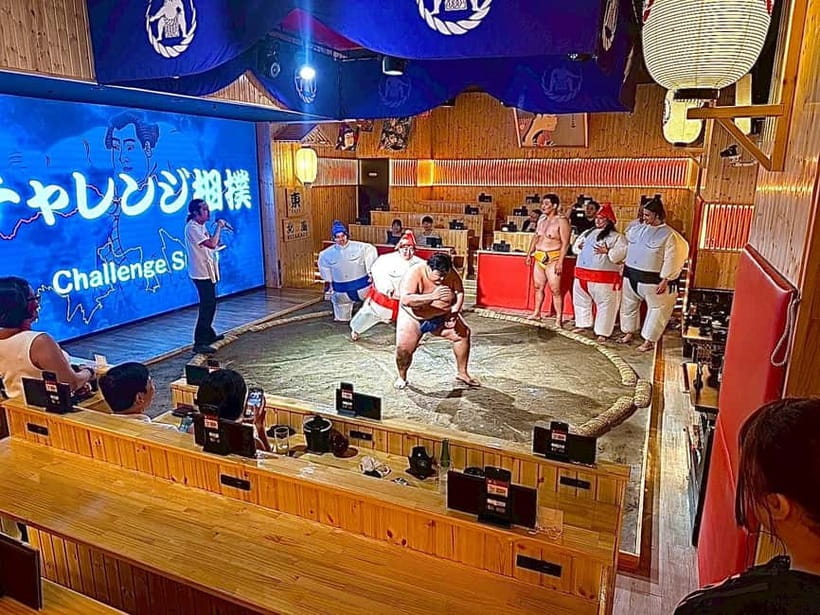
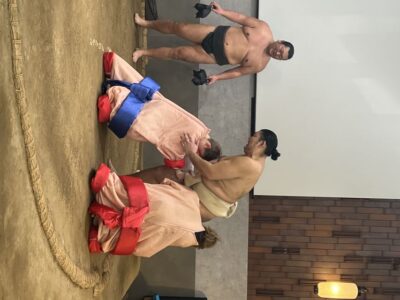
Audience participation is one of the most memorable parts of the event. Volunteers may challenge a former wrestler in the ring, often using an inflatable sumo suit. The visual joke is immediate, but the activity also shows how difficult it is to move and keep balance while wearing the costume.
Participation is limited. If too many people want to take part, each group may nominate one representative or names may be selected by lottery. Booking a ticket does not guarantee that you will wrestle.
I would not treat that as a serious drawback. The audience challenge is a bonus, and watching another person attempt it can be just as funny as taking part yourself. Families with children often get the most from this section, especially when a child is chosen. It is also worth volunteering if you are comfortable being part of a public show.
The challenge is entertainment, not a chance to test yourself against a professional competitor in a formal match. The former wrestlers control the pace, and the costumes keep the activity playful.
Photos, souvenirs, and the final value
Adults receive a printed photo with a former wrestler. The picture is taken with your group, making it more useful than a generic souvenir. You also receive a bag of items that may include the event photo, stickers, a pin, and mochi made during the program.
That final package helps justify the price for people who value a physical memory. At $77 per person, you are paying for a two-hour evening with a meal, one drink, live bilingual hosting, entertainment, participation opportunities, and keepsakes.
The value is strongest when you would otherwise pay separately for dinner and a cultural show. It is weaker if your main goal is to watch a large number of sumo matches. A real professional tournament offers a different level of competition, while a morning-practice visit offers a closer look at how active wrestlers train and live.
The venue is endorsed by former yokozuna Asahifuji and Harumafuji, which gives the concept credible sumo connections. Still, the event is designed for entertainment. It should not be confused with a working sumo stable or a serious practice tour in Tokyo.
Who will enjoy this most
I would recommend the Sapporo show to:
- First-time sumo viewers who want the rules explained
- Families looking for an activity children can understand and join
- Visitors who prefer dinner and entertainment in one booking
- Fans who want a close photo with a former wrestler
- People who enjoy interactive cultural shows rather than passive sightseeing
- Visitors unable to attend a professional tournament during their Sapporo stay
It is less suitable for wheelchair users, as the activity is not listed as wheelchair accessible. Babies under one year are not suitable for the experience.
Serious sumo followers may find the program light. You will learn useful basics and see former wrestlers up close, but this is not a substitute for a tournament, a full training session, or a detailed historical talk.
Practical booking advice for your meal and seat
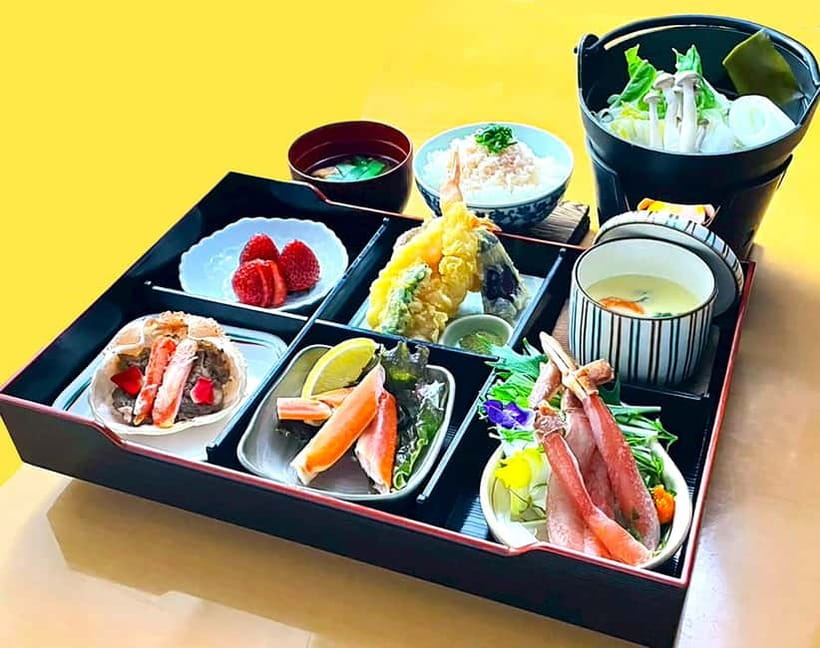
Choose your food option at the time of reservation. Beef sukiyaki, crab shabu-shabu, and vegetarian choices are listed, but the available selections may differ depending on where you book. If you need vegetarian or vegan food, request it at least two days ahead.
Front row seating costs extra, but it is worth considering if the wrestling is your main reason for coming. All seats have a view of the dohyo, so a standard seat should be enough if you mainly want the explanations, meal, and overall show.
The activity is offered in English and Japanese. The host carries much of the explanation, so you do not need to understand Japanese to follow the main rules and rituals.
Free cancellation is available up to 24 hours before the activity for a full refund. You can also reserve now and pay later, which helps if your Sapporo plans are still changing.
Should you book the Sapporo sumo show?
Book it if you want an entertaining introduction to sumo with dinner, audience participation, a close-up match, and a useful souvenir photo. The bilingual hosting, former wrestlers, maiko dance, mochi activity, and playful challenge make it easy to enjoy even if you know nothing about the sport.
Skip it if you want a full card of bouts, professional tournament tension, or a working view of daily sumo training. At $77, the price is fair when you treat it as a two-hour cultural dinner show, but less attractive if you count only the wrestling time.
For most families, first-time visitors, and casual sumo fans, I would book it, select the meal carefully, and volunteer for the ring if you are chosen.
FAQ
How long does the Sapporo sumo show last?
The experience lasts about two hours.
Where is the sumo show held?
It is held on the basement floor of the Minami 4-Nishi 2 building in Sapporo, Hokkaido.
How much does the experience cost?
The listed price is $77 per person.
Is the commentary available in English?
Yes. Live commentary is available in English and Japanese.
What food is included?
The meal depends on the option selected. Listed choices include Wagyu beef sukiyaki, crab shabu-shabu, vegetarian meals, and a Japanese set meal with hot pot. One drink is included.
Can I choose a vegetarian or vegan meal?
Yes, vegetarian and vegan meals are available by request. They must be requested at least two days before the reservation date.
Can I participate in a sumo match?
You may be able to challenge a former wrestler, but participation is limited. If many people apply, representatives may be assigned or selected by lottery.
Is the activity suitable for wheelchair users or babies?
The activity is not suitable for wheelchair users or babies under one year old.
More Shows & Performances in Sapporo
- Mt Fuji & Hakone Cruise, Drum Show Bullet Train 1 Day from Tokyo
★ 4.0 · 7,413 reviews - Tokyo Shinjuku Sumo Show & Experience with Photo
★ 5.0 · 1,750 reviews - Tokyo: Samurai Restaurant Show Ticket with 2 Drinks
★ 4.5 · 1,307 reviews - Mt Fuji & Hakone Cruise, Drum Show Bus 1 Day from Tokyo
★ 4.0 · 1,287 reviews
Just added around Sapporo
- Sapporo Walking Tour★ 4.9 · 17 reviews
- Sapporo TV Tower Admission Ticket★ 4.7 · 21 reviews
- Sapporo: The Indigenous Ainu People & Jozankei walking tour★ 4.9 · 25 reviews
- Sapporo: Furano Flower Sea & Biei Blue Pond Tour w/ Pickup★ 4.0 · 40 reviews
- Sapporo: Private Customized Guided Tour★ 4.9 · 30 reviews
- Sapporo: Furano Lavender & Biei Blue Pond Tour with Lunch★ 4.6 · 13 reviews
- Sapporo Highlights: Golden Route Morning Guided Walking Tour★ 4.9 · 16 reviews
- Sapporo: Custom Highlights and Hidden Gems Tour with a Local★ 4.9 · 21 reviews
Sumo Experiences, compared.
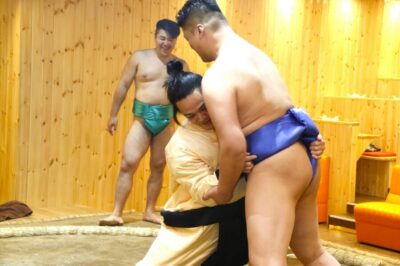
Sumo Show Experience with Chicken Hot Pot and a Photo
Our verdict →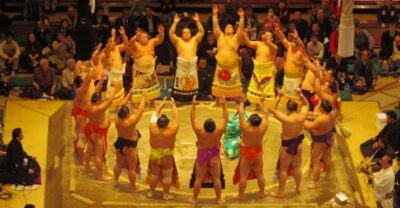
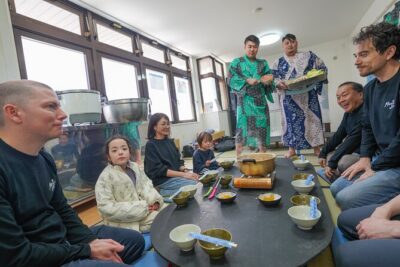
Authentic Sumo Experience in Tokyo: Enter the Sanctuary
Our verdict →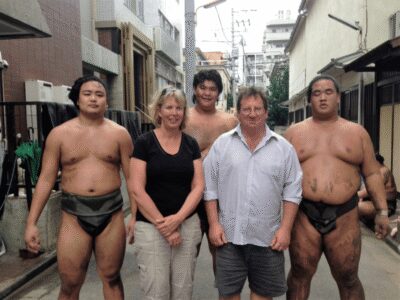
Browse the lists this tour appears in