
Reviewed · HIDDEN GEMS TOURS
Osaka: Hotspots & Hidden Gems Walking Tour Private or Group
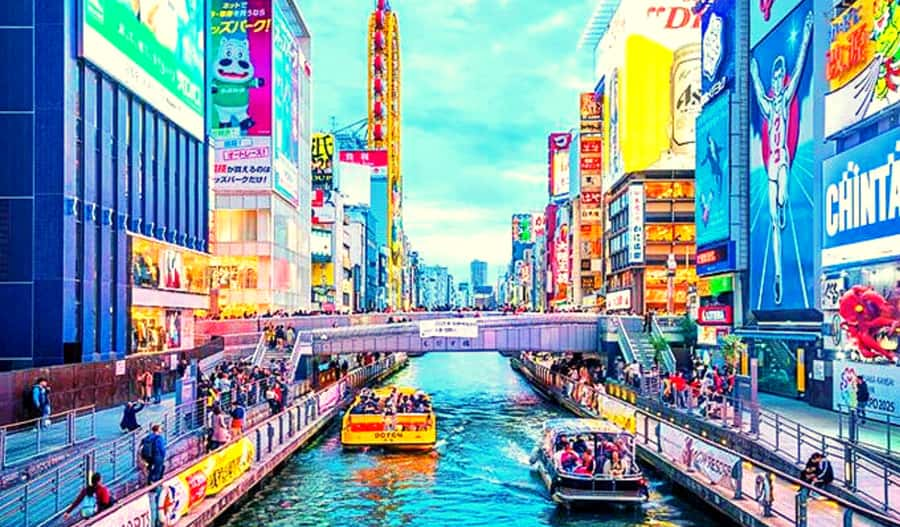
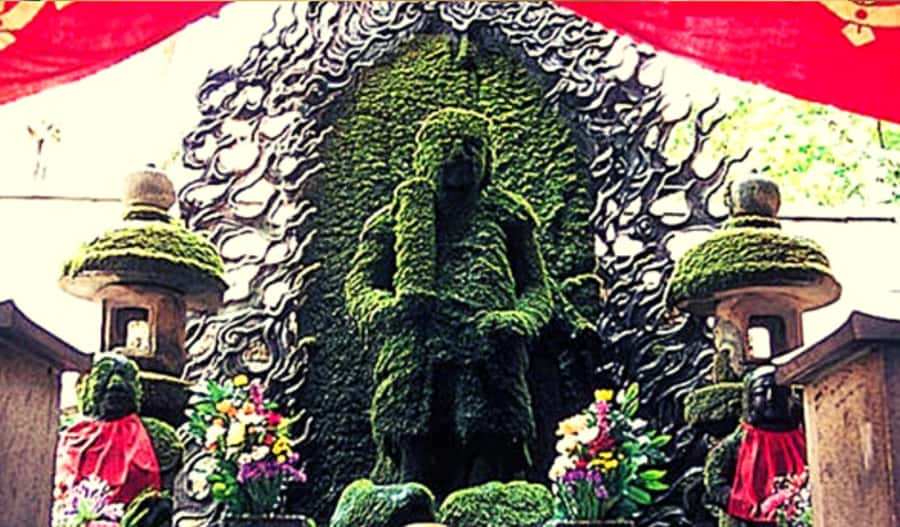
Osaka reveals itself best in the spaces between the famous sights: a narrow lane lined with tiny bars, a seafood stall at Kuromon Market, a strange old temple, and the giant signs around Dotonbori. This tour links those pieces into a lively introduction, with takoyaki tasting and a canned drink included.
I like the mix of famous Osaka and everyday Osaka, and I like that the longer private versions can be shaped around your interests. Guides such as Taka, Rahat, Stephanie, Josh, and Harry have been praised for humor, local tips, and strong storytelling. The main drawback is simple: you walk a lot, and the included food is only a small snack, not a full meal.
Key points at a glance
- Kuromon Ichiba Market: See where chefs shop and sample selected local produce.
- Dotonbori after dark: Eat takoyaki beneath Osaka’s giant signs and glowing riverfront.
- Back lanes and old neighborhoods: Pass quiet alleys, small eateries, bars, and a temple many visitors miss.
- Several tour lengths: Choose a three-hour group walk or a four to seven-hour private outing.
- Extra stops on private tours: Add Osaka Castle, Shitennoji, a knife demonstration, or the Museum of Housing and Living.
- Useful first-day orientation: Get restaurant ideas, neighborhood context, and practical advice for the rest of your Osaka stay.
Osaka in one long, colorful walk
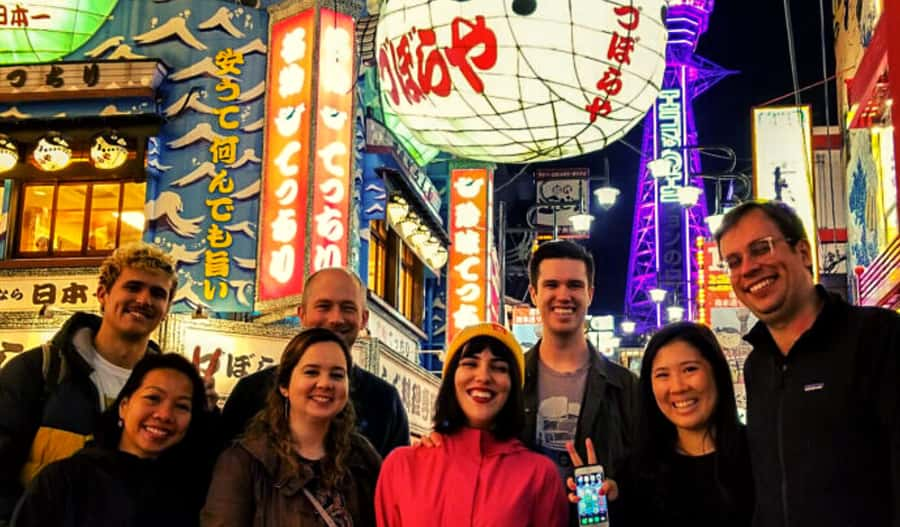
This is not a tour built around one grand monument. It is a moving portrait of Osaka, shifting from market stalls to nightlife, from modern shopping streets to old entertainment districts.
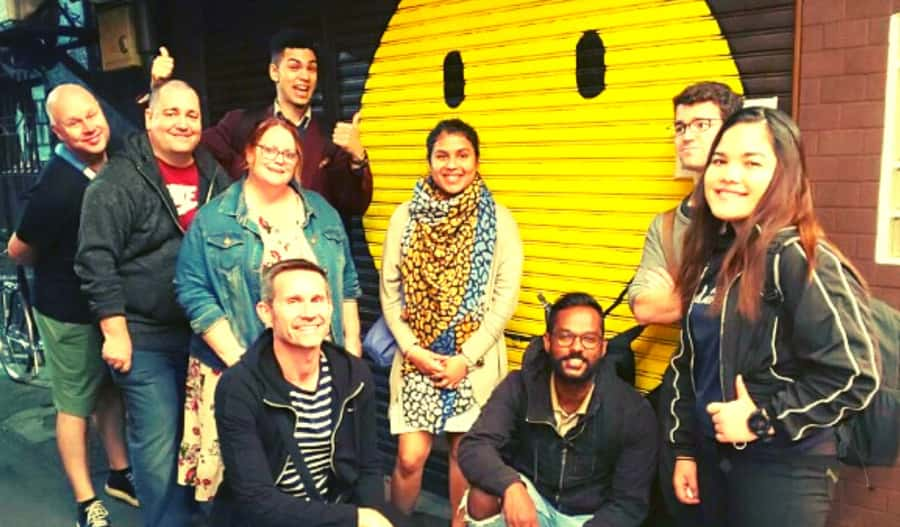
The three-hour group route begins at Namba Metro Station, then moves through central Osaka. The exact order can vary, especially for evening departures, but the main pattern is clear: market food, narrow lanes, Dotonbori, America-mura, and Shinsekai. A group can include up to nine people, small enough for questions without feeling like a procession.
That compact route works well if you have just arrived in Osaka. You get a map in your head before setting out alone, and you can ask your guide where to return for dinner, shopping, photos, or a quieter walk. Several guides have been singled out for making the information easy to follow, including Josh, who has lived in Osaka for more than 20 years, and Rahat, who is known for lively stories and practical tips.
The four, five, and seven-hour private options give you much more control. You can slow down at the market, spend longer in the back streets, add Osaka Castle, or focus on food and local life. Seven hours sounds long for a walking tour, but the route includes enough changes of scene to keep it moving. You should still choose comfortable shoes and be ready for a full day on foot.
More Hidden Gems Tours in Osaka
- Osaka Kickstart: Hotspots & Hidden Gems Tour
★ 5.0 · 1,306 reviews - Ultimate Osaka Walking Tour: Castle, Dotonbori & Hidden Gems
★ 5.0 · 862 reviews - Private Osaka Walking Tour: Highlights & Hidden Gems
★ 5.0 · 569 reviews
Kuromon Market and the small taste of Osaka
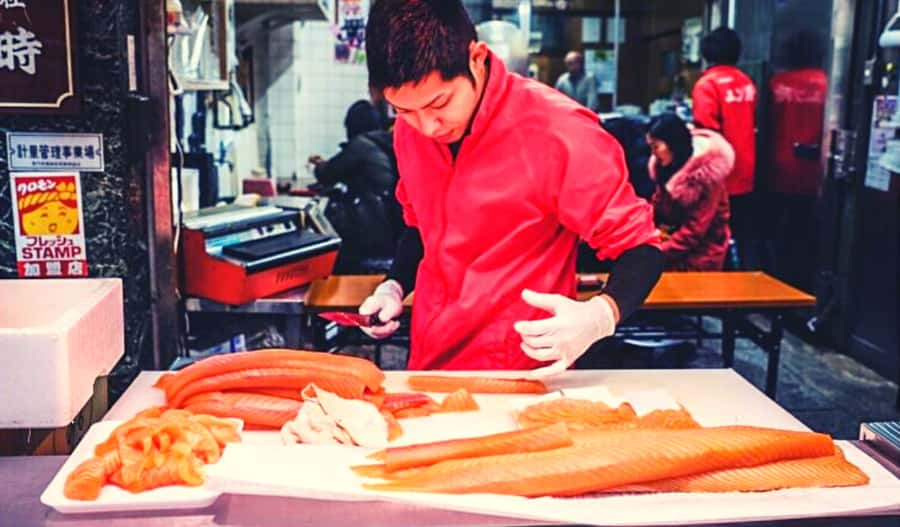
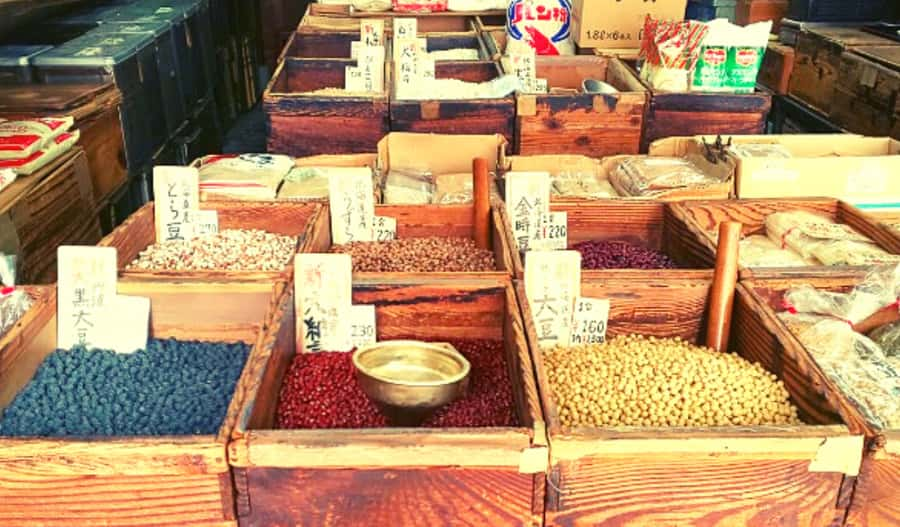
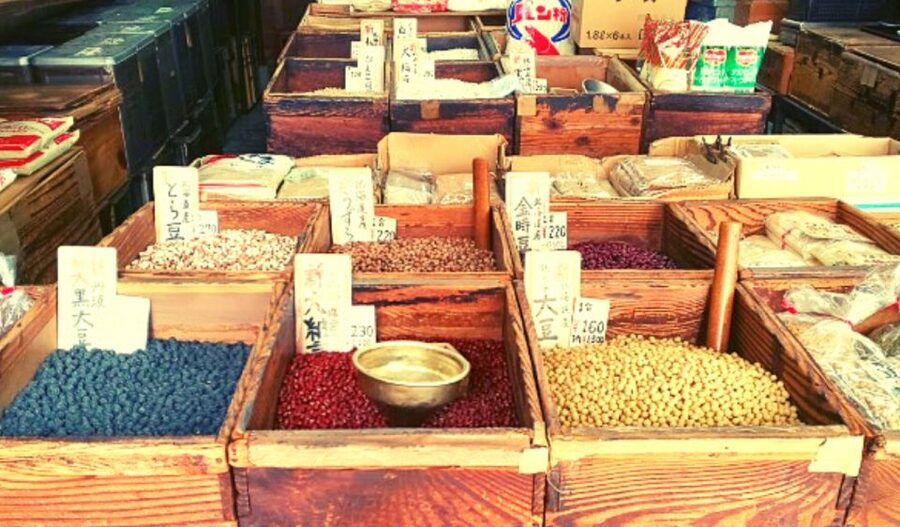
Kuromon Ichiba Market is one of the tour’s strongest stops. It is a traditional food market where chefs buy fresh ingredients, and it gives you a useful introduction to Osaka’s eating culture without requiring you to choose every dish alone.
Your guide explains unfamiliar seafood, prepared foods, sweets, and market customs as you walk. Taste testing is part of the experience, but the tour description does not promise a full series of meals. You pay for additional food and drinks yourself, so bring some yen or another accepted payment method if you want to try more.
Past visits have included unusual samples such as puffer fish and Kobe beef, but specific tastings can change. That is worth keeping in mind. The market is most valuable for its range and atmosphere, not as a guaranteed food menu.
The included takoyaki is deliberately modest: one small serving of battered octopus and a canned drink from a vending machine. That snack is a pleasant introduction to Osaka’s famous street food, but it will not replace lunch or dinner. I would plan the tour around a proper meal before or after, especially on the longer private routes.
Back alleys, bars, and the Osaka you might miss
One of the more interesting parts of the walk comes when your guide leaves the main streets and leads you into old lanes filled with small bars and restaurants. Some passages have cobblestones and a distinctly local feel. The point is not simply to photograph a narrow alley. It is to see how Osaka’s social life works away from the big shopping roads.
These lanes can be hard to interpret on your own. A row of closed doors might look uninviting, while your guide can explain what kind of places operate there and how locals use the area. Guides also share personal stories about Osaka, which adds warmth to facts about neighborhoods and customs.
You should expect a real city, not a staged historical quarter. Some streets are crowded, some are noisy, and some businesses may be closed depending on the time. The route is best for people who like atmosphere, small details, and the odd contrast between old buildings and modern signs.
The tour also includes a quieter temple stop, described as a historic temple with a distinctive past. This change of pace matters. Osaka can feel like one long rush of shopping arcades and bright advertisements, so a temple courtyard gives you a pause and a little perspective.
Dotonbori, where Osaka turns up the volume
Dotonbori is the tour’s big visual hit. Giant restaurant signs, animated billboards, the river, and dense crowds create the familiar Osaka scene. Your guide adds context about the area and points out details you could easily miss while taking photographs.
An evening visit makes particular sense here. The lights give the riverfront its full theatrical effect, and the tour can help you understand why Dotonbori is more than a photo stop. You can eat your included takoyaki, have the canned drink, and then decide which restaurants or shops deserve a return visit.
Do not expect a peaceful riverside stroll. Dotonbori can be loud and packed, especially at popular times. If you dislike crowds, a daytime departure may feel easier, although you will lose some of the after-dark glow. The strongest choice depends on your priorities: night for atmosphere, day for easier movement and clearer views of the streets.
The guide’s role is especially useful here. It is easy to spend an hour photographing signs without learning anything about the surrounding streets. A good guide turns the spectacle into a story about Osaka’s food culture, humor, and love of oversized advertising.
More Walking Tours in Osaka
- Osaka Local Foodie Walking Tour in Dotonbori and Shinsekai
★ 5.0 · 985 reviews - Osaka Bar Hopping Night Walking Tour in Namba (3 bars, 6 tastes)
★ 5.0 · 958 reviews - Osaka: Deep Backstreets Walking Tour with Dinner Option
★ 4.9 · 902 reviews - Osaka: Main Sights and Hidden Spots Guided Walking Tour
★ 4.9 · 702 reviews
America-mura and Japan’s playful view of America
America-mura, or America Village, offers a different kind of Osaka. The neighborhood reflects Japanese ideas about American culture through fashion, music, vintage shops, and street style. It is not an American district in any literal sense. That mismatch is part of the fun.
The stop works well for curious shoppers and anyone interested in how cultures borrow, reshape, and sell ideas from one another. One private group changed its route to visit a vintage shop in America-mura, and the guide added context about the neighborhood along the way. That is the sort of flexibility you can ask for on a private booking.
On the small-group version, time is tighter, so you may mainly see the area and hear its story rather than browse at length. If vintage shopping or street fashion matters to you, the private tour gives you a better chance to linger.
Shinsekai and Osaka’s older entertainment side
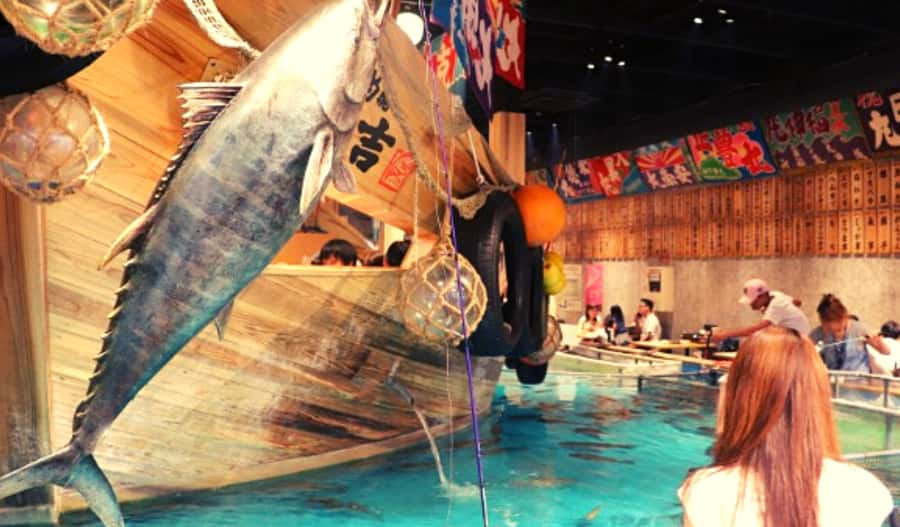
The route finishes, or sometimes passes through, Shinsekai, an older neighborhood with a very different mood from Namba and Dotonbori. You may see eccentric fishing-themed restaurants, older gaming parlors, and a less polished side of the city.
Shinsekai is useful because it breaks the idea that Osaka is only neon signs and fashionable shopping. The area has its own character, and your guide can explain how entertainment, food, and neighborhood life fit together.
Again, this is not a tidy museum district. You are walking through a working urban area with uneven surfaces, crowds, and changing businesses. That makes comfortable shoes important. The tour is not considered suitable for people with mobility impairments or pregnant women, and the pace and surfaces may also be tiring for anyone with knee, hip, or balance concerns.
What the private tours add
The three-hour group walk gives you the central highlights at the lowest price. The private four, five, and seven-hour versions cost more, but they can provide much better value for families, couples, or small groups with specific interests.
Possible additions include:
- Osaka Castle: Available on private tours of four hours or longer. The castle is not included on the three-hour group route.
- Shitennoji: Visit one of Japan’s oldest temples in a quieter setting.
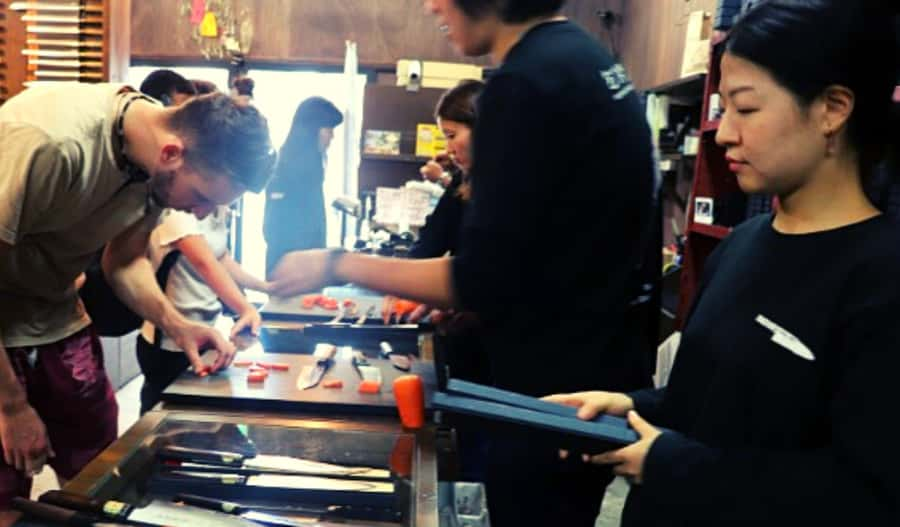
- Japanese knife shop: Arrange a private demonstration and lesson focused on world-famous Japanese knives.
- Museum of Housing and Living: See how Osaka residents lived in earlier periods and how daily life changed over time.
- East Shinsaibashi: Explore another food area with more restaurants and local streets.
- Extra alleys: Spend more time finding small eateries and less obvious corners of central Osaka.
Transportation is not included. On one private outing, the group used its own IC cards to take the train to Osaka Castle. That is a useful detail: the guide can help with the route, but you should expect to pay your own fares.
Private hotel pickup is available only for centrally located Osaka hotels. You need to send the hotel details at least the day before. Group participants meet at Exit 24 of Namba Metro Station, at the top of the stairs, near a bicycle stand about seven meters away. The guide will be waiting there, and the coordinates are 34.667372, 135.4999547.
Guides who shape the experience
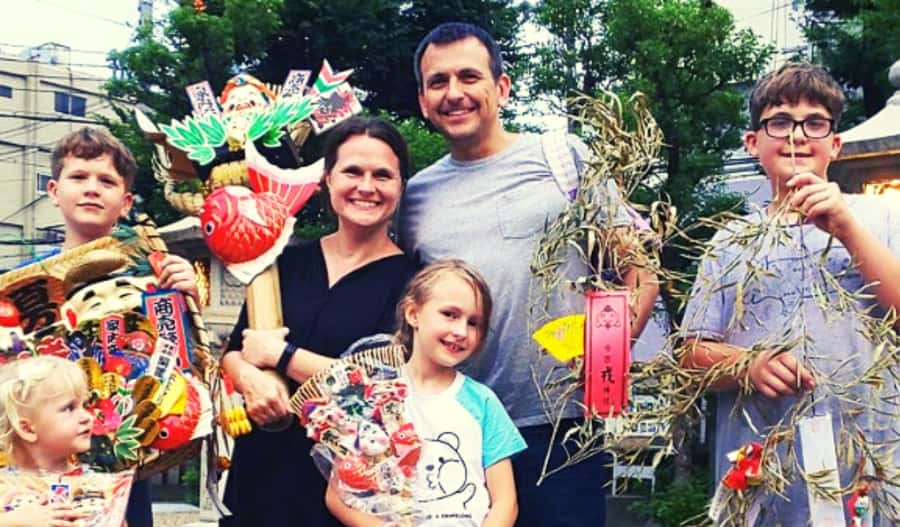
The route matters, but the guide can determine how much you get from it. This tour has a large guiding team, so your experience will vary in voice and style.
Taka has been praised for combining local affection with clear explanations and for adjusting the route, including a castle visit timed for both daylight and darkness. Rahat is known for energy, humor, and unusual details, including a rare curved escalator. Stephanie has been described as attentive and flexible, with strong advice on food, shopping, and photographs.
Josh brings long experience in Osaka, while Harry is known for relaxed pacing, humor, and a broad understanding of Japanese culture. Other guides, including Mary, Meryem, Bryan, Tommy, and Stephane, are noted for making the walk feel personal and easy to follow.
Not every guide will be Japanese-born. One guide was an Australian who had lived in Osaka for seven months, while another had spent more than 20 years in the city. That is not automatically a weakness. An English-speaking guide from outside Japan may explain cultural differences in especially clear terms, while a long-term resident can offer strong local context. If a native Japanese perspective is important to you, ask about guide assignment when booking, but do not assume you can select a particular person.
Is $33 a good value?
At $33 per person, the three-hour group walk is inexpensive for an English-speaking guided introduction to several central neighborhoods. The value comes mainly from the orientation, stories, and route planning, not from the food included.
You receive a walking tour, a local guide, restaurant suggestions, a small takoyaki snack, and a canned drink. The market tastings are described as part of the outing, but extra food and drinks are not included. Think of the included snack as a sample, not a food tour.
The private versions offer better value if you are splitting the cost among several people and want control over the day. They can also save time by combining areas that you might otherwise visit separately. For solo visitors, the private price may be harder to justify unless you care strongly about a custom route or a longer history-focused walk.
Practical advice before you book
Wear shoes you can trust on pavement, cobblestones, and a long day of walking. Leave large luggage and oversized bags at your hotel, since they are not allowed on the tour.
The walk runs in rain or shine. Only very serious conditions, such as a typhoon or earthquake, lead to cancellation with a full refund. A light rain jacket is a sensible choice, and you should dress for the season rather than assume the city will provide shelter.
Book the group tour early in your Osaka stay if you want restaurant and neighborhood advice for later. Choose an evening start if Dotonbori’s lights are a priority. Choose a private tour if you want Osaka Castle, Shitennoji, a knife lesson, or more time in the market.
You can cancel up to 24 hours ahead for a full refund, and the reserve-now, pay-later option keeps your schedule flexible.
Should you book this Osaka walking tour?
I would book the three-hour group tour as a first look at Osaka, especially if you are staying near Namba and want both famous sights and lesser-known streets. It is a strong fit for first-time visitors, curious food lovers, couples, and solo travelers who want an easy way to ask questions.
Choose the private version if you have four or more hours, want Osaka Castle or Shitennoji, need hotel pickup, or prefer a slower pace. I would skip it only if you want a formal, monument-focused tour, a full meal, or minimal walking.
For the best balance, take the three-hour route on your first evening, then use the guide’s suggestions to plan the rest of your Osaka stay.
FAQ
Where does the group tour meet?
Meet at Exit 24 of Namba Metro Station, at the top of the stairs. Look for the Exit 24 sign and a bicycle stand about seven meters away. The meeting point coordinates are 34.667372, 135.4999547.
Can I get hotel pickup?
Hotel pickup is available only on private tours and only from centrally located hotels in Osaka. Send your hotel details at least one day before the tour.
How long is the tour?
The group tour lasts three hours. Private options last four, five, or seven hours.
Does the three-hour tour visit Osaka Castle?
No. Osaka Castle is available only on private tours lasting four, five, or seven hours.
Is food included?
A small takoyaki snack and a canned drink from a vending machine are included. Other food and drinks are not included, so plan to pay separately for additional market food or meals.
Is transportation included?
No. Transportation is not included. If your private route includes Osaka Castle or another area requiring a train, you pay your own fare.
What should I bring?
Wear comfortable shoes and do not bring luggage or large bags. The tour operates in ordinary rain, although very serious weather conditions can lead to cancellation.
Just added around Osaka
- Exclusive Sushi Making Experience with a Master Chef – Osaka Area★ 5.0 · 25 reviews
- Private Home-Style Cooking Class in Osaka with Local Mom Yoshiko★ 5.0 · 46 reviews
- Hidden Osaka – Yukaku Red Light Tour & Culinary Adventure★ 4.8 · 96 reviews
- Osaka: Walking Tour and Top Highlights★ 4.8 · 104 reviews
- Osaka: Private Ceramic Painting Workshop★ 5.0 · 13 reviews
- Pickleball in Osaka, Kobe & Kyoto with Locals!★ 4.7 · 80 reviews
- Eat Like a Local in Osaka – Private Custom Street Food Tour★ 4.3 · 33 reviews
- Osaka:SUMO BEATS SHOWCASE: Taiko Drum and Wagyu burger!★ 4.2 · 37 reviews
Hidden Gems Tours, compared.
Kyoto Geisha Walking Tour: Gion District & Hidden Gems
Our verdict →
Small Group, Big Flavors & Hidden Local Secrets Tour
Our verdict →Browse the lists this tour appears in