
Reviewed · SUSHI EXPERIENCES
Osaka Dotonbori: Sushi Making Experience
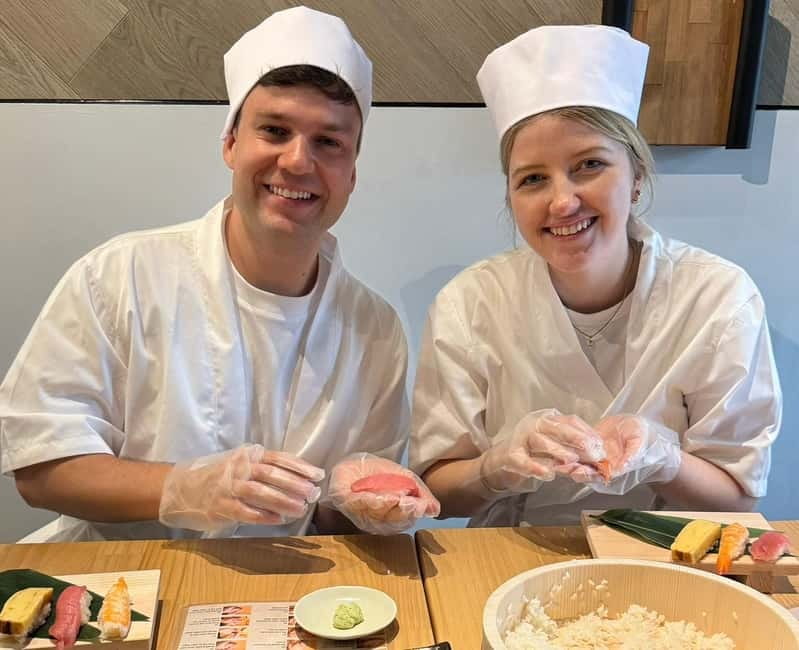
Dotonbori is famous for eating, but this 90-minute sushi class lets you make the meal yourself. You prepare the rice, add toppings, shape each piece, and then eat what you have made with Japanese sake. It is a cheerful way to turn lunch into a small lesson in Japanese food culture.
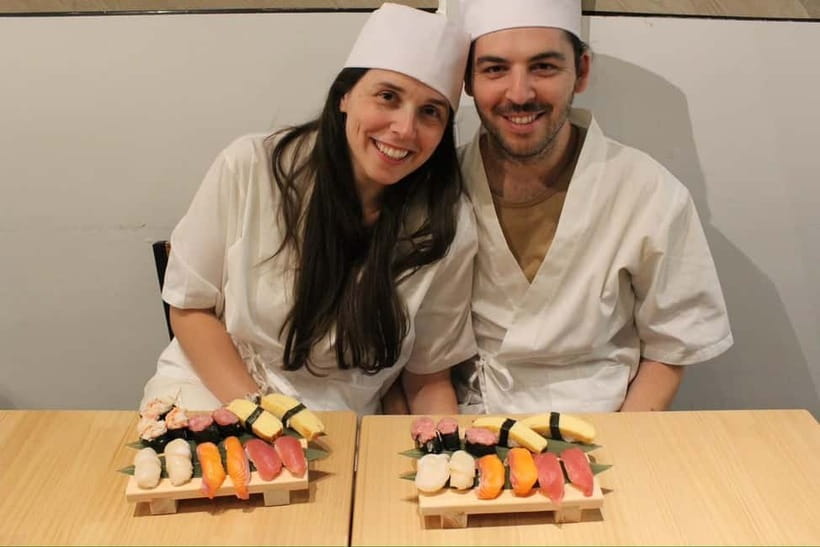
I like the friendly English instruction, especially from hosts such as Mako, Mika, Saki, and Yumiko. I also like the clear, hands-on format: 12 pieces of sushi, a certificate, sushi cosplay, photos, and a gift give you plenty to do for the price. The main consideration is that seafood freshness can vary, and the location may be tricky to find without careful directions.
Key points to know before booking
- Make 12 pieces yourself: You handle the rice, wasabi, toppings, and final shaping.
- English-speaking instruction: The process is explained step by step for beginners.
- Sake and culture included: The class adds Japanese sake and basic background about sushi.
- Vegan and halal options: Tell the provider about your dietary needs when booking.
- More than a cooking lesson: Sushi cosplay, photos, a special gift, and a sushi master certificate are part of the fun.
- Good for families and first-timers: A 15-year-old joined one family session, and beginners generally found the instructions easy to follow.
Making sushi in the middle of Dotonbori
The setting matters here. Dotonbori is Osaka’s best-known food district, with bright signs, crowded streets, and restaurants packed into a compact area near the canal. This class gives you a quieter, more focused way to understand one of Japan’s most recognizable foods before or after exploring the neighborhood.
You are not simply watching a chef work. The class is built around doing each step yourself. That makes it a good choice if you have already eaten sushi in Japan and want to understand how the pieces are put together, or if you are still unsure how to handle sushi rice, toppings, and chopsticks.
The class is promoted as one of the most popular sushi-making experiences in Dotonbori, but its appeal is easy to understand without grand claims. It is short, central, social, and designed for people who have never made sushi before.
Finding the exact place may take some care. Several participants found the location a little hard to navigate, and one specifically suggested correcting the Google Maps position. Allow extra time to get your bearings, particularly if you are coming through the busy Dotonbori streets.
More Sushi Experiences in Osaka
- Sushi Making Osaka Roll and Authentic Japanese Sushi Class
★ 5.0 · 1,220 reviews - Osaka Sushi Making Experience
★ 5.0 · 400 reviews - Osaka Sushi Making Class – Hands-On Nigiri & Rolls (Same-Day OK)
★ 5.0 · 352 reviews
Step one: learning what sushi actually involves
The session begins with an introduction to sushi, its ingredients, and the basic method. Your instructor explains what you are about to make rather than handing you a recipe and leaving you alone with a bowl of rice.
That introduction can include a little Japanese and Osaka culture, along with an explanation of sushi terms. One of the more interesting points raised during a session was how sushi was originally eaten, where its names came from, and who it was first aimed at. The amount of background may depend on the instructor and the group, so do not expect a full food-history lecture.
This part is useful because sushi looks simple until you try to shape it. The rice must hold together without becoming a heavy lump, and the topping has to sit neatly on top. The teachers keep the tone relaxed, which helps if your first piece looks more like a rice parcel than restaurant sushi.
The best instruction appears to come from the hosts who watch closely and correct your technique as you go. One participant felt that more attention to individual mistakes would improve the class, so the amount of personal correction can vary with group size and the number of bookings.
Step two: seasoning the sushi rice
The first practical task is making shari, the seasoned sushi rice. You pour sushi vinegar over the rice, spreading it across the batch before working with it.
This is a small step, but it explains why sushi rice tastes different from ordinary steamed rice. The vinegar gives it the mild sharpness that balances fish, omelette, vegetables, and other toppings.
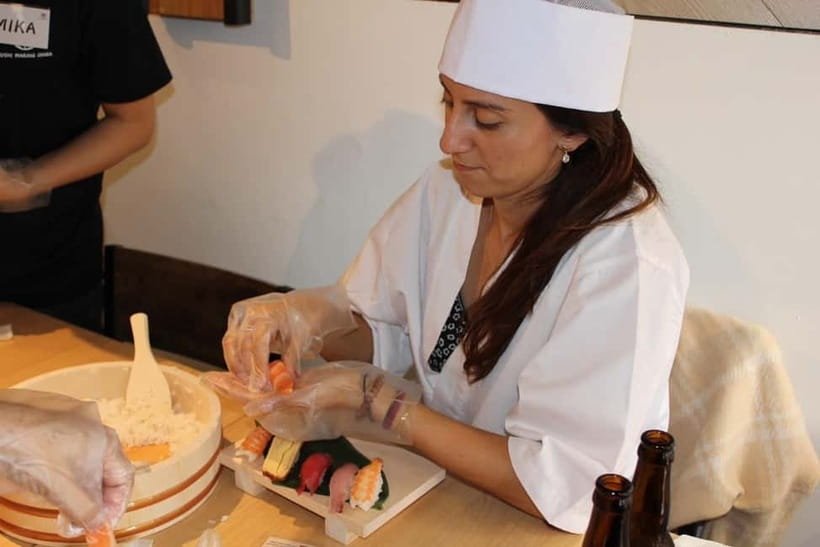
Your instructor then shows you how to form the rice. You make a small rice ball and shape it with your fingers. Do not expect perfect restaurant form on your first attempt. The point is to learn the pressure and shape, not to pass a professional exam.
The class works well for families because the task is easy to understand and produces a visible result quickly. A teenager joined a family group and found the experience suitable for everyone, which gives you a useful sense of the level. You do not need previous cooking experience.
Step three: adding toppings, wasabi, and shape
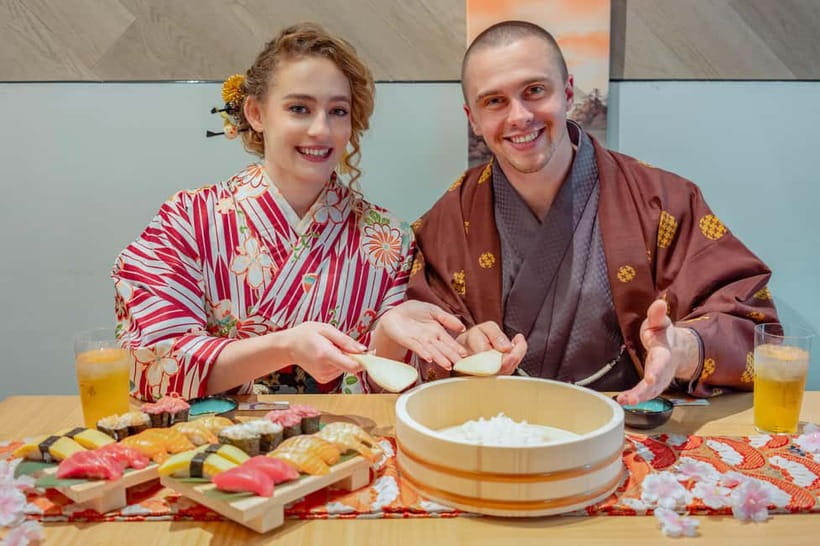
Next comes neta, the sushi topping. You place wasabi on the topping, bring it together with the rice, and use your fingers to shape the finished piece.
This is where the class becomes more than a demonstration. You learn how the rice and topping should meet, how much pressure to use, and how to make the piece hold its form. The instructors demonstrate first, then guide you through the same movement.
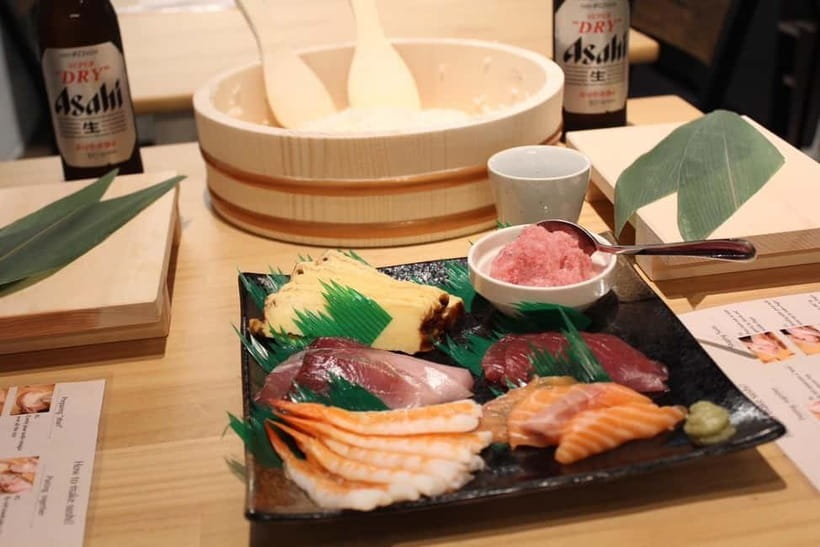
The ingredients may include seafood and other sushi toppings. One participant singled out the Japanese omelette sushi as a favorite, while another person who does not usually like fish still enjoyed the finished food. That makes the class more approachable than an activity built only around raw seafood.
If you prefer not to eat fish, ask about the available alternatives before you start. Vegan and halal sushi are offered, and the class has also accommodated a gluten allergy with gluten-free soy sauce. Those options are valuable, but you should still state your needs clearly when reserving rather than assume every ingredient is suitable.
The class describes its ingredients as high quality, and one session was said to use market produce bought daily. Still, a four-star assessment noted that the seafood was good but not exceptionally fresh. I would keep expectations sensible: this is a hands-on cultural activity in central Osaka, not an elite omakase meal.
Same trip, a completely different kind of day:
- Osaka Go Karting Tour with Funny Costume
★ 5.0 · 2,658 reviews - Osaka Castle: Museum and Tower Entry Ticket
★ 4.5 · 2,380 reviews - Osaka: Shinsekai Food Tour with 13-15 Dishes at 5 Eateries
★ 4.8 · 2,204 reviews - Osaka Food Tour: 13 Dishes at 5 Local Eateries
★ 5.0 · 2,149 reviews
Step four: shaping the final sushi
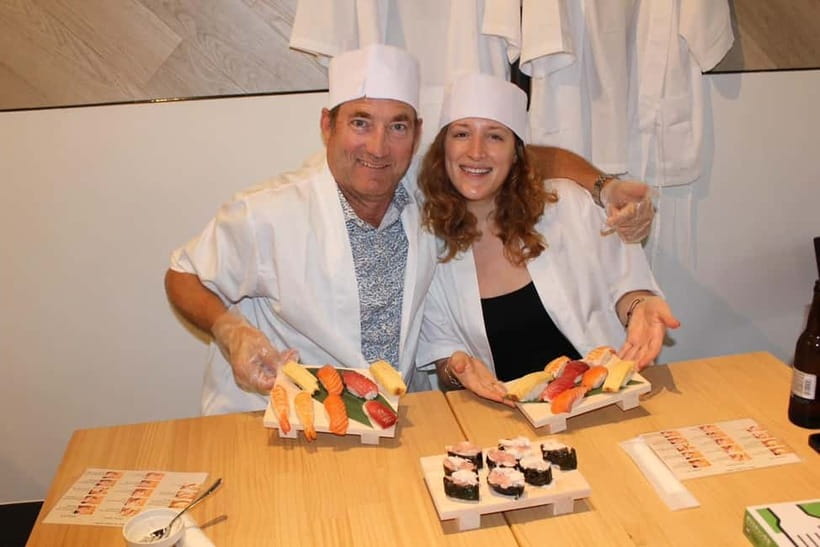
The final shaping takes practice. Using your fingers, you form each piece so the rice and topping sit together neatly. The instructors show the correct technique and explain what a properly shaped piece should look and feel like.
This is also the most amusing part. Some pieces will be tidy, some will be uneven, and a few may need another try. That is part of the charm. You get to eat the results, so perfection is not required.
The teachers are a major part of the experience. Names associated with the class include Mako, Mika, Saki, Yumiko, Kosei, Anri, Toshiki, Makoto, and Yui. The particular pair working with you will depend on the session, but the teaching style is consistently described as friendly, cheerful, and easy to follow.
English is the listed teaching language. You should be able to follow the basic steps without Japanese, and the instructors also use demonstrations to make the process clear. Several instructors have added simple Japanese phrases and chopstick tips, which give the lesson a little more local flavor.
Twelve pieces, sake, and a proper finish
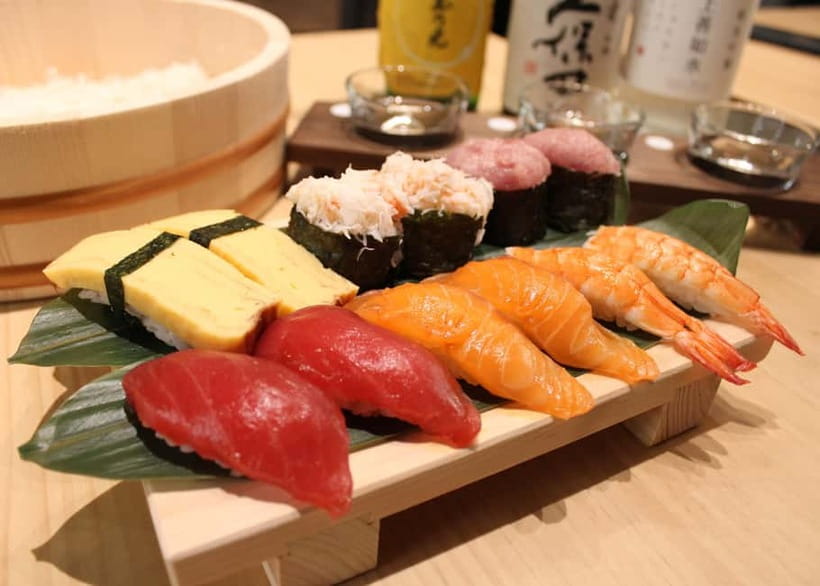
After the work comes the reward: you eat the 12 pieces you made. This is not a tiny tasting where you leave hungry. The portion gives you a real light meal, especially when combined with the time spent preparing it.
Japanese sake is part of the experience as well. The sake element is described as a tasting, and instructors explain some of the drink’s traditional background. It pairs naturally with the sushi, though anyone who does not drink alcohol should ask what alternatives are available before booking, since no nonalcoholic option is specified.
The food is one of the strongest reasons to consider the class. Participants repeatedly praised the taste, and several found the finished sushi better than expected for a beginner’s effort. The Japanese omelette piece received particular attention, and the quality of the ingredients was often appreciated.
Still, keep the meal in perspective. You are preparing a set selection of sushi rather than choosing from a large menu. If you want a long restaurant meal, this is not the right format. If you want to understand the food and then eat your own work, it offers good value.
Sushi cosplay, photos, gifts, and the certificate
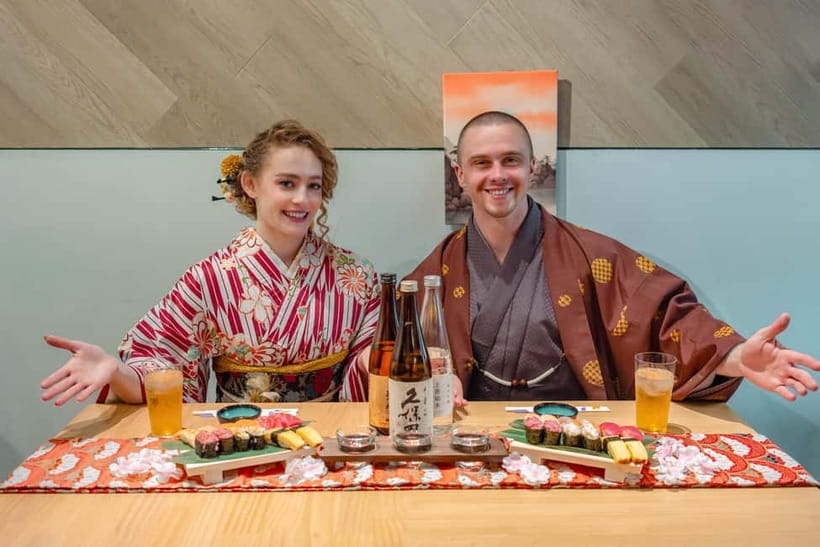
The class adds a playful layer with sushi cosplay and a photo session. This may sound a little silly, and it is. That is exactly why it works for families, couples, friends, and anyone who wants a lighter activity between Osaka’s temples, shops, and restaurants.
You also receive a special gift and a certificate identifying you as a sushi master. The certificate is clearly a souvenir rather than a professional qualification, but it gives the session a satisfying finish, especially for children and first-time cooks.
The photos help preserve the memory of the activity without requiring you to organize a separate photo stop in Dotonbori. Expect the focus to be on fun and participation rather than polished food photography.
These extras also help explain the price. At $45 per person, you receive the ingredients for 12 pieces, instruction, sake, the cosplay element, the certificate, and the related photo and gift experience. Compared with simply ordering sushi, you pay more than you would for an ordinary lunch, but you are also buying 90 minutes of activity and cultural context.
What the $45 price is really buying
I see the price as fair for a central Osaka activity if you value participation. The ingredients alone are not the whole calculation. You are paying for English instruction, a prepared workspace, a guided cultural lesson, 12 pieces of food, sake, and keepsakes.
The value is strongest for people who would otherwise book a short food tour or a family activity. It gives you a planned event with a clear beginning and end, and the location makes it easy to combine with Dotonbori sightseeing.
The value is weaker if you only want the cheapest sushi meal in Osaka. At $45, the class is not a bargain lunch. It is a food experience with a meal attached.
The 90-minute length is another plus. It is long enough to feel worthwhile but short enough to fit into a busy Osaka schedule. You can place it before an evening walk through Dotonbori, after shopping, or during the middle of a food-focused day.
Who will enjoy this class most
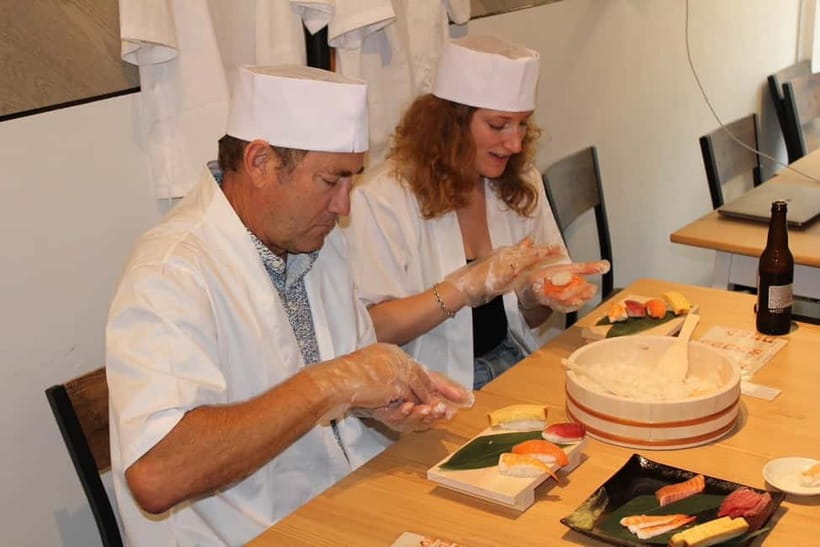
I would recommend it first to beginners. You do not need to know how to make sushi, and the step-by-step approach keeps the activity manageable.
It also suits families. The class gives younger participants something to do with their hands, and the certificate and photos provide a clear ending. A 15-year-old joined a family group successfully, so the format is not aimed only at adults.
Couples and friends should enjoy the social side. You can compare your shaping attempts, share the sake, and take photos without the formal feeling of a fine-dining restaurant.
It is also useful for people with dietary restrictions, since vegan and halal sushi are available and gluten-free soy sauce has been provided. Confirm your needs in advance, because the available selection and preparation details are not specified.
I would be more cautious if you are seeking advanced sushi training. The class teaches the basics and gives you guided practice, but it is not presented as a professional culinary course. You may also want another plan for a full meal if you have a large appetite.
Practical details that can affect your visit
The activity is wheelchair accessible, and instruction is provided in English. You can reserve now and pay later, which helps if your Osaka schedule is still changing.
Free cancellation is available up to 24 hours before the activity for a full refund. Starting times depend on availability, so check the calendar for the day you want rather than assuming a fixed departure time.
Arrive with enough time to locate the venue. Dotonbori is easy to reach but not always easy to navigate once you are among its narrow streets, signs, arcades, and restaurant entrances. The map location has caused some confusion, so checking the meeting point before leaving your hotel is sensible.
The class is supplied by 株式会社SALTE. The exact instructors vary, but Mako, Mika, Saki, Yumiko, Kosei, Yui, Anri, Toshiki, and others have led sessions. Their warm approach is one of the main reasons the experience works for first-timers.
Should you book Osaka Dotonbori Sushi Making?
Book it if you want a short, friendly activity that combines food, instruction, and a bit of Japanese culture. The strongest reasons are the hands-on format, the 12 pieces of sushi, the easy English guidance, and the fun extras that make it more memorable than a standard lunch.
Think twice if your only goal is the freshest possible seafood or advanced knife skills. One session found the seafood good rather than exceptional, and the class focuses on shaping sushi rather than professional preparation.
For most visitors, I would place this in the good use of an afternoon category. It is especially suitable for families, first-time sushi makers, and anyone who wants to leave Dotonbori with a certificate, a full stomach, and a better idea of how sushi comes together.
FAQ
How long does the Osaka Dotonbori sushi-making class last?
The class lasts 90 minutes.
How much does the activity cost?
The listed price is $45 per person.
How many pieces of sushi will I make?
You will make and eat 12 pieces of sushi using the provided ingredients.
Is Japanese sake included?
Japanese sake is included as part of the experience, with information about traditional sake provided during the activity.
Is the class taught in English?
Yes. The listed instruction language is English.
Are vegan and halal sushi options available?
Yes. Vegan and halal sushi are available. You should state your dietary requirements when booking.
Can I cancel the booking and receive a refund?
You can cancel up to 24 hours in advance for a full refund. Reserve now and pay later is also available.
Just added around Osaka
- Exclusive Sushi Making Experience with a Master Chef – Osaka Area★ 5.0 · 25 reviews
- Private Home-Style Cooking Class in Osaka with Local Mom Yoshiko★ 5.0 · 46 reviews
- Hidden Osaka – Yukaku Red Light Tour & Culinary Adventure★ 4.8 · 96 reviews
- Osaka: Walking Tour and Top Highlights★ 4.8 · 104 reviews
- Osaka: Private Ceramic Painting Workshop★ 5.0 · 13 reviews
- Pickleball in Osaka, Kobe & Kyoto with Locals!★ 4.7 · 80 reviews
- Eat Like a Local in Osaka – Private Custom Street Food Tour★ 4.3 · 33 reviews
- Osaka:SUMO BEATS SHOWCASE: Taiko Drum and Wagyu burger!★ 4.2 · 37 reviews
Sushi Experiences, compared.
Sushi Making Tokyo Roll and Authentic Japanese Sushi Class
Our verdict →
Sake Omakase in Tokyo: Guided Tasting by Certified Sommeliers
Our verdict →
Browse the lists this tour appears in