
Reviewed · TEA CEREMONY EXPERIENCES
2 Types of Japanese Sweets making and Tea Ceremony
Japanese sweets are small, pretty, and far more hands-on than they first appear. In this 125-minute workshop near Kyoto’s Gojo Station, you make wasanbon ohigashi, two seasonal nerikiri sweets, and your own matcha.
I like the three-part format because you get to work with different textures and methods, not just shape one sweet and leave. I also like the use of white and red bean paste from long-established Kyoto shops, plus single-origin matcha for the tea portion.
The main consideration is the teaching style. This is a casual, organized class rather than a quiet, formal tea ceremony, and English support can vary. One session led by Maiko received clear English translation, while another participant found the room noisy and less intimate than expected.
Key points at a glance
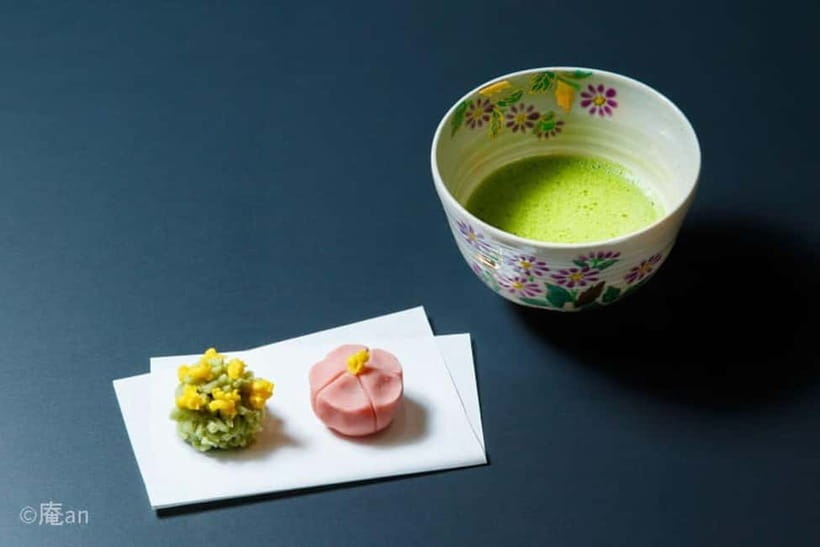
- Three edible projects: Make wasanbon ohigashi, a flower-shaped nerikiri, and a kinton nerikiri before drinking matcha.
- Kyoto ingredients: The white and red bean paste comes from long-established Kyoto shops, and the matcha is single-origin.
- Easy-to-reach location: The venue is one minute from Exit 1 of Gojo Station on the Subway Karasuma Line.
- Seasonal focus: Your two nerikiri designs change with the season, giving the workshop a timely Japanese touch.
- Good value at $28: The price covers the full sweets and tea experience, with only small optional charges for color, a take-out box, or a certificate.
- English help is available: The instructor speaks Japanese, with translation provided as much as possible. Contact the provider in advance if English support matters to you.
Making three Japanese sweets in one Kyoto class
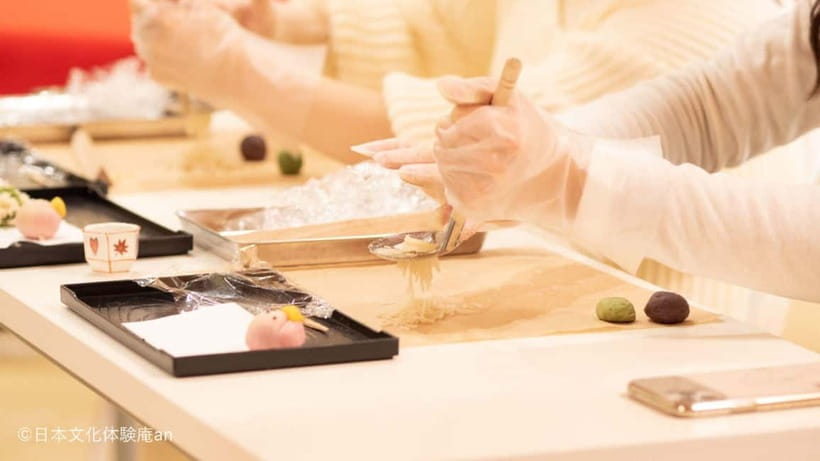
The appeal here is simple: you do not just watch a demonstration. You make three different sweets, each showing a different side of Japanese confectionery.
The first is ohigashi, a dry sweet made with wasanbon, a fine traditional Japanese sugar. Ohigashi is firm and delicate, with a clean sweetness and a shape that is often tied to the season or the tea setting.
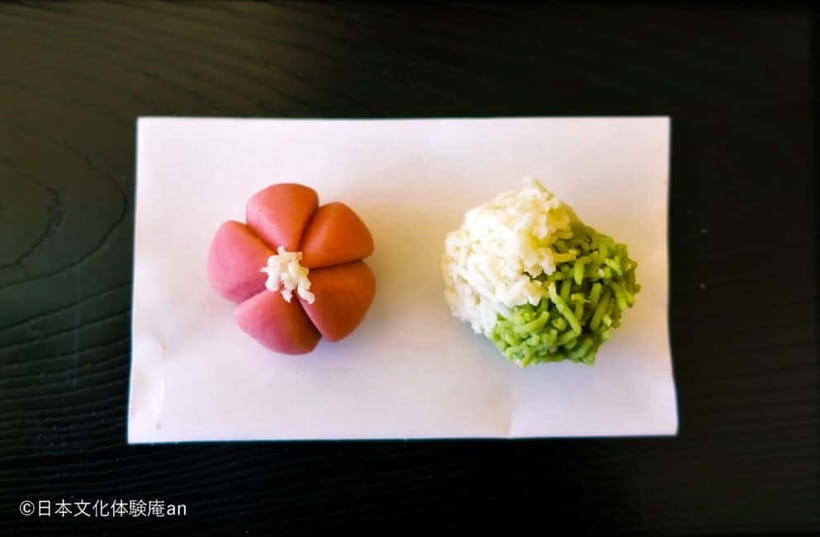
Next come two soft nerikiri sweets. One is flower-shaped, and the other is a kinton-style sweet. Both use white or red bean paste, and the exact appearance matches the season.
That variety matters. You can compare the dry, finely molded ohigashi with the softer, more sculptural nerikiri. It also gives you enough time to learn without spending the whole class on one repeated task.
More Sweets & Dessert Tours in Kyoto
- Kyoto: Japanese Traditional Sweets Making and Tea Ceremony
★ 4.4 · 314 reviews - Kyoto Wagashi(Japanese sweets) Cooking Class near Fushimiinari
★ 5.0 · 60 reviews - Kyoto: Wagashi (Japanese sweets) Cooking near Fushimiinari
★ 5.0 · 40 reviews
What happens during the 125 minutes
The class begins with an explanation of Japanese traditional sweets. This opening helps put the ingredients into context before you start handling them.
At about the 20-minute mark, there is a short break. The program then moves into the flower-shaped nerikiri, followed by the kinton nerikiri. The schedule allows roughly an hour for these two soft sweets, so you are not expected to rush through the shaping.
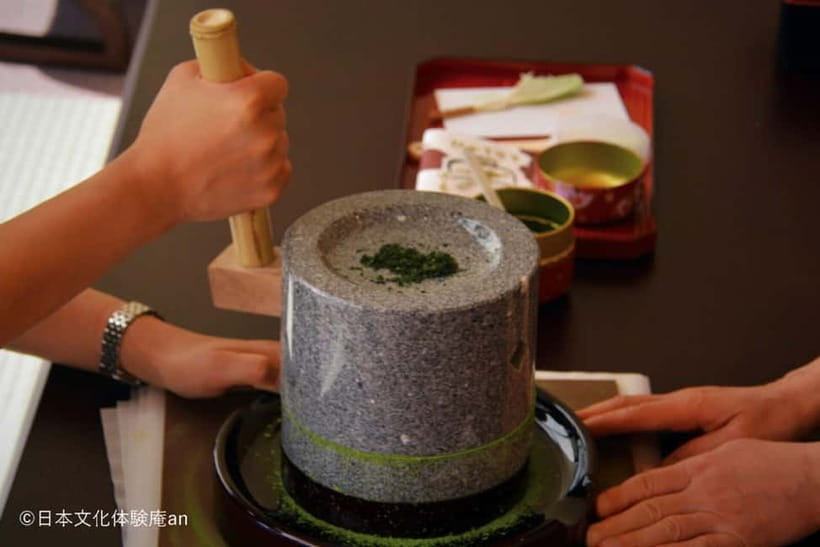
The second break comes around the 85-minute point. After that, the teacher explains tea, demonstrates matcha grinding, and leads the tea portion.
The final part includes a casual tea ceremony experience, picture time, and a chance to eat and drink what you have made. The formal session ends at about 115 minutes, with room departure at 125 minutes.
I appreciate this pacing. The breaks divide the class into clear sections, and the last part gives you time to enjoy the results rather than immediately packing up.
Ohigashi and the fine art of wasanbon
Ohigashi can be easy to overlook because it is smaller and less soft than nerikiri. I think it is one of the more interesting parts of the class because it introduces a type of Japanese sweet many visitors may not encounter in a standard café.
Wasanbon is a traditional Japanese sugar known for its fine texture. Working with it shows how Japanese confectionery can depend on precision rather than heavy flavor or large portions.
The finished sweet is designed for tea, so the point is balance. You get a small taste of sweetness alongside the slightly bitter matcha later in the class.
The workshop uses traditional Japanese sugar rather than presenting a generic craft activity. That gives this first section a useful cultural connection, even if you have no previous experience with tea or sweets.
Shaping seasonal nerikiri with Kyoto bean paste
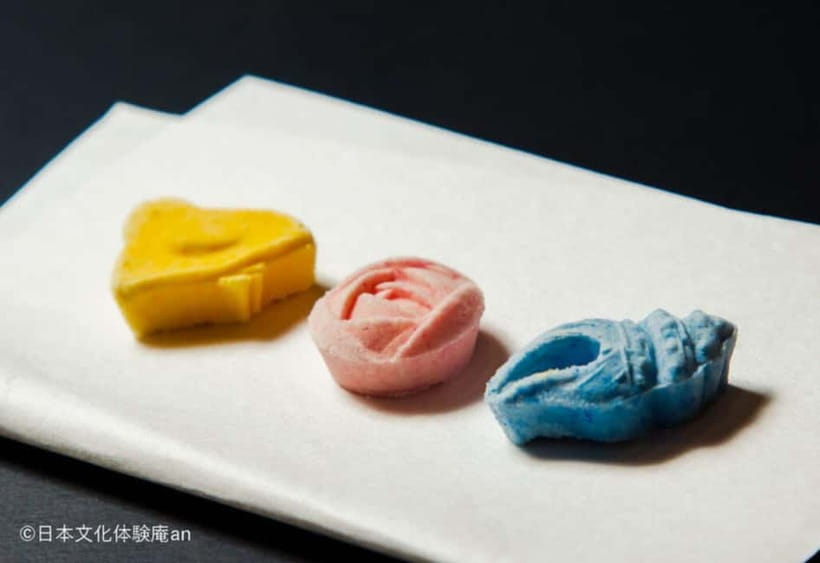
The nerikiri portion is likely to be the most visually satisfying part of the class. You make a flower-shaped sweet and a kinton sweet, both using white or red bean paste.
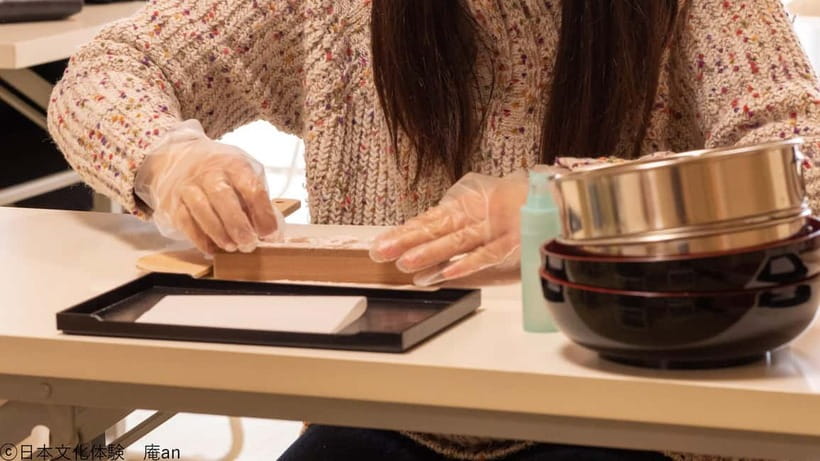
Nerikiri is soft and moldable. The teacher guides you through the shaping, but the finished result will depend on your hands. That is part of the fun. Your sweet may look slightly less polished than the instructor’s, which is normal and gives the experience a personal touch.
The seasonal designs are a real advantage. Instead of making one fixed souvenir all year, you work with shapes linked to the time of your visit. The exact designs are not specified in advance, so you should treat the seasonal element as part of the surprise.
The bean paste comes from long-established Kyoto shops. That detail matters because the filling is not just a background ingredient. It provides the main flavor of the sweets, and the quality of the paste affects the whole experience.
If you want to take your creations with you, a sweets take-out box costs an additional 100 JPY. The base price includes the experience, but not this packaging.
More Tea Ceremony Experiences in Kyoto
- Kyoto: Tea Ceremony in a Traditional Tea House in Kiyomizu
★ 4.9 · 3,519 reviews - Kyoto: Tea Ceremony Ju-An at Jotokuji Temple
★ 4.9 · 3,207 reviews - Kyoto: 45-Minute Tea Ceremony Lesson Experience
★ 4.3 · 2,378 reviews - Kyoto: Table-Style Tea Ceremony at a Kyo-Machiya
★ 4.9 · 1,211 reviews
Grinding matcha and making your own tea
The matcha section begins with an explanation of tea and a grinding demonstration. You then make your own matcha and drink it with the sweets.
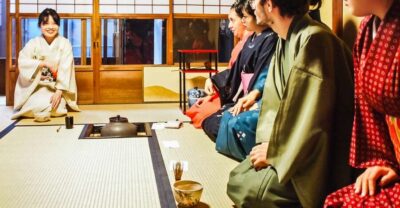
This is a casual tea experience, not a highly formal ceremony with a long sequence of strict movements. That makes it approachable if you are curious about matcha but do not want to worry about getting every gesture exactly right.
The matcha is single-origin, which gives this part more substance than simply adding green powder to hot water. You get to see how the tea fits with the sweets you prepared, especially the sweetness of the bean paste and wasanbon.
There is an important distinction here. You will take part in tea preparation and receive an explanation of the ceremony, but the format may feel more like a guided cultural lesson than a traditional, intimate tea gathering.
That difference matters if you are booking specifically for a formal tea ceremony. If you mainly want to learn how matcha is prepared and enjoy a cup in a Japanese setting, the casual format should suit you better.
English support and the role of the instructor
The official language is Japanese, and English translation is provided as much as possible. You can contact the provider before booking if you want to request English support.
The level of help may depend on the instructor and the session. Maiko led one class and was attentive and informative, with clear translation throughout. Another participant found the instructor’s English good and described the workshop as easy to follow.
That is encouraging, but I would still contact the provider if detailed English instruction is essential. The techniques are hands-on, so watching the demonstration may help even when every word is not translated.
The instruction also depends on the atmosphere in the room. One session was described as noisy because some people were disrespectful. Since the class is held indoors with other participants, you should not expect complete silence or a private lesson.
How the $28 price measures up
At $28 per person, this is a strong value if you want a compact Japanese culture activity in Kyoto. You make three sweets, learn about matcha, prepare your own tea, and have time to eat and take pictures.
Many food activities charge for one main preparation. Here, the combination of ohigashi, two nerikiri styles, and matcha gives you several distinct tasks. The range is the main reason the price feels fair.
There are a few small extras:
- Adding color costs 200 JPY.
- A take-out box costs 100 JPY.
- An experience completion certificate costs 300 JPY.
These additions are optional. I would consider the box if you want to carry the sweets away, but the certificate is only useful if you enjoy collecting activity mementos.
The price does not include travel to the venue, and the provider does not compensate you for travel expenses if you cancel. That is worth keeping in mind when planning a tight Kyoto day.
Finding the venue near Gojo Station
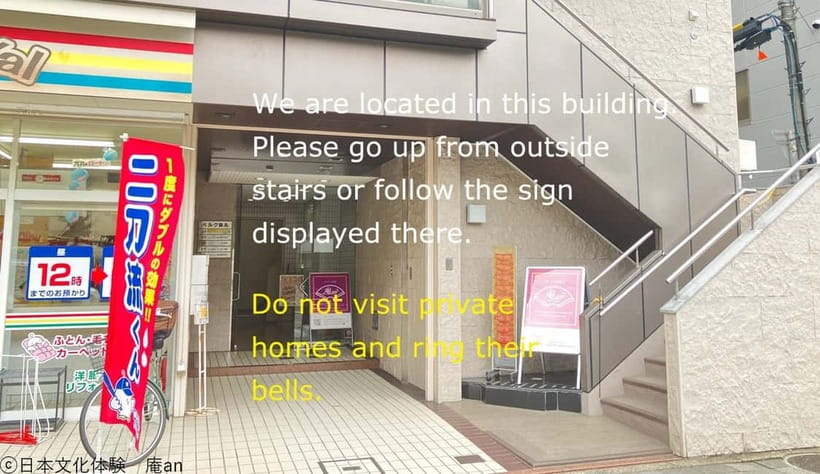
The meeting point is one minute from Exit 1 of Gojo Station on the Subway Karasuma Line. The entrance faces Gojo-dori, the main street, which should make the final approach fairly simple.
Give yourself extra time anyway. The class will not be held for late arrivals, and the provider specifically warns that delays cannot be accommodated.
The building has no elevator, and you need to use stairs to reach each venue. The activity is marked as wheelchair accessible, but the stair information creates a practical point to clarify before booking. Contact the provider in advance if you use a wheelchair or have difficulty with stairs.
The operating hours are 10:00 to 17:00. Reservations made after 17:00 are processed the next day, so late-evening requests will not receive the same-day response.
Who will enjoy this experience most
I would recommend this class to you if you want a hands-on introduction to Japanese sweets without committing to a full-day food tour. It also fits well between sightseeing stops because the venue is close to a subway station and the activity lasts just over two hours.
Families may like the simple, tactile nature of shaping the sweets. Children under two who sit on a parent’s lap are free, according to the activity rules. The provider does not give other child-age details, so contact them if you are booking for older children and want to confirm suitability.
This is also a good choice for anyone who likes edible souvenirs. You make the sweets yourself, and the optional take-out box gives you a way to carry them after the class.
You may want a different experience if your main goal is a formal tea ceremony, a private lesson, or a very quiet room. The class is structured and social, and the tea portion is casual.
Practical booking advice for a smoother visit
Book with enough time before your next activity. The stated duration is 125 minutes, but you also need to reach the venue, find the entrance on Gojo-dori, and manage the stairs inside the building.
Arrive early rather than exactly at the start time. The class moves through several stages, and missing the opening explanation could make the first sweet harder to follow.
If you need English instruction, contact the provider before reserving. Translation is offered as much as possible, but Japanese is the listed language.
If you cancel at least 24 hours in advance, you can receive a full refund. After that point, cancellation charges apply, and changing the date or time after a fee has been incurred can also bring an additional charge.
The activity offers reserve now and pay later booking, which helps if your Kyoto schedule is still changing. Still, do not reserve a slot unless you can reach Gojo Station on time.
Should you book the Japanese sweets and tea class?
Book this experience if you want good value, several hands-on food projects, and a relaxed introduction to matcha. The use of Kyoto bean paste, wasanbon sugar, seasonal nerikiri, and single-origin matcha gives the class more substance than a simple make-and-eat workshop.
Go in expecting a casual group activity rather than a silent, formal ceremony. English help can be useful but is not the listed operating language, and the room may be noisy.
For about $28, I think the combination is hard to beat for a short Kyoto activity. It is especially well suited to first-time visitors who want to make something with their own hands and leave with a better sense of how Japanese sweets and tea work together.
FAQ
Where is the Japanese sweets and tea experience held?
It is one minute from Exit 1 of Gojo Station on the Subway Karasuma Line in Kyoto. The entrance faces Gojo-dori.
How long does the activity last?
The full experience lasts 125 minutes. The scheduled activities finish at about 115 minutes, followed by eating, drinking, and room departure.
What sweets will I make?
You will make wasanbon ohigashi, one flower-shaped nerikiri, and one kinton nerikiri. The two nerikiri sweets are seasonal.
Is English available during the class?
The instructor’s listed language is Japanese. English translation is provided as much as possible, and you can contact the provider if you would like to request English support.
Is this a formal tea ceremony?
It is a casual tea ceremony experience. You will learn about tea, watch a matcha grinding demonstration, make your own matcha, and drink it with the sweets.
Are extra items included in the price?
The $28 price includes the sweets-making and tea experience. Adding color costs 200 JPY, a sweets take-out box costs 100 JPY, and an experience completion certificate costs 300 JPY.
Just added around Kyoto
- Sekka Cotton Furoshiki Class★ 5.0 · 19 reviews
- Secret Eastern Kyoto Biking Adventure★ 5.0 · 44 reviews
- Kyoto Sword Experience – includes Museum Ticket/Ninja Experience★ 4.5 · 149 reviews
- Scenic Green Tea Fields of Hidden Kyoto & Local Tea Exp (Private)★ 5.0 · 32 reviews
- Private Sake Tasting in Central Kyoto with Sake Sommelier★ 5.0 · 32 reviews
- Samurai School in Kyoto: Samurai for a Day★ 5.0 · 202 reviews
- SHIRAKAWA Japanese Culture Experiences with private English staff★ 5.0 · 16 reviews
- A Privately Guided Photoshoot in Beautiful Kyoto by a Pro★ 5.0 · 18 reviews
Tea Ceremony Experiences, compared.

Tea Ceremony in a Traditional Tea House in Kiyomizu
Our verdict →
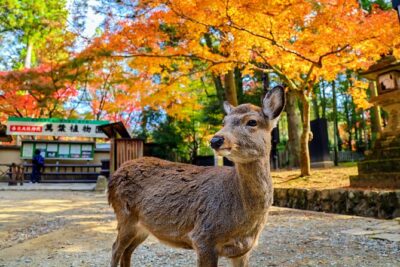
World Heritage Kyoto & Nara Uji Authentic Matcha Experience
Our verdict →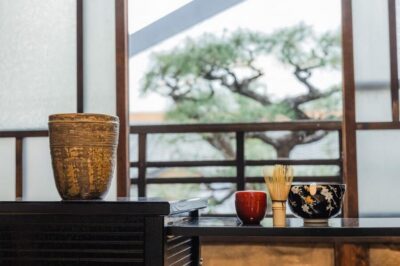
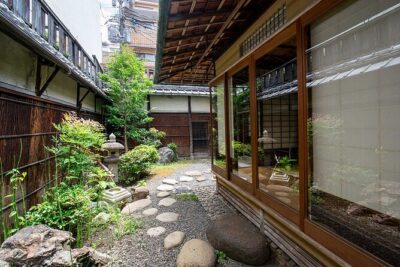
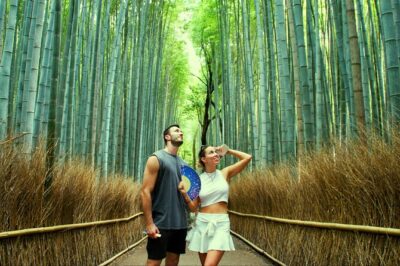
Arashiyama Bamboo Forest, Monkeys, Matcha & Temple Tour
Our verdict →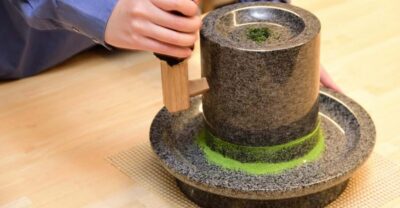
Browse the lists this tour appears in