
Reviewed · CYCLING TOURS
Tokyo: Hidden Gems Guided Bike Tour with Lunch
Tokyo’s past comes into focus on two wheels. This five-hour ride links Asakusa’s famous Kaminarimon Gate and Senso-ji Temple with quieter streets, the Sumo district of Ryogoku, and the Fukagawa Edo Museum. You get a view of Tokyo that is broader than the usual temple-and-shopping stroll.
I like the small-group format, limited to five participants, and the way the tour mixes major sights with local religious sites and a working neighborhood. I also like that lunch, bike rental, museum admission, insurance, and a café stop are included, so the $96 price is easier to judge.
The main consideration is physical and practical: you need to be at least 150 centimeters tall, comfortable on a bicycle, and ready to keep moving for much of the day. Vegetarian choices are limited, and a late arrival means you cannot join, reschedule, or receive a refund.
Key points at a glance
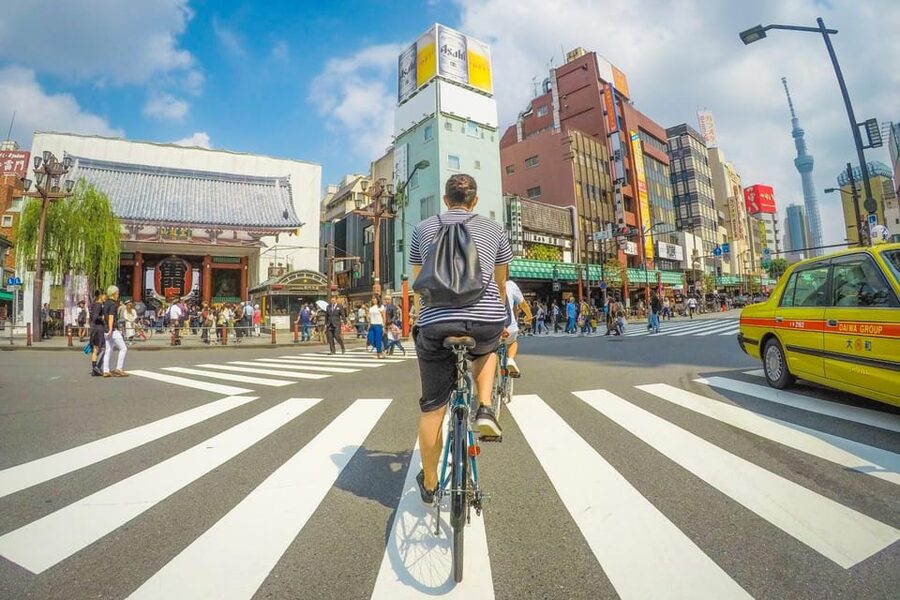
- Ride from Asakusabashi to East Tokyo’s historic districts, with stops in Asakusa, Ryogoku, and Fukagawa.
- See Bandai’s large anime figures, including Dragon Ball and Doraemon, before reaching Kaminarimon.
- Pair a Shinto shrine visit with Fukagawa Fudo-son, a Buddhist temple where you can observe everyday Japanese worship.
- Eat lunch in Ryogoku, Tokyo’s Sumo district, at a local restaurant.
- Visit the Fukagawa Edo Museum, where life and streets from the Edo period are presented at street level.
- Finish with a café stop, with bikes, entry fees, lunch, and insurance already covered.
Starting at Asakusabashi Station
You meet the guide outside Exit A3 of Asakusabashi Station on the Toei Asakusa Line. Arrive early. The tour begins on time, and the operator is clear that a late arrival can mean losing the entire tour without a refund or a new booking.
Before setting off, the guide gives a short talk about traffic rules in Japan. This is useful even if you cycle regularly at home. Tokyo traffic has its own rhythm, and the briefing gives you a quick sense of how to ride responsibly in the city.
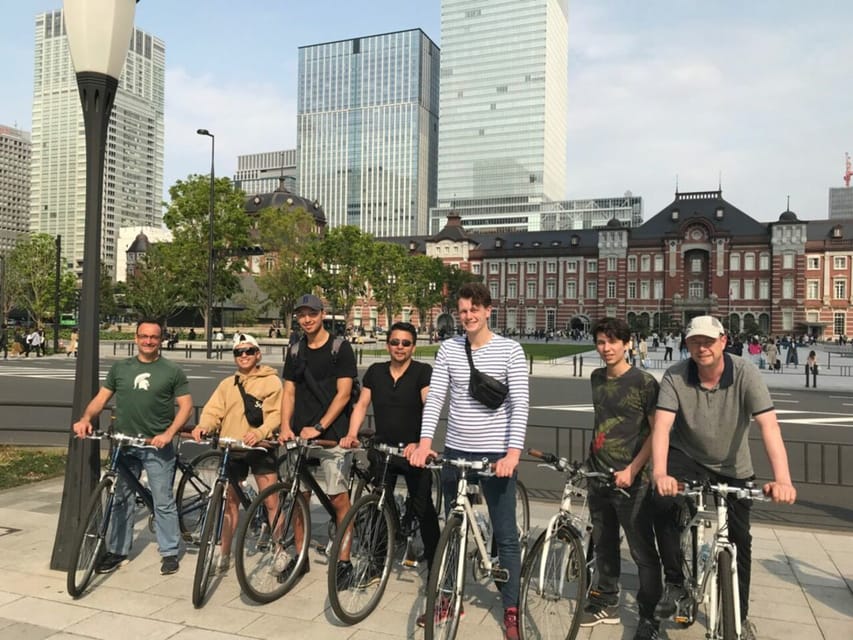
The tour is conducted in English. It is designed for all cycling levels, but you still need to be comfortable riding for several hours. Participants must be taller than 150 centimeters, and the tour is not suitable for children under 15.
You cannot leave luggage at the bicycle office, so bring only what you can carry while riding. Use station lockers before meeting the guide if you have suitcases or large day bags.
More Bike Tours in Tokyo
- Tokyo Guided Small-Group Biking Tour
★ 5.0 · 1,250 reviews - Tokyo Great Cycling Tour
★ 5.0 · 811 reviews - Tokyo Top Highlights 3h Guided E-bike Tour
★ 5.0 · 714 reviews
Bandai figures and the first look at Asakusa
The first stop is the Bandai head office, where oversized figures of characters such as Dragon Ball and Doraemon provide an easy photo opportunity. This is a light, playful beginning, and it gives the tour a distinctly Tokyo feel before the temples and older neighborhoods take over.
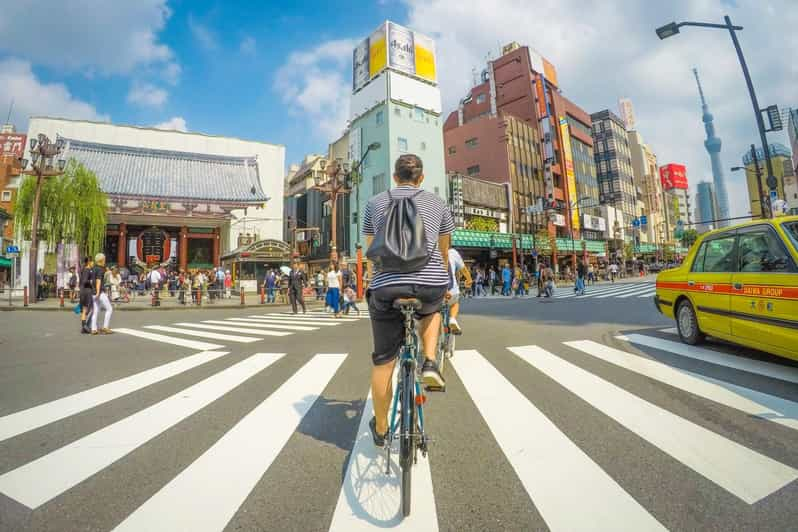
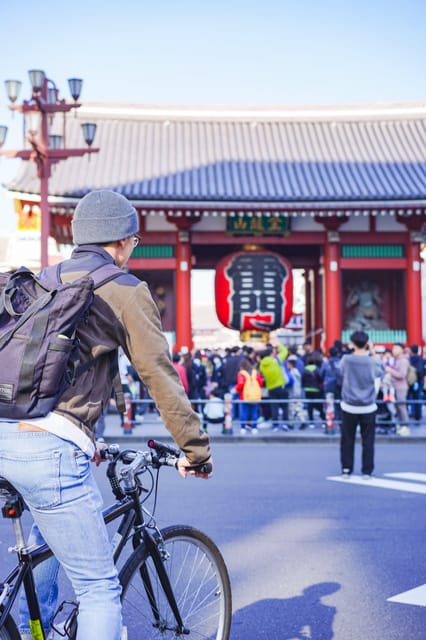
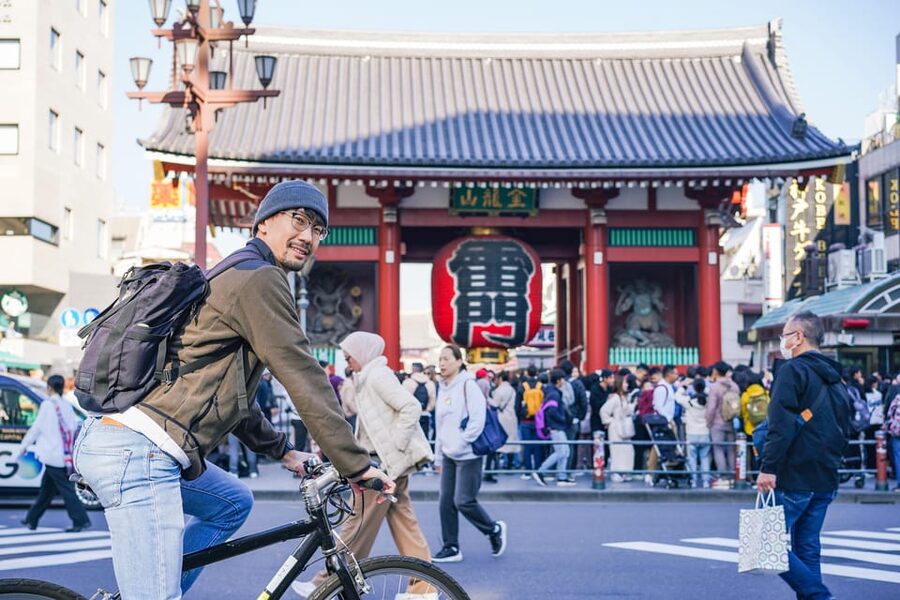
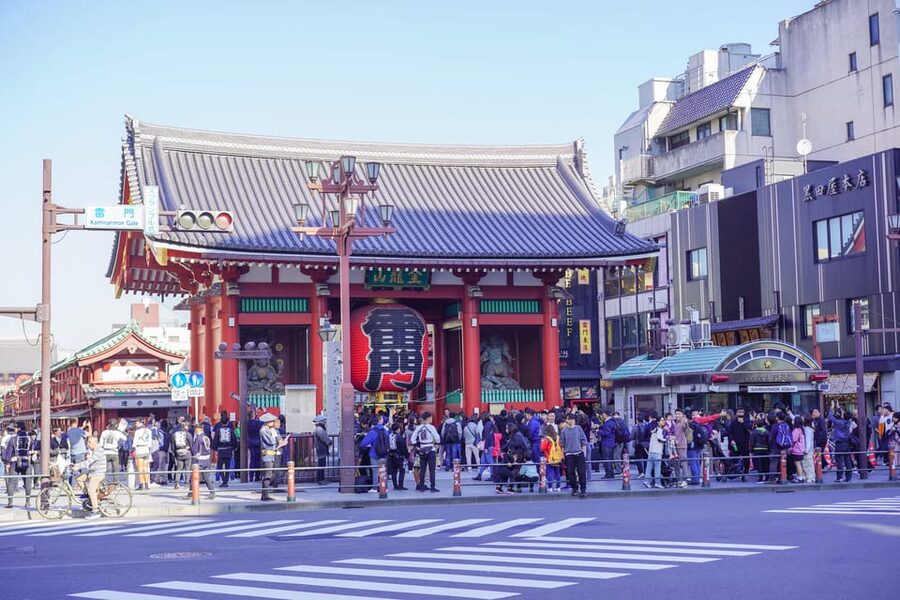
From there, the route continues toward Asakusa. You stop at Kaminarimon, the large entrance gate associated with Senso-ji. It is one of Tokyo’s best-known sights, so this part of the ride does not avoid crowds entirely. The value is that you reach it as part of a wider route rather than spending your whole morning in the busiest temple area.
You then have about 30 minutes at Senso-ji Temple. The temple is a useful introduction to how Tokyo’s popular religious sites work, with visitors coming to pray, take photographs, and walk through the grounds. Your guide can add context that is easy to miss when you visit alone.
Asakusa has been a popular area since the Edo period, from 1603 to 1868. That long connection to entertainment, worship, and local travel helps explain why it remains such a strong first stop. You see the famous face of Tokyo here, but the bicycle route soon takes you away from the most familiar postcard views.
Along the Sumida River toward Ryogoku
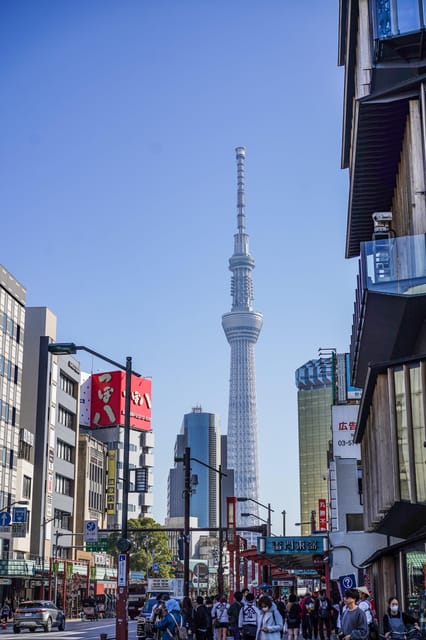
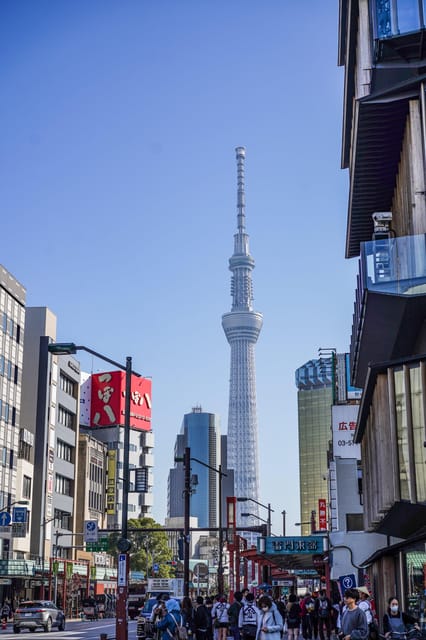
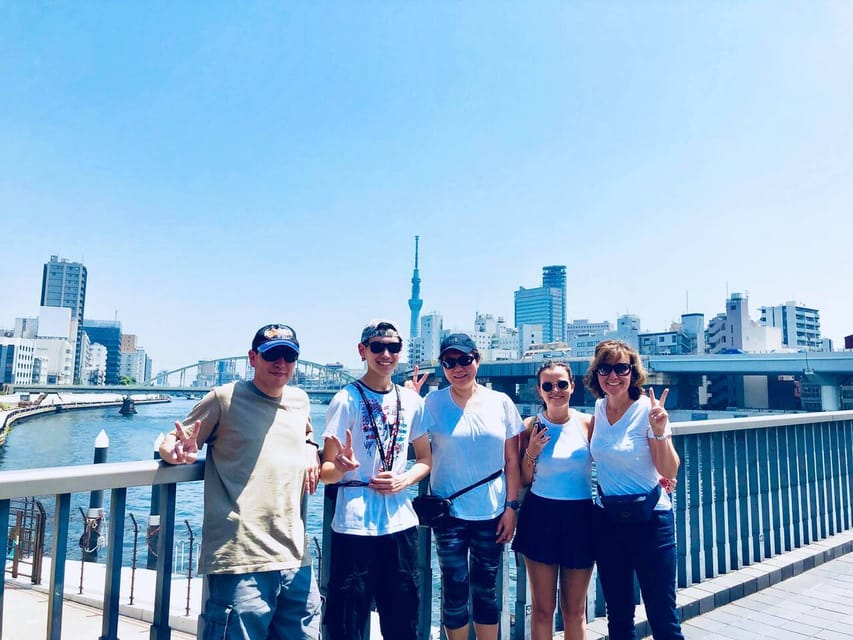
After Asakusa, the ride crosses a bridge with views toward the Sumida River and Tokyo Skytree. At 634 meters, Skytree is one of the most striking reference points in eastern Tokyo. From a bicycle, you get a moving view rather than a fixed observation-deck scene, with the river and tower appearing together as you travel.
This portion connects the sights in a natural way. You are not simply being driven from one attraction to another. The ride itself becomes part of the tour, giving you a sense of how the districts relate to each other.
The route continues to Ryogoku, known as Tokyo’s Sumo district. You walk around the area for a short time and hear about its connection to Sumo. The stop is not presented as a full Sumo event or a visit to a tournament, so set your expectations accordingly. It is a neighborhood introduction, paired with lunch.
That balance works well for a half-day tour. You get a taste of the district without using up the afternoon in one attraction. If Sumo is your main reason for visiting Tokyo, you will probably want a separate Sumo-focused activity as well.
Local lunch in Tokyo’s Sumo town
Lunch takes place at a local restaurant in Ryogoku and lasts about 45 minutes. It is included in the price, which makes the day easier to plan and adds value to the package.
The meal is part of the practical appeal, but food choices deserve a warning. Vegetarian options are limited because many Japanese restaurants are not fully prepared with vegetarian menus. If you have strict dietary requirements, contact the operator before booking rather than assuming an alternative meal will be available.
The tour does not include additional food and drinks, though you can buy them along the way. Bring money or a payment method for anything beyond the included lunch and later café stop.
One strength of the meal stop is its setting. Eating in Ryogoku gives the Sumo district more substance than a quick photograph outside a landmark. It also provides a proper break before the afternoon ride to Fukagawa.
More Hidden Gems Tours in Tokyo
- 3h Tokyo E-Bike Tour: Hidden Gems, and Local Life with guide
★ 5.0 · 670 reviews - Tokyo: Custom Hidden Gems & Highlights Tour with Local Guide
★ 4.7 · 272 reviews - Tokyo: 3-hour Guided E-Bike Tour of the City’s Hidden Gems
★ 4.8 · 251 reviews - Shibuya & Harajuku: Hidden Gems & Highlights Private Tour
★ 4.7 · 139 reviews
Fukagawa Fudo-son and everyday Buddhist practice
After lunch, you cycle toward Fukagawa. The first stop there is Naritasan Fukagawa Fudo-do, also called Fukagawa Fudo-son. You spend about 35 minutes at the temple.
This stop adds a different religious setting from Senso-ji. Earlier, you see one of Tokyo’s major Buddhist temples in Asakusa. Here, the focus is more closely tied to daily worship and the way people use a temple as part of ordinary life.
The tour also includes a Shinto shrine visit, according to the activity description, although the detailed stop list names Fukagawa Fudo-son as the religious stop. In practical terms, you should expect the guide to explain Japanese religious customs and the difference between the settings, while the exact order may change.
The temple visit is one of the strongest parts of the route for anyone who wants context rather than a quick photo. You are given time to look around and ask questions, and the guide can explain what you are seeing as you move through the site.
Remember that this is a place of worship. Dress and behave respectfully, and follow the guide’s instructions about where to stand and how to observe the space.
Seeing Edo life at the Fukagawa Edo Museum
The Fukagawa Edo Museum is the tour’s main history stop. You spend about 45 minutes inside, looking at how people lived roughly 150 years ago during the Edo period.
This is more useful than a museum made up only of display cases. The focus is on streets and daily life, allowing you to picture the scale of homes, shops, and neighborhood spaces. The museum helps connect the older references from Asakusa and Ryogoku to ordinary people, not just famous temples and historical figures.
For me, this is where the tour’s theme becomes clearest. You have already ridden through districts that developed over centuries. At the museum, you get a visual sense of what those streets may have felt like in the Edo era.
Museum admission is included, so you do not need to budget an extra entry fee. The schedule allows enough time for a useful visit, though not an exhaustive museum study. If you like to read every label slowly, you may find the stop brief.
The itinerary can change because of traffic, weather, and operating conditions. If a location is closed, the operator may substitute another place. That flexibility is sensible in Tokyo, but it also means you should treat the listed order as a plan rather than a guarantee.
A short café finish and the ride back
After the museum, the group stops at a local café for about 15 minutes. This is a short pause, not a full meal, and additional drinks or food are not included.
The café stop gives you a chance to rest before returning to Asakusabashi Station. It also keeps the day from becoming one long sequence of cycling and sightseeing. The tour ends back at the original meeting point, which is convenient if you stored luggage in station lockers.
The full outing lasts five hours. That includes the traffic briefing, riding time, sightseeing, lunch, museum visit, and café break. Starting times vary, so check availability for the date you want.
How much value do you get for $96?
At $96 per person, this is not the cheapest way to see Asakusa. You can visit Kaminarimon, Senso-ji, and many public areas independently for little or no admission cost.
The price makes more sense when you count the services together: a guide, rental bike, lunch, Fukagawa Edo Museum admission, and insurance. You also get a planned route between several districts, which saves you from working out the connections yourself.
The small group is another part of the value. With a maximum of five participants, the guide has a better chance of answering questions and keeping the ride together. This is not a private tour, and other participants may be present, but it should feel more personal than a large coach excursion.
A reviewer singled out guide Shogun for keeping the pace brisk while still providing historical information. That is a useful clue about the style of this outing. You should expect an active day with plenty of ground covered, not a slow stop-and-start ride.
Another positive point is the lack of a hard-sell shopping stop. Some city tours steer groups into stores where the visit feels compulsory. This route is built around temples, neighborhoods, lunch, and the museum, so your time is spent on the stated theme.
Who will enjoy this bicycle tour?
I would recommend it to first-time visitors who want a structured introduction to eastern Tokyo without spending the whole day on major tourist streets. It also suits repeat visitors who have already seen central Tokyo and want a different set of neighborhoods.
History-minded visitors will appreciate the Edo Museum and the guide’s explanations. People interested in Japanese religion will benefit from seeing both a major temple setting and a more everyday place of worship.
The tour also works well for active couples, solo visitors, and small groups of friends. The English guide and limited group size make it easier to ask questions as you ride.
I would hesitate to recommend it if you dislike bicycles, need a fully private tour, require a broad vegetarian menu, or are traveling with children under 15. You should also skip it if bad weather is likely to make cycling unpleasant, since the tour can be canceled for safety reasons.
Wear comfortable shoes. Cycling clothing is not required, but practical clothes are sensible. You do not need special cycling shoes, and the activity does not list them as included.
Weather, timing, and other practical details
The tour may be canceled when weather conditions are unsafe. Check the operator’s arrangements before setting out, especially during periods of heavy rain or strong winds.
The order of stops can change because of traffic, weather, or operating conditions. A site may also be replaced if it is closed. Think of the tour as a guided East Tokyo route with several planned highlights, not a rigid promise that every stop will occur in the exact listed order.
Free cancellation is available up to 24 hours before departure for a full refund. You can also reserve and pay later, which helps if your Tokyo schedule is still changing.
The tour includes insurance, but the operator recommends obtaining your own travel insurance. That is sensible for any activity involving cycling.
Should you book the Tokyo bike tour?
Book it if you want a five-hour introduction to East Tokyo that combines cycling, temples, local food, Sumo connections, and Edo-era history. The route covers more ground than a walking tour, but it still leaves time for meaningful stops.
The best reasons to choose it are the small group, the included lunch and museum entry, and the range of places covered. Guide Shogun’s brisk pace and clear historical focus also fit the tour’s active format.
Skip it if you want a slow temple tour, a Sumo match, extensive vegetarian food choices, or a private vehicle. For most reasonably fit visitors over 15 who want to see how several eastern districts connect, $96 is a fair price for the amount included.
FAQ
Where does the tour start and finish?
The tour starts outside Exit A3 at Asakusabashi Station on the Toei Asakusa Line. It ends back at the same meeting point.
How long does the tour last?
The activity lasts five hours. Starting times vary, so check availability for your chosen date.
Is lunch included?
Yes. Lunch at a local restaurant in the Ryogoku area is included. Additional food and drinks are not included but can be purchased.
Is the bicycle rental included?
Yes. Bike rental is included, along with the guide, lunch, Fukagawa Edo Museum entry, and insurance.
What language is the tour conducted in?
The tour has a live English-speaking guide.
Can vegetarians join?
Vegetarians can join, but vegetarian food choices are limited. Many Japanese restaurants are not fully prepared to provide vegetarian menus.
What should I bring, and are there age or height requirements?
Bring comfortable shoes. Participants must be at least 150 centimeters tall, and the tour is not suitable for children under 15. Do not bring luggage, since it cannot be stored at the bicycle office.
Just added around Tokyo
- Kawagoe Japanese Food Tour : Unagi Kaiseki and Sake near Tokyo★ 5.0 · 30 reviews
- Kawagoe 4hr Private Tour with Licensed Guide (Kawagoe Dep)★ 5.0 · 13 reviews
- Little EDO Sushi Making workshop in Kawagoe★ 5.0 · 18 reviews
- 【R34】Tokyo:Private Daikoku tour in Modified R34★ 4.9 · 92 reviews
- :Tokyo,Shibuya/ Pro Photography in Kimono / English-Friendly★ 5.0 · 26 reviews
- Tokyo:Celebrate Unique Japanese New Year Tradition Festivity★ 3.9 · 20 reviews
- Tokyo: Allstar Food Tour★ 4.7 · 29 reviews
- Tokyo: West-Side Cycling and Food Tour with Guide★ 5.0 · 37 reviews
Cycling Tours, compared.
Arashiyama Bamboo Forest & Hidden Gems Bike Tour (Early Bird)
Our verdict →
Browse the lists this tour appears in