
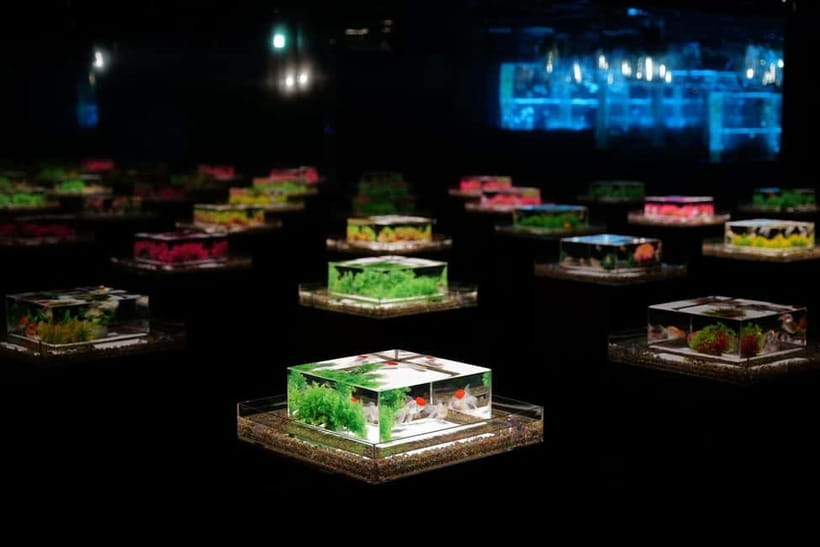
Reviewed · MUSEUMS
Tokyo: Art Aquarium Museum GINZA Entry Ticket
The Art Aquarium Museum GINZA turns goldfish into the center of a light, music, and scent show. Fish glide through unusually shaped tanks while color and sound alter the mood around them. It is less a conventional aquarium and more a short, atmospheric art visit in the middle of Tokyo’s Ginza shopping district.
I like the way it connects a modern gallery setting with Edo-period goldfish appreciation, a Japanese pastime that treated carefully bred goldfish as objects of beauty. I also like the changing seasonal presentation, which gives the permanent venue a reason to look different during the year. The main drawback is its compact size: you may finish in 30 to 60 minutes, so it is not a full-day attraction.
Key points to know
- Goldfish become the art: The fish share the stage with sculptural tanks, colored lighting, music, and fragrance.
- Plan for about one hour: The museum is compact, making it easy to fit between Ginza shopping and other Tokyo sights.
- Photography is welcome: You may take pictures, but tripods, monopods, strobes, and extra lighting are not permitted.
- The setting is very convenient: Admission is on the ninth floor of the new building at Ginza Mitsukoshi.
- Seasonal changes matter: The permanent venue changes some of its art presentation during the year.
- Families can save: Up to two children under elementary school age may enter free with one adult.
Goldfish, color, and the old Edo pastime
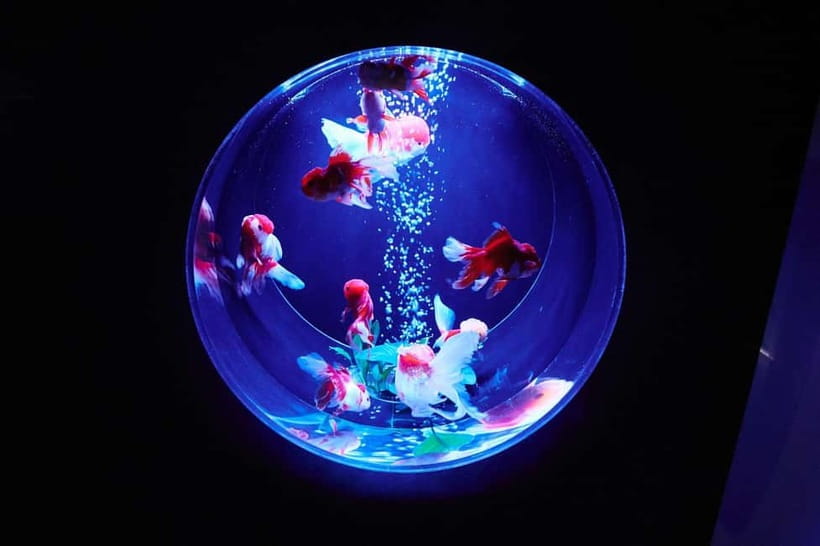
This museum works because it asks you to look at an ordinary aquarium animal in an unusual way. The goldfish are not simply displayed in plain tanks with identification labels. Their movement becomes part of a carefully arranged room, with lighting, music, fragrance, and decorative forms shaping what you notice.
The concept reaches back to Edo-period Japan, when goldfish appreciation became a fashionable pastime. The museum gives that tradition a contemporary setting. You get the old fascination with breeding, color, and graceful movement, but the presentation is built for a modern art audience and a camera-ready visit.
That combination makes the experience especially appealing if you have already seen Tokyo’s major temples, towers, and shopping streets. It offers a different kind of cultural stop. You are not studying a long gallery of paintings or reading a large collection of historical panels. You are watching living creatures move through a changing visual setting.
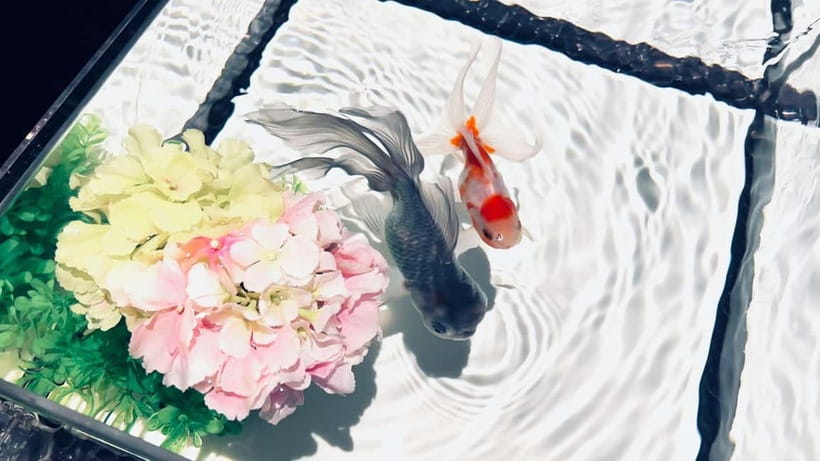
The museum also provides information about the goldfish in English, which helps you understand that the fish themselves are part of the subject. Their body shapes and colors are not just background decoration. Look at the displays long enough to notice how differently the fish move and how their appearance changes under each lighting design.
More Museum Tours in Tokyo
- Tokyo: teamLab Planets TOKYO Digital Art Museum Entry Ticket
★ 4.6 · 9,779 reviews - Tokyo: Samurai Ninja Museum Guided tour and Experience
★ 4.6 · 1,010 reviews - Ninja Experience (Family Friendly) at Samurai Ninja Museum TOKYO
★ 5.0 · 441 reviews
The ninth floor at Ginza Mitsukoshi
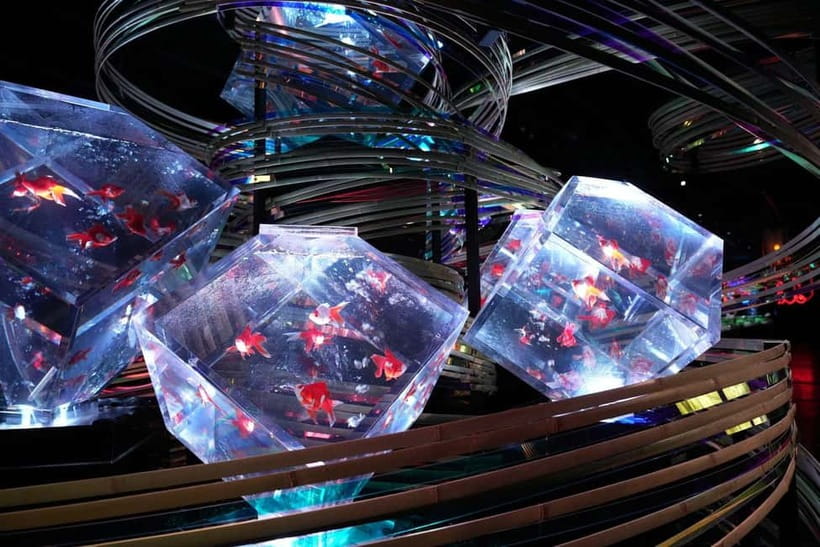
The museum is inside Ginza Mitsukoshi, not in a separate street-level building. This is useful, but you need to know where to go. Admission reception and same-day tickets are on the ninth floor of the new building.
The easiest rail access is Ginza Station. Tokyo Metro’s Ginza, Marunouchi, and Hibiya lines connect to Exit A7. From Ginza 1-chome Station on the Yurakucho Line, allow about five minutes from Exit 9. Higashi Ginza Station is also close, with a roughly two-minute walk through the underground passage toward Ginza Station.
This central location makes the museum simple to pair with a Ginza afternoon. You can visit before shopping, take a break from department stores, or use it as a short cultural stop before dinner. The department store setting also means you should not expect a stand-alone museum campus or a large entrance plaza. Once you reach the building, follow the information for the new building and ninth floor.
If the address helps with map searches, it is Ginza Mitsukoshi, 4-6-16 Ginza, Chuo-ku, Tokyo, postal code 104-8212. The listed coordinates are 35.6712864, 139.7657382.
A compact route through the displays
The viewing time is estimated at one hour. That estimate feels important when planning your day. You can slow down for photographs and still usually keep the visit within a manageable block of time. If you move quickly, you might spend closer to 30 minutes, as one midweek morning visitor did.
The route is built around aquarium displays and spatial presentations rather than a long sequence of traditional museum rooms. As you move through, pay attention to the relationship between the fish, the tank shape, the lighting, and the sound. The appeal is not one single centerpiece. It is the change in mood from display to display.
Some presentations are likely to hold you longer than others, especially if you enjoy photography. Give yourself time to watch the fish settle into the frame. A quick snapshot can record the color, but a longer look lets you notice the fish’s slow movement and the way the room’s music affects the atmosphere.
The exhibition is also designed to change with the seasons. Since the venue is permanent, the display does not have to remain exactly the same year-round. One repeat visitor found that more than half of the art had changed over a two-year period. That does not guarantee a completely new exhibition on every return, but it does make a second visit more worthwhile than a fixed display might be.
Why the music and scent matter
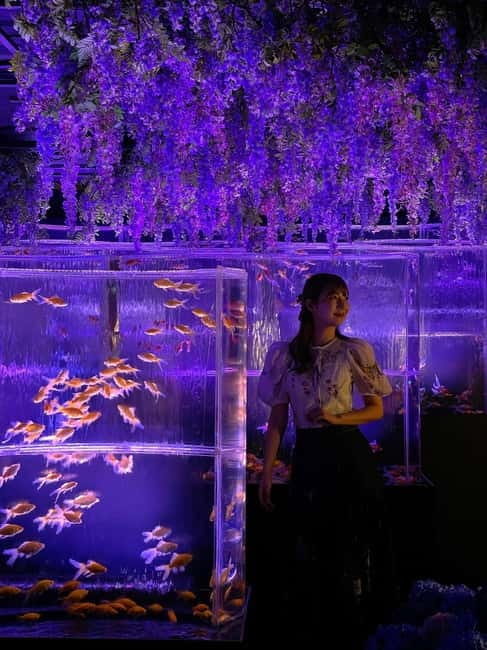
The background music is not an afterthought. It gives the museum a calm, enclosed feeling and helps separate the displays from the busy city outside. Several visitors singled out the music as a major part of the pleasure, describing it as tranquil and closely tied to the art.
The scent adds another layer. Aromatherapy is used in the exhibition, so you are not experiencing the displays through sight alone. This will appeal to you if you enjoy art installations that create a full mood rather than simply presenting objects. If you prefer a quiet, neutral aquarium with natural lighting, the theatrical approach may feel less direct.
The music and fragrance also mean this is not simply a place to identify fish species. The museum wants you to respond to the whole room. That can be a strength when you are looking for something memorable and visually unusual. It can be a weakness if you want detailed scientific information about aquatic care or a large natural-history collection.
More Aquariums in Tokyo:
- Tokyo: Sumida Aquarium Entry Ticket
★ 4.6 · 70 reviews - Tokyo: Sunshine Aquarium Entry Ticket
★ 4.6 · 55 reviews - Naha: North Okinawa Sightseeing Tour & Churaumi Aquarium
★ 4.4 · 472 reviews - Okinawa: Churaumi Aquarium, Ryukyu Village & Manza Bus Tour
★ 4.5 · 118 reviews
Photography without extra equipment
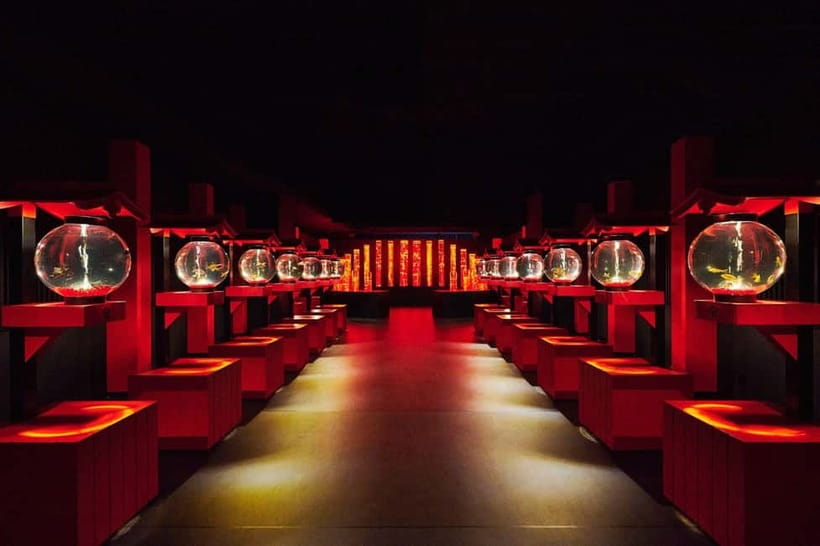
Photography is permitted, and the museum is clearly designed with photographs in mind. The colored tanks and darkened presentation make strong subjects, particularly when a goldfish passes through a well-lit section of the display.
You may take pictures, but tripods, monopods, and similar equipment are not allowed. Strobes and separate lighting equipment are also prohibited. This keeps the route moving and prevents bright flashes from disrupting the atmosphere or other people’s photographs.
If you want better conditions for pictures, consider an early or midweek time. One visitor with a 10:30 a.m. weekday entry found only a few other people in the museum and had room to take photographs without interrupting anyone. That is one person’s experience, not a promise of empty rooms, but it is a sensible reason to avoid the busiest part of the day when photography is your priority.
Even without professional equipment, you can get useful pictures by taking your time and waiting for a fish to move into the right position. Keep your camera steady, avoid flash, and look for angles that include the tank design as well as the fish. The best image may show the whole arrangement rather than a close-up of one animal.
What the $17 ticket delivers
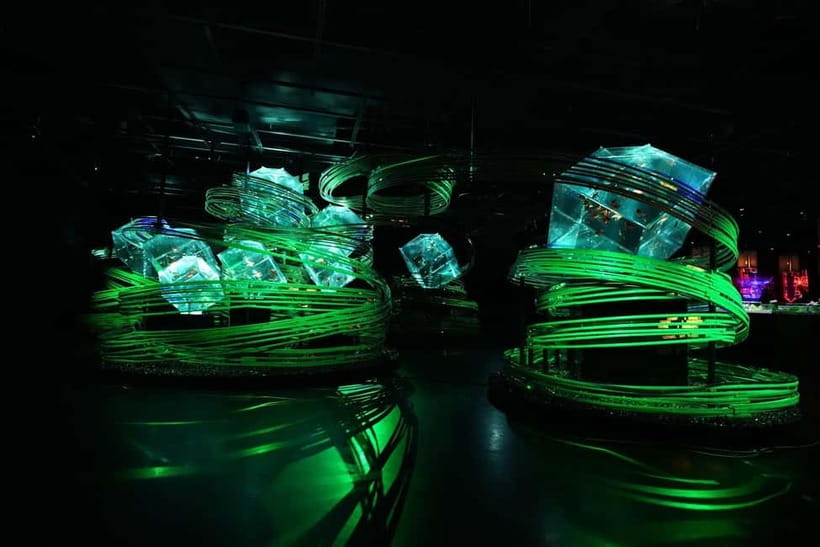
At about $17 per person, this is not an all-day attraction, so the value depends on what you want from a museum visit. If you measure admission by hours inside, the price may seem high for a compact 30-to-60-minute stop. If you value design, photography, and a distinctive cultural idea, the ticket is easier to justify.
I would consider it good value as part of a Ginza day, particularly because the museum is easy to combine with shopping and other central Tokyo plans. You do not need to spend half a day reaching an isolated venue. The short duration can actually help: it gives you a polished art experience without taking over your schedule.
The ticket includes admission, and up to two children under elementary school age may enter free with one adult. That makes the cost more reasonable for a small family, provided the children are comfortable in an art setting where the main subjects are viewed rather than touched.
The experience is non-refundable, and closing days and business hours can vary. Check the available time before paying, especially if you are planning around a tight Tokyo itinerary. The activity is valid for one day, with starting times shown according to availability.
Who will enjoy this most
I would recommend the museum first to anyone who likes visual art, unusual interiors, or photography. You get a strong payoff if you enjoy adjusting your eye to color, reflections, movement, and atmosphere.
It also suits couples and families looking for a short indoor stop. The visit does not require a full day of attention, and its Ginza location makes it easy to add to a larger plan. Children may enjoy the fish and the changing lights, though the experience is presented as art rather than a hands-on aquarium.
Repeat visitors may find more value than first-time visitors expect because the displays change with the seasons. If you are in Tokyo again after a year or two, the museum may offer a noticeably different set of presentations. The exact amount of change depends on when you visit.
You may want to skip it if your main interest is marine biology, a large collection of aquatic species, or a long museum route. Goldfish are the focus, and the exhibition is deliberately stylized. It is also not the best choice if you dislike dark rooms, strong visual effects, or fragrance.
A note about animal presentation
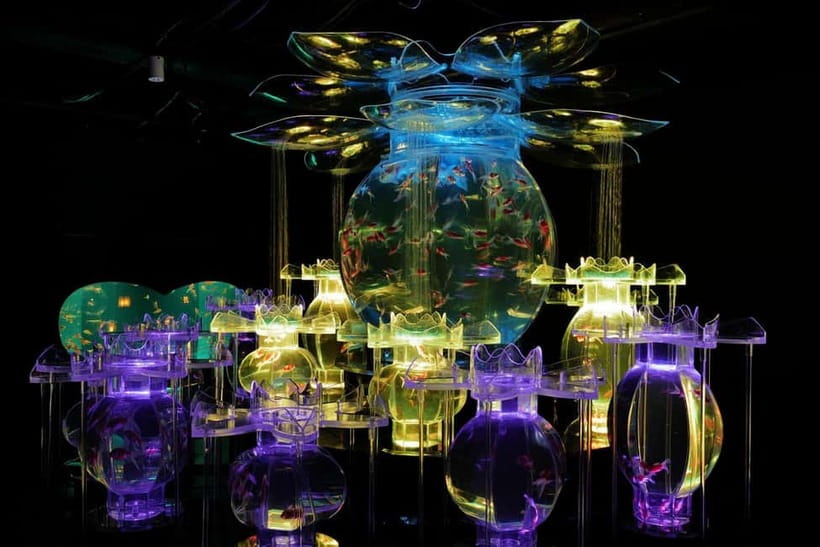
The museum’s artistic approach is part of its appeal, but it is fair to think about the welfare of the fish. The experience places goldfish in display settings built for visual impact, and one visitor expressed concern that some fish appeared poorly treated.
The supplied information does not provide detailed care standards, tank specifications, or veterinary policies, so I would not make claims beyond that concern. If animal welfare is central to your decision, you may want to ask the venue directly about its care practices before booking. For everyone else, it is worth viewing the fish thoughtfully rather than treating them only as photographic props.
Practical timing for a Ginza day
Give yourself roughly one hour at the museum, plus time to find the ninth-floor admission area. If you are arriving from a different part of Tokyo, use the station access that best matches your line rather than assuming all Ginza stations connect in exactly the same way.
A morning visit can work well for photography, based on the quieter 10:30 a.m. weekday experience described above. You can then continue through Ginza’s department stores and streets. An afternoon visit works too, but the museum’s compact format means you should not schedule it as the only major event of the day.
Check the day’s opening information before you set out. Closing days and business hours may change. Since the ticket cannot be canceled, this small check matters.
Should you book Art Aquarium Museum GINZA?
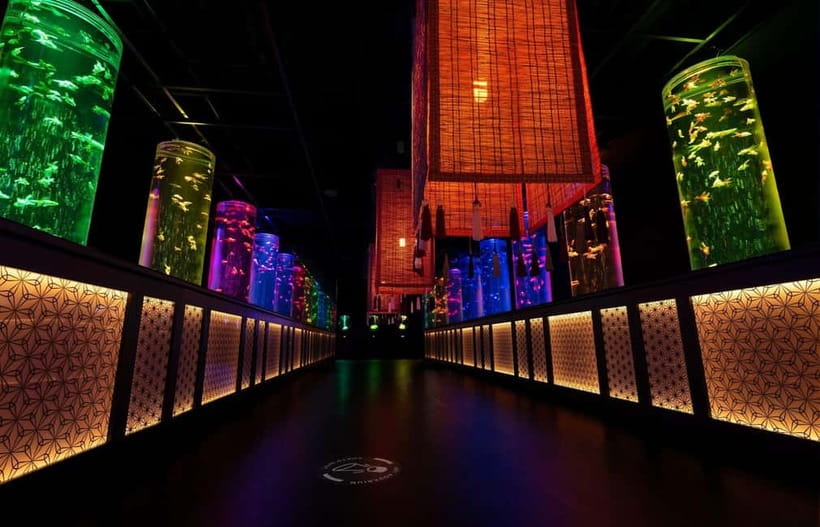
Book it if you want a short, polished Tokyo experience built around goldfish, art, music, and fragrance. The museum’s best qualities are its unusual concept, beautiful lighting, strong photo opportunities, English information about the fish, and convenient Ginza setting.
Do not book it expecting a large aquarium or a half-day museum. The route is compact, and some of the value comes from the mood rather than the amount of material. At $17, I see it as a worthwhile add-on for a Ginza itinerary, especially for photographers and repeat visitors interested in seasonal changes.
For the best chance at calm viewing, choose a weekday morning when available. Leave the tripod and flash in your bag, allow about an hour, and treat the visit as a carefully designed art stop rather than a conventional aquarium.
FAQ
Where is Art Aquarium Museum GINZA located?
It is inside Ginza Mitsukoshi at 4-6-16 Ginza, Chuo-ku, Tokyo. Admission reception and same-day tickets are on the ninth floor of the new building.
How do I reach the museum by train?
From Ginza Station, use Exit A7 on the Tokyo Metro Ginza, Marunouchi, or Hibiya lines. It is about a five-minute walk from Ginza 1-chome Station Exit 9, and about a two-minute underground walk from Higashi Ginza Station toward Ginza Station.
How long should I allow for the visit?
The estimated viewing time is one hour. Depending on your pace and how long you spend taking pictures, you might finish in about 30 minutes or stay close to an hour.
What is included in the ticket?
The ticket includes the admission fee to Art Aquarium Museum GINZA. Up to two children under elementary school age may enter free with one adult.
Can I take photographs inside?
Yes. Photography is permitted inside the museum. Tripods, monopods, similar equipment, strobes, and additional lighting equipment are not allowed.
Is the museum open every day?
Closing days and business hours may vary. Check the available date and starting time before booking and visiting.
Does the display change during the year?
Yes. The permanent venue presents seasonal changes throughout the year. The amount and type of change depends on the season and the date of your visit.
How much does admission cost?
The listed price is $17 per person. Since the visit usually takes about one hour, the value is strongest if you enjoy art installations, photography, and the Ginza location.
Can I cancel the ticket after booking?
No. This activity is non-refundable, so check the date, time, and museum operating information before purchasing.
Just added around Tokyo
- Kawagoe Japanese Food Tour : Unagi Kaiseki and Sake near Tokyo★ 5.0 · 30 reviews
- Kawagoe 4hr Private Tour with Licensed Guide (Kawagoe Dep)★ 5.0 · 13 reviews
- Little EDO Sushi Making workshop in Kawagoe★ 5.0 · 18 reviews
- 【R34】Tokyo:Private Daikoku tour in Modified R34★ 4.9 · 92 reviews
- :Tokyo,Shibuya/ Pro Photography in Kimono / English-Friendly★ 5.0 · 26 reviews
- Tokyo:Celebrate Unique Japanese New Year Tradition Festivity★ 3.9 · 20 reviews
- Tokyo: Allstar Food Tour★ 4.7 · 29 reviews
- Tokyo: West-Side Cycling and Food Tour with Guide★ 5.0 · 37 reviews
Museums, compared.
teamLab Planets TOKYO Digital Art Museum Entry Ticket
Our verdict →

Kamigata Ukiyoe Museum:Ukiyo-e Woodblock Printing Experience
Our verdict →
Mt. Fuji, Owakudani, Hakone Shrine, & Open-Air Museum
Our verdict →Browse the lists this tour appears in