
Reviewed · RAMEN & NOODLE TOURS
Shibuya: Ramen Dojo Tokyo | Make All 3 (Tonkotsu/Shoyu/Miso)
The best part of this 90-minute ramen workshop is the three-bowl finish. You make fresh noodles, prepare chicken chashu, and then compare tonkotsu, shoyu, and miso side by side. It is a useful way to learn how broth changes the character of a bowl without spending hours making stock.
I like the small groups of up to eight, which give instructors such as Kazuki, Kensei, and Kai time to help with tricky steps. I also like that the recipe arrives digitally after class, so the experience can continue in your own kitchen. The main consideration is that the broths are prepared in advance, and the studio is reached by stairs only.
Key points at a glance
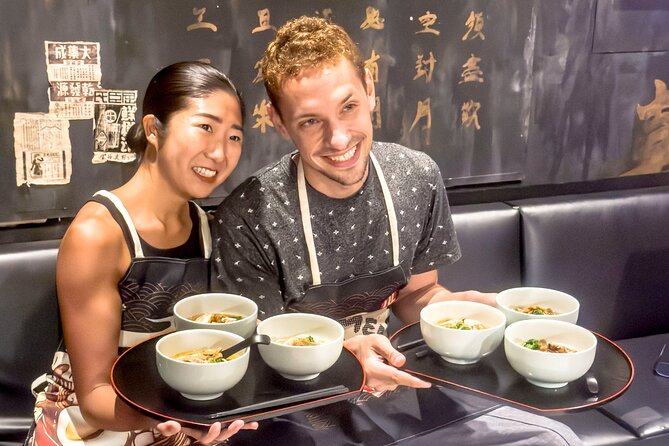
- Three ramen styles in one sitting: Taste tonkotsu, shoyu, and miso in separate mini bowls.
- Fresh noodles made by hand: Knead dough, roll it, and cut it with a professional noodle machine.
- Chicken chashu included: Prepare and finish the meat before adding it to your bowls.
- English-led and beginner-friendly: The instructors explain each step clearly and adjust their help to the group.
- A full meal in small portions: Three bowls can be surprisingly filling, so arrive hungry.
- Convenient Shibuya timing: The studio is about a 10-minute walk from Shibuya Station, and you finish at the same place.
What you really make at Ramen Dojo Tokyo
This is a cooking class with a smart division of labor. You handle the parts that teach you the most: dough, noodles, chicken chashu, seasoning, boiling, and plating. The long-cooking soup bases are ready before the class begins.
That arrangement matters. Traditional ramen broth can take many hours, sometimes much longer, to prepare properly. If you had to make three stocks from raw ingredients in one short class, you would spend most of the session waiting. Here, you get to compare the finished bases and learn how to adjust them instead.
You will make three small bowls rather than three full restaurant servings. That is a good format for tasting. Tonkotsu gives you a creamy, pork-based style. Shoyu brings a soy-seasoned profile, usually sharper and lighter. Miso adds a fuller, savory taste. The exact balance is adjusted during the class, so you can make the soup stronger or milder to suit your preference.
The class also uses chicken chashu. That is worth noting for diners who expect the usual pork topping. You prepare and finish the chicken yourself, then add it with the other toppings when plating.
More Ramen Tours in Tokyo
- Eat and Drink Like a Local: Tokyo Ueno Food Tour-Taverns&Ramen
★ 5.0 · 957 reviews - Ramen & Gyoza Cooking Class in Tokyo with Local Supermarket Visit
★ 5.0 · 823 reviews - Tokyo: Ramen Tasting Tour with 6 Mini Bowls of Ramen
★ 4.9 · 432 reviews
The 10-minute walk and check-in
The studio is listed at 1F, 2-16-29 Ohashi, Meguro-ku, Tokyo. From Shibuya Station, allow about 10 minutes on foot. Your booking time matters here because the studio opens its doors only 10 minutes before the start.
There is no early waiting area, so arriving far ahead does not help. Aim to reach the studio five to 10 minutes before class. If you arrive five or more minutes late, you may need to join while the class is underway, or you may be refused entry for safety and timing reasons. Contact the class before the start if you are running late.
The activity begins and ends at the same studio. That makes it easy to plan around. You can schedule the class before shopping and sightseeing in Shibuya, or use it as a lunch or dinner activity before continuing into the neighborhood.
The location is practical, but do not expect a sightseeing stop built into the class. The point is the food and the instruction. Once you enter, the attention shifts to the kitchen.
First 10 minutes: briefing and kitchen setup
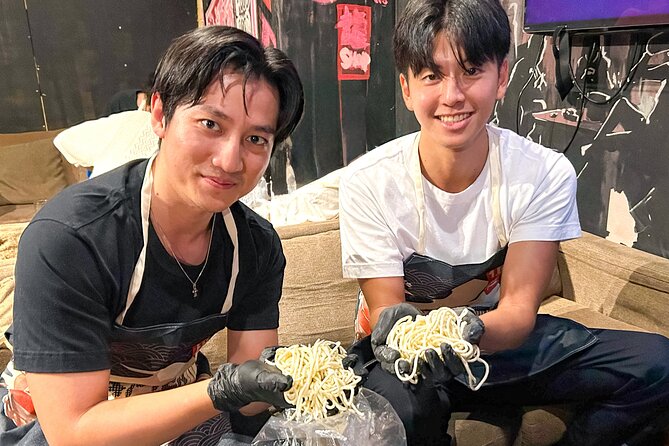
The class opens with a 10-minute briefing. You receive an apron and learn the order of the session, the equipment, and the safety rules.
This first explanation is especially helpful if you have never made noodles. The process uses flour, water, and technique, and small changes in pressure can affect the dough. The instructors demonstrate the movement before asking you to try it.
English is the main class language, with Japanese also available. Instructors named in class feedback include Kazuki, Kensei, Kai, Arata, and others. The teaching style can vary slightly by instructor, but the format is designed for beginners. You are not expected to know ramen terms or professional kitchen methods before arriving.
The staff also manage the timing closely. That is necessary because several steps must be ready at once later, when the noodles are boiled and the bowls are assembled. A relaxed attitude helps. This is a practical cooking lesson, not a test of restaurant technique.
Chicken chashu in 5 minutes, then a proper finish
The first hands-on food task takes about five minutes. You begin preparing the chicken chashu, then return to it for another 10 minutes later in the class.
The two-stage process keeps the session moving. While the dough is being worked, the chicken can be prepared and finished. You get to take part in the topping rather than simply finding sliced meat waiting beside your bowl.
This is also a good example of what the class does and does not promise. You are not preparing every ingredient from raw beginnings. Some parts are ready in advance because the class must fit into 90 minutes. Still, the ingredients you handle are meaningful ones, and the finished chashu gives you a recipe idea you can repeat at home.
If you avoid pork, chicken is already the main meat used here. Vegetarian and vegan adjustments may be possible, but you need to ask in advance. The kitchen uses wheat, egg, soy, chicken, and pork, and complete protection from cross-contamination cannot be guaranteed.
Same trip, a completely different kind of day:
- 1-Day Tokyo Bus Tour
★ 5.0 · 14,250 reviews - Tokyo: TOKYO SKYTREE® Admission ticket
★ 4.5 · 11,192 reviews - Tokyo: teamLab Planets TOKYO Digital Art Museum Entry Ticket
★ 4.6 · 9,779 reviews - Tokyo: Sumo Show Experience with Chicken Hot Pot and a Photo
★ 4.8 · 6,678 reviews
The noodle machine is the class highlight
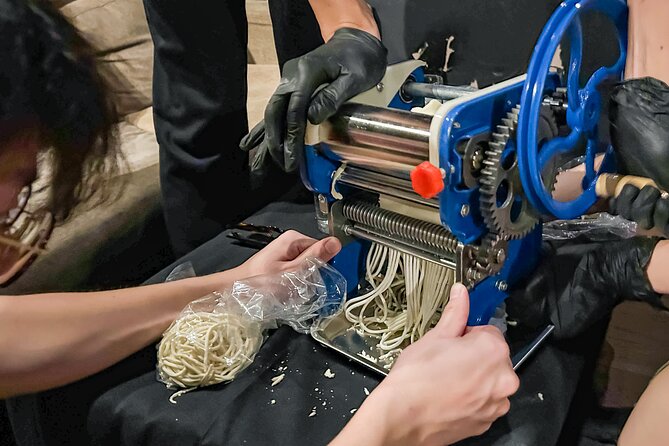
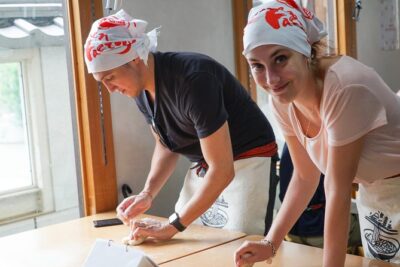
The noodle-making section lasts about 20 minutes. You knead the dough, roll it, and cut it into noodles using professional equipment.
This is the most physical and memorable part of the experience. You can see the dough change under pressure, and the cutter turns the prepared sheet into strands with a more even shape. A few class sessions have included extra amusement when the rolling machine needed attention, but that is part of working with equipment rather than a reason to worry.
The machine does not remove the learning. Instructors demonstrate hand technique and may encourage you to use your hands before relying on the equipment. That gives you a better sense of the dough and helps you understand why noodle texture matters.
This is also the part most likely to leave flour on your clothes. Aprons are provided, but wear something you do not mind getting dusty. The studio asks you to follow staff directions closely, and guests with severe airborne flour sensitivity should not book this activity.
For home cooks, the practical value is strong. One class participant found the method easy to repeat without special equipment at home. You will not leave as a professional noodle maker, but you will understand the basic sequence and the role of texture.
Boiling and broth preparation in 10 minutes
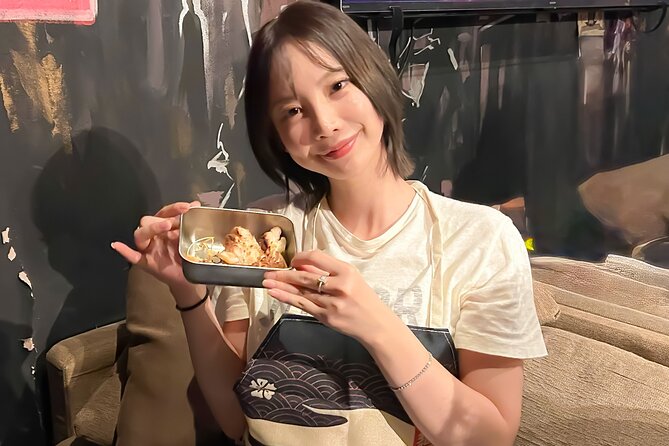
After the noodles and chicken are ready, the class moves to boiling and soup preparation. This section takes about 10 minutes.
The three soup bases have been prepared in advance. That is a limitation if your main goal is to learn a long traditional stock from start to finish. It is also what makes the three-style tasting possible in a short class.
You adjust the soup to your preferred strength, then see how the same freshly made noodles behave with different bases. This side-by-side comparison is more useful than simply eating one bowl. You can notice how the creamy tonkotsu changes the feel of the noodles, how the shoyu seasoning brings a cleaner edge, and how miso makes the bowl taste fuller.
The instructor handles the safety-sensitive parts and keeps an eye on the boiling process. You should expect guidance rather than complete independence at every station. That is a sensible approach for a small teaching kitchen with hot water, soup, and several bowls being prepared at once.
Plating three mini bowls
Plating takes about five minutes, but it is where the earlier work becomes visible. You place the noodles, broth, chicken chashu, and toppings into three separate bowls.
The small portions make the presentation attractive and keep the tasting manageable. Three full bowls would be too much for most people, especially after handling food and standing in the kitchen. Even so, the three mini bowls can make a filling meal, so avoid eating a large meal immediately beforehand.
This is the most photo-friendly moment. The trio gives you three colors and textures to arrange, and photography is welcome. If you post images, the studio appreciates the hashtag #RamenDojoTokyo.
Do not expect a formal food-photography lesson. The value is that your own work is ready to photograph, then eat while it is hot.
Thirty minutes to taste, compare, and ask questions
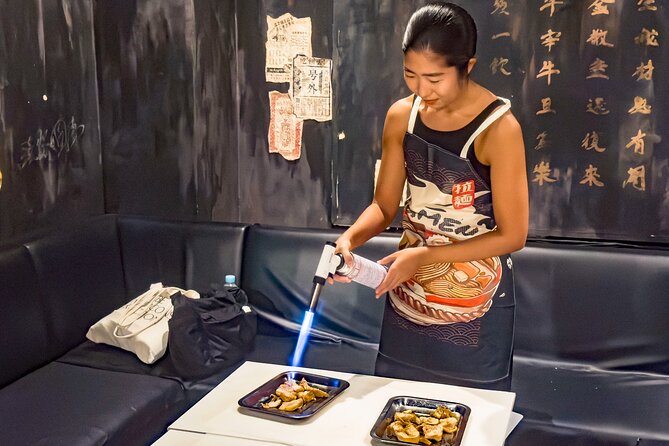
The final 30 minutes are for tasting and photos. This is not rushed. You can try the bowls in succession, compare the broth styles, and ask the instructor about what you made.
The generous tasting period also gives the class a social side. Couples and small groups can work together, and the instructor can answer questions as you eat. Some sessions feel almost private when only a few people attend, although the maximum group size is eight rather than guaranteed private instruction.
The food is the strongest part of the finish. You have made the noodles and chicken, while the prepared broths let you focus on taste. The digital recipe sent afterward adds real value, especially if you want to recreate the experience at home.
You should understand what the recipe can and cannot do. It lets you repeat the class method, but it will not turn your kitchen into a ramen shop. The long-cooked bases and professional cutter may not be practical for every home cook. Still, the noodle process, seasoning ideas, and assembly are accessible.
Is $64 a fair price?
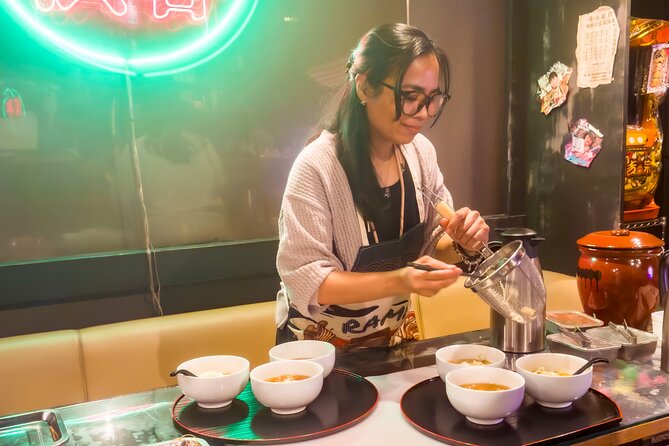
At $64 per person, this is not the cheapest meal in Tokyo. You can eat ramen for far less, and the class does not include drinks or alcohol. You are paying for instruction, equipment, ingredients, an apron loan, three tastings, and the recipe afterward.
The value improves if you treat it as both lunch or dinner and a cultural activity. The class lasts 90 minutes, and you finish with enough food to count as a substantial meal for many people. You also leave with a method you can try again, rather than only a restaurant memory.
The price makes less sense if you only want to taste excellent ramen. A good ramen shop will be more direct and usually cheaper. Book this class for the process, the fresh noodles, and the chance to compare three styles in one sitting.
I also think the small group format helps justify the cost. Clear instruction is important with dough and hot cooking equipment. The instructors are repeatedly praised for being friendly, precise, and easy to follow. Kazuki, Kensei, Kai, and Arata are among the names associated with particularly helpful sessions.
Who should book, and who should skip it
I would recommend this class to first-time cooks, couples, families with children aged six or older, and anyone who wants a hands-on food activity in Tokyo. It works well when you want something more active than a restaurant meal but less demanding than a full-day cooking course.
It is also a good choice for people who like learning a technique they can take home. The noodle-making section gives you something concrete to remember, and the recipe helps you repeat the process.
You should think twice if you have celiac disease, severe wheat, egg, or soy allergies, or a severe sensitivity to flour in the air. The kitchen uses gluten, egg, soy, chicken, and pork, and strict separation cannot be promised.
The class is not suitable for anyone unable to use stairs. The studio has stairs only. Dietary requests may receive partial accommodation for no chicken or pork, vegetarian, or vegan diets, but you must contact the provider ahead of time and should not expect strict substitutes.
Timing, clothing, and practical planning
Book a time that lets you arrive hungry but comfortable. Eating too close to the workshop can make the three-bowl tasting feel like hard work.
Wear casual clothing and use the provided apron. Flour may land on your clothes during the noodle section. Follow the instructor’s directions around hot water and kitchen equipment, even if you have cooked at home before.
The class starts and ends at the studio, with no hotel pickup or drop-off. Afterward, you can continue exploring Shibuya, since the studio is roughly a 10-minute walk from the station. Free cancellation is available up to 24 hours before the activity, and reserve-now, pay-later booking can help if your Tokyo schedule is still changing.
Should you book Ramen Dojo Tokyo?
Book it if you want to make something, not simply eat something. The fresh noodles, chicken chashu, three broth styles, and English guidance create a well-paced introduction to ramen without demanding advanced cooking skills.
Skip it if your priority is a fully traditional broth-making course, strict dietary control, or a quiet meal with no hands-on work. For everyone else, $64 is a reasonable price for a small-group class that doubles as a filling meal and leaves you with a recipe to try at home.
FAQ
How long does the ramen class last?
The activity lasts 90 minutes. The schedule includes a briefing, chicken preparation, noodle making, finishing the chicken, boiling and soup preparation, plating, and tasting time.
Where is Ramen Dojo Tokyo located?
The studio is at 1F, 2-16-29 Ohashi, Meguro-ku, Tokyo 153-0044, Japan. It is about a 10-minute walk from Shibuya Station.
Which ramen styles will I taste?
You will make and taste three mini bowls: tonkotsu, shoyu, and miso ramen.
Are the broths made from scratch during the class?
The broth bases are prepared ahead because long cooking times do not fit the 90-minute format. You adjust the soup strength and prepare the noodles, chicken chashu, toppings, and final bowls.
Is the class taught in English?
Yes. The activity is conducted in English, and Japanese is also available. English-speaking instructors guide the class step by step.
What is the maximum group size?
The class is limited to eight participants. The group may be smaller, but private instruction is not guaranteed.
Can children join the workshop?
Children aged six and older are recommended for the activity.
Can I join with a vegetarian or vegan diet?
Partial accommodation may be possible for no chicken or pork, vegetarian, and vegan requests. You must inquire in advance, and the kitchen cannot guarantee protection from cross-contamination.
Just added around Tokyo
- Kawagoe Japanese Food Tour : Unagi Kaiseki and Sake near Tokyo★ 5.0 · 30 reviews
- Kawagoe 4hr Private Tour with Licensed Guide (Kawagoe Dep)★ 5.0 · 13 reviews
- Little EDO Sushi Making workshop in Kawagoe★ 5.0 · 18 reviews
- 【R34】Tokyo:Private Daikoku tour in Modified R34★ 4.9 · 92 reviews
- :Tokyo,Shibuya/ Pro Photography in Kimono / English-Friendly★ 5.0 · 26 reviews
- Tokyo:Celebrate Unique Japanese New Year Tradition Festivity★ 3.9 · 20 reviews
- Tokyo: Allstar Food Tour★ 4.7 · 29 reviews
- Tokyo: West-Side Cycling and Food Tour with Guide★ 5.0 · 37 reviews
Ramen & Noodle Tours, compared.
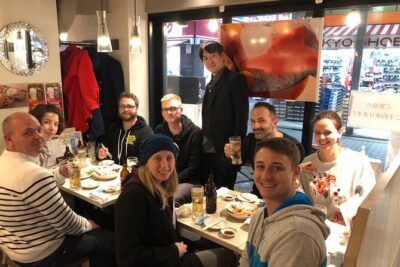
Eat and Drink Like a Local: Tokyo Ueno Food Tour-Taverns&Ramen
Our verdict →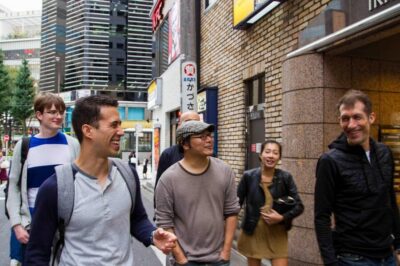

Five Must-See Highlights Walking Tour & Ramen Lunch
Our verdict →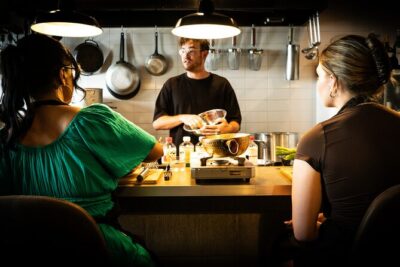
Professional Ramen & Gyoza with Ramen Chef in a restaurant!
Our verdict →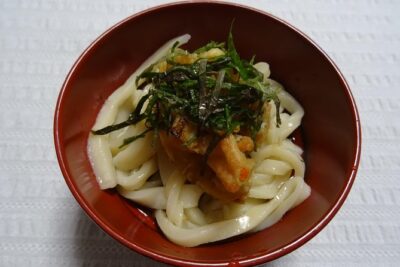
Popular in SapporoExperience authentic hand-made soba at a real soba shop!
Our verdict →
Browse the lists this tour appears in