
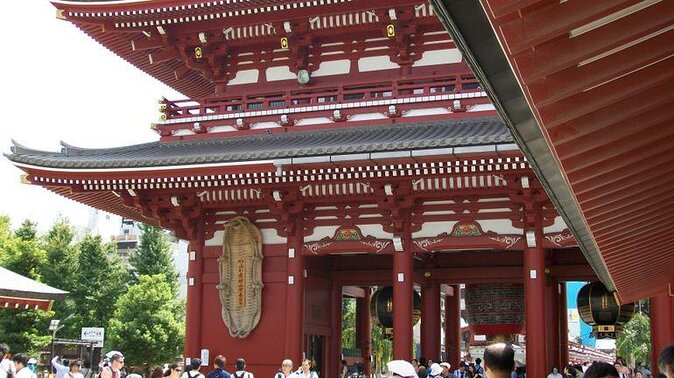
Reviewed · CUSTOM PRIVATE TOURS IN TOKYO
Private Custom Tour: Tokyo in a Day
Tokyo is too large for a one-size-fits-all sightseeing plan, and this private tour handles that problem well. You can spend your day around Tsukiji seafood and local food, imperial gardens, temples, shrines, shopping streets, or modern neighborhoods such as Shibuya and Akihabara.
I like the chance to shape the day with your guide, and I like that you can learn Tokyo’s train and subway system instead of simply watching the city through a car window. The main caution is stamina: a full public-transport day can reach 20,000 steps, roughly 14 kilometers, with stairs and some routes that are not barrier-free.
Key points to know before booking
- Your interests set the route: Ask for food, temples, shopping, Japanese culture, gardens, history, or a mix of old and new Tokyo.
- Public transport feels more local: Your guide can teach you how to use Tokyo’s trains and subway, though it means plenty of walking and stairs.
- A private car saves energy: The vehicle option is useful for families, older visitors, or anyone who wants to cover several far-apart areas with less walking.
- Full-day tours include lunch: The eight-hour option includes lunch and a drink, while the half-day option does not include lunch.
- Popular guides have different strengths: Shuhei is often praised for food suggestions and train navigation, while Sabina, Roy, Keiji, Yuki, and others are noted for flexible planning and city orientation.
- The price reflects private attention: At $159.18 per person, the value is strongest for a small group that wants a route built around its own priorities.
A private Tokyo day built around you
The best feature here is not a fixed list of sights. It is the ability to tell your guide what matters before the day begins, then adjust the plan as you go.
You might ask for a classic first look at Tokyo, combining Meiji Jingu Shrine, Asakusa, the Imperial Palace area, and Shibuya Crossing. You could also build a food-focused day around Tsukiji, ramen, street food, or sake. Families can lean toward Harajuku, Akihabara, or shopping. A reader interested in Japanese history could request temples, shrines, the Imperial Palace, and Sengakuji, known for the tombs of the 47 ronin.
The tour is private, so only your group participates. That matters in Tokyo. You do not have to wait for strangers, repeat a stop that does not interest you, or keep pace with a large group. Guides have adjusted routes for children, older adults, changing interests, health concerns, and last-minute requests.
The four-hour version is best treated as an introduction, not a citywide sweep. Eight hours gives you room to connect several parts of Tokyo, stop for lunch, and spend more time in neighborhoods rather than simply taking photographs and moving on.
More Custom Private Tours in Tokyo
- Tokyo Customized Private Tour (Must See Places in 1 Day)
★ 5.0 · 1,499 reviews - Tokyo Customized Private Tour: See Top Attractions in 1 Day
★ 5.0 · 1,351 reviews - Tokyo Customized Private Walking Tour With Local Guide
★ 5.0 · 274 reviews
Tsukiji: start with food and a changing market district
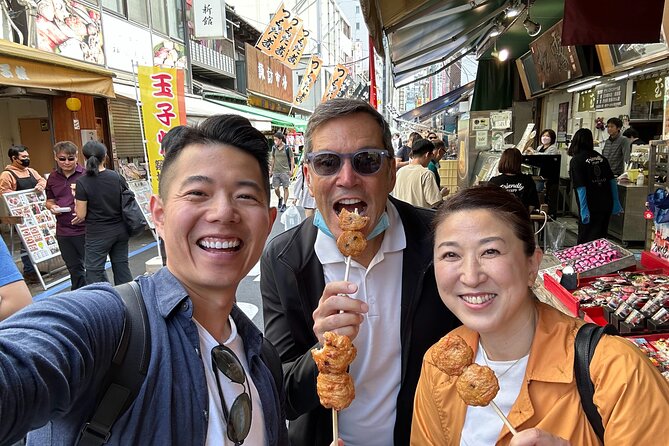
The old Tsukiji Market area makes a strong opening stop, especially if food is one of your priorities. The wholesale market moved to Toyosu, but the former Tsukiji district remains useful for small food shops, seafood, snacks, and the atmosphere of an old market quarter.
Allow about two hours if you want to sample food and browse without rushing. A guide can help you understand what you are seeing, suggest items to try, and steer you toward lunch or snacks that match your comfort level. This is one place where a local guide can add more than basic directions.
The practical point is timing. Market businesses do not all keep the same schedule, and the tour information notes that attraction hours are subject to availability. If Tsukiji is your priority, tell the operator and guide early so the route fits the day.
Food-focused planning has produced some of the strongest moments on this tour. Guests have been guided to ramen, street food, seafood samples, and local restaurants. One guide, Shuhei, is repeatedly praised for food recommendations as well as for explaining how to move around Tokyo by train.
Hama Rikyu Gardens and the Imperial Palace area
Hama Rikyu Gardens offers a useful change of pace after city streets and food stalls. The garden gives you ponds, open views, and a quieter setting in the middle of Tokyo. Traditional sweets and green tea may be included in the plan, depending on the route you arrange with your guide.
You can also request the Imperial Palace area. The palace itself has access restrictions and operating conditions, so your guide will need to explain what is available on your date. The value here is not simply seeing a famous name on a map. It is placing modern Tokyo beside the city’s imperial and political center.
Koishikawa Korakuen is another garden mentioned as an option. You will not fit every garden, temple, shopping street, and market into one day, so be realistic when planning. A good private guide can help you choose between depth and range, rather than promising everything at once.
Asakusa and Senso-ji: Tokyo’s old quarters
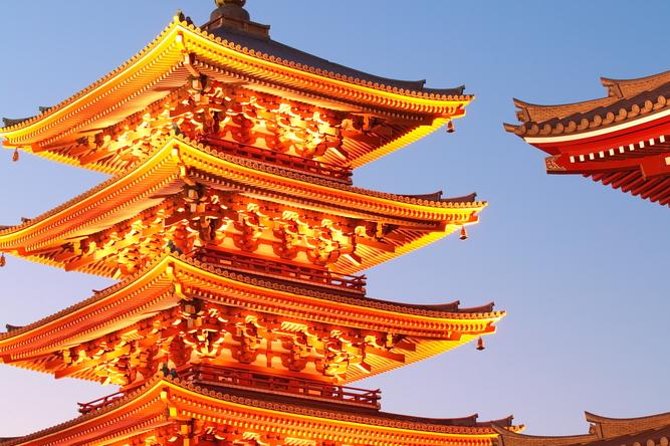
Asakusa is one of the most rewarding choices for a first day in Tokyo. The area gives you a clear sense of traditional streets, Buddhist worship, souvenir shopping, and the city’s older identity.
Senso-ji is the main draw. You can spend about two hours around Asakusa, depending on whether you want temple time, shopping, food, or nearby streets. Your guide can explain the customs at a shrine or temple and help you distinguish religious spaces from ordinary sightseeing stops.
Asakusa also works well for families because the visit mixes visual interest with shops and food. It can be crowded, and the approach to the temple involves walking through a busy commercial area. That is part of the experience, but it may feel tiring when combined with several other districts.
If you want a calmer version of old Tokyo, ask about Yanaka Ginza instead. Its shopping street offers traditional crafts, souvenirs, and a more local neighborhood feel. It is a sensible alternative when you want to see an older side of the city without spending the whole day at major landmarks.
Same trip, a completely different kind of day:
- 1-Day Tokyo Bus Tour
★ 5.0 · 14,250 reviews - Tokyo: TOKYO SKYTREE® Admission ticket
★ 4.5 · 11,192 reviews - Tokyo: teamLab Planets TOKYO Digital Art Museum Entry Ticket
★ 4.6 · 9,779 reviews - Tokyo: Sumo Show Experience with Chicken Hot Pot and a Photo
★ 4.8 · 6,678 reviews
Meiji Jingu, Harajuku, and Takeshita Street
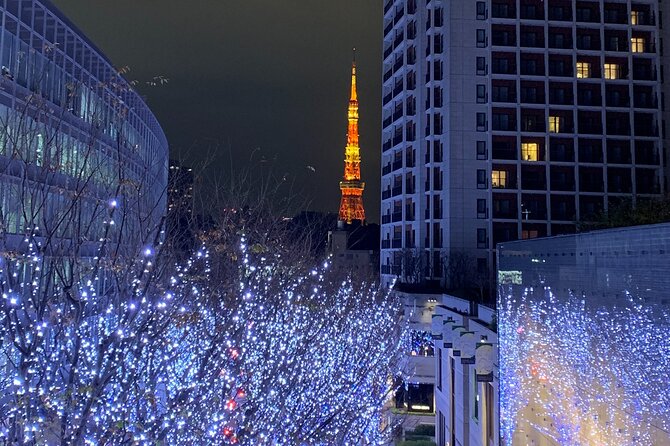
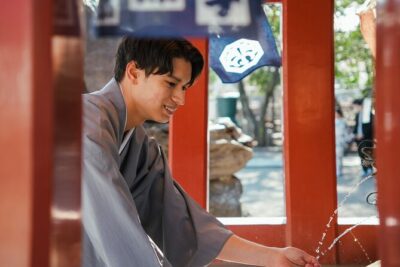
Meiji Jingu Shrine gives the tour a strong cultural stop. The shrine sits within a wooded setting and feels different from the dense commercial districts nearby. Your guide can explain basic Shinto customs and help you observe respectfully.
The shrine is often paired with Harajuku and Takeshita Street. That combination works because you move from a major religious site to youth fashion, quirky shops, and modern Tokyo street life within the same general area.
Takeshita Street can be energetic and crowded, so it is not the best choice if you want a quiet afternoon. It is a good fit for teenagers, shoppers, and anyone interested in contemporary Japanese style. One family specifically used the private format to support a shopping-focused day with a 13-year-old, and the guide adjusted patiently to the group’s interests.
Omotesando, Shibuya, and nearby shopping areas are possible alternatives. You might request Shibuya Crossing if you want a famous modern Tokyo scene, or choose Omotesando for architecture and fashion. The key is to tell your guide whether you want shopping time or just a quick look, since those require very different pacing.
Shibuya, Akihabara, and other modern Tokyo choices
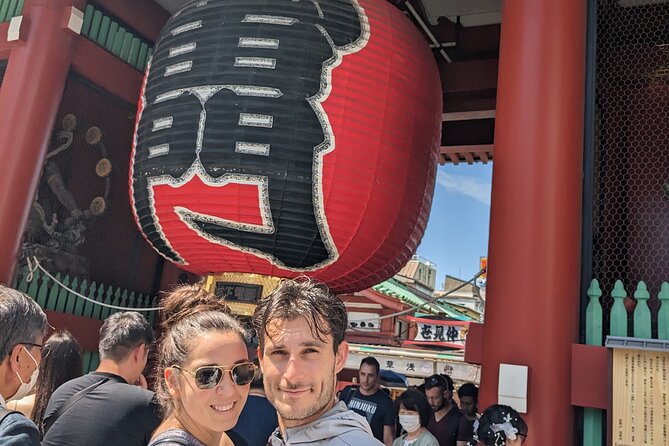
Tokyo’s modern side can be added to a classic route, but you should not expect a long visit in every district during one day. Shibuya works well for a quick orientation, a crossing view, shopping, and a sense of the city’s scale.
Akihabara is a better choice if your group cares about electronics, video games, manga, or anime culture. It may be far less interesting if your main goals are gardens and temples. This is where the custom format earns its keep: you can replace a generic stop with one that your family will actually remember.
The tour has also worked for specialized interests. A guide named Minoru planned a Murakami-themed day that included Shibuya Crossing and DUG, a jazz bar connected with Norwegian Wood. That kind of personal connection is possible only when you explain your interests in advance.
You can also ask about Sengakuji, especially if Japanese history matters to you. One private group included the temple and the tombs of the 47 ronin along with the Imperial Palace, Senso-ji, and Meiji Shrine. It is a good example of how this tour can move beyond the most obvious stops.
Public transportation or a private vehicle?
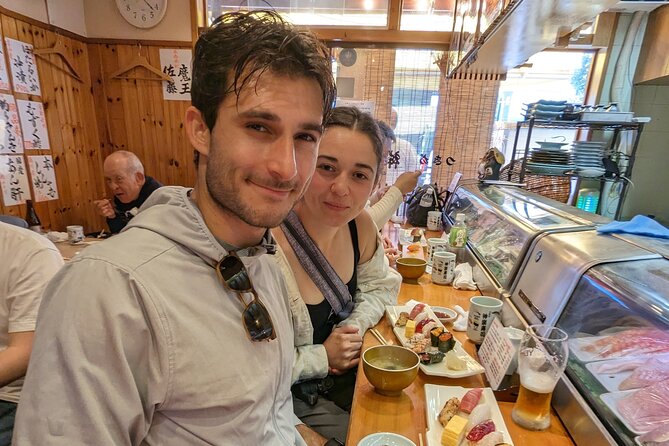
The transport choice changes the character of the day.
Public transportation is the better pick if you want to learn how Tokyo works. Your guide can show you how to use trains and subways, and you can later return to places on your own. Several people have found this especially useful as a first-day orientation.
The tradeoff is effort. An eight-hour public-transport tour averages more than 20,000 steps, or about 14 kilometers. You will walk between stations, along neighborhood streets, and through attractions. Stairs are part of the day, and some routes are not barrier-free.
A private vehicle is more comfortable and can help connect distant districts. It is worth considering if you have mobility concerns, young children, heavy luggage, or a hot-weather visit. A driver and guide can also make a broad sightseeing day less exhausting.
The car option is not automatically better. You lose some of the everyday Tokyo experience, and traffic can affect timing. For a first visit, I would choose public transport if you are comfortable walking and want practical city skills. I would choose a private vehicle if seeing more sights with less physical strain matters most.
Guides, communication, and the human side of the tour
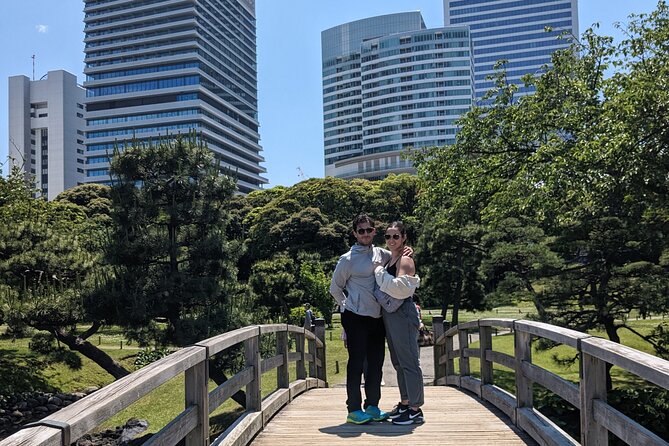
The guide can make or break a private custom day, so it is worth paying attention to the names and strengths available. Shuhei is often singled out for humor, food advice, train navigation, and careful attention to heat, hydration, and meal breaks. Roy is known for strong neighborhood coverage and for explaining both major sights and less obvious places.
Keiji has helped people combine modern Tokyo with quieter streets and has adjusted routes for visitors with artificial hips or concerns about hills and stairs. Sabina has received praise for history, religion, art, family planning, and mobility needs. Yuki is described as warm and flexible, while guides such as Kahori, Minoru, Ken, Mami, Yoshi, and Yukiya have also handled tailored days.
English ability can vary. Most feedback is strongly positive, but one lower-rated experience pointed to difficulty understanding the guide, and another noted that the guide’s English was not strong enough for a walking tour. If precise historical explanation is important to you, state that clearly when booking and ask what guide-language support is available.
A separate practical issue: one group found an extra trainee in the van who had not been disclosed beforehand. It did not ruin the day, but you can reasonably ask in advance who will be in the vehicle.
What the $159.18 price gets you
The listed price is $159.18 per person. Since the tour is private, the value depends heavily on group size. A family or small group can split the cost of personalized guiding, hotel pickup, transport, and route planning. For one person or a pair, the price is harder to justify unless you place a high value on efficiency and personal help.
The full-day option includes hotel pickup and drop-off within Tokyo’s 23 wards, an English-speaking professional guide, transportation fares when using public transport, lunch, and a drink. If you choose the vehicle option, private transport is included under that selection.
Extra activity fees are not included. Optional attractions may cost more, and the operator advises discussing additional expenses when planning the route. Ask specifically about any admission charges, special food stops, or paid experiences before finalizing the day.
The strongest value comes when you use the tour for something difficult to arrange alone: a food route, a first-day orientation, a family day with mixed interests, or a route that must account for mobility and energy. If you only want a standard list of Tokyo landmarks, public transit and a guidebook will cost less.
Who should book this Tokyo tour?
I would recommend it for first-time visitors who want help getting their bearings fast, families with different interests, food lovers, and anyone with only one free day. It also suits repeat visitors who want a focused subject, such as Japanese gardens, literature, shopping, temples, or local food.
You should think twice if you dislike walking, need a fully step-free route, or want every attraction included at a slow pace. Even the private format cannot defeat Tokyo’s size. A full day can feel packed, especially in summer, so build in food, water, and rest.
The booking terms are simple: cancellation is free up to 24 hours before the start time. Changes made inside that window are not accepted, and poor weather may lead to a new date or a full refund. Pickup is offered within Tokyo’s 23 wards, not everywhere in the greater Tokyo region.
Should you book it?
Book this tour if you want Tokyo shaped around your group rather than around a fixed bus route. Before you go, send a short priority list, name any mobility limits, say whether you prefer trains or a car, and identify one must-have meal or neighborhood.
I would choose the eight-hour public-transport version for an active first visit, especially with a guide such as Shuhei, Roy, or Keiji if available. I would choose the private vehicle for comfort, long distances, or a group that cannot manage 20,000 steps.
At 4.9 out of 5 from 1,432 ratings, with 98 percent recommending it, the record is excellent. Still, the smart booking decision is not based on the score alone. It comes down to whether you want a personal guide, can handle the pace, and are willing to communicate clearly before the day begins.
FAQ
How long is the Tokyo custom tour?
You can choose a half-day tour of about four hours or a full-day tour of about eight hours.
Is hotel pickup included?
Yes. Hotel pickup and drop-off are included for hotels within Tokyo’s 23 wards.
Can I choose public transportation instead of a car?
Yes. You can explore by train and subway, or select the private vehicle option. Public-transport fares are included when you choose that format.
Is lunch included?
Lunch is included with the full-day option only. The full-day option also includes a drink.
How much walking should I expect?
An eight-hour public-transport day averages more than 20,000 steps, or about 14 kilometers. Some routes include stairs and are not barrier-free.
Can I request specific Tokyo sights or interests?
Yes. You can request areas and themes such as Tsukiji, temples, shrines, shopping, food, sake, the Imperial Palace, Asakusa, Meiji Shrine, Harajuku, Shibuya, Akihabara, or Yanaka Ginza. Optional attractions may involve extra fees.
Just added around Tokyo
- Kawagoe Japanese Food Tour : Unagi Kaiseki and Sake near Tokyo★ 5.0 · 30 reviews
- Kawagoe 4hr Private Tour with Licensed Guide (Kawagoe Dep)★ 5.0 · 13 reviews
- Little EDO Sushi Making workshop in Kawagoe★ 5.0 · 18 reviews
- 【R34】Tokyo:Private Daikoku tour in Modified R34★ 4.9 · 92 reviews
- :Tokyo,Shibuya/ Pro Photography in Kimono / English-Friendly★ 5.0 · 26 reviews
- Tokyo:Celebrate Unique Japanese New Year Tradition Festivity★ 3.9 · 20 reviews
- Tokyo: Allstar Food Tour★ 4.7 · 29 reviews
- Tokyo: West-Side Cycling and Food Tour with Guide★ 5.0 · 37 reviews
Custom Private Tours in Tokyo, compared.
Tokyo Customized Private Tour (Must See Places in 1 Day)
Our verdict →
Browse the lists this tour appears in